The VAP Series – Show Jumping Warm-Up Stewards
The USEA Volunteer Achievement Program (VAP) was created by the USEA Volunteer Committee to recognize volunteers for their education, experience, responsibility, and commitment in different roles offered at USEA Recognized Events. Next up in our VAP Series, which shares best practices for completing your badge in every role available through the program, we will be highlighting the role of show jumping warm-up steward.
The show jumping warm-up steward is responsible for ensuring a smooth progression of competitors from the warm-up area to the competition arena. The warm-up can be a busy and even stressful place at times, so it is important that the warm-up steward is able to keep a level head while multitasking.
When you arrive at the venue to prepare for your show jumping warm-up steward shift, you will need to collect a set of materials, including an order of go for the show jumping arena that day, pens/pencils, and a radio at minimum, and proceed to your station near the warm-up area. Once at your station, it is very important to organize the materials, so everything is easily accessible before the competitors start arriving, and review the order of go to determine factors like the number of competitors per level, when there are breaks, and the flow of the schedule.
Communicating with other volunteers and officials is a critical part of this role. In some cases, there may be an in-gate steward that you will work alongside to get competitors into the ring, while in other instances, you may be the sole individual in charge of the flow. The volunteer coordinator will tell you if there is an in-gate steward or other warm-up stewards that you will be working with, but it is your responsibility to coordinate with them to determine the best way to shepherd riders from one person to the next. If you are to oversee sending the riders into the ring yourself, make sure to say hello to the judge before the competition begins and ask if there are any specifics on how they would like competitors to enter the ring. This is a great opportunity to ask for directions on how to handle out of order and eliminated competitors who have permission to ride as well.
Out-of-order rides should be a rare exception, not the rule. If the technical delegate (TD) is in your area when an out-of-order request is made, you can consult them first. However, depending on the event, the judge may want the organizer to rule on whether a person can ride out of order or not. Therefore, it is always good practice to coordinate with the organizer and the judge on how this should be handled before the day begins.
Now that you are ready to work, there are several things you need to know as a show jumping warm-up steward. First, be sure you understand the order-of-go format, which arena you are in charge of if there is more than one, and which signaling device is associated with your arena. You will also need to know the jump specifications at every level, in case you need to help raise or lower the warm-up jumps between divisions:
Jump Specifications
These specifications are provided for reference; consult with the show jumping judge or show jumping course designer for the exact specifications they want to use for each level.
Jump Cups
- Use deep cups (1” depth) for top poles
- Use medium cups (3/4” depth) for other poles
- Use flat or shallow (1/2” depth) cups for planks, gates, etc.
- Use breakaway cups for back pole of oxers
Jump Heights and Widths
Heights |
Overall Spreads of Oxers |
|
Starter |
2’3” |
2’6” |
Beginner Novice |
2’7” |
3’3” |
Novice |
2’11” |
3’7” |
Training |
3’3” |
3’11” |
Modified |
3’5” |
4’1” |
Preliminary |
3’7” |
4’3” |
Intermediate |
3’11” |
4’7” |
Advanced |
4’1” |
4’9” |
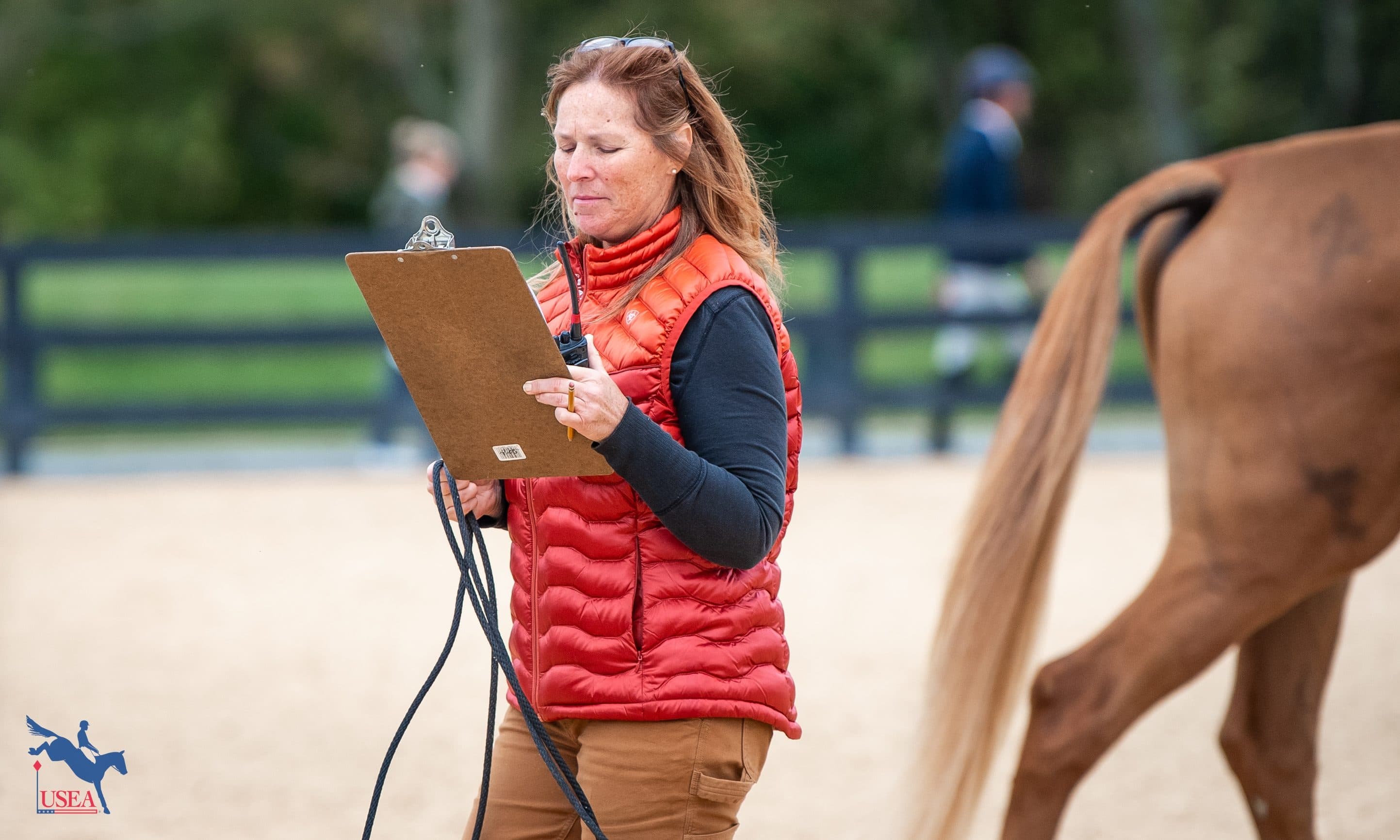
When you’re performing your duties, be sure to practice good horsemanship and be mindful around the competing horses. Keep track of competitors as they enter the warm-up area, and let them know where they are in the order-of-go. As each competitor leaves your area to enter the arena, be sure to check them off your list, so you know they’ve gone in to compete. The Event Secretary should let you know of any scratches, but if you are unable to locate a competitor, use your radio to ask if they have scratched.
All warm-up jumps must be jumped with the red flag on the right and the white flag on the left as the rider approaches the fence. If you see a competitor jump a jump the wrong direction, with the red flag on the left, inform the TD. In addition, if any competitors or coaches are “claiming” a jump in the warm-up or not sharing a fence with others, let the TD know immediately. All warm-up jumps should be able to be utilized by any competitor.
Another thing to keep an eye out for is competitors or coaches raising the poles of the fences beyond the permitted height. The jumps should be no more than 4” above the maximum height for the level explained in the table above. Placing a pole in front of any warm-up jump is also an infraction that should be noted to the TD. Finally, if you notice someone other than the competitor warming up a horse, this should be brought to the TD’s attention.
As you can see, the responsibilities of a show jumping warm-up steward should keep you busy all day! This role is a great way to meet many competitors and coaches in the Area, watch the warm-up process, and even see a glimpse of competition from your station.
Why Should I Serve as a Show Jumping Warm-Up Steward?
The top volunteers that served as show jumping warm-up steward have each served in the role more than 10 times. Hear from the experts on why they choose this role time and time again.
"I love being SJ Warm-Up Steward, because it draws on skills honed during my career and on qualities of my personality. It makes me feel good about myself. I stay calm, clear and firm in a chaotic situation, reassuring anxious riders and “doing the dance” to handle problems and last-minute changes. I enjoy managing the energy: keeping it friendly and flowing to reduce stress. My ability to project my voice for up to 6 hours without strain comes from an unexpected source: walking picket lines in my 20s!
My white board set up gives everyone the information they need to focus on their warmup while keeping track of their place easily, at a glance. I am an entry-level eventer and one of those “nervous nellies” always asking “how many in front of me now?” so this is to help those others like me out there! Also, I know that if I want my sport to continue, I need to pitch in by volunteering at the shows where I am not competing. I watch and learn, too! One of the great things about horse trials is the variety of volunteer opportunities. I really like this one, and it suits me, but there are some I am terrible at or don’t like. Volunteer! Find one that fits and enjoy!" - Corinna L. (Area VIII)
"There's something special about the warmup rings, especially for the jumping phases. As a competitor myself, I appreciate the energy, excitement, anticipation and sometimes nervous anxiety that can electrify that atmosphere. And I like being a part of that energy, interacting with the riders, coaches, friends and family, and hopefully being a point of calm and order amid all the chaos.
Organized and on-time rings improve everybody's experience. And honestly, somewhat selfishly, being really familiar with the inner rhythms of a typical show day helps keep me calm and collected when it's my turn in the saddle!
Volunteering at a horse show is a great way to spend the day regardless of if it's scribing or jump judging or any other role, but my favorite place to be is the warmup ring with all its activity and energy!" - Emma H. (Area II)
"I came to horses and eventing late in life. I was over 50 when I married into it; my wife, Nancy, is an eventer. Early in our marriage she signed up to compete at a horse trial in Virginia. I went along to watch—actually I went along because I was petrified she’d get hurt (for the non-initiated eventing looks very dangerous.) When it was time, we headed over to stadium, we got to the warm-up ring, and all I saw was chaos. Not long after this, Waredaca, where we keep our horses, was holding a horse trial, and I was asked to volunteer. I agreed, but only if I could run stadium warm-up. I spoke with Gretchen Butts, who owns Waredaca, and told her I wanted get it (warm-up) under control, make it safer. No one cares more about safety than Gretchen, and she gave me her OK. My plan was to limit the number of riders in warm-up, bring riders into warm-up based on the order-of-go, and let them know when they were on deck. In the first two years I got some push-back, it wasn’t how warm-up was typically managed. But riders soon came to appreciate it.
My favorite part of this role is the people—eventers comprise a wonderful community, and I’ve gotten to know a lot of them—amateurs, professionals, trainers, and parents. I’ve seen young girls work hard, persevere, and go from Beginner Novice to five-star riders. I’ve seen someone come back year after year on the same horse jumping the same heights and still leave the ring with an ear-to-ear smile. And I’ve made some very close friends. But the satisfaction I get comes from knowing that by taking the busy work—when can I go in to warm-up, will I have enough time and space to warm-up, when do I go in the ring—that’s the busy work—by taking the busy work off the riders’ shoulders and letting them focus on riding I help make the competition safer and ultimately more fun. In the main, that’s what stewards do, they manage the parts of the competition that are 'outside' the actual competing. And I think the best way to do that is for the stewards to own the busy work." - Alan D (Area II)
"Event volunteering roles are a lot like picking the right horse; sometimes it’s best to let it pick you. I've been lucky enough to participate in several different volunteer roles, but what’s drawn me to show jumping warm-up is the people. Early on I had a horse trainer who took the time to share with me what the riders needed and how I could be most helpful. Her directions, kindness, and encouragement meant a lot to me. Since those first couple of events I've become much more comfortable in the role. The riders regularly share their appreciation and thankfulness with and for the volunteers, which really means a lot. I keep returning to this, and honestly any of the other positions, because nowadays it feels like I'm hanging out with friends. It’s a great time, every time. My advice to others is—It doesn’t matter who you know or what you know to be a volunteer. Just show up with a willingness serve and have fun, and I guarantee that you’ll have a great day!" Ben J. (Area III)
"First, I enjoy the face pace of the show jumping warm-up with horses [going in the arena] every 90 seconds. I keep coming back because of the competitors. I love seeing theirs and their horses' progression through the levels. Over the years, I have seen Beginner Novice riders move through the levels to ride in the Kentucky Three-Day. I like helping riders feel safe in the warm-up, which can feel a bit like controlled chaos at times. Lastly, I enjoy helping new eventers navigate the warm-up when their minds are running a million miles a minute thinking about the task ahead. Good snacks never hurt either!" - John B. (Area III)
How Do I Earn the Show Jumping Warm-Up VAP Badge?
Are you ready to earn your show jumping warm-up steward badge? Log onto EventingVolunteers.com, go to “My Dashboard,” and use the “My Achievements” tab to follow these steps to start your journey towards earning a badge today:
- View the volunteer video and read the guidelines for the role by clicking the icons next to the “SJ Warm Up” title in the first column.
- Take the assessment for the role and score an 80% or higher to proceed.
- Work as a Show Jumping Warm-Up Steward at two (2) or more USEA recognized competition(s) for a total of ten (10) or more hours.
- Once the hour requirements have been met, apply for the badge directly through EventingVolunteers.com by requesting a recommendation in the fifth column on the “My Achievements” page.
- The Volunteer Coordinator(s) or Organizer(s) for each competition where you worked will be asked to approve your application for the badge.
- Once approved, the badge will be added to the role in your Eventing Volunteers profile.
To learn more about the Volunteer Achievement Program, click here. To create an Eventing Volunteers profile, click here. For more information on the VAP or the USEA Volunteer Incentive Program, please contact Kaleigh Collett at [email protected]. Good luck earning your next VAP badge!
About the USEA Volunteer Incentive Program
Volunteers are the lifeblood of our sport—the unsung heroes, and the people who make it possible to keep eventing alive. In efforts to recognize the dedication, commitment, and hard work that volunteers put into eventing, the USEA formed the Volunteer Incentive Program (VIP) in 2015. In 2017, an online management portal was designed for volunteers, organizers, and volunteer coordinators at EventingVolunteers.com, which is also available as an app for iOS and Android.
Volunteer incentives include national and area recognition, year-end awards, a top 10 USEA Volunteer leaderboard, and a Volunteer of the Year award which is given to the volunteer who accumulates the most volunteer hours on EventingVolunteers.com at recognized events throughout the USEA competition year. Click here to learn more about the USEA Volunteer Incentive Program.
The USEA would like to thank the Maryland International Educational Foundation and Horse Illustrated for their support of the Volunteer Incentive Program.
Related Articles

The Dutta Corporation Continues Support of USEA Young Event Horse Program in 2026
The United States Eventing Association (USEA) is pleased to welcome back The Dutta Corporation as a valued supporter of the USEA Young Event Horse (YEH) Program and the 2026 USEA Young Event Horse Championships. The Dutta Corporation will return...
A First FEI Win for MHE Excel Star Noble Ikon and Morgan Houberg in USEA/USEF 6-Year-Old Developing Horse National Championship
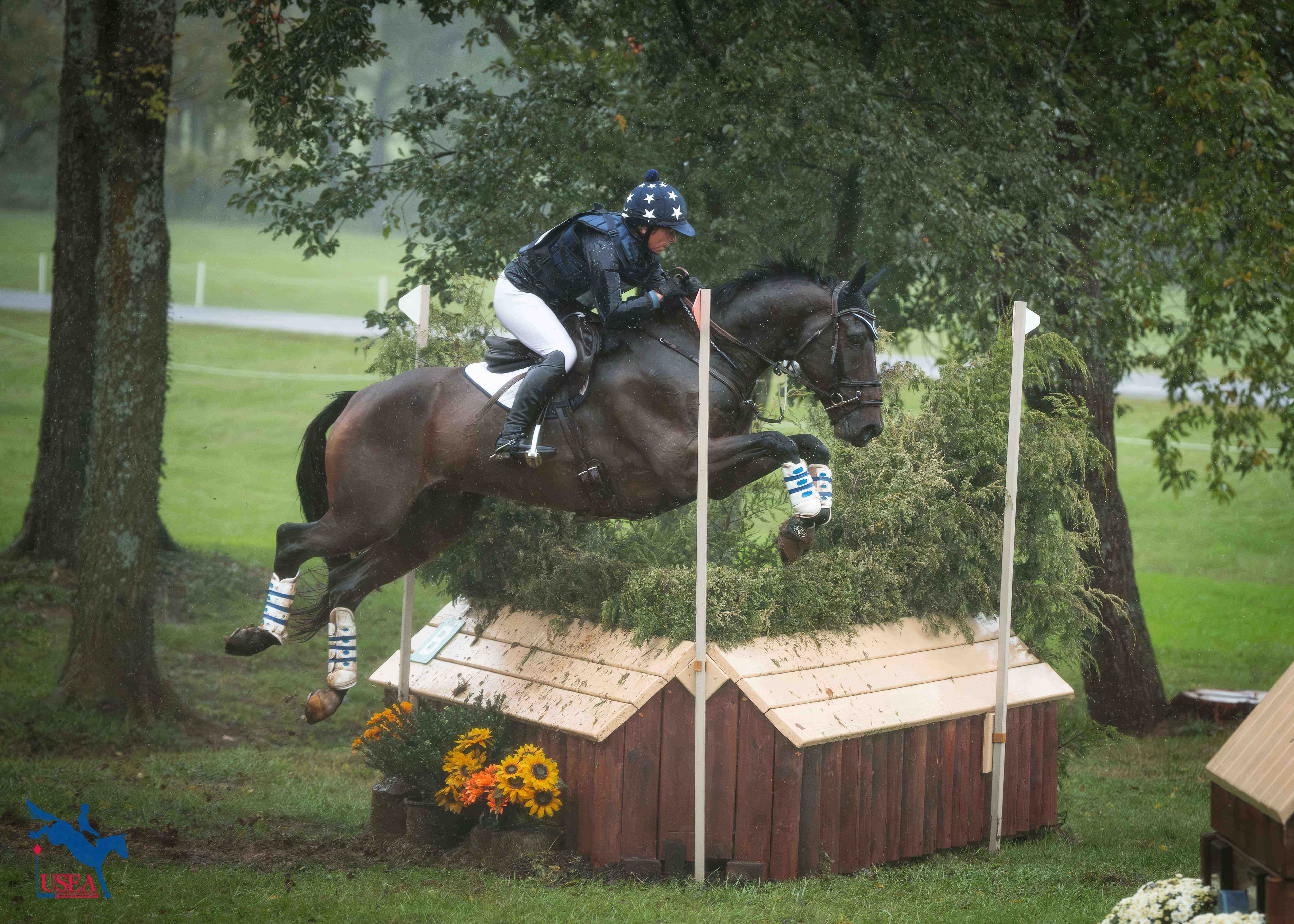
Heavy rain overnight and into the morning turned the final day of the 2026 USEA/USEF Developing Horse Eventing National Championships into a true test of the young horses' confidence, athleticism, and determination at Morven Park International. When the final scores were tallied in the CCI2*YH-S ...
Orpheus Rises to the Top to Claim USEA/USEF 7-Year-Old Developing Horse National Championship
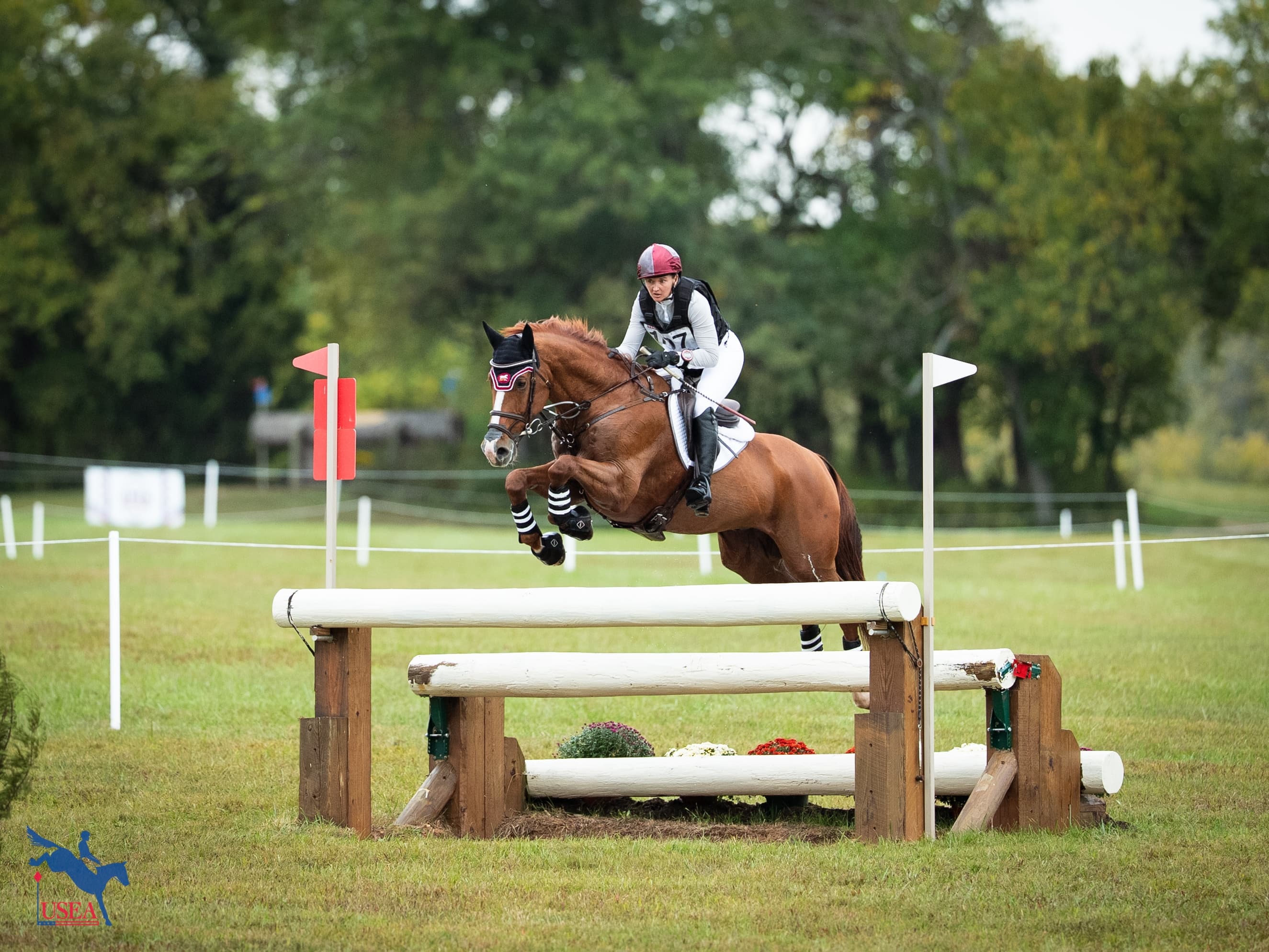
Consistency across all three phases proved to be the winning formula for the Dutch Warmblood gelding Orpheus, who rose from third place after dressage to claim the 2026 USEA/USEF 7-Year-Old Developing Horse Eventing National Championship at Morven Park International on Saturday. Owned by Cellar F...