Seminar and Forum Reports - Day 3 at USEA Annual Meeting and Convention

Cardiopulmonary Research
Dr. Catherine Kohn and Dr. Rob Stevenson gave a fascinating lecture that piqued the interest of all horse owners and riders. They presented an update on the USEA Equine Cardiovascular and Pulmonary Research Study Initiative, which serves to collect information to better serve the welfare of the horse.
The study is an ongoing collection of data that takes into account horse fatalities at all levels of eventing in an attempt to understand how fatalities related to the heart. The majority of horse deaths in eventing have occurred on cross-country, with the majority of those being related to catastrophic injuries which resulted in the horses’ humane destruction. When necropsies of horses that died of unknown causes have been available, pulmonary hemorrhage, pulmonary and cardiac hemorrhage, and bleeding into the abdomen have been found. Horses cannot die of heart attacks, and it is rare (about one per year) for horses to die of sudden cardiac death.
Dr. Stevenson, a rider himself, and biomedical engineer, Jeremy Oakes, have worked to create devices that are easy to use in horse trials so that more data can be collected. They have implanted electrodes into a Professional’s Choice neoprene girth (short and long), which only requires the skin to be dampened under the girth. The equipment is not in the riders’ way at all.
Dr. Kohn and Stevenson are asking for riders at all levels to be open to participating in the study with their own horses, as more data is constantly needed in order to learn more about why horses die on course.
Helmet Safety – Minimizing Concussion, sponsored by Charles Owen
Roy Burek of Charles Owen enlightened the audience on the science of traumatic brain injuries (TBI) and concussion in his “Minimizing Concussion” lecture. He explains that with modern safety measures and helmets being used in contact or high risk sport, brain bleeds and skull fractures are being seen less frequently. What hasn’t changed, however, is the prevalence of concussions. About 4,000 Americans go to hospitals each day with brain injuries, Burek reported. He discussed the stages of helmet protection:
o Scalp protection
o Skull fracture
o Brain bleeds
o Contusions
o Neocortex
o Hippocampus
o Thalamus
He explains that helmets currently aim to protect the first four points, but the last three also cause cell death in the brain. The tissue on the outside of the brain is a bit firmer than the tissue on the inside of the brain (like the thalamus). We actually need softer helmets to protect the soft tissues of our brains.
Some of the factors that affect the outcome of trauma are age, gender, hydration (if you’re well hydrated, you’ve got plenty of blood flowing through the brain), nutrition, progesterone and Vitamin D levels, and brain volume. He recites one of the most important things you can do to help your brain heal after a TBI: rest. If your brain is trying to metabolize and repair itself, you don’t want to be doing something that will use up the glucose that your brain needs to heal itself.
Competitors and Organizers Open Forum
In this well-attended forum, moderator by Christina Gray, the discussion included the financial realities of organizing an event, event cancellations and resulting want for refunds, how organizers and competitors can work together to keep costs under control, and organizers assisting in the education of new officials.
First, however, Gray gave a presentation on where a rider’s entry fee goes: the basic resources required to run an event and the responsibilities of the organizer in the year leading up to the event.
While safety is one of the biggest priorities, it is a significant cost. You need a safety Officer, an ambulance (ALS unit is $1,000 a day), EMT/paramedic ($250-$400 a day plus meals). And it is getting increasingly difficult to find providers due to increasing liability and rising costs.
There is no such thing as a typical horse trials. The largest horse trial this year had 543 entries, the smallest 22. Total events this year equaled 237 with an average of 181 competitors, 129 events under 150 competitors, 43 events have over 300 competitors.
The total average cost for a horse trials is $32,065. The organizer’s cost per rider is $235 not including any stabling, equipment facility fees, utilities, or repairs.
If an event is cancelled, there are still a number of items that must be paid for by the organizer, which attributes to the inability to distribute refunds to competitors.
Riders and organizers can and should work together to help lower costs. Riders and trainers can encourage sponsorship, since they are the typical customers of these potential sponsors. Encourage also your vet, farrier, and friends to donate time at events. And try to send your entries in before the closing date so that organizers can make more accurate plans. Riders ask organizers to offer vouchers and empathy in the event of cancellations or the necessity to scratch a horse due to injury.
Rule Change Open Forum
The Rule Change Open Forum was moderated by USEF Safety Committee Chair Malcolm Hook. All of the eventing related proposed rule changes that will be taken forward to the USEF Technical Committee in January can be found at this link. Here is a selection of notable proposed changes:
EV106.2e
For the last couple years the standard has been to accept entries postmarked by the closing date of competition. This has been difficult for organizers to work with, so the proposal is to revert back to the old standard where entries must be received by the end of the day on closing date.
As a result of EV106.2e, EV Appendix 3 required the following language amendment: “A competitor and/or a horse may be entered in a Horse Trial without having fulfilled the qualifications noted below, provided qualifications have been fulfilled by the closing date for entries 10 days before the Cross-Country Test of the Competition for which it is needed if the NQR has been achieved at a Horse Trial or CIC or at least 24 days if the NQR has been at a CCI.
EV113.3
Add medical bracelets to the language regarding the requirement for medical cards.
EV119.1-3
The athlete representative rule has been rewritten for clarity. This has also removed the requirement for a competitor representative to file an event review form. If the representative meets with the technical delegate or ground jury to discuss a matter, then this meeting is memorialized in a document that is included in the technical delegate report. This does not go into effect until December 1, 2014.
EV173.1
There is a proposal to change the licensing of eventing officials to add an “S” level of licensing, which officiates through Advanced. The large “R” would be limited to officiating through Intermediate.
There is an additional proposed change to allow roweled spurs in dressage and show jumping at the national levels to remain consistent with a similar recent FEI rule amendment.
Related Articles
Risky Business
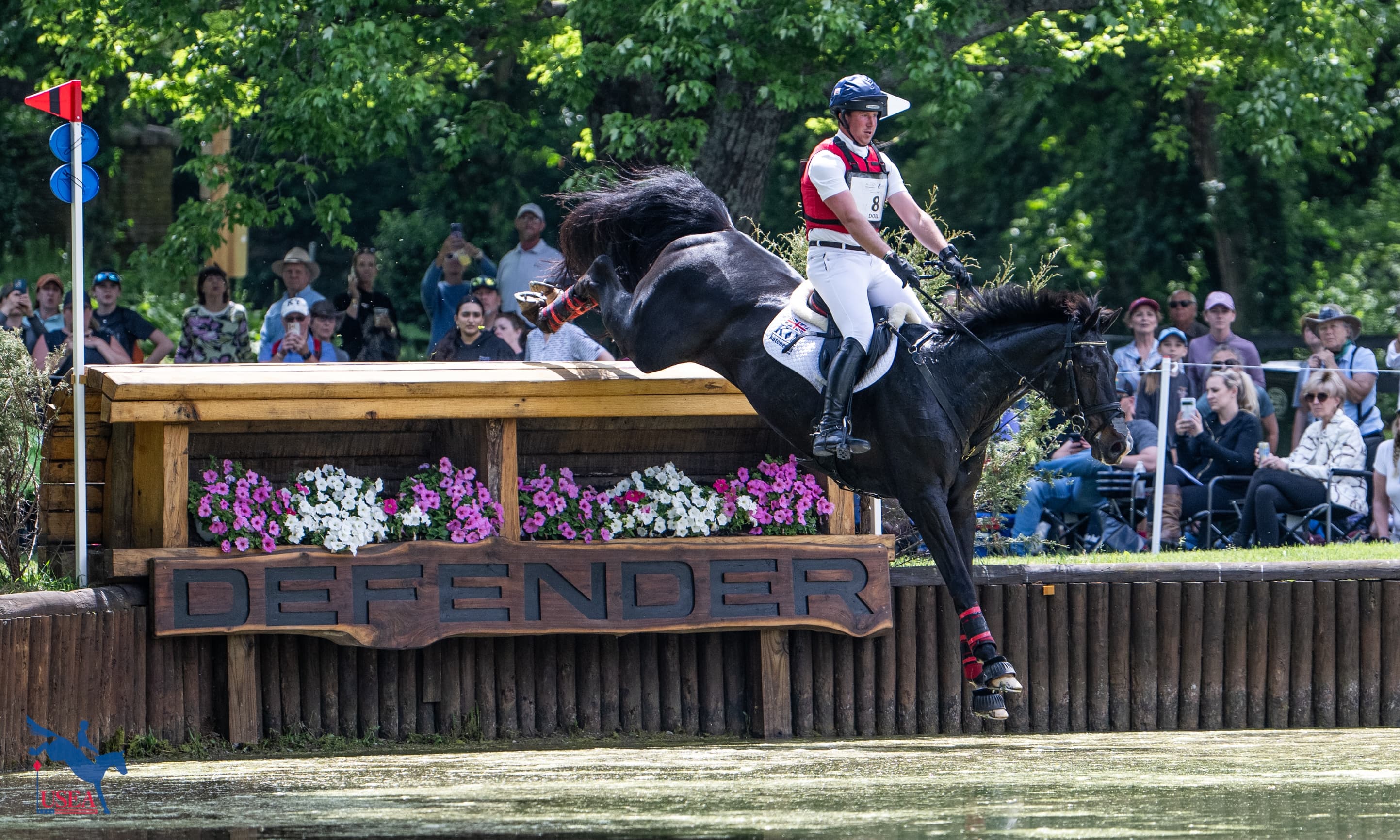
Every sport carries some risk, but equestrian activities involve working with animals that weigh over 1,000 pounds—and whose first instinct is often to flee first, ask questions later.