Risky Business
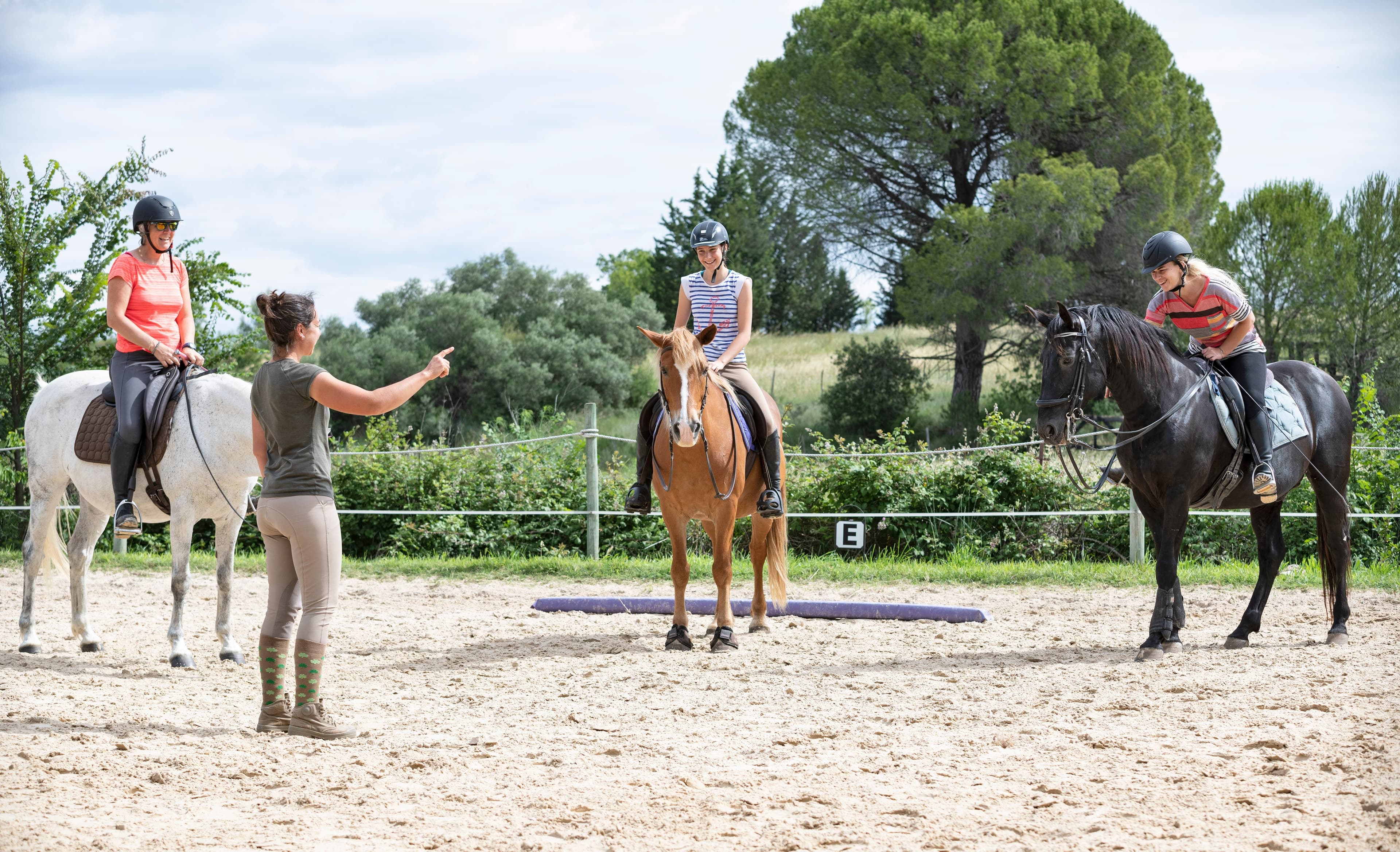
Every sport carries some risk, but equestrian activities involve working with animals that weigh over 1,000 pounds—and whose first instinct is often to flee first, ask questions later.
When you are paid for your services—whether teaching lessons, coaching, training clients’ horses, selling, boarding, or hosting competitions and clinics—you can be considered responsible not only for your own safety but also for your clients, their horses, anyone they bring along, and even uninvolved parties who just happen to be in the vicinity.
Even with careful planning, accidents can happen. And when they do, lawsuits can threaten your business, finances, and reputation.
You may not even think of yourself as “in business.” Giving a few lessons a week to local beginners or taking in a boarder as a companion for your horse might seem small, but these commercial activities put you at risk.
Real-Life Scenarios
Consider these common situations:
- You’re working with a client. You put her on one of your bombproof school horses to give her some valuable experience navigating ditches. Unfortunately, the horse zigs and your student zags, and she comes off suffering a concussion and dislocated shoulder.
- Your young client brings her father along to watch her practice her test for the upcoming schooling show. While her father is helping get the horse ready, it stomps at an especially irritating fly, accidentally landing on the father sneaker-clad foot.
- You hold a schooling competition at your farm. A competitor has an unplanned dismount while on cross-country and their loose horse collides with a spectator, or worse, runs into the road hitting a car, damaging the vehicle and injuring the driver and passengers.
- A boarder walks into the pasture to catch his horse and is injured when he inadvertently gets in the middle of a minor horse melee.
These are very real possibilities, and in all four cases a lawsuit is a concern. Unfortunately, you can be sued for just about anything, even the far-fetched and unreasonable. A boarder can be kicked while tying up a hay net for his own hangry horse, which has a history of dangerous behavior, and may still pursue you for damages.
Remember, regardless of how outlandish the claim, it will probably cause you grief, including the fees required to hire attorneys to defend you.
Subrogation
In addition, while your client may have no desire to sue you, if their personal health insurance company finds out that they were injured while under your tutelage, that company may subrogate, a process where while the client’s health insurance company pays their medical bills, they then pursue you for compensation claiming you were responsible for causing the injuries.
Uninsured Clients
Or worse (and unfortunately more common than you might imagine), your client may not have any health insurance at all, in which case as the bills mount up, they may feel they have no choice but to pursue you legally for the damages.
So how do you protect yourself?
Commercial Equine General Liability Insurance
Like any other business person, you need to consider buying commercial general liability (CGL) insurance. Simply put, by purchasing insurance you pay a premium in order to transfer your risk to the insurance company.
More specifically, you want a CGL policy designed for horse people. This specialized liability coverage helps protect you if a third-party claimant, such as a client, bystander, or spectator, is injured or their property is damaged due to your covered commercial activities
- Covers: Teaching lessons, coaching, boarding, training, selling horses, hosting clinics or competitions
- Benefits: Coverage should help pay legal defense costs, even if a claim is false or groundless, and should cover awarded damages up to policy limits
Pro Tip: Care, Custody and Control Coverage: CGL insurance does not provide any coverage for damage to non-owned horses in your care, which is where Care, Custody and Control (CCC) come into play. CCC helps protect if a non-owned horse in your care, such as a boarded horse, a horse in training, or a horse you're trailering for a regular client (but not for a commercial hauling business), is injured or killed and the owner sues you wanting compensation for vet bills or the replacement cost of the horse. This coverage can be attached to a CGL policy and is essential to provide complete protection.
Coverage Formats
- Farm Package – CGL coverage can encompass a multifaceted business such as a farm that boards, has horses and riders in training, and/or conducts clinics and competitions each year. In these cases, the CGL becomes part of a farm package policy that includes coverage for the home, barn, outbuildings, equipment, personal liability, auto, and even workers compensation.
- Standalone Policies are available for independent professionals such as trainers or instructors who do not have a home base and instead go to their clients, possibly operating out of several facilities. The policy can follow you as you work.
Determining How Much Coverage You Need
The premium for a CGL policy depends on the types of exposures, along with the amount of activity involved in each.
CGL policy limits typically start at $500,000 or $1 million per occurrence (meaning the most the policy would pay out for any one claim), with aggregate limits (the most the policy would pay out in a 12-month policy year) up to $1–$2 million or higher.
When deciding on coverage limits, consider:
- Your personal and business assets
- The scale and type of your equine activities
- Consult an attorney or financial advisor to choose appropriate limits
How do you choose which limit is enough for your situation? In today’s litigious environment awards for damages can easily run into the millions due to the costs of medical care. When deciding on a limit, you need to consider the assets you are looking to protect, both personal and commercial. Consult a financial advisor and an attorney to help you determine what types of coverage you should have in place, and what limits best meet your needs and budget.
Other Ways to Protect Yourself
Business Structure
When talking to your attorney and business advisors make sure to discuss the formal, legal set-up of your business and how it might, or might not, protect your assets.
One useful way to do this is to set your business up as a separate legal entity such as a Limited Liability Corporation (LLC), or Corporation. This helps put your personal assets, such as your farm, car, investments, and bank accounts, somewhat out of harm’s way. While doing so is not a guarantee, it is a good place to start.
The paperwork required to set up these entities varies state to state, but is usually straightforward and relatively inexpensive. Work with an attorney (hopefully one familiar with equestrian business) to determine what structure will best protect you and to help you set it up. Also make sure to maintain this structure, which may require reports to be filed and fees to be paid each year.
State Equine Liability Statutes
Equine liability statutes are laws that help limit the liability of horse owners, operators of equine facilities, and sometimes participants in equine activities for injuries that occur during horseback riding or related activities.
Currently 48 states have some form of equine liability statute or immunity law, but the details vary (and can change, so make sure to research your state—or states if you operate out of more than one—for up-to-date info):
- Some states have broad immunity for horse owners and equine activity sponsors.
- Others limit liability only in certain situations (e.g., when riders sign a waiver, or for participants over a certain age).
- A few states also include exceptions for gross negligence or intentional misconduct.
Often these statutes require that signs, with specific wording, be posted and/or that wording be included in the liability release that is signed by participants (more on that below).
Liability Releases/Hold Harmless Agreements
You must have clients read and sign a release of liability/wavier/hold harmless agreement (one that you have hopefully had reviewed by an attorney), as the insurance company will require it, and it is in your best interests.
- If you operate in a state with an equine liability statute, the agreement must include any wording required.
- If you operate out of different states—if you live on a border, travel to other states, or spend part of the year in a different state—make sure the required wording from all of those states is included in your release.
While releases are an essential, unfortunately they do not prevent you from being pursued legally by the person who signed it (or their family), but it could be instrumental in your defense. Make sure to keep a copy of the signed releases for all your clients on file indefinitely, even if they are no longer a client.
Getting Started
Find an experienced insurance agent that specializes in equestrian coverages. To obtain a quote, you will need to complete an application detailing your commercial equine activities.
It is imperative that all your horse-related activities be included on the application, no matter how limited the exposure, because you will not be covered for activities that were not disclosed to, and approved by, the insurance company. You may only sell one horse a year so you don’t consider yourself to be in the business of selling horses, but in order to have protection for that activity, it must be noted on the application and approved by the insurance company.
Resources
As the USEA’s Official Equine Insurance Provider, Marshall+Sterling offers customized risk solutions for all equestrian needs, from Equine Mortality and Commercial General Liability and Care, Custody & Control, to Farm Packages, offering a consultative that gives clients confidence in their decision-making.
From life’s big moments to its unexpected turns, Marshall+Sterling helps you plan for every chapter, tailoring strategies around your evolving journey — anticipating change, adapting to your goals, and making sure your home, family, and belongings are protected.
Mini Checklist
- Do I need CGL coverage?
- Do I need CCC coverage for non-owned horses?
- Should I talk to an attorney and/or financial consultant?
- Is my business properly structured (LLC or Corporation)?
- Does my state have an equine activities liability statute? Am I in compliance with signage requirements and wording in my releases
- Are my liability releases up to date? Do I have a signed copy on file for all of my clients, current and past?
- Does my insurance agent specialize in equestrian coverages? Do I have the most comprehensive coverage available at appropriate limits for my situation?
Frequently Asked Questions
I only operate out of one facility, and the farm owner has a liability policy, so I should be covered by it and don’t need my own policy.
Do not assume you’re automatically covered by the facility where you operate. If you are an employee of that farm, it’s possible you are covered by their liability policy. If you are an independent contractor, it’s very unlikely. In either scenario, make sure to have a conversation with the owner or manager to determine how, if at all, you are covered. And if you are, make sure to understand any restrictions.
For example, you might be covered if teaching on that property, but not anywhere else. Or you might only be covered for certain activities. If possible, get all of this information in writing.
We have an equine limited liability law in our state. I made sure to include the wording in my release, and I posted the proper signs. Doesn’t this protect me from being sued, in which case I don’t need an insurance, right?
You have done everything right so far by including the wording in your releases and posting signs on your property. Unfortunately, equine limited liability laws do not protect anyone from being sued. A frivolous lawsuit still requires a defense, and a general liability policy should help cover your defense fees in the event you are pursued legally by a third-party for bodily injury or property damage that occurred while you were performing your covered equestrian operations.
All the horses boarded at my barn are insured by their owners. Do I need CCC coverage?
Yes, you still need CCC coverage. If any horse not owned by you that you board is damaged and the owner’s insurance policy pays the claim, if their insurance company believes you were negligent in causing the loss, you could be sued by the horseowner’s insurance company through what is called subrogation. If this happens, the CCC policy should help protect you.
About the Author
A lifelong equestrian starting out in 4-H and then moving on to show hunters, eventing, and dressage, Amy J. Daum has three decades of experience in the equine insurance industry, including seven years as a member of the USEA staff. A founding partner of Broadstone Equine Insurance Agency, she joined Marshall+Sterling six years ago when M+S acquired Broadstone, and currently serves as M+S’s Vice President of Equine Operations.
Related Articles

HSH Moves Like Jagger Takes Center Stage in USEA YEH East Coast 5-Year-Old Championship
It was a weekend to remember for Caroline Pamukcu at the 2026 Dutta Corp. USEA Young Event Horse (YEH) East Coast Championships at Fair Hill, as she followed up Friday's victory in the 4-year-old division with another championship title on Saturday, this time aboard HSH Moves Like Jagger. The 5-y...

HSH Straight Arrow Hits the Mark in 2026 USEA Young Event Horse East Coast 4-Year-Old Championship
Caroline Pamukcu added another USEA Young Event Horse (YEH) Championship title to her résumé today at Fair Hill, piloting HSH Straight Arrow to victory in the 2026 USEA YEH East Coast 4-Year-Old Championship. The 4-year-old Irish Sport Horse gelding, owned by Pamukcu and Sherrie Martin and bred b...
A Plea From Your Friendly Social Media Manager: Please Stop Using AI on Your Sale Horse Photos
I get it. You want to sell your horse. You have a photo from a show photographer, but it's not quite what you envisioned. The horse looks fine, but not great. The background is the schooling ring. The lighting is flat. And there's this tool that can fix all of it in seconds.