Pressure Proof Tip with Daniel Stewart: We Don’t Always Know What We Don’t Know
Creating confidence and courage requires the development of an endless variety of important resilience skills, but learning those skills can be challenging and sometimes leave us feeling a bit discouraged, disappointed, defeated, and disheartened (did I mention disqualified?). To ensure we develop a mindset that can navigate and manage the expectation and emotional ups-and-downs associated with learning new skills, it’s important that we become mindful of the many different emotions we'll likely experience along the way.
One way for us to do this is to understand the concept of what’s called the conscious-competence ladder; a progressive step-by-step program designed to help us understand the many natural thoughts and emotions we can expect to experience when learning a new skill. It focuses on two important factors: consciousness (awareness) and skill level (competence) and follows four predictable stages of learning:
(1) Unconsciously Incompetent: We don’t know what we don’t know. We’re blissfully ignorant during this stage of learning because we don’t know what we don’t know. We don't even know we don't have a particular skillset yet or that we even need it! We tend to be quite happy during this stage because our expectations are understandably low, but we must be mindful here because our confidence usually exceeds our abilities. It’s therefore, important that we identify how our current strengths and weaknesses can influence our ability to grow while also being willing to listen to our coaches so they can put it all into words for us. Asking our trainer for their input and advice, along with patience, curiosity and a desire to improve (no matter what) are important requirements to moving beyond this level.
(2) Consciously Incompetent: We know what we don’t know. This tends to be the most disheartening stage of the learning ladder because it’s here that we realize we don't have a skill that we wish we had—and even worse—we discover that others are much better at it than us and can even make it look easy! Working through this stage requires us to be patient, positive, and proactive; and to focus our attention towards our own progress rather than focusing on the proficiency of others.
Learning posting trot diagonals or the flying change are examples of skills that frequently cause riders to doubt themselves and their abilities. We can eliminate much of the disappointment and frustration related to this stage by simply reminding ourselves that a little short-term discomfort is what will ultimately lead us to long-term growth.
(3) Consciously Competent: We know what we know. This stage feels a lot better than the last one because it’s here that all our hard work and patience finally pays off, and we begin to feel happily competent at a skill we once thought impossible. In this stage we practice the new skill often and gain more confidence and competence each time we perform it. We still need to concentrate when performing it, but it becomes more and more automatic and natural each time.
(4) Unconsciously Competent: We don’t know what we know. When we arrive at this stage we don't really even know we have a particular skill—it just seems natural, and we perform it effortlessly without any conscious thought. This stage is often referred to as muscle memory, and it’s here that we don’t just feel effortless proficiency while performing it, we even feel confident and at ease teaching it to others.
Once we arrive at this stage it’s important to continue challenging ourselves by learning additional new skills (back to step one!) and to remind ourselves that we may slide backwards from time to time if we don't continually use and/or teach our new skills regularly.
There are many important benefits of embracing the ladder of learning, specifically (1) It helps us relieve much of the dejection and disappointment we might otherwise feel when learning new skills, (2) It helps us understand the vast variety of normal and expected emotions we'll likely experience along the way, and (3) It’s been proven to improve motivation and safety by managing our expectations and altering our behaviors so we don't try to achieve too much, too soon.
The learning ladders is also a wonderful tool for coaches because it helps them understand and empathize with what their riders are thinking and experiencing when trying new things, and allows them to design a program with reasonable exceptions and specific exercises based on the exact stage that each of their riders are in.
I hope you enjoyed my Pressure Proof tip and will consider joining me this summer in one of my Equestrian Athlete Training camps! Four days of equestrian sport psychology, fitness, leadership, nutrition, yoga, and more! For more information visit https://www.pressureproofathlete.com
Related Articles

Centerline Success : An Afternoon of Learning, Insight, & Inspiration at Devon
Center Line Success, sponsored by Team Tate Academy and hosted by USDF, provided its 80 attendees with a wealth of knowledge to put into practice. Jeanne McDonald, USEF “S” Dressage judge, and Heather Gillette, USEF “S” Eventing judge, generously took time out of their day to present and all atte...
Pressure Proof Tip with Daniel Stewart: Fears and Our Inner Flinstones
Last month we began discussing the fact that many of the fears we experience today can be attributed back to the survival instinct born in all of us thousands of years ago. We even talked about how the fear of being watched (the spectator effect) can be attributed back to the fear our caveman and...
Sharon White and Claus 63 Capture the Win in the US Equestrian Open Final CCI4*-L, White Becomes First Woman to Win the Title
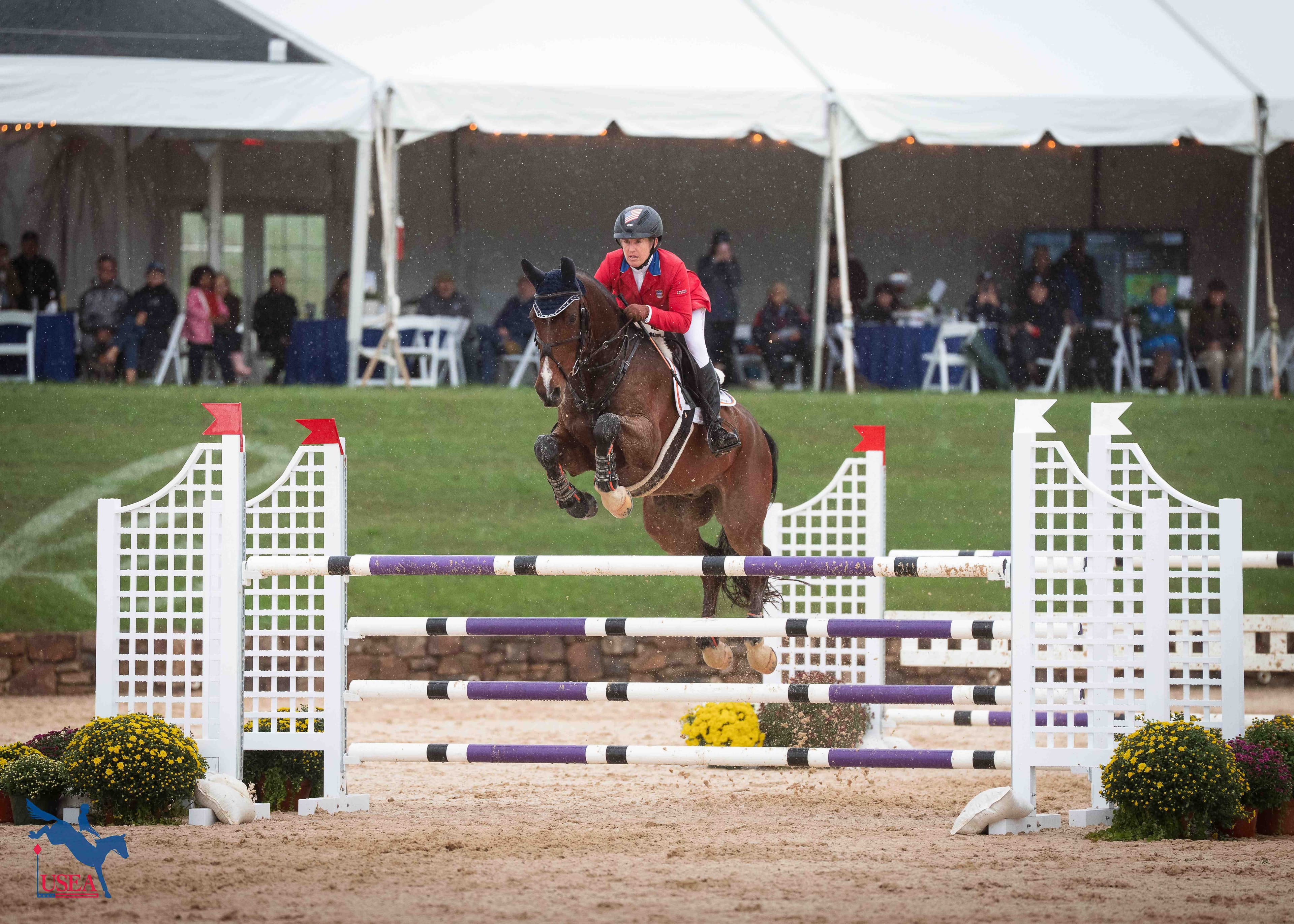
The second edition of the $200,000 US Equestrian Open Eventing Final concluded at Morven Park International Equestrian Center with Sharon White (Summit Point, W.V.) and Claus 63 delivering a standout performance in the final jumping phase to capture the win. It was a historic result as White beca...