Learning New Skills with LandSafe
The following article was submitted by Area II Council member Mary Grace and written by Liz Harrison. They co-organized a LandSafe clinic last fall in Area II.
If you’ve heard of LandSafe Equestrian clinics you may have thought or heard these sentiments: “That’s too expensive, I need to compete instead;” “I don’t want to learn how to bail;” “I need to just focus on staying on my horse.” I say to these people, “Do you know what assuming does?”
I’ve been riding for most of my life, and I can remember to this day the lesson in the 1990s where we were taught the emergency dismount. I was about 10, on a perfectly good horse in an indoor arena with sand/dirt footing, and the direction was: as you turn down the long side, jump off towards the center of the ring, and don’t try to land on your feet. I landed like a sack of potatoes, and that was the end of the lesson.
The instructor added that I should cover my head next time and that relaxing like that was a good thing. The follow-up learning opportunity was during trail camp where we were told, “Even if you fall off, do not to let go of the reins. If you do, you’ll be chasing your horse home from Fair Hill.” No dismount included in that training, just a threat. Were you a part of this class from the school of hard knocks?
Maybe you are an adult who decided to take up riding in their 40s with no prior experience with horses. The inner adrenaline junky was all geeked out at the idea of racing across an open field with a horse, or maybe the majestic nature captivated you and convinced you to take up riding. But, in your last lesson your "spidey sense" sent you a warning sign when your horse took a funny step, and let’s face it, you don’t bounce like you used to. Now you don’t feel so confident swinging your leg over.
If you don’t fall into either of those categories, maybe you are a parent, and your horse crazy kid has finally bugged you enough to sign them up for lessons. Watching their lessons, especially now that they are cantering and jumping, is a bit of “fingers crossed” moment for you. You are way out of your comfort zone, but you are trusting someone you barely know to keep your child safe on a 1,200 pound flight animal.
The trainer has given you their list of qualifications and as you look around the barn, even the 10-year-olds have more experience than you. You stay a bit quiet. But again, when you watch your kid ride, you hold your breath as they go over jumps or gallop down to the barrel pattern, hoping it never happens, but also begging, please don’t fall off!
My parents watched for years from between fingers as I jumped around and galloped. Thankfully, I’ve never sustained any serious injuries riding horses, but that is sheer luck. I’ve been scraped off, stomped on, tossed and lawn-darted, but I’ve stayed on more than those instances and perfected the sack-o-potatoes technique for over 20 years, so I thought I was in good shape. I was very lucky that as a kid my parents didn’t mind spending good money on a helmet, because to our knowledge that was the best you could do to stay safe.
I became most interested in LandSafe when I was writing curriculum for an equine management course I was planning to teach. I was looking for sound safety training, and to be frank, most of what was out there fell short. I found it to lack premise in practicality and lean heavily on “the way it’s always been done.”
Don’t get me wrong, not all about the old way is wrong, but I found it to lack the philosophy and practice needed. I was teaching a high school animal science program, and if you have a teenager or know of one, you might be getting the idea of why I was looking for something grittier than a manual.
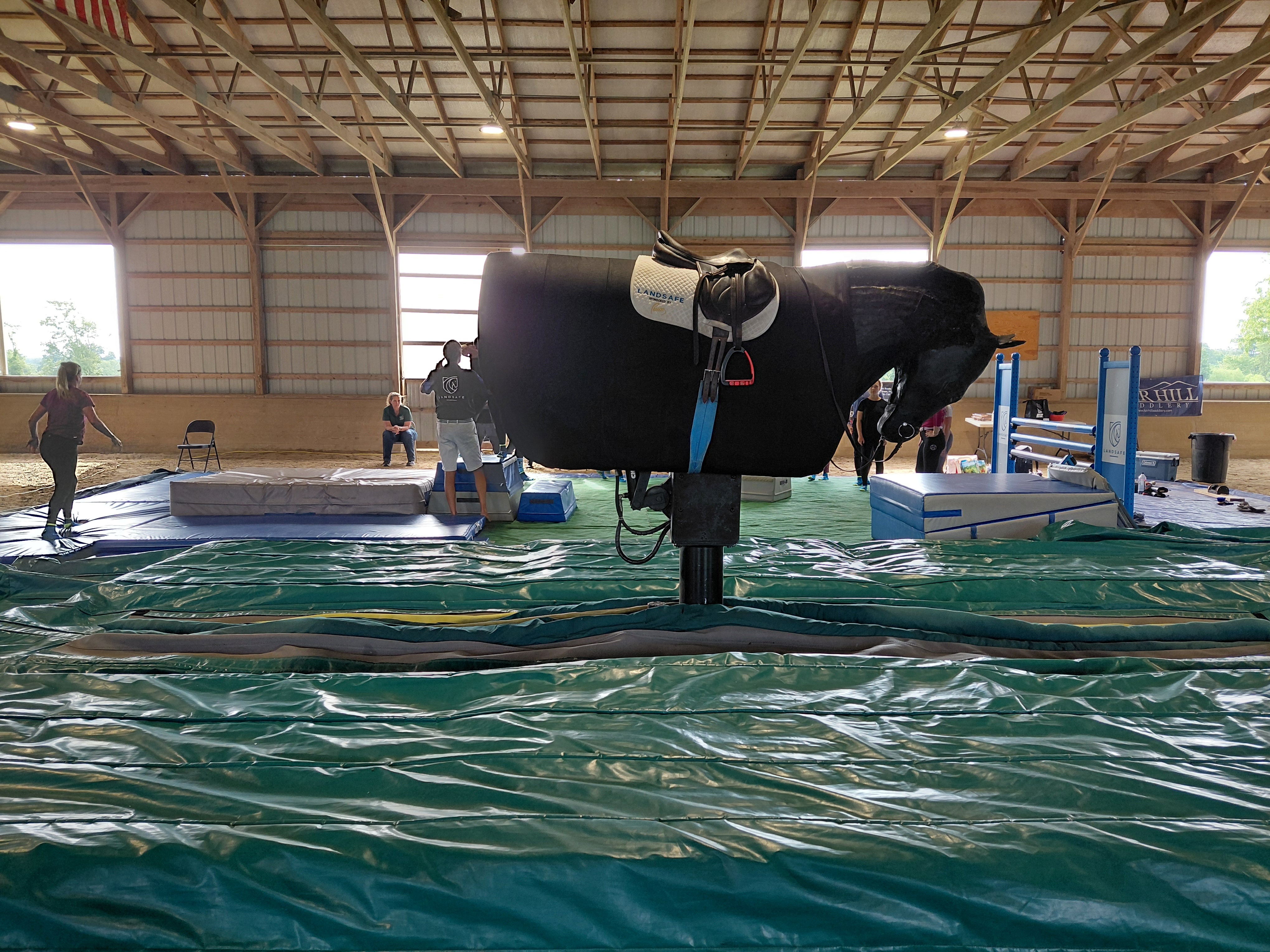
When I reached out to Danny and Keli Warrington to discuss how their training applies to all horse people, my eyes were opened wide to the connection of this training to today’s equestrian sports, misconceptions, and gaps in training.
These conversations connected the LandSafe training to rider fitness, balance, body awareness and the disconnect between training equestrians as athletes the same way we train our horses as athletes. LandSafe principals can be applied to all athletes, especially motorcross.
Using this as an example, a motorcross athlete doesn’t need to keep their motorcycle fit, but they have to be very fit and strong. This gives them more finesse on their bike, allowing them to tackle more difficult maneuvers. If equestrians began to think about themselves more like the motorcross rider, that maintaining their own strength and fitness is a separate piece of the puzzle, they too, would find that they would experience more finesse in their rides. I’ve learned from Danny and Keli that rider strength not only improves our rides, but can ensure that we are strong enough to fight back when we impact the ground.
Think back to those three examples I gave earlier: the rider who learned from the school of hard knocks; the 40-something starting a new hobby and the kid. If you walked up behind any one of them and gave them a gentle, but firm push, what would happen? They would hopefully step forward with one foot and be able to balance themselves without impacting the ground. The longtime rider, should have decent balance; the 40-something may struggle to keep their balance, and the kid’s reaction would hopefully be the best. They may also put their hands up or reach for something. Human instinct when losing our balance is to grab something. When you are on horseback you have that same instinct, but often it’s clinging to your horse. If you are being catapulted toward the ground or the horse has lost balance and isn’t recovering, do you really want to cling to the missile?
Hopefully you answered, “No.” With LandSafe training you will learn that sometimes we must choose to depart, and sometimes we are getting ejected. In either case, LandSafe is designed to train you how to impact the ground to reduce catastrophic injury. It is not designed to keep you from getting hurt; LandSafe is designed to keep you alive. If you are falling from a horse at speed, you are likely going to get hurt. We all know, riding helmets do protect you, but they are only designed to absorb some impact, not all. They also cannot protect your neck. Helmets, vests, and safety stirrups are all great investments in your safety, do not get me wrong, but if you are lawn-darted into the earth with nothing slowing your trajectory before impacting the ground, your helmet and vest only go so far.
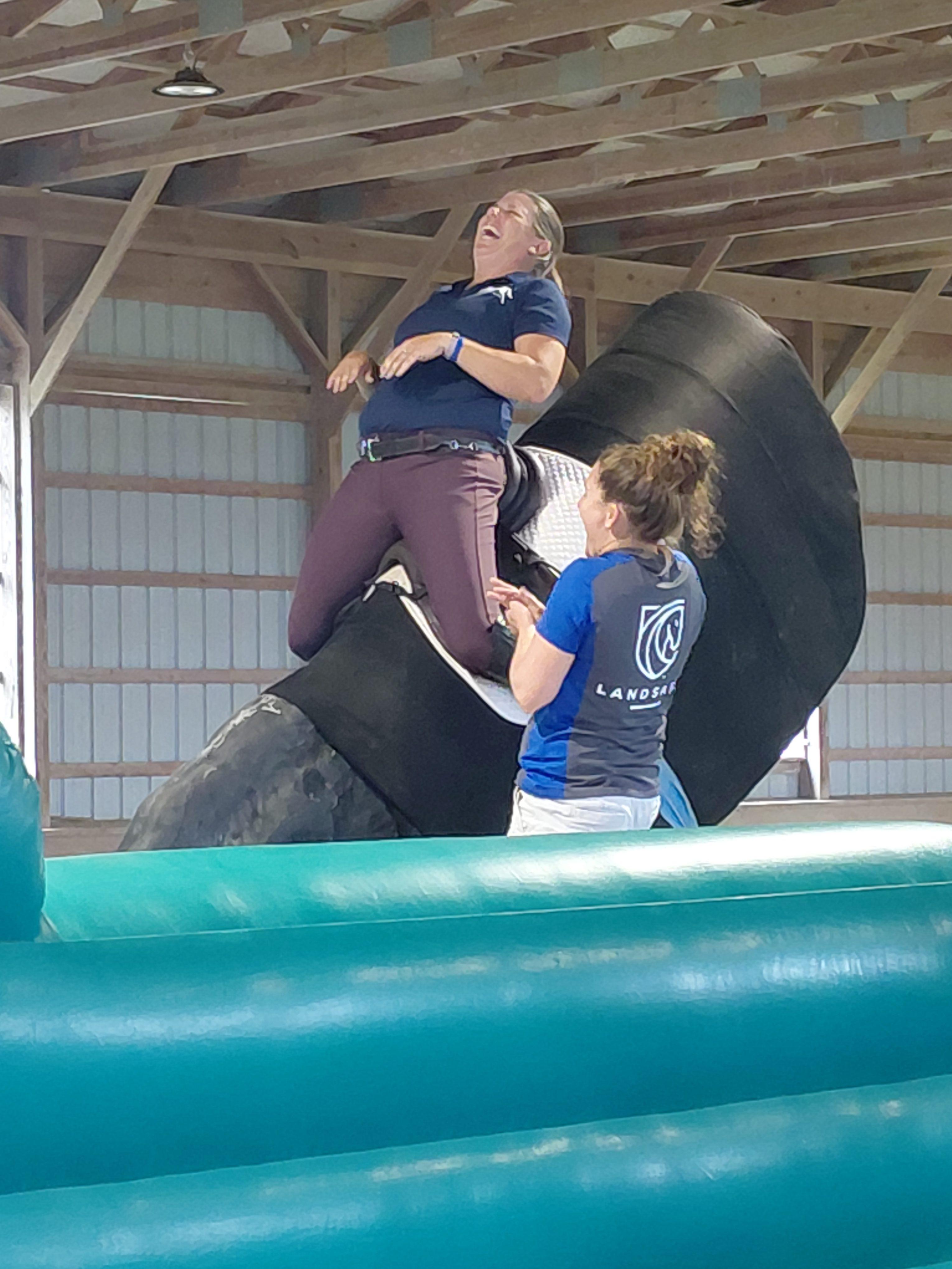
For me, I met Danny and Keli when I was pregnant. I had no idea how having a kid would change my body and my mindset. Getting back on a horse after a baby was a challenge in so many ways. I have never been afraid of coming off until I had a baby. I was riding scared every single day.
The first time I did come off, was after I had done a LandSafe clinic. I was cross-country schooling my green horse. My horse and I both misread a corner, and he hit the jump hard. I was in the air, and my horse was disappearing beneath me. Without thinking I dropped the reins as his head disappeared below me, got my arms up, turned to the side, tucked my chin, and rolled away. I hopped up and walked up Nelson’s Hill to catch my horse. Much more experienced riders than I have had far worse outcomes coming off at a walk than I did that day. It wasn’t just my helmet or vest that kept me safe. The steps of how to impact the ground may sound simple to you reading it (yeah, sure I can do that too), but for me, it was muscle memory. It wasn’t a conscious decision, it was instinct, and I learned it at a LandSafe clinic.
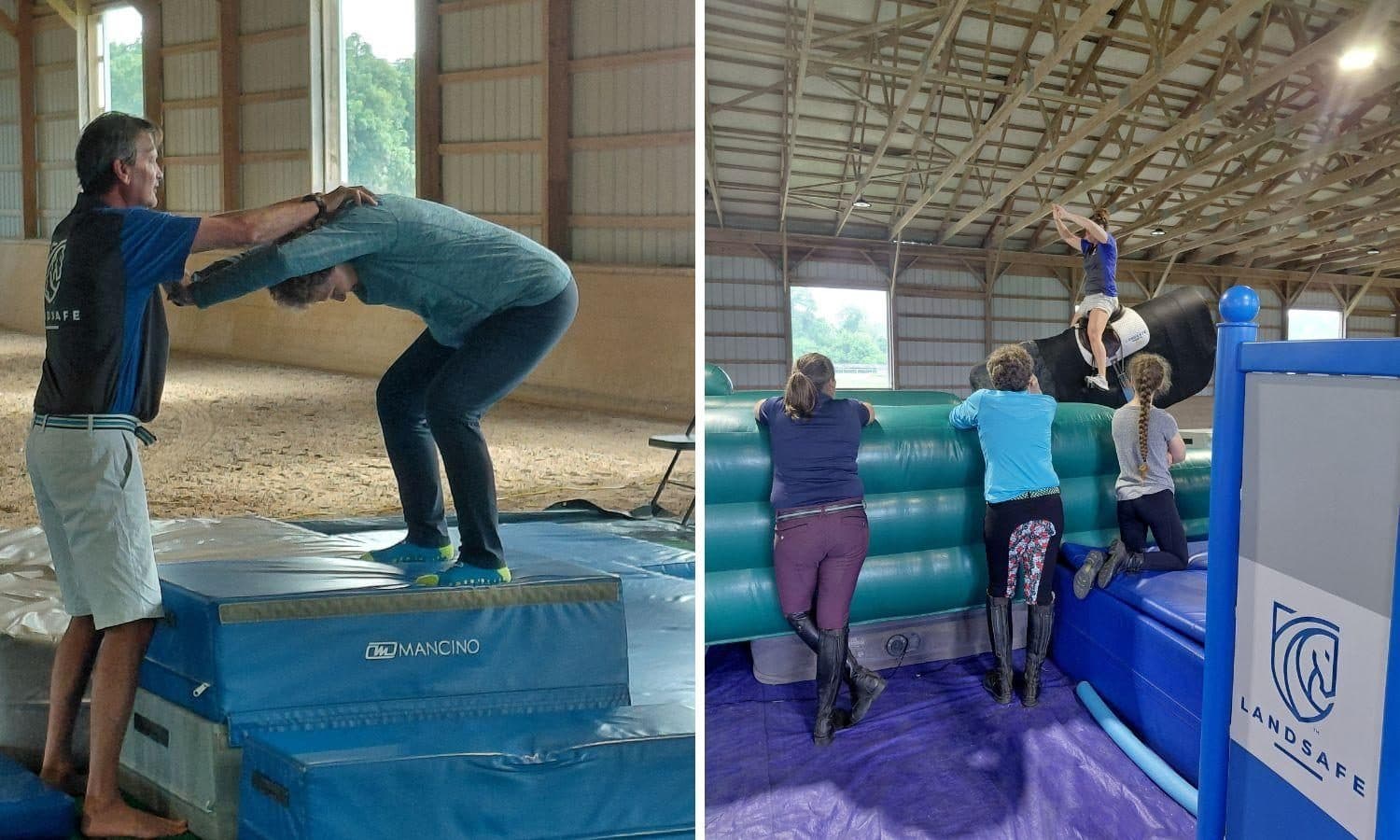
It is hard to believe that through a two-day training you can build muscle memory, specific to how to impact the ground. First, Danny and Keli do an incredible job of meeting each participant where they are fitness-wise and their comfort with the concepts. Each participant is evaluated through the introductory exercises. The clinic always begins with tumbling exercises: a ball with momentum goes farther than a stick. Meaning, when you come off, you need to get away from the horse. Through these gymnastic exercises, you will learn how to turn into a ball and “keep rollin’, rollin’, rollin’. ”
Your roll begins with getting your arms up, above your head creating your very own roll cage. Danny explains how you are at battle with the ground. Push the ground away, and keep it away. This philosophy combined with the “angry cat” shape turns your body into a bowling ball rather than a lawn-dart.
Danny and Keli have been around horses and ridden long enough to have seen just about everything, and they relate their experiences to all their training. This clinic isn’t about perfect tumbling; it’s about practical application and repetition. During the weekend you practice impacting the ground over 30 times. That type of repetition is impossible to accomplish without this training because you cannot try again when you fall off a horse. You have a few seconds for your instinct to kick in, and it’s either the right one or the wrong one. During the last clinic, I did my emergency dismount about the way you would expect a baby learning to walk downstairs the first time would. I fumbled to let go of the reins, and when it was time to run into my roll, I lawn-darted myself in the mat. Danny laughed at me, and Keli made sure I was OK (their good cop, bad cop balance is hilarious) and I was able to take an extra turn and try again. If that had been real life, I would likely be on a stretcher at the very least.
It’s been six years since I had Danny and Keli to my house to talk about how I could integrate their training into the curriculum I was writing. I have since left education, but life has brought this full circle with a new career in insurance. I now write farm and equine liability (among other coverages), but I see first-hand how the insurance industry views horseback riding, and if you’ve ever tried to insure your lesson program, you know too. Even before meeting Danny and Keli, I have wanted to bring a LandSafe Clinic to Chester County, Pennsylvania.
There have been a few, but not nearly enough. In partnership with USEA Area II, the Kathy Barry Agency was able to put one on at Line It Up Farm in Coatesville. We were able to provide scholarships to individuals, bring in outside speakers to talk about course design, and we spent two days testing and pushing ourselves outside of our comfort zone to be safer riders. It starts with you, your education, and muscle memory. Don’t assume you will react the correct way; test yourself at a LandSafe clinic.
To learn more about LandSafe Equestrian; Danny and Keli Warrington and their program visit: landsafeequestrian.com.
Related Articles
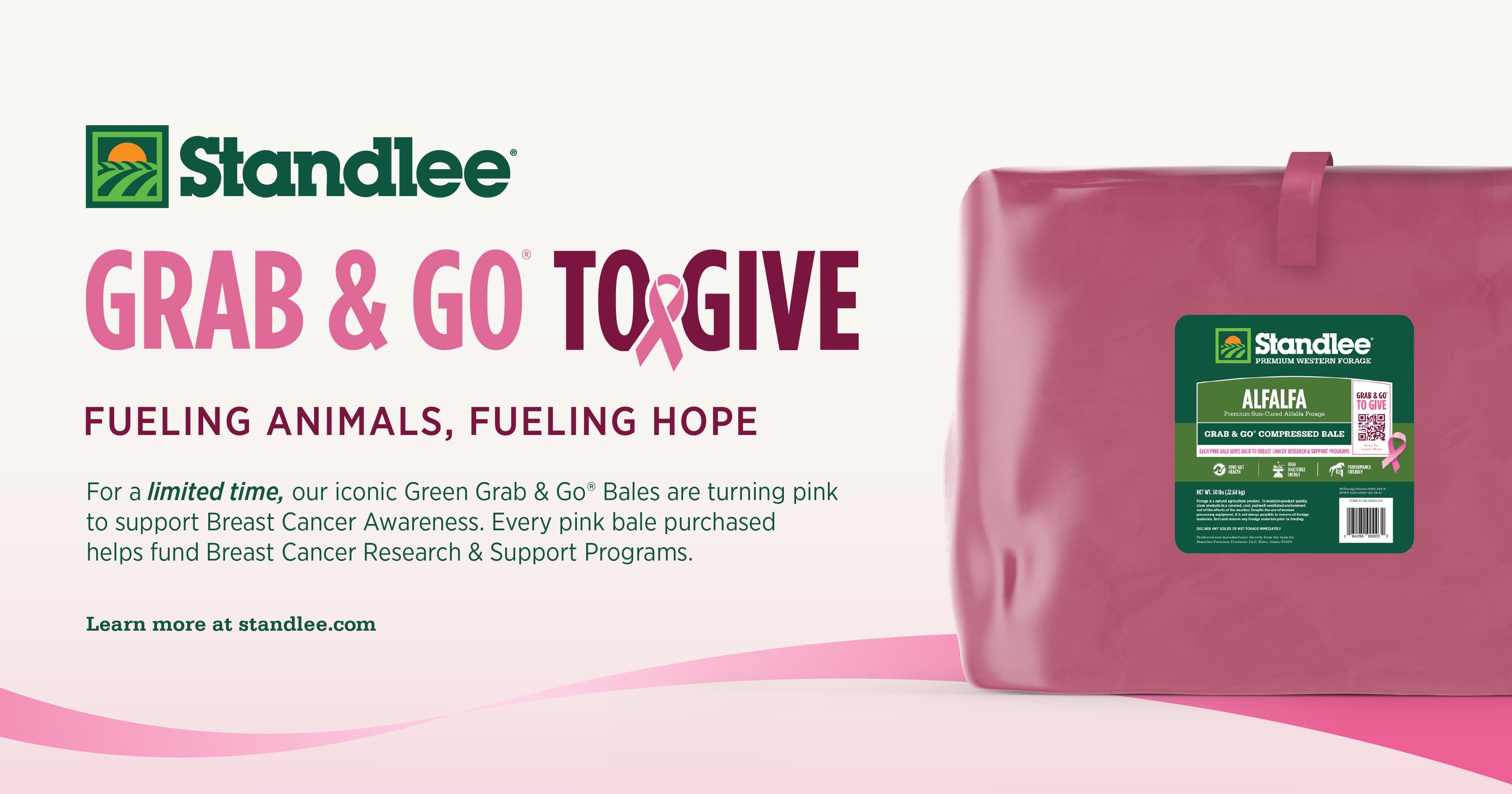
Standlee’s Grab & Go® Bales Go Pink Again for Breast Cancer Awareness
Kimberly, Idaho – This October, Standlee is once again turning its iconic green Grab & Go bales pink in recognition of Breast Cancer Awareness Month. Now in its sixth year of supporting the cause, Standlee’s annual breast cancer awareness campaign returns with Grab & Go to Give, bringing together...
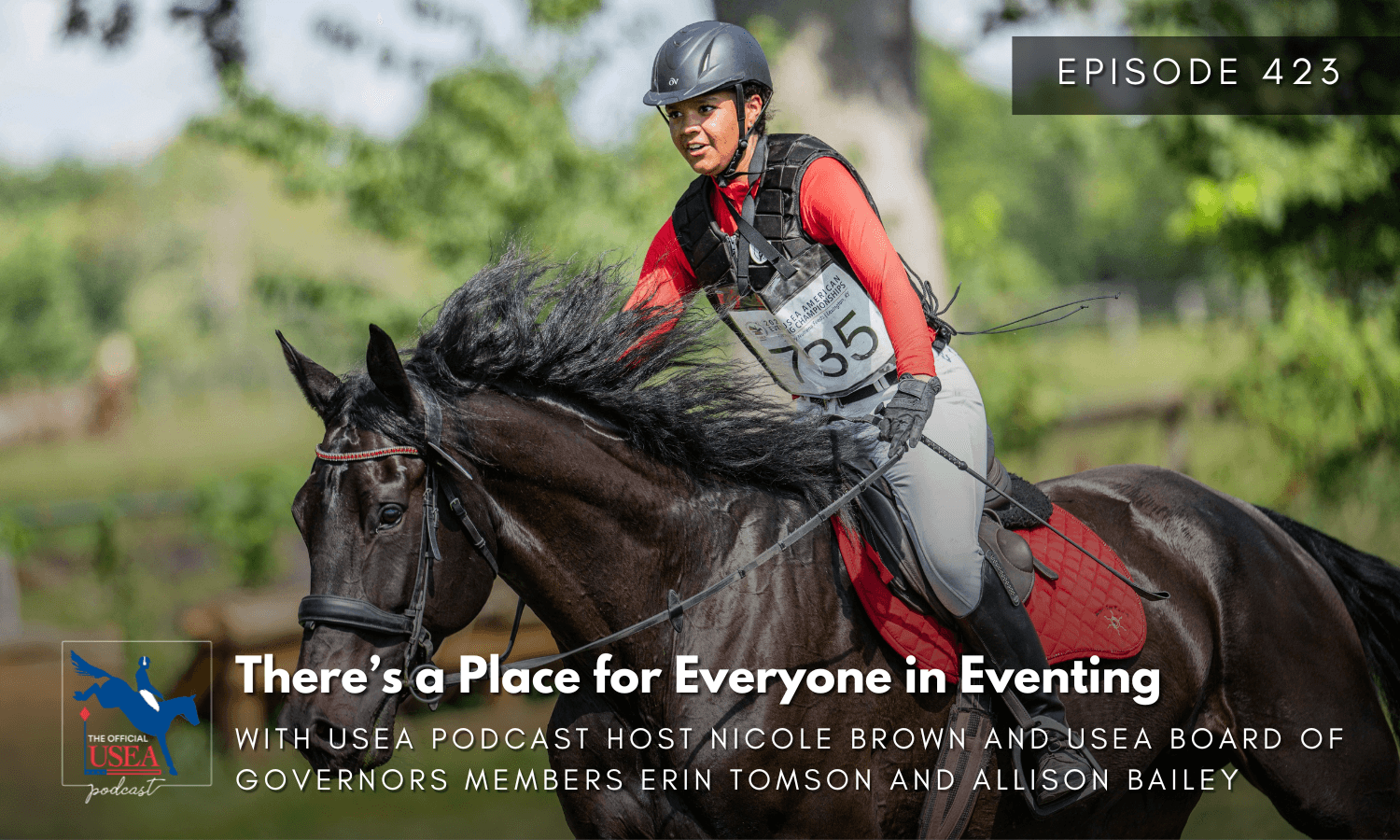
USEA Podcast #423: There’s a Place for Everyone in Eventing
Eventing isn't only about moving up the levels. It's about finding the place in the sport that brings you and your horse joy. This week on the USEA Official Podcast, USEA Board of Governors members Erin Thompson and Allison Bailey join the show to celebrate grassroots and amateur eventing and dis...
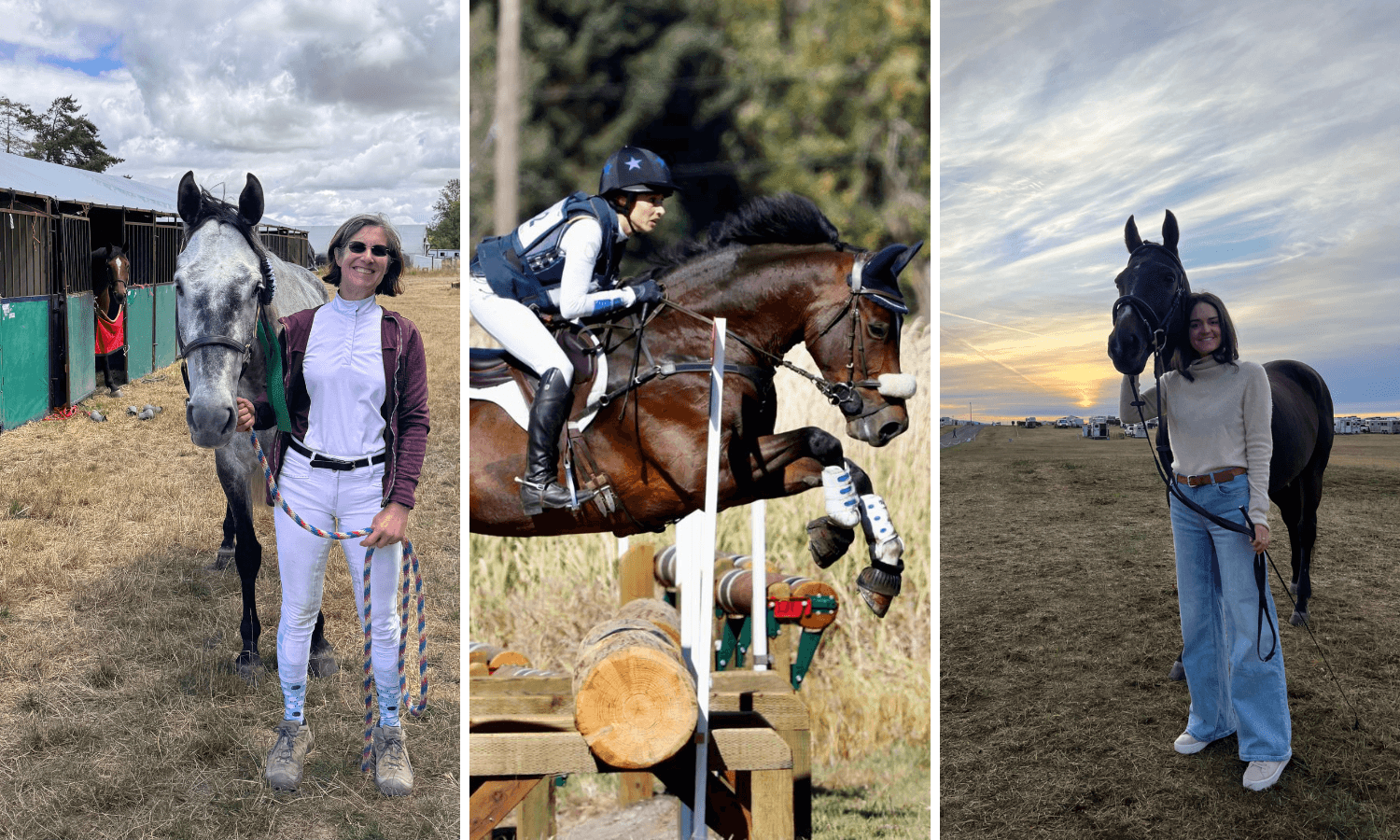
Wilson, Karplus, and Pope Take Home USEA Classic Series Wins at Spokane Sport Horse Farm
The traditional long-format experience was alive and well at Spokane Sport Horse Farm in September, where three horse-and-rider combinations came away with USEA Classic Series victories at the Beginner Novice, Novice, and Training levels.