Improving the Gaits on Day 1 of the USEA EA21 East I Clinic
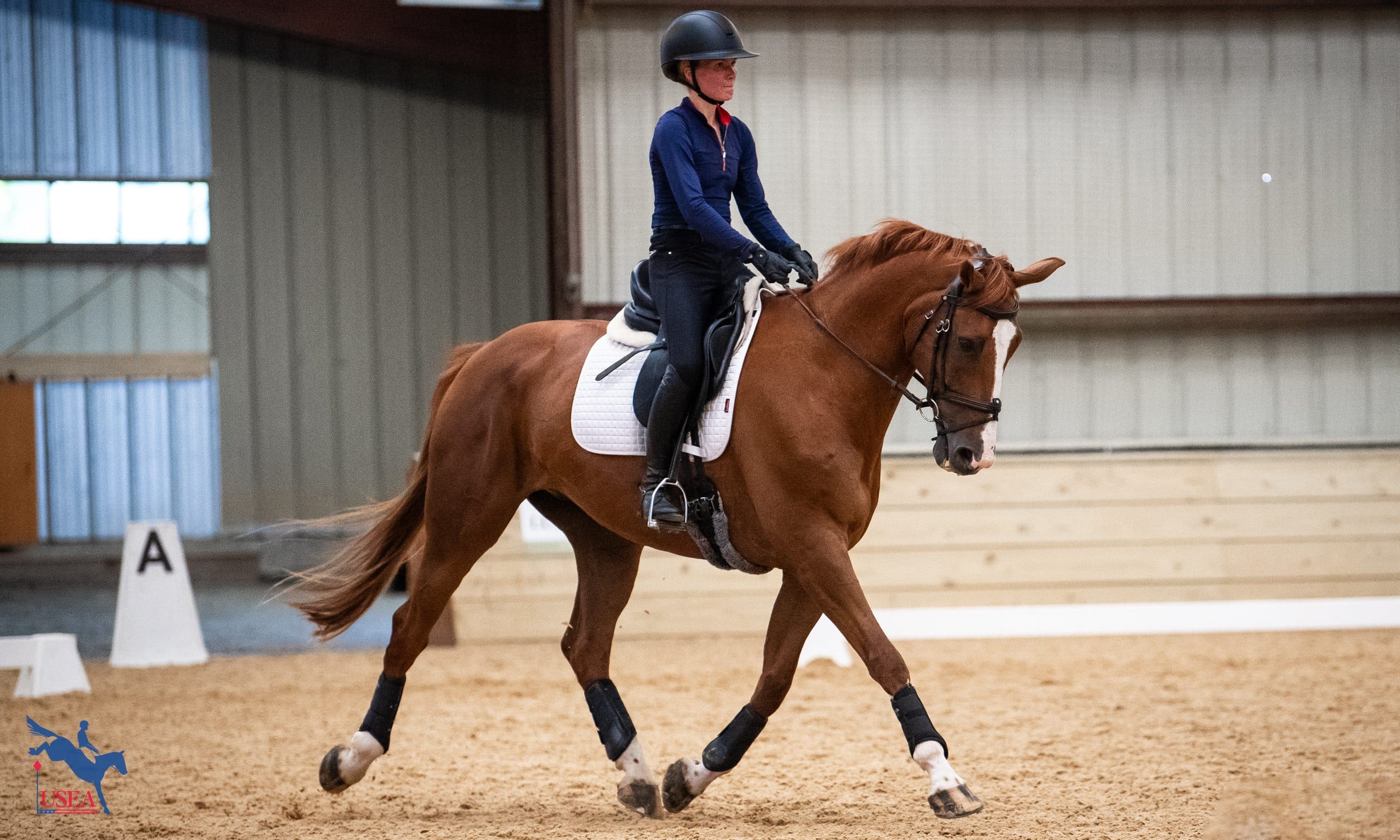
Leesburg, Virginia—June 16—As you move through the levels of eventing, the need for an adjustable canter and control of your horse’s body increases, and that starts on the flat.
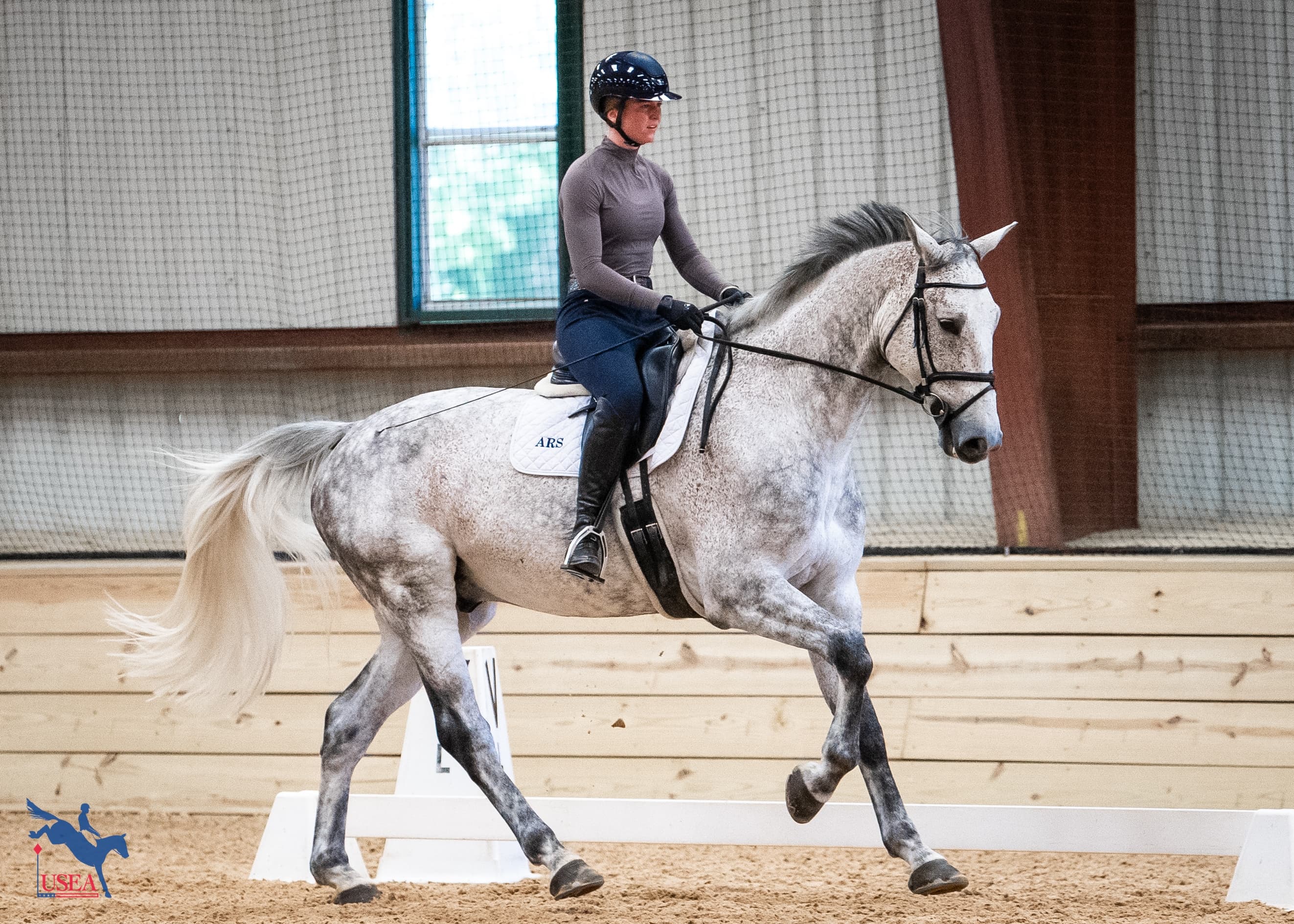
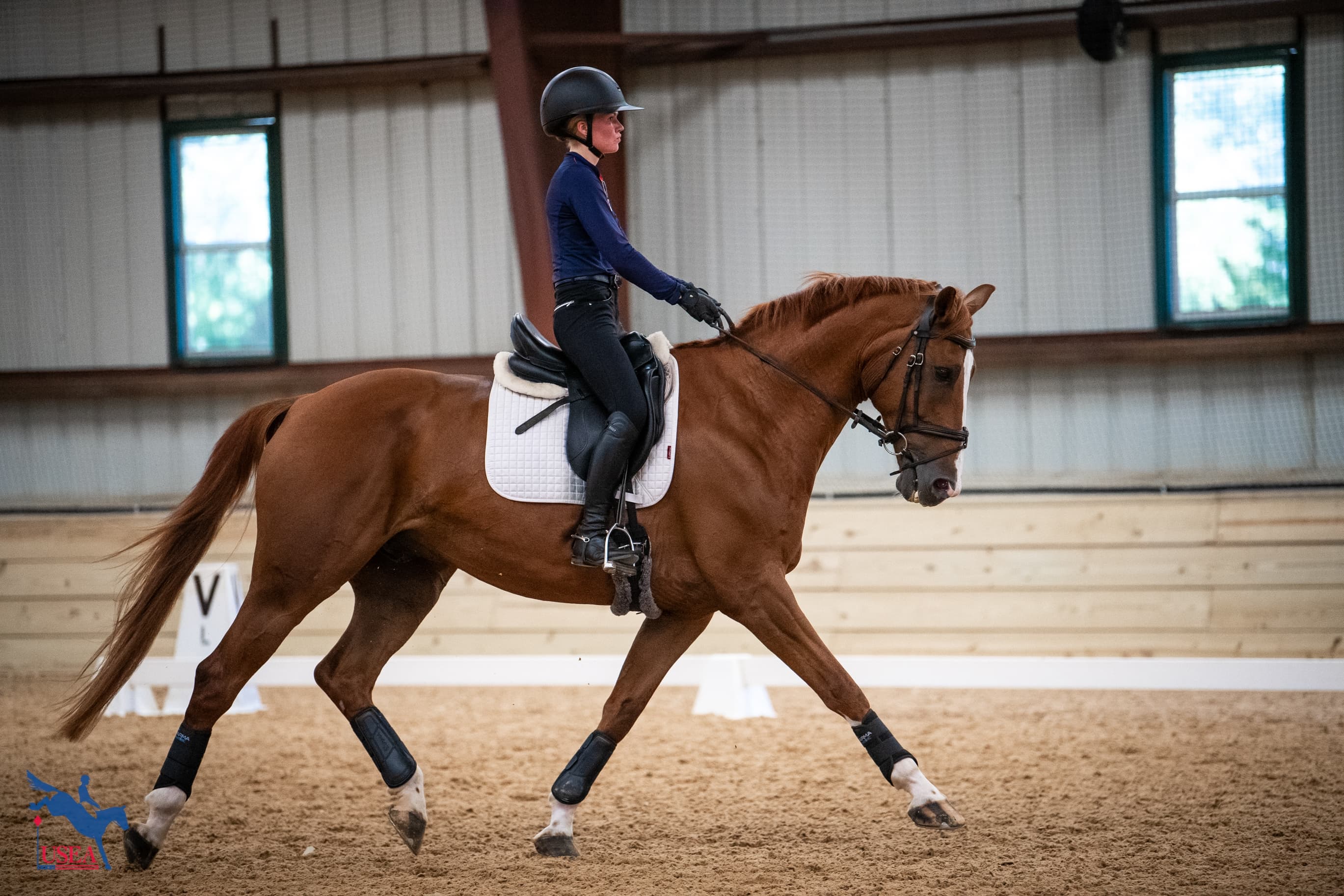
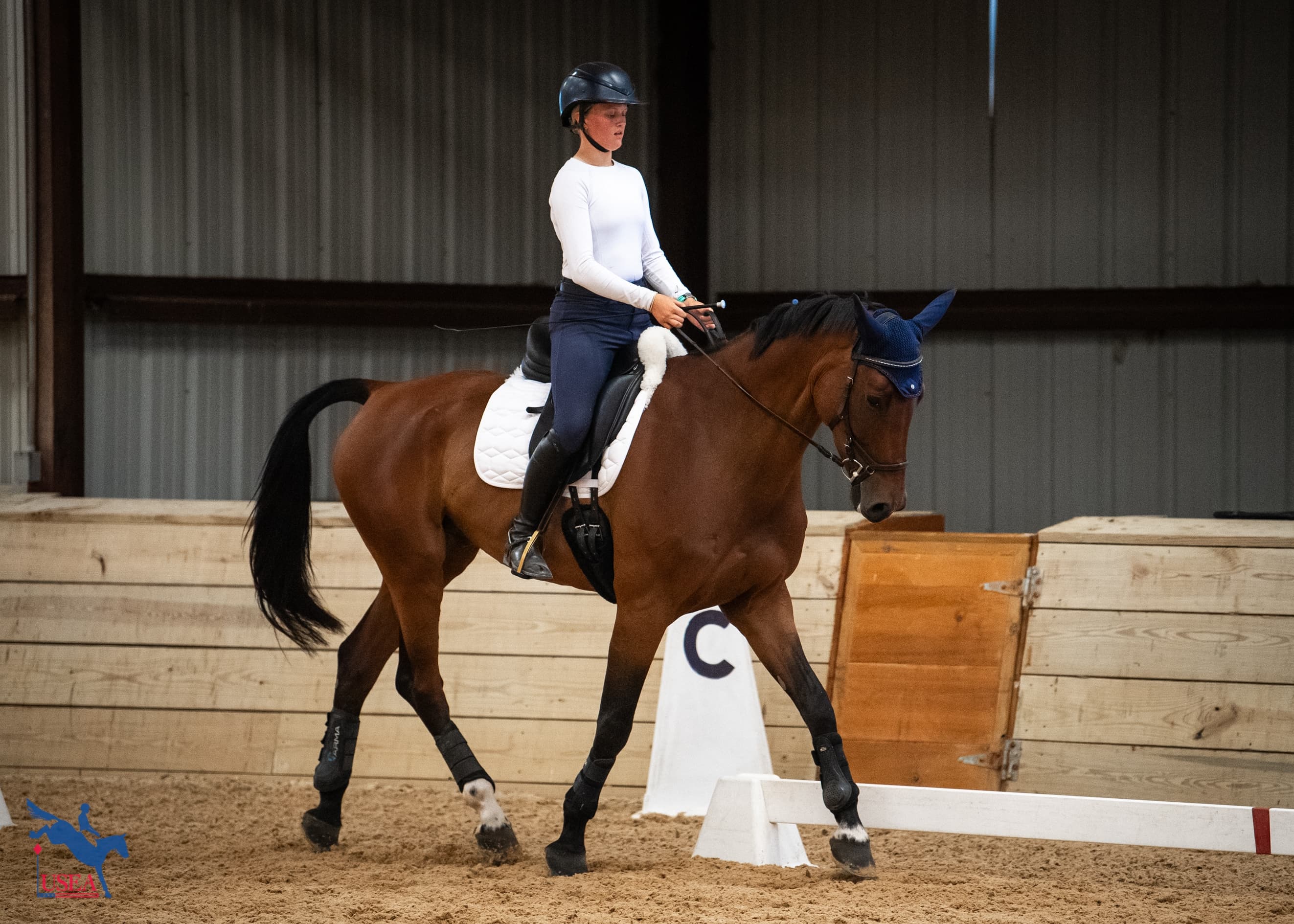
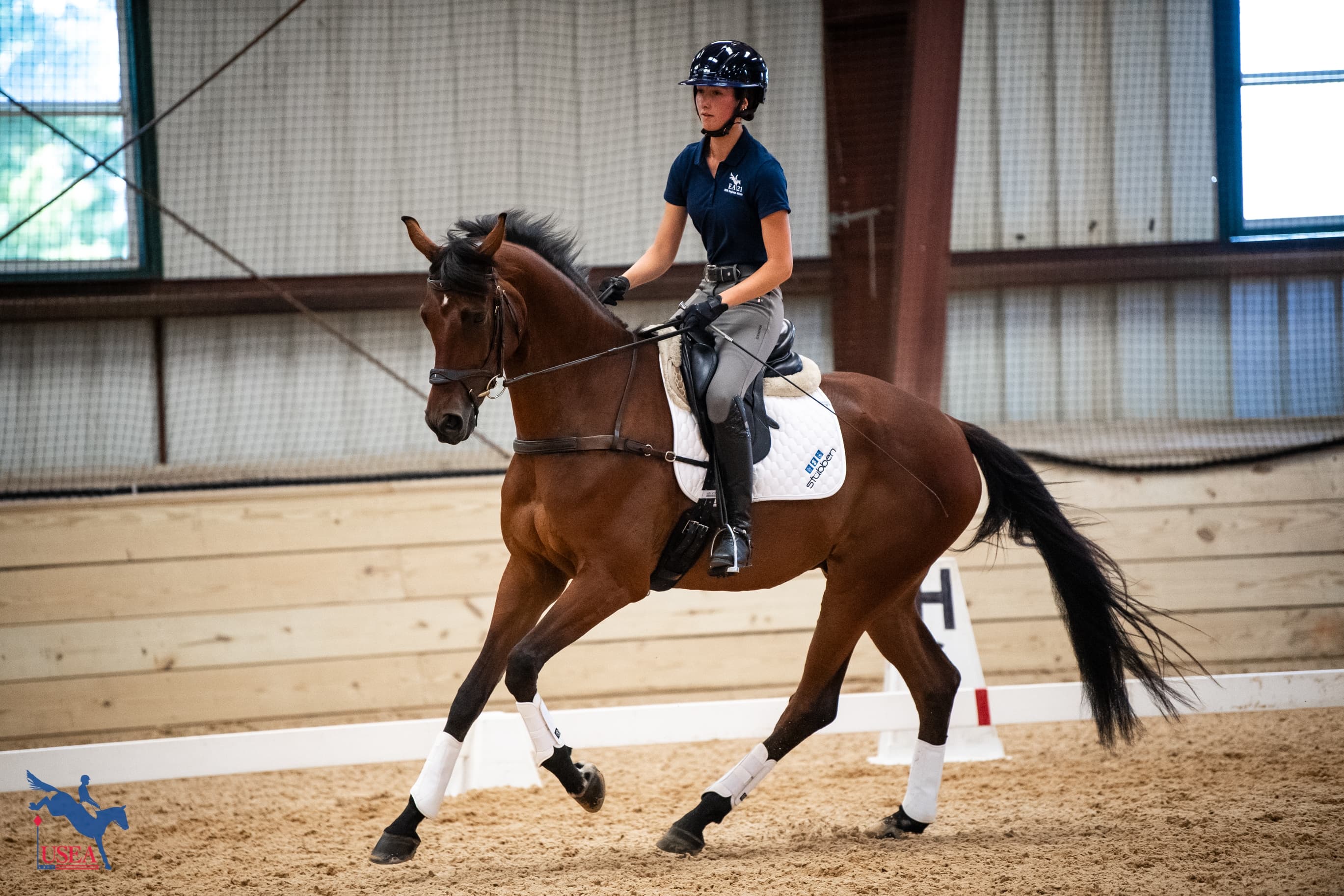
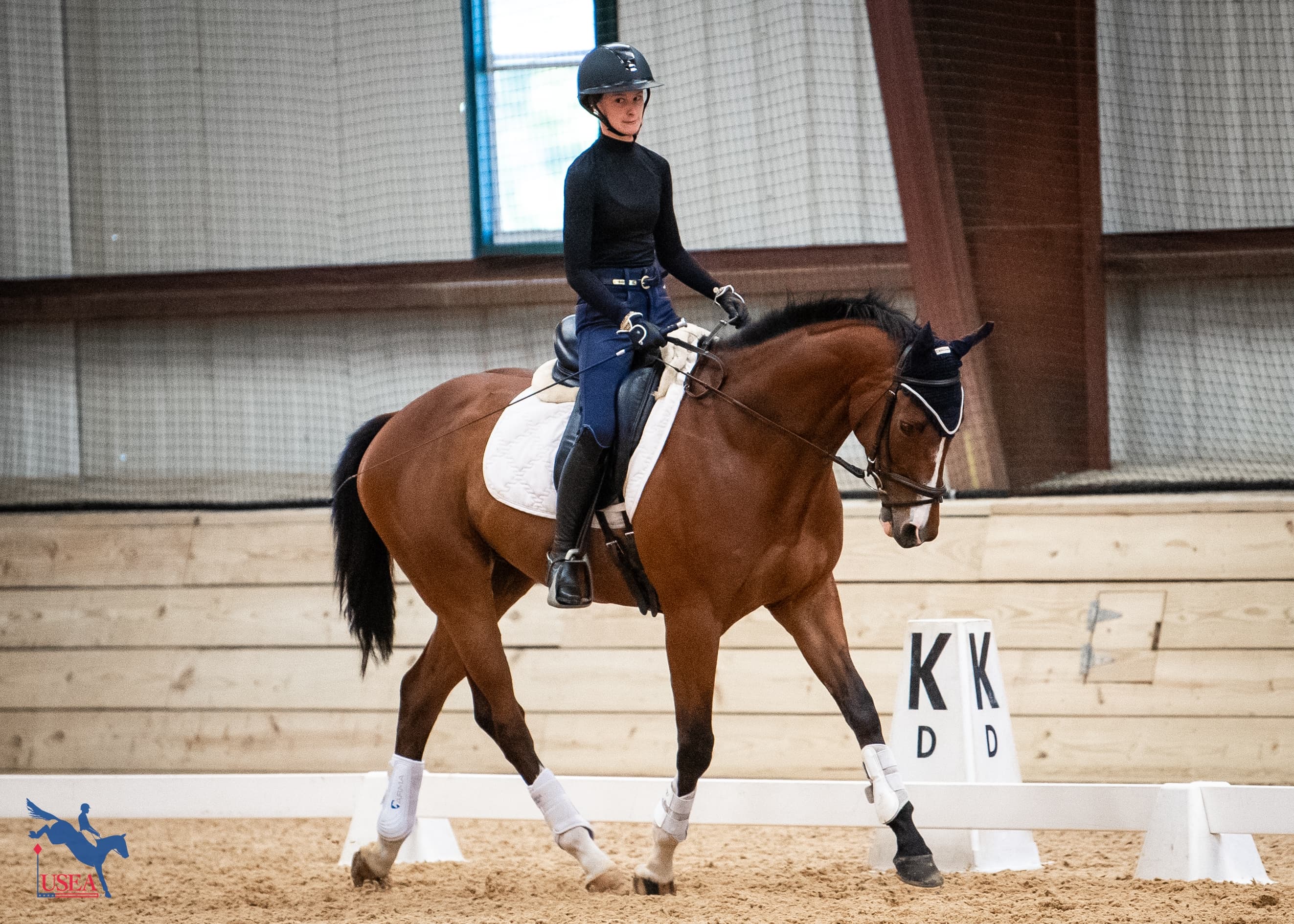
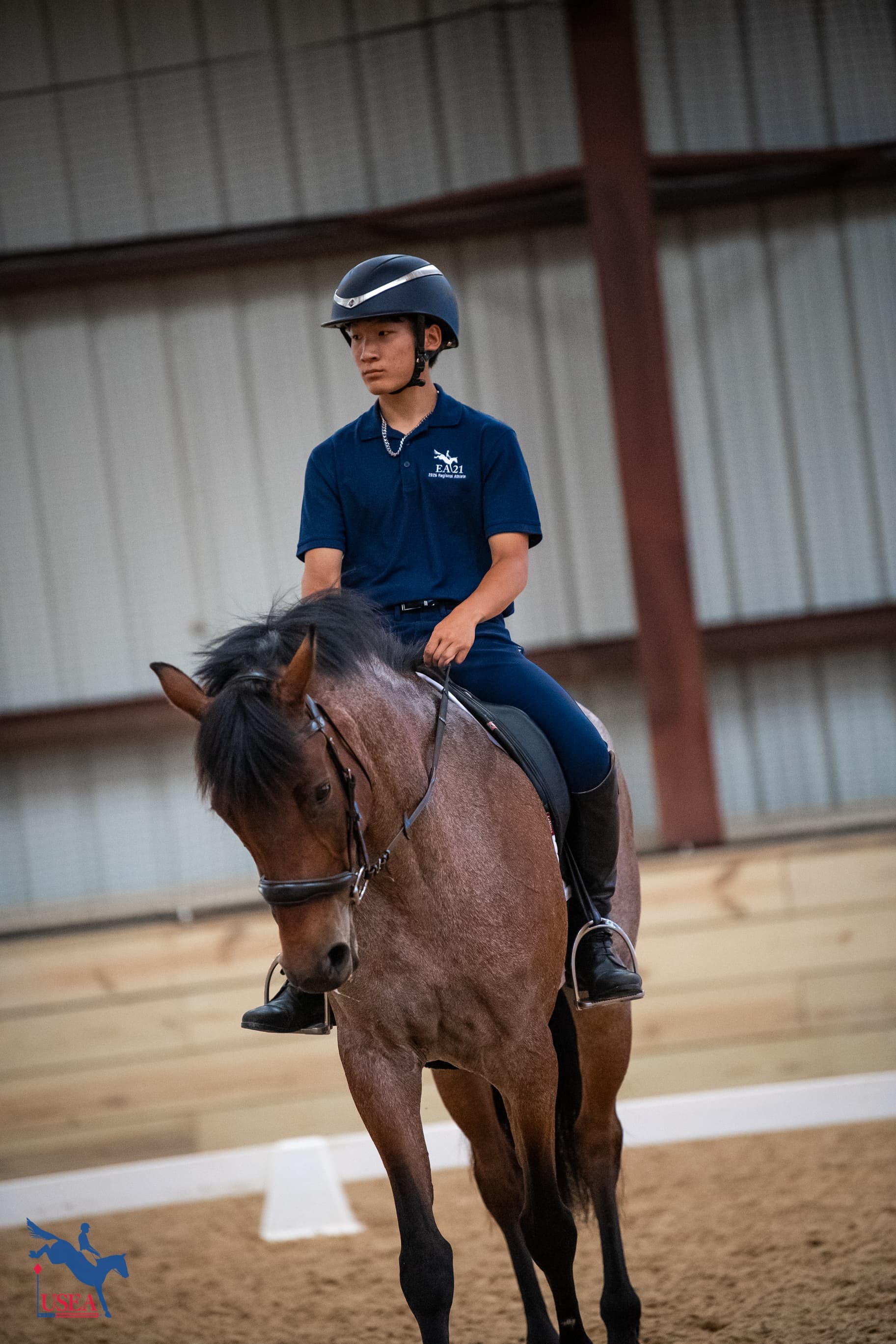
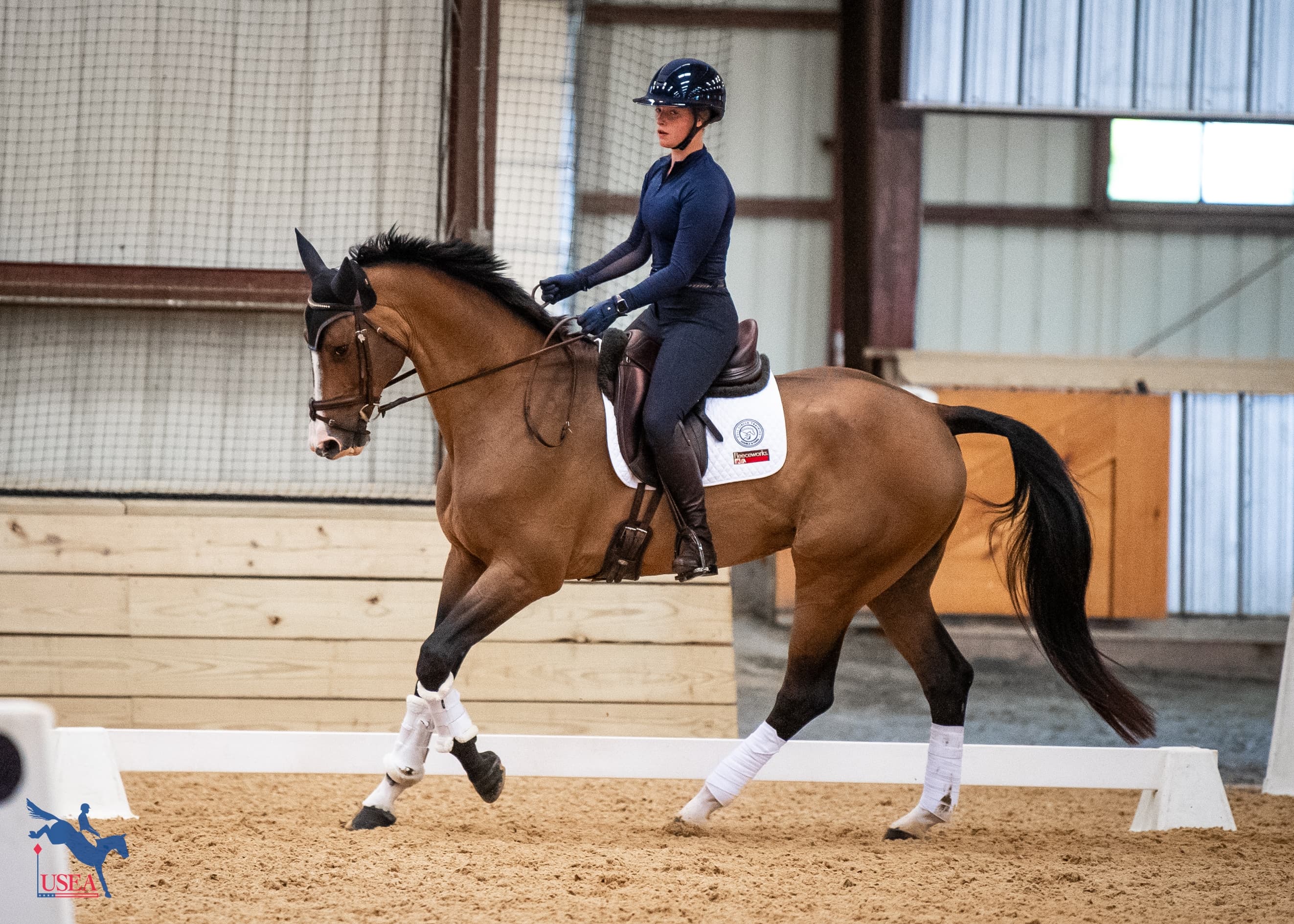
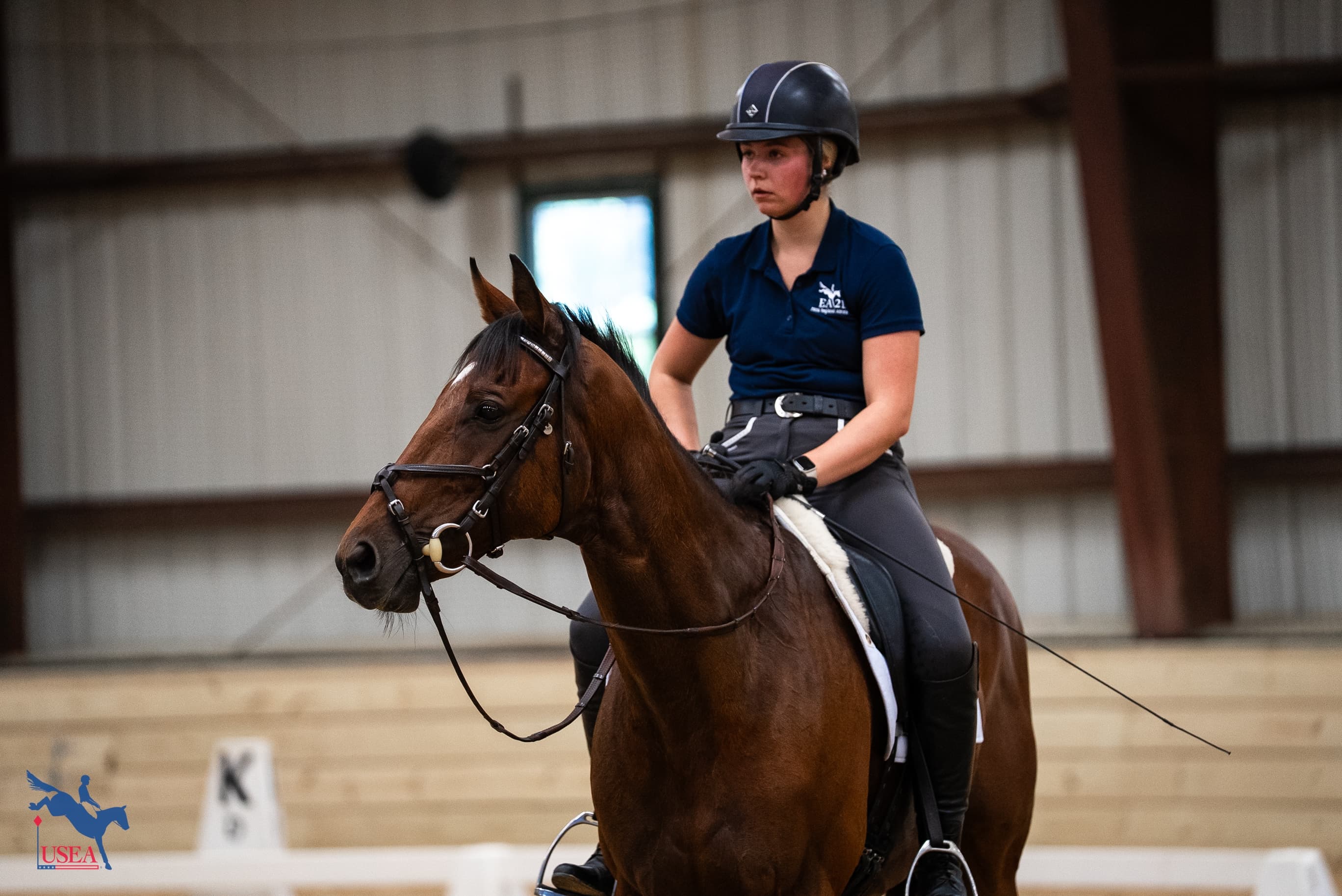
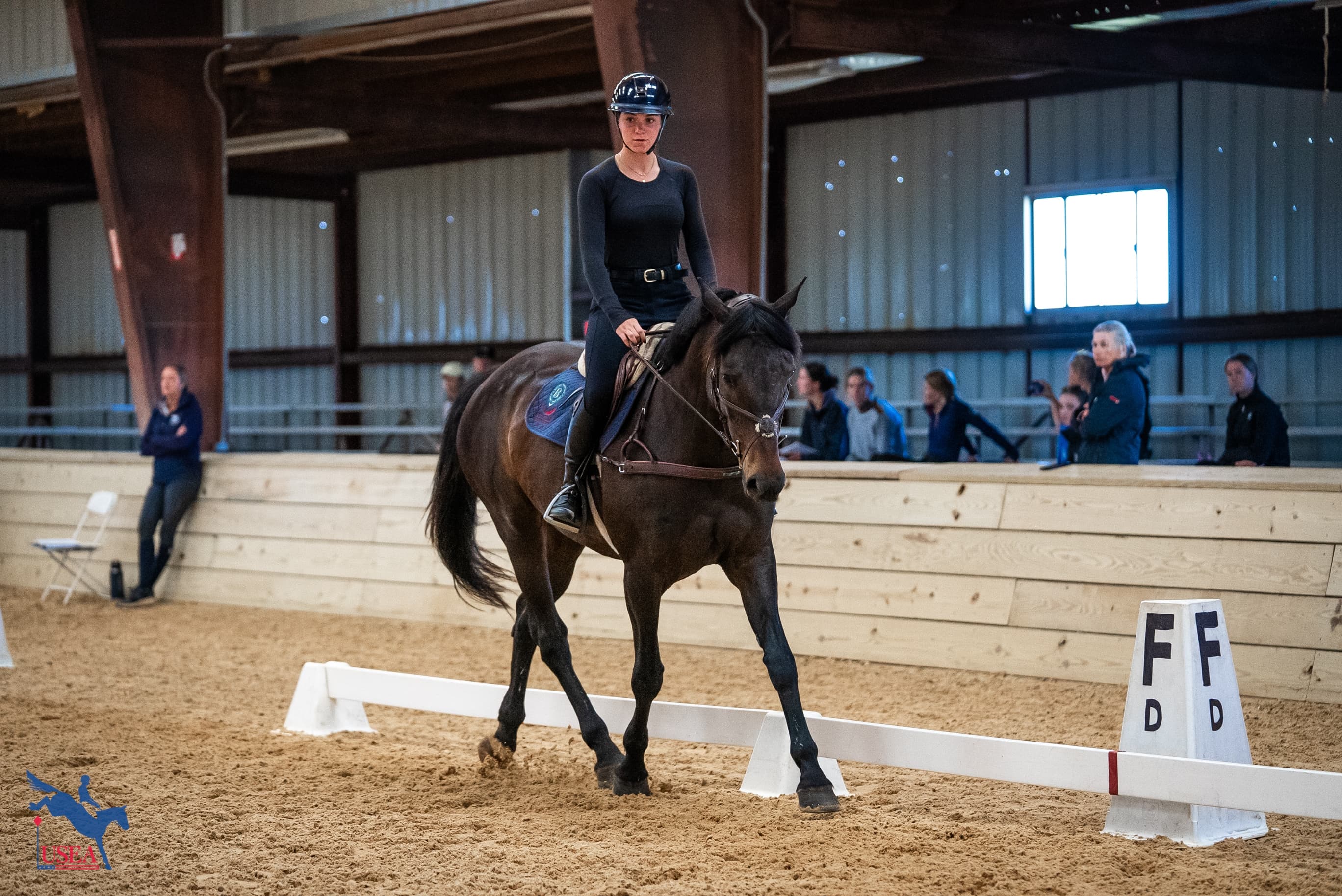
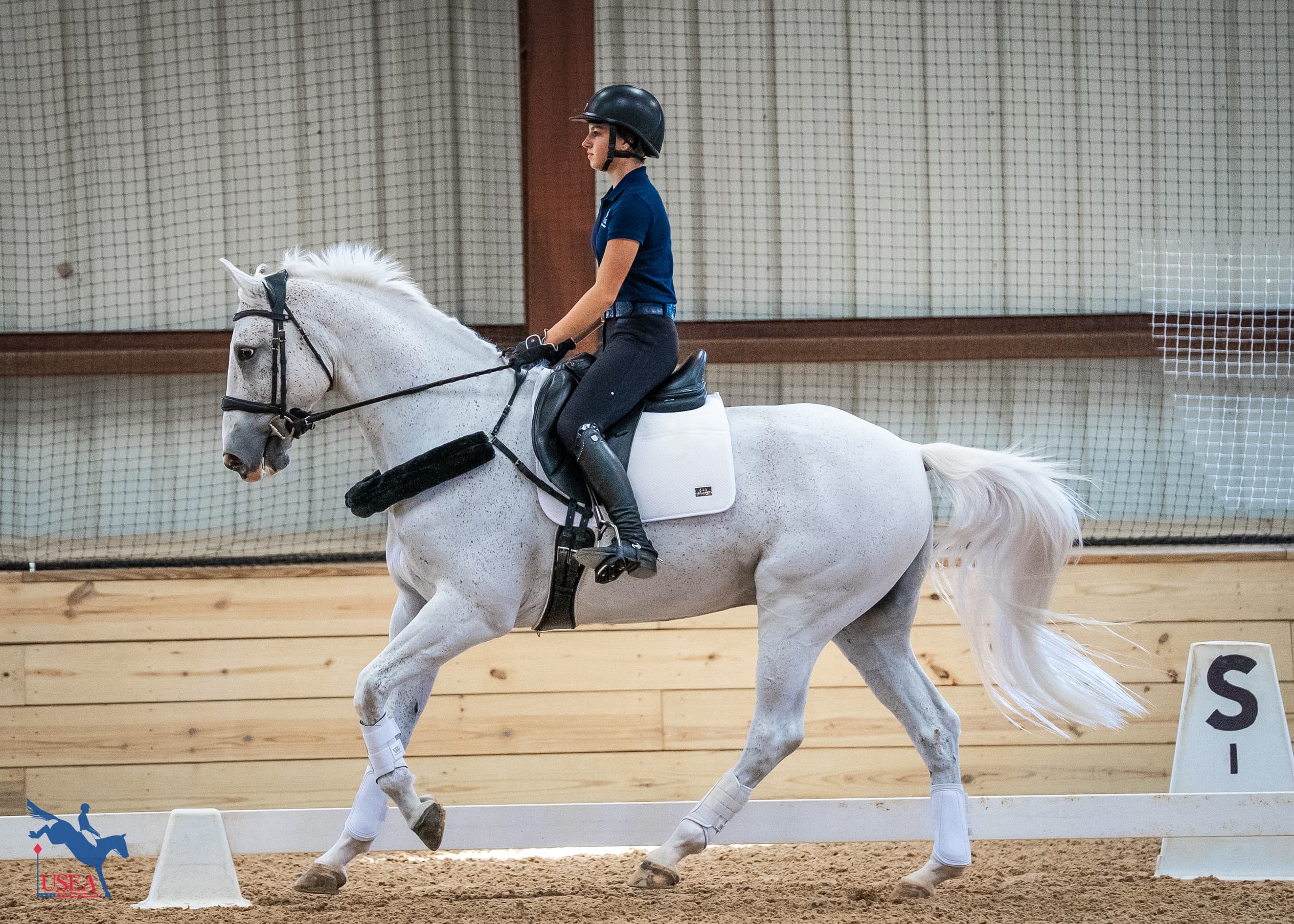
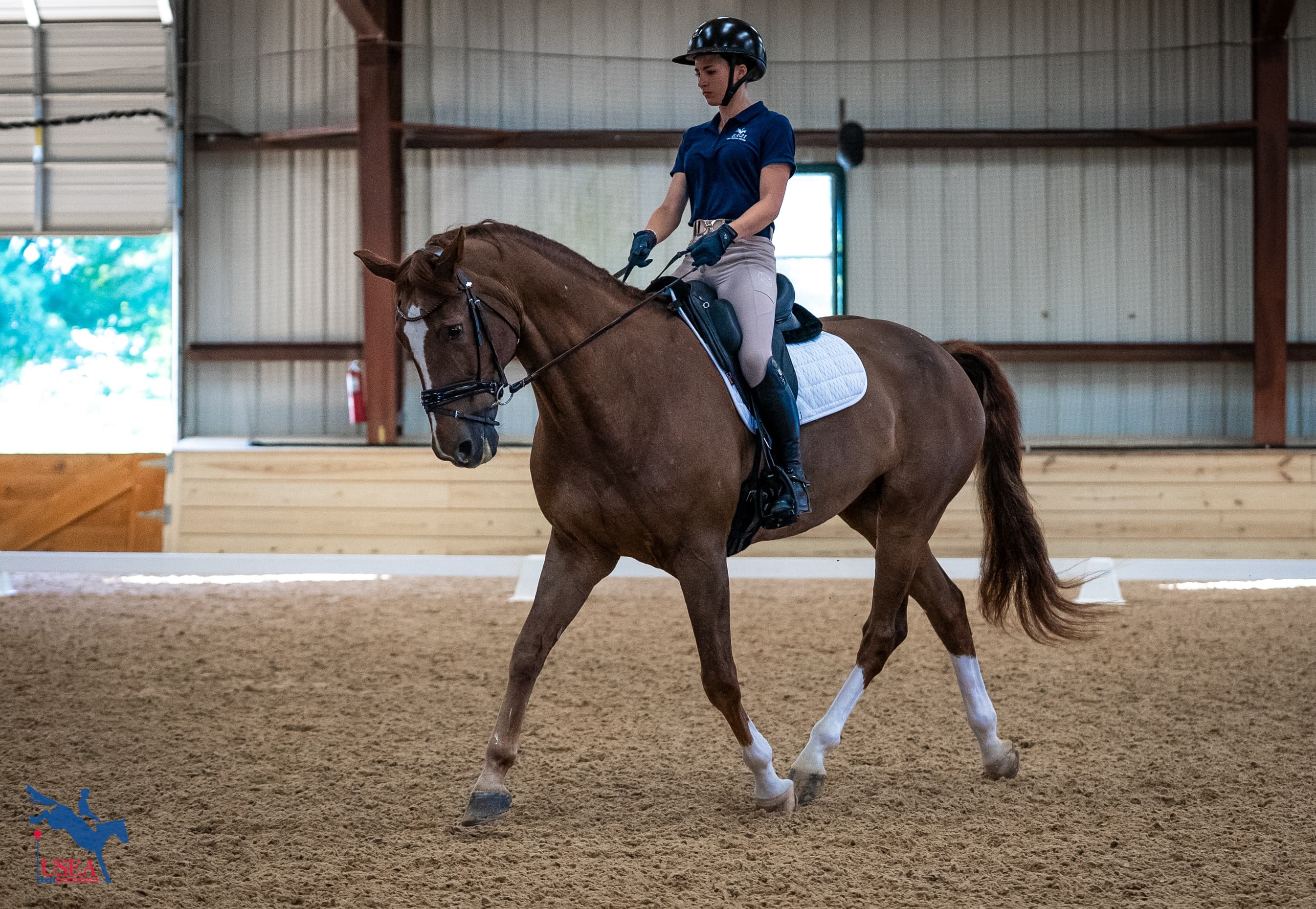
On Day 1 of the USEA Emerging Athlete Under 21 (EA21) East Coast I regional clinic, held at Morven Park International Equestrian Center, coach Bec Braitling worked with 12 hand-selected riders from Training through Intermediate skill levels to improve their horses with a variety of exercises in the dressage ring.
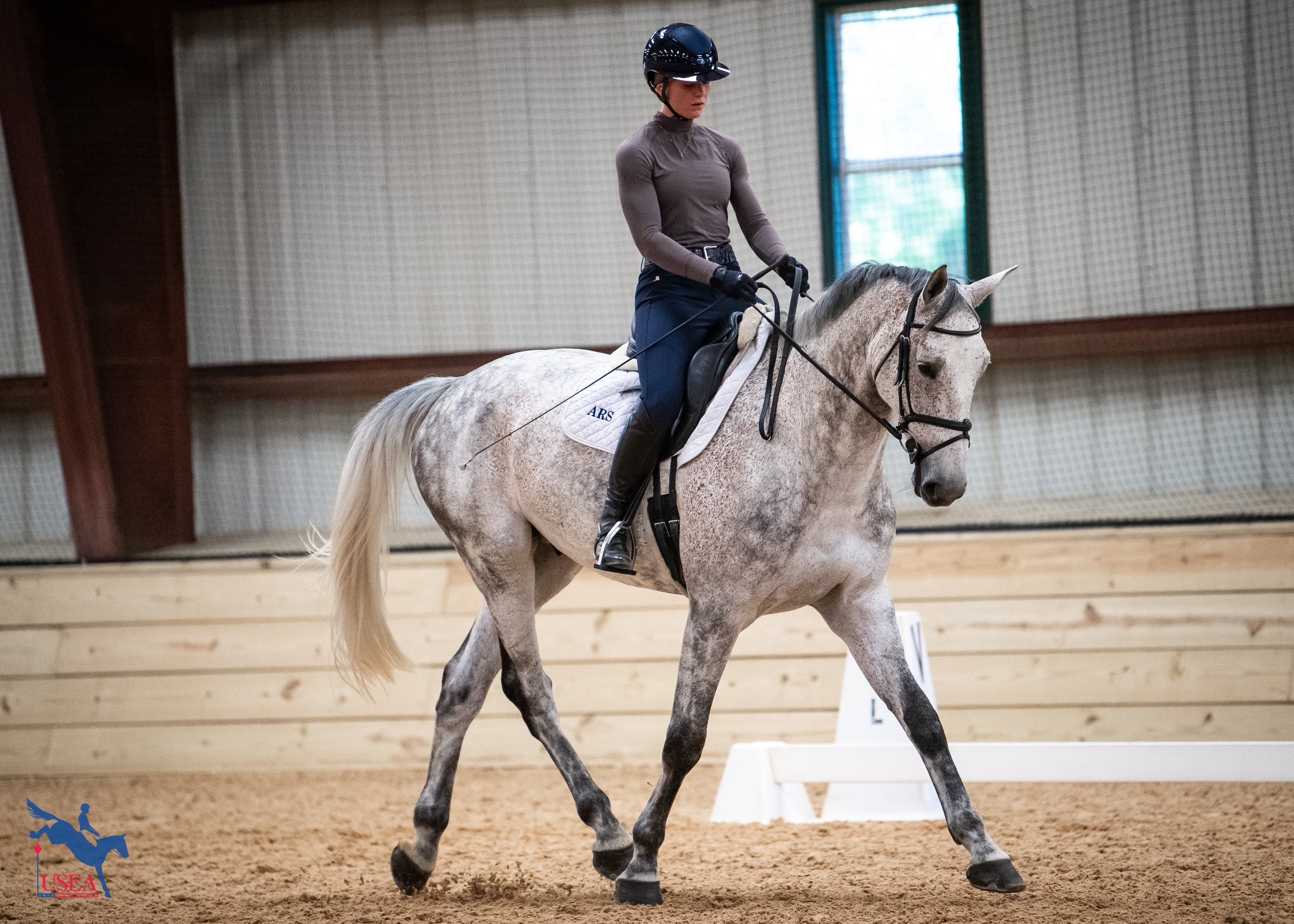
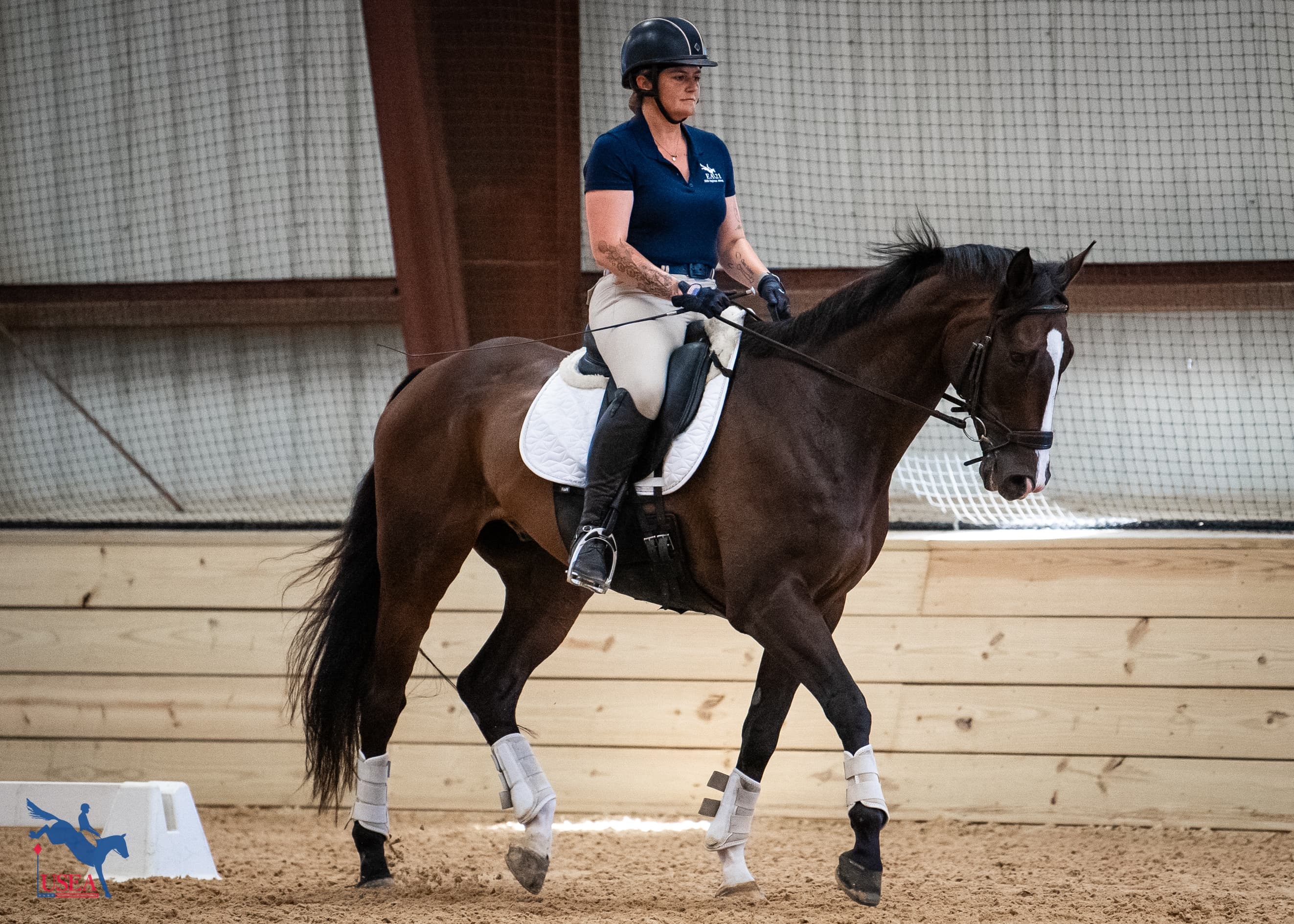
Working in pairs, Braitling had each rider warm their horse up, then worked with both riders at once on suppling exercises in all three gaits. After that, she asked them to switch horses to see what they could learn and to show them any weaknesses in their riding.
Yesterday, Braitling reviewed the German training scale with the riders in a classroom session, and today they put that scale to work, utilizing the basic tenants of rhythm, relaxation, connection, impulsion, straightness, and collection as they worked through the exercises.
“We had a super day on the flat—some really nice horses, some great riding, and a very diverse group of horses and riders, which was really nice to work with,” said Braitling. “Last night, we talked a lot about some of our ideas of training dressage. Obviously a big influence for us is the use of the [German] training scale, and so we talked a lot about that today with each lesson in our assessment of each horse in the warm-up and what exercises that we were going to use to help strengthen a certain horse or improving the gaits with each horse. That was a really big focus for us—definitely very horse-based in the sense of sort of what does each horse need?”
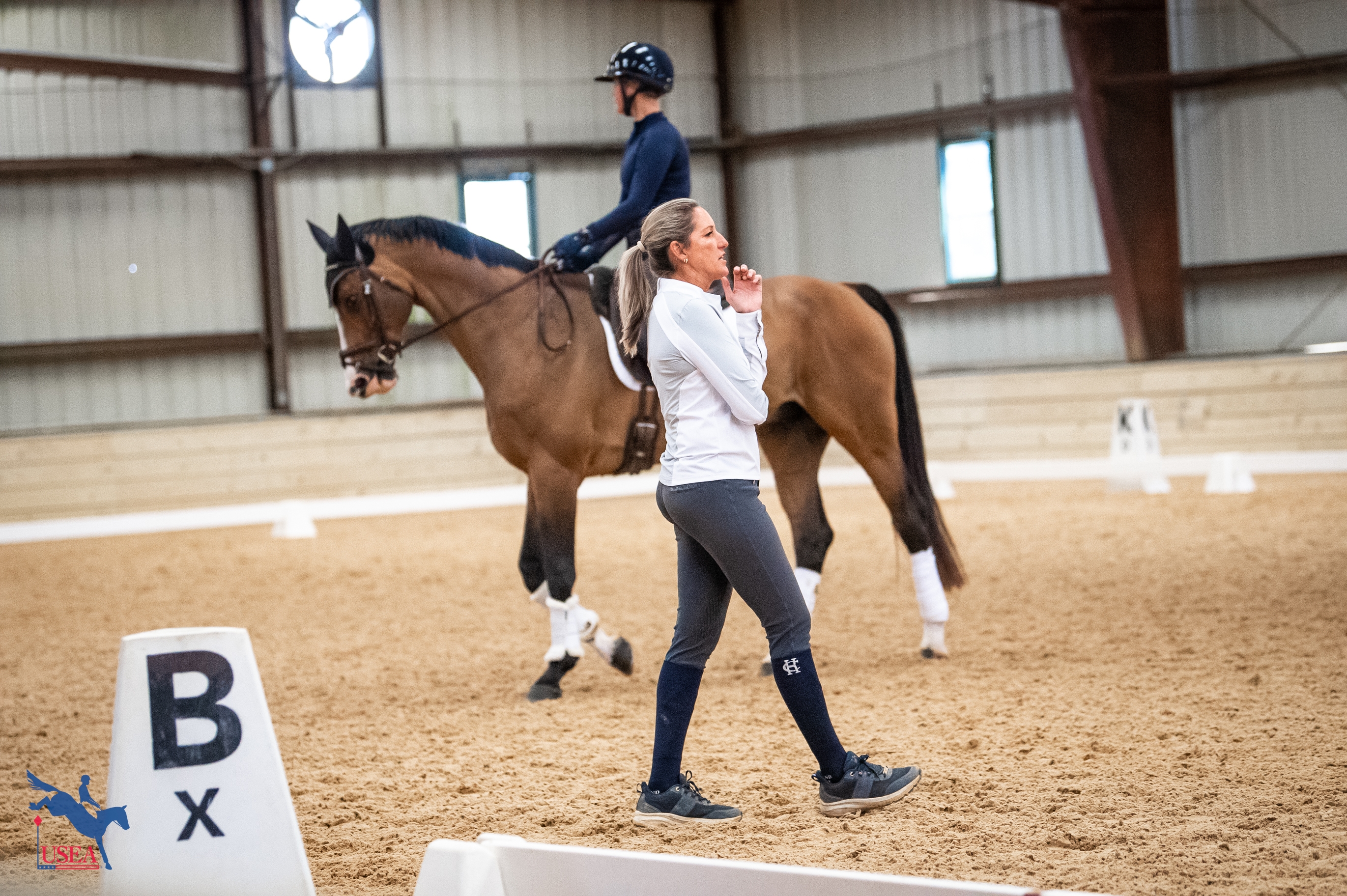
The lessons were interactive, with Braitling asking questions to the riders watching and gathering feedback from those riding.
“They could really put their input in, and I felt like it was really important that they could walk away from this and really know what tools that they learned, what exercises that we utilized, and that they could use this at home on any of their other horses.”
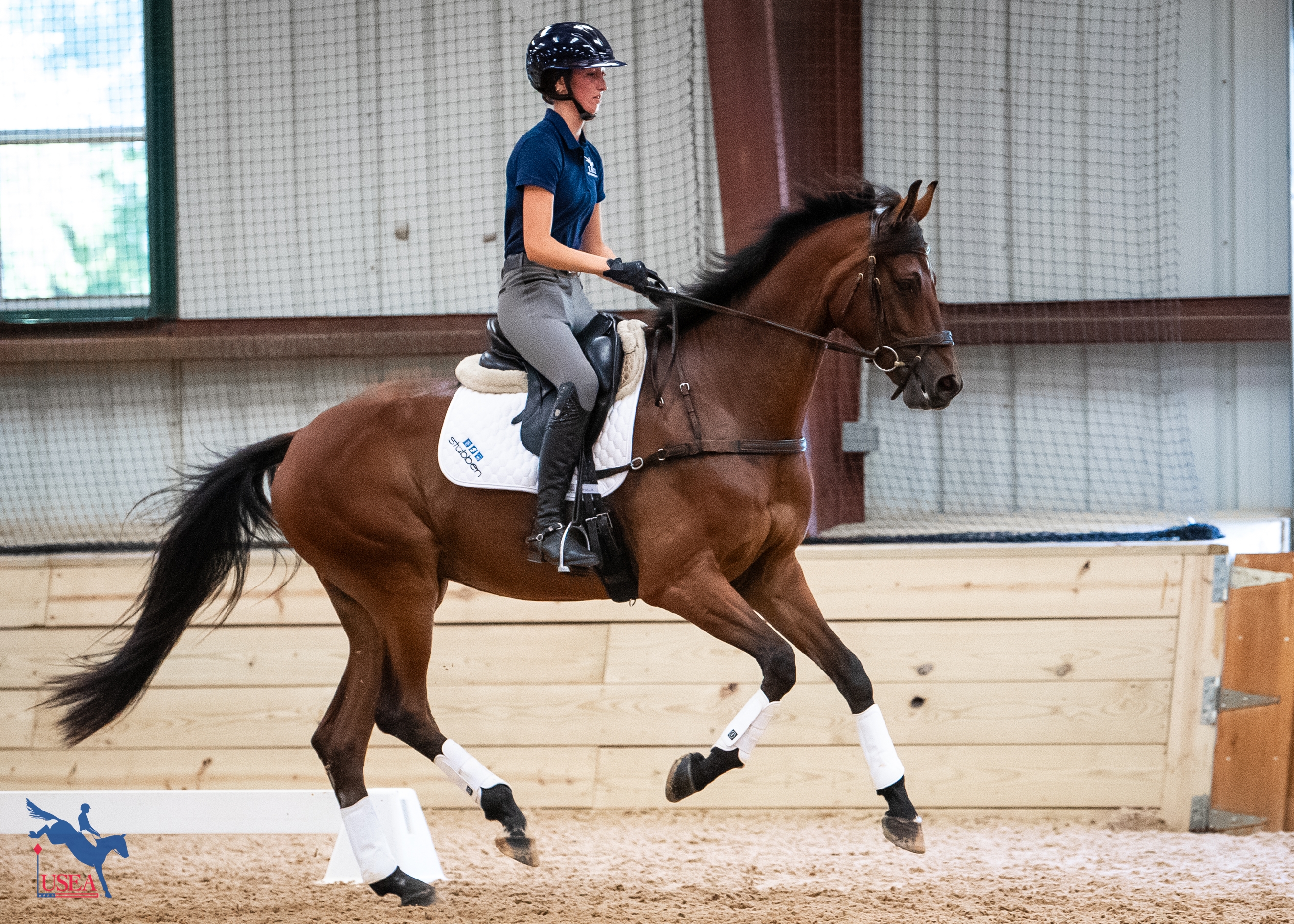
One exercise that benefitted every horse, whether it was a Thoroughbred, a warmblood, a tense horse, a young horse, or an older campaigner, was a 10-meter circle in trot and canter in the corner to a lengthening on the diagonal or the longside, then back to a 10-meter circle to balance.
Braitling’s hope was the exercise would improve the horse’s gaits and introduce the idea of collection, using the 10-meter circles to create engagement and activity.
“When the horse went into the lengthen, it sort of felt like there was a lot more push there, and hopefully trying to create a little cadence in that in that work,” she explained. “We had some Training level horses. The nice thing about exercises like that is you can use it on any level horse. It's a great tool in training and also helping riders to ride back to front. You could have two completely opposite horses come in the ring and still create an environment where that horse could get better, wherever they are in their training.”
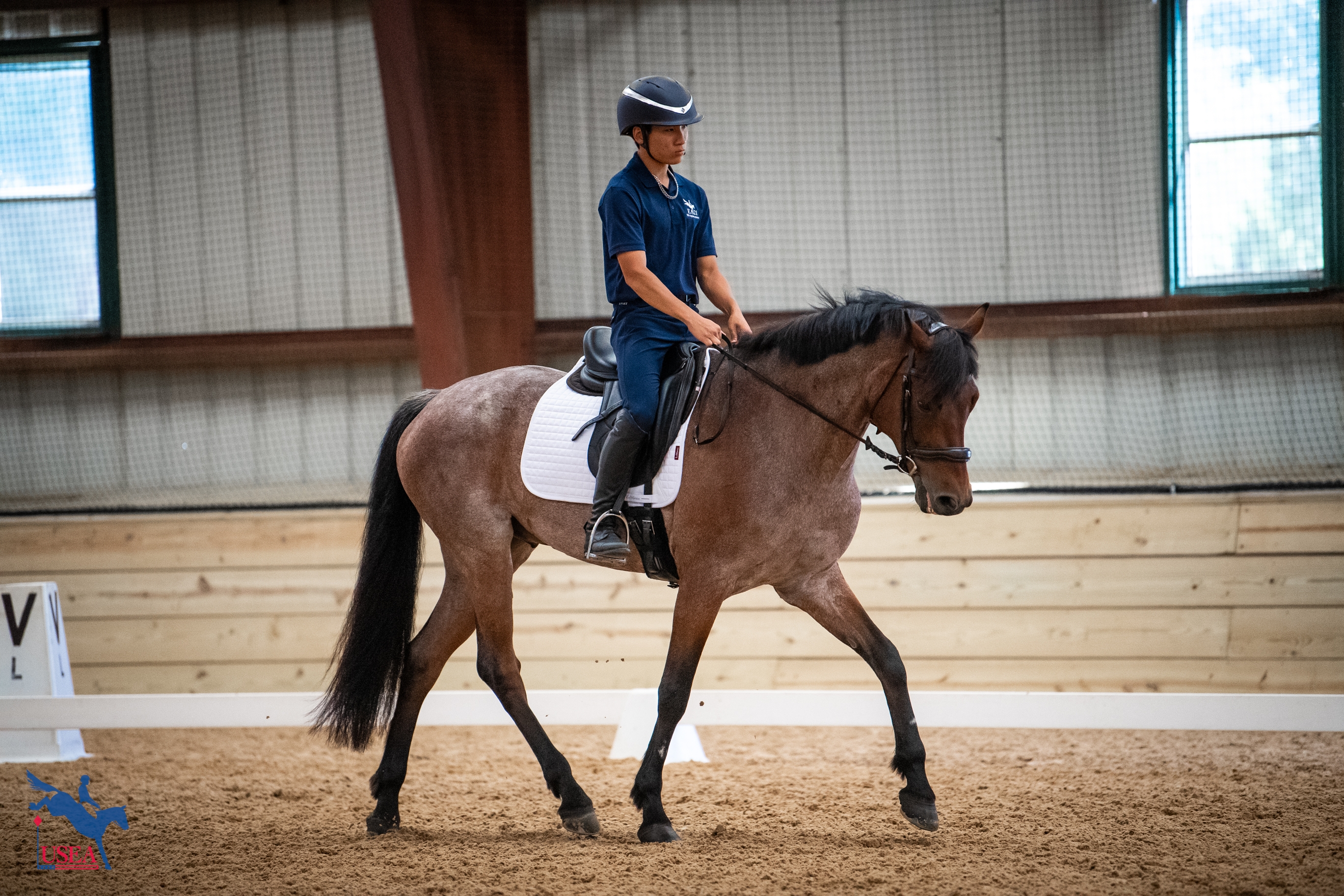
Braitling also had riders work on a square doing quarter turn walk pirouettes, then fully reversing in a full pirouette.
“It was a little bit the same thing, teaching the riders about using the aids in a slower gait,” she said. “In the walk, I think it's sort of a nice way to think about working on alignment and engagement.”
She reminded riders to use their seat to half halt coming into the walk pirouette and to use the outside aids to square the turn, all while making sure they were shortening the walk steps and that there was a slight flexion to the inside.
At the end of the day, Braitling discussed how these exercises will help with test riding.
“Test riding is a real skill. I think there's some really good test riding riders, and you want to really study people that know how to go in the ring and emulate that bravery in the ring, and if you make a mistake, remember you guys are in training, so yes, when you're doing your big FEIs or Young Riders, you really want to hope it's all in order by then, but in your lead up shows, you want to make sure that you're really building towards those tests,” she said. “So, how big can I go? OK, that was too big, I made a mistake. And then fix that; either go home and train that and have that horse really understand where you're coming from. I could be creative in how I show that horse off, versus people go in the ring on a really nice horse, and don't show a clear transition, so don't be lazy in there. Be really critical of every marker, every turn, and so that the judge is just like, ‘Whoa, they're really operating.’ ”
These exercises, plus others Braitling incorporated with certain pairs, like shoulder-in, walk to halt, and simple changes of lead, will come in handy tomorrow as the riders start to jump courses and grids.
Tomorrow will be all about focusing on line, pace, speed, and balance, she said. “A lot of those movements really do help create balance. One of the groups we even talked about, ‘OK, well, this is what it would be like in the square turn; maybe you'd square the turn to come to a jump. This is the type of canter that we want to work on. This is the type of turn.’ So hopefully that ties over with a lot of what we worked with, where they could really be thinking, ‘OK, this is how it felt in the ring. Now I get to take that out into the arena and hopefully apply that in a pretty similar fashion.’ ”
Braitling added that she was thrilled to see so many new faces this year in the group. “I love seeing the older faces again, because I think they're great leaders in these situations. Some of the other newer kids can sort of look up to them and say, ‘OK, what's next?’ or ‘What's the expectation?’ But then also seeing those newer kids step up and be just at that same level is really, really fun.”
New this year, five-star groom Hailey Burlock from the USEA Grooms Program gave a horsemanship lecture after the riding session where she discussed everything from knowing your horse’s legs to the relationship with your farrier and answered questions.
Participants also had to complete a volunteer requirement to be in consideration for selection.
“We know our sport is built so much on [volunteerism], and I think it's always really hard to carve out time to volunteer for things, but it was something that we [the EA21 Committee] really stand by and think that, if the kids can really plan their year, that there's plenty of time to get in the 10 hours. I'd love to see them be able to get out and help competitions behind the scenes to understand how things run—getting ready for a show, things like that.”
To hear more from the EA21 East I athletes, check out the USEA’s social media!
East I | Morven Park Equestrian Center | Leesburg, Virginia
The Participants:
- Jaelyn Comer
- Isabella Craft
- Laurel Curry
- Reese Dellangelo
- Megan Hopkins
- Carlin Keefe
- Lyman Ordway
- Emerson Padgett
- James Power
- Annabelle Sprague
- Elle Stephenson
- Riley Zgrebnak
Follow the USEA coverage on social media!
Facebook | Instagram | Threads | TikTok
About the USEA Emerging Athlete U21 Program (EA21)
The purpose of the USEA Emerging Athletes U21 Program (EA21) is to identify and provide consistent quality instruction to the next generation of elite event riders. The aim is to create a pipeline for potential team riders by identifying and developing young talent, improving horsemanship and riding skills, and training and improving skills and consistency.
The USEA Emerging Athletes U21 Program was launched in 2022 with a model of five summertime regional clinics taught by carefully selected USEA Eventing Coaches Program (ECP) coaches, leading to a winter national camp consisting of selected Young Riders from the regional clinics. Athletes who are 21 years or younger, are current members of their USEA Young Rider Area program, and are established at the Training Level or higher, are eligible to apply for the EA21 program. Click here to learn more about the USEA EA21 Program.
The USEA would like to thank ARMA, Bates Saddles, GGT Footing, Horse Illustrated, Kerrits, PulseVet, Ride iQ, Schneiders Saddlery, Sidelines Magazine, WeRideTogether, YETI, and 100xEquine for sponsoring the USEA Emerging Athletes U21 Program.
Related Articles
HSH Moves Like Jagger Takes Center Stage in USEA YEH East Coast 5-Year-Old Championship
It was a weekend to remember for Caroline Pamukcu at the 2026 Dutta Corp. USEA Young Event Horse (YEH) East Coast Championships at Fair Hill, as she followed up Friday's victory in the 4-year-old division with another championship title on Saturday, this time aboard HSH Moves Like Jagger. The 5-y...
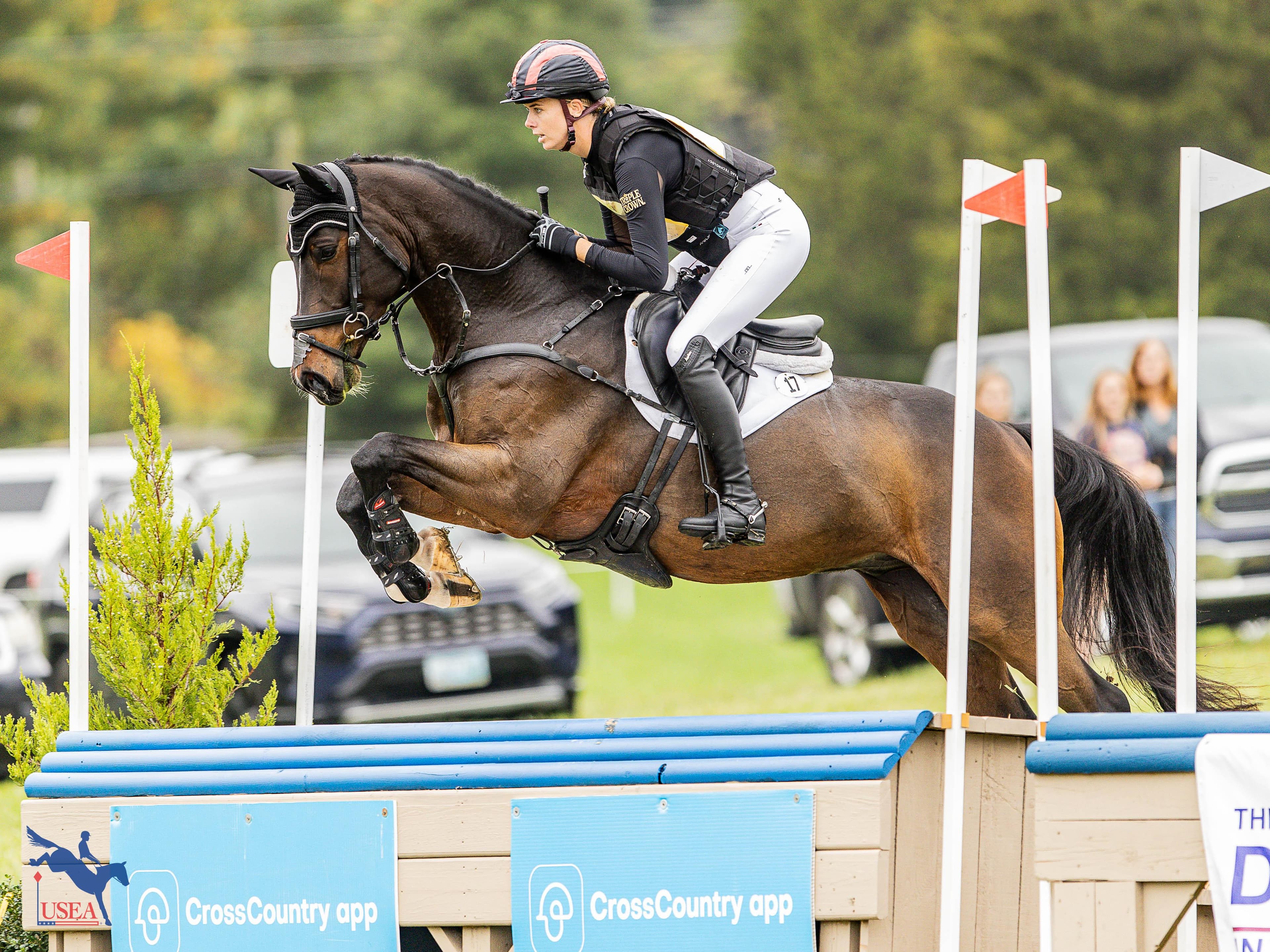
HSH Straight Arrow Hits the Mark in 2026 USEA Young Event Horse East Coast 4-Year-Old Championship
Caroline Pamukcu added another USEA Young Event Horse (YEH) Championship title to her résumé today at Fair Hill, piloting HSH Straight Arrow to victory in the 2026 USEA YEH East Coast 4-Year-Old Championship. The 4-year-old Irish Sport Horse gelding, owned by Pamukcu and Sherrie Martin and bred b...
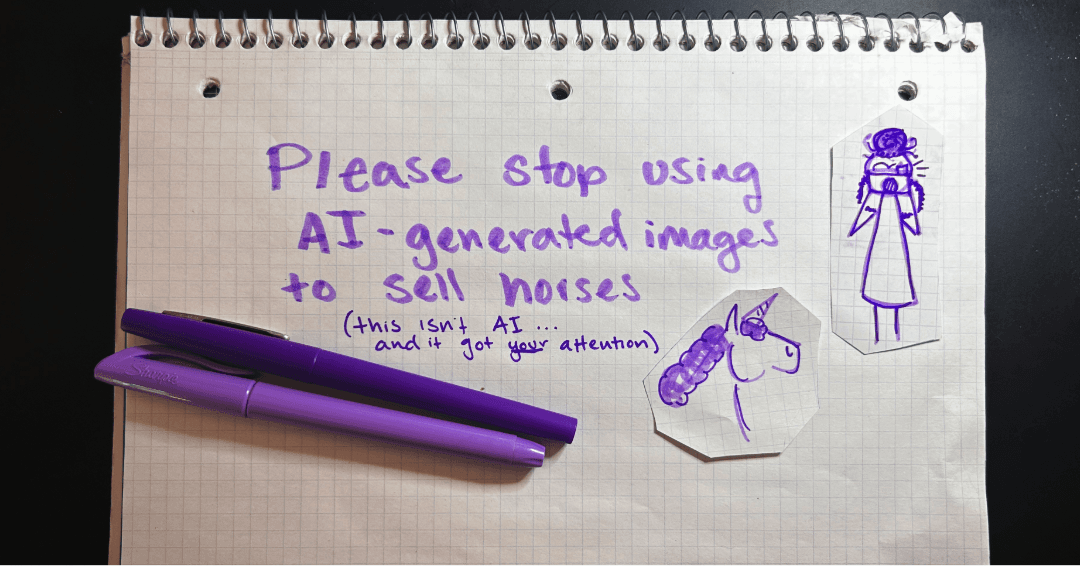
A Plea From Your Friendly Social Media Manager: Please Stop Using AI on Your Sale Horse Photos
I get it. You want to sell your horse. You have a photo from a show photographer, but it's not quite what you envisioned. The horse looks fine, but not great. The background is the schooling ring. The lighting is flat. And there's this tool that can fix all of it in seconds.