Mastervich Emphasizes Learning Through Doing at Day 1 of EA21 West I Regional Clinic
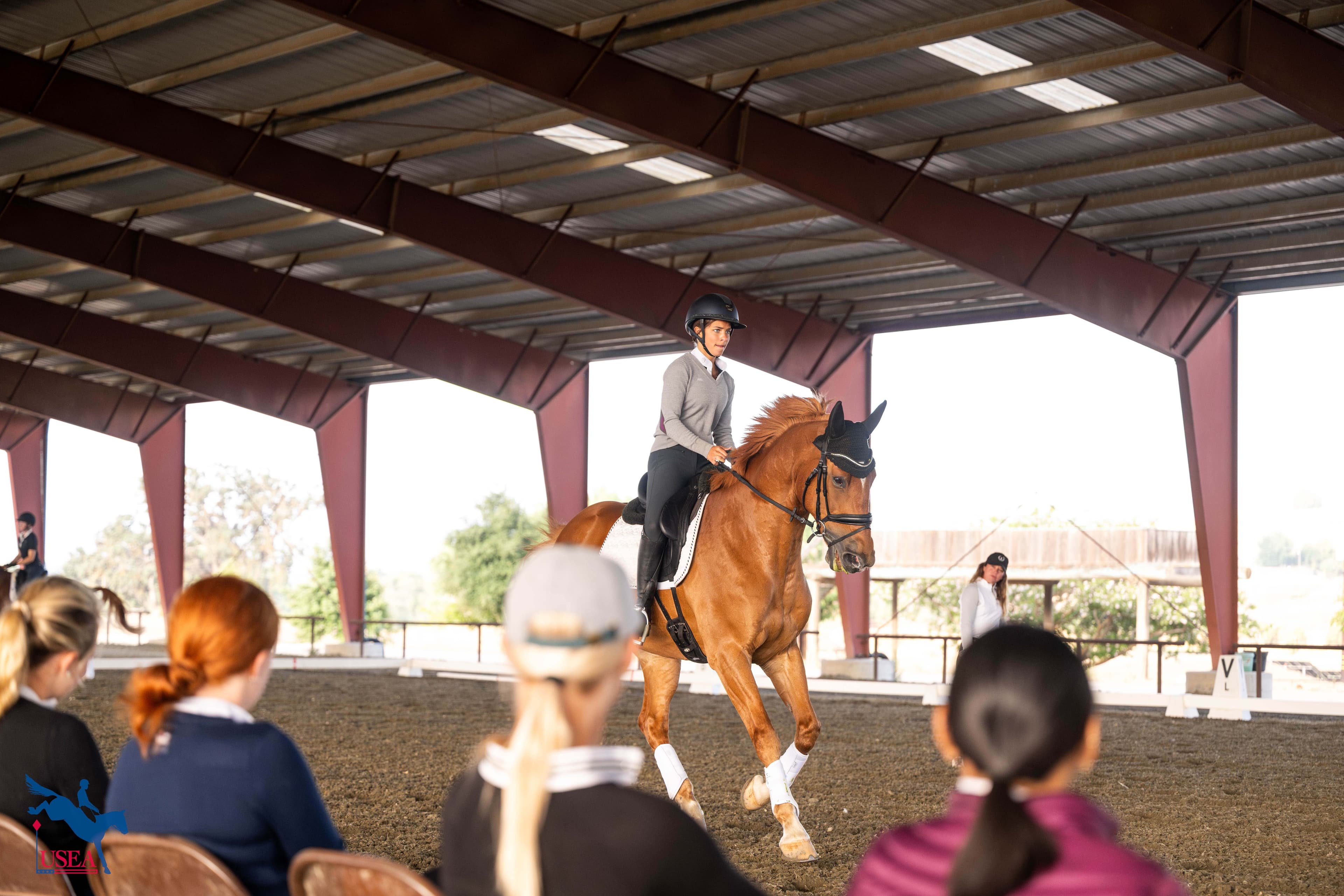
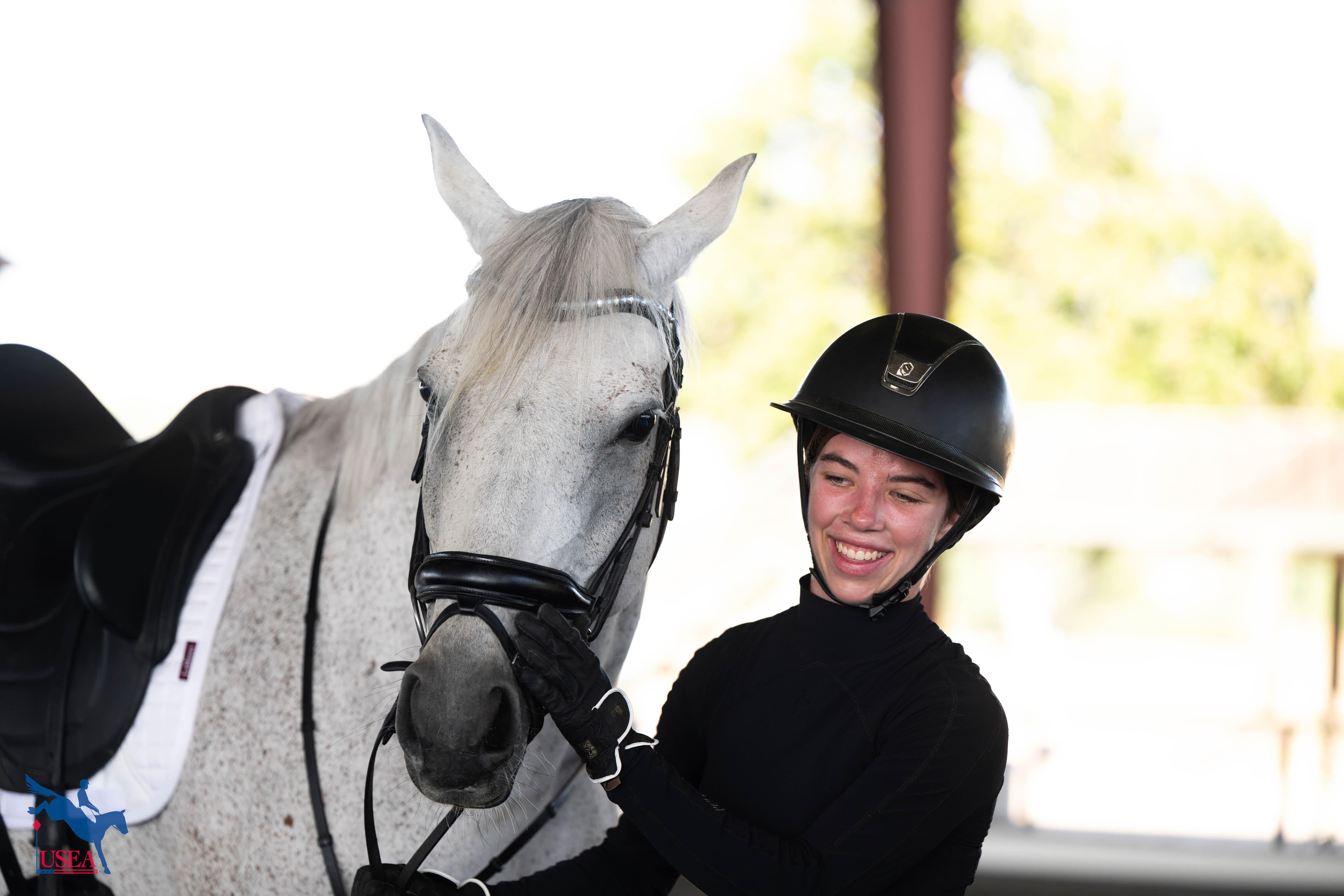
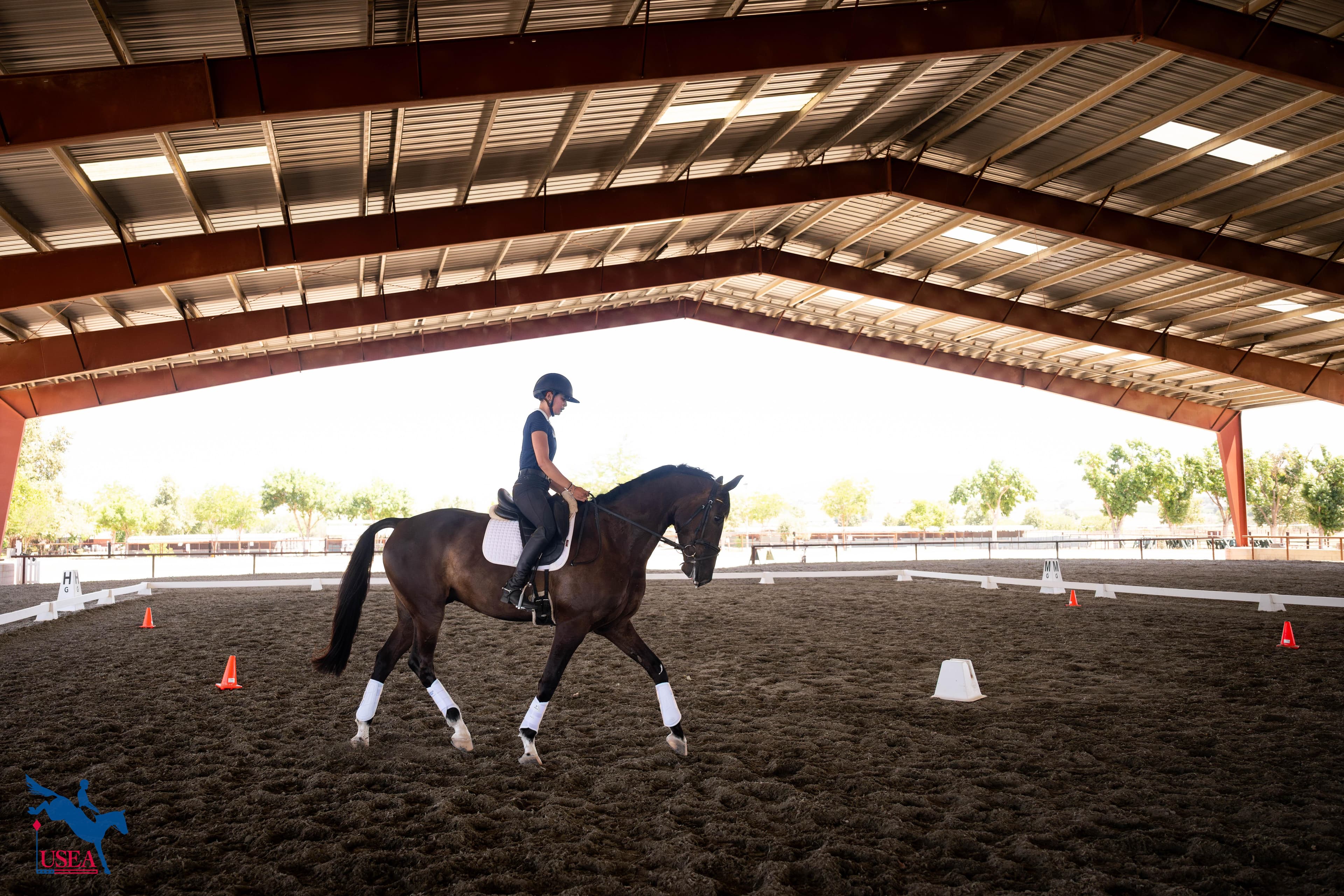
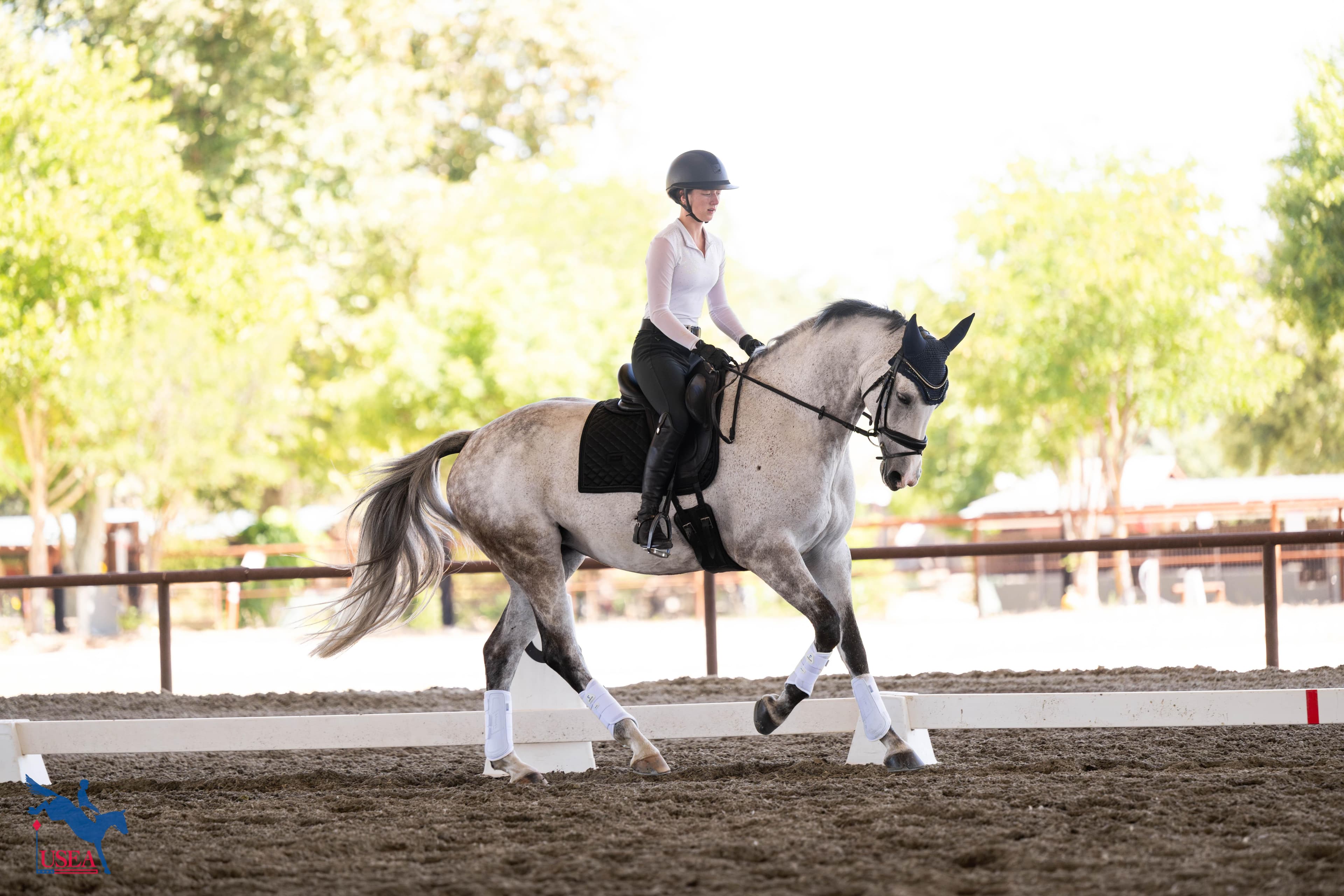
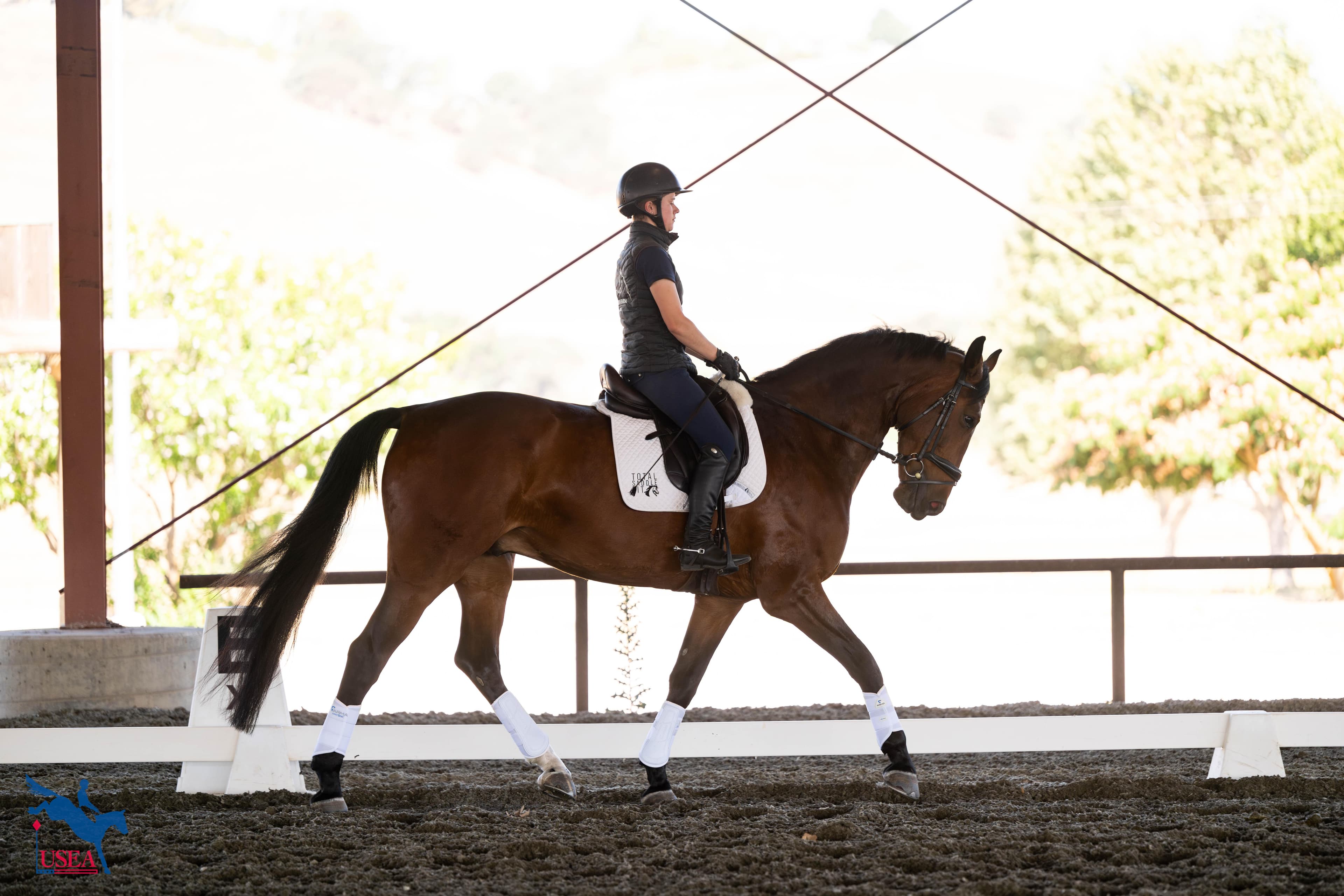
Paso Robles, Calif.—June 16— Show, don’t tell was the theme of the day for coach Emily Mastervich on the first day of the USEA Emerging Athletes U21 (EA21) West I Regional Clinic held at Twin Rivers Ranch. So often riders get caught up in managing every moment that they lose sight of what’s next, especially in the dressage.
An evening lecture held the night prior reviewed the German training scale. Becoming a mainstay and core tenet of the EA21 curriculum, it is a tool that already standardizes language in dressage tests at both the national and international levels. A clear understanding of the different terms helps educate riders both in terms of general training models but also in understanding feedback for dressage judges and unfamiliar clinicians alike.
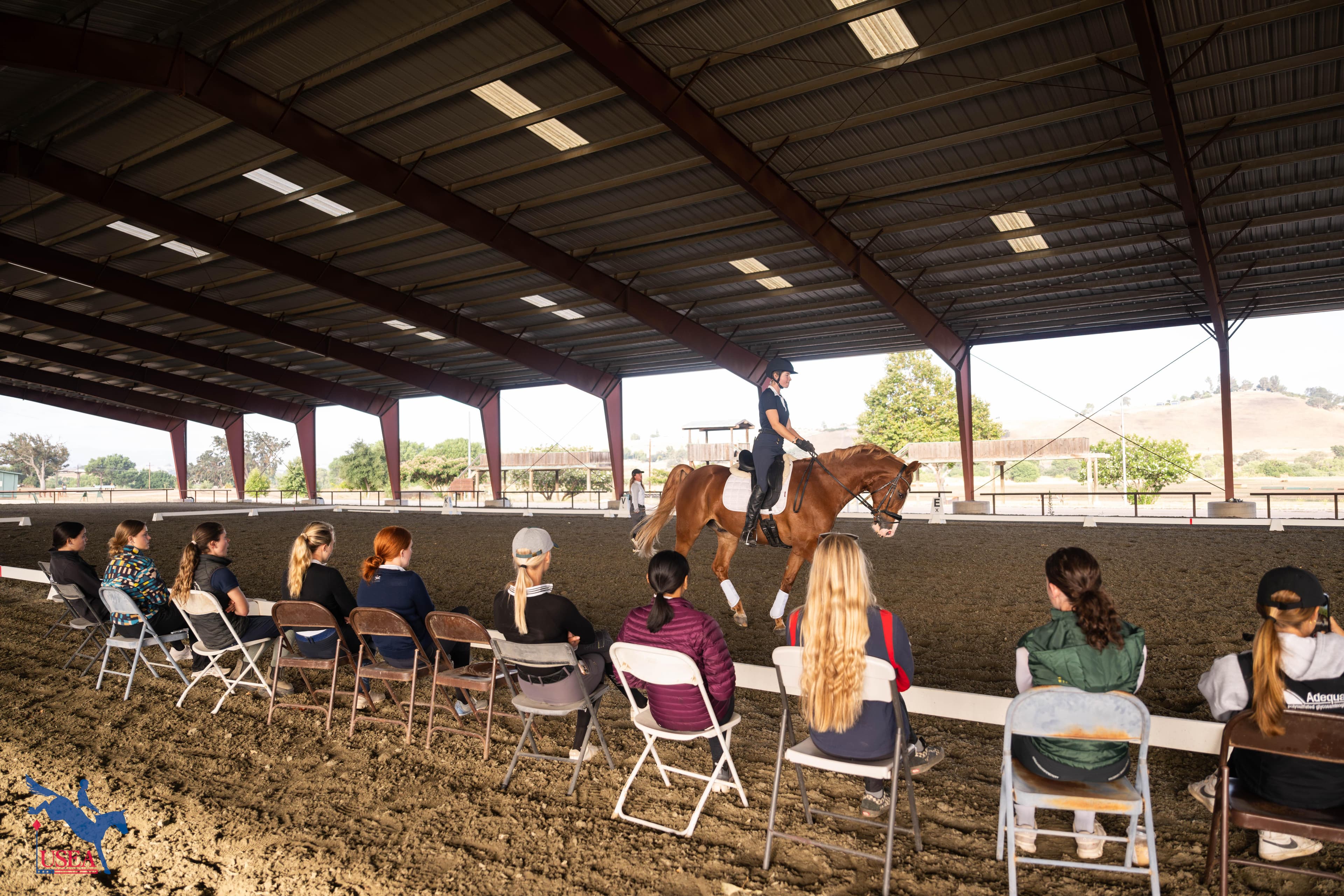
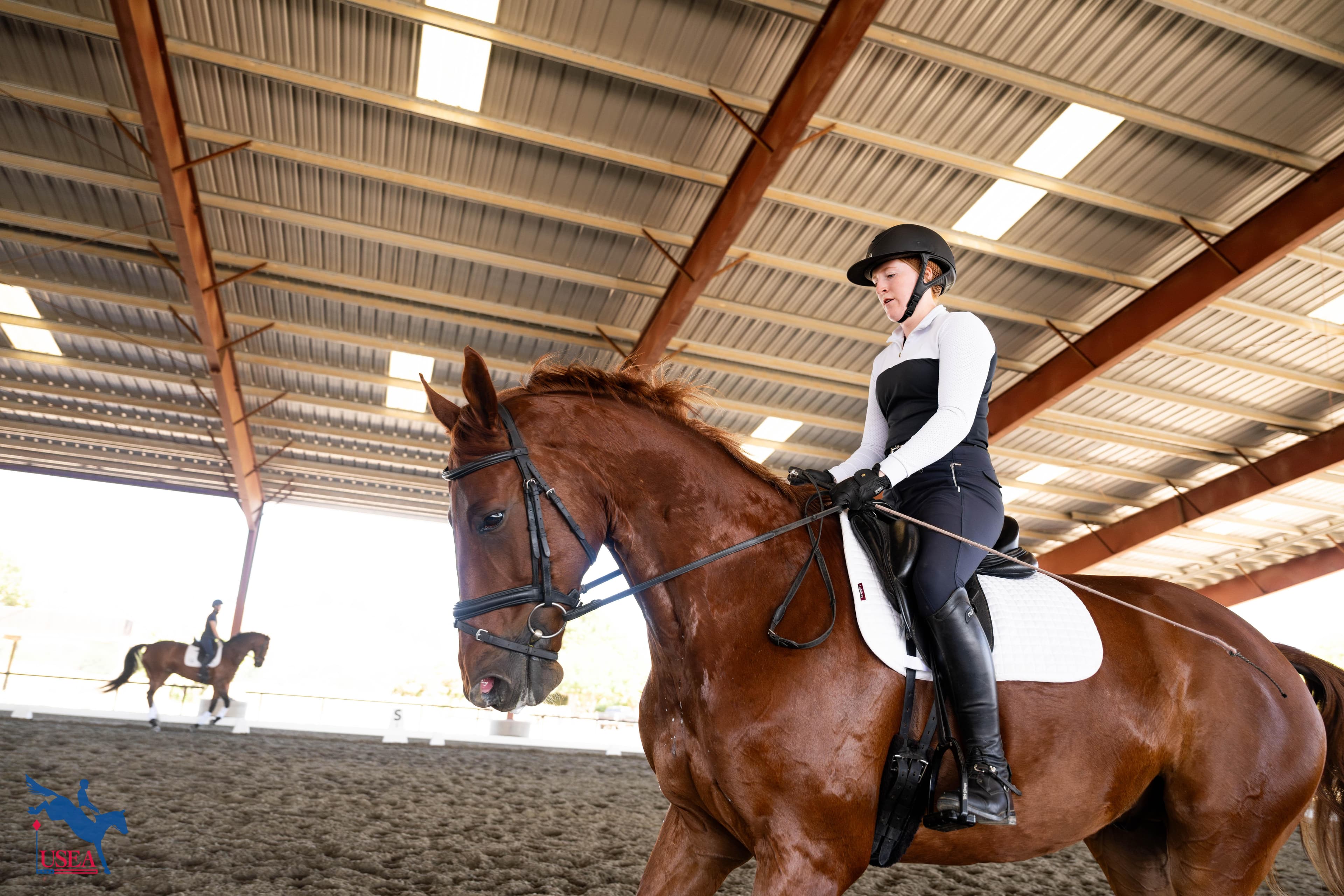
With 12 participants in the clinic, riders were paired up for the dressage lessons but prior to riding, Mastervich played a game of charades with the whole group. Each riding pair had to recreate different movements with one rider demonstrating the horse’s body position and one rider demonstrating the rider’s body. The remaining group guessed what was being described. This resurfaced in the riding portion when Anya Ostrovsky and Paige Beauchamp Crandon demonstrated a horse’s body position during a turn on the forehand around a square of poles.
Armed with both new physical and mental knowledge, getting in the saddle was only the beginning.
Mastervich tailored each exercise and lesson individually to the horses in the ring but she told participants to: “Ask yourself what is the purpose and intention of this ride? Your purpose today is to learn.”
She encouraged them to let go of worrying what they looked like and to engage wholeheartedly in the messy business of learning: to use their bodies more, to find what was effective for each horse, and to see what didn’t work. Most importantly, she asked them to guide their horses through the exercises rather than managing every step. Test riding is useful as a guideline to show where the holes in the training are but is not actually the training itself.
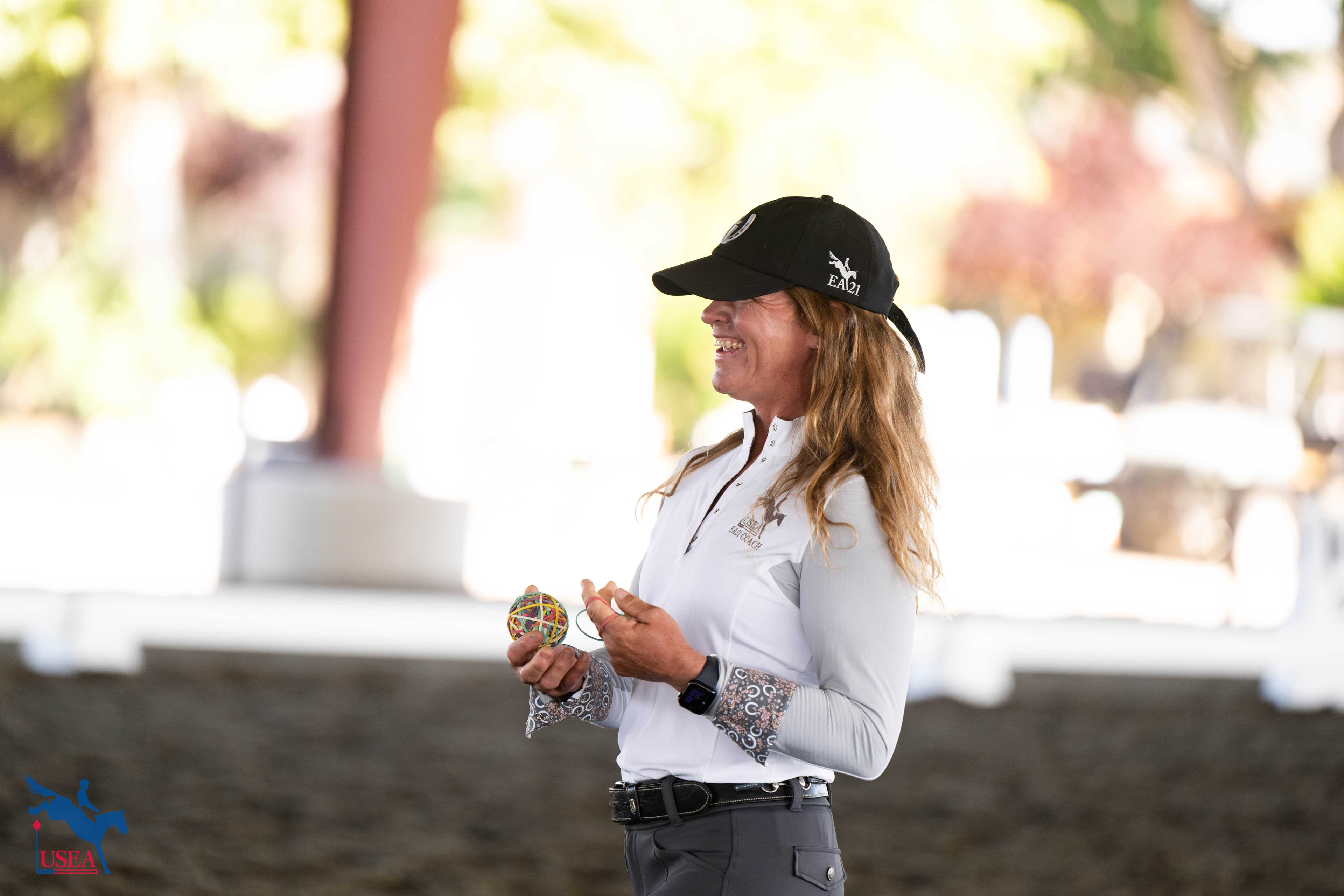
From reins looped under the neck to pinkies tucked into rubber bands looped on saddle d-rings to counter canter serpentines to turns on the forehand or the haunches around a square of poles, there was no lack of things to think about. The exercises made forward thinking and planning a priority.
“Dressage is about training them to be better athletes and how to communicate as a partnership,” Mastervich remarked. “You’ll bring all these things into the other phases.”
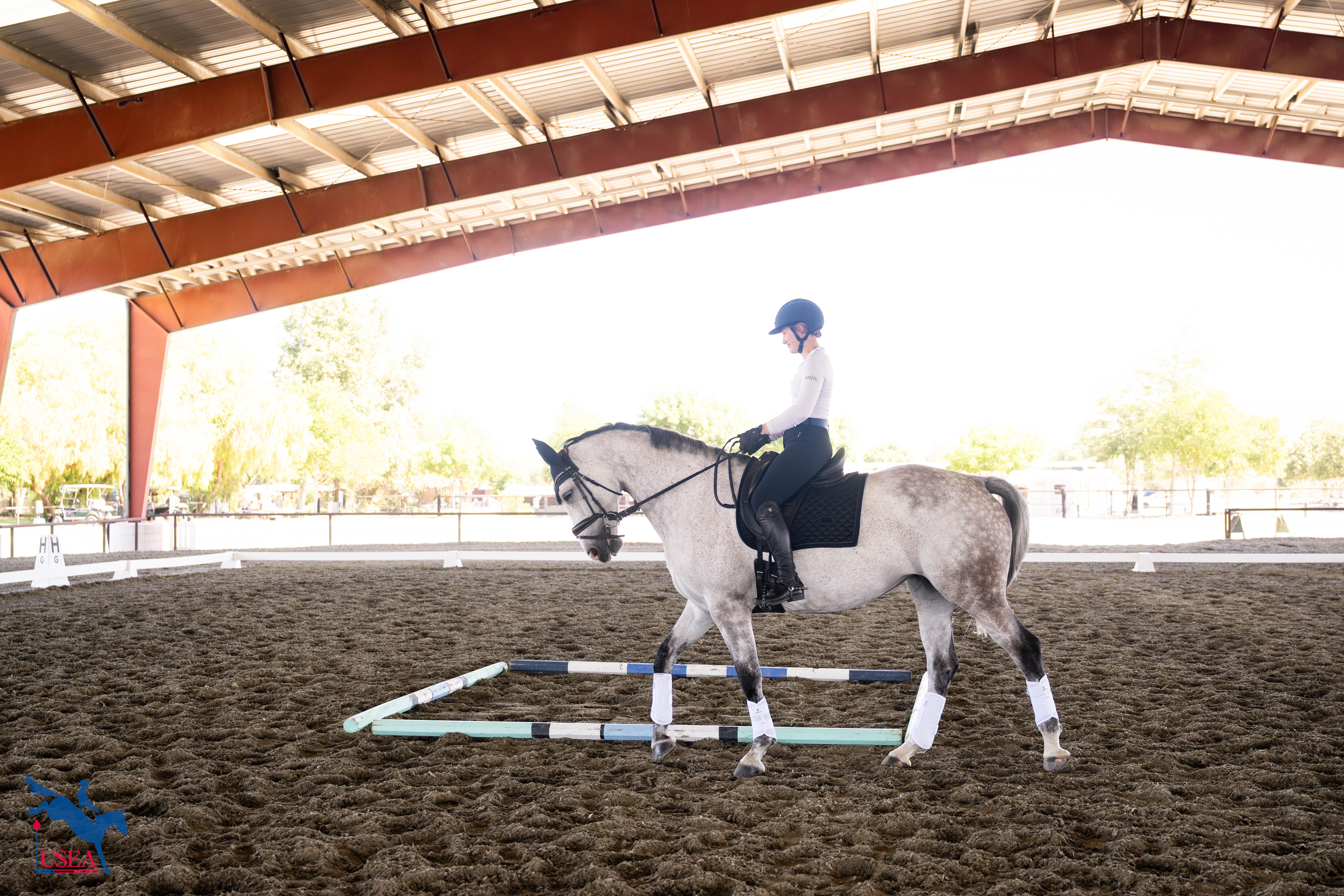
For Fiona Lempres, a first-time EA21 participant, using a square of poles where the corners marked the points for a quarter turn on the forehand or the haunches provided a moment of huge success.
“I feel like my horse Lizzy really unlocked a new level today, just getting her more flexible and through in the contact. Often, I can get her through or I can get her flexible but today we actually achieved both, which is a big breakthrough for me! We did a lot of haunches and shoulders work and isolating each aspect really helped her move through that.”
In addition to working through unique exercises, riders were asked to swap back and forth from their horses to their partner’s mount, learning how to ride those same patterns with an unfamiliar partner and to gain real-time understanding of how to be an effective communicator. Soobin Oh found the swapping back and forth a real highlight.
“After we got to swap horses and swapped back to our original horses, we started to disregard what the horse was doing with their head and forget about that whole pretty rider image. Instead [we focused] on what we were feeling underneath us instead of what we’re looking like. That really helped me develop my feel for my horse and ride him off my seat instead of just my reins.”
The concepts of the German training scale helped not only provide clear and defined language but also help riders understand nuances as they advanced in their learning. Maya Zechman, another EA21 first-timer, found the moment where she discovered the difference in feel between having impulsion and having leg on to be particularly memorable.
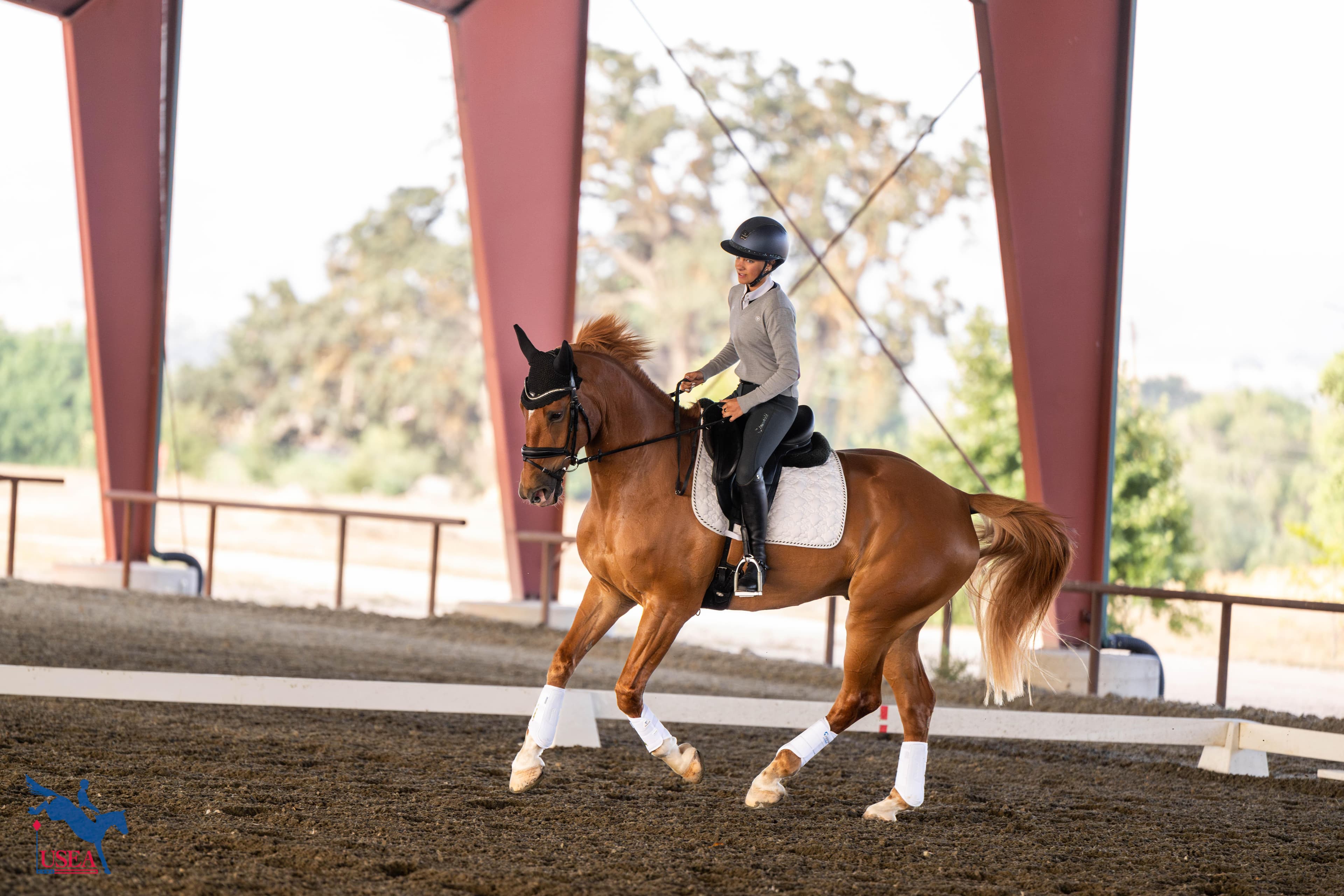
“We did a 10-meter circle in the corner and then came out of the corner to lengthen trot and then took the leg yield from that, continuing to use that power from the lengthening into the leg yield. I broke to the canter a couple times and that was really helpful feedback to understand where I needed to use more impulsion instead of just having my leg on and keeping that energy instead of taking back which is often my tendency.”
Kylie Scott is a returning participant at the EA21 West I Regional Clinic, and the program has become a recurring goal for both the partnership it helps her build and for the education it imparts.
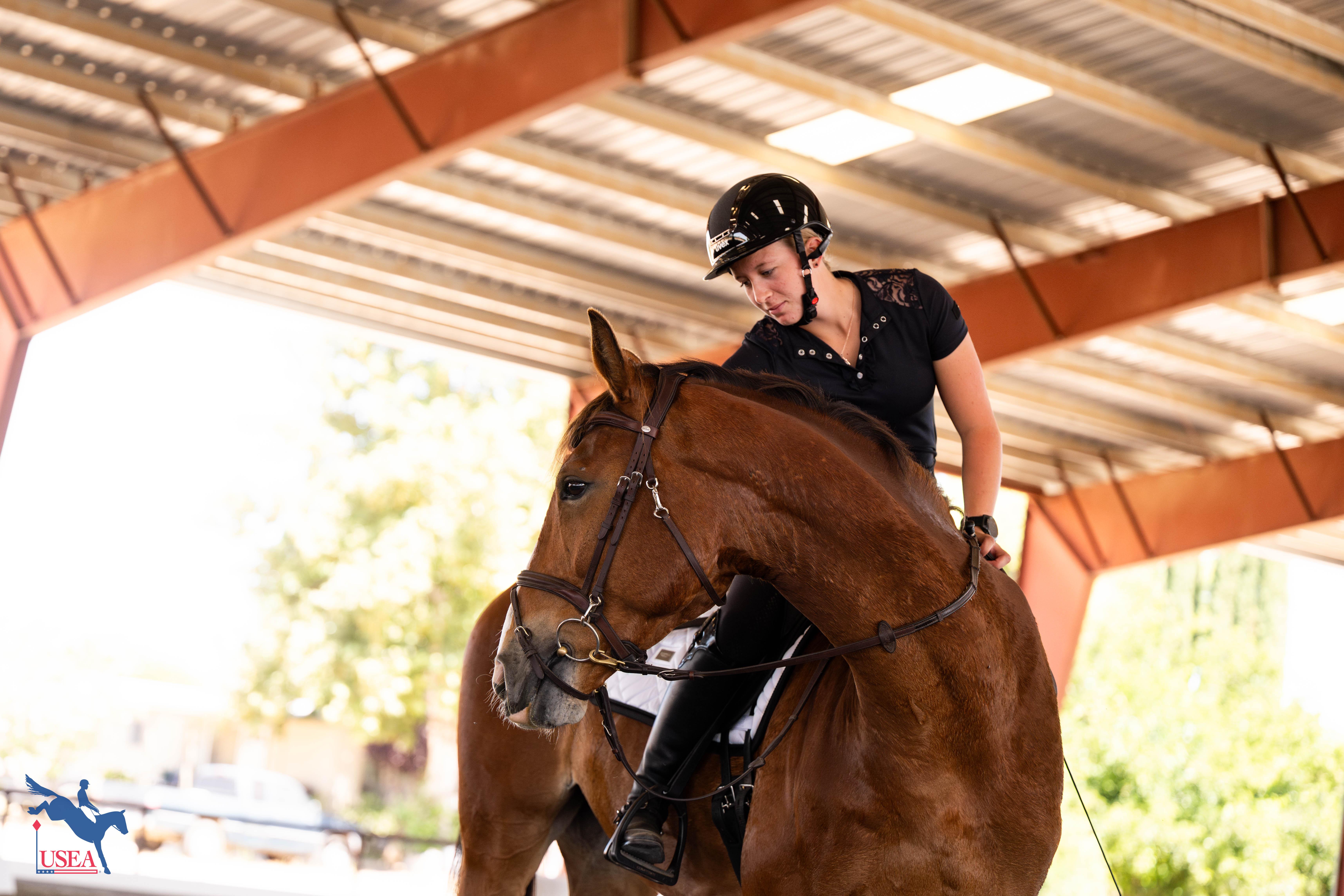
“I came here last year, and I had such a great time. I got to learn so many new activities to do with my horses, to build trust with them in the dressage and then carry that over into jumping. So now I want to come back every year just to be able to learn and build my own skills!”
Another returning face is Crandon, who attended for the first time last year but audited for three years prior to that. She finds her perspective changes every time and her educational base broadens. The coaches, she feels, have a lot to do with that. In particular, Mastervich has opened her eyes to new ideas.
“She has so many creative ways of explaining her thoughts and ideas," she said. "She doesn’t just give you what the exercise is but she gives you the details as to how it helps the horses or what it’s supposed to do. Riding with Emily is honestly a breakthrough every time.”
While the education under saddle is key, there are lessons being learned off the horse’s back. A stable management lecture guided by participant questions focused on condition and bit selection and a lecture on jump materials and precise striding helped to provide some insight into the other aspects of eventing.
New this year, prospective athletes were required to volunteer for a minimum of 10 hours in order to be considered for the EA21 program. Lauren Bebb found that not only was volunteering an important reminder of the support needed to run competitions but also another opportunity for educational engagement.
“Our sport is held up on volunteers,” she remarked. “They create such a great foundation, keep us together, and I think it’s really important for all of us young riders to ensure that we’re also learning how to do that so we can be participants in keeping our sport going.”
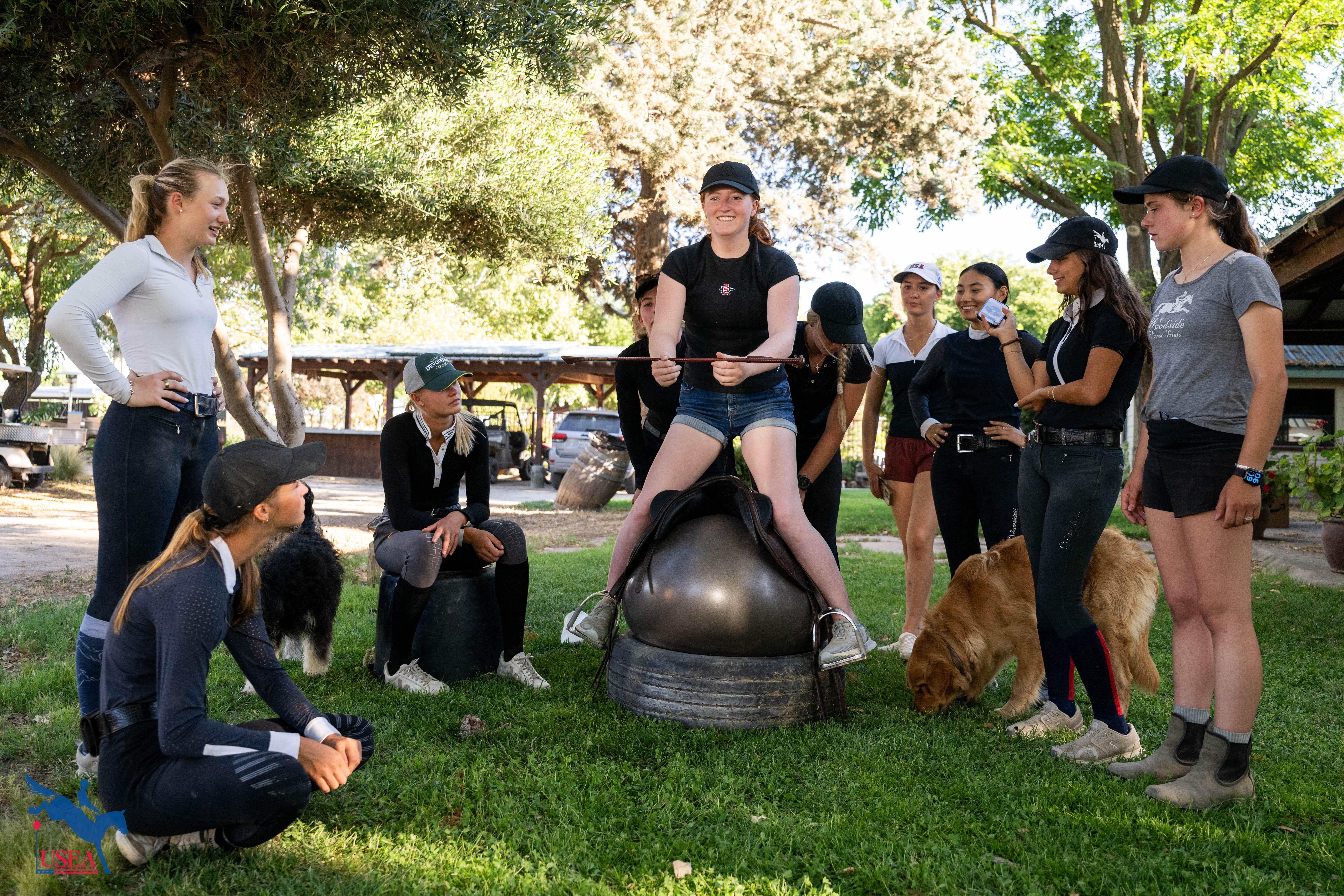
The day concluded with a playful demonstration of the various jumping positions on an exercise ball and a competition of who could hold the galloping position the longest without touching the saddle. In a team effort, with two spotters holding the back of the saddle, first place went to Anya Ostrovsky with a time of 4:30.64, second to Salma Kuhlmann with a 4:23.07, and third to Camille Botoy who set the standard at 3:04.47.
West I | Twin Rivers Ranch | Paso Robles, California
The Participants
- Lauren Bebb
- Megan Bebb
- Camille Botoy
- Paige Beauchamp Crandon
- Olivia Keye
- Salma Kuhlmann
- Fiona Lempres
- Soobin Oh
- Anya Ostrovsky
- Kylie Scott
- Nadia Vogt
- Maya Zechman
Follow the USEA coverage on social media!
Facebook | Instagram | Threads | TikTok
About the USEA Emerging Athlete U21 Program (EA21)
The purpose of the USEA Emerging Athletes U21 Program (EA21) is to identify and provide consistent quality instruction to the next generation of elite event riders. The aim is to create a pipeline for potential team riders by identifying and developing young talent, improving horsemanship and riding skills, and training and improving skills and consistency.
The USEA Emerging Athletes U21 Program was launched in 2022 with a model of five summertime regional clinics taught by carefully selected USEA Eventing Coaches Program (ECP) coaches, leading to a winter national camp consisting of selected Young Riders from the regional clinics. Athletes who are 21 years or younger, are current members of their USEA Young Rider Area program, and are established at the Training Level or higher, are eligible to apply for the EA21 program. Click here to learn more about the USEA EA21 Program.
The USEA would like to thank ARMA, Bates Saddles, GGT Footing, Horse Illustrated, Kerrits, PulseVet, Ride iQ, Schneiders Saddlery, Sidelines Magazine, WeRideTogether, YETI, and 100xEquine for sponsoring the USEA Emerging Athletes U21 Program.
Related Articles
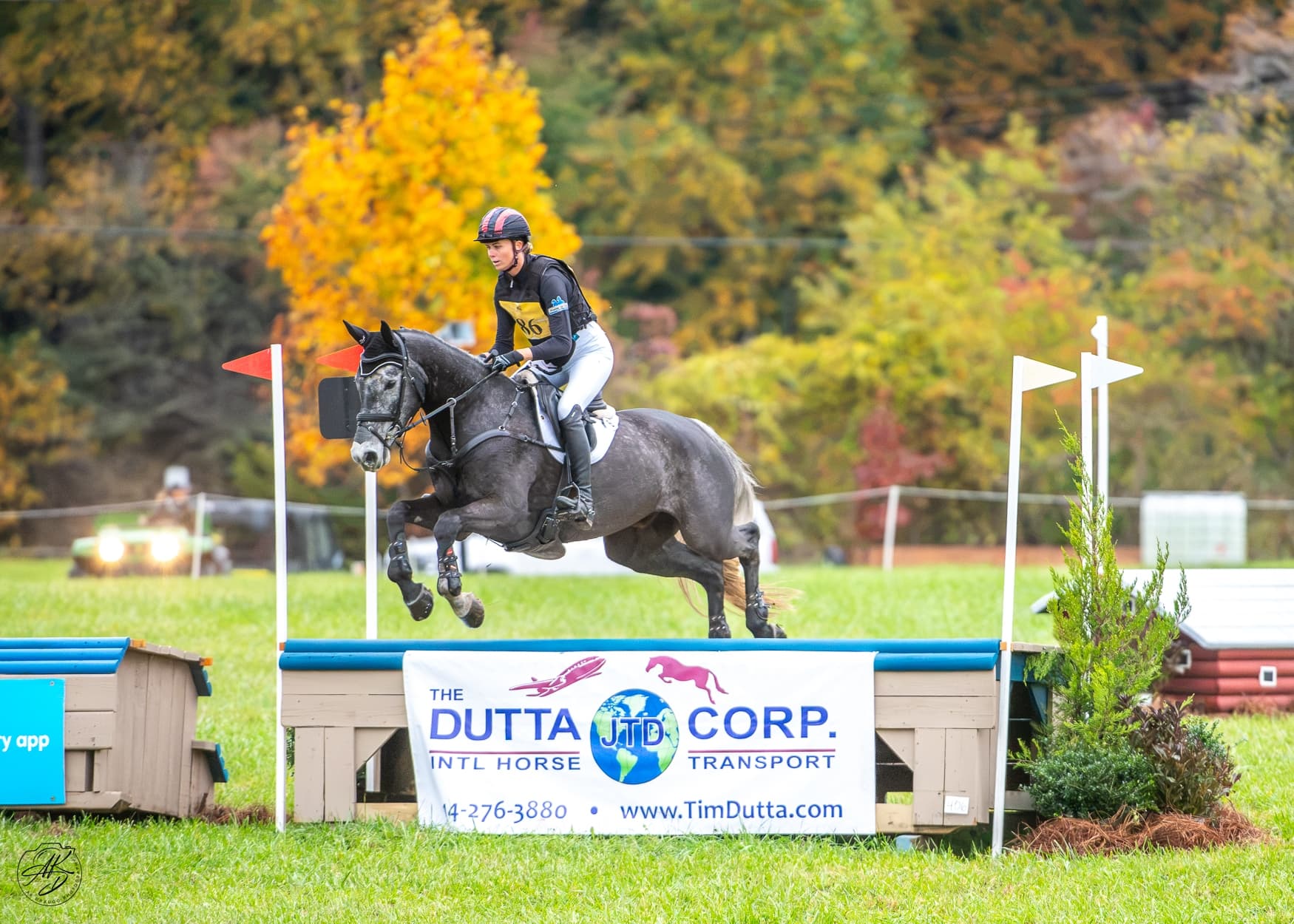
HSH Moves Like Jagger Takes Center Stage in USEA YEH East Coast 5-Year-Old Championship
It was a weekend to remember for Caroline Pamukcu at the 2026 Dutta Corp. USEA Young Event Horse (YEH) East Coast Championships at Fair Hill, as she followed up Friday's victory in the 4-year-old division with another championship title on Saturday, this time aboard HSH Moves Like Jagger. The 5-y...
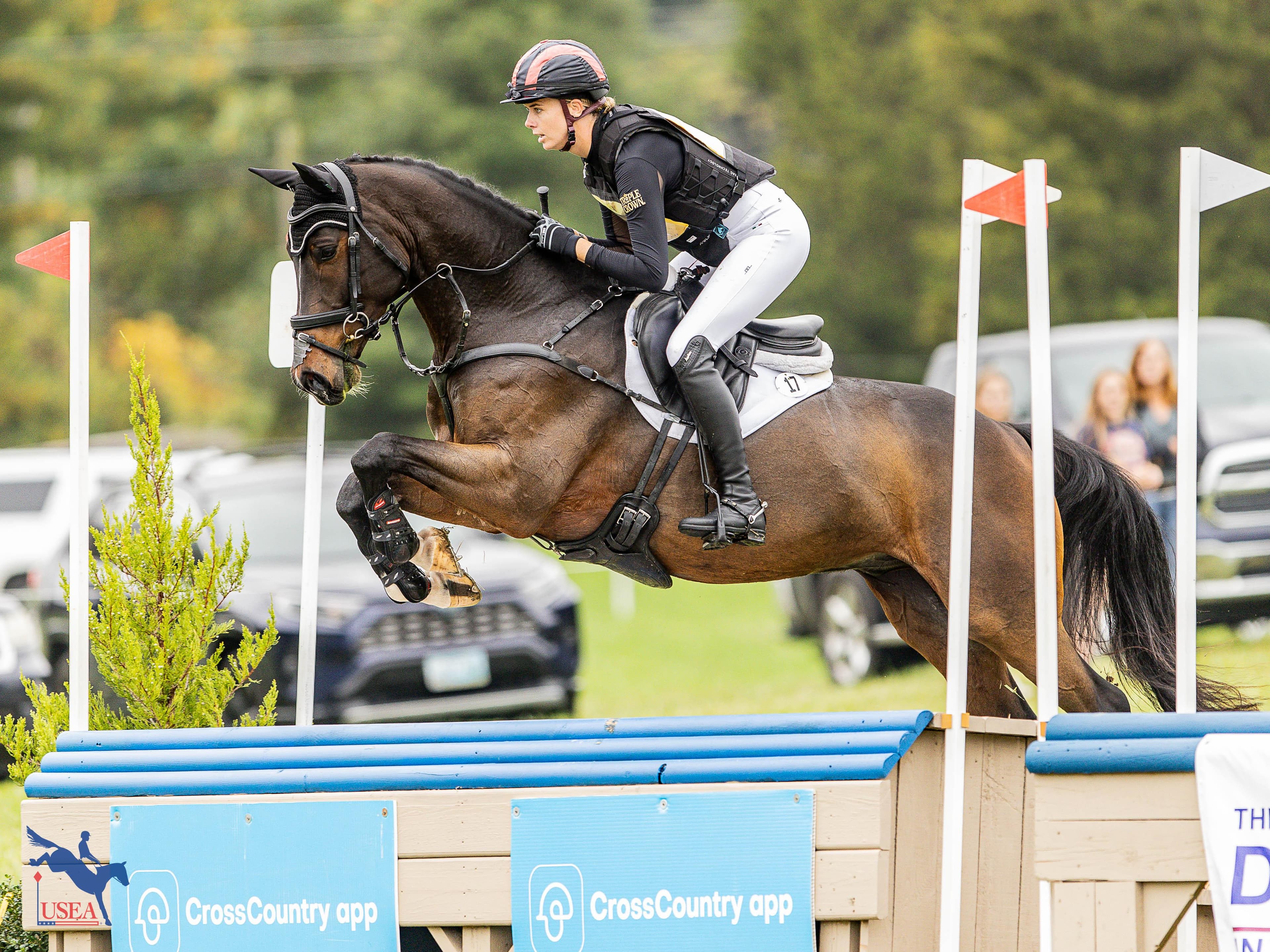
HSH Straight Arrow Hits the Mark in 2026 USEA Young Event Horse East Coast 4-Year-Old Championship
Caroline Pamukcu added another USEA Young Event Horse (YEH) Championship title to her résumé today at Fair Hill, piloting HSH Straight Arrow to victory in the 2026 USEA YEH East Coast 4-Year-Old Championship. The 4-year-old Irish Sport Horse gelding, owned by Pamukcu and Sherrie Martin and bred b...
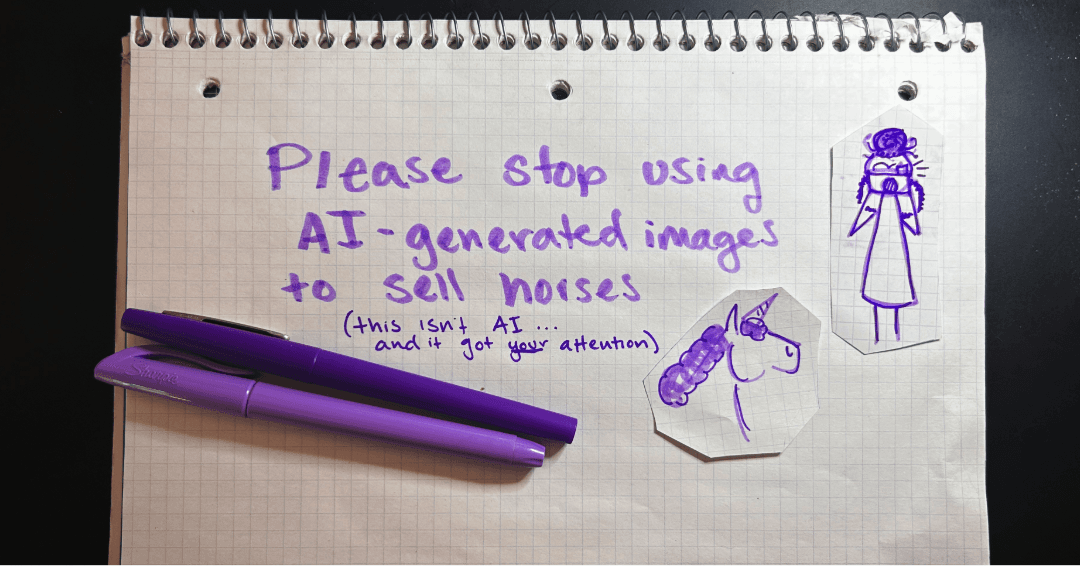
A Plea From Your Friendly Social Media Manager: Please Stop Using AI on Your Sale Horse Photos
I get it. You want to sell your horse. You have a photo from a show photographer, but it's not quite what you envisioned. The horse looks fine, but not great. The background is the schooling ring. The lighting is flat. And there's this tool that can fix all of it in seconds.