USEA Annual Meeting & Convention: Thursday Report
Although Thursday could be considered a light day at the USEA Annual Meeting and Convention, it was still packed with a variety of activities that kept Convention goers occupied all day long.
Five open forums and two educational seminars anchored the day's events with committee meetings squeezed into all hours. A report of the open forums can be found below, and check back soon for a video of the Rider Strength and Conditioning Workshop!
The USEF Eventing Technical Committee Open Forum
Dressage Tests - Jonathan Holling opened the discussion with a word about dressage tests. He felt that the Professional Horseman’s Council and competition organizers should have better means of communication to ensure that Advanced competitors are offered dressage tests of the appropriate difficulty depending on the time of year and the upcoming schedule of international events. For instance, horses aimed at Rolex should be able to begin the season riding the easier Advanced level dressage tests and ride the more difficult Advanced test in the weeks leading up to Rolex.
While Jonathan was talking in particular about the Advanced level, Karen O’Connor brought up that this should apply at all levels. She said that as part of the training process, a horse should be able to begin a season with an easier test and work up to the more difficult test as the season progresses. Otherwise, the horses may become anxious.
It was mentioned by another committee member that determining which test at each level is more difficult is important. The “B” or “C” test is not necessarily always the more difficult test.
Roger Haller closed the topic by suggesting a group including but not limited to Jonathan Holling and Captain Mark Phillips meet and compile a note to send to organizers addressing this issue. This topic will be further discussed in the Professional Horseman’s Council meeting.
Jockey Club Thoroughbred Incentive Program – The next item on the agenda regarded the Jockey Club’s recently launched Thoroughbred Incentive Program, which recognizes and rewards the versatility of the Thoroughbred through sponsorship of Thoroughbred classes and high point awards. The Jockey Club has committed $100,000 for a 2012 pilot program.
The challenge is implementing this program in accordance with USEF policies. Concern was also expressed that the description of the program is currently worded to appear very restricted. One attendee mentioned there may not be enough Thoroughbreds entered in the specific classes to make the competition viable and suggested instead a series with awarded points instead of offering designated Thoroughbred classes.
David O’Connor and Phillip Dutton both expressed support for the program despite the need to iron out details. “This is the place to promote the American horse,” David said.
Phillip followed up David’s comment by stating eventers should be enthusiastic about the program. Dutton also said that if the racing industry fully understands and recognizes the second life of the Thoroughbred as a sport horse, particularly in eventing, then it is possible higher-quality ex-racehorses will be marketed to eventers.
A motion to send a letter to the Jockey Club outlining the joint enthusiasm and suggestions for the Thoroughbred Incentive Program was proposed. Dutton seconded the motion and none opposed.
USEF Young Horse Championships – The USEF Young Horse Championship was discussed in brief. This championship is being developed as an equine show case for young horses of all breeds and disciplines. This championship gives owners, breeders, and trainers the opportunity to show case their young horses and also helps identify potential upper-level competition horses.
At this time, show jumping, eventing, combined driving, endurance, hunters, and dressage have expressed interest in the championship. Participation from dressage is tentative as the United States Dressage Federation currently has a well-established young horse program. Hosting the championships with all disciplines gives owners and breeders the opportunity to see which discipline their young horses fit into.
FEI Passes Mandatory Microchip Rule – By far the most engaging discussion referred to the recent FEI ruling that beginning in 2013, all horses newly registered with the FEI must be micro-chipped. David O’Connor mentioned that the main purpose of this rule is disease tracking. He said he would not be surprised if in the future, the United States Department of Agriculture made micro-chipping mandatory for all horses across all disciplines.
Cathy Wieschhoff asked if micro-chipping will alleviate the need for paper passports, noting the expensive and time consuming task of having a vet draw by hand every detail of a horse’s appearance. Attendees learned that the horses flown to Mexico for the Pan American Games were micro-chipped, and David said it made the airport process much quicker and easier.
Denis Glaccum expressed confusion as to why the FEI moved to micro-chip horses but will not switch to digital passports, choosing instead to continue hand-drawing a horse’s features. Roger Haller said passports are a source of revenue for the FEI, and the idea that micro-chipping will eliminate the need for paper passports is not an impossible option. However, many questions remain as to how micro-chipping will be regulated, how the chips will be read by organizers, and the technical aspects of updating and maintaining the data stored on the micro-chips.
Who Are You? – At the very end of the USEF Eventing Technical Committee Meeting, Cathy Wieschhoff asked, “What is this committee exactly and what do you do?” Committee Chair Malcolm Hook read the official outline of the committee duties which are as follows:
It shall be the duty of the Breed/Discipline Committees and Councils to hold at least one meeting a year to consider the recommendations and suggestions submitted by the respective Affiliate Associations, the Councils, the Exhibitors' Committee, other standing committees and others and to prepare, amend, and submit for consideration to the Board of Directors the rules for conduct of all classes within their respective Breed/Discipline or Council with specific attention called to any rule change(s) being proposed that were not endorsed by the respective Affiliated Association or Council. The Breed/Discipline Committees and Councils may be called upon by the President for advice and counsel as to technical questions regarding the conduct of classes in the Breed/Disciplines.
David translated by saying that the Eventing Technical Committee has full representation of all aspects of the sport. Malcolm said the committee also has a strong responsibility for the welfare, conduct, and future viability of the sport of eventing.
Professional Horseman's Council
The USEA Professional Horseman’s Council covered a variety of topics today in their Open Forum. Chaired by Jonathan Holling and Peter Gray, the meeting started from the ground up with a discussion led by Phillip Dutton about a footing management program. Phillip recently met with the National Steeplechase Organization to learn about their program for footing management, and he used two visual aids, a compaction meter and a moisture meter, to show the testing that is carried out on Steeplechase footing. Phillip explained that he believes the U.S. is at a disadvantage compared to the rest of the world because of the footing we have to run our horses on, and we need to put more emphases on preparing the track. A lively discussion followed on how a program of testing footing could be implemented including what makes good footing, who is going to do the testing, and how organizers can make their footing better.
Following the footing discussion, the PHC moved onto the selection of Advanced dressage tests and how organizers can choose the right ones to ramp up the difficulty in preparation for the destination events in the spring and fall. Organizers who were present in the meeting piped in that they did not mind which test they offered, they just needed to be told which one to choose. Marilyn Payne and Karen O’Connor were then tasked with the job of looking through the Omnibus to make recommendations of test selection.
Max Corcoran, the head of the USEA/PHC Horsemanship Task Force, then took the floor to give a report on the Task Force and open discussion for future goals. The Task Force has been busy this year with helping T3D and CCI* riders in the finish area and imparting knowledge to riders on how to properly cool down their horse’s after cross-country. Some ideas that were given for missions for the Task Force included getting more involved with the Pony Club, have a special talk during the jog-up and finish area at major events that would explain to up and coming riders what is going on and why riders were doing certain things for their horses, have a lecture series at the AEC, work with area chairs at camps, and participate at Pony Club Nationals.
Danny Warrington then brought up the discussion of a carding system for trainers/coaches. Several ideas were brought up but the discussion boiled down to how we positively or negatively track the trainers who are bringing students to events, whether recognized or not, who are producing students that ride and compete dangerously. No firm resolution was reached but the discussion was definitely left open-ended for more ideas.
The next issue on the table was the Omnibus description of cross-country courses. This was something that was originally raised by the Organizer’s committee and brought to the PHC for their opinions. Some ideas that PHC members had included having the rider representative score the event and then averaging that with the score of other officials. This score would then be published in the following year’s Omnibus listing. It was also mentioned that the course designers could score their event and this could be added to the online listing one week before Opening Date, however, John Williams interjected that is would be hard to get all of the course designers scoring consistently at all events. The final thought was basically to keep the paragraph descriptions, but request that organizers be more descriptive and include more specific information when writing about their courses.
The discussion then moved onto the rider representative role, one of the main tasks of members of the PHC. Jon Holling urged the PHC to send in their rider rep forms consistently and in a timely manner, and explained that this is the riders’ chance to get their voice heard and they need to be held accountable otherwise this chance could be taken away. Communication needs to be strengthened between the rider rep, organizers, and officials.
The PHC then turned to old business including: clarification of Area Rider Representative role, the Watch list, and the splitting of Advanced and Intermediate divisions. The PHC was informed that a rule that will be implemented in 2013 has been proposed that organizers will have the option to not to split the Advanced level. Currently it is required that you have to split a level if it has more than 40 riders right now. By keeping the Advanced level together this will allow organizers to have better prize money and more complete competition.
The two hour PHC meeting concluded with a brief foray into this Convention’s hot topic – the one fall and you are out rule. Opinions were heard on every side of the fence of what will certainly be a much discussed issue this weekend.
USEF Active Athletes Open Forum
The USEF Active Athletes Open Forum was moderated by Captain Mark Phillips and Sara Ike. The discussion primarily focused on the preparation for the Olympics.
Sara stated that $400,000 had been allocated for accommodations prior to the Games. The riders expressed a need for communication so they know what will be covered by the monies and what they can expect to spend themselves. Sara said the monies will likely be distributed in the form of grants.
The team will be housed at Eddie Stibbies’s farm in England prior to the Games. It has 50 stalls, good footing, large turnout paddocks, good fencing, and great training facilities
It was mentioned that Bettina Hoy will be available regularly early in 2012 to work with the listed riders.
Sara said that competitors should expect a fitness evaluation as part of the criteria for selection. The details have yet to be ironed out, but she wanted riders to be aware. Mark said the fitness criteria will not be a deal breaker for selection, but an important part of preparation. The fitness programs established will be on a person by person basis, just as the spring schedule for the horses will be based on individual needs.
The team selection trials will include Rolex, Jersey Fresh, Badminton, and Saumur. There is a possibility of adding additional dates, but the hope is the selection trials will be finished mid-May to give the horses enough time to recover. Mark will discuss individually with riders their schedules and expectations. The final mandatory outing for the ten short-listed riders will be the Barbury CIC3* in June. The team must be named by July 6.
Riders attending the forum were very concerned that the team and alternates be named before Barbury, but Mark Phillips did not think that was the best strategy to maintain the necessary level of training. He said England has enough experienced riders that they can name a team early without compromising training. The mindset of American athletes, he said, was different. He used Phillip Dutton as an example, stating that Phillip would not want to go to the Olympics unless he was going to be competitive. However, other listed riders simply dream of going to the Olympics and once chosen for the team their training regime may wane.
Karen O’Connor admired the cohesiveness of the Pan American team this year, stating that although the team changed at the last minute, it was still a cohesive group cheering and supporting one another. “We beg for that,” she said. It is too difficult, however, to name a team late and go from competing against each other to cheering for each other overnight.
The United States Olympic Committee also gave a brief presentation touching on nutrition, fitness, and sports psychology.
Andrea Braakhuis said the goal is to be healthy, fit, and lean athletes. She said once again that the fitness regimes will be outlined on a person by person basis. The baseline fitness evaluations will begin with a skin fold test during the Convention.
Amanda Wittenmeyer discussed strength and conditioning. She pointed out that riders can no longer “ride into shape,” and their objective is to commit to achieve a certain level of physical preparation necessary to maintain a high level of athletic performance at the London Olympics.
Sean McCann made several observations relative to sports psychology. He said that eventing is an exceptionally challenging sport requiring three different mental games on multiple horses and often under the stress of dealing with uncontrollable factors. He said winter is the time to work on one’s mental game and that self-awareness may be the single most important skill for success. Despite the heated discussions about when and where to announce the team and why, Sean said an athlete must always prepare under the assumption that it will work out for that athlete in order to maintain mental preparedness.
USEA Xentry: What’s Next?
Robert Winter gave a presentation on the progress of Xentry, the USEA’s Online Express Entry System. Xentry was established as a service to members, providing a quick, secure, easy way to enter competitions. Xentry has morphed into a service beneficial for organizers as well.
Xentry’s 2011 numbers are as follows:
1160 total entries through Xentry system
509 total entries paid by credit card
163 events received at least one entry through Xentry
94 events received four or more entries
32 events received ten or more entries
587 members entered events via Xentry
305 members entered using a credit card
129 submitted three or more entries
Xentry is a service beneficial to many people for many tasks. It is a database driven and managed by USEA, creating the ability to improve collecting and verifying data. Data pertaining to many demographics are available. Membership verification and digital qualification information makes completing and managing entries easier for both the riders and organizers. Xentry is also working closely with StartBox Scoring to streamline the transfer of data before and after competitions.
2011 was a successful pilot year for Xentry, and the developers took great care in creating a user friendly interface and fixing software bugs. Expanding Xentry’s range of services is the goal for 2012.
Developers of Xentry intend to make it easy for riders to enter themselves in competition and also give access to parents, owners, secretaries, and grooms to enter for competitors. Non-members will also be able to enter through Xentry, and members will be able to update their memberships and manage their horse’s registrations. Organizers will have the ability to manage event registration and make updates to omnibus listings.
USEA staff is often asked to run queries and generate reports pertaining to qualifications and event results. It is the hope that Xentry users will have the ability to run these queries themselves.
The USEA targets having these services and others, including 100% paperless entries for participating events, will be implemented into the Xentry system by the third quarter of 2012.
Xentry has been tested on multiple browsers and mobile platforms are in development.
USEF Event Owners’ Task Force
Nearly every upper level rider, several high profile owners, legal , and non-profit representatives gathered together for the USEF Owner’s Task Force Open Forum. Task Force Chair, Dr. Mark Hart, started the meeting with a background of how the group was formed. The EOTF ultimately started out of conversations among the owners at the 2006 World Equestrian Games in Aachen. Over the next two years the discussions continued and the Task Force was officially created in 2008. The goals of the EOTF are to broaden the group of owners in America and to enhance the event horse owner’s experience. The EOTF wants good, competitive teams and they know that the way to do that is to have the best horses under the best riders.
The EOTF believes that the way to bring in new owners is through syndication. The cost of owning an upper level event horse is prohibitive, so the best way to get people involved is to sell shares. The syndicates will never be profitable the way they have in horse racing, so owners need to do it for the love of the sport and the game. The EOTF has chosen to create a website that will become the vehicle to help riders and owners join together in syndicates or other ways. The website presents materials for owners and riders such as sample budgets, contracts, and tax deductible information. The other side of the website is a place where riders can post information about themselves and horses they are interested in syndicating. Owners can then go to the website and get a feel for certain riders they might be interested in getting involved with.
Following the overview of the syndication process, Boyd Martin then took the floor and gave a personal account of how he syndicated Neville Bardos and Otis Barbotiere and his experiences with the new syndications. Ali Slusher then relayed her recent experience of syndicating a four-year-old Windfall mare. The discussion flowed back and forth about what kinds of horses should be syndicated and which riders should be supported. In his final tips Boyd emphasized that he believes only truly exceptional horses should be syndicated as the owner base is so limited that you don’t want to burn an owner on a horse that might not make it.
Related Articles
Hiller and Patterson Claim First USEA Classic Series Victories of the Year at Longleaf Pine H.T.
The Longleaf Pine Pine H.T. kicked off the 2026 USEA Classic Series season on April 3-5 at the Carolina Horse Park (Raeford, North Carolina). This year, the event offered two Classic Series divisions at the Beginner Novice and Novice levels. Get to know the first Classic Series champions of the y...

The Classic Series is ‘Icing on the Cake’ for Longtime Coconino Organizer Alice Sarno
For Alice Sarno, competing in a long format three-day event during her competitive career was always “icing on the cake” after a season of horse trials.
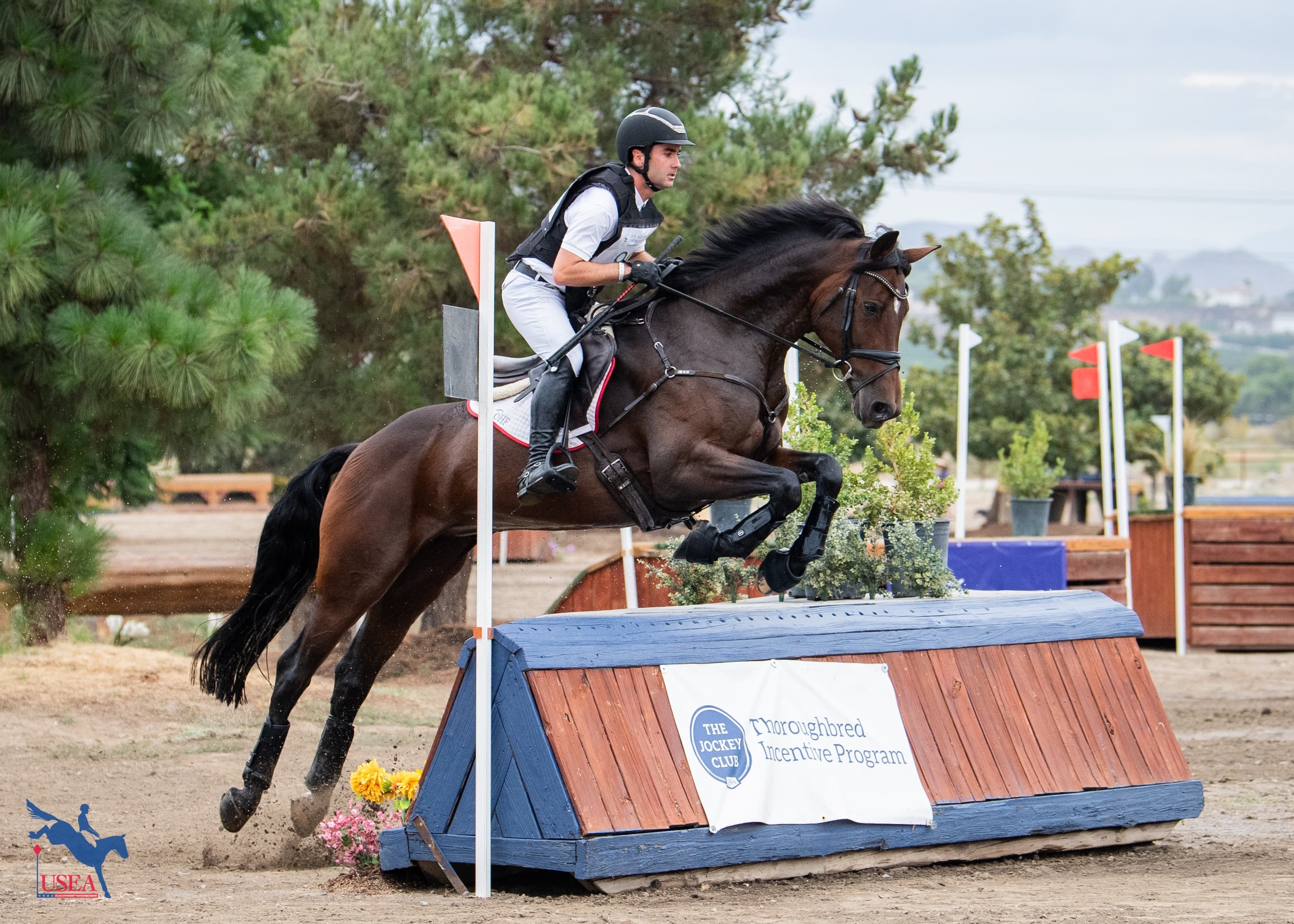
Championing Thoroughbreds in Eventing: The Jockey Club Renews Partnership with USEA
The United States Eventing Association (USEA) is pleased to announce the renewal of its partnership with The Jockey Club for the 2026 season. As part of this continued collaboration, The Jockey Club will return as a Silver Sponsor of the USEA American Eventing Championships (AEC) and a Contributi...