Tips for the 10-Minute Box at a Classic Three-Day Event
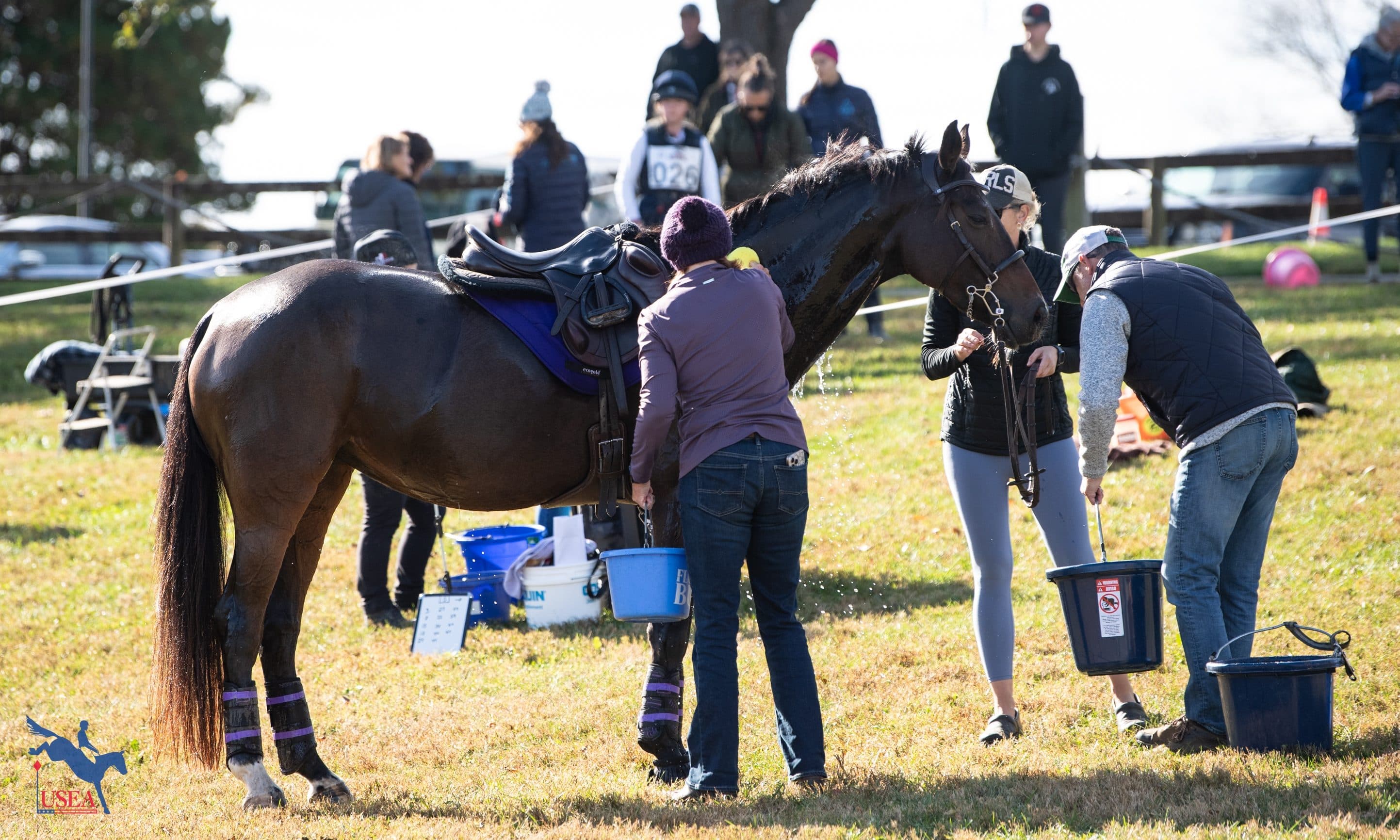
The most exciting part of a Classic Series event is endurance day, where riders test their horsemanship skills to find out if they’ve prepared and conditioned their horses for the added challenges of roads and tracks and steeplechase before heading out onto cross-country.
One of the most important places on endurance day is the 10-minute box, a designated area where competitors go after Phase C, the second roads and tracks phase, to have their horses checked by a vet and to take a short break before heading out onto Phase D, cross-country.
Fallon Haig, DVM, DACVS, is a hunter/jumper rider turned eventer who serves on the USEA Classic Series Committee. She works at Loomis Basin Equine Medical Center near Sacramento, California, as a surgeon and equine medical manipulation practitioner.
Haig has worked at the Ram Tap Three-Day Event in Fresno, California, and enjoys watching her eventing community come together to put on the educational event.
Haig explained that the 10-minute box is a safety check before Phase D. You'll also head to the area of the 10-minute box after your cross-country round to the D Box to have another vet check and start getting yourself and your horse cooled down and recovered.
“I think the 10-minute box really makes the riders aware of their own horses' health and cardiovascular status,” she said. “You need to know that your horse is fit enough to make sure everything's going to go well on cross-country.”
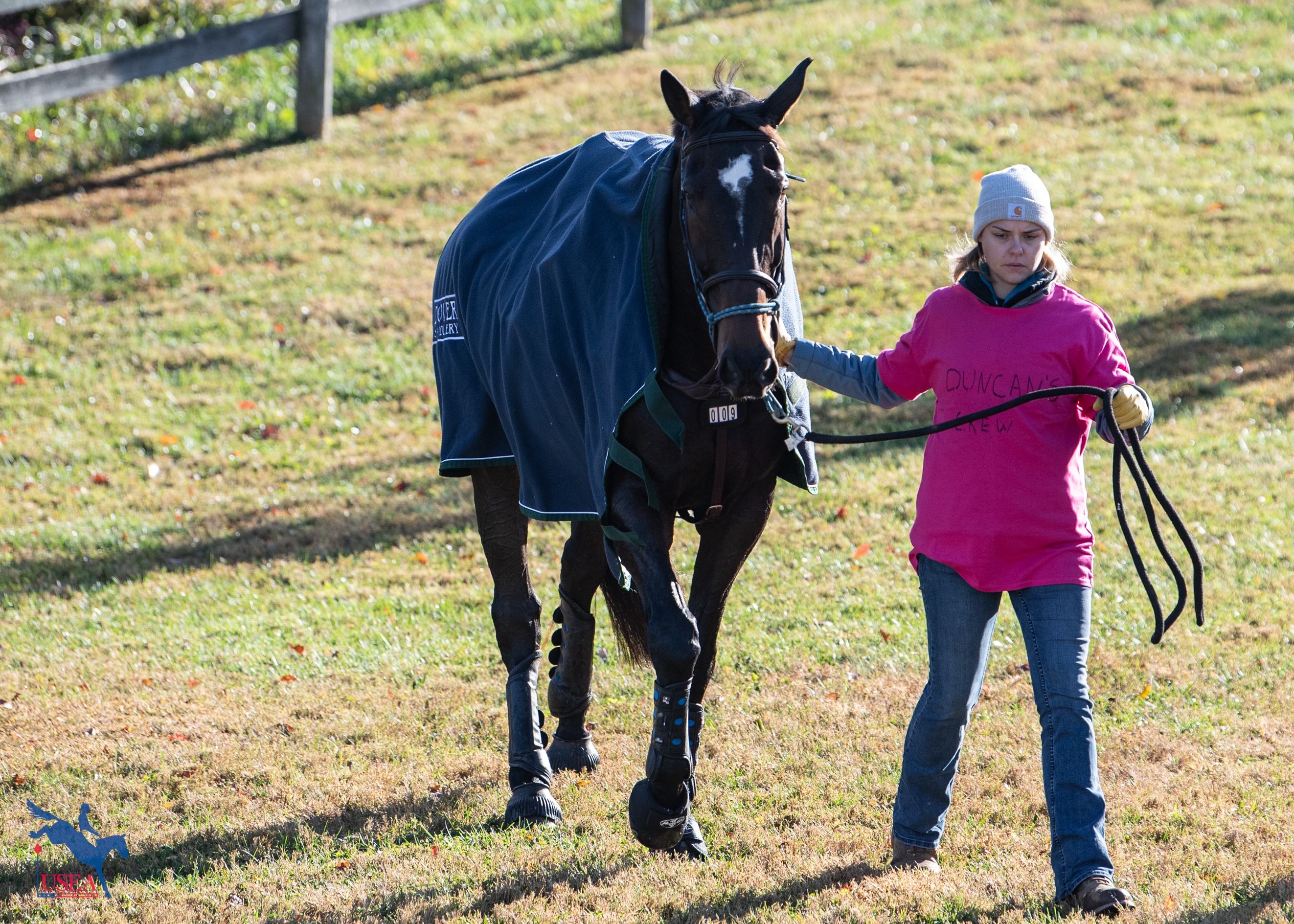
It helps to be extra-prepared for both the 10-minute box and the D box. Pack a couple of buckets of supplies for your helpers to carry. An extra set of shoes and studs, an extra crop, spurs, or anything else that might break. Bring Gatorade or another type of hydration beverage and water for you. Bring a bucket for your horse to drink out of and a bucket for sponging.
Haig said it’s best to get to the 10-minute box earlier than 10 minutes before your cross-country ride time, so you have as much time as possible for recovery, so try to stick to your plan on the first three phases without pushing your horse too much. You’ll trot straight in, dismount, and a vet will get your horse’s TPR (temperature, pulse, and respiration) while looking them over for any cuts or scrapes and keeping an eye on them to make sure they recover quickly.
They’ll already have a baseline TPR and other information on each horse’s health that’s gathered during in-barn examinations when you arrive before the start of the competition and can use that as a comparison in the 10-minute box.
While your horse is being examined, you’ll have a chance to take a breather, get hydrated, and check for lost or loose shoes or any tack malfunctions. Ideally, you’ll have at least one other person to help you.
“We've definitely been at a place where somebody comes and their helpers or their team has been called to an emergency or something has shifted in the schedule, and they can no longer get help, and the riders or the teams for the other riders just kind of step up and help, and it's really lovely to watch the cooperation and friendliness and teamwork,” Haig added.
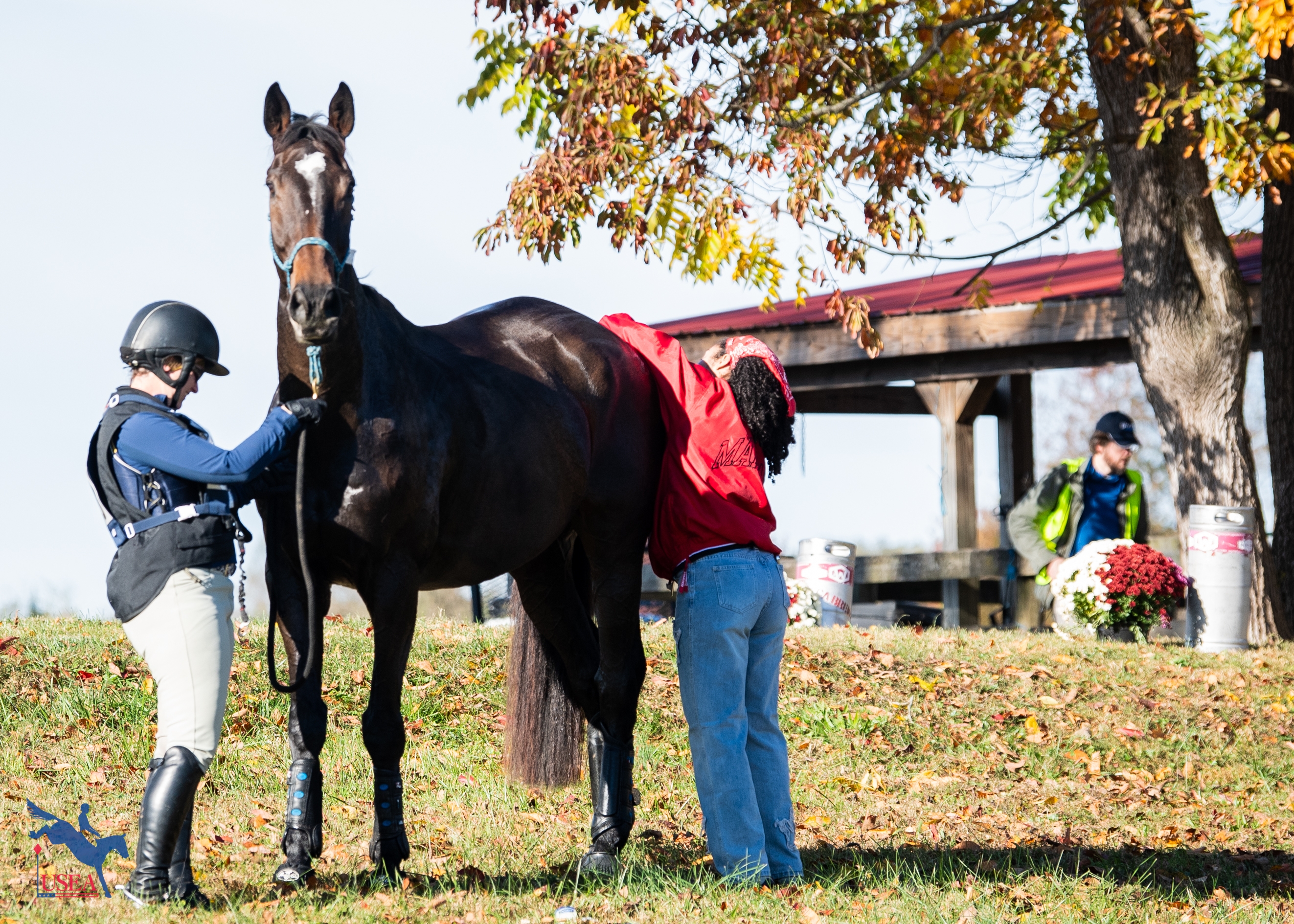
Horses must be cleared by the vet before they can leave the box. “I’ve been very fortunate to work with some amazing horse people, and none of the horses that I have had that I have worked with in the Classic capacity have been forced to retire by me because their people have been getting them trained up for this and doing the gallop sets and the trot sets and the endurance aspect of it to make them ready for it from a cardiovascular standpoint, which is amazing,” she said. “But if I don't think it's safe for the horse to compete, I will not let them.”
Some signs that a horse is not fit to continue would be colicking, lameness, urine that’s red or dark brown, which could indicate dehydration or tying up, or open wounds or swellings acquired during the first three phases.
Once their horse has been cleared, riders can get back in the tack.
“One of the mistakes that I see people have is that somebody loosens the girth during the time in a box, and that same person does not tighten the girth at the end, and the rider goes to get on, and then there's a kerfuffle, so whoever is loosening the tack needs to be responsible for tightening the tack back up before they go cross-country,” Haig suggested.
The rider is responsible for keeping track of their cross-country ride time and getting to the start box once their horse has been cleared.
After your cross-country ride, you’ll head to the D box for another vet exam. Haig says she’ll watch the pair trot in from cross-country to make sure there’s no obvious lameness, then have their rider’s team strip the tack and start cooling the horse down. Once the horse shows her it’s cooling down appropriately, usually within 5 minutes, she’ll send them back to the barn for a complete cooldown.
She recommends getting tendon boots off as soon as possible after cross-country.
“I would really encourage them to get those off as quick as possible, because all the heat that gets trapped in there is not so great for the horse's legs long term,” she said.
Your entire week at a Classic Series event will be full of education, but the 10-minute box is key to learning about and understanding the heart of the sport.
“I think the main reason I like [the Classic Series] so much is because they are educational as well as just the competition, and so I think you see a whole other level of horsemanship and teaching and learning about the history of eventing and good ways to care for your horse,” Haig concluded.
About the USEA Classic Series
The USEA Classic Series keeps the spirit of the classic long format three-day events alive for Beginner Novice through the Preliminary levels. Competitors can experience the rush of endurance day, including roads and tracks, steeplechase, the vet box, and cross-country, as well as participate in formal veterinary inspections and educational activities with experts on the ins and outs of competing in a long format three-day event. Riders who compete in a USEA Classic Three-Day Event during the year will have the chance to win a variety of prizes at the events from USEA sponsors and earn leaderboard points. Click here to learn more about the USEA Classic Series.
The USEA would like to thank bronze sponsors D.G. Stackhouse & Ellis Saddles, Gallagher’s Water, PulseVet, and SmartEquine, contributing sponsors Bates Saddles and Schneiders Saddlery, and prize sponsor 100xEquine for supporting the USEA Classic Series.
Related Articles

World Equestrian Brands Continues Support of USEA Programs in 2026
The United States Eventing Association (USEA) is pleased to welcome back World Equestrian Brands (WEB) as a valued partner for the 2026 season. World Equestrian Brands will support multiple USEA programs and initiatives, including T...
HSH Moves Like Jagger Takes Center Stage in USEA YEH East Coast 5-Year-Old Championship
It was a weekend to remember for Caroline Pamukcu at the 2026 Dutta Corp. USEA Young Event Horse (YEH) East Coast Championships at Fair Hill, as she followed up Friday's victory in the 4-year-old division with another championship title on Saturday, this time aboard HSH Moves Like Jagger. The 5-y...
HSH Straight Arrow Hits the Mark in 2026 USEA Young Event Horse East Coast 4-Year-Old Championship
Caroline Pamukcu added another USEA Young Event Horse (YEH) Championship title to her résumé today at Fair Hill, piloting HSH Straight Arrow to victory in the 2026 USEA YEH East Coast 4-Year-Old Championship. The 4-year-old Irish Sport Horse gelding, owned by Pamukcu and Sherrie Martin and bred b...