The VAP Series: Show Jumping In-Gate
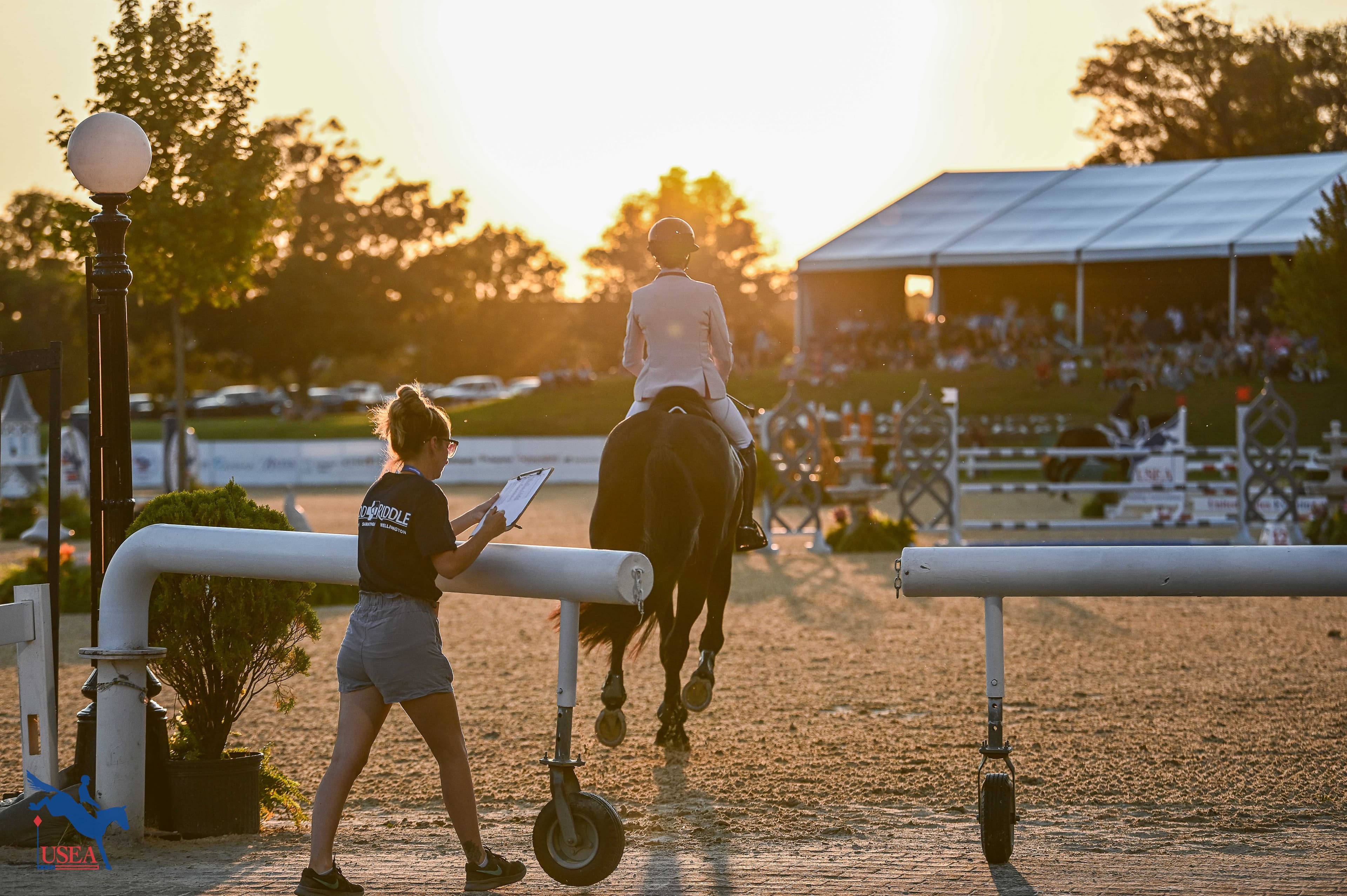
There is a lot happening at the show jumping in-gate. Riders are putting the finishing touches on their warm-up, horses are coming and going from the arena, officials are communicating over the radio, and the order of go needs to keep moving. At the center of it all is the Show Jumping In-Gate Steward, helping ensure each competitor knows exactly where they need to be and when.
In the next installment of the VAP Series, which shares best practices for completing your badge in every role available through the USEA Volunteer Achievement Program (VAP), we're taking a closer look at a position where organization, communication, and a calm demeanor can make a big difference for both competitors and officials.
What Does a Show Jumping In-Gate Steward Do?
Simply put, the Show Jumping In-Gate Steward regulates the flow of competitors into and out of the show jumping arena. But keeping an entire division running smoothly requires plenty of coordination behind the scenes.
Before the first horse enters the ring, the In-Gate Steward should review the order of go, noting competitors with multiple horses, missing numbers, and anything else that could affect the schedule. They will also coordinate with the Show Jumping Warm-Up Steward and check in with the Show Jumping Judge to learn how they would like riders sent into the arena. Depending on the event, the judge or announcer may have additional instructions for the information they need communicated over the radio.
For Shawn O. (Area X), that preparation is one of the keys to being successful in the role.
"I try to volunteer at every event I participate in. I especially like to do the show jumping in-gate for several reasons: I love watching show jumping, I like to see my friends ride, and I like to get a look at how the course is riding. Also, as a rider, I know how helpful it is to get to the in-gate and have someone there who knows what is going on and clearly tells me what to do and when. It is a calming influence."
Shawn makes a point to speak with the show jumping official before competition begins to determine when they want the next rider sent into the ring and what information they want communicated over the radio.
"Each official is different and has a preference, so I try to do it the way they want," Shawn said. "Maybe it's my military background, but I like to run a tight ship, stay organized, and stay on time. I think that is another reason why I like to work the In-gate; I have a direct influence on how well the event runs."
Keeping Things Moving
Once the division is underway, organization becomes even more important. Ideally, the In-Gate Steward should have one competitor in the arena, one "on deck" at the gate, and another ready to go. As riders arrive, the steward notes their arrival on the order of go and lets them know whether they are next, one away, two away, and so forth.
As each competitor enters, the steward communicates their name and number to the judge and announcer and notes any changes to the published order. At the same time, they must keep the in-gate itself clear so that horses finishing their rounds can safely exit without interfering with the next combination preparing to enter.
That steady flow can have a significant impact on the pace of the entire competition—and on the experience of the riders waiting their turn.
For Roger C. (Area VII), who regularly works the in-gate at Aspen Farms Horse Trials, interacting with those competitors is what keeps him coming back.
"There's one show that I am the consistent in-gate person, and that is Aspen Farms Horse Trials. My favorite part is the interaction with the riders. I wish them all to have a great ride and most of all to have fun," he said. "I keep returning because the organizer of the show and all the volunteers are such great people. It is just plain fun to be there."
Communication is Key
While keeping track of the order of go is an important part of the job, a successful In-Gate Steward doesn't work alone. The role relies heavily on communication with the warm-up steward, judge, announcer, and other officials.
That teamwork is something Bob B. (Area VI) has come to appreciate through his time volunteering at the show jumping gate.
"My first love is cross-country, but I've really enjoyed working the gate at Stadium," he said. "I've gotten to know William [Robertson], a course designer, and he is very involved throughout the show. I've noted the progression of announcers in the arena, especially at Woodside, and I think that gives the process more validity."
Bob has also found that developing a good working relationship with the warm-up steward can make all the difference.
"I have also been lucky enough to partner with Ann, who controls warm up. And control she does (in a good way). We work well off of each other and it seems to work for others around us—judges included. We've done several FEI shows at Twin [Rivers Ranch], and that was a good learning experience."
The guidelines also emphasize establishing ahead of time how unusual circumstances will be handled. Riders should generally follow the published order, with out-of-order rides being the exception rather than the rule. Because procedures can vary by event, the In-Gate Steward should coordinate with the Organizer and judge beforehand about who has the authority to approve a change.
Skills for Success
If you like staying organized, communicating with people, and having a front-row seat to the action, show jumping in-gate might be the volunteer role for you.
A good In-Gate Steward can keep track of several things at once without allowing the atmosphere at the gate to become hectic. Riders need clear information about where they stand in the order, while officials need timely and accurate communication. Meanwhile, horses are moving through the same space, making good horsemanship and awareness especially important.
Perhaps most importantly, the person at the gate can help create a positive experience for competitors. A rider heading into show jumping may be excited, nervous, or intensely focused. Having a volunteer waiting who can confidently tell them when they're due in the ring gives them one less thing to worry about.
And volunteering can offer something equally meaningful in return.
"My daughter is in her 16th year of riding at only 21 years old," Bob said. "Horses are her life, and I enjoy being able to be part of her world without being intrusive."
Preparing for Your Shift
Show jumping in-gate doesn't require much equipment, but volunteers should come prepared to spend their shift outdoors. The USEA Volunteer Committee recommends comfortable closed-toe shoes appropriate for changing footing conditions, along with weather-appropriate clothing, sunscreen, snacks, drinks, and a folding chair. The event will generally provide the essentials for the job, including a clipboard, order of go, pencils or pens, and a radio.
Volunteers should arrive at least 15 minutes before their shift to check in and collect their materials. If the event uses EventingVolunteers.com, remember to check in and out through the app so your volunteer hours count toward year-end awards.
How Do I Earn My Badge?
Are you ready to earn your Show Jumping In-Gate Steward badge? Log onto EventingVolunteers.com, go to "My Dashboard," and use the "My Achievements" tab to start working toward your next VAP badge.
Begin by watching the volunteer video and reviewing the guidelines for the Show Jumping In-Gate Steward position. The guidelines provide the foundation for the role, but volunteers should always consult with the Volunteer Coordinator or event officials if they have questions or need additional information specific to their event.
From there, complete the assessment for the role and begin logging your experience working show jumping in-gate at USEA recognized competitions. Once you've completed the necessary requirements, you can work toward having the Show Jumping In-Gate Steward badge added to your Eventing Volunteers profile.
Whether you're drawn to the role for the front-row view of show jumping, the chance to interact with competitors, or the satisfaction of helping an event stay on schedule, the Show Jumping In-Gate Steward has a direct hand in keeping competition moving smoothly—one horse and rider at a time.
About the USEA Volunteer Incentive Program
Volunteers are the lifeblood of our sport—the unsung heroes, and the people who make it possible to keep eventing alive. In efforts to recognize the dedication, commitment, and hard work that volunteers put into eventing, the USEA formed the Volunteer Incentive Program (VIP) in 2015. In 2017, an online management portal was designed for volunteers, organizers, and volunteer coordinators at EventingVolunteers.com, which is also available as an app for iOS and Android.
Volunteer incentives include national and area recognition, year-end awards, a top 10 USEA Volunteer leaderboard, and a Volunteer of the Year award which is given to the volunteer who accumulates the most volunteer hours on EventingVolunteers.com at recognized events throughout the USEA competition year. Click here to learn more about the USEA Volunteer Incentive Program.
The USEA would like to thank the Maryland International Educational Foundation and Horse Illustrated for their support of the Volunteer Incentive Program.
Related Articles
Derek di Grazia to be Inducted into U.S. Eventing Hall of Fame in December at the USEA Annual Meeting & Convention
Since 1999, more than 50 outstanding horses and people have been inducted into the U.S. Eventing Hall of Fame. Induction into the Hall of Fame is the highest honor awarded within the sport of eventing in the United States that is only bestowed to individuals who have made significant contribution...
Never Say Never: Devoted Area VII Volunteer Sarah Airhart Completes Her First USEA Recognized Event
Sarah Airhart had it made. She was enjoying a half lease on a 16.2 Warmblood named Pantero (Rex Grannus x Tibet) that she adored and whose owner, Ronni McLaughlin-Remy, was willing to take them wherever they’d liked. She also landed a coach who she long admired through her 12 years of volunteerin...
The Work of Breathing: Respiratory Load and the Young Event Horse
Developing a young event horse is an exercise in patience and detail. Riders build fitness gradually, introduce new questions carefully, and pay close attention to soundness, nutrition, and confidence. One part of the workload is easy to overlook because it rarely shows itself: the work of breath...