Future Proofing Eventing With the USEA Youth Mentorship Program
For many of us, our experience with eventing is limited to being a rider, a competitor, or a fan. We enjoy the sport by doing it or watching it, cheering for the successes, and bemoaning the losses from personal enjoyment or disappointment. Some of us may be lucky enough to compete at the upper levels, and even more so to be in a place with expert instruction and education. But what actually goes into making a level playing field for the sport we love often remains a blurry, out of sight area.
“We have a shortage of good officials,” said Peter Gray, former Olympic event rider, current FEI five-star judge, and ground jury member at the 2026 Eventing Championships at Galway Downs FEI competition. “In lot of young people I’ve noticed in the past, becoming an official sounds like a great idea, but they go off to university, and you never see them again. So we have a big problem.”
Back in 2008, Vicki Howard-Fine, then Area IX Young Rider Coordinator, noticed a similar problem. Of those members who were staying in the sport, many of them aspired to ride professionally and were unaware of other career opportunities that existed in the sport they loved so much. Perhaps, she thought, there was a way to solve the two problems with one solution.
There lies the birth of USEA Youth Mentorship program: a chance for youths between the ages of 16-25 who are current members of their Area Young Rider program or Collegiate team to shadow officials at FEI competitions.
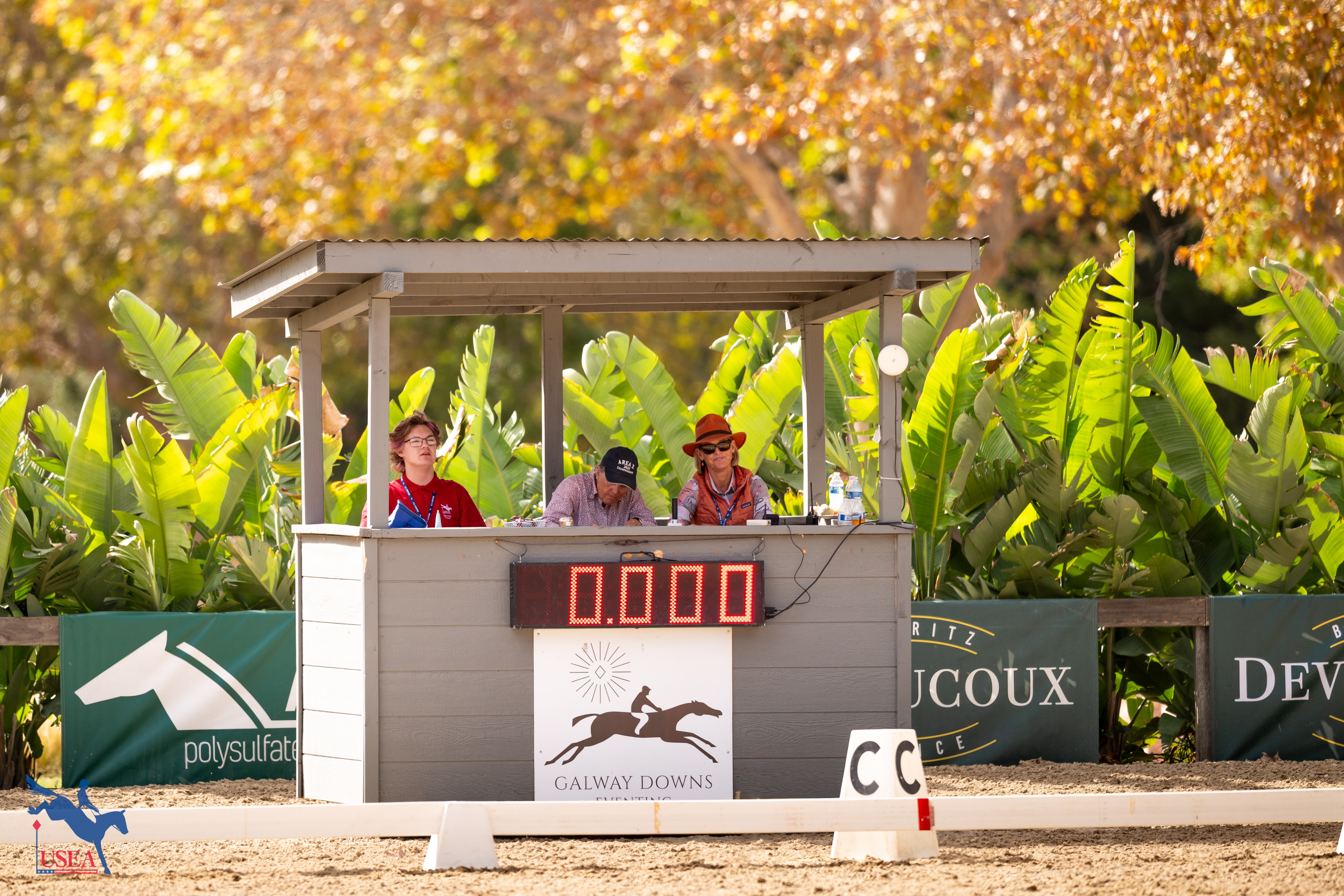
At first, the program was only offered at Young Rider Championships but it has since grown to run at various events in both recurring and one-off capacities across the United States such as Plantation Field International Horse Trials, USEA Intercollegiate & Interscholastic Championships, USEF Young Rider Championships, and as of this weekend, the 2026 Eventing Championships at Galway Downs in Temecula, California. Howard-Fine worked heavily with many different Area Coordinators such as past Area II Coordinator Chris Donovan and past Area I Coordinator and Current Committee member John Bourgion. When the time came to find a new program facilitator, Holly Covey, then a volunteer who worked often with Donovan, got the tap on the shoulder. It was a no-brainer for her to say yes.
“The most important thing for the future of the sport would be trying to help that way,” Covey said. “They really do ask the young riders to be mentored by the officials at the event. It exposes them to the inner workings of the backside of an event, as well as teaches them about the horsemanship required at this competition level. I think that’s the most valuable part of it. These kids spend four days with judges, officials, and technical delegates, and they go home different riders. They treat their horses differently. They have a whole different perspective on what horsemanship means. So it’s more educational for them as well as a way for the USEA to enable young riders to see what it’s like to be an official and possibly make that a life goal.”
Covey was joined this weekend at Galway Downs by Kendra Zartman, the Area VII Young Rider Coordinator alongside Scott Wiede. Over the summer, she traveled to the USEF Eventing Young Rider Championships at The Maryland International + Horse Trials in Adamstown, Maryland, and saw Covey running the program firsthand.
“I thought it was amazing!” Zartman exclaimed. “What the kids got to do, who they got to be with, the judges, and I really wanted to bring it here to the West Coast. This is an incredible way for the kids to learn to express themselves, how to be respectful to everybody, to [learn to network], and [to see] the officials are actually on their side. Sometimes officials have a bad reputation because all they do is rules. The kids need to know the officials are real people and they are here to help them succeed. This sport has wonderful, amazing riders right now and it’s super important we always have riders coming up that continue at the FEI level as riders, as trainers, as coaches. What we are doing here today is ensuring that the USEA and the sport of eventing has a future 10 years from now. These are younger kids. In 10 years, they are going to be the ones that’ll be on the committees. In 20 years, they’ll be the officials and making the rules. So I think we are setting up the sport for future success.”
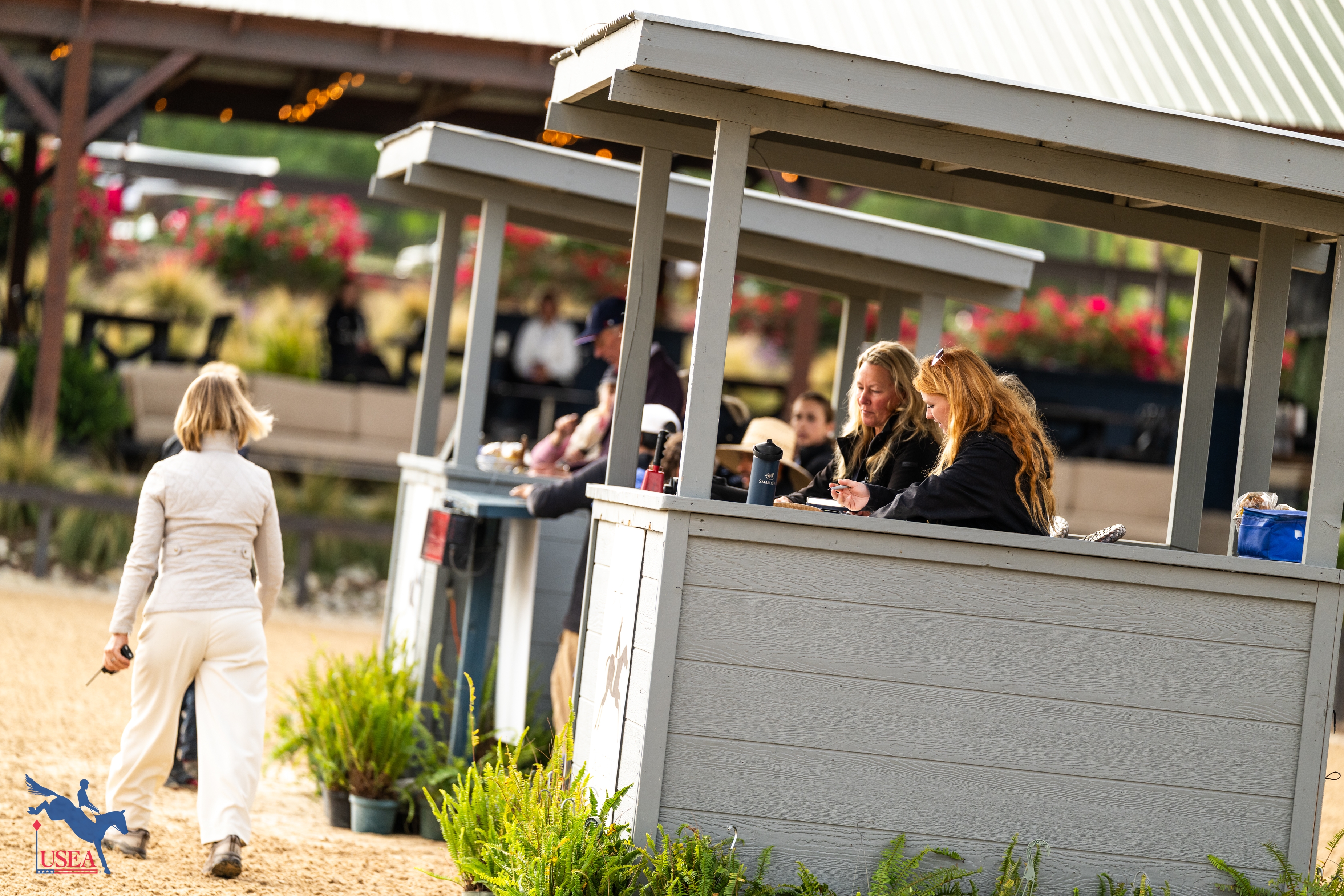
A high level of maturity is expected from the program participants as they must be able to observe quietly and spend long intense hours with active event judging without interfering or distracting the officials themselves. In applying for the program, they must write a short resume of their equestrian experience, select a specific role they are keen on shadowing, and explain their choice. In doing so, Covey says, it prepares them for a future as an elite athlete.
“Learning how to talk to sponsors, how to write down your resume, learning how to prove to people you’re an elite athlete, that’s important,” she remarked. “Young riders are elite athletes. If you were in high school gymnastics, you wouldn’t be doing gymnastics at a national championship, but these kids are so they are elite and it just takes a bit of practice for them to start thinking about themselves as being in this sport.”
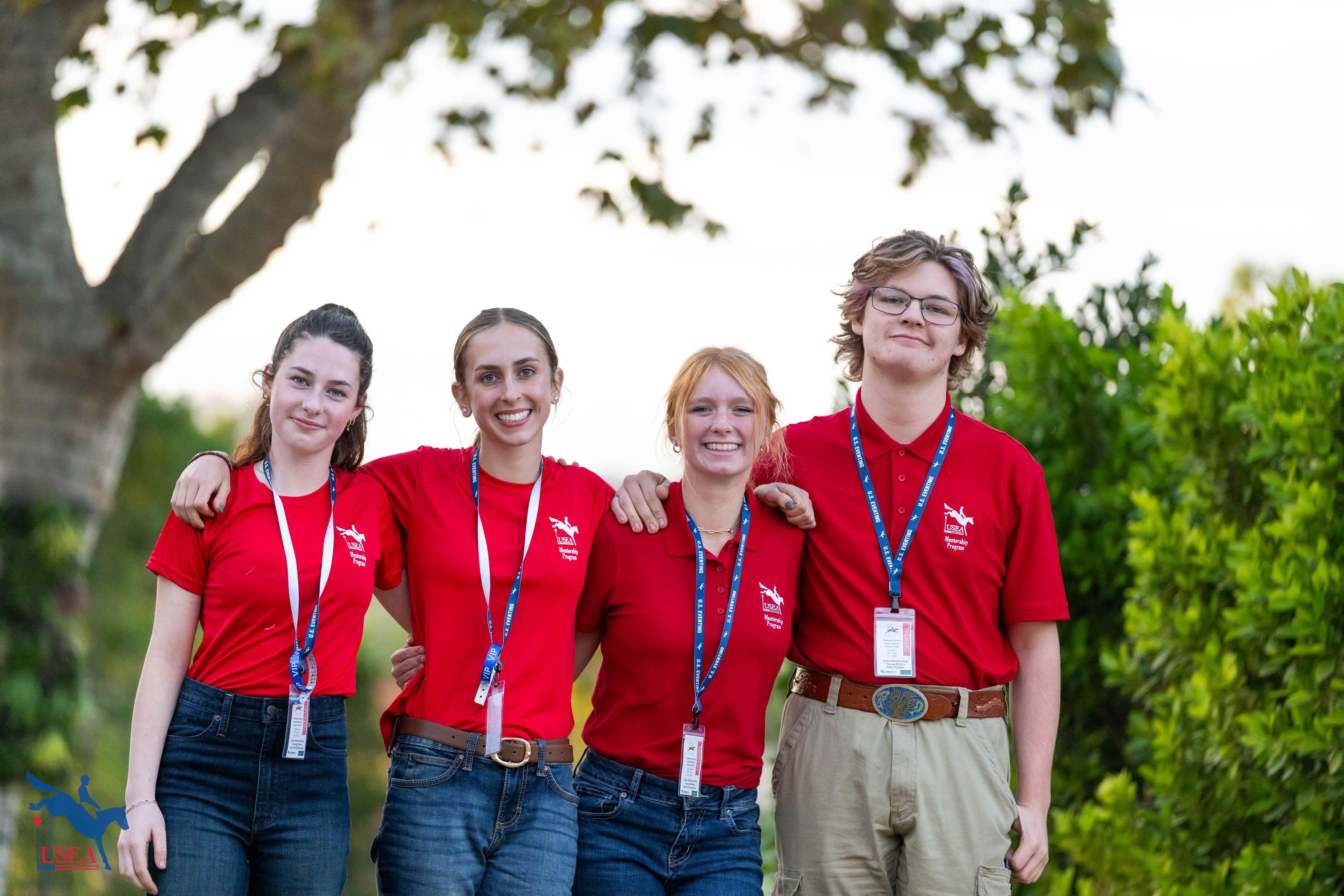
The group of mentees at Galway numbered only four but all hailed from Washington state. Teagan Barte, Chloe Dunsmore, Miles Paden, and Audrey Rehberger, jumped into the fire with excitement and enthusiasm.
“If I want to be someone in the sport that works in it, [this is] such a great way to see what everybody does and how to get involved in the different aspects,” Dunsmoor explained. She spent much of the dressage day taking reams of notes in a new notebook and learned an enormous amount about the communication that happens between the judges. “Each judge thinks differently and especially at the FEI levels, it’s not just one judge. They do a lot of talking between each other; asking why did we give this horse this score? Why did we do this? Why did we do that? I never knew that. I really thought it was A is their own person, C is their own person, B is their own person. I didn’t know it was a team effort.”
Barte agreed. “I’m interested in learning what goes into an FEI event behind the scenes and how everything gets put together. Dressage honestly isn’t my favorite but today showed me that it’s actually really interesting and there’s a lot of work that goes into it. A lot of education and knowledge too.”
For Peter Gray who was mentoring for his third time alongside his role as judge, the reward is the joy of educating and the hope of seeing them in the judging booth in the future. “It’s a special group of young people. They are really interested, have extraordinary communication skills, very interested in what we are doing, and what they are learning. We just need one. We need one good person every year to graduate from this and go on. We don’t need a zillion new officials, just a couple of good ones. Once they learn how much it takes to be an official, all the mentoring, all the exams, all the money to travel: we have a big problem. If we just get one or two from this program, it’s a bonus.”
Debbie Adams, USEF “S” Eventing judge and fellow ground jury member with Gray, noted that the people who tend to apply for the mentorship program are from further reaching areas that may not be as saturated with educational opportunities as other parts of the country. “Once the kids had the opportunity, they swarmed in. They’re super enthusiastic, they want to stay all day. Full of questions! I think it’s a great introduction for them to see what’s like. The girl that sat with me all day, she said, ‘I had no idea there was all this work behind the scenes. I didn’t know all the thought that goes into it.’”
But it’s not just the dressage judges that the participants got to shadow. Dr. Victoria Lewis, senior lecturer at Hartpury University in Gloucester, England, served as the Chief FEI steward at Galway Downs and was so thrilled with the experience, she hopes to bring the idea back to the UK.
“It’s a really great opportunity for those students to see high-level competition but also see behind the scenes, to understand what each role of the officials is, as well as being able to walk the course with the course designer and technical delegates,” she said. As the FEI steward, her responsibility is everything outside the field of play. In the competition ring, it’s all the judges but around that space, she checks the tack, equipment, welfare, and safety not only of the horse and rider but also of the spectators.
“To educate the young riders coming through, so they’re fully prepared when they reach the FEI level is wonderful. It’s also good for them to understand the different roles because I’m not always sure the riders are actually aware of what our responsibilities are and how hard we work. Seeing it from the other side of the fence, now when they’re dealing with the officials of competitions, they understand from our perspective. For the most part, we’re want the show to be successful, the riders to do well, and for everybody to have a level playing field.”
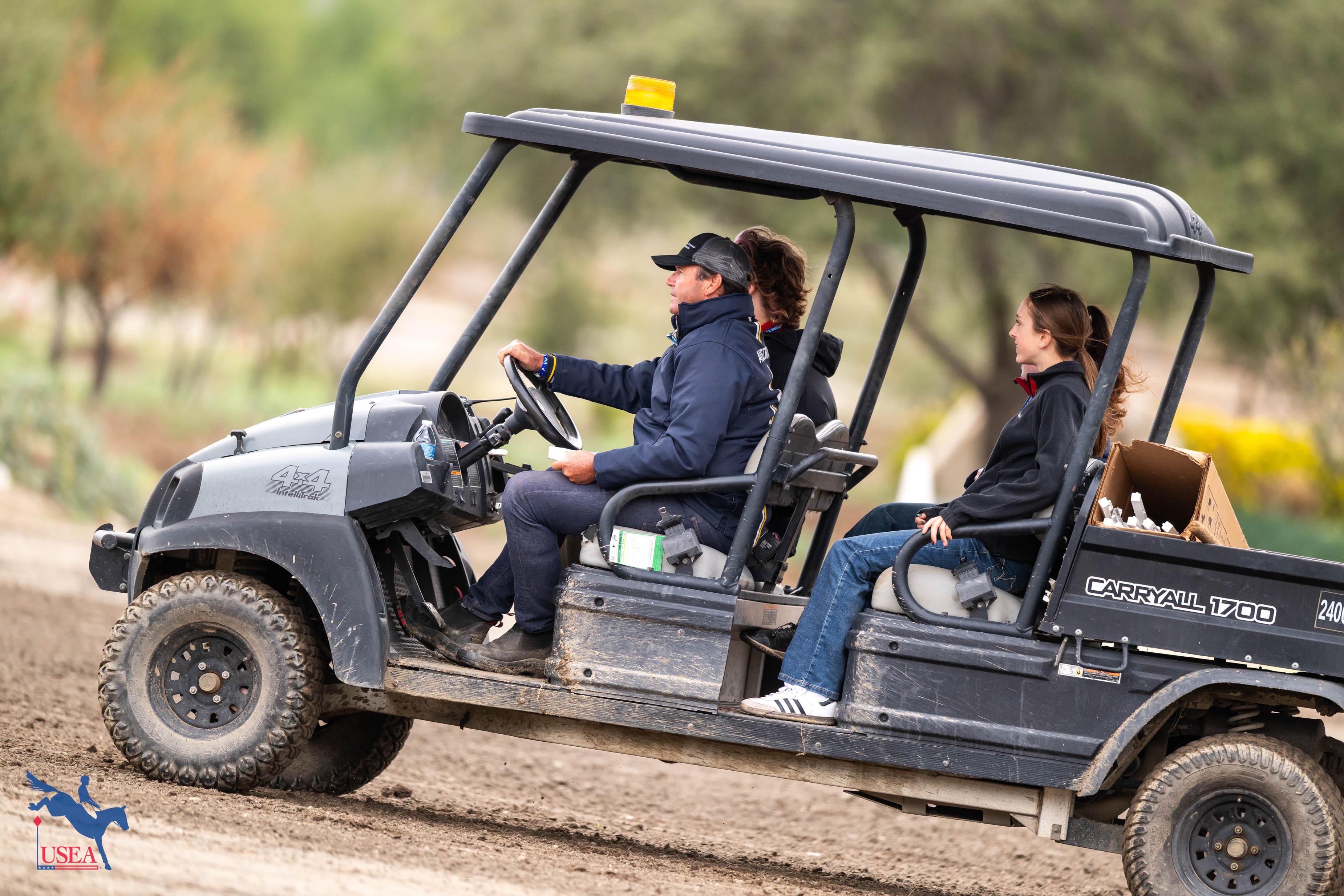
Clayton Fredericks, the cross-country course designer for the CCI4*-S/L and CCI3*S/L, and William Robertson, the show jumping course designer for the 2026 Eventing Championships at Galway Downs, also took the time to explain their roles, decisions, and techniques to the mentees. All four took turns on cross country day with the officials and spent time in the control tower to understand how cross-country runs smoothly, safely, and efficiently.
“We rode around with [Fredericks] in his cart, and he was talking us through what he was doing and why he picked certain elements,” Rehberger explained. “He watches his course to make sure everything is going smoothly and that nothing needs to be changed, taken out, or added. It was cool to be able to watch it from his perspective as the person who created it. Then when we went along with [Robertson] to build the show jumping for tomorrow. [Since] he’s also certified in the jumper world, he brought all of his knowledge of that into it as well. We learned from both of them about their style fits into the [design] and what they are trying to communicate to the horses and riders what they need to do to be able to go through the course with the most success.”
The group finished their cross-country day helping set the show jumping for the final day of FEI competition. Robertson, who went through programs very similar when he was a young rider, was happy to offer support for the next generation to come as he had been given early on.
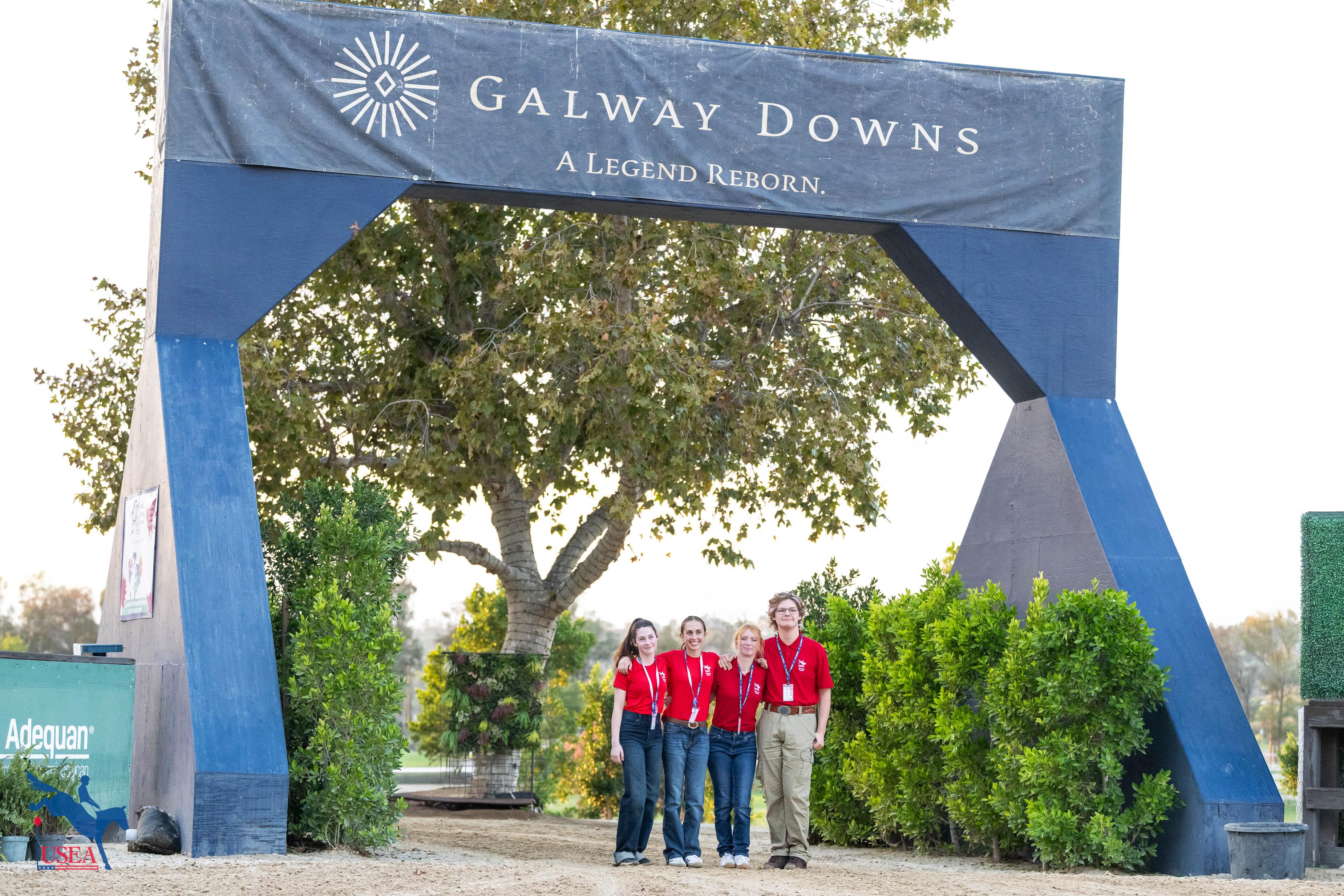
“We need new officials in the sport and need to see some new blood coming through and doing the various roles within the horse show world that’s not just competing,” he said. “I did the mentorship program last year at the [2025 American Eventing Championships at Galway Downs] so I’m a little familiar with this program. It’s a good group of kids! They asked lots of questions but also very knowledgeable themselves so I was able to go into a lot of theory and depth. We could focus on the real fine-tuned points of why we shifted the fence one way or another, what that does to the question or test you’re setting up.”
Miles Paden had applied for the program hoping to learn and what he discovered was an eloquent description of the heart of eventing:
“The horse world is full of science from the vet side, statistics, and all these other things, but also art. Riding is an art. We are watching artists design these amazing and wonderful high-level courses to see riders and horses perform at their best. I got to be with the course designer [Clayton Fredericks], see how he’s looking at these courses running, feeling out what errors he made, and what he can improve for next time. I got to experience from the vet box side that more science but still kind of art of protecting people, an art of looking at what is needed, looking at how these horses are performing, and what is needed to protect our sport and protect the privilege of riding here. That was a great experience; to see the admiration and dedication these people have and want to put towards a sport like this. Looking at this wonderful show jump course that was designed, it’s falling back into that art form, falling back on the fact that these people have dedicated so much of their time, money, and lifestyle to this: creating something that is beautiful, creating something that is difficult, creating something that tests both the mind of the rider and the ability and strength of the horse. That is something to just admire and think about.”
Ultimately though, the horsemanship that Covey sees mentees learn from the program, the objective knowledge of dressage that Gray and Adams share, the understanding of the horse that Fredericks and Robertson use to create the questions that make up the jumping phases, the welfare that Dr. Lewis protects, and the first hope that Howard-Fine had back in 2008 appear in Paden’s answer to why the program matters:
“When I asked my dressage judge what the difference is between FEI and Horse Trials, she told me there’s none. The ride you present at the Horse Trials is the ride you’re going to present at the FEI. There is no difference in the way that they are judging you or a difference in the way that you should be representing yourself. I think that’s comparable to why you should apply for this program. It’s going to set you up so that there isn’t a difference between FEI and Horse Trials. It’s the same ride. It’s the same way you apply yourself, but it’s going to give you that understanding, that willingness to go forward in the sport. The amount of knowledge I’ve learned this weekend of what course design looks like, how it works, how the judges are looking for certain movements, or what goes on at an event is more knowledge than I would [gain] just by competing. I am happy I took that chance and I’m excited to see the changes, the leaps, the bounds, and potentially the ribbons!”
About the USEA Youth Mentorship Program
The United States Eventing Association (USEA) Youth Mentorship Program provides Young Riders and Intercollegiate athletes with a unique, behind-the-scenes educational experience at some of the sport's premier competitions. Designed to inspire the next generation of equestrian professionals and leaders, the program offers participants the opportunity to shadow experienced eventing officials, including judges, technical delegates, stewards, course designers, and event management personnel. Through hands-on observation and mentorship, participants gain valuable insight into the organization, officiating, and operation of eventing competitions while developing professional connections and exploring potential career paths within the eventing industry. Open to eligible Young Riders and Collegiate members ages 16–25, the program aims to broaden participants' understanding of the sport beyond the saddle and foster a lifelong commitment to eventing through education, leadership, and professional development.
To learn more, visit the USEA Youth Mentorship Program webpage here.
Related Articles
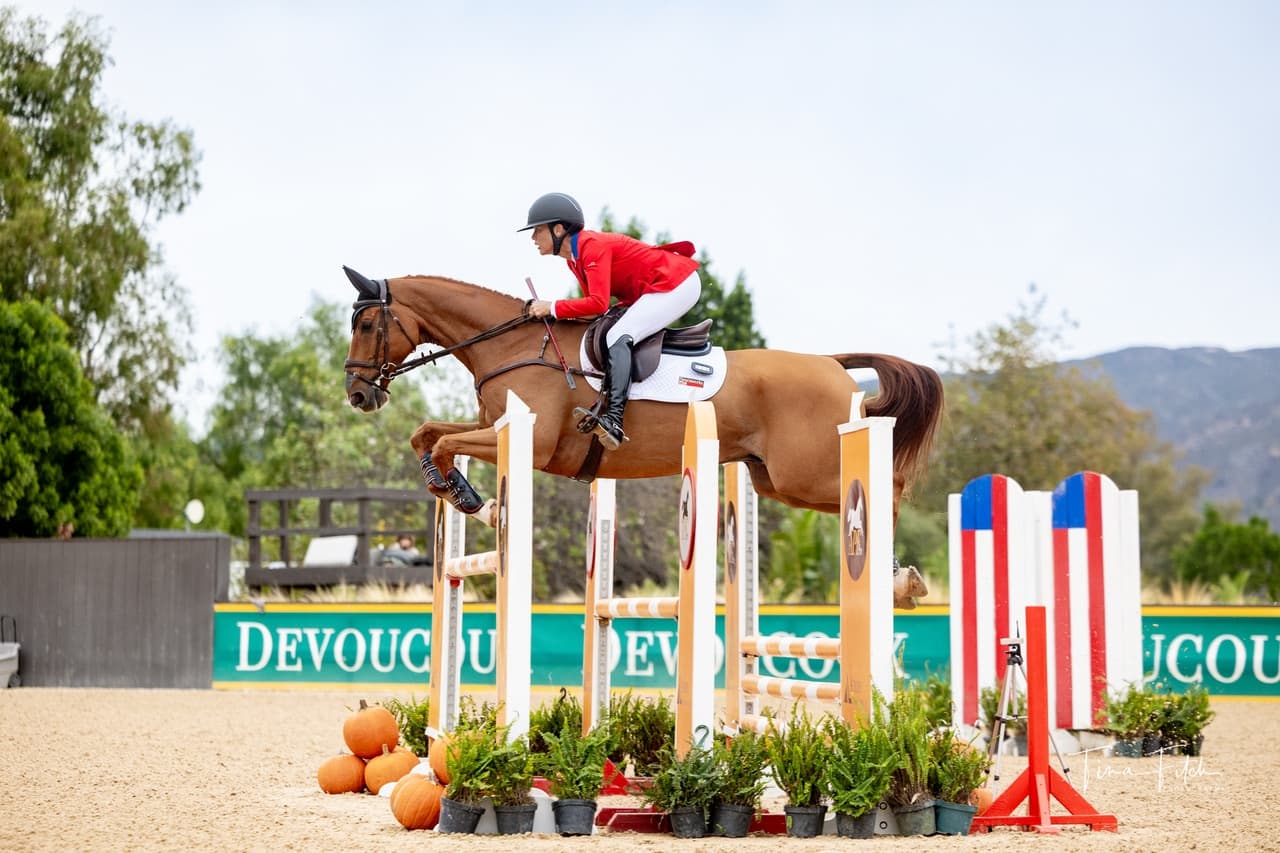
Tamie Smith Claims Four-Star Victories at The Eventing Championships at Galway Downs
The final day of international competition in The Eventing Championships at Galway Downs started auspiciously with all 55 FEI horses sailing through the horse inspection. It reflected well-prepared equine athletes and cross-country courses that tested without over taxing on Friday.
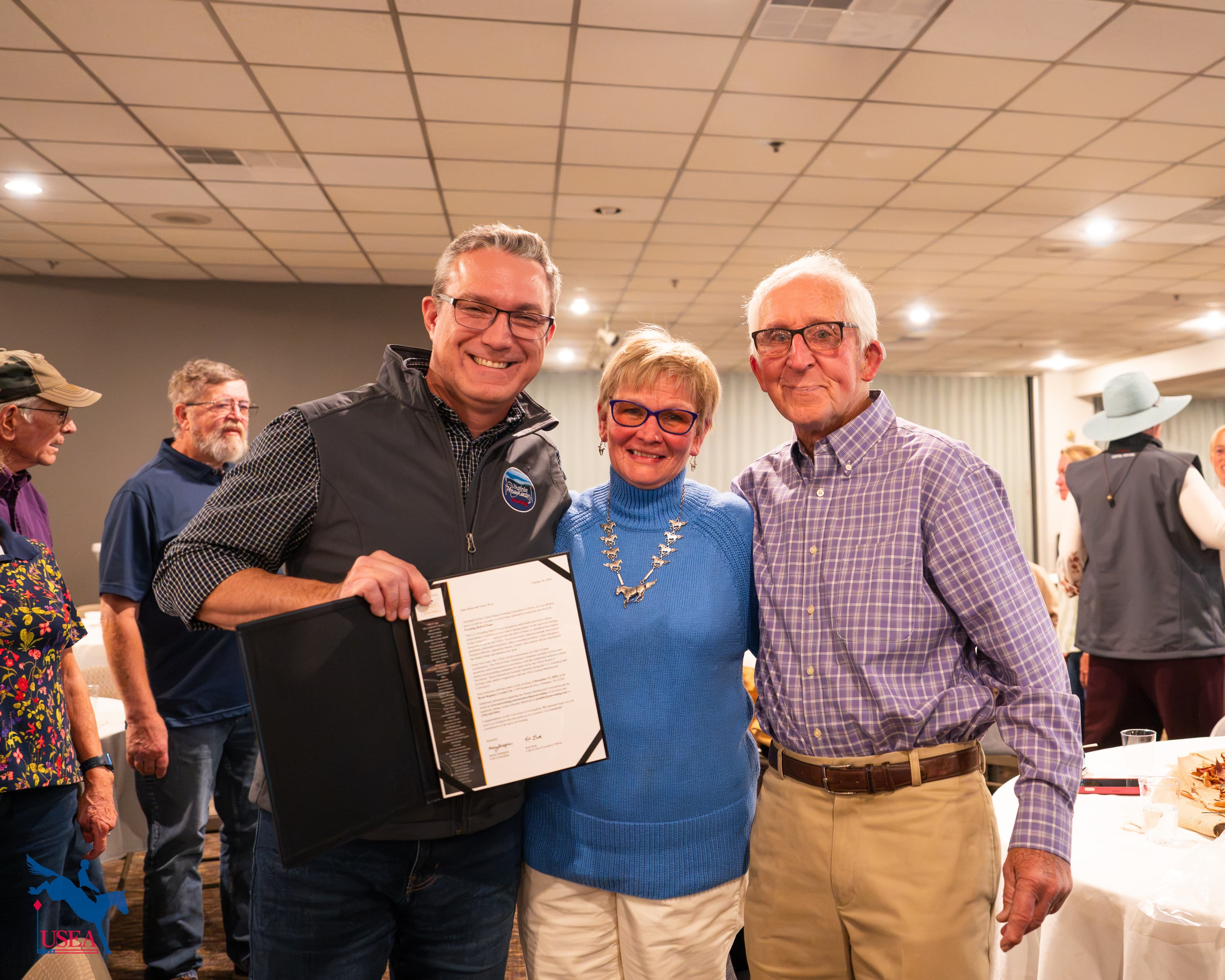
Brian and Penny Ross Named as Final U.S. Eventing Hall of Fame Inductees for 2026
Since 1999, more than 50 horses and people have been inducted into the United States Eventing Association (USEA) Eventing Hall of Fame.
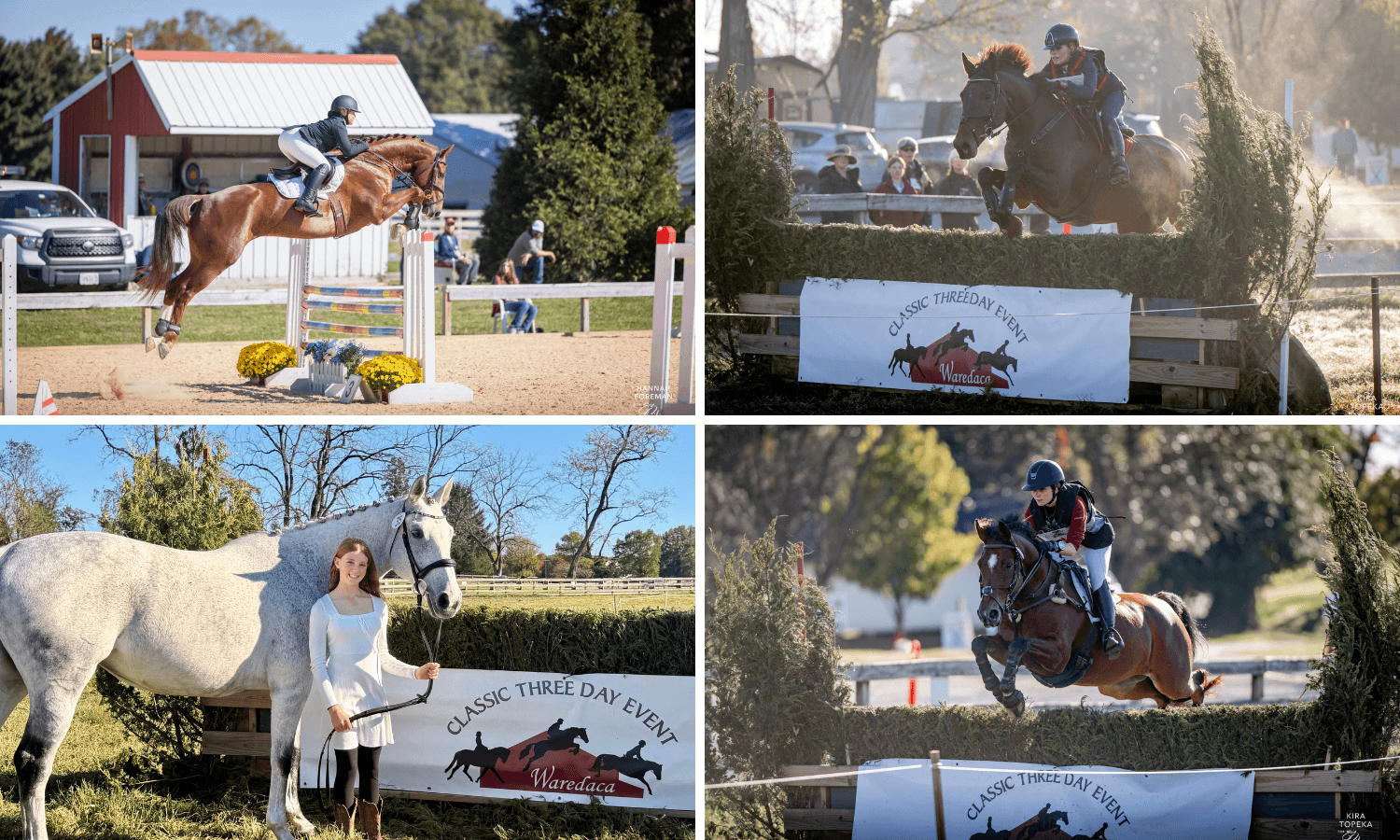
Cascarino, Fansler, Frew, and Armstrong Claim USEA Classic Series Victories at Waredaca
The USEA Classic Series returned to Waredaca Farm in Laytonsville, Maryland, in October, where four horse-and-rider combinations claimed victories in the Modified, Training, Novice, and Beginner Novice Three-Day divisions at the Waredaca Classic Three-Day Event.