The Importance of Hips, Feet, and Seat on Day 2 of EA21 West II Clinic
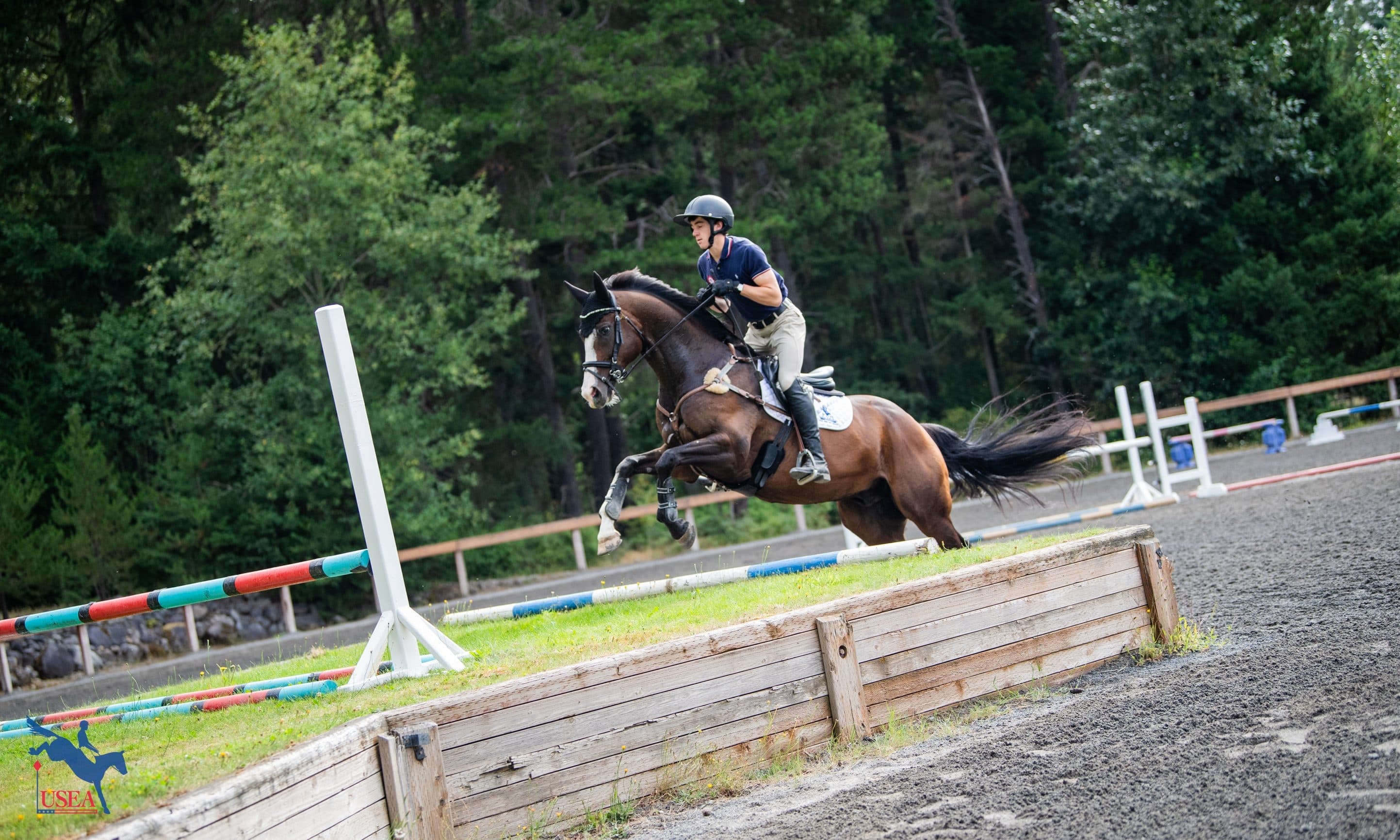
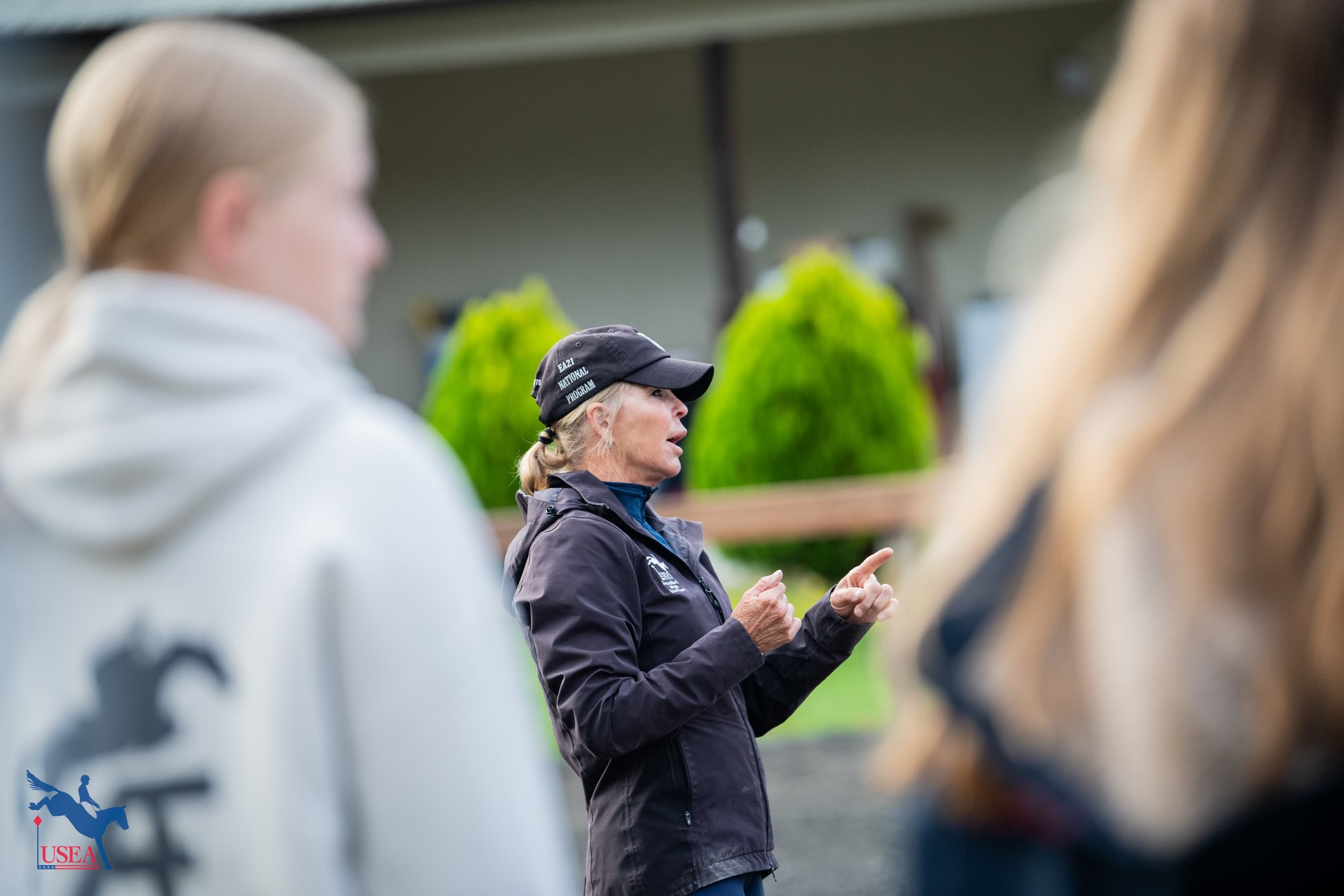
Yelm, Wash.—Aug. 12—"I think anytime you feel like you can find your horse's hips, you know where you can dictate the rhythm, and the more you have that, the easier it is to be seamless and proactive in all the details that you need for the jumping. And I think having feet and seat, so you can get the connection, is always great,” said Jan Byyny, USEA Emerging Athletes Under 21 (EA21) coach on day 2 of the EA21 West II Clinic at Aspen Farms.
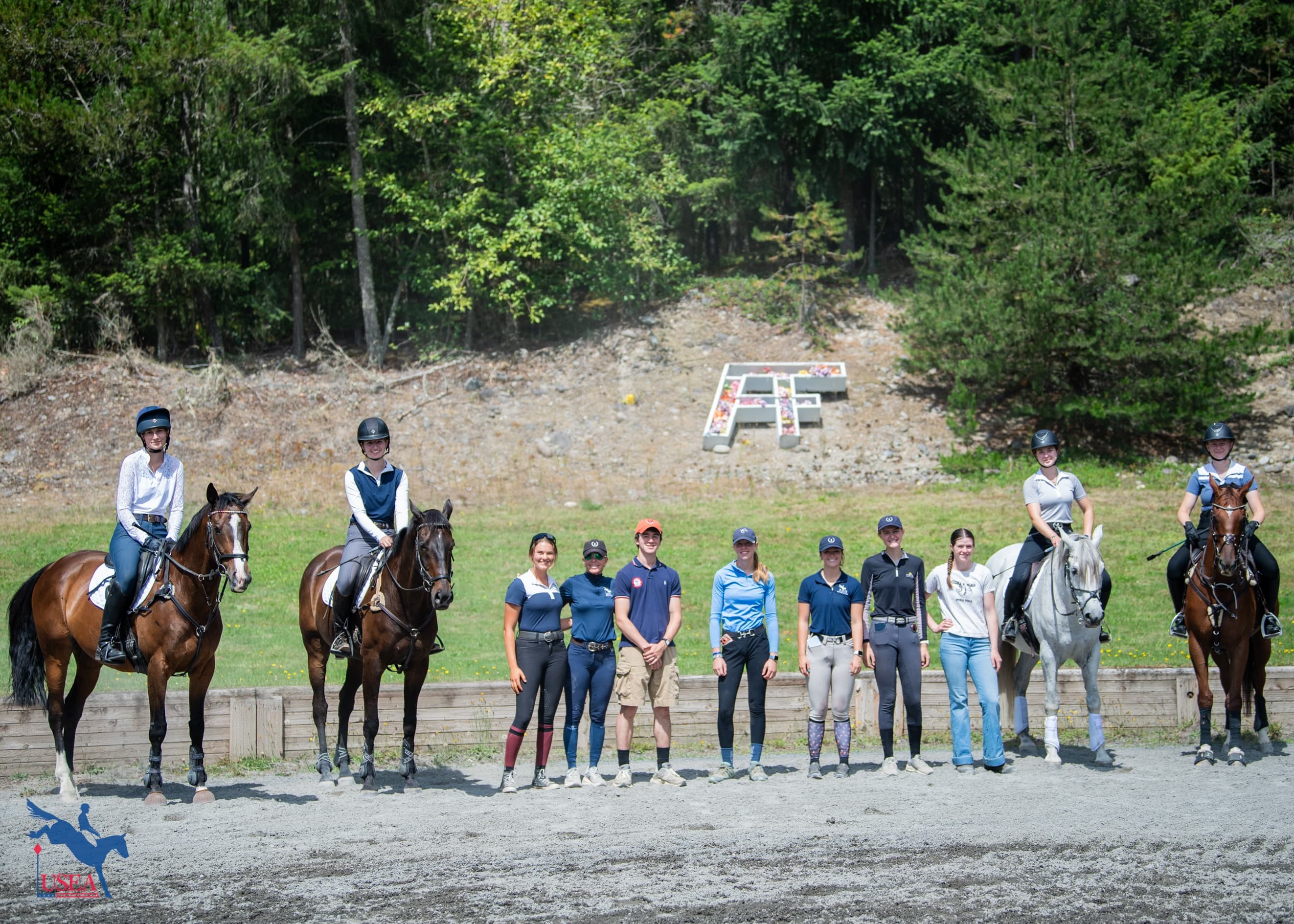
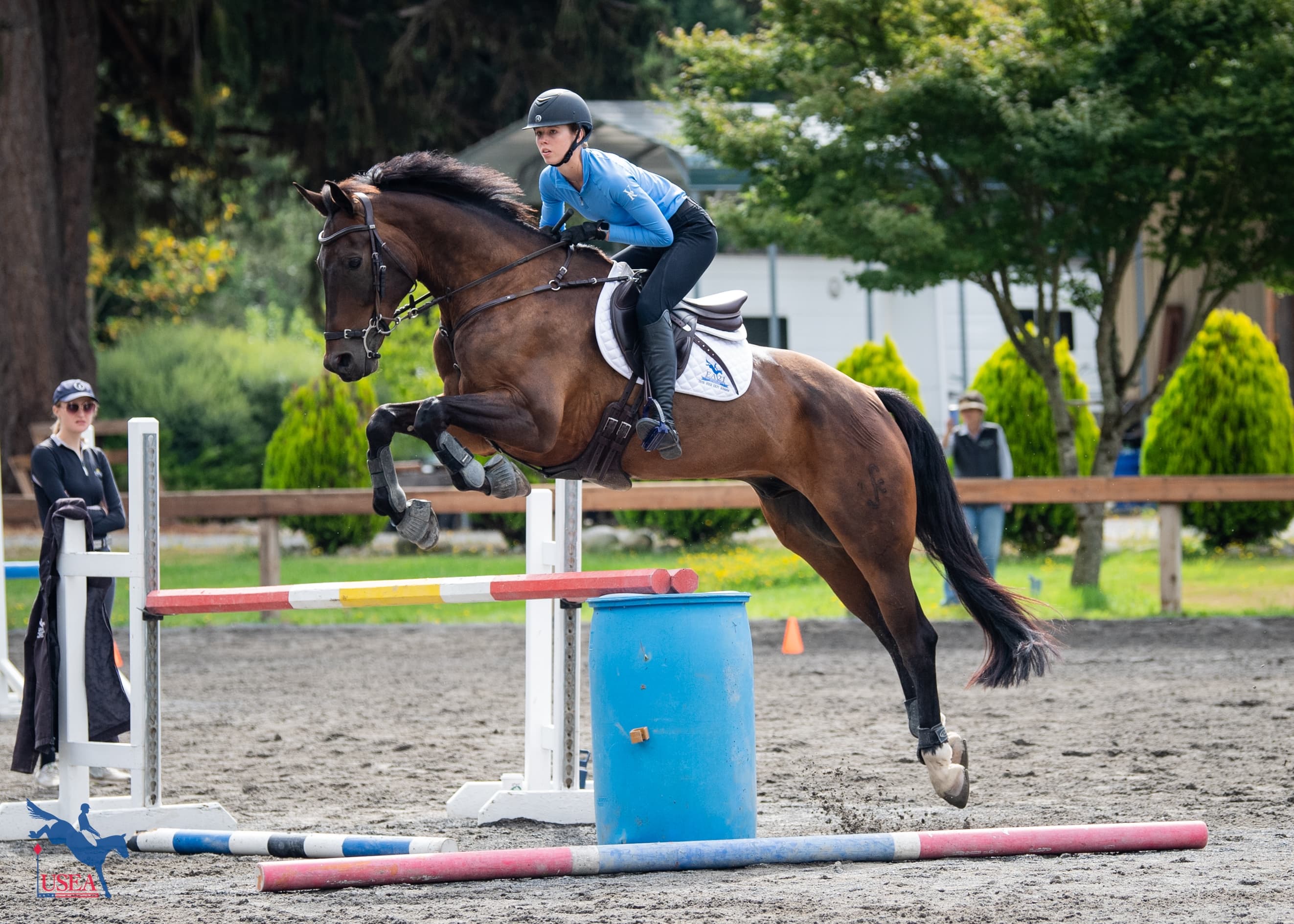
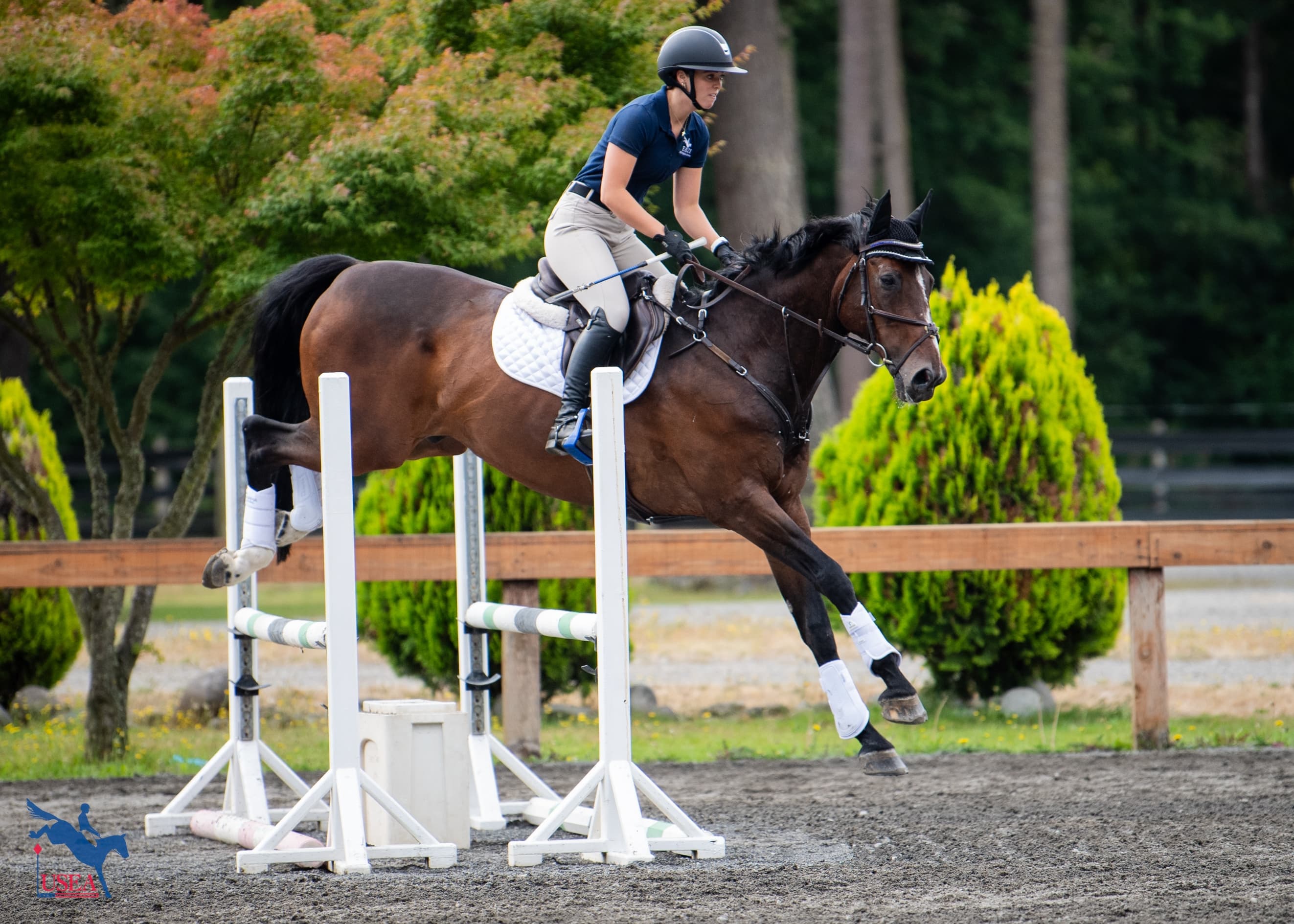
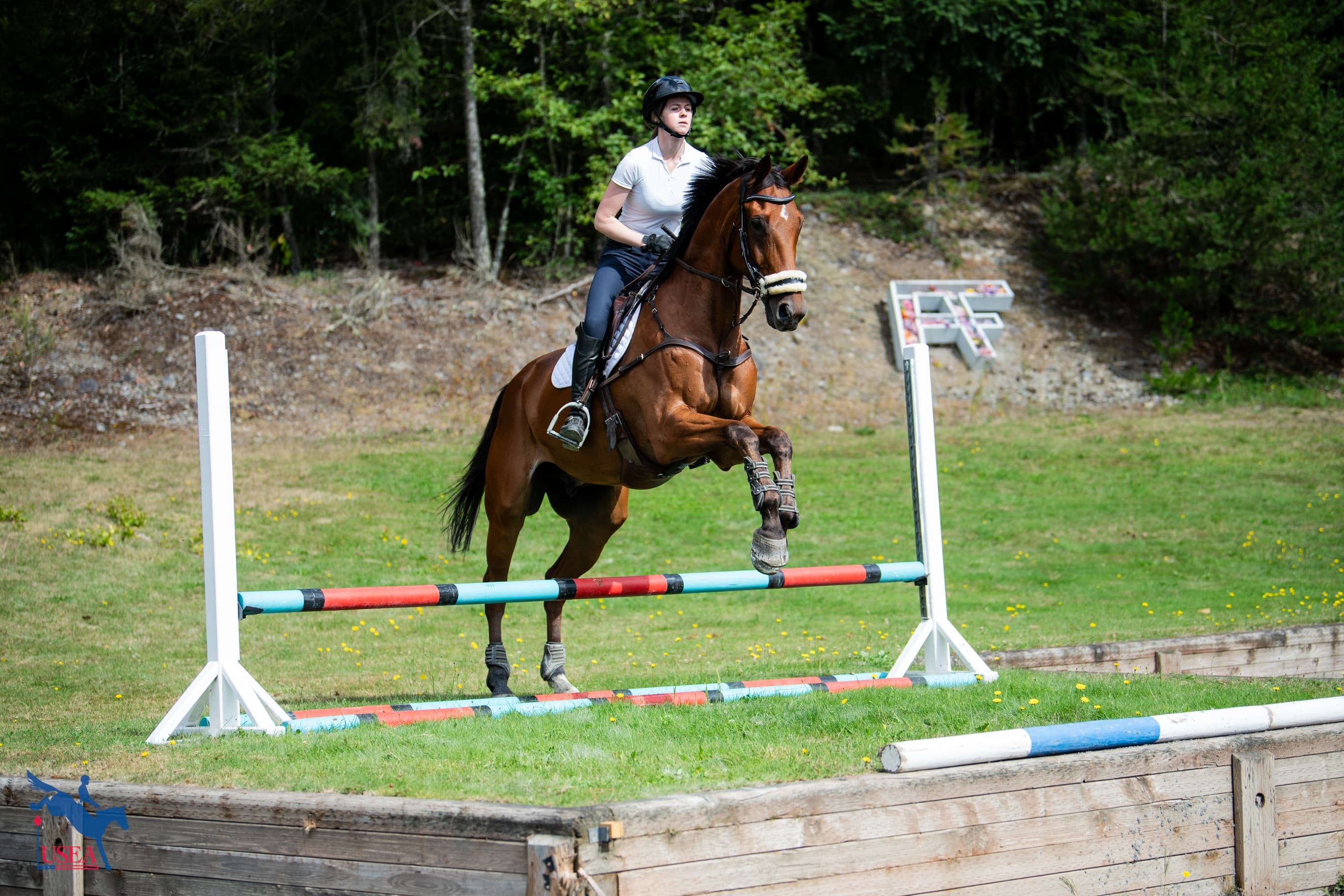
Byyny worked with 10 hand-selected athletes yesterday on the flat where she emphasized exercises that helped the riders use their seat and hips to change their horse’s gaits—a skill needed for the show jumping coursework they had today.
Three groups of riders from Training level to Intermediate skills started by walking on a circle, using their hips to do walk/trot transitions, then cantering in a light seated position working on changing the pace from bigger to smaller.
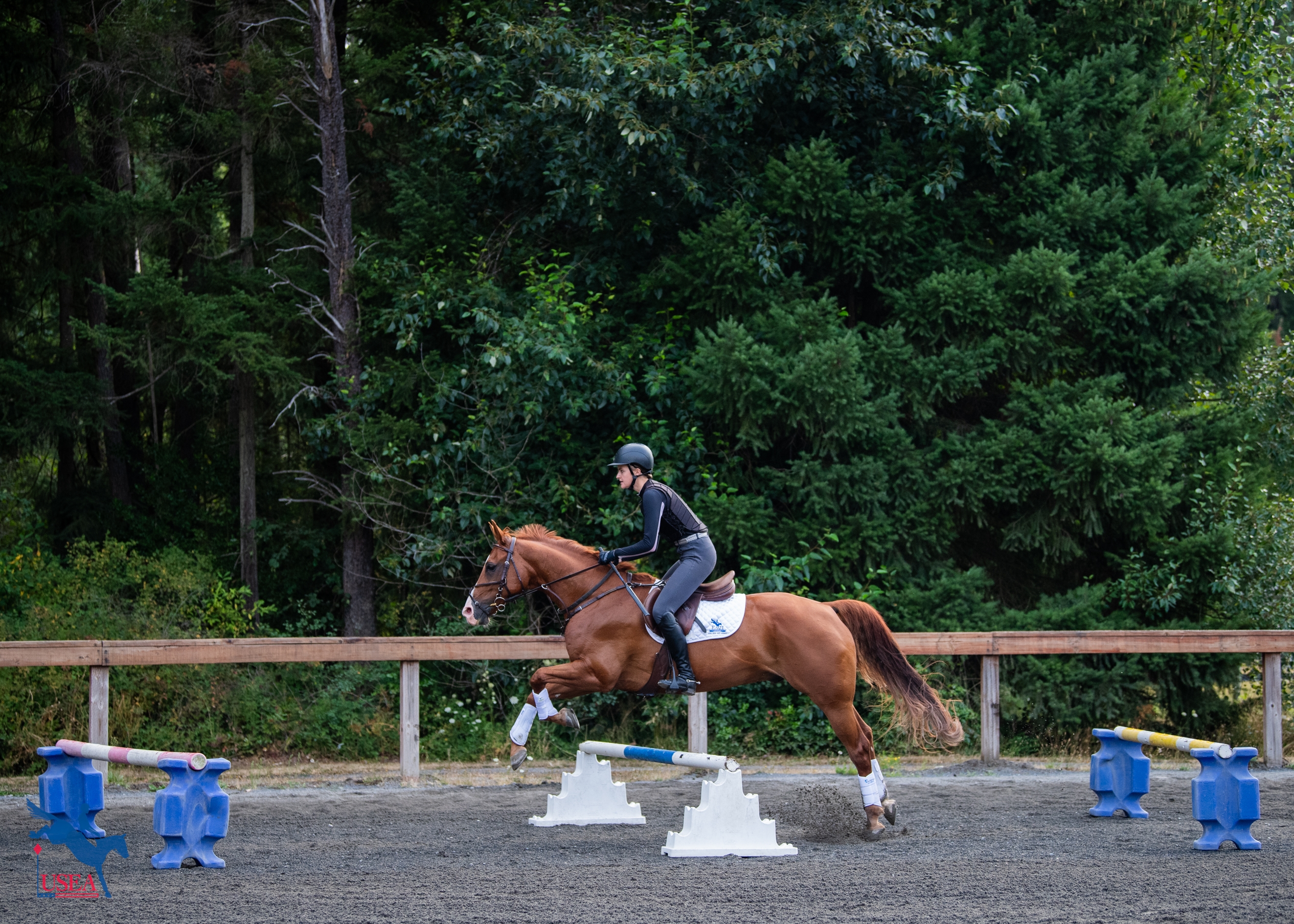
“The more you can find that rhythm, the more confidence you're going to give your horse, and the more you can react to what you're feeling,” she explained. “When you think about the line of direction and the speed and the balance and the timing [to the jump], that [rhythm and confidence] is so you have a system in your head, and so you can go back to that all the time.”
Byyny had some riders use haunches-in to help control their horse’s hips when they wanted to change leads as they began cantering an exercise of two poles set about five strides apart. She then asked riders to make six or seven strides in the line as they began incorporating a double bounce of cavaletti off a turn to the poles.
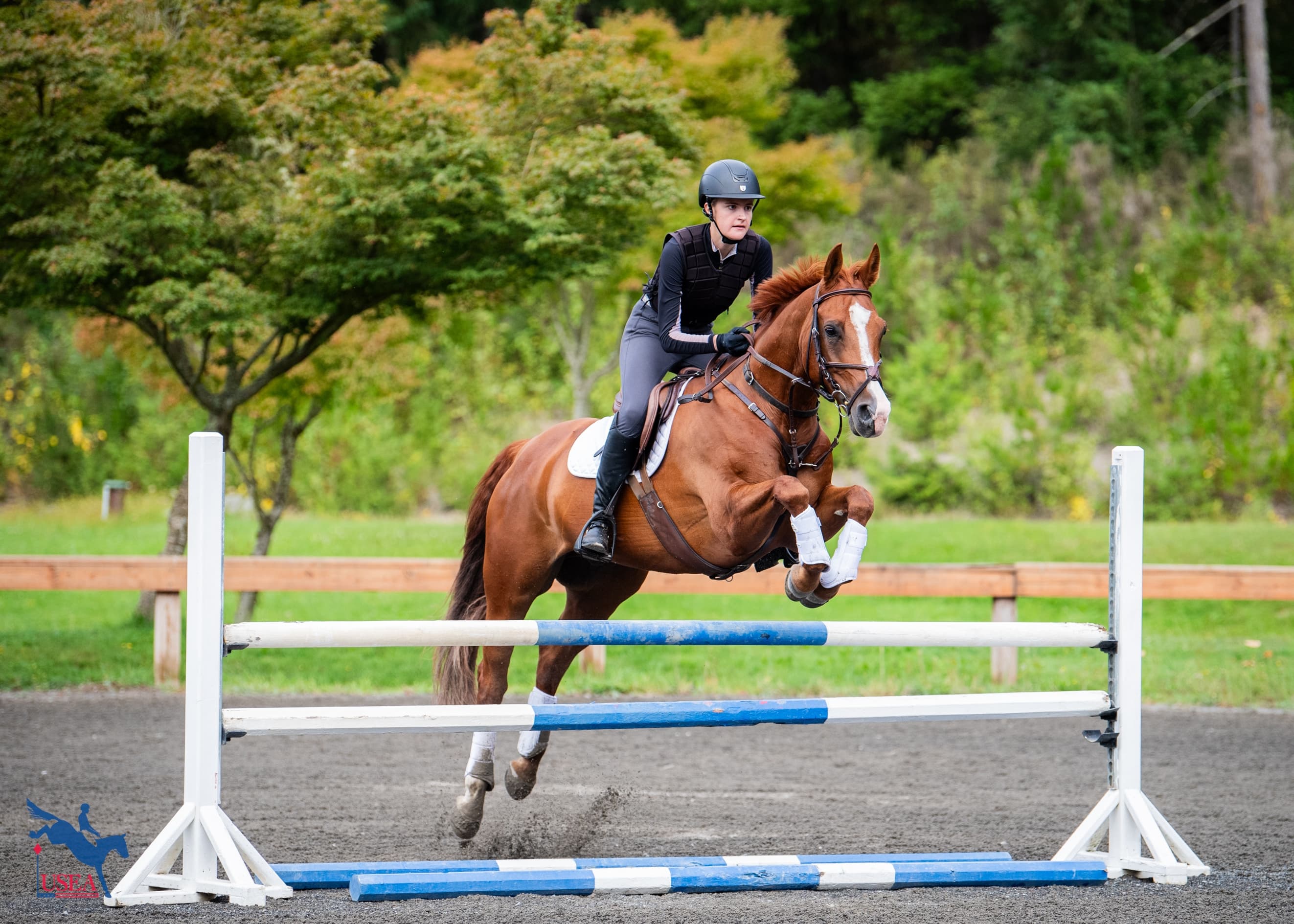
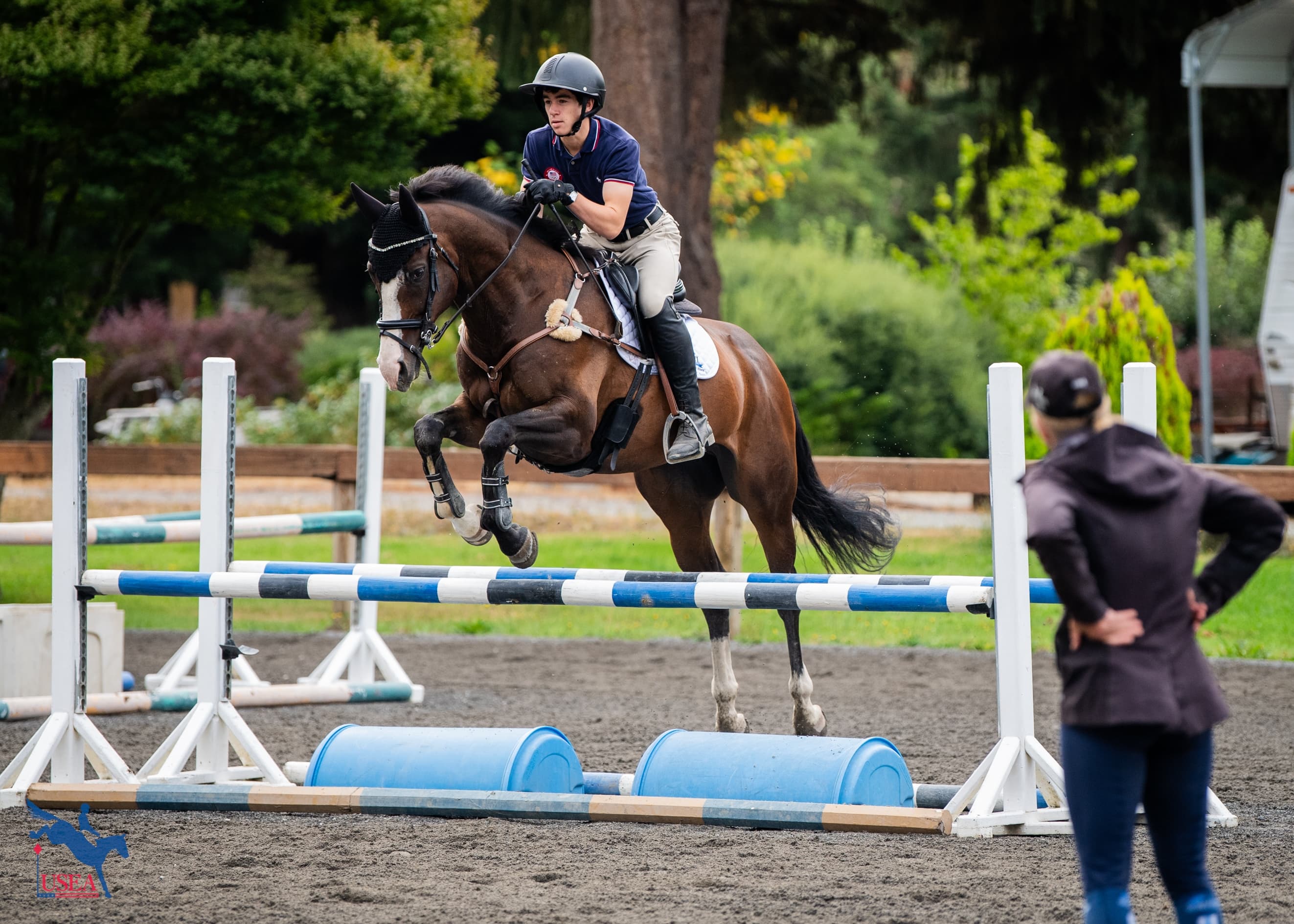
As riders began adding in lines of jumps, including a one-stride, an angled two-stride, a corner, a triple bar, and a bounce bank into and out of the arena, she reminded them that it was OK to make mistakes. “I never judge myself or my horse,” she said. “It’s all just information. Learning is messy. We’re doing this to have a better thought process, not that it makes you ready for the Olympics tomorrow. It makes you think for yourself.”
Reacting in the moment while on course was encouraged instead of just pulling up when a mistake was made. Byyny set up some cones in between jumps for riders to either go around or inside of on their way to their next jump to help them think about what was next and ride the correct line of direction. “The more they can have those instincts, the better they are going to be as horsemen,” she said. She also reminded them consistently to use their hips to open up or shorten the canter as needed.
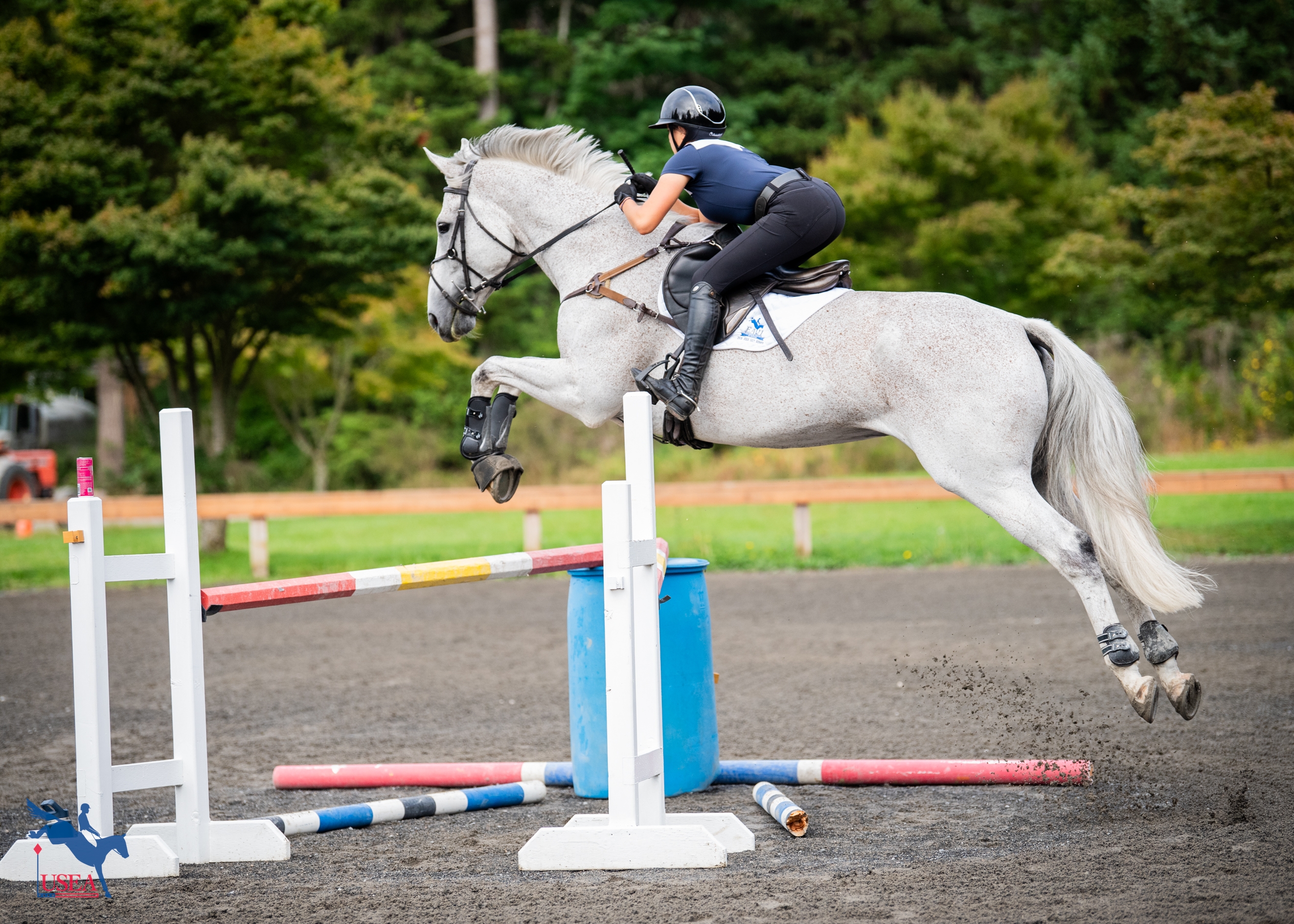
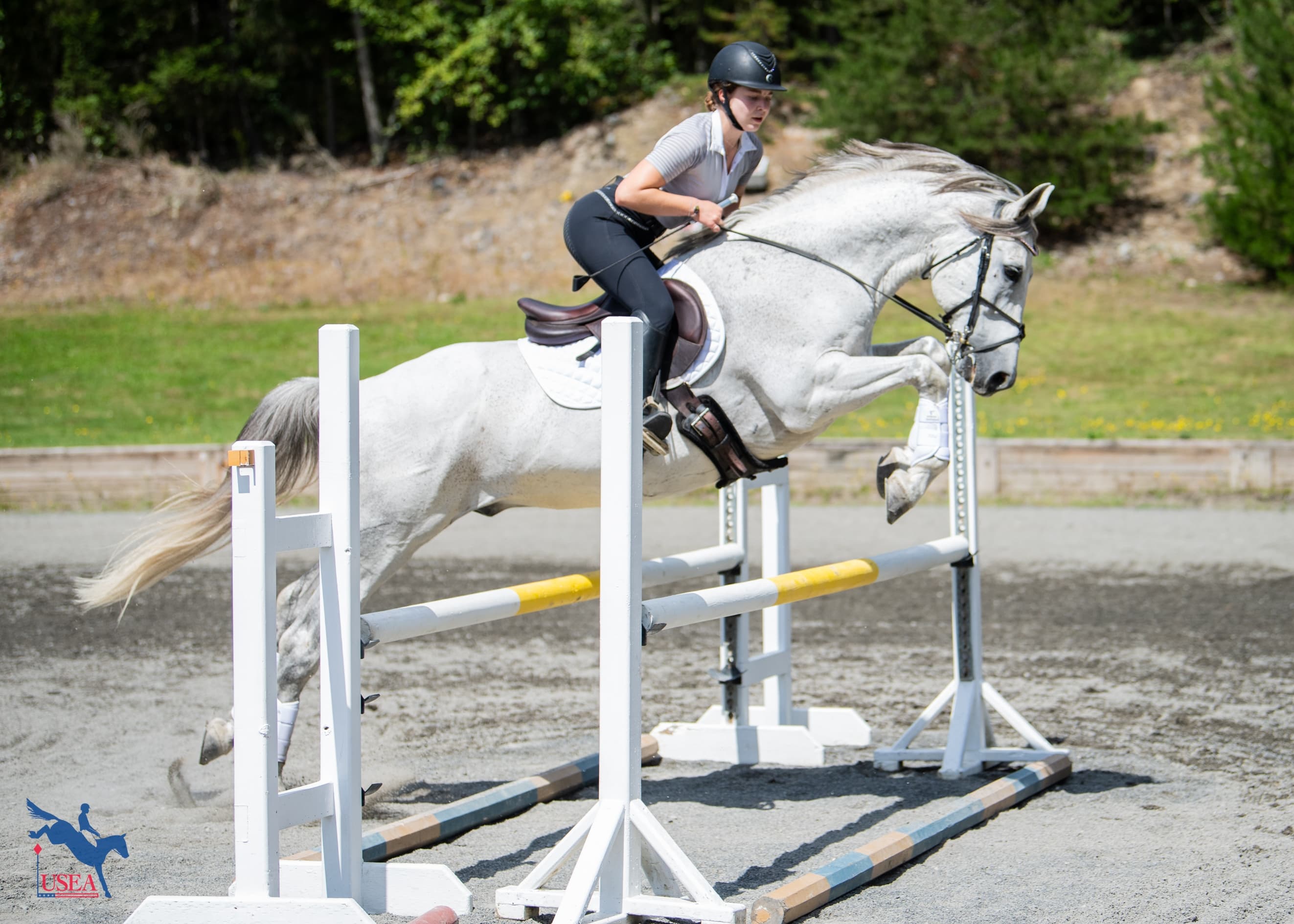
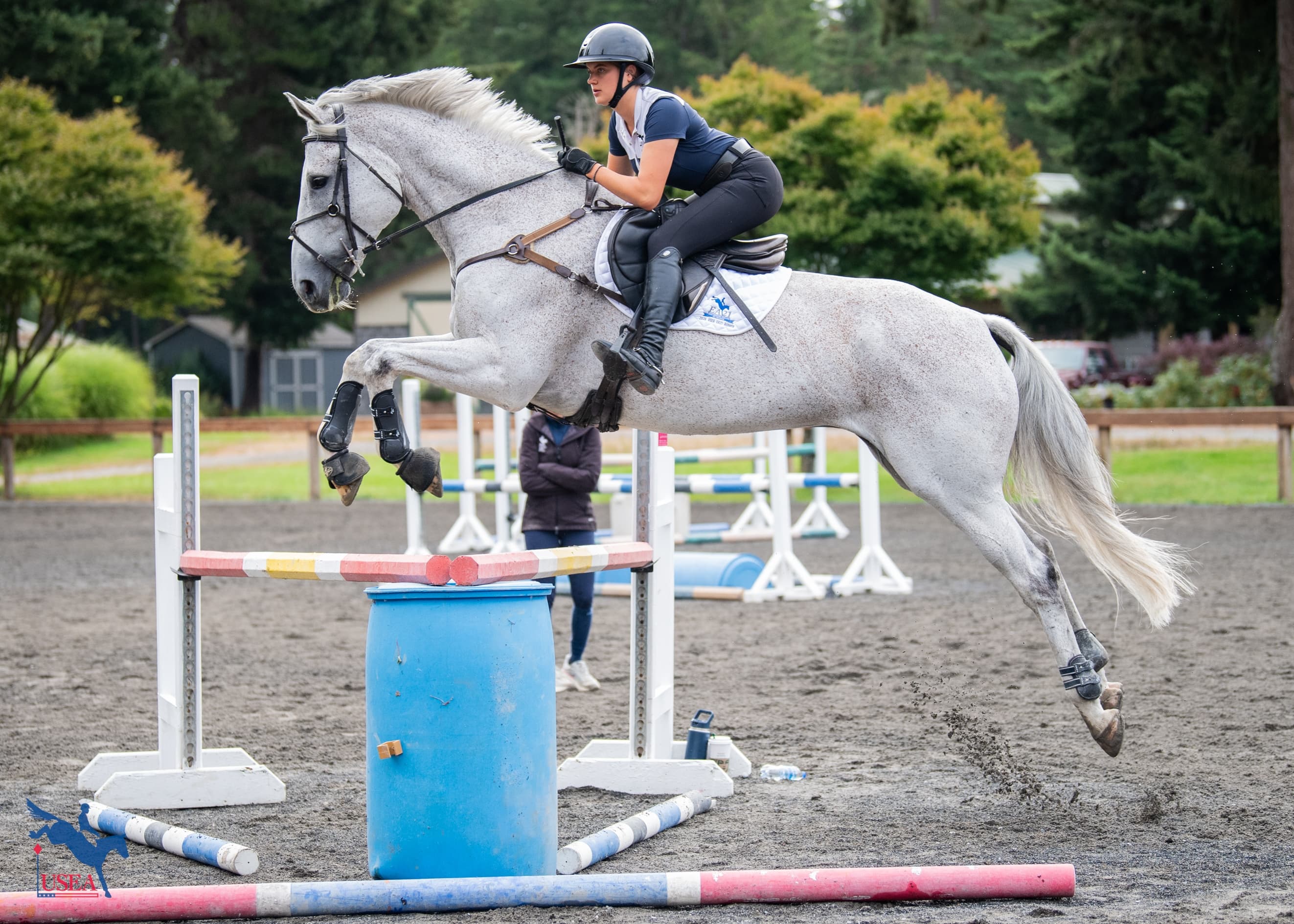
She had them jump a triple bar in nearly a cross-country pace heading towards the rail, then bring the canter back to make a turn around the short side of the ring, to an in and out off a tight turn. She also had them do lines incorporating the bounce bank and adding the small double bounces back in. “The bounces and the bank just gave them footwork,” she said. “Once you have the footwork, you can do anything right.”
Overall, Byyny was impressed with the riders over the last two days, including the handful who were catch riding and really stepped up to improve their skills on an unfamiliar horse.
“I love the group of kids,” she said. “They are engaged. They are inspiring. They have been so thoughtful in their ability to think about how to problem solve with the information that [the EA21 program supplies]. We have a curriculum in a language to assist so they can figure out how to best train a horse and know how to start to have tools to be better horsemen and having a better thought process of how it works from the [German] training scale and taking that into this because it's all connected, isn't it?”
A huge thank you to Kendra Zartman for serving as the onsite coordinator at the USEA EA21 West II Regional Clinic, to coach Jan Byyny for her time and expertise, and to Aspen Farms for generously hosting this year's clinic.
West II | Aspen Farms | Yelm, Washington
The Participants
- Simone Clark
- Annabelle Davis
- Lindsay Essex
- Alexis Johnson
- Izzy Lenk
- Flynn Patinkin
- Brianna Rasmussen
- Caterina Ritson
- Carson Vogt
- Zoe Weide
Follow the USEA coverage on social media!
Facebook | Instagram | Threads | TikTok
About the USEA Emerging Athlete U21 Program (EA21)
The purpose of the USEA Emerging Athletes U21 Program (EA21) is to identify and provide consistent quality instruction to the next generation of elite event riders. The aim is to create a pipeline for potential team riders by identifying and developing young talent, improving horsemanship and riding skills, and training and improving skills and consistency.
The USEA Emerging Athletes U21 Program was launched in 2022 with a model of five summertime regional clinics taught by carefully selected USEA Eventing Coaches Program (ECP) coaches, leading to a winter national camp consisting of selected Young Riders from the regional clinics. Athletes who are 21 years or younger, are current members of their USEA Young Rider Area program, and are established at the Training Level or higher, are eligible to apply for the EA21 program. Click here to learn more about the USEA EA21 Program.
The USEA would like to thank ARMA, Bates Saddles, GGT Footing, Horse Illustrated, Kerrits, PulseVet, Ride iQ, Schneiders Saddlery, Sidelines Magazine, WeRideTogether, YETI, and 100xEquine for sponsoring the USEA Emerging Athletes U21 Program.
Related Articles
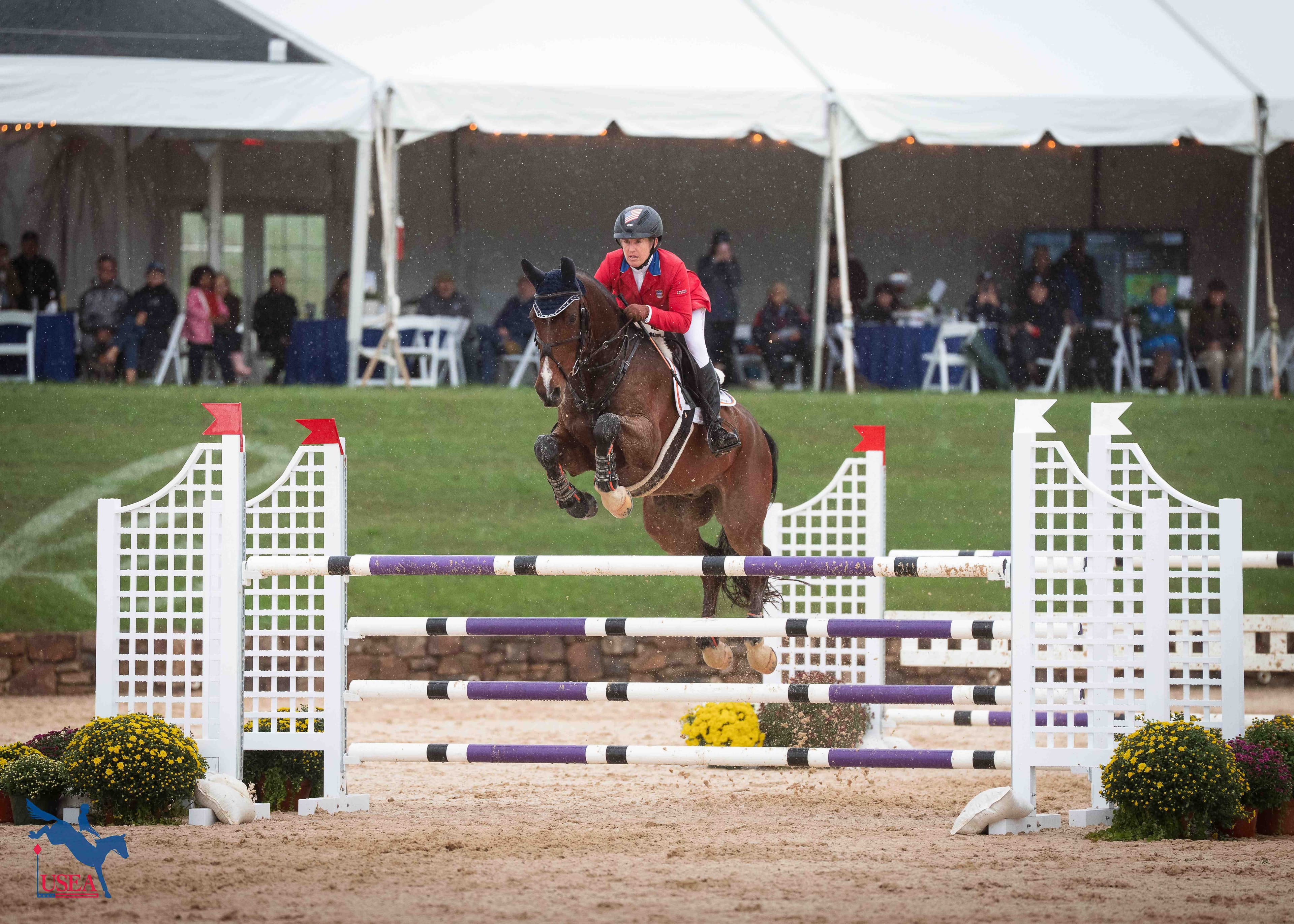
Sharon White and Claus 63 Capture the Win in the US Equestrian Open Final CCI4*-L, White Becomes First Woman to Win the Title
The second edition of the $200,000 US Equestrian Open Eventing Final concluded at Morven Park International Equestrian Center with Sharon White (Summit Point, W.V.) and Claus 63 delivering a standout performance in the final jumping phase to capture the win. It was a historic result as White beca...

The Dutta Corporation Continues Support of USEA Young Event Horse Program in 2026
The United States Eventing Association (USEA) is pleased to welcome back The Dutta Corporation as a valued supporter of the USEA Young Event Horse (YEH) Program and the 2026 USEA Young Event Horse Championships. The Dutta Corporation will return...
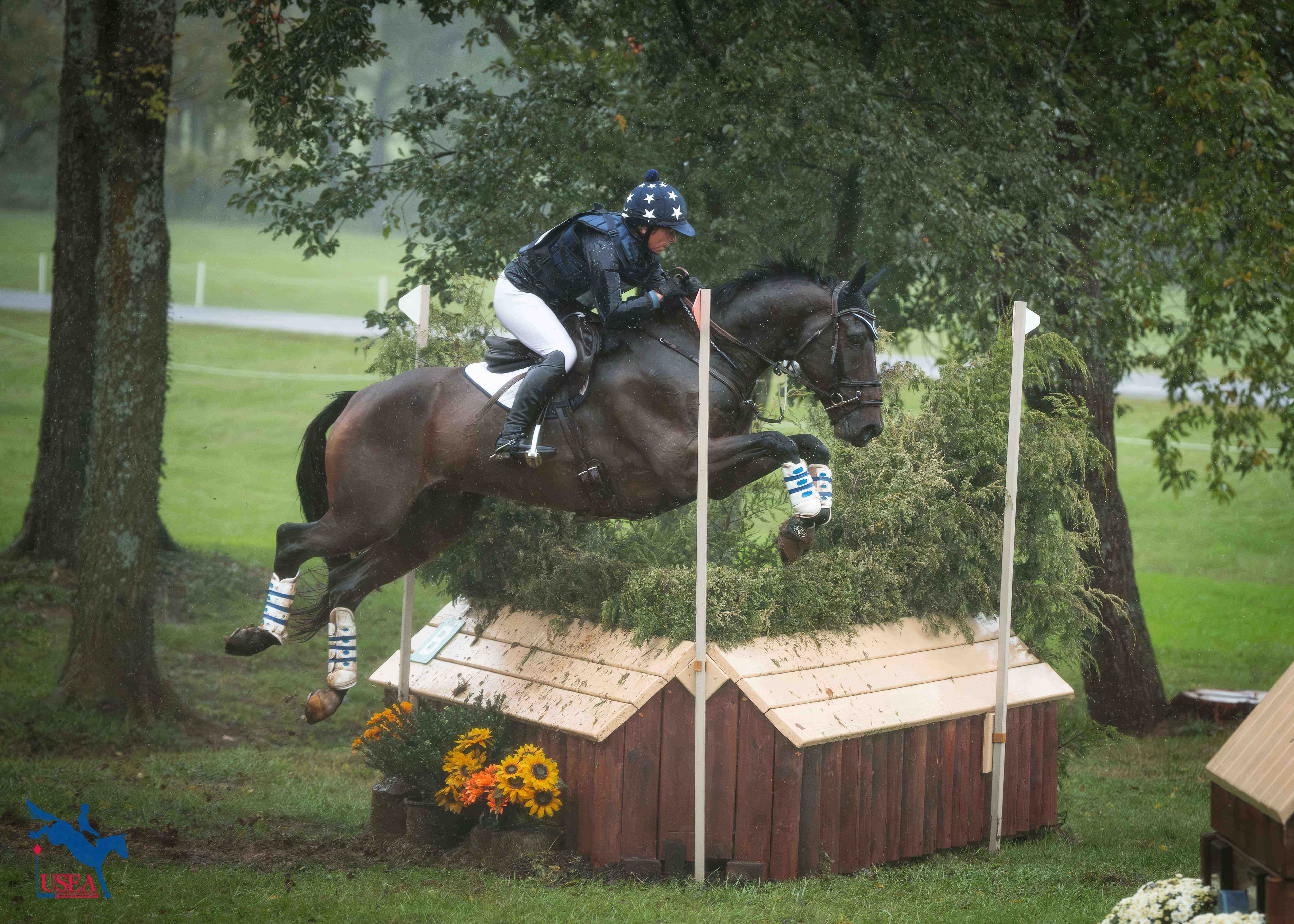
A First FEI Win for MHE Excel Star Noble Ikon and Morgan Houberg in USEA/USEF 6-Year-Old Developing Horse National Championship
Heavy rain overnight and into the morning turned the final day of the 2026 USEA/USEF Developing Horse Eventing National Championships into a true test of the young horses' confidence, athleticism, and determination at Morven Park International. When the final scores were tallied in the CCI2*YH-S ...