USEF Rule Changes Effective December 1, 2026 – What Eventers Need to Know
With the start of a new competition year just around the corner, now is the time to familiarize yourself with any rule changes that apply to our sport. US Equestrian has approved 17 eventing specific rule changes and 12 General Rules which will apply to USEA members. Check out the summaries below to learn more about each of these rule changes that take place December 1, 2026.
Note: Each summary below is based on the "Rule Change Intent" USEF published with the proposal. The tracking number links to the official final rule language.
Eventing Rule Changes
Full list: USEF Upcoming Rule Changes – Eventing.
Dangerous Riding and warnings
Recorded Warnings for Dangerous Riding — EV 113.2 (053-25) USEF added the Recorded Warning to its warning card system in 2025, but the Eventing chapter still referred only to Yellow Warning Cards. That meant Dangerous Riding was being treated as more serious misconduct than intended. This change replaces the Yellow Warning Card with a Recorded Warning, matching the FEI.
Recorded Warning in the Disqualification Table and Dress Rules — EV 105.1 (054-25) This adds the Recorded Warning as a penalty option alongside Elimination and the Yellow Warning Card. It applies to the disqualification table, protective headgear violations and prohibited dress. The Ground Jury keeps the discretion to match the penalty to how serious the violation was.
Application of Dangerous Riding — EV 113.1 (208-25) This makes Dangerous Riding penalties consistent: every case must receive a Recorded Warning. The Ground Jury may also add 25 penalties or Elimination. This matches the FEI rules.
Cross-Country
Missed Marker penalty aligned with FEI — EV 122 (080-25) Dual USEF/FEI competitions often share jump judges, officials, courses and scoring software. To keep penalties consistent, the missed-marker penalty drops from 15 to 9 to match the FEI. One missed marker still keeps the MER.
Definition of Missed Marker — EV 122.2 (210-25) This clarifies when a marker counts as missed: when the point of a shoulder fails to pass between the obstacle markers.
Cross-Country Definitions of Faults aligned with FEI — EV 122.3 (081-25) Under the current wording, a rider who chose a black flag alternative could be penalized for a circle. This change follows the FEI: a horse is penalized only for passing around the back of the next element of a combination that it then jumps. Course designers get more freedom to plan black flag alternatives.
Modified Cross-Country Dimensions aligned with FEI — EV App. 3 (157-25) Modified horse trials often run at the same event as FEI 1* competitions, and having different specifications was confusing for riders and officials. Modified cross-country speed, spreads and drop now match the FEI 1* specifications.
Distance Requirements for Ditches and Steps — EV App. 1 (214-25) This clarifies the minimum distances before and after ditches and steps at Beginner Novice and Novice, to help officials and riders.
Show Jumping
Show Jumping Specifications — EV App. 3 (215-25) This fine-tunes show jumping specifications so spreads relate more safely and appropriately to heights. Changes include:
- Shorter maximum course lengths at Beginner Novice and Novice
- Adjusted speeds at Novice and Modified
- Smaller oxer spreads at Beginner Novice through Training
- No triple bars at Beginner Novice and Novice
Compulsory Retirement Amendment — EV 127.8 (209-25) Compulsory Retirement exists to stop combinations with a poor show jumping round from starting cross-country. Now it applies only when show jumping runs before cross-country. When show jumping comes last, riders can finish on their score.
Show Jumping Phase Penalties – Compulsory Retirement — EV 127.8 (217-25) USEF's reason: riders moving up the levels often don't know the rules that apply higher up, which affects safety. An athlete who starts cross-country after receiving a Compulsory Retirement will get a Yellow Warning Card or Recorded Warning.
Dressage, Dress and Saddlery
Permitted Saddlery for National Events — EV 10 Annex (060-25) Annex 1 already covers saddlery for all three phases. This moves the reference to the top of the saddlery subchapter so riders know to check it for every phase, not just dressage.
Permitting Ear Plugs — EV App. 0 (218-25) Ear plugs will be allowed in all phases. Removing ear hoods to check for ear plugs was a safety risk for officials and volunteer stewards, many of whom don't have much experience handling horses.
Neckwear and Breeches for Dressage and Show Jumping — EV App. 9 (219-25) With a jacket, a closed shirt collar now meets the neckwear requirement. Stock ties, chokers and ties are still allowed, but not required. Breeches may be white, light or dark colored, but not bright colors or patterns, and contrast piping is allowed.
Officials and Participation
Ground Jury Duties – Fitness to Compete — EV 156.2 (220-25) This gives officials clear authority to act on a horse's overall wellbeing, not just soundness. If a horse's fitness to compete is questioned, the Ground Jury must consult the Veterinarian before eliminating it.
Withdrawing from an FEI Division and Changing to the National Division — EV 108.4 (207-25) The current rule only covers horses Eliminated from an FEI division. This extends it to horses withdrawn during or after the FEI dressage test for reasons unrelated to horse welfare. The Ground Jury may let them compete in the national event at a level they are qualified for. A horse that has started the second phase of the FEI event cannot switch.
MERs for Modified Classic Three-Day Event — EV App. 2 (221-25) Now that Modified is established nationwide, Training level MERs no longer count toward Modified Classic qualification. This matches the other classic series divisions: combinations need at least one MER at Modified or higher.
General Rules Changes that Affect Eventers
Full list: USEF Upcoming Rule Changes. These apply to every USEF discipline, plus two that apply only to Eventing.
Safety and Welfare
Return to Sport Protocols — GR 848.1 (065-24) This simplifies the return-to-sport process after a fall. Anyone under 18 who falls, any adult who falls without landing on their feet, and any adult who falls more than once in a competition must be examined by the competition's Qualified Medical Personnel, a physician, physician assistant or nurse practitioner before remounting or competing again. The requirements for riders with a concussion or apparent concussion are unchanged.
Use of Qualified Medical Personnel — GR 847.1 (001-25) This rule change broadens who can serve as Qualified Medical Personnel to certified or licensed medical providers or first responders with ATLS, BTLS or PHTLS trauma certification. Medical personnel must also be easy to identify, for example by uniform or a bright-colored vest.
Emergency Action Plan — GR 845.1 (007-25) The "accident preparedness plan" becomes a written Emergency Action Plan (EAP), in line with industry and sport standards. The EAP must now also list emergency vehicle access points, the Qualified Medical Personnel's contact details, and the nearest hospital and Level 1 Trauma center.
Horse/Pony Collapse — GR 839.1 (048-25) This extends a 2025 hunter/jumper Presidential Modification to all breeds and disciplines. It was prompted by collapses believed to be linked to substances given to quiet horses. A horse that collapses is barred from competing for at least seven days. It can only return once a licensed veterinarian examines it and submits a signed Federation form. The rule also gives a clearer definition of a collapse.
Equine Vaccination Requirements — GR 844.1 (025-25) Vaccinations must now be valid for the whole time a horse is on the competition grounds. USEF's stated intent is to let competition management respond to local disease threats with additional vaccination requirements that follow AAEP guidelines.
Drugs and Medications Rules and Medication Report Forms — GR 401.1 (027-25) This clarifies rules across the drugs and medications chapter, especially what is expected when filing medication report forms. Notable updates:
- "Horse" is defined to include horses, ponies and mules.
- The definition of Persons Responsible is clarified.
- A paper medication report form may only be used when the online form cannot be submitted.
- The 60-day temporary suspension provision is removed.
- Kinesiotape and self-adhesive patches are prohibited while a horse is competing.
Officials and Competition Administration
Steward and/or Schooling Supervisor Decisions — GR 1033.6 (056-25) This makes clear that stewards and schooling supervisors are there to enforce Federation rules, not personal preferences. Their decisions on schooling fences must be based on Federation rules, and they must cite the rule if asked.
Officiating Eligibility for Foreign FEI Officials — GR 1005.3 (055-25) Safe Sport and background-check requirements reduced the number of foreign FEI officials available, which was a financial hardship for organizers. Foreign FEI officials now have to meet those requirements only if they officiate national classes at more than two competitions in the same USEF Competition Year (previously more than one in any 12-month period). Counting by competition year rather than any 12-month period fixes a calendar-shift problem.
Timeline for Results Submission — GR 1214.1 (030-25) Results must be transmitted within 10 days or as otherwise agreed in the Federation Competition License Agreement. This allows faster deadlines now that results move to USEF through its results API. Full results must now also include drivers, vaulters, handlers, trainers and coaches.
Eventing-Specific General Rules
Eventing TDs at Dual USEF/FEI Licensed Competitions — GR 1040.1 (009-25) Technical Delegates who hold both USEF and FEI Eventing licenses may serve in both roles at dually licensed competitions. The FEI already permits this and it is common practice. The change removes financial and organizational burdens for organizers and officials.
Requirements for Competitions Regarding Eventing TD — GR 1211.4 (018-25) Together, GR1211 and EV153 forced organizers to hire too many Technical Delegates. USEA, the Eventing Sport Committee and the International Disciplines Council had all opposed the original requirement. This exempts Eventing from the GR1211 chart and points to EV153 instead. It also clarifies that entry counts include horses at the Endorsed, Licensed and FEI levels.
As always, we highly encourage USEA members to be familiar with the US Equestrian Rules for Eventing before entering any competition.
Related Articles
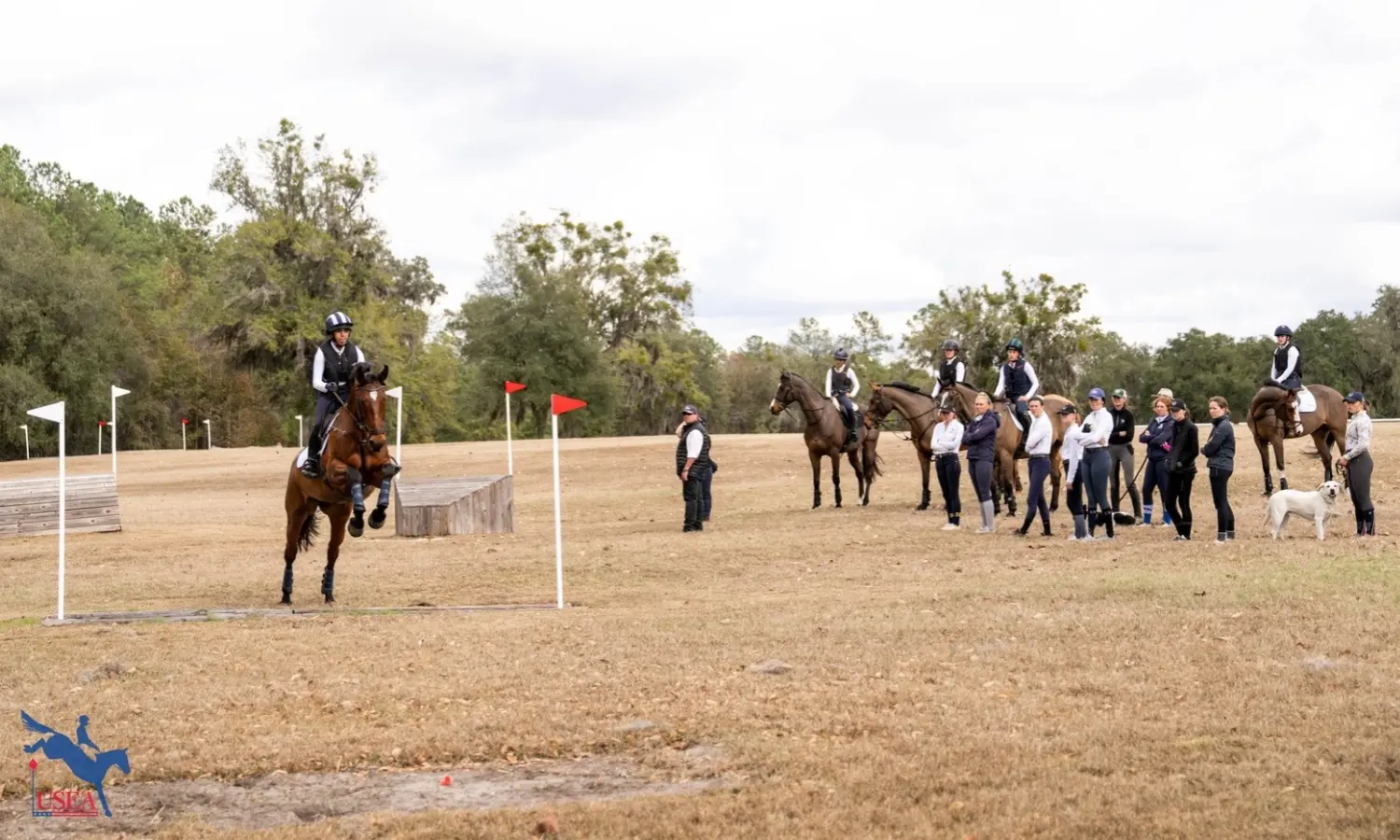
Learn Alongside the Next Generation: Full Auditing Opens for the 2026–2027 EA21 National Camp
The United States Eventing Association (USEA) invites the eventing community to audit the 2026–2027 Emerging Athletes U21 Program (EA21) National Camp, taking place December 29, 2026 – January 2, 2027, at Twin Rivers Ranch in Paso Robles, California. The five-day camp will be led by USEA EA21 Dir...
The VAP Series: Cross-Country Warm-Up Steward
There are few places at a horse trial that capture the excitement and anticipation of competition quite like the cross-country warm-up. Horses are eager to get out on course, riders are making their final preparations, and trainers are offering last-minute words of encouragement. Amidst all the a...

Celebrate with the USEA at the Annual Meeting & Convention and U.S. Eventing Hall of Fame on December 11-13
The 2026 USEA Annual Meeting & Convention, featuring the U.S. Eventing Hall of Fame Induction Ceremony, is an opportunity to come together wit...