Ride Between the Flags with Sally Cousins: A Preliminary Bending Question
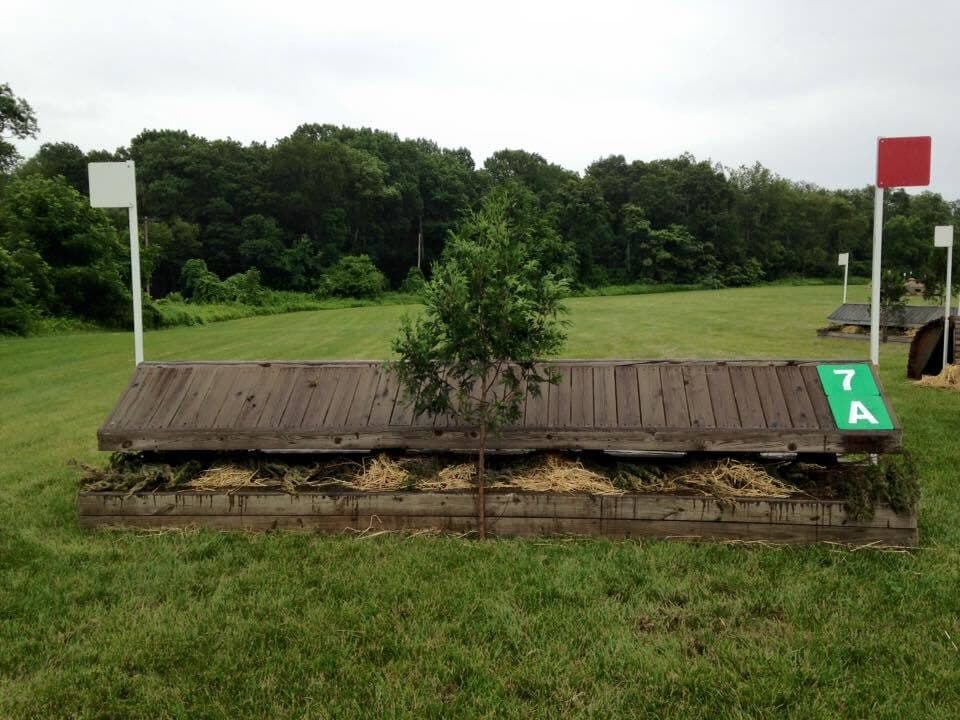
In this series, the pros walk through their approach to riding questions, fences and combinations on cross-country. This Ride Between the Flags is given by Sally Cousins. She walks us through a Preliminary bending line, which featured at the Horse Park of New Jersey I H.T.
This was a combination used at the New Jersey Horse Park last June. I rode this on an experienced intermediate level horse. I was trying a new bit and decided to drop down a level in case it didn't work. (it didn't) Whenever I plan my ride at a fence, there are two factors that most influence my decision about how best to ride it: the experience level of my horse and the horse’s strengths and weaknesses in its training. If I am walking the fence with students, I ask myself how I would ride it on my least experienced horse that competes at that level and make my recommendations with that in mind.
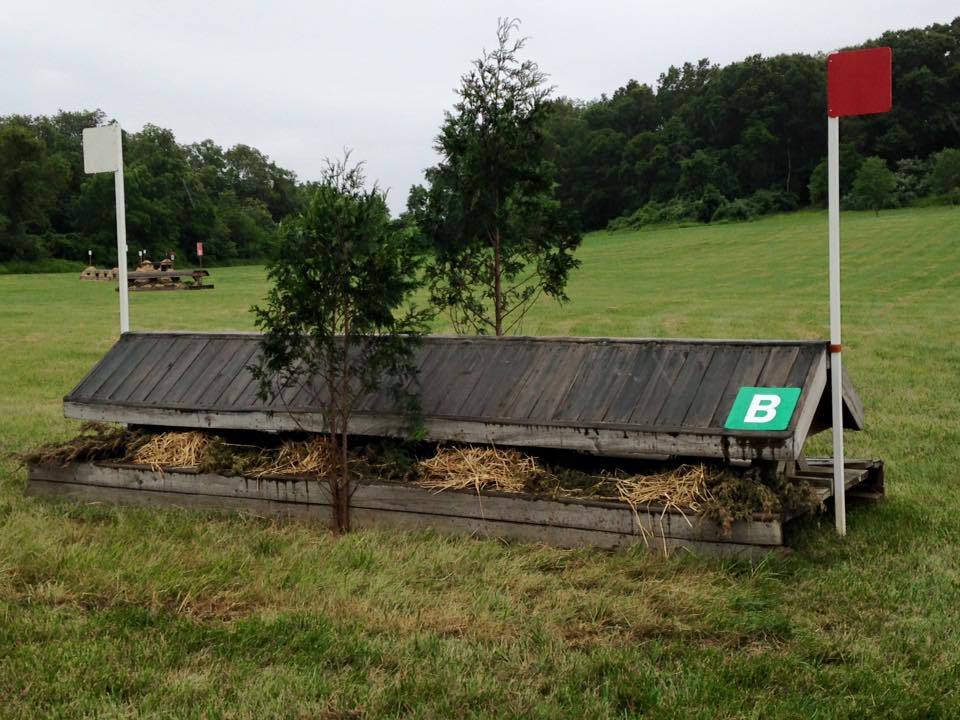
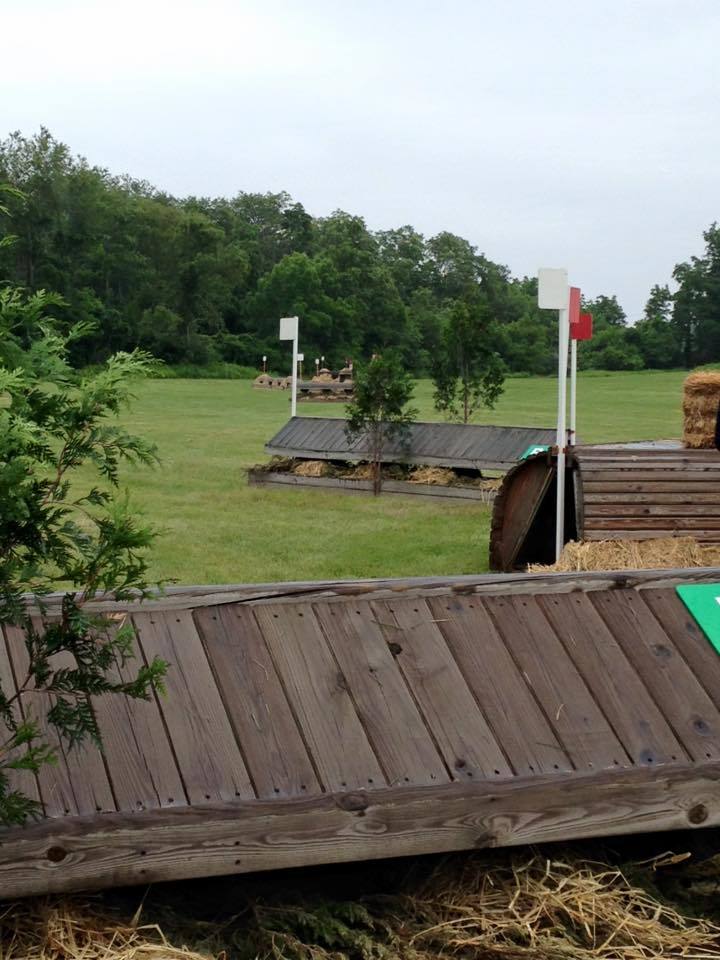


Brigitte Aickelin Photos.
This was a combination that set on a bending line to the right. The jumps used are not big but the strategic use of trees made the question more difficult. The quickest route was jumping in on the far right bending in 72 feet (5 strides) to the right side of the second fence. The tree placed in the middle of the combination made the turn quite sharp. The shape and height of the jumps did not make you have to set up too much but if you wanted to get the turn done well you needed to come back to a show jumping type canter. The use of the trees forces you to choose the inside or outside line. If the trees would not have been there, the combination would have been very easy middle to middle. If I was riding a horse that was less experienced or didn't turn well to the right, I would have jumped in on the left to the far left side. The extra strides would give more time to get the turn done and a chance to let the less experienced horse process the question. Having said that, bending lines can be quite difficult. It is easy to get "lost in the bow". That means the bigger the bend the easier it is to lose the outside shoulder of the horse and get an extra stride or even a run out.
Paul Darragh was an excellent Irish show jump rider. He changed my riding in a significant way. He was the first trainer to really focus on the loss of the outside shoulder being the most common problem for jump riders. He said that we all know that the most important part of the horse to ride was the engine (hind end) but that next most important thing we needed to focus on is our ability to control the outside shoulder. Have you ever come through a turn saw a great distance only to have it disappear? Or to be able to see a good distance off of one turn but not the other? Both of those scenarios usually involve losing the outside shoulder.
So, back to our combination, losing the outside shoulder can be subtle. It is often easier on a tight turn to keep the horse organized than to find the horse starting to sprawl as the turn opens up. When I have a combination I have plan A. I pay close attention to how the combination is flagged (in this case A and B) which means plan B cannot involve circling between the two elements. If my horse wasn't going as well as I wanted, I might change to plan B and taking the longer turn. It would only cost you a few seconds.
In our warm up we need to evaluate how the horse is going that day. I practice the types of turns I will have on course to see how my horse responds. It will give me an idea of what I can expect out on course.
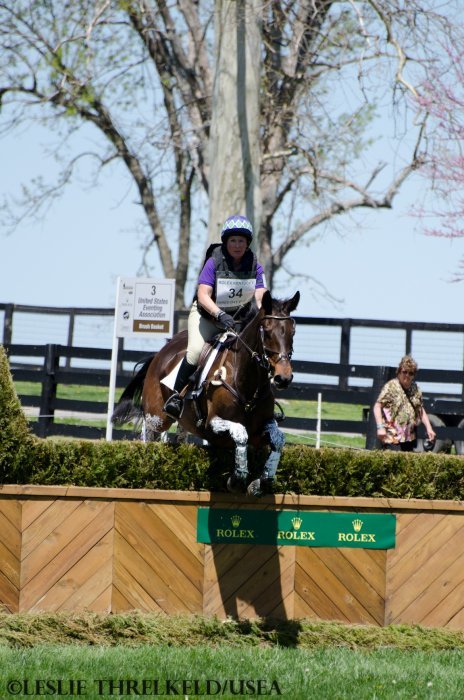
About Sally Cousins
Sally is a very successful upper level rider out of Aiken, SC during the winter. She has competed at the top levels internationally including at Burghley CCI4* and Badminton CCI4*. Sally is a constant at the top of USEA leaderboards, and held the spot as Top Lady Rider from 2008-2012. Besides her own riding accomplishments, Sally also thoroughly enjoys training and teaching her students and their horses. Click here to visit Sally's website and learn more about her program.
Related Articles
USEA Board Approves New Intro Level
Growing the sport of eventing in the United States remains a central goal of the United States Eventing Association (USEA) and its Membership Committee. Through feedback from members, coaches, and prospective participants, a common theme emerged: while interest in the sport is strong, the cross-c...
USEA Podcast #412: The Stories that Defined Kentucky
Fresh off of the heels of a U.S. win at the Defender Kentucky Three-Day Event, the crew sits down to recap the weekend in the bluegrass and all the pairs that impressed during the CCI4*-S and CCI5*-L competitions. From well-deserved wins, to horses who won our hearts, to a moment that USEA CEO Ro...
The Countdown to the 2026 USEA American Eventing Championships presented by Nutrena Feeds is On!
The 2026 United States Eventing Association (USEA) American Eventing Championships (AEC) presented by Nutrena Feeds is headed back to the Kentucky H...