Re-Training Your Off-The-Track Thoroughbred for A Successful Future in Eventing
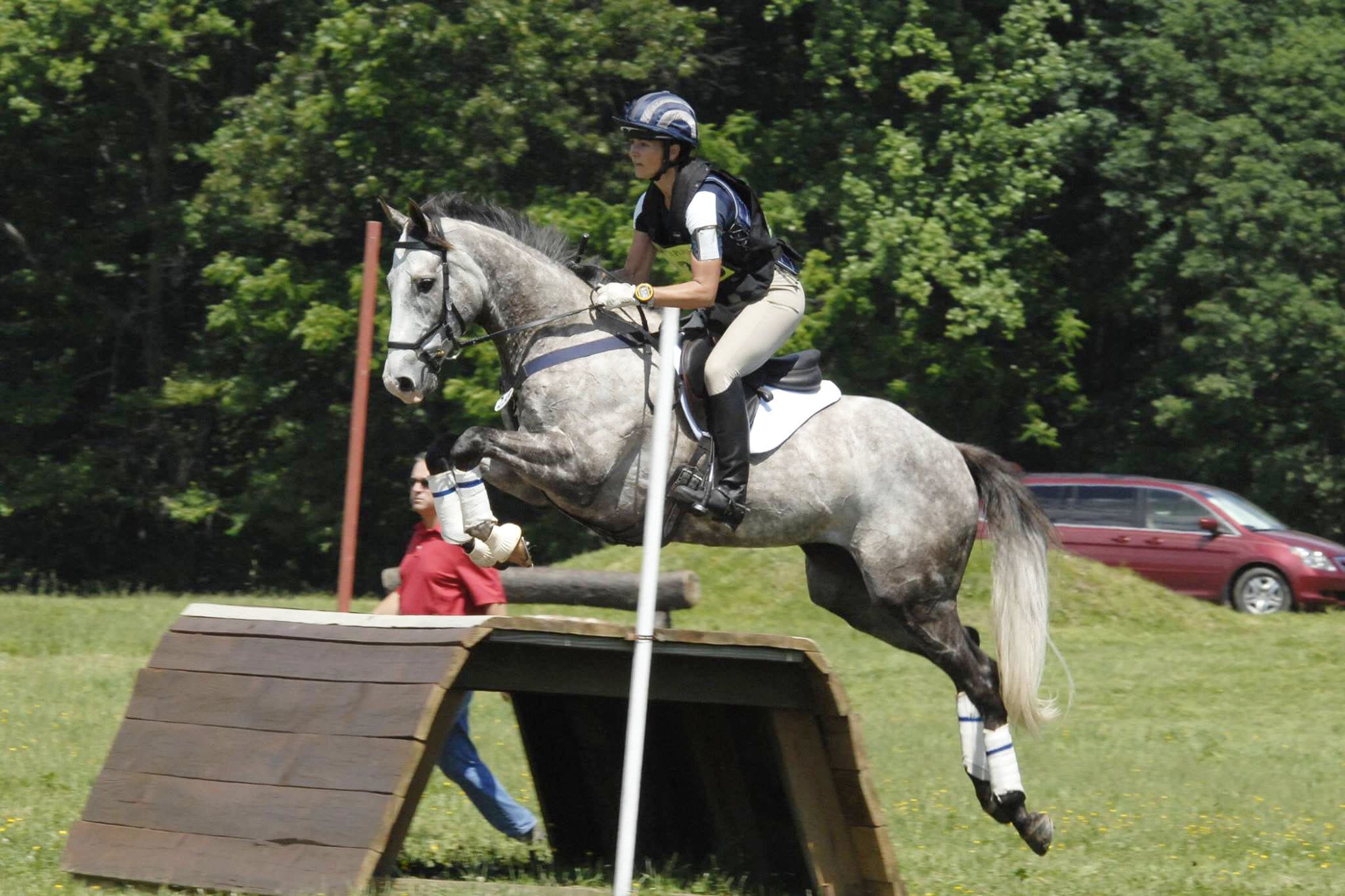
The Young and Future Event Horse article series is being provided through a partnership between Mythic Landing Enterprises, LLC., and the USEA. This is the second half of a two-part series on evaluating and training OTTB's for a future career in Eventing. Click here to read Part I: Evaluating Off-The-Track-Thoroughbreds for a Future in Eventing.
After evaluating a potential off-the-track Thoroughbred that you would like to purchase, and your vet has given you the OK, it’s time to bring them home to begin the re-training process. For Kelley Williams, this begins with allowing the horse some down time. The amount of time they will need can vary from horse to horse. They may need anywhere from two weeks to three months off depending on how sore or tight their body is, or if their feet need time to settle. Williams explains, “My goal is to re-train them and sell them, so as soon as their body is ready to get back into work we start the re-training process. I’m really attentive to each horse and work with them at their own speed.”
The type of horse you are looking for and your competition goals will determine the age of horse you should consider. If you’re interested in campaigning your horse in the USEA Young Event Horse program, you will be looking to purchase a 3 or 4-year-old off-the-track so that you have time for your horse to settle before beginning their Eventing career. “I tend to prefer younger horses because they don’t have as much wear and tear on their body and are less likely to have any extra ‘baggage’ from the racetrack lifestyle. The other positive for me with a younger horse is that in general I prefer to put the most basic training on my horses. That way I know what they are thinking and how they process things because I have been there every step of the way,” elaborated Williams
For the first timer getting a Thoroughbred off-the-track, Kelley suggests looking at horses that are a bit older. Kelley describes, “With an older horse comes a bit more maturity, both physically and mentally. This can frequently lead to a horse that is somewhat easier to bring along because they tend to have a bit more basic strength and sense of balance. You also don’t have to deal with the ‘baby brain’ as much, which can be hard to keep on track for the more detailed work.”
Regardless of the age of horse you decide to purchase, the re-training process will remain the same but the amount of time it takes your horse to progress will vary. After giving the horse’s body and brain some turnout time to settle, Williams likes to start these young horses outside of the ring. “I think it’s really good for their brain and body to go out and walk, whether it’s a hack in the woods learning to cross creeks, going up and down hills, or walking around in my fields stepping over small logs, it’s all about gradually teaching them how to negotiate those sort of obstacles. I’ve also found that this is a great way to get their body back to work slowly to begin the training process without taking the day to day work too seriously,” Williams describes.
Williams explains that many racehorses expect a particular routine and work program. Her goal is to ensure that her horses are motivated to come to work everyday and learn that what we do is fun! After a few weeks of hacking, Williams begins to introduce ring work. “At first, it’s just simply walking, trotting and cantering in a steady rhythm at all three gaits while teaching the horse to stay in front of my leg and to carry themselves. As I go through this process I start to get a better understanding of the horse’s strengths and weaknesses so that I can develop a program that will work best for that particular horse. Every horse is different both physically and mentally, however the goal is the same, to teach the horse what we want him or her to do and while it may be physically challenging, it is never too hard for either their body or mind. If you approach the training process this way, it’s amazing what you can eventually ask a horse to do and they will be able to do it happily, confidently, and willingly because they know that what you’re asking them to do is safe and within their abilities.”
One of Williams’ favorite training tools is always having her horses step over various obstacles as part of their day-to-day work. This way, when Williams begins to introduce jumping, it just makes sense to the horse to go over whatever is in front of them. For example, Williams will have her horses step over small logs in the field and poles, flower boxes, small gates and rolled up liverpools in the arena.
Once the horse has the basics of a steady walk, trot and canter where they stay in front of the leg, travel on a straight line and carry themselves, Williams will start teaching them about jumping. Since presumably the horse already understands to walk over small obstacles, Williams starts by trotting single rails and following those with two or three rails in succession. “I will often put the rails 9 or 10 feet apart so that I can easily canter the rails when appropriate without changing the way it looks to the horse. Again, doing these sorts of exercises tells me a little bit about what each individual horse will need in order to jump properly. Some horses need small canter exercises, some horses need trot poles to cross-rails to explain the foot work, some do best learning to jump in a trot grid and so on. Be sure if you’re starting your own horse and are not sure how to proceed to access a trainer or instructor who is familiar with the process of teaching young horses to jump.
Finally, when it’s time to begin introducing various cross-country obstacles to your OTTB, the transition should be fairly simple since your horse has been walking over small logs outside already. “The logs that I’ve been walking over will be the first ones I trot over. If they can trot over them calmly, then we might trot one and continue to the next one in a canter. This way it just makes sense to the horse because they are essentially doing what comes naturally to them,” Williams explains.
Overall, Williams believes that in order to successfully re-train an off-the-track Thoroughbred, you must make sure that you’re horse is confident and believes they can do every challenge that you present to them all on their own.
Kelley Williams is an Advanced-level event rider that specializes in the re-training of off-the-track Thoroughbreds. Based in the heart of Area II Eenting, Williams is the head trainer at A Bit Better Farm, a leading event facility located in Brookeville, Maryland. Williams is known for her patient personality, which contributes to her success in bringing up her young Thoroughbreds from the bottom to upper-level competition. To learn more about Kelley Williams and her program, please visit her website at www.abitbetterfarm.com.
Related Articles
USEA Board Approves New Intro Level
Growing the sport of eventing in the United States remains a central goal of the United States Eventing Association (USEA) and its Membership Committee. Through feedback from members, coaches, and prospective participants, a common theme emerged: while interest in the sport is strong, the cross-c...
USEA Podcast #412: The Stories that Defined Kentucky
Fresh off of the heels of a U.S. win at the Defender Kentucky Three-Day Event, the crew sits down to recap the weekend in the bluegrass and all the pairs that impressed during the CCI4*-S and CCI5*-L competitions. From well-deserved wins, to horses who won our hearts, to a moment that USEA CEO Ro...
The Countdown to the 2026 USEA American Eventing Championships presented by Nutrena Feeds is On!
The 2026 United States Eventing Association (USEA) American Eventing Championships (AEC) presented by Nutrena Feeds is headed back to the Kentucky H...