Podcast: Chris Bartle/Training Tip from Tamie Smith
Chris Bartle, a former British eventing and dressage team member and now the German Three Day Event Team National Coach, shares his philosophy for coaching the modern sport and what we can expect from him at the ICP Symposiums this winter. Tamie Smith from Area VI offers this week's training tip. This podcast is available for download from the iTunes store to your Smartphone Podcast App.
Chris Stafford: (Music playing). This is the United States Eventing Association official podcast. Hello and welcome to the program, I'm Chris Stafford. On the show this week we hear from Chris Bartle who will be presenting the ICP Symposiums in California and Florida this winter, but first we have a training tip from Tami Smith from Area Six. Hi Tami, welcome back to the program.
Tami Smith: Hello, how are you?
Chris Stafford: Well, you have a tip for us this week don't you? A training tip for getting horses back into work.
Tami Smith: All of our horses go into a field for a couple weeks or a couple months and then as they come back into work and we've hacked them for a few weeks, then I take all my horses, even the experienced ones and we start them back into the round pen and work on ground work. This is just really to get them really connected back to me, and each of my riders does it as well. Really, you're trying to disengage their haunches, move their shoulders around, get them to where they follow you and pay attention to you while you're in the round pen. It's easy once you send them out into the field. Their horses again. You'll always want them to be able to feel that way, but once they get back with you you want them to feel like a partner again. I typically do this once a week, but when they come back in from work, I do that for a few weeks.
Chris Stafford: This is really like tuning in or getting them to tune into you again, isn't it?
Tami Smith: Absolutely.
Chris Stafford: Connecting with them. How close would you work with them then physically in the round pen, Tami.
Tami Smith: I have what it's like a Parelli stick they call it. I want them to always understand that I have my space and that they have their space and that I can go into their space at any time. They can't go into my space without being invited. Initially we just work with them at the walk and get them to where if I go to walk to the right, they disengage their haunches. I go to walk to the left they disengage their haunches. At the advanced level of that I'm not even ten feet. I'm about ten feet from them. Because, their eye is on me, they're really focused on what I'm doing and what I'm asking of them. To start it off you would be very close; because, you would walk towards them and then you would touch them on their hock to disengage their haunches.
The advanced level would be that you just walk to the right, no matter how far you are and they disengage their haunches. I like to kind of play even out in the turnouts with them, I kind of like to play with them a bit that way.
Chris Stafford: Do they have any tack on at all? A head collar or anything?
Tami Smith: No.
Chris Stafford: They're completely free. What gaits will you work at them. You mentioned the walk then. Would you build up to the trot and the canter? How much do you do?
Tami Smith: Initially the walk to teach them. When you said do they have anything on, they do have a rope halter on to teach them, to train them what it is; because, you need to have some pressure. If you just walk into the round pen and start doing weird stuff and you don't have any kind of control of your horse, you might end up getting yourself hurt.The advanced level, I don't even need anything on them. Eventually what we end up doing is we ride them bridleless in the round pen. Then we actually take them out of the round pen and teach them to ride without a bridle out in the arena.
Chris Stafford: Do you do this with horses of all ages?
Tami Smith: Yeah, yeah we do. We do it with all ages. The reason why is; because, there's so much power in the connection with a horse. There's so much power with teaching them how to stop off your feet and your leg. I really feel like it's the way to teach riders that don't necessarily have the same feel that you have had over years. I just said, Jimmy Wofford said once, that you need 10,000 hours in the saddle before you become good, or get good. I feel like I've been the saddle 100,000 hours, and I still feel like I'm learning. Having the horses in the round pen and being able to really do horsemanship type exercises with them, it really gets not only you connected with your horse, but it really develops their sense of how you're the person that's leading them.
They learn to trust you. It's a really amazing thing to see when they really feel like they can trust you; because, I feel like horses are defensive and acting out when they don't feel like they have somebody that they can trust.
Chris Stafford: Does this groundwork involve jumping as they become fitter?
Tami Smith: Yeah, I don't do a lot of the jumping in the round pen, but once it's in the advanced stages and we're riding without a bridle and being able to do everything without a bridle, we do jump without a bridle as well.
Chris Stafford: For how long a period of time once they come back into work and you've been hacking them would you do this round pen work, Tami?
Tami Smith: For a couple of weeks. The first week we just kind of get them back into, it's a couple days a week and we just get them back into getting their muscles to move. Obviously, the hacking has helped with that as well. Then the second week we really just, especially the horses that are already trained. All of mine that I have currently have already been through this. They get back into it really fast. If it was a horse that I was just teaching, it would take a month at least to probably be able to get them out into an arena where you could safely jump without bridle. I think it would probably take about a month.
Chris Stafford: Great advice for getting them back into work; because, I know the season's over now, but it's not long before we start picking up the reins again, is it?
Tami Smith: No, no it's not. It's right around the corner. I can't wait. I'm already going stir crazy.
Chris Stafford: (Laughing). Thank you so much for our tip this week, Tami.
Tami Smith: Yeah, thank you.
Chris Stafford: British coach Chris Bartle who is also the National Team Coach for the German Eventing Team will be visiting the states next January to present at the two ICP Symposiums in California and in Florida. He joins us now to talk about his philosophy as a coach and also explain what he will be bringing to those symposiums this winter. Hello Chris, welcome to the program.
Chris Bartle: Hi, it's a pleasure to have the chance to chat with you Chris.
Chris Stafford: Before we discuss your coaching today, let's start with a big of background Chris, and perhaps you'd explain the system you came up through with the British Horse Society?
Chris Bartle: Yeah, well of course as you mentioned that, the British Horse Society has played a significant part in my coaching development. I started as a teenager in my mother's riding school, Yorkshire Riding Center here, is my mother's idea, dates back quite a few years now. It started in 1963 when I was just a kid in shorts. I came up through that riding school situation, through the British Horse Society qualification system. That went parallel with my interest in activities as a competition rider, both in terms of dressage and then eventing. That's the path I've followed in my coaching career you might say.
Chris Stafford: Well although you're a national team coach, you do still coach at all levels, don't you?
Chris Bartle: Very much so. I have come through as I was just intimating there, my coaching career, my competition riding career went side-by-side, hand-in-hand. I was coaching, teaching beginners how to do riding clubs. Teaching very novice riders in competition world long before I got into the high echelons of championships, Olympics and so on. Even while I got the chance to train and work with such riders, such Olympic riders and championship riders I still am involved even now with teaching novice riders on their own horses. I can't say now that I work as I used to do in the riding school with riding school horses and teaching beginners how to do riding clubs. I've moved as you might say on from that and the Yorkshire Riding Center changed a bit. Now my work is with all levels of rider and horse, but yeah focused on competition at some level.
Chris Stafford: Well of course since you began in the 60's coaching has evolved today and become more sophisticated, hasn't it?
Chris Bartle: Yeah, I think it's sophisticated or become a bit more sophisticated in some respects, but at the same time nobody has told the horse that. The horse is still the horse. I would say in my coaching [inaudible 00:11:35] style and so on is to try to keep it simple. I think one can over complexity things. My mother gave to me you might say an interest in detailed analysis of what makes up a horse. How a horse moves. How a rider interacts with a horse and that interest in the detail remains with me, even though I'm still trying to as I said keep the system as simple as possible, both for the horses sake as well as for the rider's sake.
Chris Stafford: We've also seen a growth if you will in cross-pollination among coaches and nations haven't we?
Chris Bartle: Yes, we have. If you take a step back and you see the development of national styles of riding you might say. One could previously say there was a German style of riding dressage and show jumping which was different from an American style, which was different from the British style and so. Now because of that cross fertilization there's the trainers, the riders, and much more interaction with each other across the globe. There is an obvious coming together. One sees in Germany a much lighter style of riding than perhaps one saw back in the 60's and 70's and 1980's even. Equally you see some aspects of the German system and German style of riding maybe in America or certainly in England, in GB as well. That is an ongoing thing as we coaches and of course the riders travel the globe and pass information along in a coaching sense. Also absorb ideas and different riding styles by watching, copying others as we compete and travel around.
Tami Smith: Let's talk about your success with the German team Chris and how you've influenced them?
Chris Bartle: The eventers at the time when I came on board had gone through a spell of not being so successful, so they were very open to new ideas. That of course always helps when you can join a team in a trough while along the peak of a wave. Secondly, I found the riders a little bit I would have to say and to be honest with you surprisingly open to everything that I said and ideas that I brought across. Obviously Germany has a very solid base to its' riding and to it's riding schools and to the way the children learn to ride and so on. That disciplined approach and that disciplined way of riding is something which as a coach you find if they're obviously open and 9/10th of them were very open to being molded or changed in a slightly different direction to maybe where they were.
Starting from a very solid base to their riding. Yes, one had to be a little bit, how should I say, in a step-by-step way of bringing across my ideas. I certainly didn't come in saying, what you're doing is all wrong and this is how you'll do it and so on and so on. That's not my style. I tried to emphasize the positives. Work on the weaknesses. Pointing them in a new direction in terms of their style of riding cross country especially. Work on their dressage related to their cross country and jumping, and obviously trying to tie all of those three phases, treated differently in our eventing sport together and emphasize that link. Obviously as we went along the fact that it worked for some became an advertisement to others and that's why it became more and more accepted in terms of my ideas, and yeah.
We can't just sort of sit back and say like that, nothing stands still in life. There's always new kids on the block and new people coming through. It certainly helps that they're very open to it, much more so than people perhaps imagined at the start.
Chris Stafford: Well this will be your first time at an ICP Symposium Chris, so what do you anticipate you will bring to this audience?
Chris Bartle: Actually my role and my chance really in coming to the ICP Symposium is to bring across my ideas on coaching in general. My ideas on specific coaching ideas that relate to the dressage, the show jumping, the cross country in terms of our discipline eventing. That those will relate to pure dressage and pure show jumping is obviously clear. I'm not coming across to say this is how you should mold the ICP in the same that the British Horse Society examination system has been molded over the years. That's not my expertise. I think that it's great that there is a program underway over your side and I would encourage that. I think it helps riders certainly over here to know that when they go to their coaches, there is a basic level of ability that's being demonstrated in order to get the British Horse Society qualifications and so on.
It will still boil down at the end of the day to each individual and how they individually present their ideas and their own individual coaching style which we all know from years doing this, you take a bit from here and a bit from there. It is still your own personal way of doing things. That shouldn't change and won't change I'm sure.
Chris Stafford: Well over the years Chris, the sport has evolved considerably around the world. What do you see as the biggest changes?
Chris Bartle: It's really the change in the format to the shorter format has made quite significant changes. I would say some positive, some negative. I'm not in favor of the sport going even shorter. I think the essence of eventing, the essence of the old fashioned horse trials back in the days when we rode 4-1/2 minutes steeplechase, roads and tracks and then then cross country. Stamina and fitness training was a very important aspect of it. The technical elements of the dressage, the show jumping, the cross country are less than they are now. Now what I would say about eventing if it is currently in the shorter format, it's an equestrian triathlon, although there is still a wish I think on the part of a majority of the people to keep the influence and the end result as it is and was.
In other words the cross country should be the most important element within the end result balanced by the show jumping and the dressage. I still strongly think that as we go more technical you don't in my opinion want to shorten the distances still further and lose that type of horse first of all, and go more towards a jumping breeding and so on. I think we need to keep a specific identity to an event horse. The other aspect about it is horsemanship and you ride a cross country course at the four star level to 12, 12-1/2 minutes as we did in the past. Then you really had to feel what you had underneath you. You had to not just ride on the clock looking at your watch.
You had to have a feeling for what your horse can do. That is an aspect of eventing which I wouldn't want to lose. The fact that it is the technical aspects, the dressage test is very much more demanding. The cross country course with its' technical elements and so on is much more demanding. The show jumping is technically more demanding. Perhaps the fences are not as heavy, scary on the cross country courses as I remember in what I call the black and white days, but there's still plenty to go out when you see the big four star events. I think in a pretty good situation at the moment the balance of it is, but I know from hearing discussions there is some pressure from some sides to make the cross country a little bit shorter and have more emphasis on the show jumping of the dressage. I suppose I'm a bit of traditionalist and would not like to see that myself.
Chris Stafford: How would summarize the impact that the changes have had on coaches?
Chris Bartle: Yeah; because, the demands of the dressage and the show jumping have increased, a lot more time is devoted to that. That's understandable, but at the same time I think there's two sides to the dressage, one is dressage training in the true sense of the word; because, dressage comes from the French word to train. Therefore, dressage can be done on the hill. It can be done out in the field. It can be done on the road. It can be done on the track. It can be done in the arena. Dressage doesn't always have to be in a 20 x 60 arena. Then of course you have the dressage test which is something which one has to rehearse it down to them. Any sort of movement and such. That has to be done.
That is only a small percentage of the work done in the dressage. I'm working on dressage out and about and not in the arena. Then that ties in quite well with the jumping and the jumping is only as good as the dressage at the end of the day, is the expression I would tend to make. Of course we all know that good jumper always makes the job easier. A horse that isn't bred to be a jumper isn't as careful naturally. Requires even better presentation, better canter, even better balance on the part of the rider and so on. We can't just rely on the horses innate jumping ability. That I suppose is how it has changed the coaching entity you might say.
Of course, it's to get that balance right and that's one of the next things I would hope to bring across when I come over.
Chris Stafford: Well, we look forward to seeing you over here at the ICP Symposium, Chris. Thank you so much for joining me this week.
Chris Bartle: My pleasure and I look forward to coming over. I am looking forward to leaving snow in Yorkshire and getting out of a plane to glorious sunshine in the US of A in January.
Chris Stafford: The dates for those symposiums are January 16th and 17th at Galway Downs in Temecula, California followed by Longwood Farms South in Ocala, Florida from the 19th to the 20th. You can find more information on the website by clicking on the link on the front page at useventing.com. A reminder that if you're not planning to attend the convention, you can follow all the news on the website. You'll find a link on the right hand side of the front page to the convention. That of course takes place in Fort Worth, Texas from December 3rd through the 7th. This podcast is available for download as a free subscription from the iTunes store to your Smartphone podcast apps. Until the next time enjoy your eventing. (Music playing).
Related Articles

Standlee Returns as Corporate Sponsor and “Official Forage of the USEA” for 2026
The United States Eventing Association (USEA) is excited to announce that Standlee has renewed as a Corporate Level sponsor for 2026. They will continue as “The Official Forage of the USEA,” Gold Level Sponsor of the USEA American Eventing Championships (AEC), and Contributing Sponsor of the USEA...
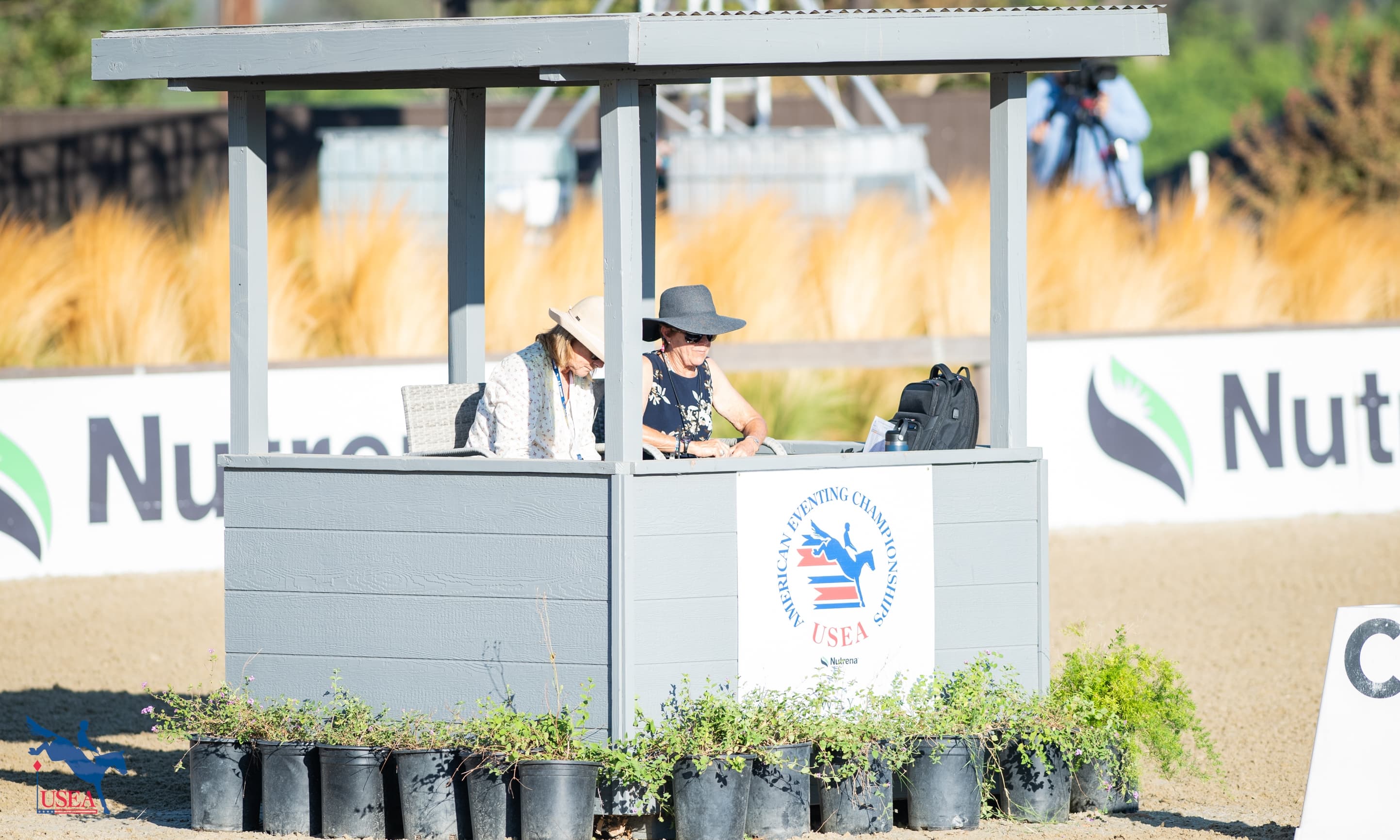
The VAP Series – Dressage Scribes
The USEA Volunteer Achievement Program (VAP) was created by the Volunteer Committee in 2025 to recognize the sport’s volunteers for their education, experience, responsibility, and commitment in dif...
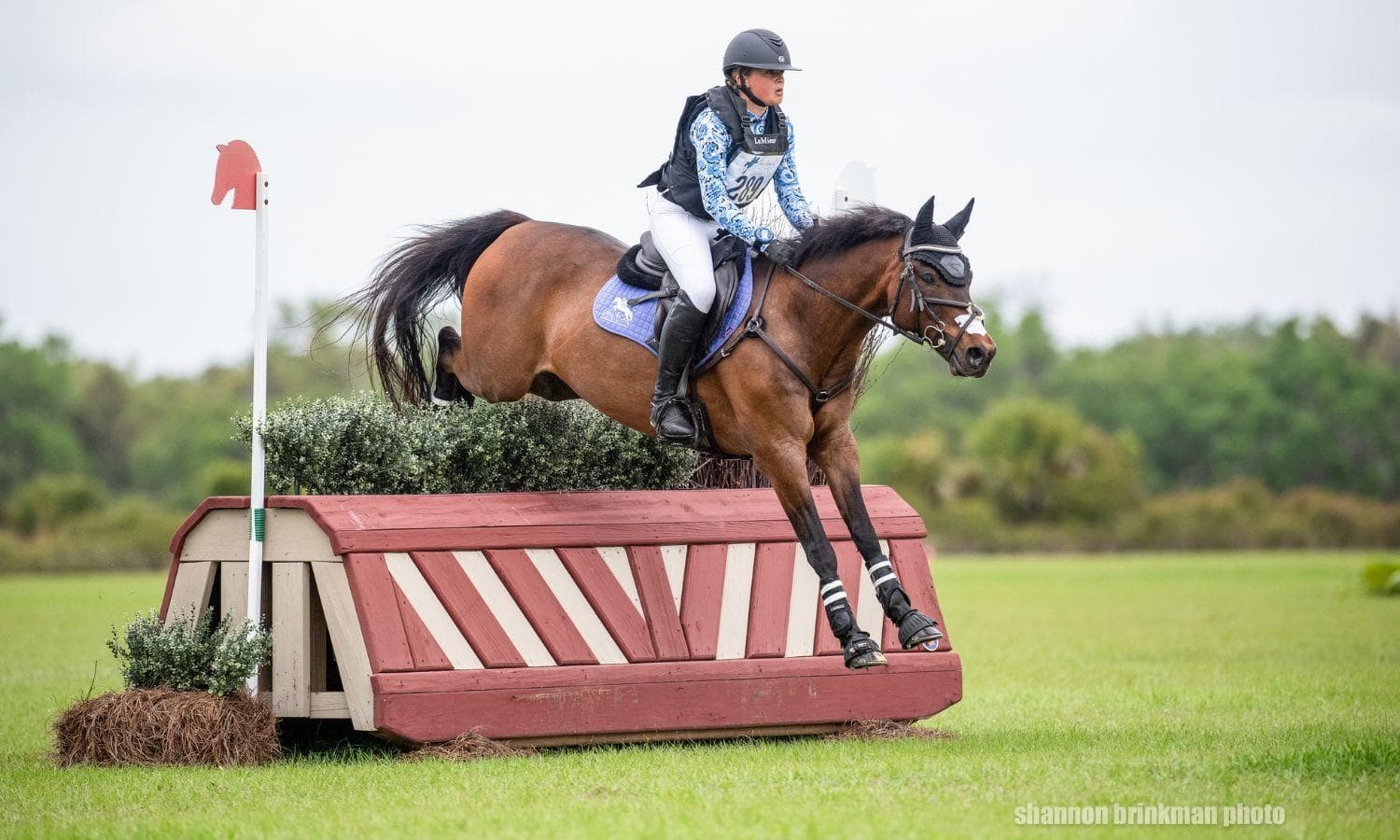
Borton Comes Full Circle at The Event at TerraNova CCI1*-S
It was a full-circle moment for Addison Borton when she competed in the CCI1*-S at The Event at TerraNova, held March 26-29 in Myakka City, Florida. Just 11 years old, Borton rode Way Too Marvelous BSR to fourth-place finish in her first international event—three years after her first ever USEA-r...