On Your Aids is Smooth, and Smooth is Fast: Day 2 at the USEA EA21 East II Clinic
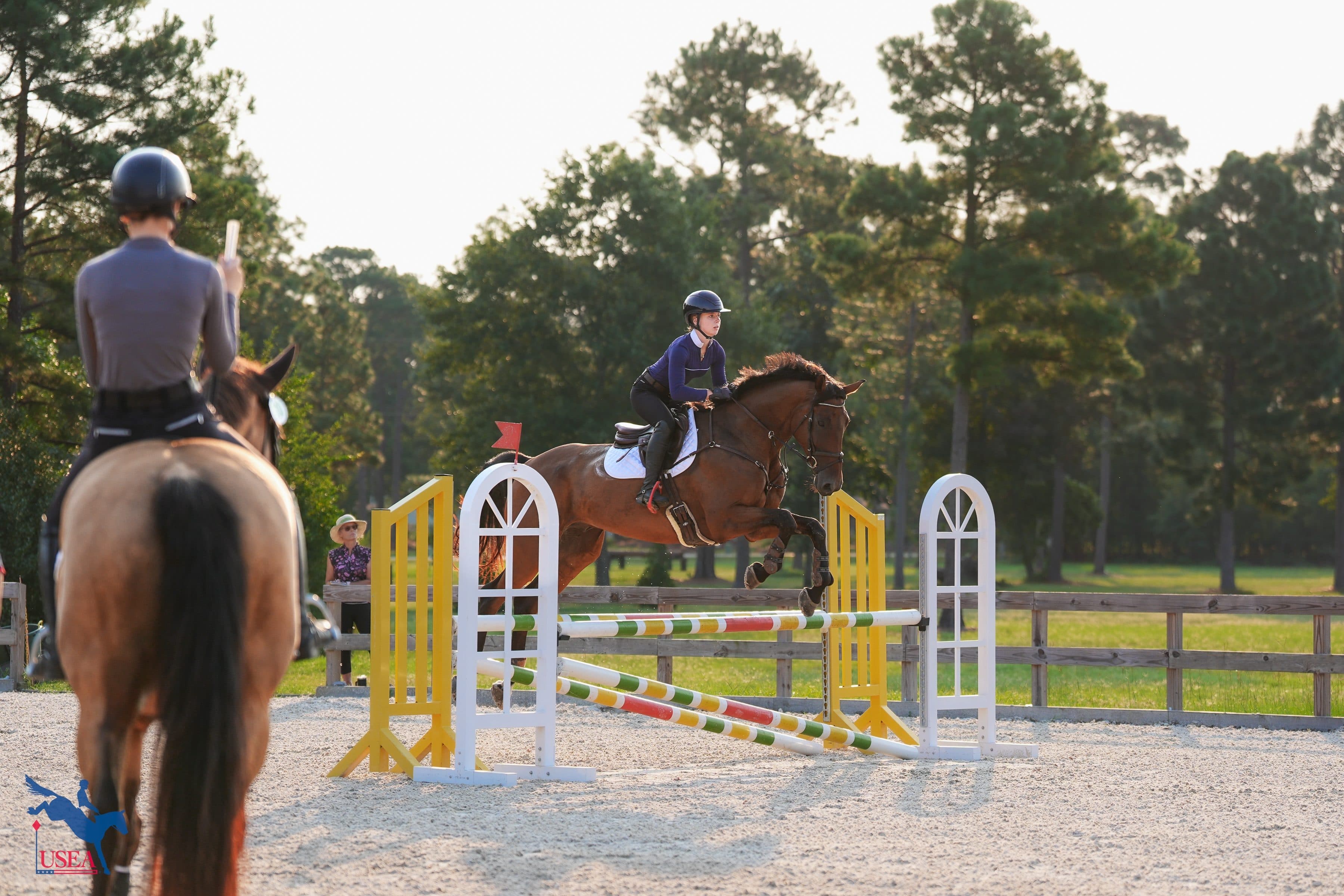
Aiken, S.C.—July 29—If you spend enough time in the saddle, somewhere along the way you’ll likely hear the saying: “Slow is smooth, smooth is fast.” On day 2 of the USEA Eventing Athletes Under 21 (EA21) East II Clinic, coach Emily Mastervich amended the turn of phrase to say: “A horse on your aids is smooth, and smooth is fast.”
It is no secret that as you progress up the levels of eventing, speed, or “making the time,” has a greater impact on your results in both jumping phases. It should also be no secret that simply going faster often doesn’t cut it and can actually incur more rails, loss of balance, and in the worst cases, result in dangerous riding. So the question of the morning became, how do we get “faster” while still maintaining safe and clear rounds?
Mastervich began by working this question backwards. All three sessions warmed up over the same exercises. First was a ground rail, square turn to a placing pole-vertical-placing pole, square turn to a ground rail, and then back again. Horse and rider pairs navigated this exercise at the trot and then the canter from both directions. Mastervich didn’t give the riders any distances, but rather wanted them to “make their own decisions, be aware of what was unfolding in the moment, and support their horses through [the exercise].”
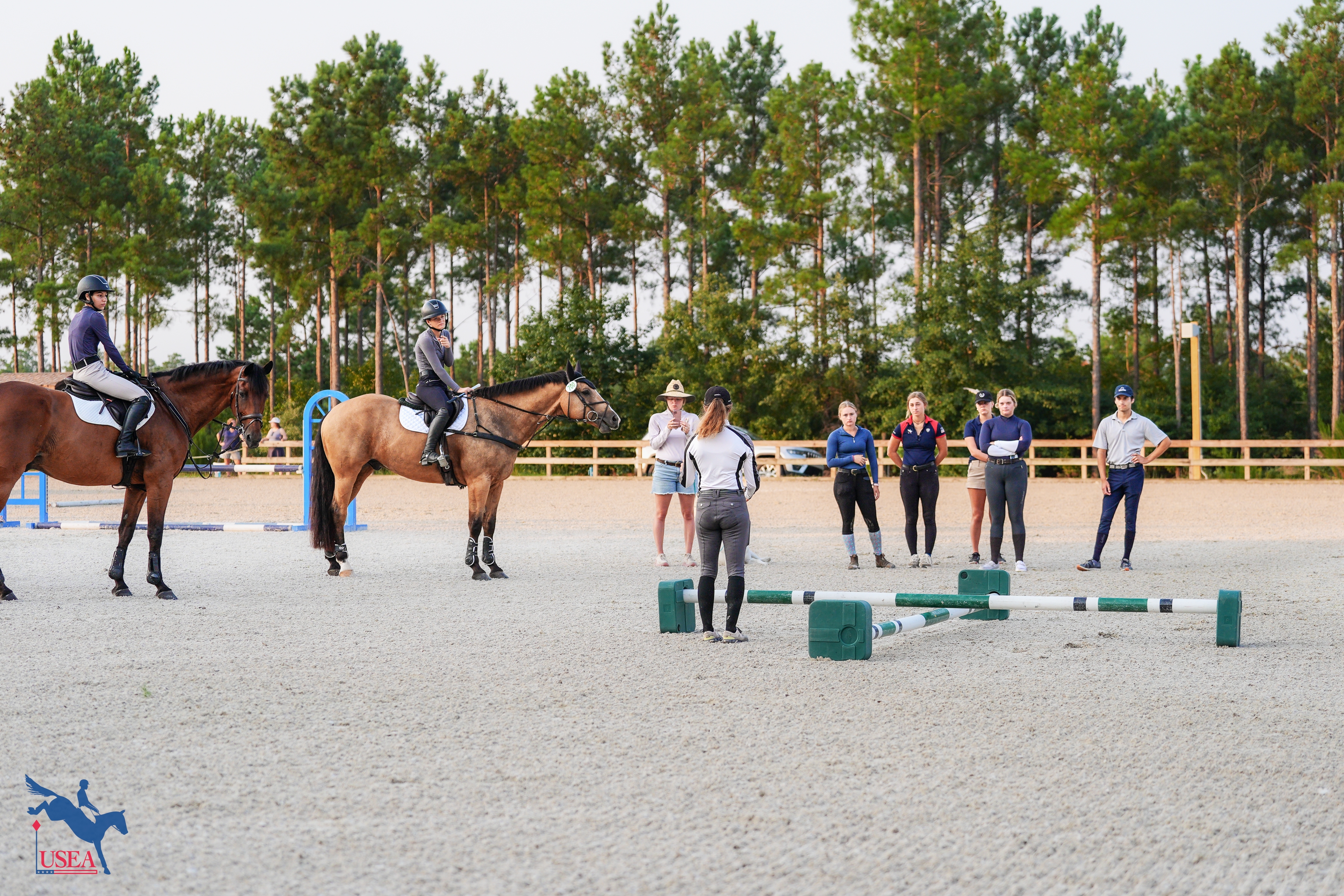
“It’s not always going to be perfect,” Mastervich knowingly stated. “We want to work on the riders becoming more instinctive in their decision making process and know what to do in different situations, both on the cross-country course and in the show jumping arena.”
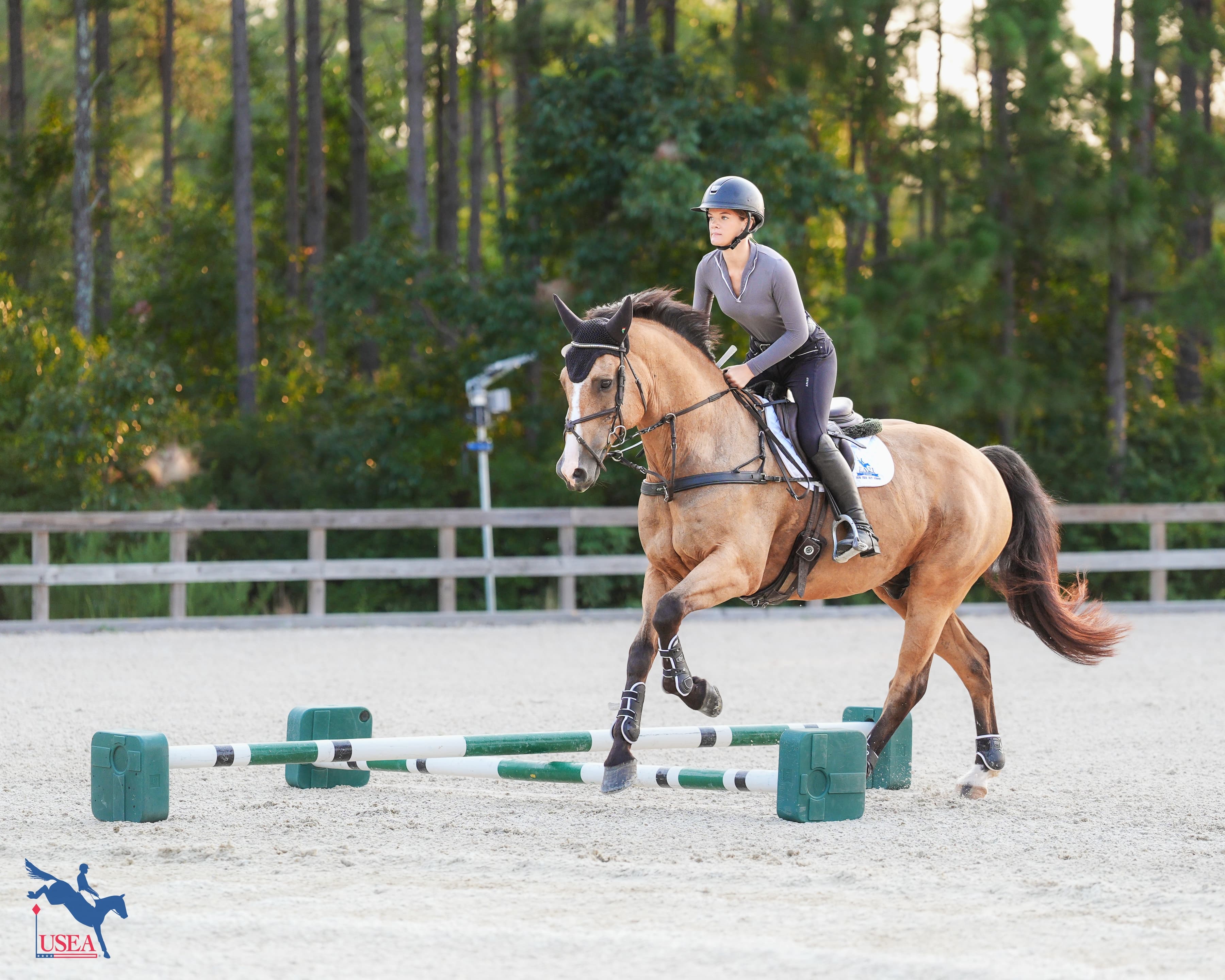
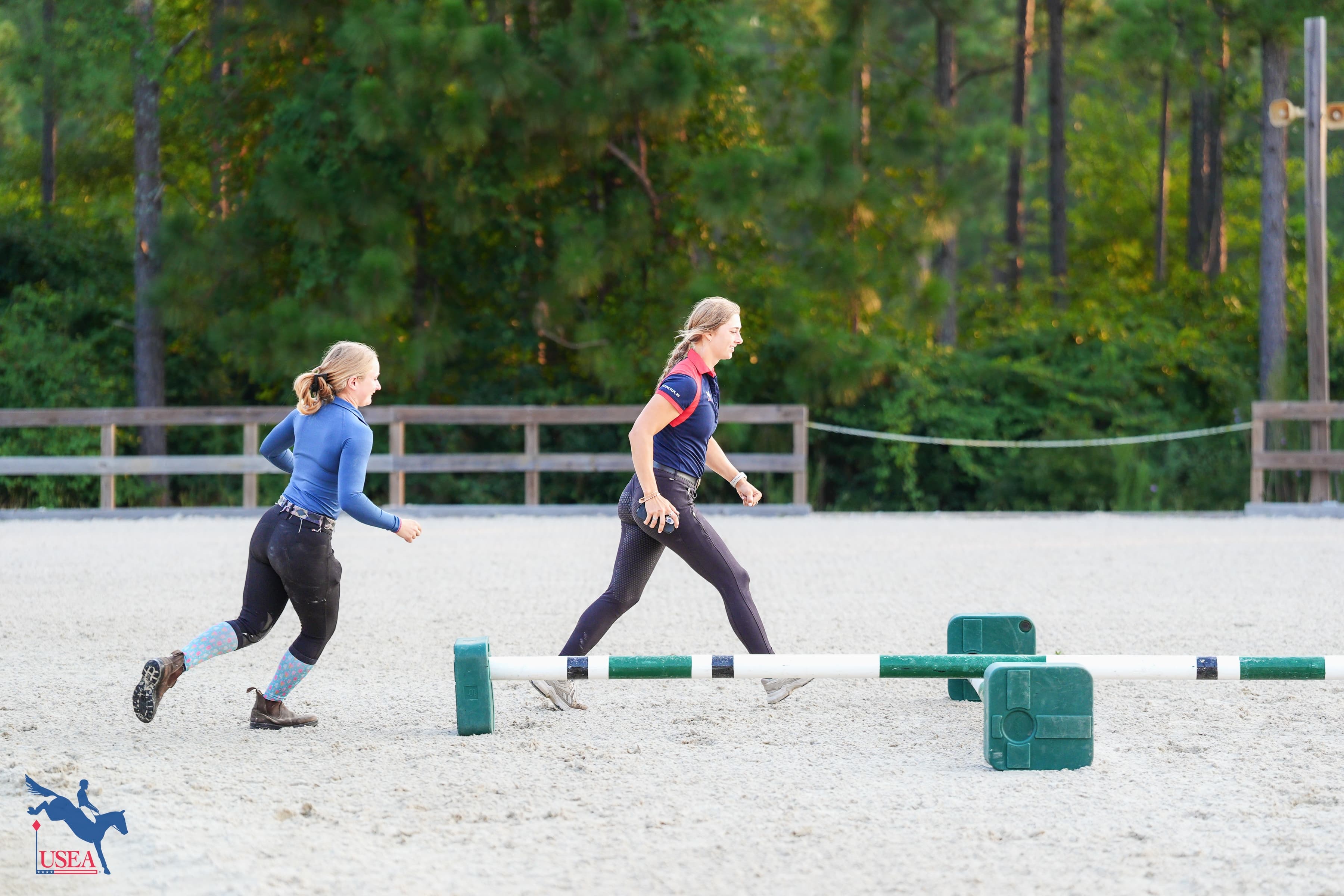
The next exercise was one Mastervich says she uses a lot at home with her own horses. Two low cavalettis, crossed in the middle to make a perfect “X,” which the pairs cantered a four-leaf clover pattern around: left lead outside turn, outside turn, inside turn, inside turn to right lead, outside, outside, inside, inside. If you’re confused don’t worry. So were all the riders until they had several on foot demonstrations.
The point of the exercise however, was to keep the rider’s brains working quickly, get them thinking about their horse’s alignment through the turns, and carry over what they worked on day 1. Were their shoulders falling in? Were their haunches swinging out? “I’m really trying to work on the riders feeling how the flat work transfers over to the jumping phases,” Mastervich explained.
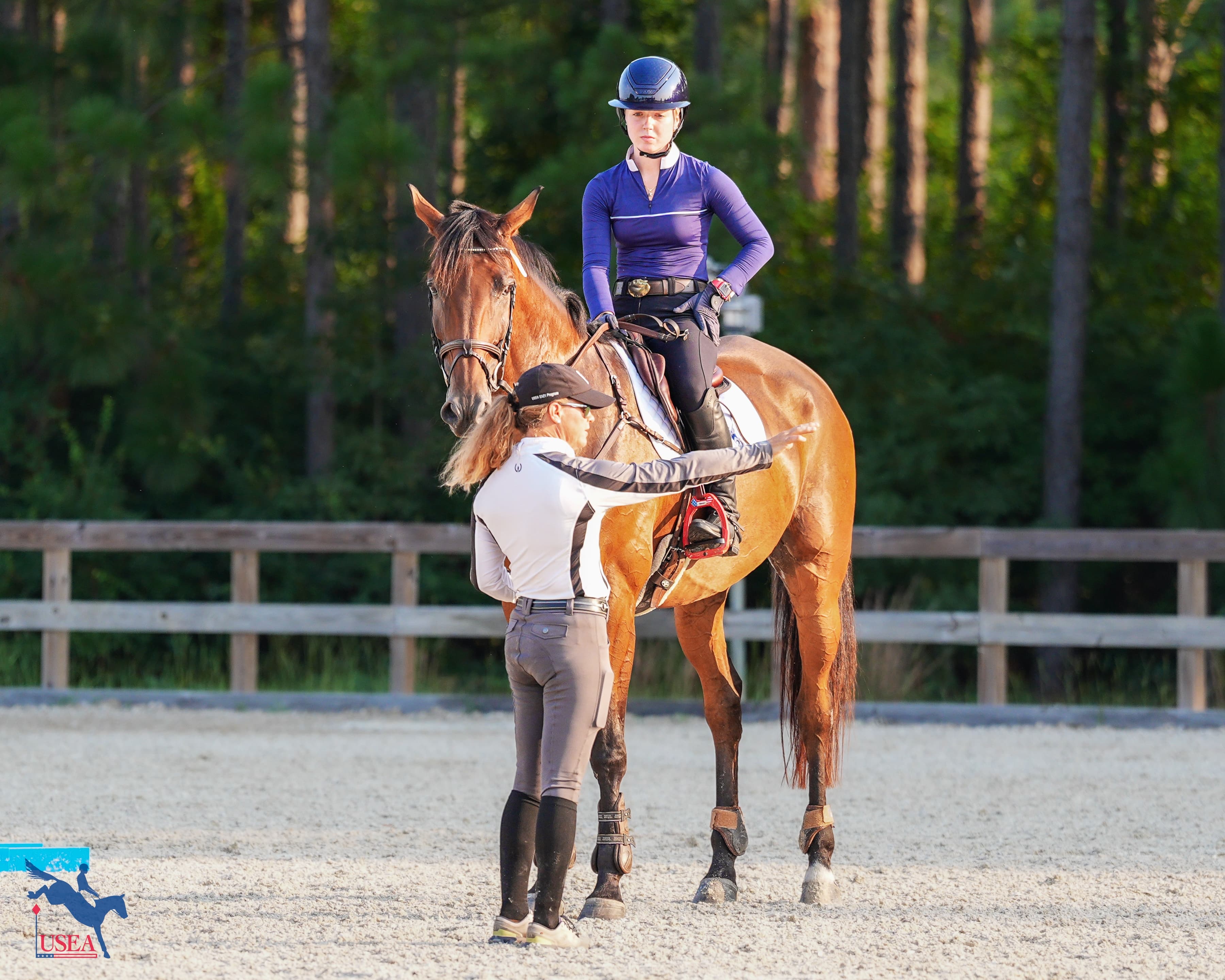
Mastervich then addressed all clinic participants, mounted and unmounted. “When [the exercise] wasn’t smooth, what was the obvious thing? Your horses were against the contact. They weren’t on your aids.” Answering her own question and driving the point home, she confirmed: “whether or not the horse got there smoothly has a lot to do with whether the horse was accepting your aids.”
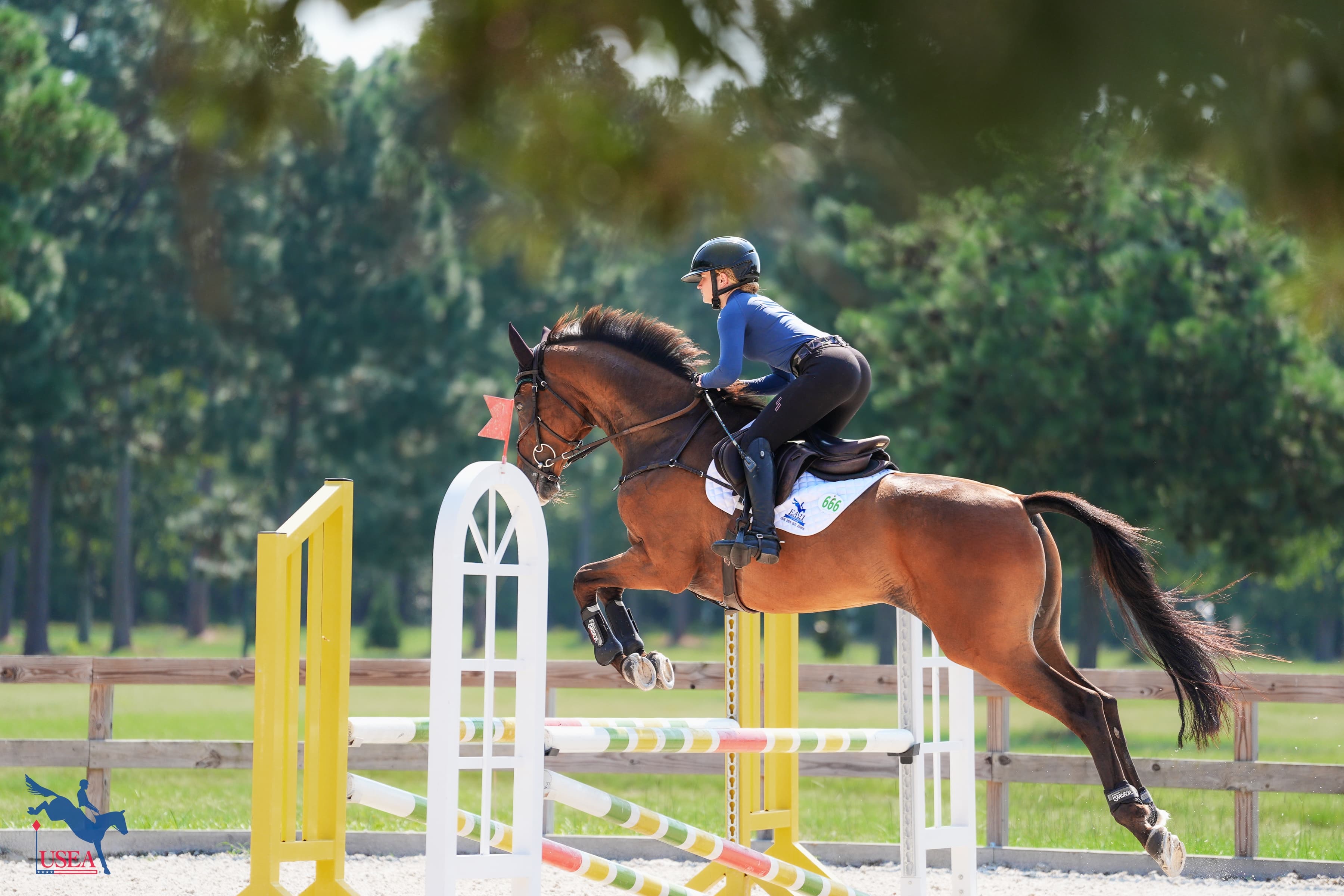
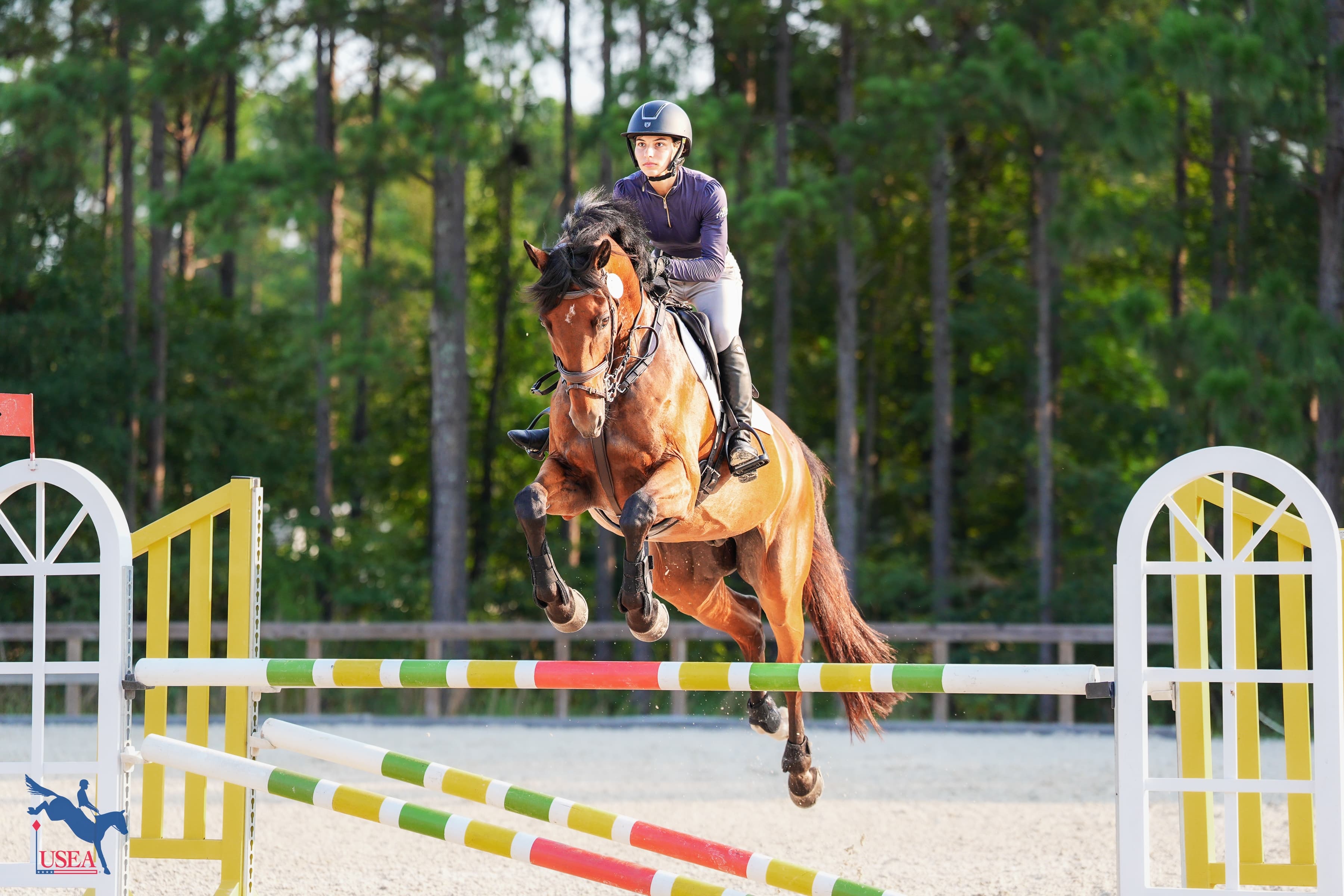
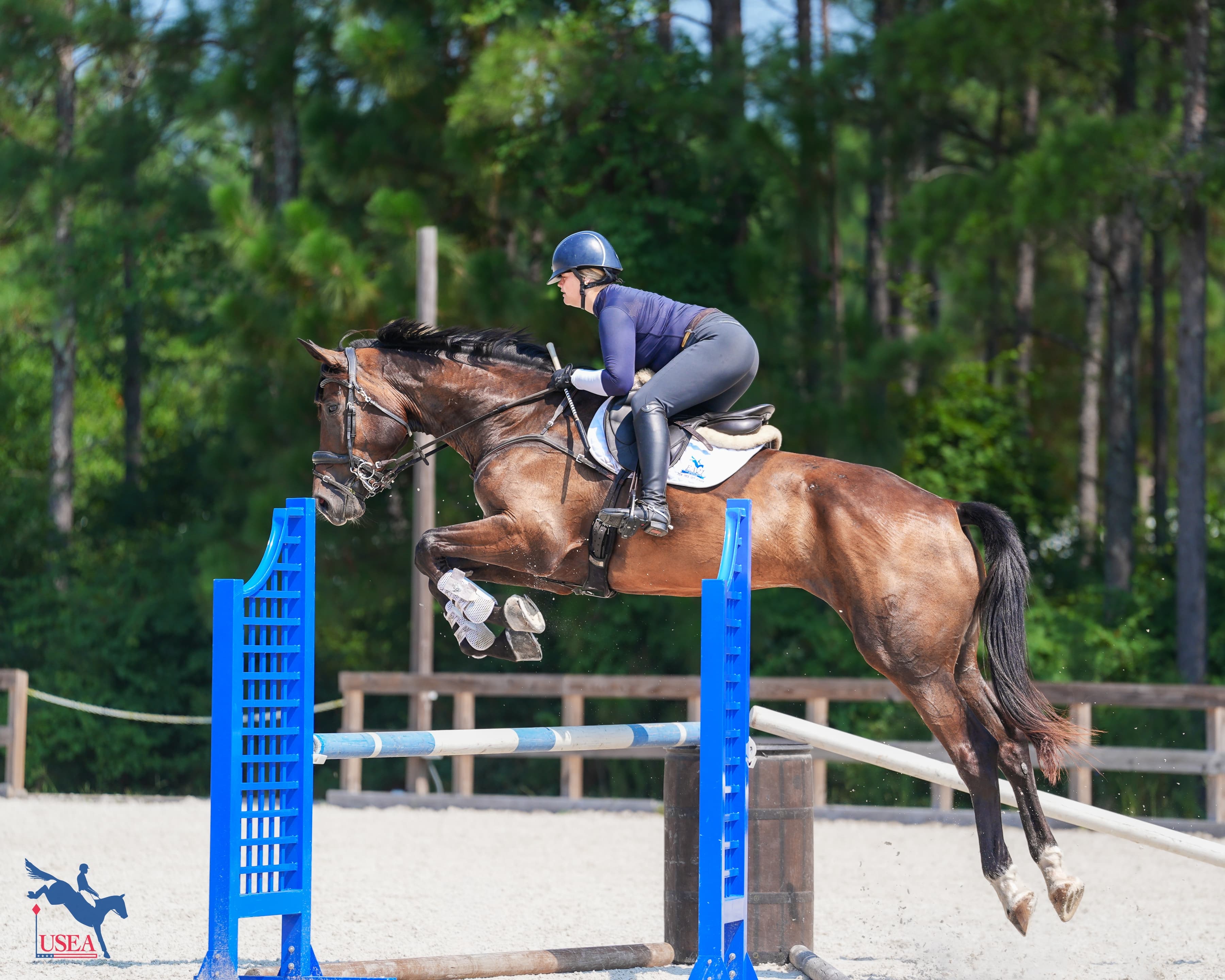
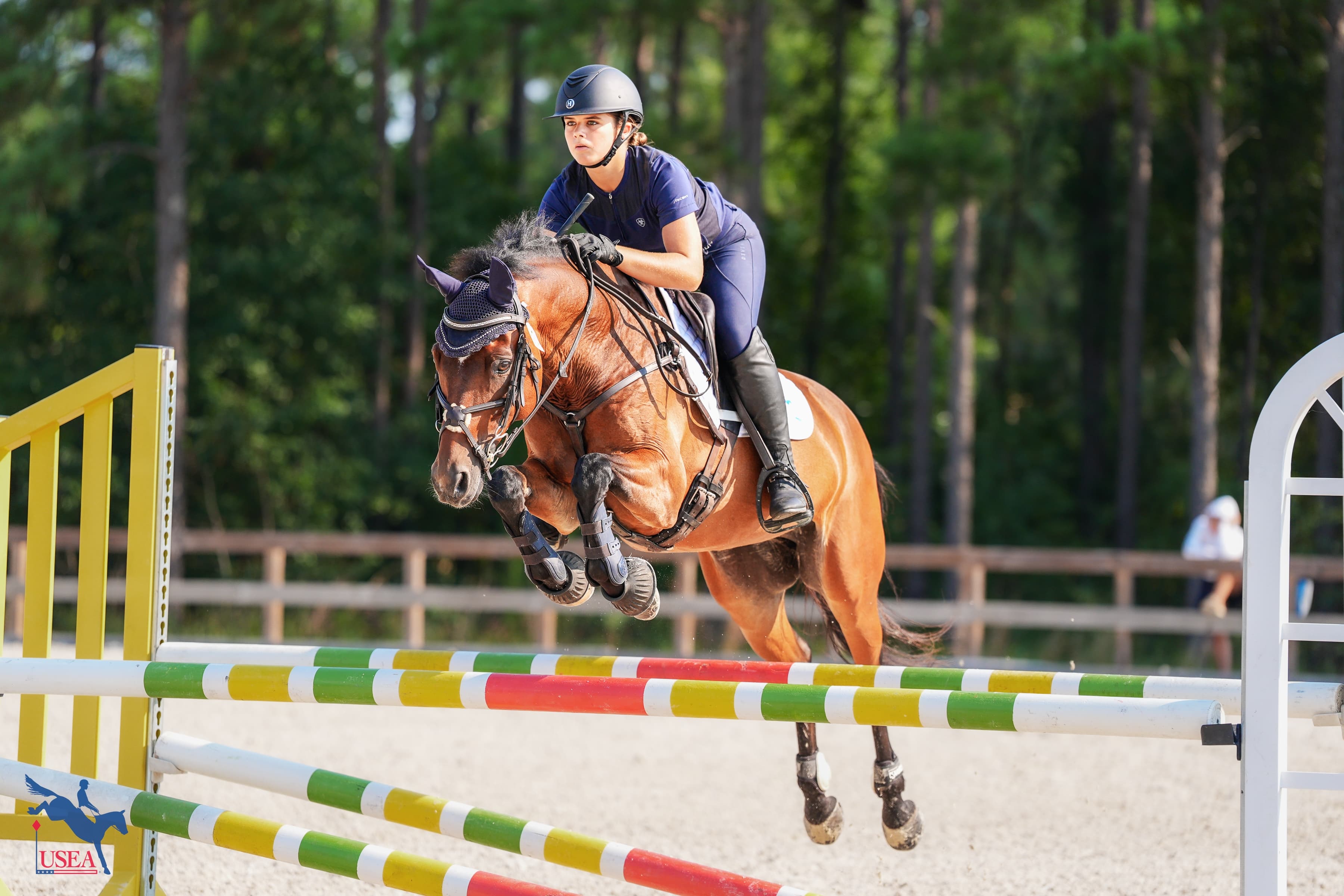
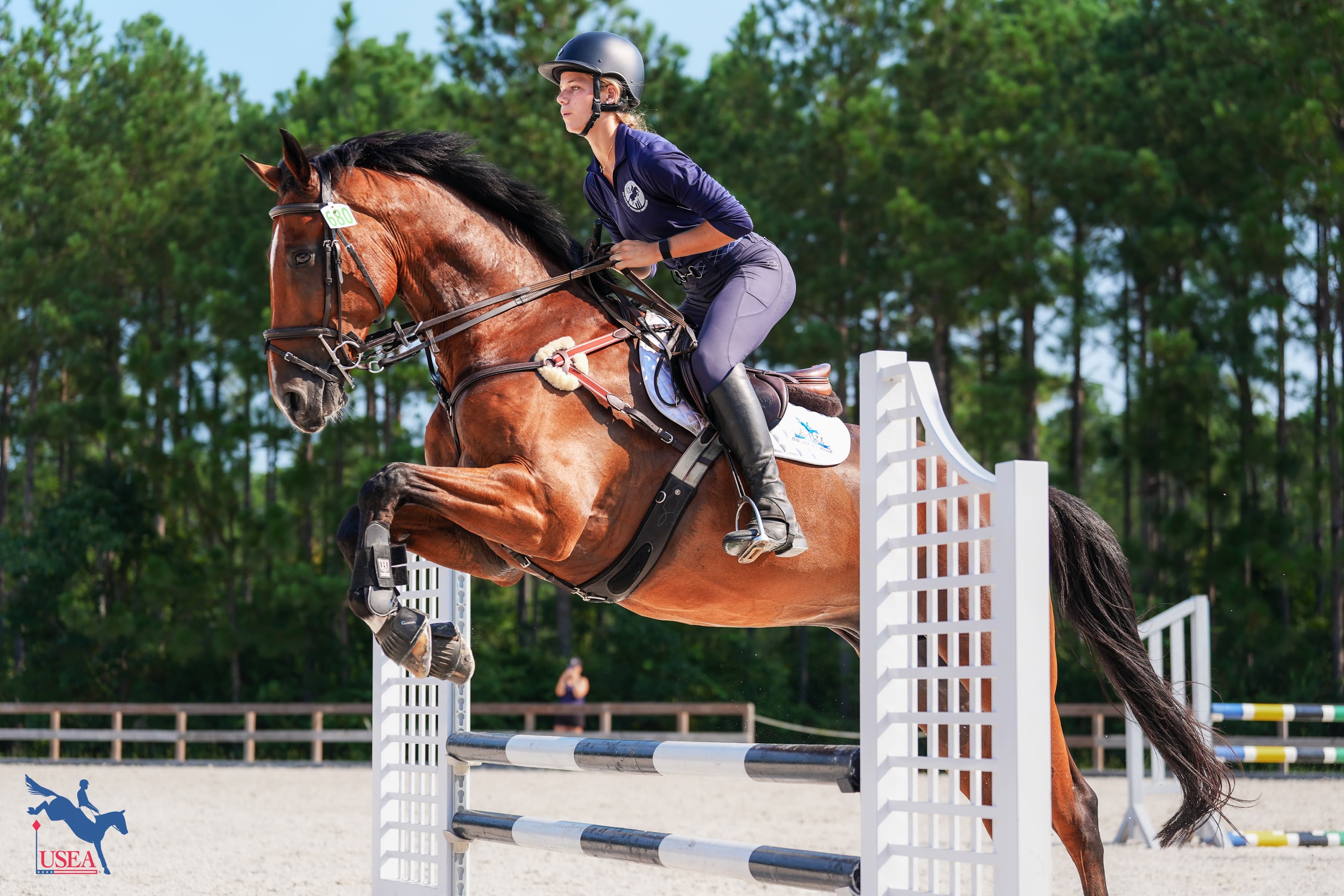
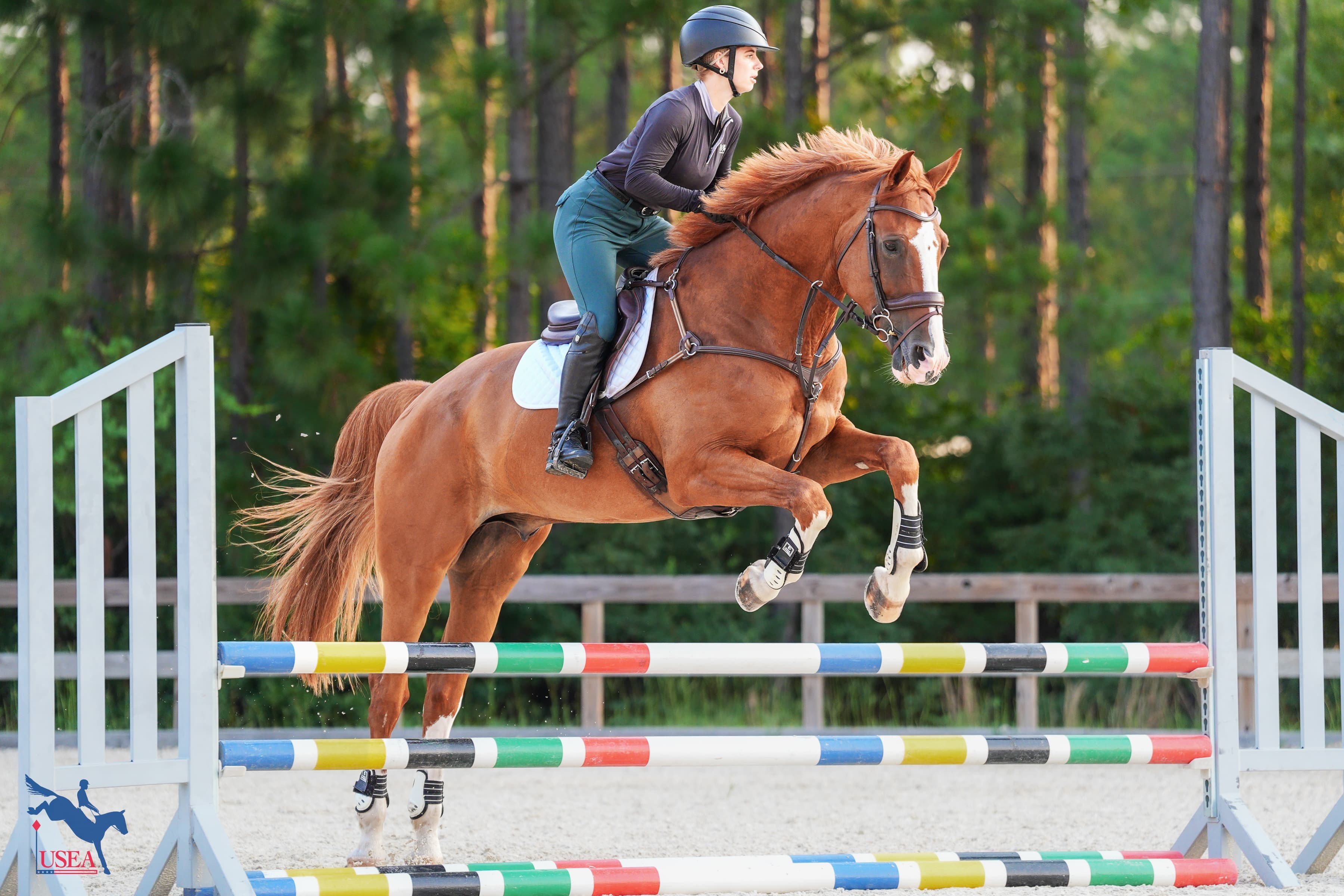
The lessons then progressed in a more “typical” show jumping fashion, while still incorporating a few turns and angles you’d be more likely to find on cross-country. “It’s a bit of a different take on a normal show jumping clinic, because we’re trying to incorporate a lot of different aspects in one session,” said Mastervich. All the while the focus for the riders remained on keeping the horse between the aids.
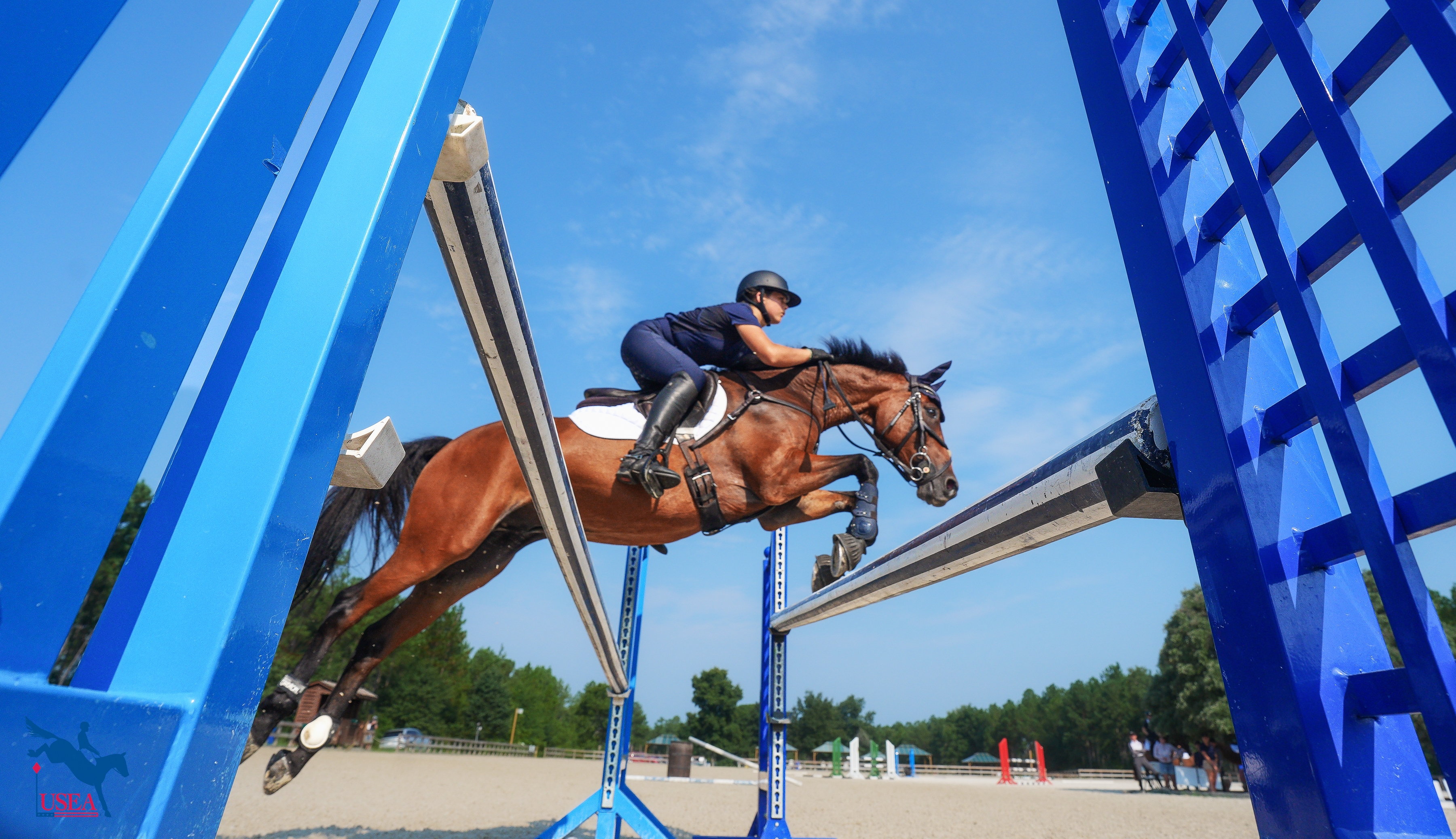
Pairs went down a two oxer line, one direction in five strides, roll back over a vertical, then back down the same oxer line in six strides. The approach to the five strides was much closer to the corner of the arena, meaning riders really had to come out of their turn with power to make the longer distance. Meanwhile the approach back down the same line in the opposite direction was much more forgiving, meaning the horses had to listen to their rider’s aids and wait for the six instead of just bombing down the same line they’d just done in five.
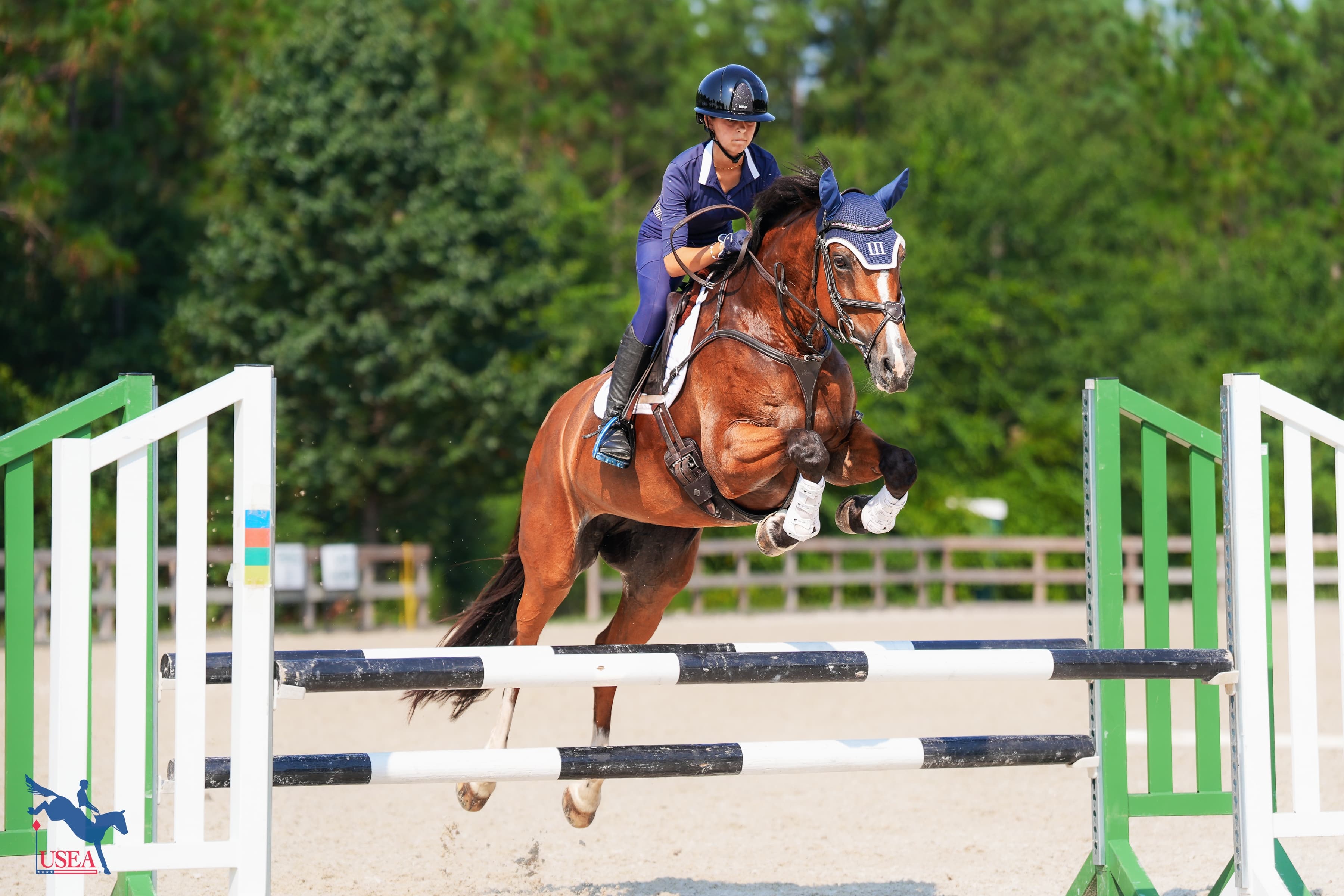
The ever present goal was adjustability and ridability. Mastervich constantly had the riders checking in on how well the horses were responding to their aids. The jumps got bigger, and the courses got longer. Every group even got to school a triple combination. “That was really fun,” said Kaitlyn Cobey, an EA21 first timer. “I haven’t done a lot of [triple combinations] on my 8-year-old, so that was a great learning experience,” she said of her Dutch Warmblood gelding, Redfield Need For Speed, or “Maverick.”
“There’s a lot to throw at them in an hour and a half,” Mastervich said with a laugh. “We’re giving them a snapshot of the different areas they need to keep working on to get to the higher levels.”
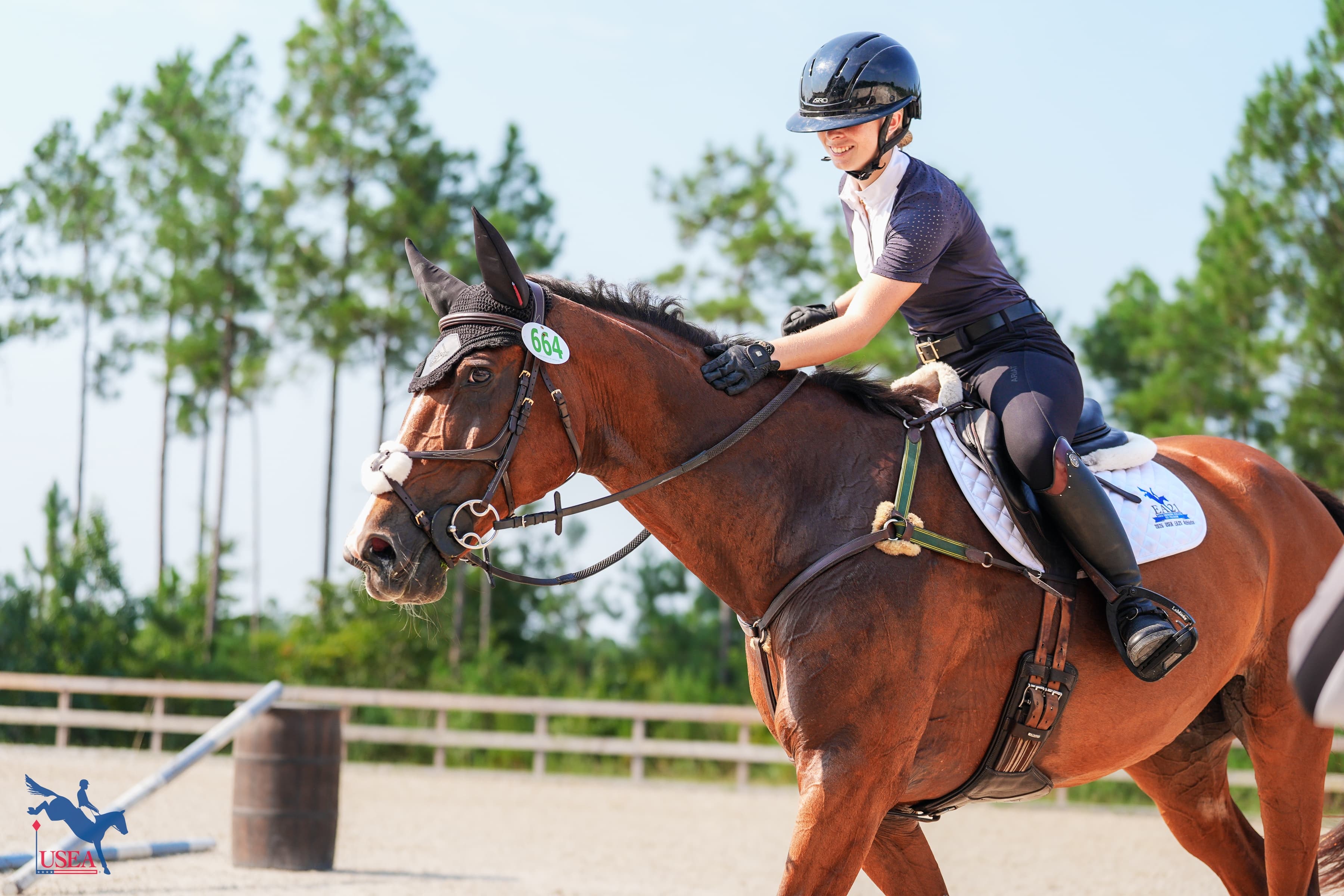
Mastervich’s exercises were effective. “For me personally, maybe the ride didn’t start out at our best,” reflected Audri Hoos. She and her 10-year-old American Warmblood Colonial Cross found the bending and footwork of the warm up exercises challenging at first. “But then Coach Emily had us work through the clover, and that really loosened 'Stoner' up. By the time we started going through the rest of the lines, he was really much more rideable,” Hoos shared. “It really unlocked him. This was one of the best jump schools I’ve had in quite a while!”
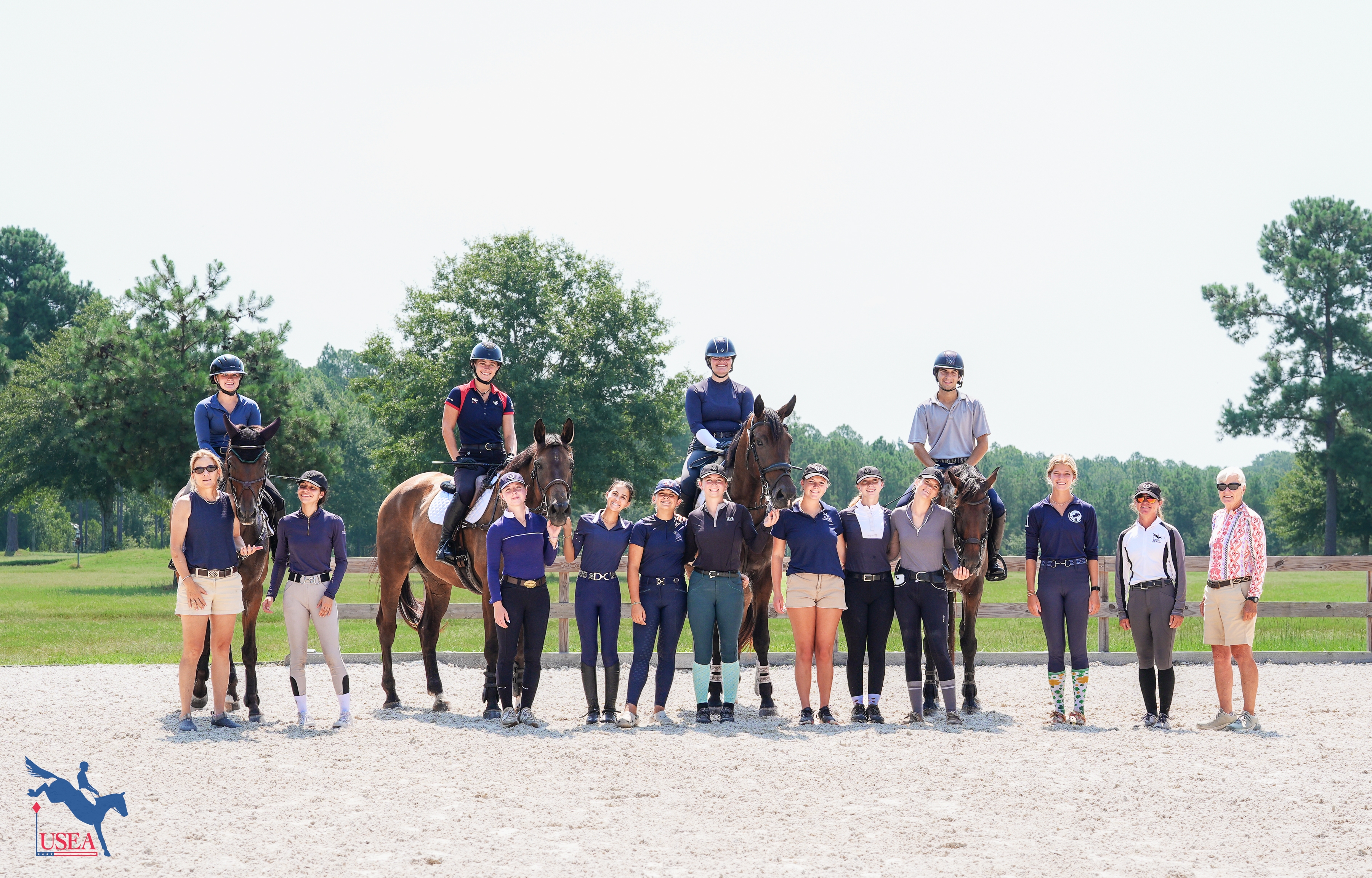
Similar takeaways were gleaned by unmounted clinic attendees. Keira McKeon was named as the first alternate for the EA21 East II clinic. With plans to attend the University of Kentucky in the fall and join their Intercollegiate Eventing team, McKeon made the trip all the way from California to audit this week’s clinic. “Watching all of these twisty-turney exercises,” McKeon observed, “You really have to use your aids quite a bit. Same with the dressage, working on the square yesterday, doing leg yields, shoulders-in, haunches-in; all of that lateral work really supples the horse. Once you get the suppleness it’s a lot easier to communicate and ride.”
In summary, “I really couldn’t be happier with how the day went,” said Mastervich. “We were able to cover a lot of ground, and the riders really seemed to take something from each exercise. A lot of them had the comment that now they know what to go home and work on. And really, that’s the big idea!”
A huge thank you to Shelley Ryan for serving as the onsite coordinator at the USEA EA21 East II Regional Clinic, to coach Emily Mastervich for her time and expertise, and to Stable View for generously hosting this year's clinic.
Thanks to the use of the Poggio Fund, a member of the USEA Grooms Committee, Max Corcoran, was able to be onsite for both days of the clinic, leading horsemanship seminars and assisting riders back at the barn with their overall horse care. The USEA is very grateful to Corcoran for taking time out her schedule to attend this year's East II clinic and provide this education to our athletes.
East II | Stable View | Aiken, South Carolina
The Participants
- Addison Borton
- Kaitlyn Cobey
- Catherine Frank
- Audri Hoos
- Kennedy Langmo
- Victoria McCallum
- Nicole Nair
- Julia Pinell
- Trinity Sachau-Sherman
- Katelyn Smith
- Piper Van Tassel
- Jake Tessler
The USEA Emerging Athlete U21 (EA21) Program is entirely funded through donations. Led by the EA21 Committee, the program provides educational opportunities for young riders under the guidance of USEA Eventing Coaches Program (ECP) Certified Coaches, helping build the future pipeline of U.S. Eventing. Your support makes this program possible. Please consider making a donation through the USEA Foundation and selecting EA21 as your designated program: https://useafoundation.org/donate
Follow the USEA coverage on social media!
Facebook | Instagram | Threads | TikTok
About the USEA Emerging Athlete U21 Program (EA21)
The purpose of the USEA Emerging Athletes U21 Program (EA21) is to identify and provide consistent quality instruction to the next generation of elite event riders. The aim is to create a pipeline for potential team riders by identifying and developing young talent, improving horsemanship and riding skills, and training and improving skills and consistency.
The USEA Emerging Athletes U21 Program was launched in 2022 with a model of five summertime regional clinics taught by carefully selected USEA Eventing Coaches Program (ECP) coaches, leading to a winter national camp consisting of selected Young Riders from the regional clinics. Athletes who are 21 years or younger, are current members of their USEA Young Rider Area program, and are established at the Training Level or higher, are eligible to apply for the EA21 program. Click here to learn more about the USEA EA21 Program.
The USEA would like to thank ARMA, Bates Saddles, GGT Footing, Horse Illustrated, Kerrits, PulseVet, Ride iQ, Schneiders Saddlery, Sidelines Magazine, WeRideTogether, YETI, and 100xEquine for sponsoring the USEA Emerging Athletes U21 Program.
Related Articles

USEA Recognizes Ride EquiSafe for Support of 2026 American Eventing Championships
The United States Eventing Association (USEA) is pleased to recognize Ride EquiSafe for its continued support as an Official Bronze Level Sponsor of the 2026 USEA American Eventing Championships (AEC), which took place August 25-30 at Th...
Skyler Norris Comes Full Circle with Advanced Debut at Ocala
For Skyler Norris, the Florida Horse Park in Ocala is more than just another competition venue. It’s where she first discovered the thrill of eventing as a little girl and where she’s spent countless weekends competing, learning, and chasing her dreams.
Official Corporate Sponsors of the USEA
Become a Sponsor