On the Aids on Day 1 of the USEA EA21 West II Clinic
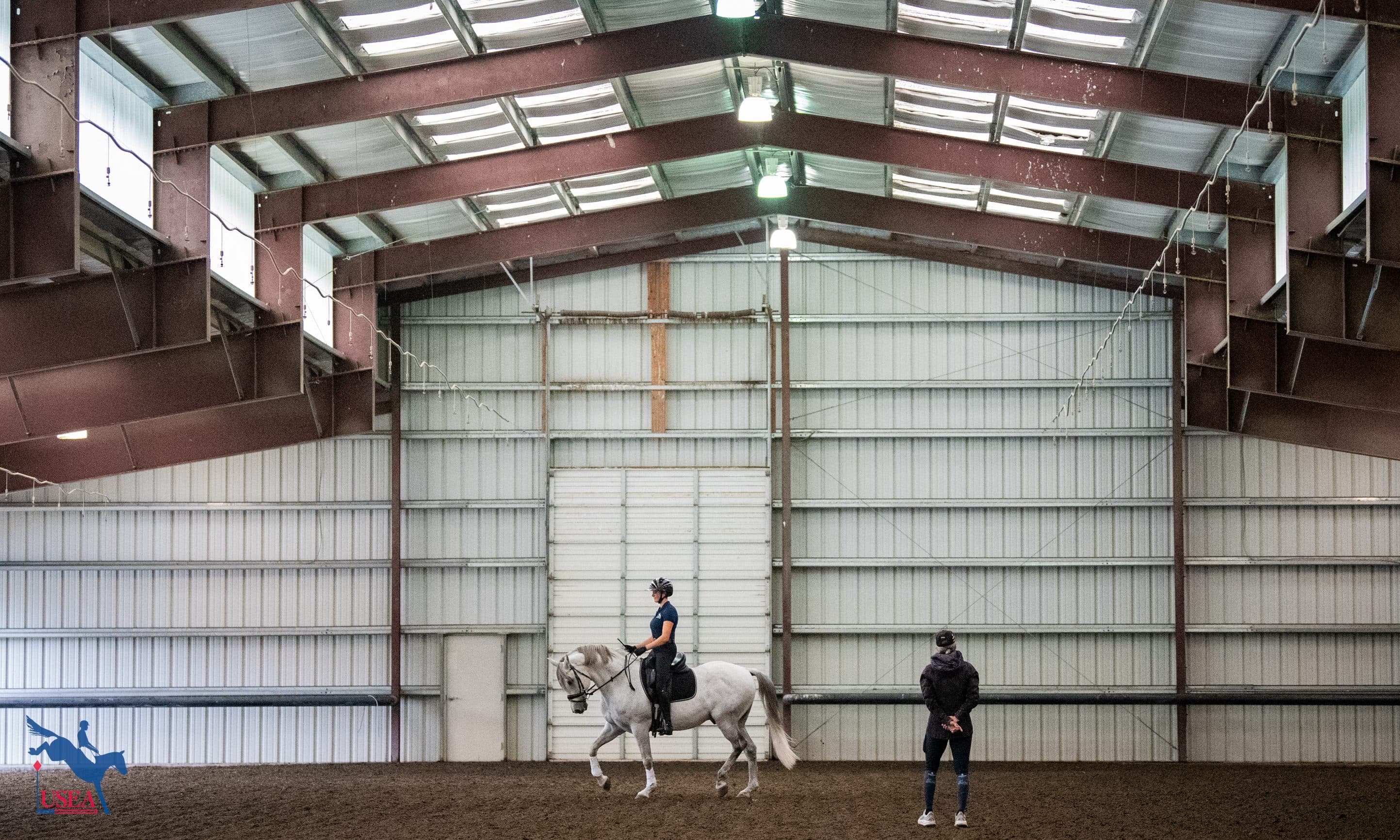
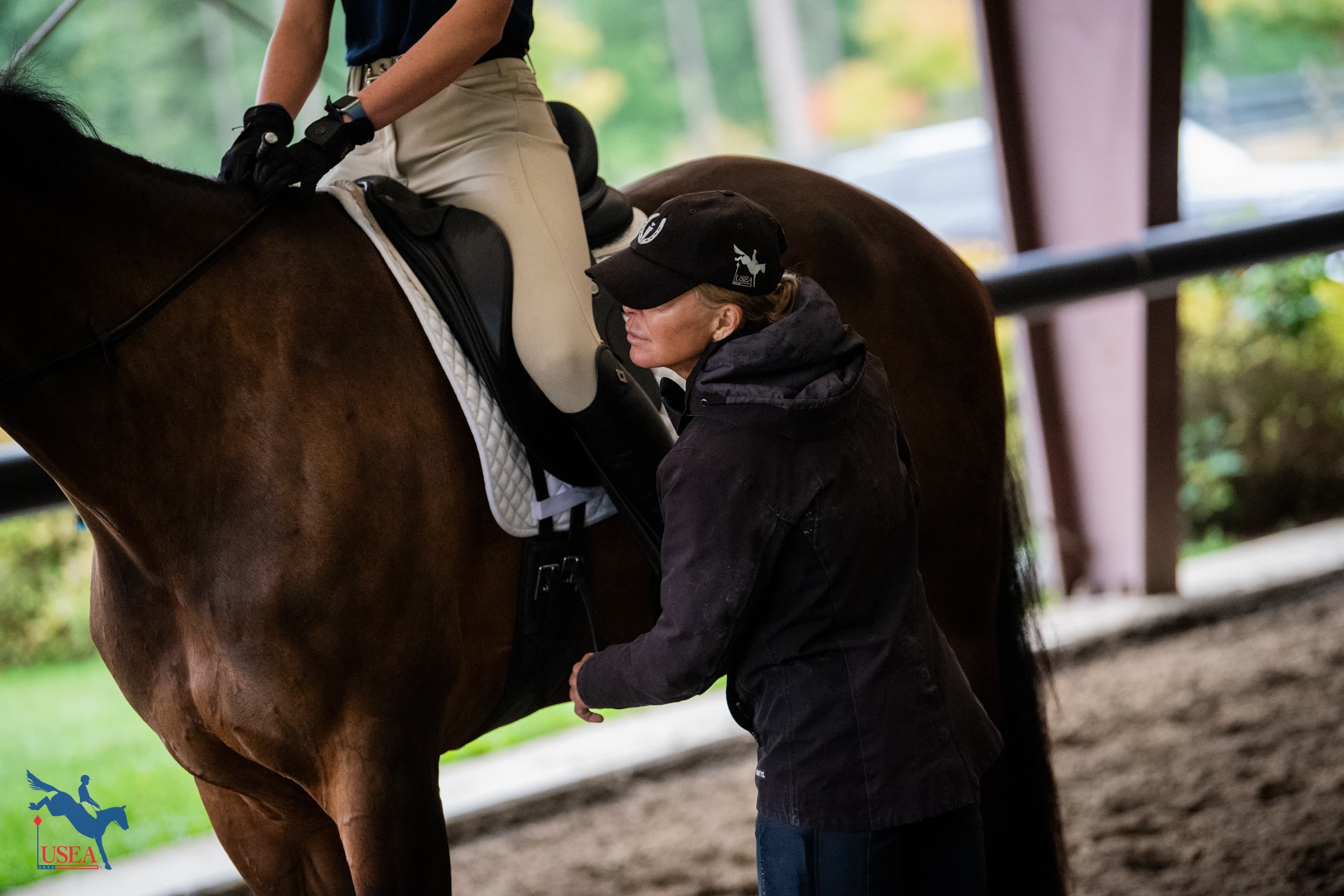
Yelm, Wash.—Aug. 11—Being able to have your horse on your aids is a key concept for dressage, but it translates to jumping too. That was the focus on Day 1 of the USEA Emerging Athlete Under 25 (EA21) West II clinic, taught by Jan Byyny.
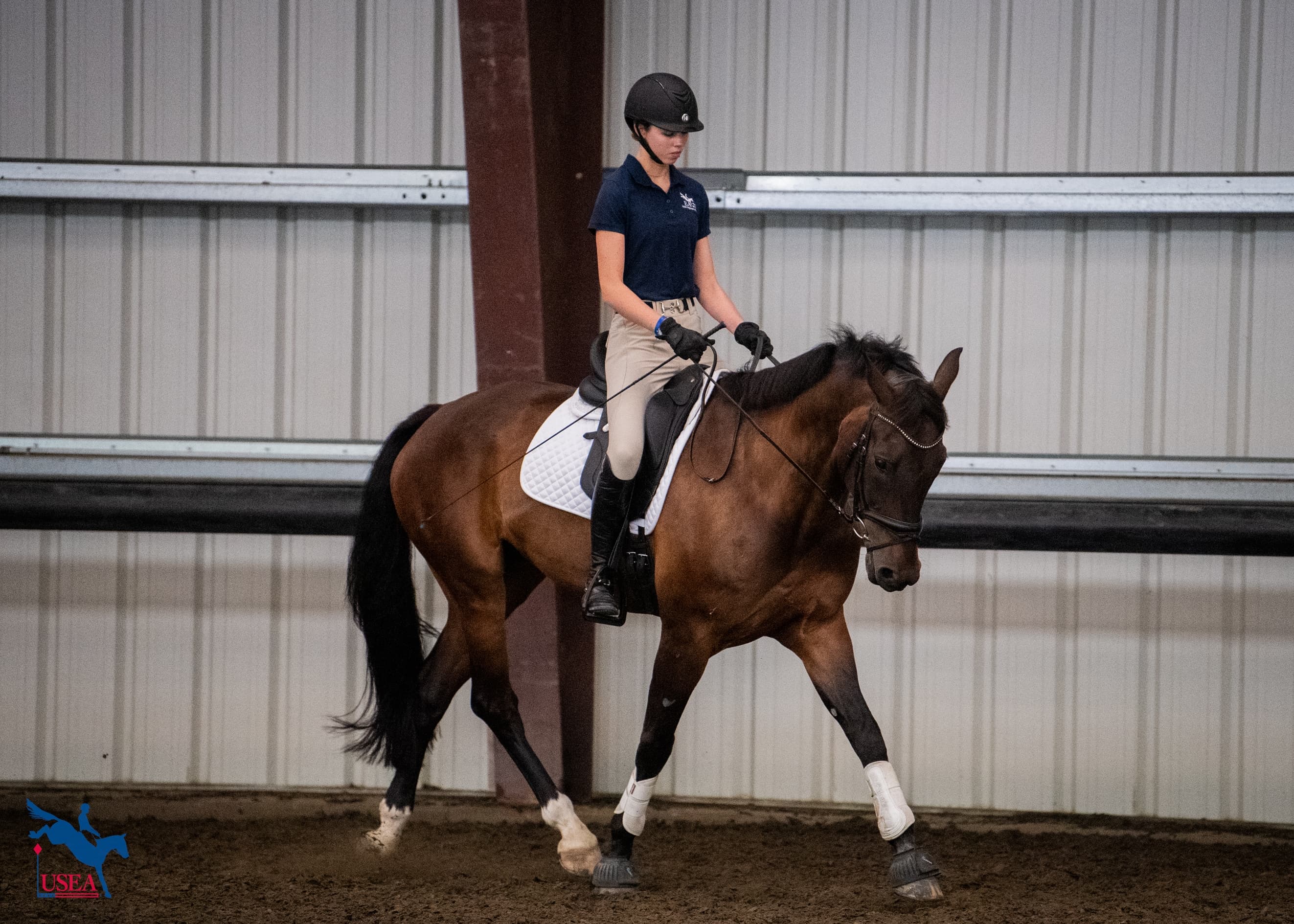
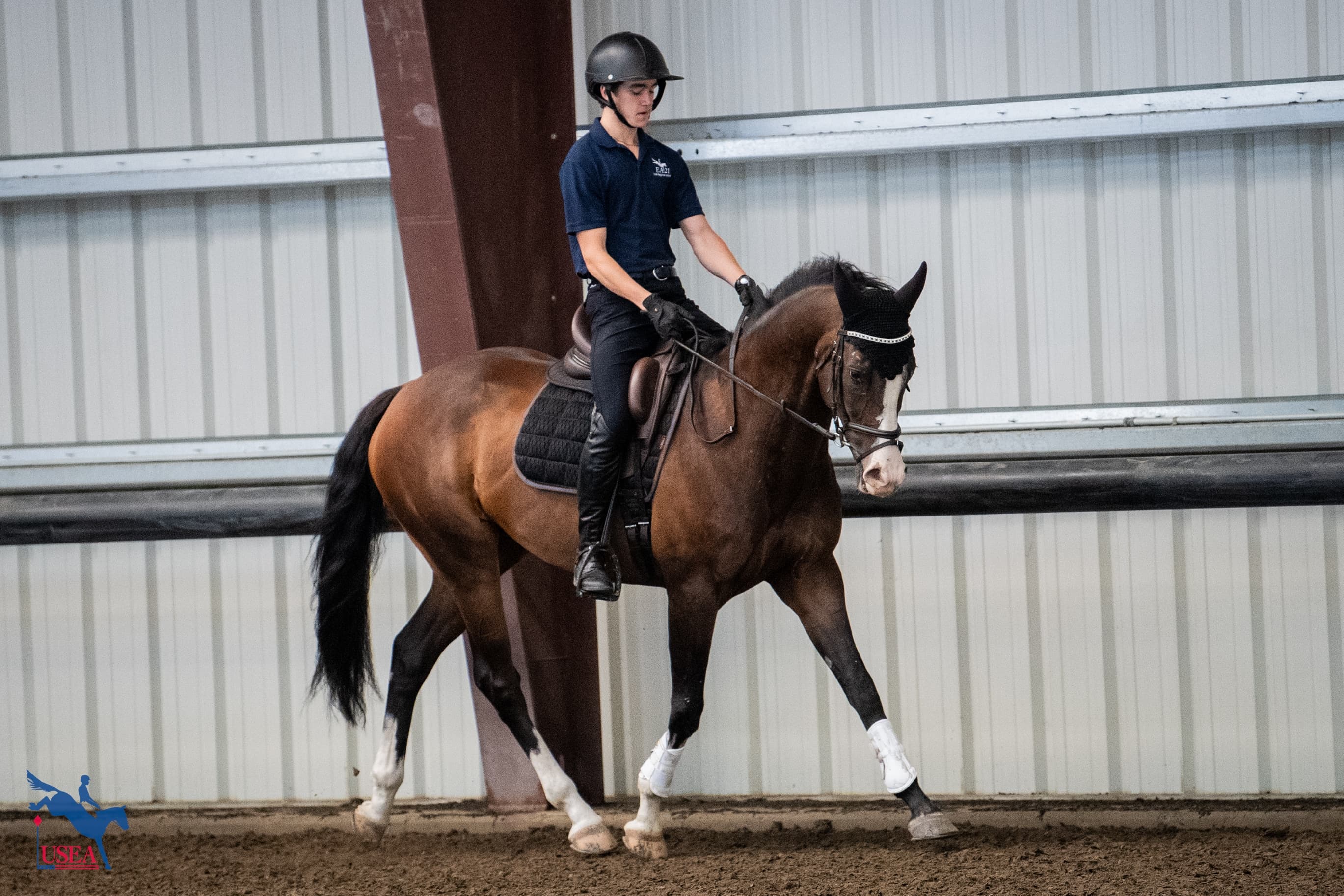
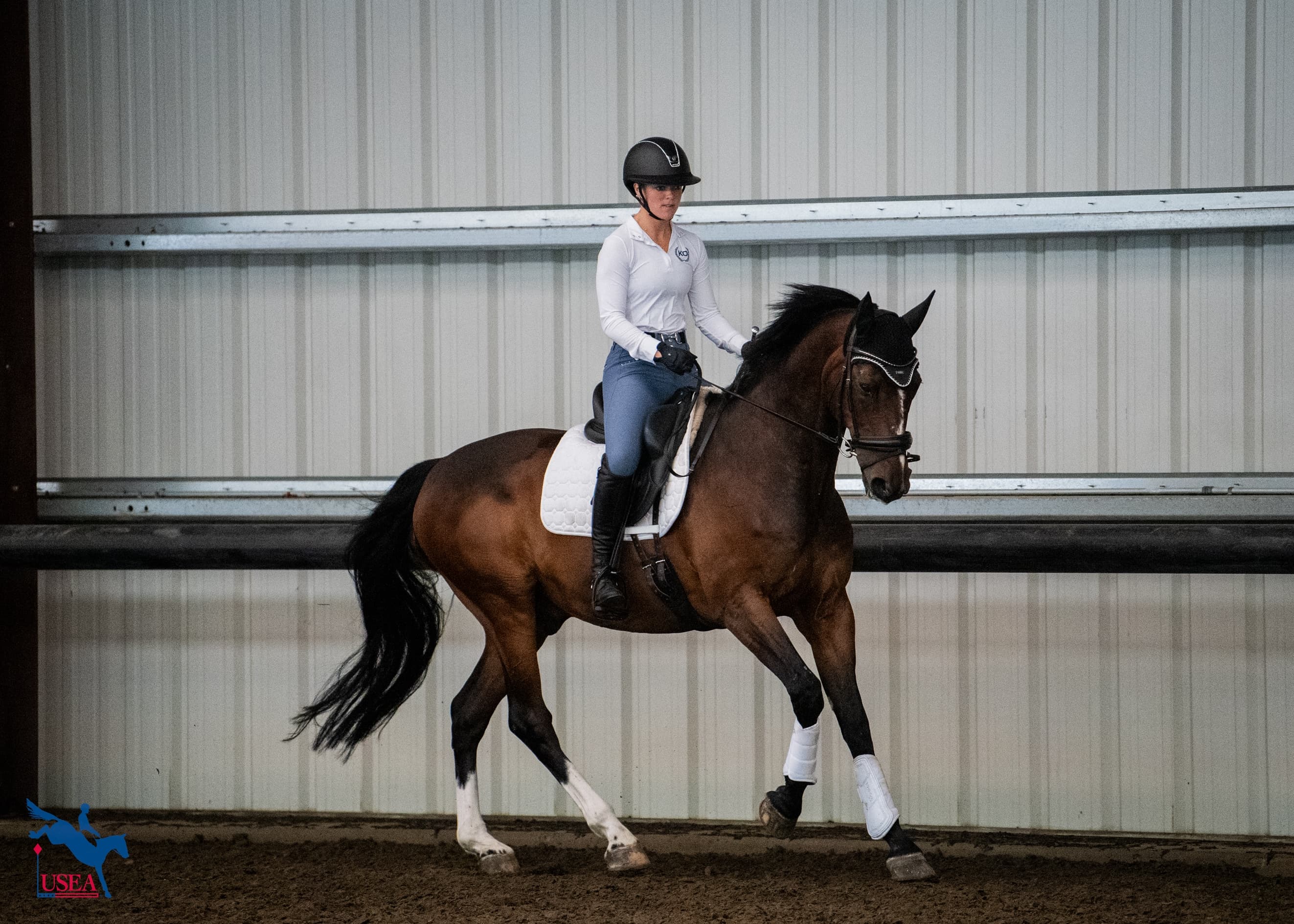
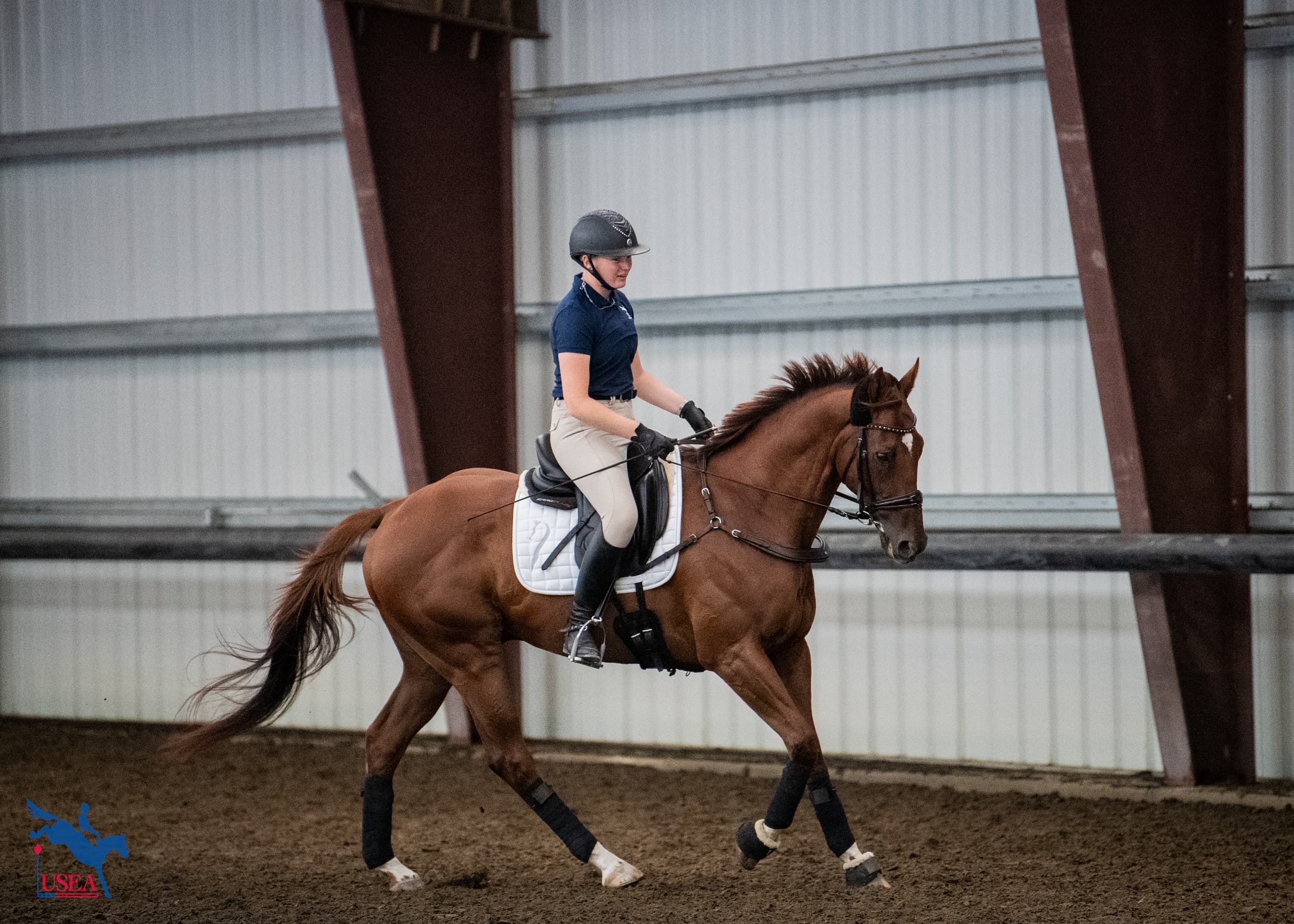
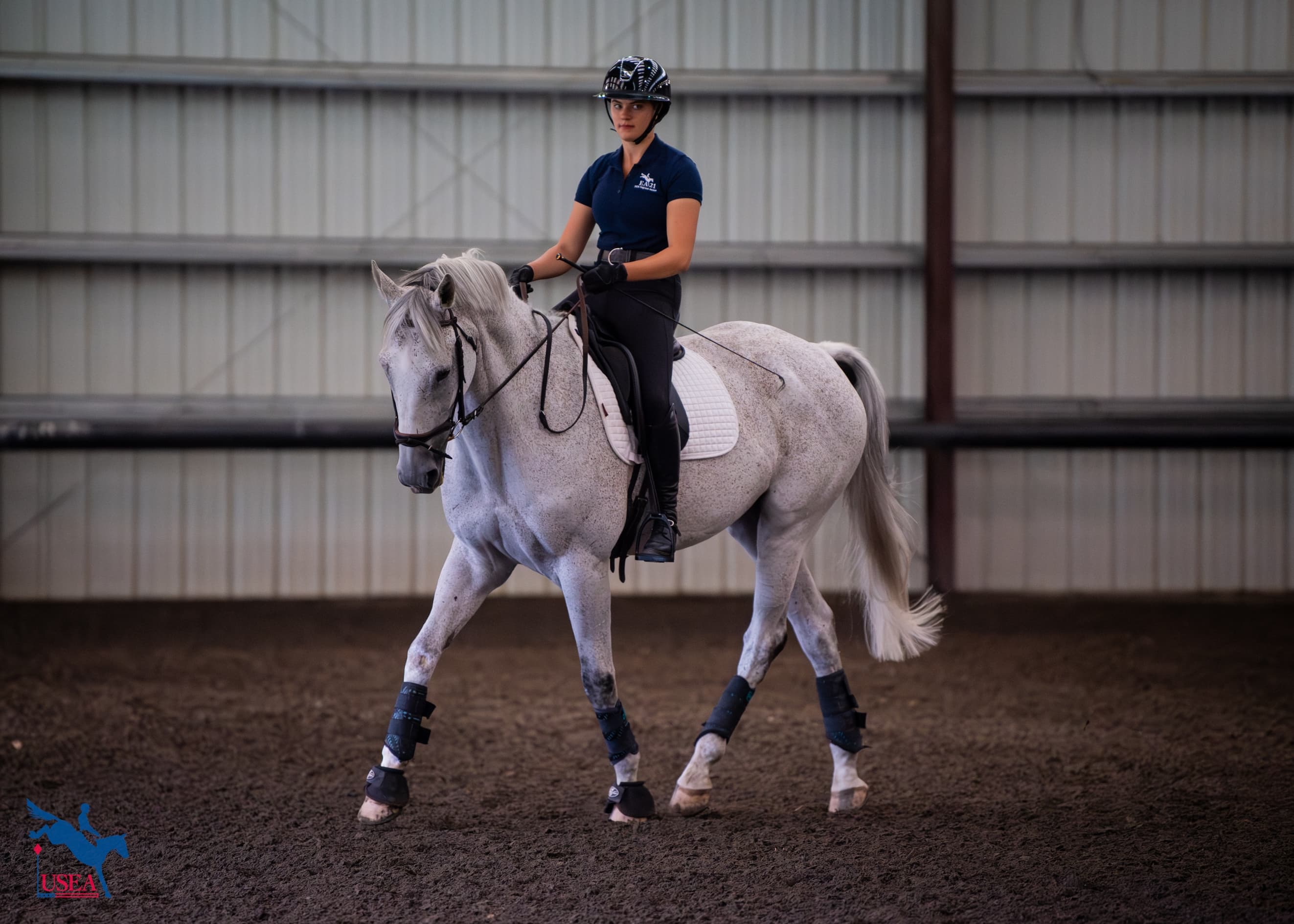
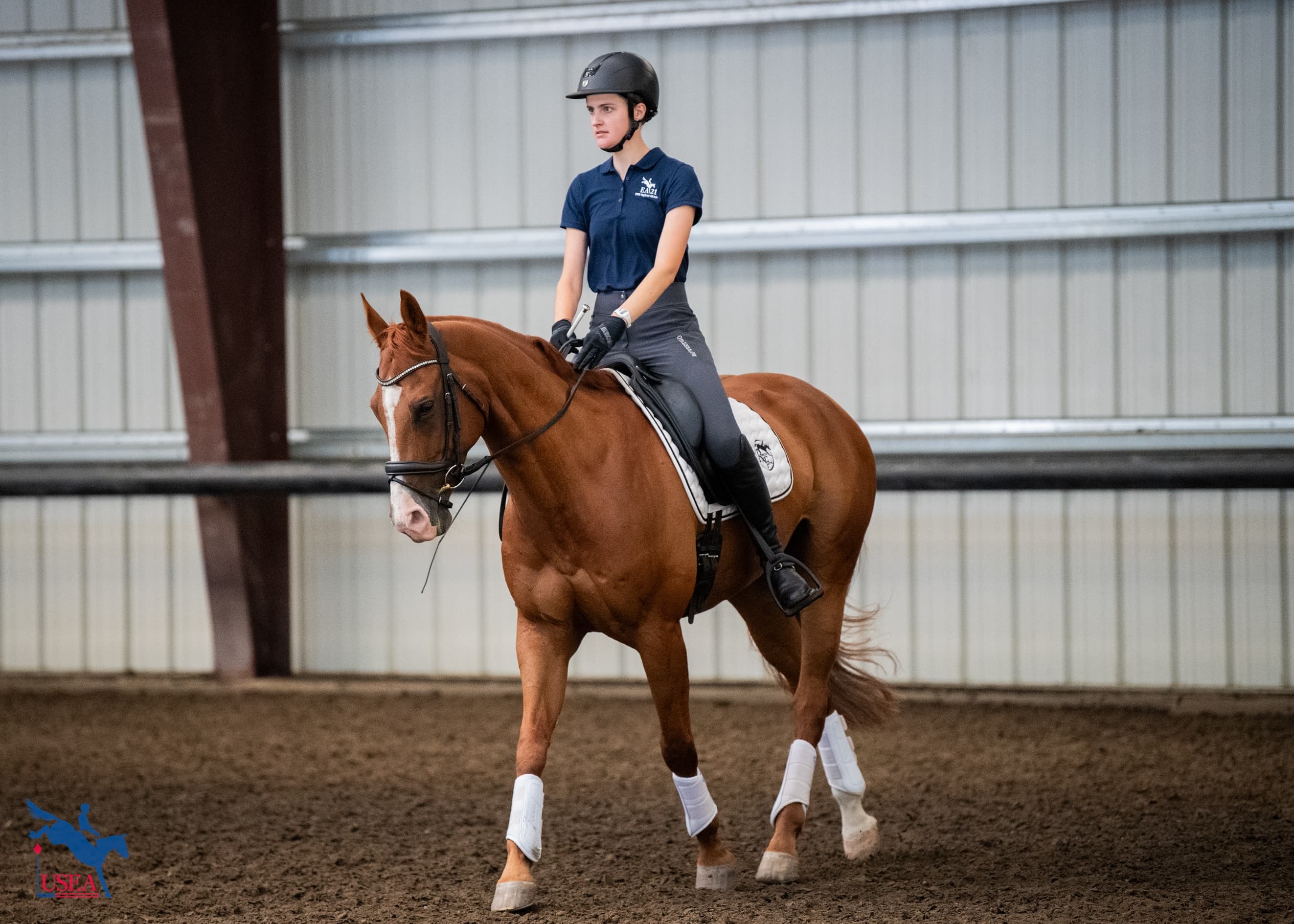
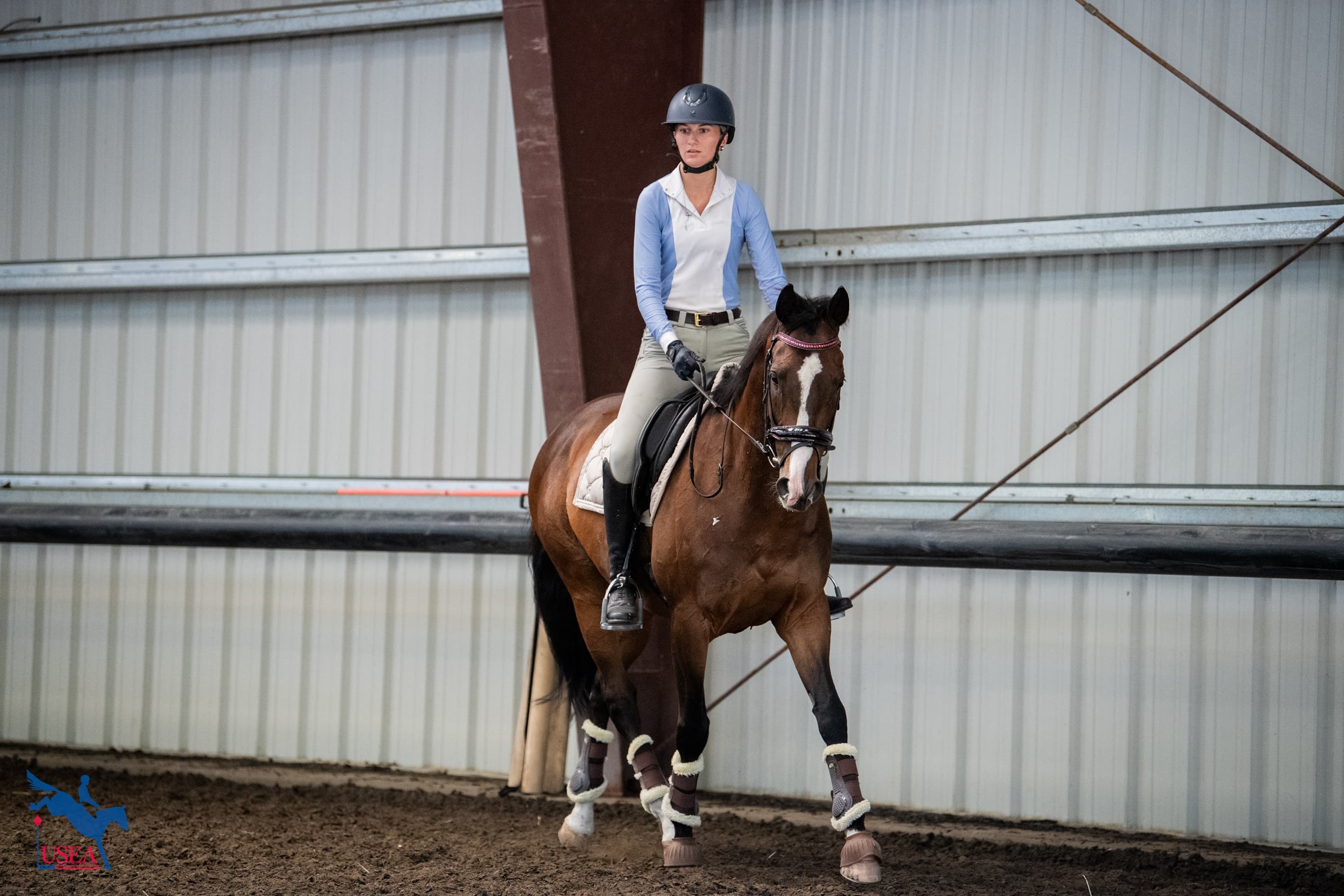
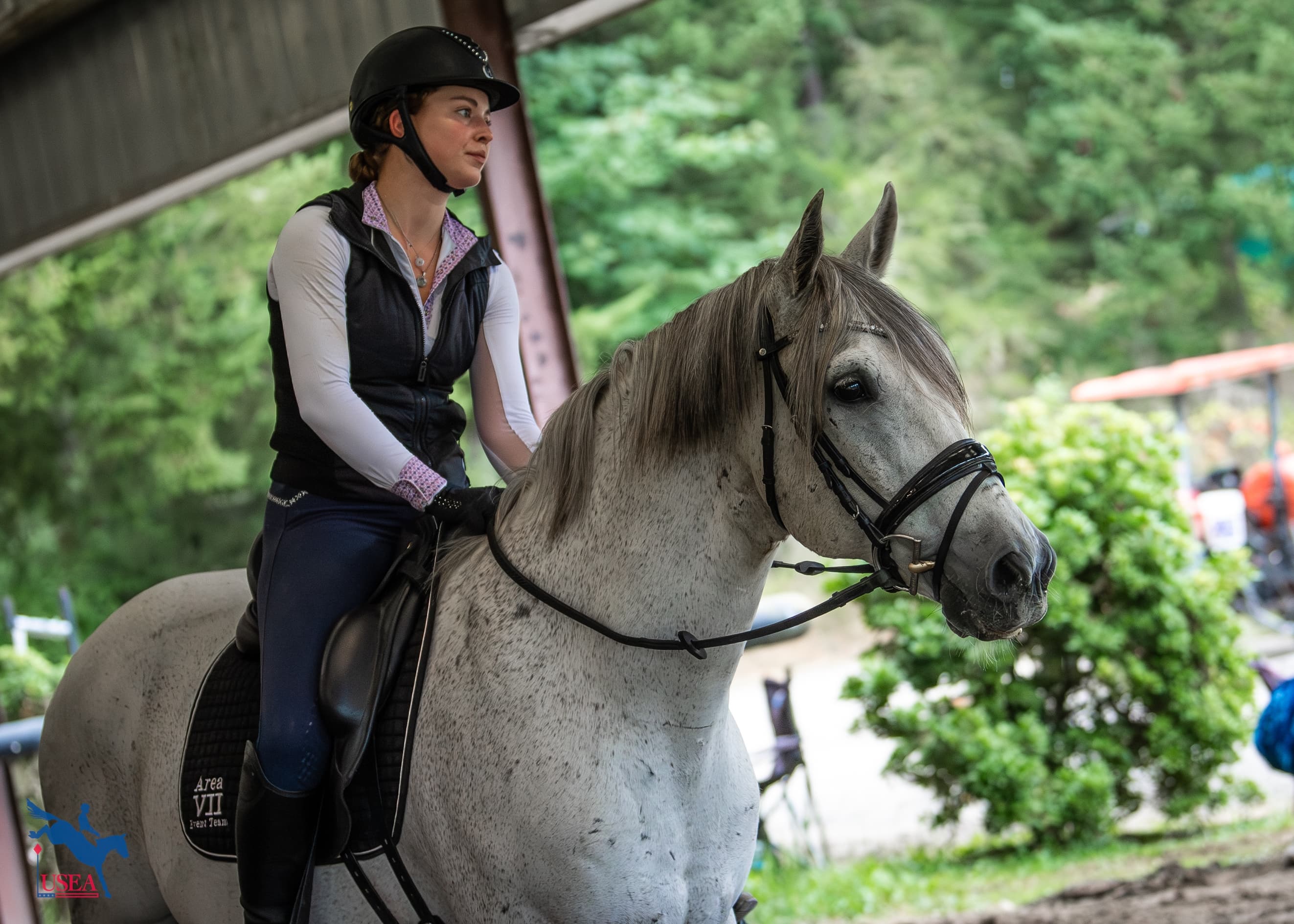
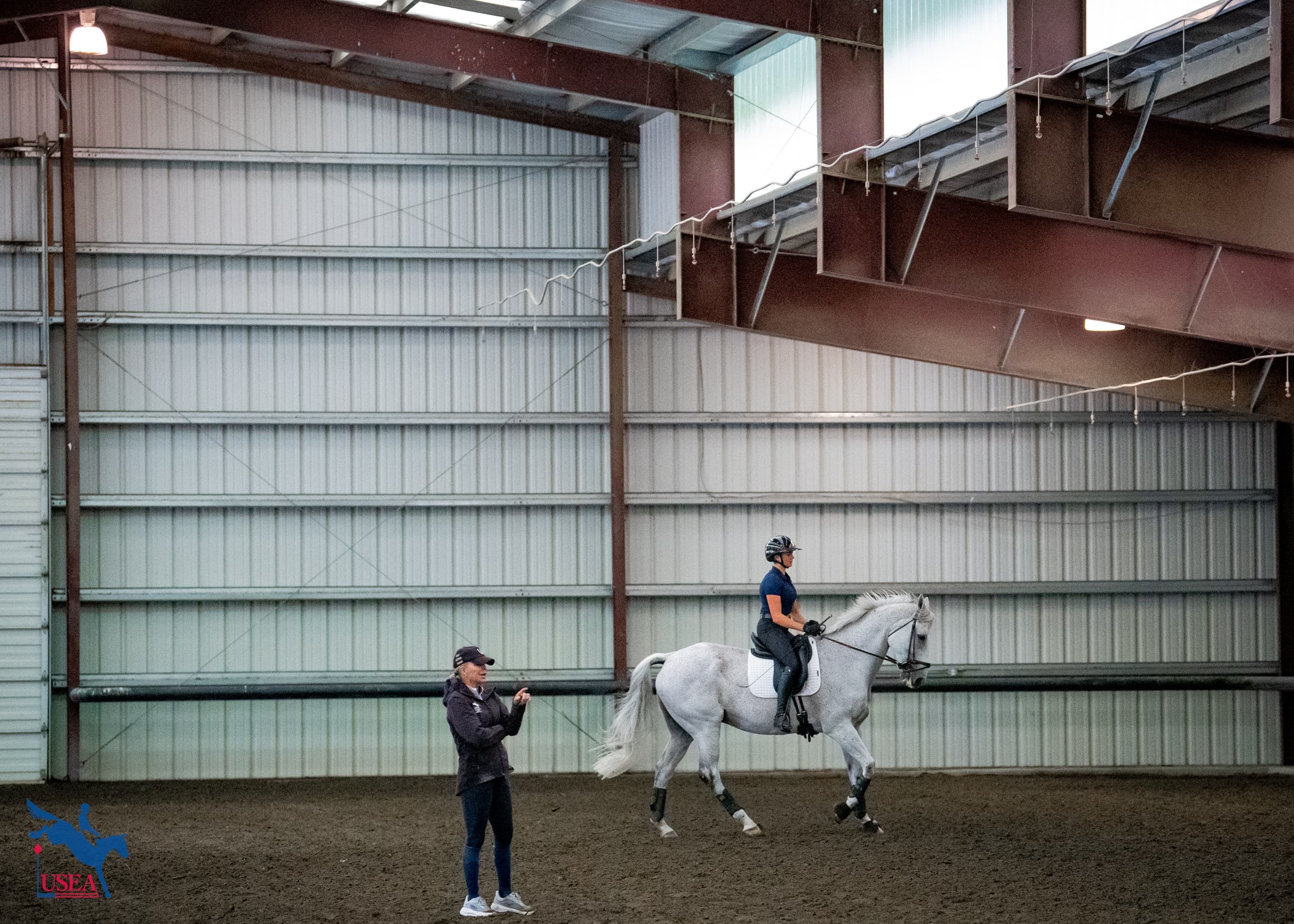
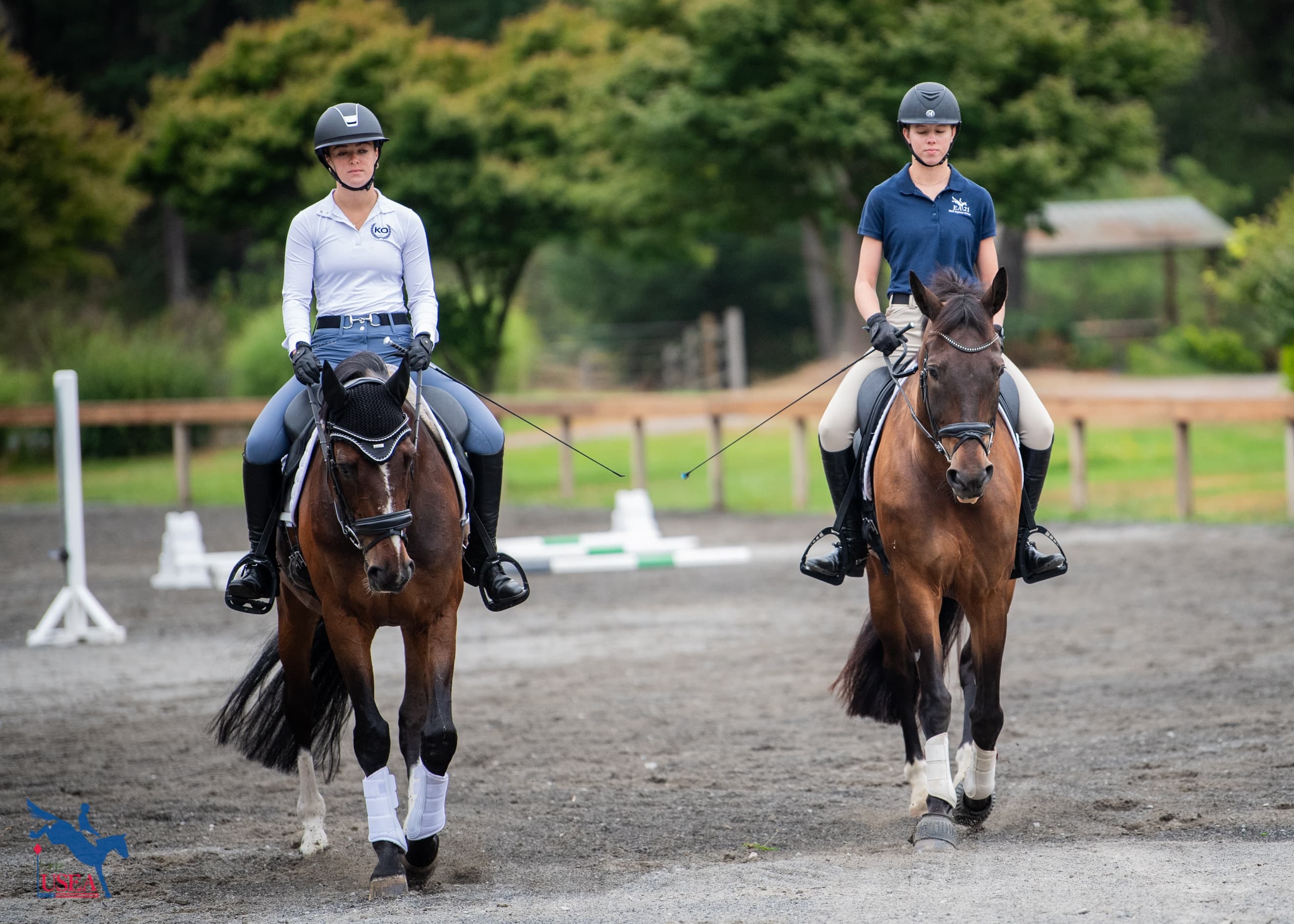
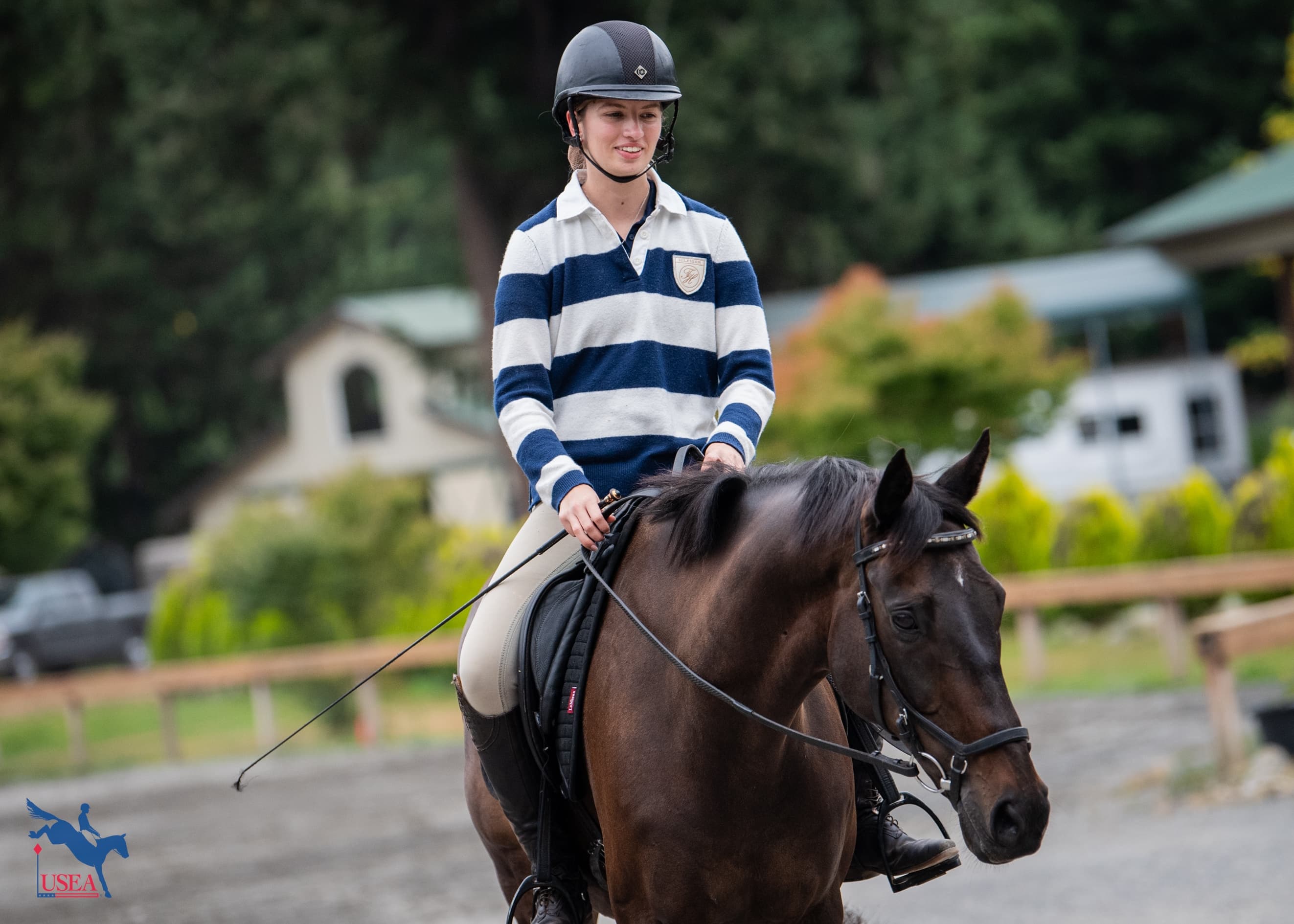
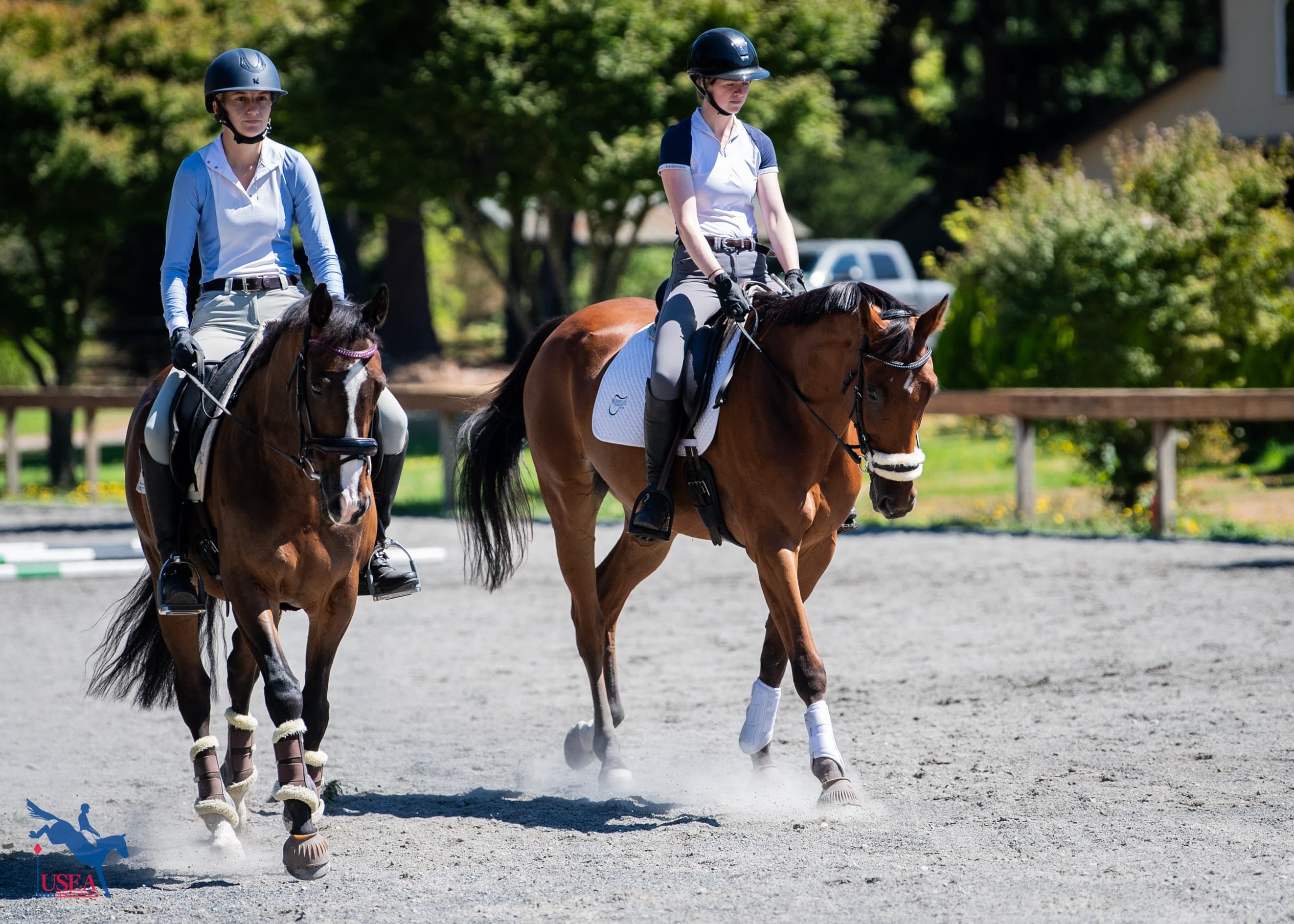
Ten hand-selected athletes rode in pairs with Byyny under Aspen Farms’ covered arena, putting concepts from the German Training Scale (rhythm, relaxation, connection, impulsion, straightness, and collection) that they learned in Monday evening’s lecture to the test.
One main concept Byyny explained to every group was the importance of the rider’s hips. You can influence your horse by the way you swing your hips, so on Monday, she led the group in a fun exercise using stick ponies to demonstrate how to swing the hips forward and back as you would in the saddle.
“They all found yesterday that when we did the exercise, it was much harder to actually collect in their hips than it was to go forward,” she said. “So, [today] we practiced that and the idea of how you can influence the horse and align their body with your own body, that they follow your hips, and your shoulders follow their shoulders, and then little lateral exercises to make it a little easier to go forward and come back as well.”
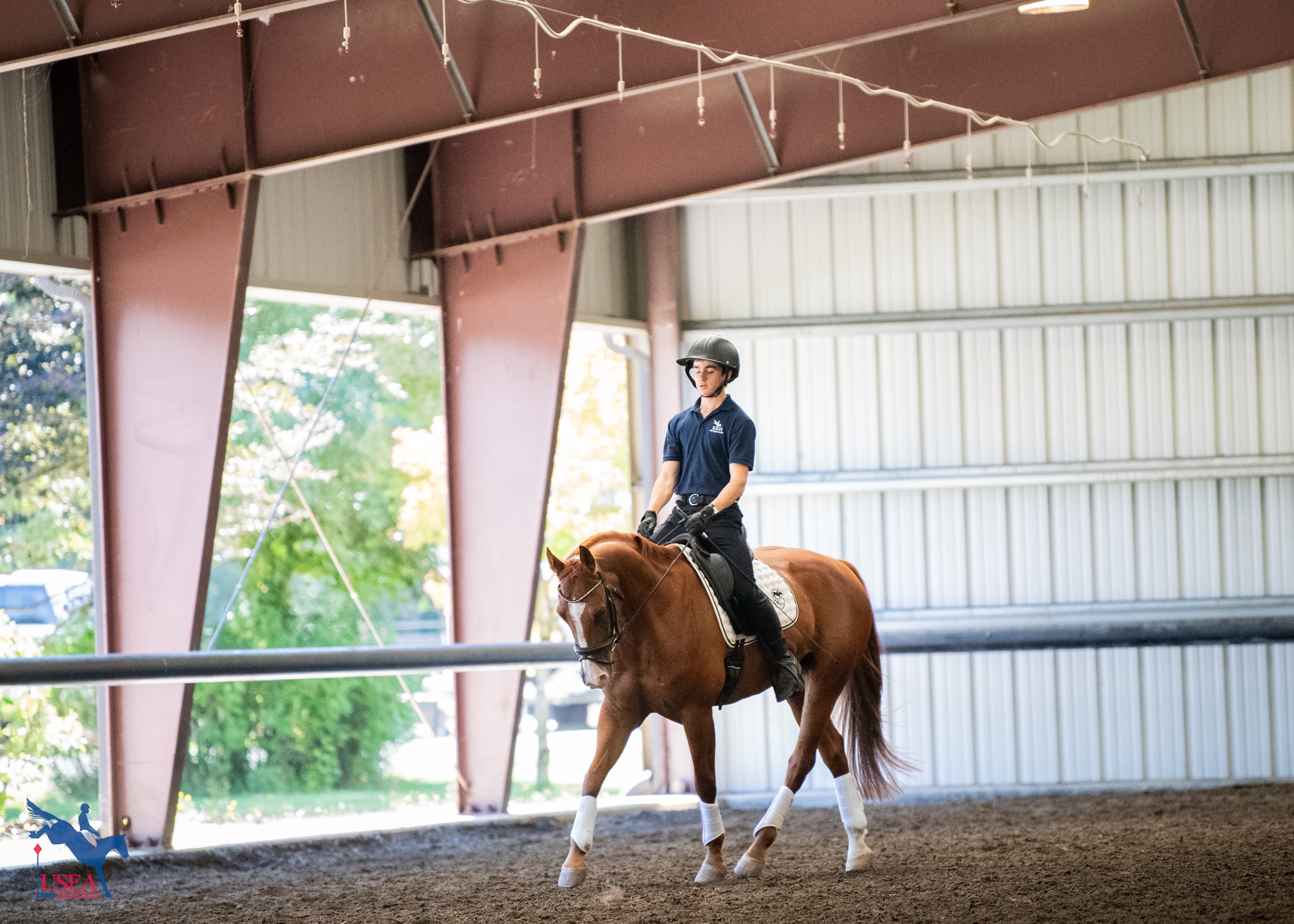
Today, she used a forward and back exercise with all five pairs, starting in trot on a circle and asking for a “5” trot, which would roughly equate to their natural trot, then pushing it up to a 7, then an 8, a 9, and a 10. She emphasized her scale wasn’t trying to get a perfect, huge 10 trot or a perfect 1 collected trot, just that the riders could make a difference in the step of their horses and find the rhythm in their hips.
“Your trying to find a really good mid-range, and you get strength by going bigger and smaller than you're quite ready for, and so you could really see when we came back to the kind of 4,5, or 6 gaits how much the horses started to get connection and also follow [the rider’s] body. You're always trying to get them a little bit longitudinally supple and laterally supple to get better connection. and then making sure that we it’s all connected to the training scale.”
She also worked on a turn on the forehand exercise, one of few lateral movements that’s not found in a dressage test, but which is very useful to test the horse’s responsiveness to the leg aids. Not only did the movement test the horse’s response to pressure, but it helped them move from the inside leg to the outside rein and leg for better connection in the hand.
That exercise segwayed nicely into a trot leg yield exercise from the quarterline and centerline to the track and vice versa.
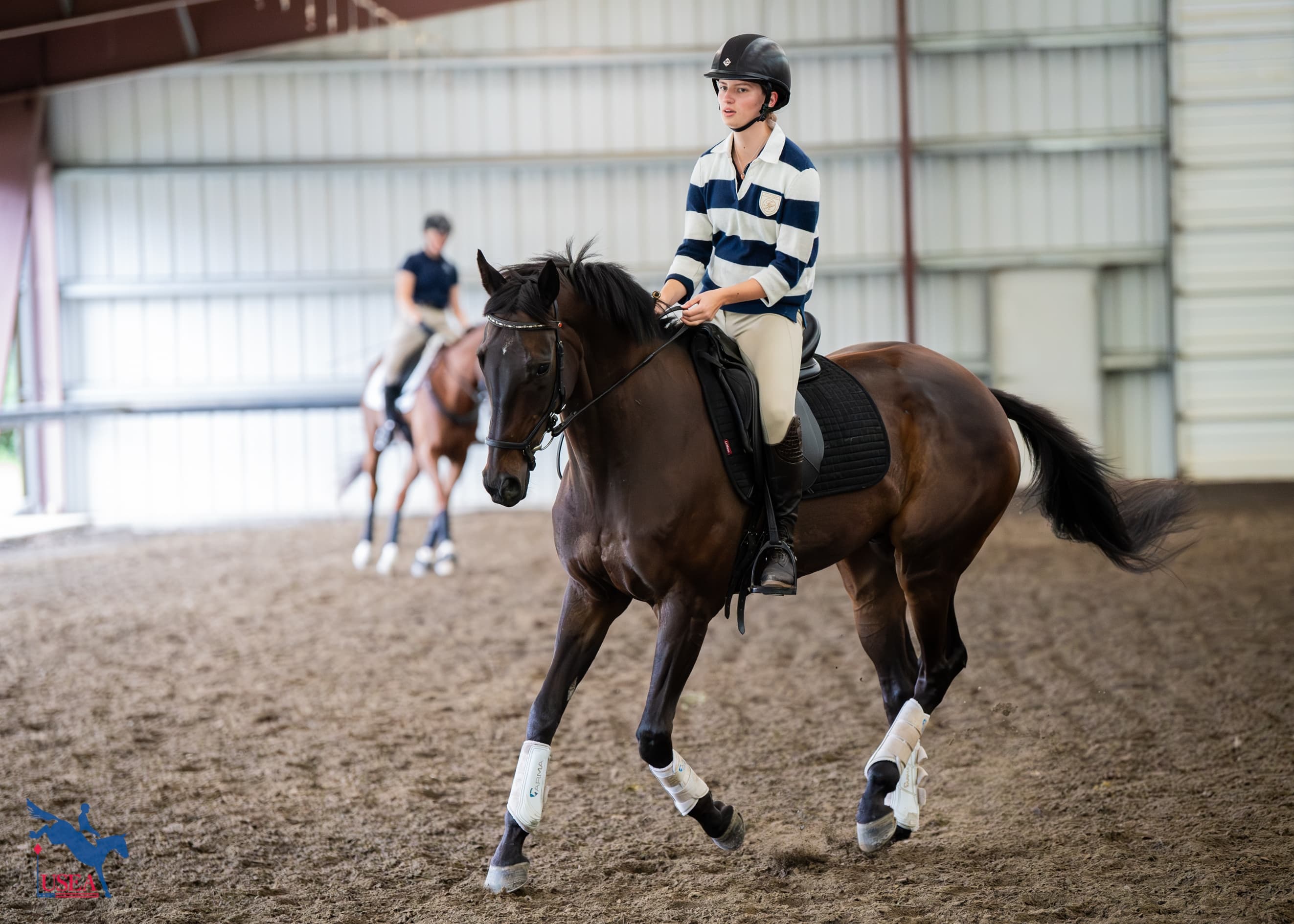
Finding a swing in the hips is sometimes easier in canter, so Byyny had riders work on a circle in bigger and smaller canters, using their hips and seat to go forward and back.
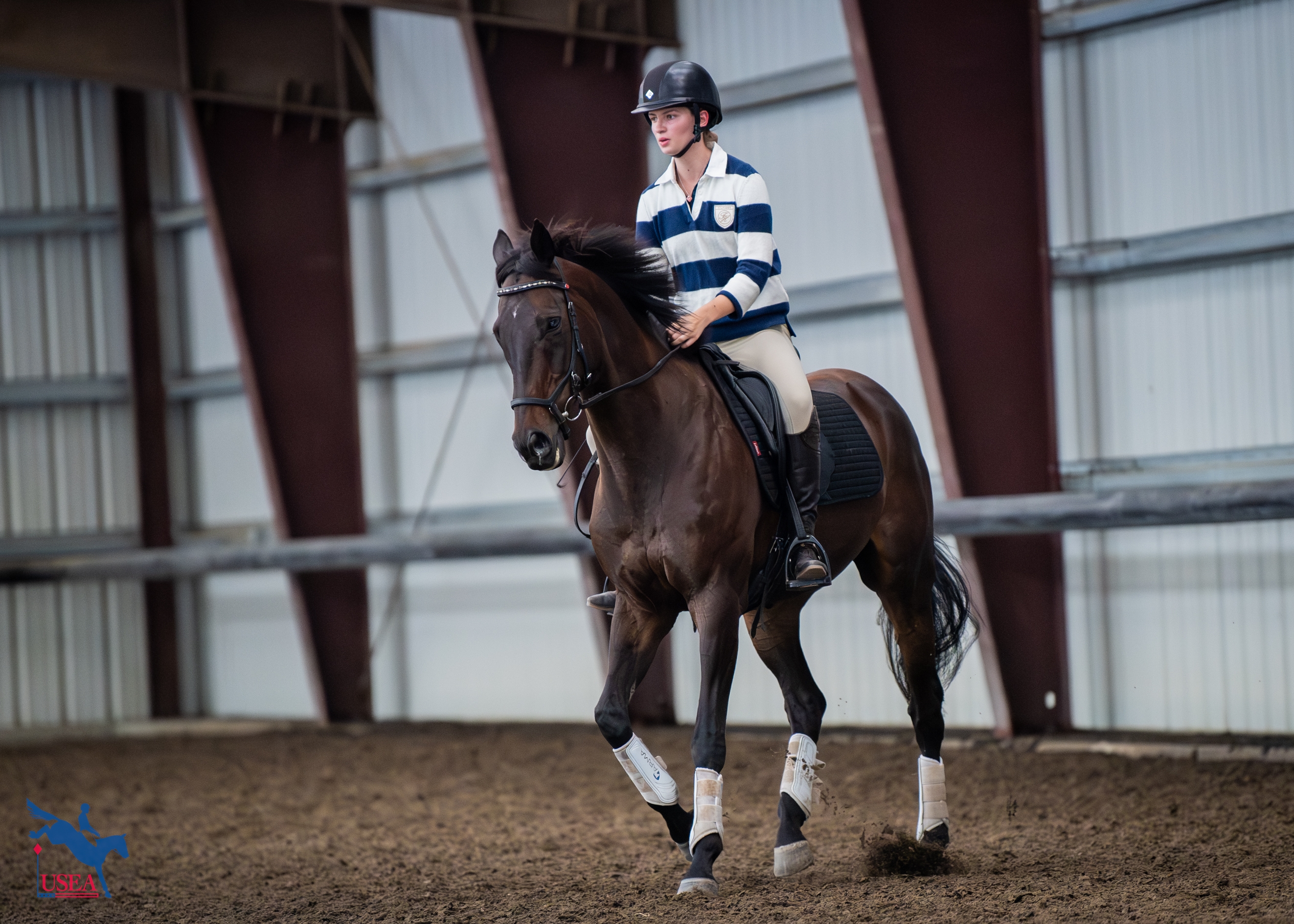
“I think it's all having the ability to have big different canters,” she said about the relationship of flatwork to jumping. “Being able to jump a jump in a small canter and a big canter, and then finding the balance of their hips, feet, and seat to have that rhythm. And once they find their hips, they can actually find the distance because they can feel the canter so much better.”
For the second half of their lessons, riders swapped horses as they’ve done for the last few years in the EA21 clinics so they could put their sharpened skills to the test on an unfamiliar mount.
“It's so great because I think when you have to swap to a horse—some of these kids are on catch rides anyway—but I think when they have to be a little out of their own comfort zone, then you see them using the tools that they have learned to problem solve, and it was so fun to watch because although it's not always perfect, they all got better. I think especially on the flat, it's great because they do have to put the system to work a bit.”
Byyny was thrilled with the group of riders today, many of whom were returning participants. “These guys are like little sponges,” she said. “This is only my second year of doing it, but it's just fun to try to get them to participate about and engage into what they see, and hopefully, they will not only be good horsemen but good trainers as well and having some compassion for what they are seeing and hearing and doing.”
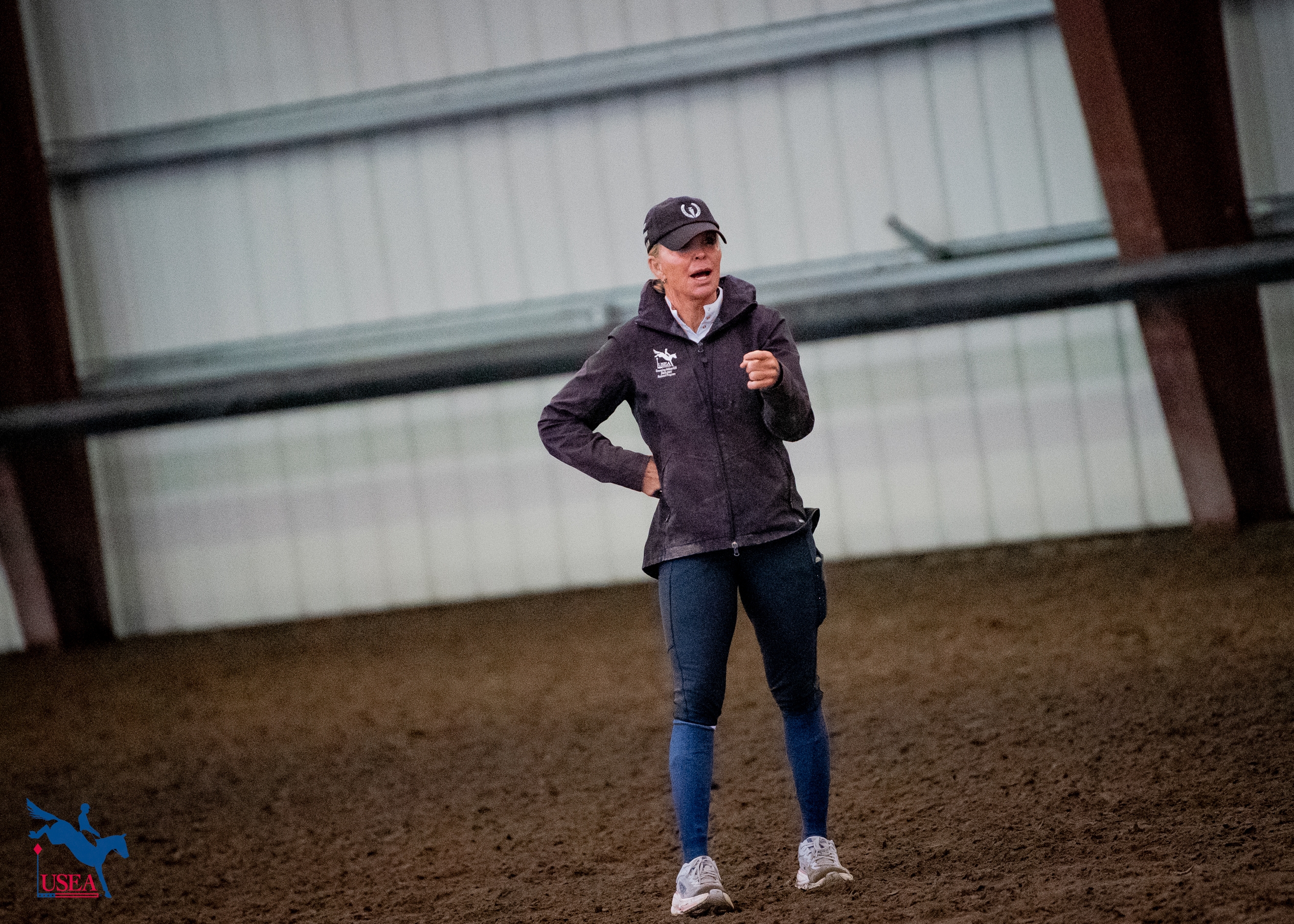
Byyny hopes the riders come away with many tools in their toolboxes after this week as they continue on in their riding careers.
“I think it's so important—everyone can get on, but if you have ways to fix and think and work with the horses, I think you're just going to be better as a whole for everything you do—being able to problem solve and feel like you can cope it when you run into a problem; just having a system to really help them problem solve and to be better horsemen, because at the end of the day it's all about the horses, isn't it? And having that journey of not worrying if it goes wrong, but how to actually make it better because you have the tools.”
Riders will have show jumping lessons tomorrow beginning at 7:30 a.m. PST.
West II | Aspen Farms | Yelm, Washington
The Participants
- Simone Clark
- Annabelle Davis
- Lindsay Essex
- Alexis Johnson
- Izzy Lenk
- Flynn Patinkin
- Brianna Rasmussen
- Caterina Ritson
- Carson Vogt
- Zoe Weide
Follow the USEA coverage on social media!
Facebook | Instagram | Threads | TikTok
About the USEA Emerging Athlete U21 Program (EA21)
The purpose of the USEA Emerging Athletes U21 Program (EA21) is to identify and provide consistent quality instruction to the next generation of elite event riders. The aim is to create a pipeline for potential team riders by identifying and developing young talent, improving horsemanship and riding skills, and training and improving skills and consistency.
The USEA Emerging Athletes U21 Program was launched in 2022 with a model of five summertime regional clinics taught by carefully selected USEA Eventing Coaches Program (ECP) coaches, leading to a winter national camp consisting of selected Young Riders from the regional clinics. Athletes who are 21 years or younger, are current members of their USEA Young Rider Area program, and are established at the Training Level or higher, are eligible to apply for the EA21 program. Click here to learn more about the USEA EA21 Program.
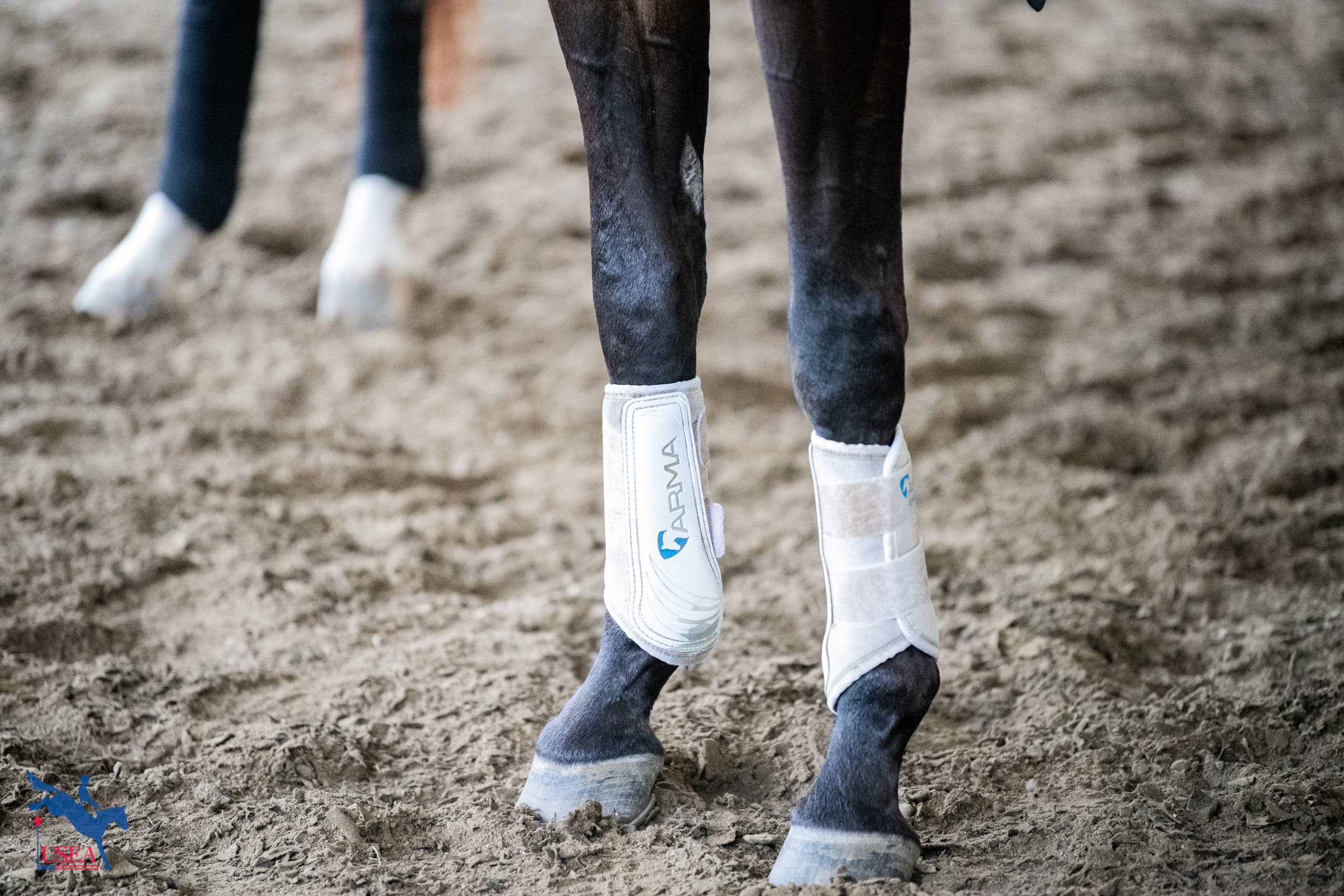
The USEA would like to thank ARMA, Bates Saddles, GGT Footing, Horse Illustrated, Kerrits, PulseVet, Ride iQ, Schneiders Saddlery, Sidelines Magazine, WeRideTogether, YETI, and 100xEquine for sponsoring the USEA Emerging Athletes U21 Program.
Related Articles
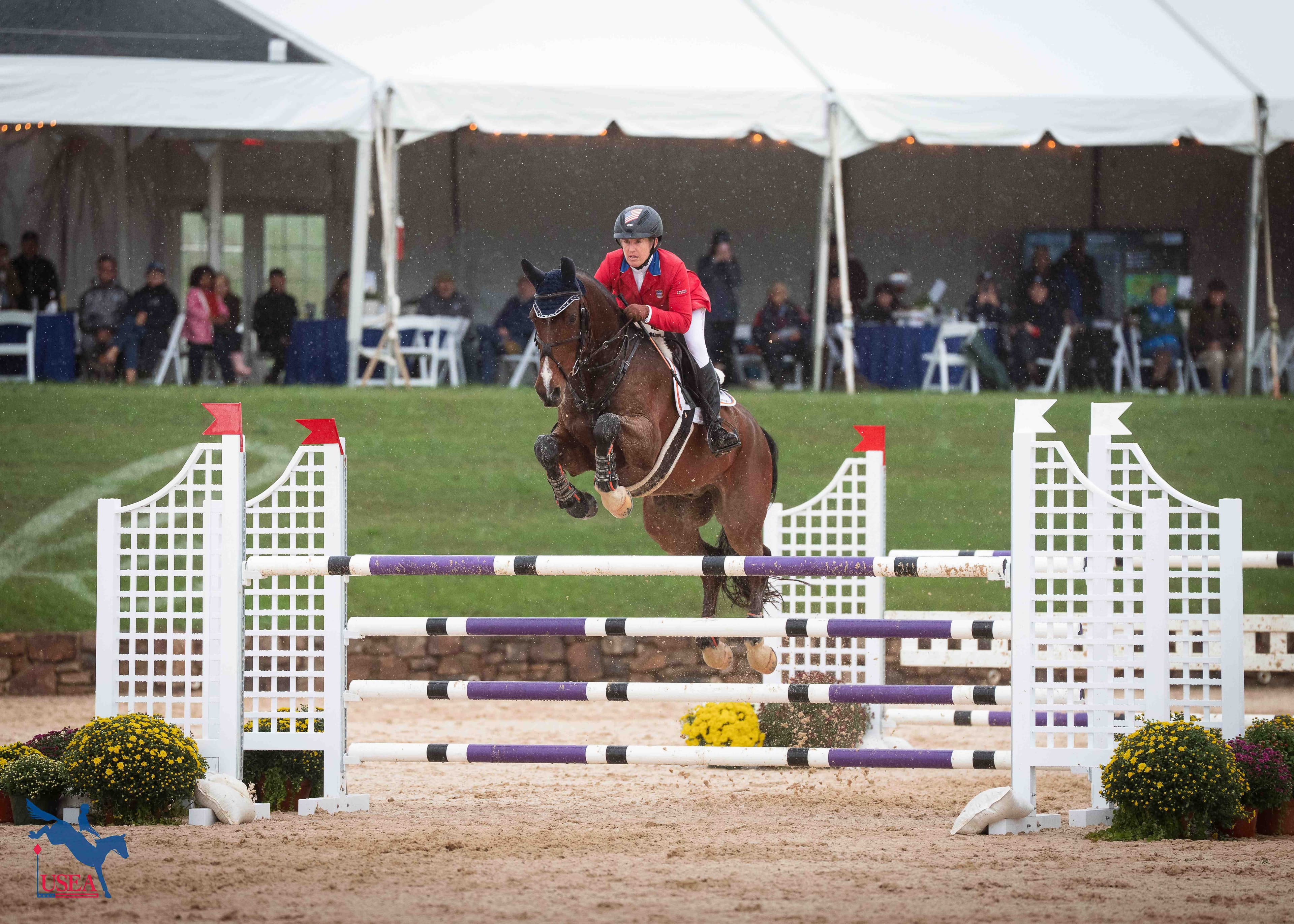
Sharon White and Claus 63 Capture the Win in the US Equestrian Open Final CCI4*-L, White Becomes First Woman to Win the Title
The second edition of the $200,000 US Equestrian Open Eventing Final concluded at Morven Park International Equestrian Center with Sharon White (Summit Point, W.V.) and Claus 63 delivering a standout performance in the final jumping phase to capture the win. It was a historic result as White beca...

The Dutta Corporation Continues Support of USEA Young Event Horse Program in 2026
The United States Eventing Association (USEA) is pleased to welcome back The Dutta Corporation as a valued supporter of the USEA Young Event Horse (YEH) Program and the 2026 USEA Young Event Horse Championships. The Dutta Corporation will return...
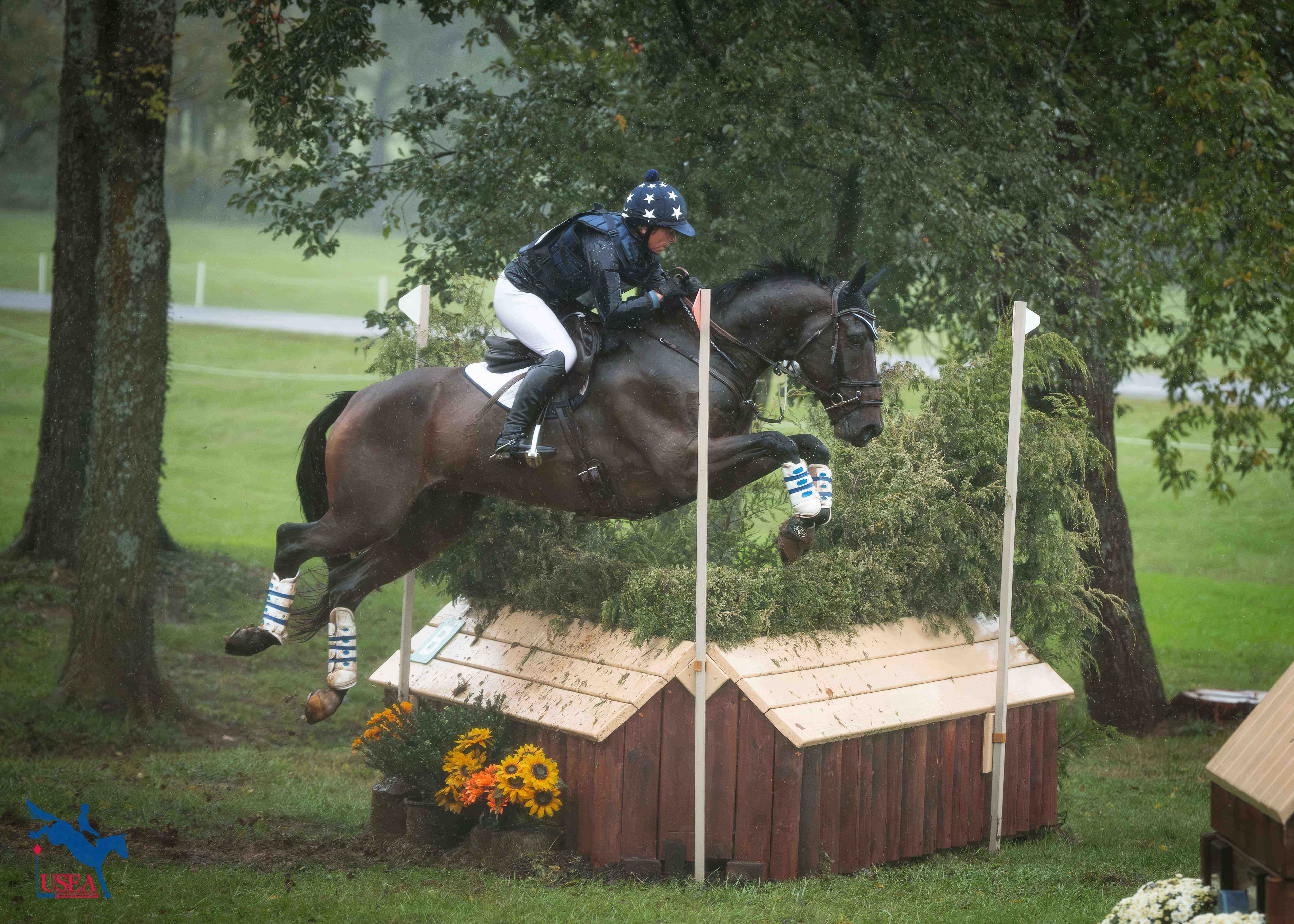
A First FEI Win for MHE Excel Star Noble Ikon and Morgan Houberg in USEA/USEF 6-Year-Old Developing Horse National Championship
Heavy rain overnight and into the morning turned the final day of the 2026 USEA/USEF Developing Horse Eventing National Championships into a true test of the young horses' confidence, athleticism, and determination at Morven Park International. When the final scores were tallied in the CCI2*YH-S ...