'Kindness and Patience is Key': Introducing Young Horses to Water with Chris Talley
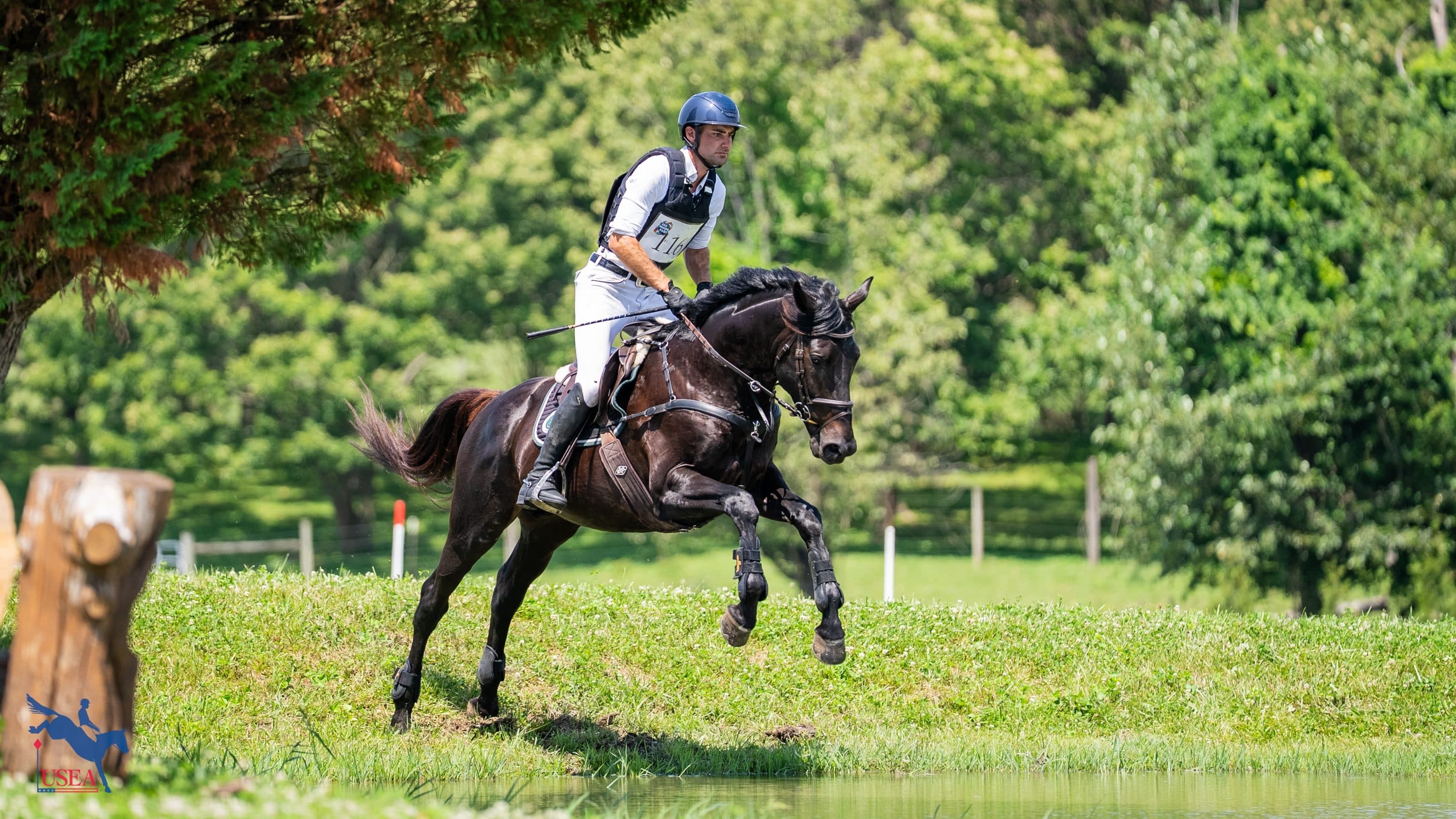
Water is a feature at every level in eventing from Starter through Advanced, so teaching a young horse how to navigate it safely and confidently is key to success on cross-country.
If you’re preparing your 4- or 5-year-old for the USEA Young Event Horse Program (YEH), you can expect water obstacles to be equivalent to what you’d find on a Beginner Novice or Novice cross-country course during the qualifiers. For the YEH Championships in the fall, you may find a Training level question at the water for the 5-year-old division.
Chris Talley, a five-star rider based in Dyke, Virginia, and Ocala, Florida, at Home Track Farm, says that introducing water to a young horse must be done methodically and with kindness and patience. Talley has produced many YEH graduates, most recently finishing as the overall reserve champion with Kimmy Risser’s Westphalian mare HM Belterra (Bandelero JSF x Murray Hillbilly) in the YEH 4-year-old Championship in 2024 and third in the 5-year-old East Coast Championship in 2025. He also rode Home Track Farm’s Irish Sport Horse gelding HTF Castle Kilmac (Castlecomer Q x PLS Diamond Heist) to the reserve championship title in the East Coast 4-year-old division in 2025.
“We really try to strive to make it fun for them,” he said. “For me, it's all about kindness and patience, and that's the way you encourage horses to be confident. I think being confident in yourself as a rider as well. You set yourself up for success as a rider and as a trainer.”
Talley and his husband, Lee Maher, have a lot of green horses, and they usually start them on the longe in a halter when they’re 3 and 4 to introduce them to various cross-country obstacles, including water. Talley says he always brings his Wellies in case he needs to go in the water to be lead.
If you’re not able to start a horse on the longe, make sure you have a more confident horse to school with.
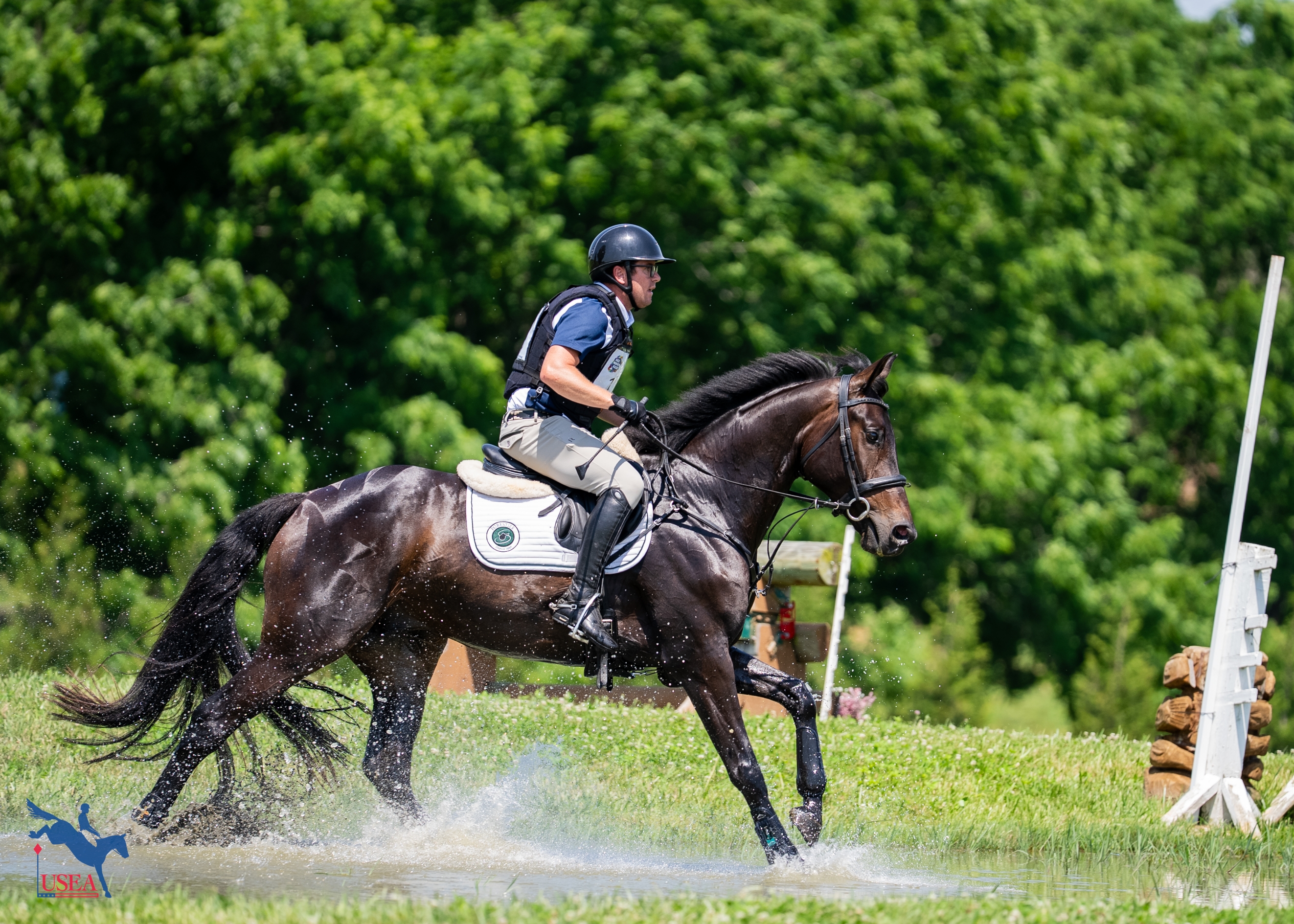
If you have access to trails with water crossings, incorporating hack days so crossing water becomes second nature to the horse is a great area of opportunity. From stagnant water that’s not clear to running water, it’s all a good experience.
It’s best to introduce water at a dedicate water jump where you know the footing and the entrance and exit will be safe, Talley noted.
“I really like to let the horses go in and sniff the water. I think that's kind of in all aspects of horse training, horses touching things is a way of acceptance,” said Talley. “If they kind of start, and they want to go backwards or sideways, I don't so much mind. They're just trying to figure it out but always try to never let the horses turn away from what they want to look at. We can go sideways as much as we need to. Sometimes you end up doing a whole 360 around the water jump, going a little sideways. I don't mind that. I just kind of stay there and just in a nice, polite way, keep encouraging them to take a forward step to what they're scared of, and if they take a forward step for me, then there's a reward there, and it can be scratches or a cookie, whether I'm on them or off their back. Then just stand there, let them take a big deep breath, and then ask for another step.”
While a young horse might think that there are sharks in the water at first, most horses eventually enjoy splashing and sniffing the water. If it’s a clean source, let them have a drink, but be careful not to let them start pawing and try to roll!
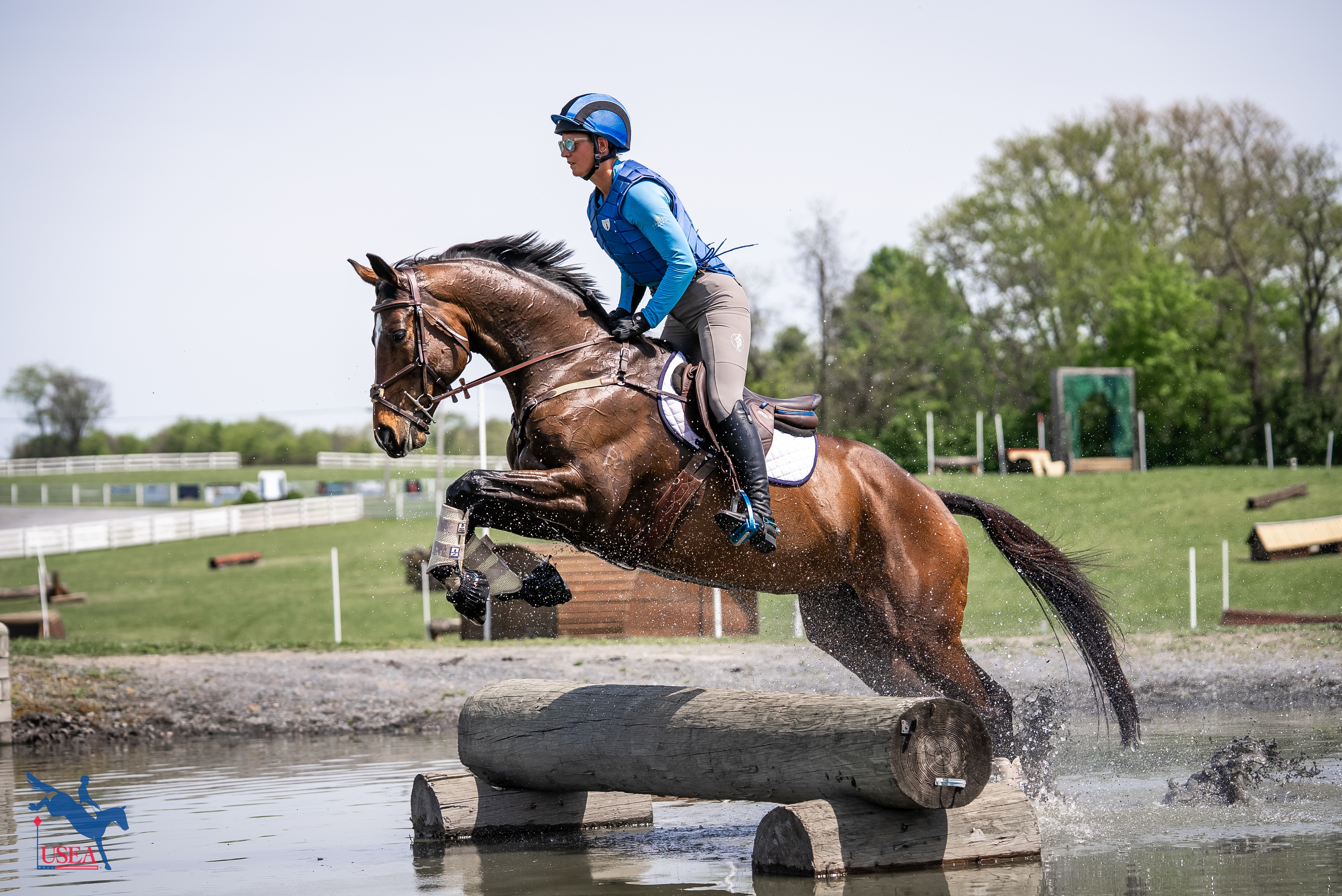
Talley says teaching a horse about water is like teaching it to jump—some may take to it right away, while others need more time.
“That's where it comes back to having patience and just being willing to accept each horse as an individual and waiting for it,” he said. “Sometimes it's 5 minutes, and you're in the water, and that's amazing, and other times you're up there for 45 minutes, and you’re [making sure that you’re] not getting upset or flustered and just kind of staying focused on what you want to accomplish.”
Once your horse is confidently walking through the water, try a trot, then a canter, making sure they don’t try jumping or leaping into the water, though that may happen for a while as they’re learning and experiencing new and different water jumps during schooling and competition.
When introducing a jump near the water, Talley makes sure his horses are confident cantering through the water first. At a YEH competition, you may find a jump a few strides before or after the water jump during qualifiers. During the Championships, you may see a jump in the water, which mimics a Training level question. Start by using small logs or a show jump while schooling to let your young horse learn how to jump an obstacle in water.
When introducing banks into and out of water, find a small one so that they’re able to walk it and make it not such a big deal, said Talley.
“I am a big advocate of, within reason, walking things,” he said. “I think horses really learn to understand what to do with their feet if they don't have to be rushed. Once they're confident going in and out of the water, I always introduce [banks] on the rope, but when the horses are under saddle, and I'm on their backs, I'll trot into the water, bring them to a walk. I'll let them walk up to it, and some horses are braver than others; some will just pop right up and out. If they want to stop and sniff it, fine. If I feel like there's forward momentum, then I'll encourage them to just take a nice walk step up. If I feel like I need to circle and come back around and get a bit of forward momentum in the walk, then I don’t mind that. And the same thing with coming back down, which usually gets a little bit hairier, because oftentimes the horses walk up, they sniff, they kind of go a little sideways, and then oftentimes they launch. So that's always interesting with the babies, but I encourage them to just kind of step off on the nice loose rein if they launch.”
Once the horse is walking the bank both directions, you can introduce trot, and eventually canter, over several sessions.
At competitions where a water jump may be new and unfamiliar, Talley will let his young horses come back to a trot as needed and canter out, but they must move forward because a step back at the edge of the water, depending on how it’s flagged, could be given 20 penalties.
He noted that at the YEH Championships, his strategy is to show off his horse’s skills by cantering into the water. “By the time I go to the Championships, I try to have the horses so it's very natural for them to canter in the water so I can keep that forward, positive-looking momentum for the judges’ perspective,” he said.
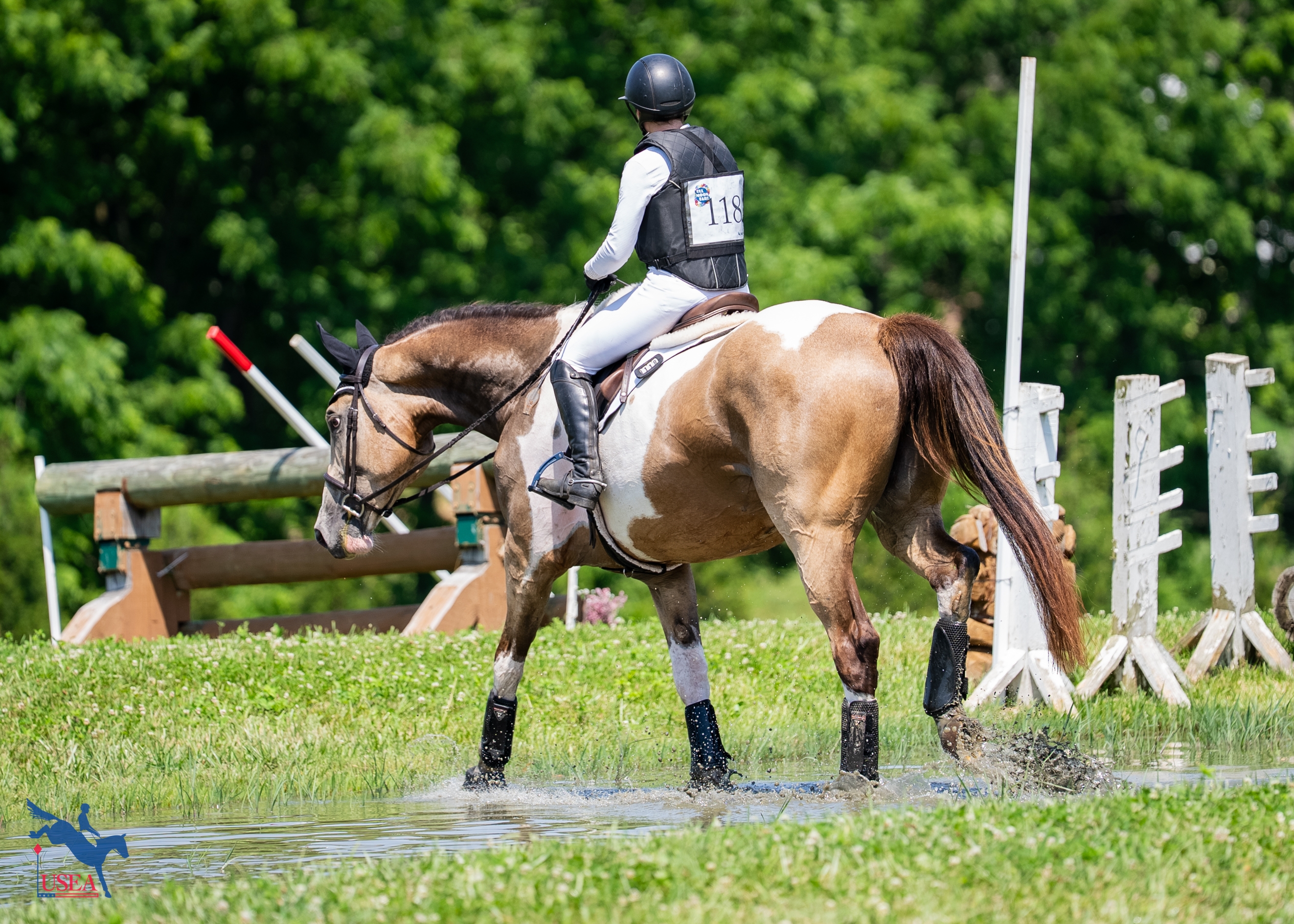
One of the many positive elements of the YEH program is that horses are allowed to school the water before their jumping round. “You can't school any of the specific jumps, but they let you walk around,” said Talley. “They let the young horses sniff the jumps. They let you go in and out of the water, and I think that's really beneficial for young horses just to go to a show. Yes, the Championships have pressure because of the atmosphere, but it still creates a really inviting environment for young horses. You’re kind of taking the element of surprise away from them, which I think is hugely beneficial in creating confident horses for the future.”
Overall, Talley says the water jump should be a fun, no-pressure environment for young horses.
“For me, teaching young horses about water is one of the most fun things about cross-country,” he said. “There's a little bit of an element of unknown, and it can often be a bit exciting! But for me, I think as long as you keep patience, it's really fun. I try to incorporate the water into as much of my daily training as I can because it makes for much more competent horses in the future.”
About the USEA Young Event Horse (YEH) Program
The Young Event Horse (YEH) Program was first established in 2004 as an eventing talent search. Much like similar programs in Europe, the YEH program was designed to identify young horses aged 4 and 5 years old, that possess the talent and disposition to, with proper training, excel at the uppermost levels of the sport. The ultimate goal of the program is to distinguish horses with the potential to compete at the four- and five-star levels, but many fine horses that excel at the lower levels are also showcased by the program.
The YEH program provides an opportunity for breeders and owners to exhibit the potential of their young horses while encouraging the breeding and development of top event horses for the future. The program rewards horses who are educated and prepared in a correct and progressive manner. At qualifying events, youngsters complete a dressage test and a jumping/galloping/general impression phase. At Championships, young horses are also evaluated on their conformation in addition to the dressage test and jumping/galloping/general impression phase. Click here to learn more about the Young Event Horse Program.
The USEA would like to thank Platinum Sponsor, The Dutta Corp., Gold Sponsor Goresbridge, as well as Contributing Sponsors ARMA, Bates Saddles, CrossCountry App, FLAIR Equine Nasal Strips, Gallagher's Water, HorseWeek, The Jockey Club, Kerrits, Marshall+Sterling, Schneiders Saddlery, SmartEquine, and Standlee, and Prize Sponsor 100xEquine for sponsoring the Young Event Horse Program. The USEA also thanks Ocala Horse Properties for their support of the 2026 USEA YEH Symposium.
Related Articles
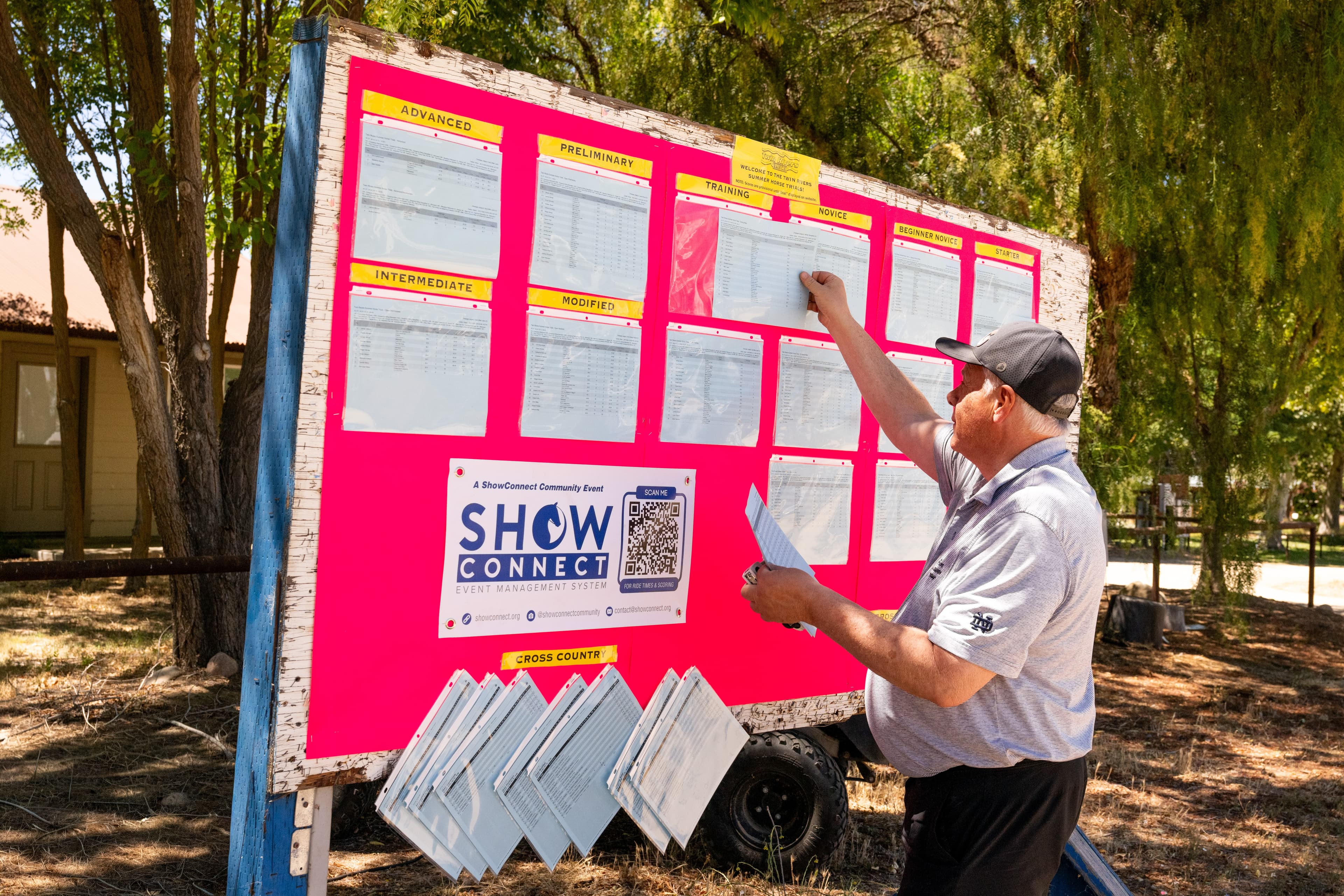
Bring Your Event to Life with ShowConnect
A great event gives everyone something to follow. Competitors can find the information they need. Spectators stay connected to the action. Announcers have the details that make each ride a story.
ShowConnect’s latest features help organizers create that experience while giving the show-of...

Standlee’s Grab & Go® Bales Go Pink Again for Breast Cancer Awareness
Kimberly, Idaho – This October, Standlee is once again turning its iconic green Grab & Go bales pink in recognition of Breast Cancer Awareness Month. Now in its sixth year of supporting the cause, Standlee’s annual breast cancer awareness campaign returns with Grab & Go to Give, bringing together...
USEA Podcast #423: There’s a Place for Everyone in Eventing
Eventing isn't only about moving up the levels. It's about finding the place in the sport that brings you and your horse joy. This week on the USEA Official Podcast, USEA Board of Governors members Erin Thompson and Allison Bailey join the show to celebrate grassroots and amateur eventing and dis...