Keeping It Simple on Cross-Country on Day 5 of EA21 National Camp
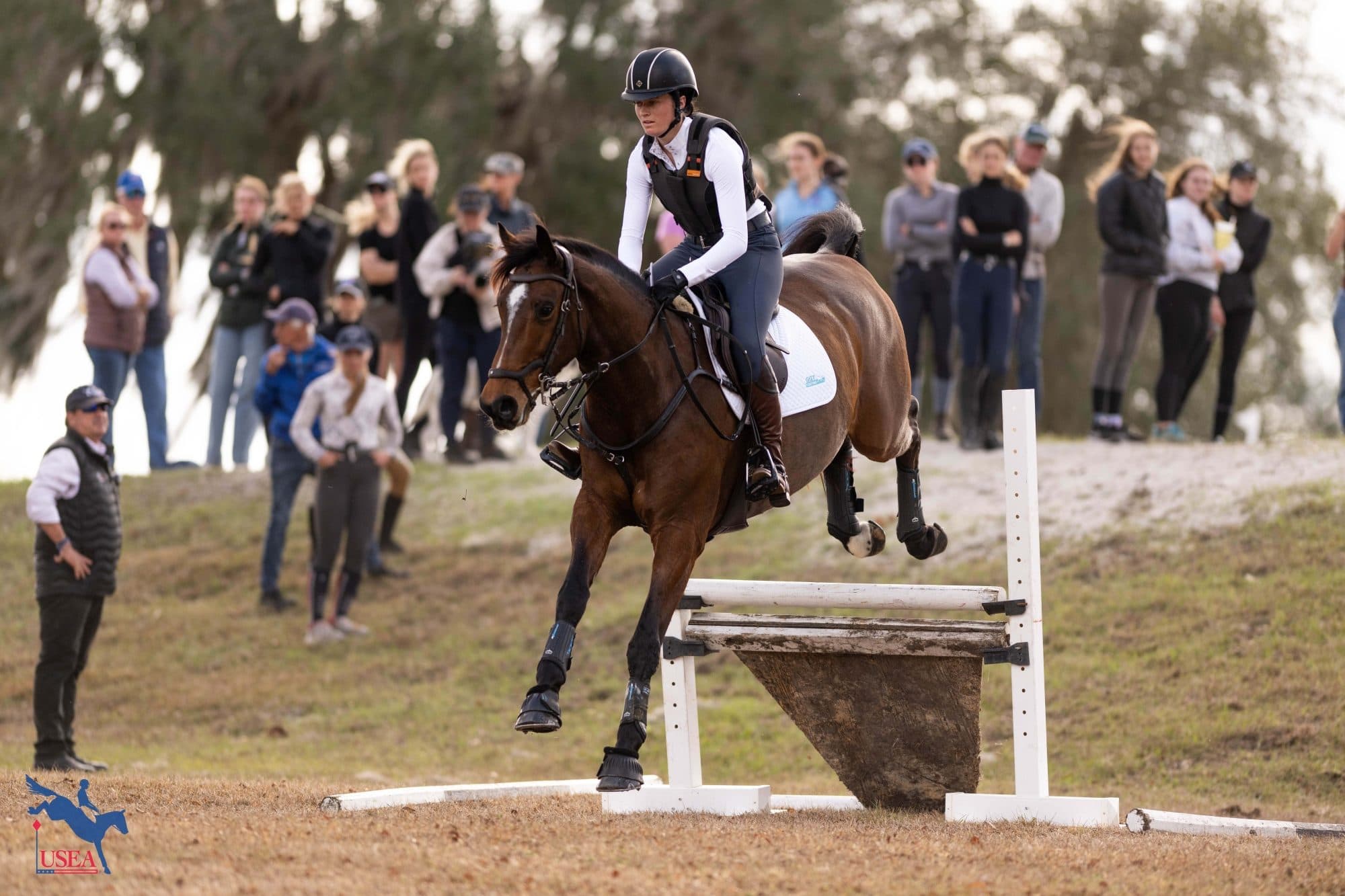
Ocala, Fla.—Jan. 3—The USEA Emerging Athletes U21 (EA21) 2025-2026 National Camp concluded five days of theory-intensive lectures and riding instruction with a finale cross-country day. “I'm thinking it'll probably take a day or two to process all the information!” Hannah Willford, National Camp participant, said with a laugh.
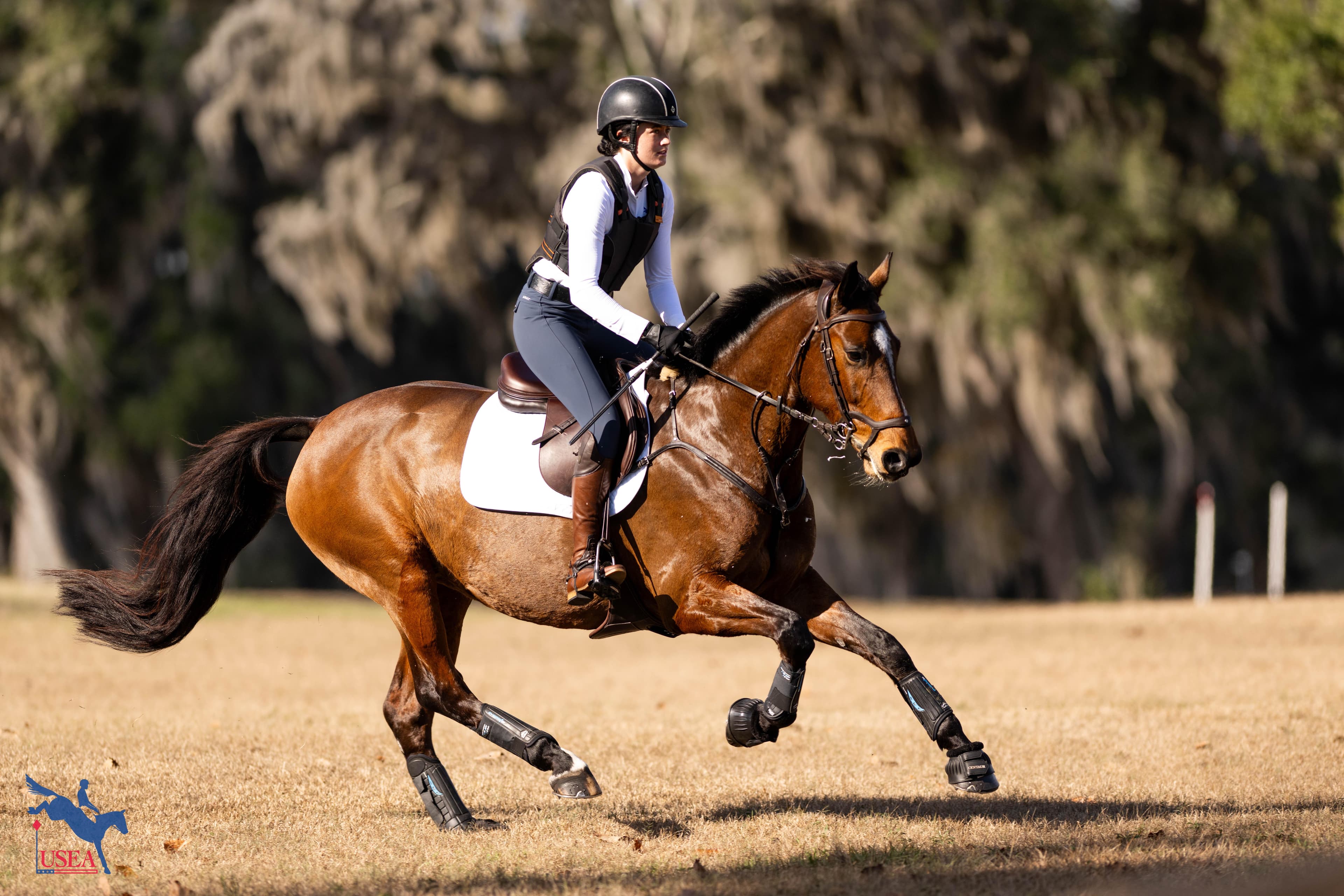
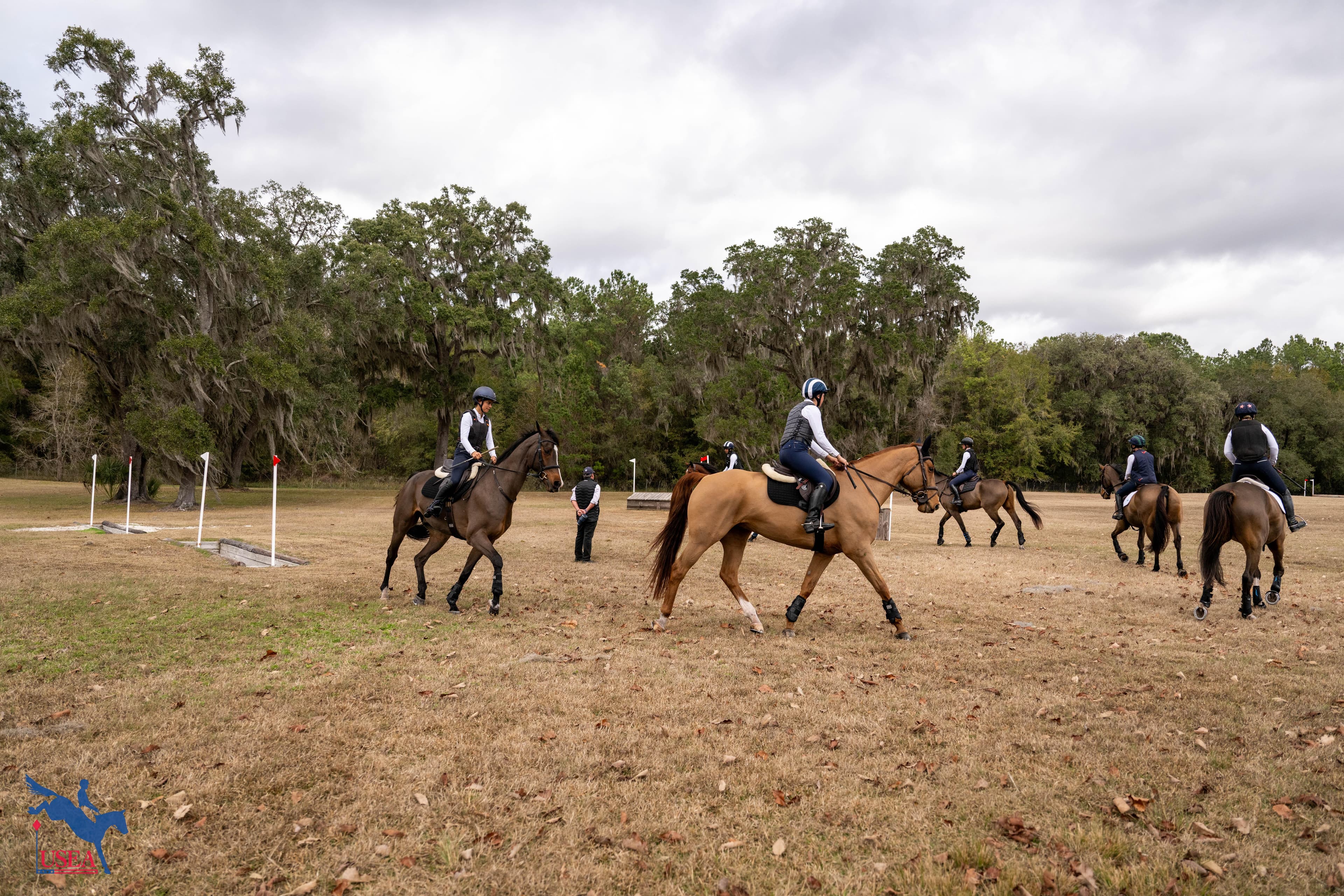
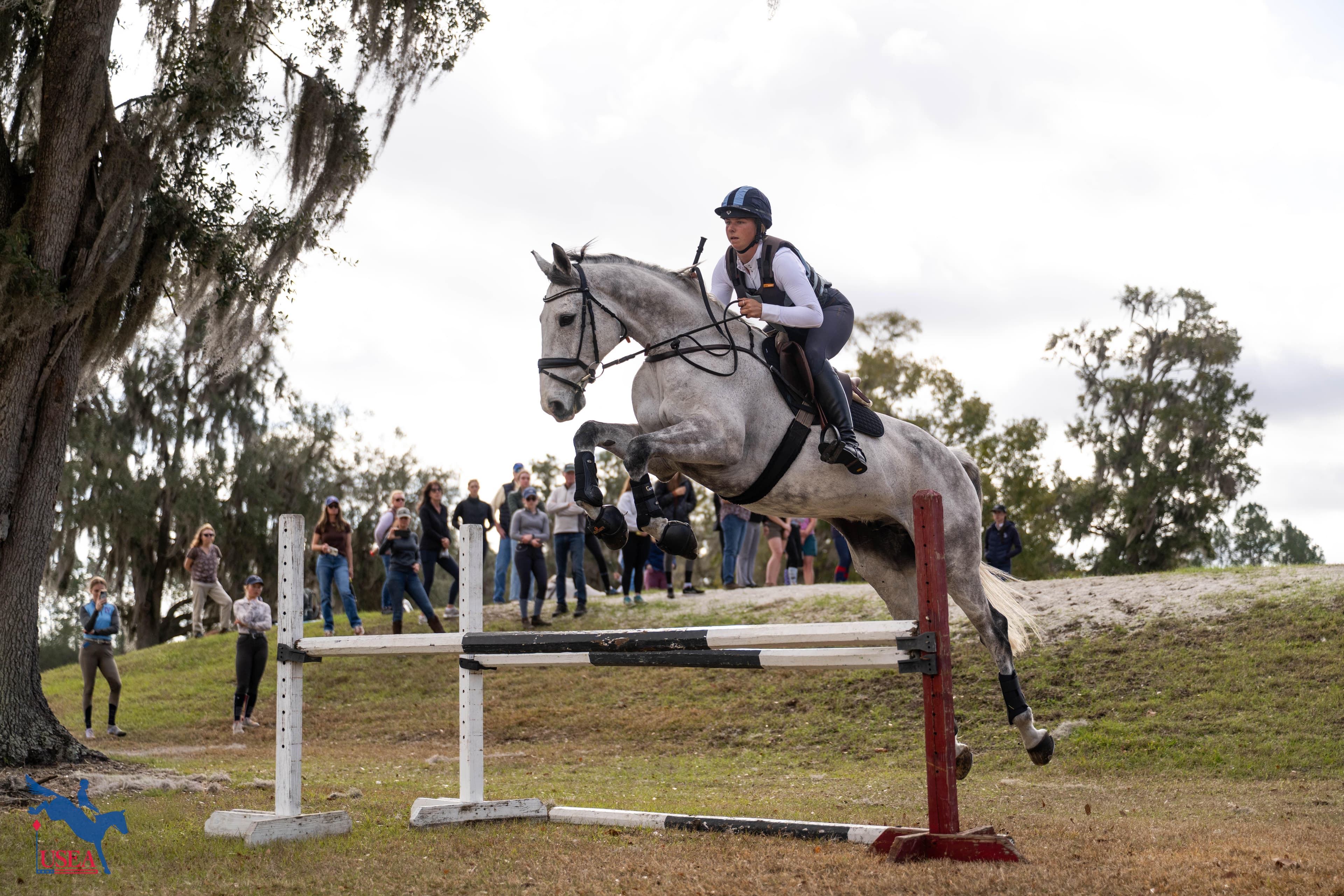
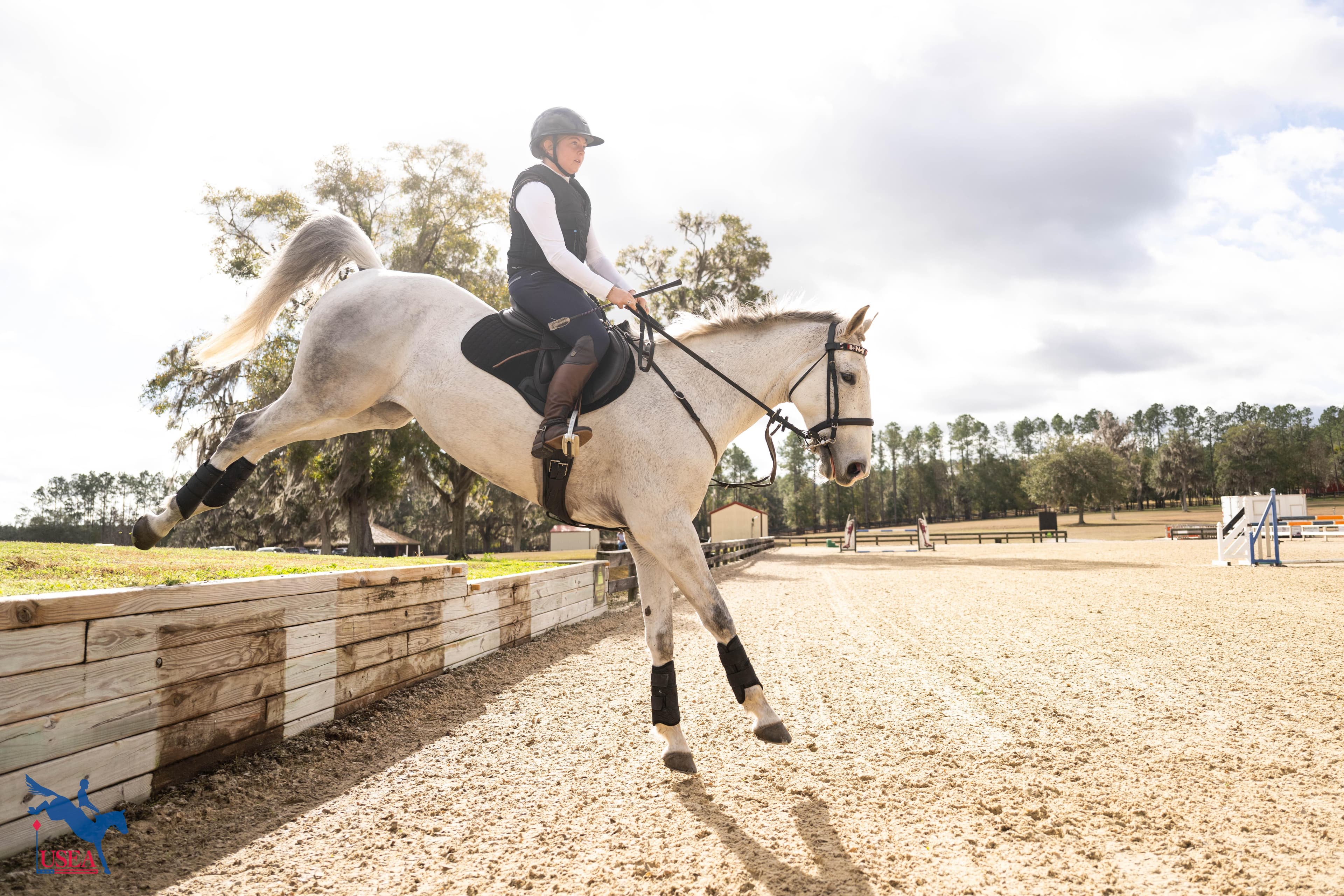
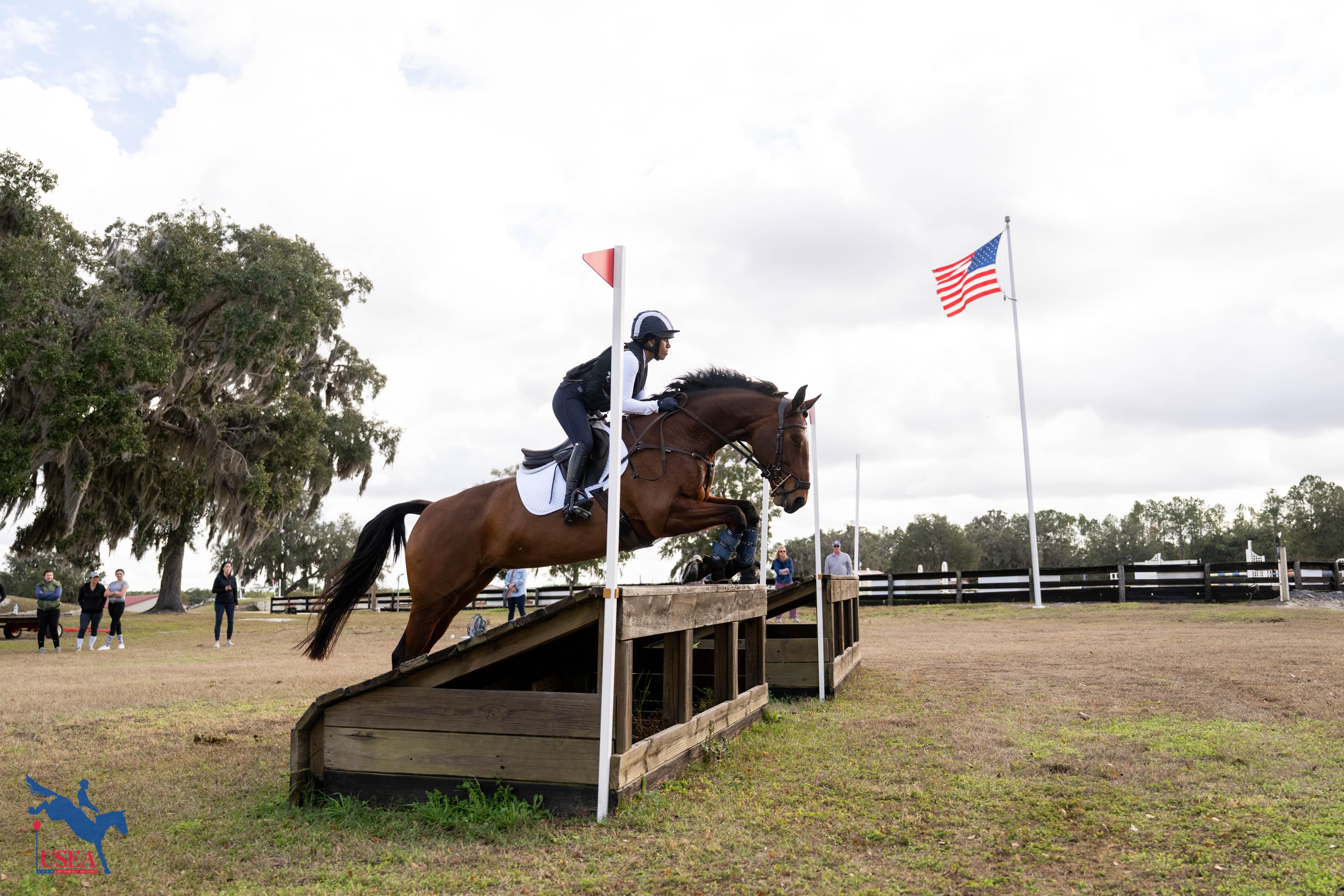
For the final time, David O’Connor, Director of Coaching for the EA21 Program, began the day with a lecture about cross-country riding positions. Three positions should appear most often on a cross-country course: a galloping position out of the tack that a rider uses between fences, a preparation position which brings the shoulders up and hips back to indicate to the horse a change is coming, and a jumping position which a rider naturally falls into as the horse takes the fence. Each one should not be confused for the others so that the consistent shifts can be subtle enough to influence change without have to resort to louder communications such as hand or seat. This will also help with making time on cross-country as it doesn’t interfere with the rhythm of the gallop and allows for more efficient turns.
But like everything, if a question is asked, a response is needed and riders will have to train the skill and ensure their horses are on the same page, just like in the dressage and show jumping rings. What happens in the sandbox also needs to happen in the field. And decisions need to be made on cross-country too.
One big decision is speed. Getting around a cross-country course is not about how fast you can go. Certain situations demand a decrease in speed, not to be confused with a change of rhythm:
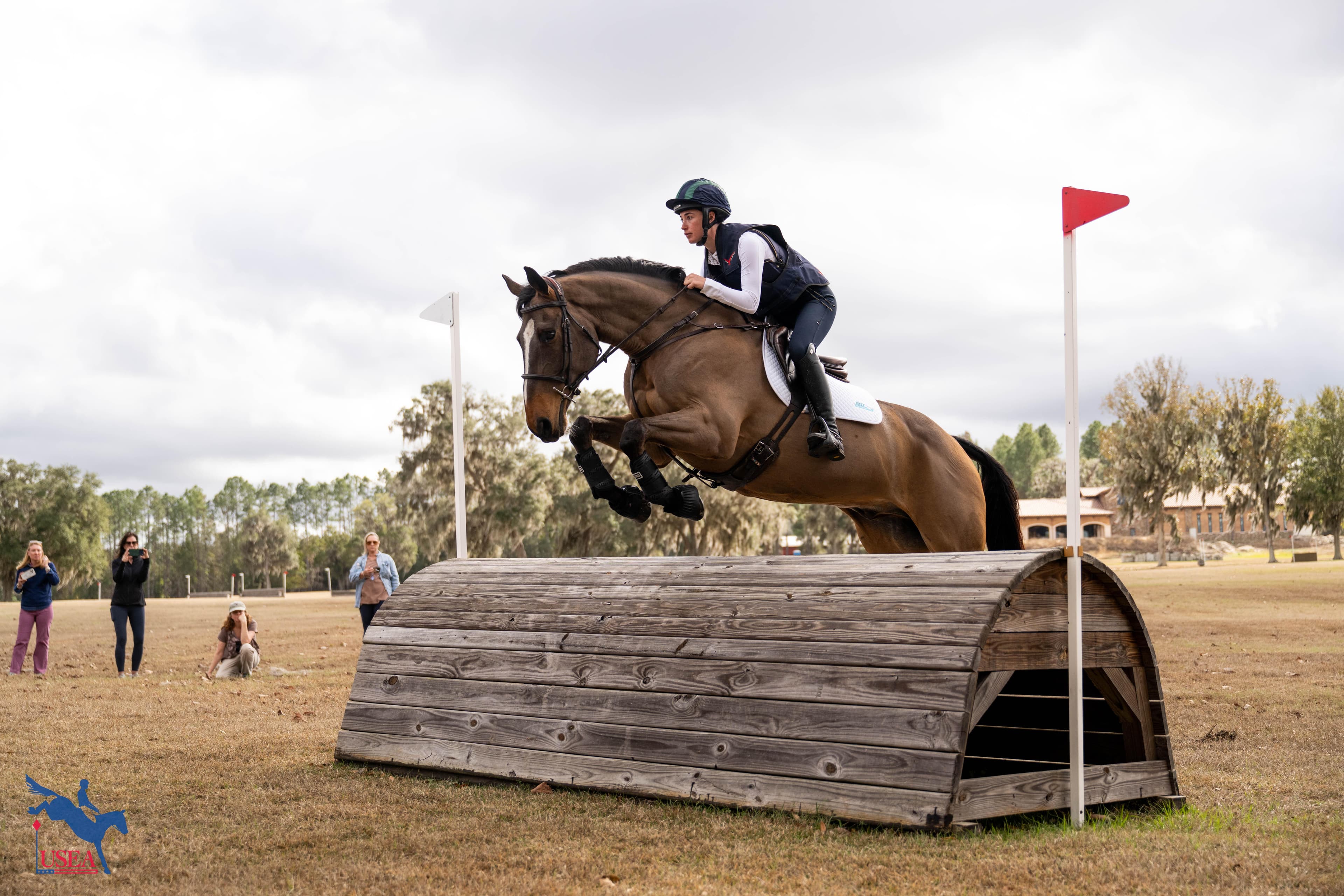
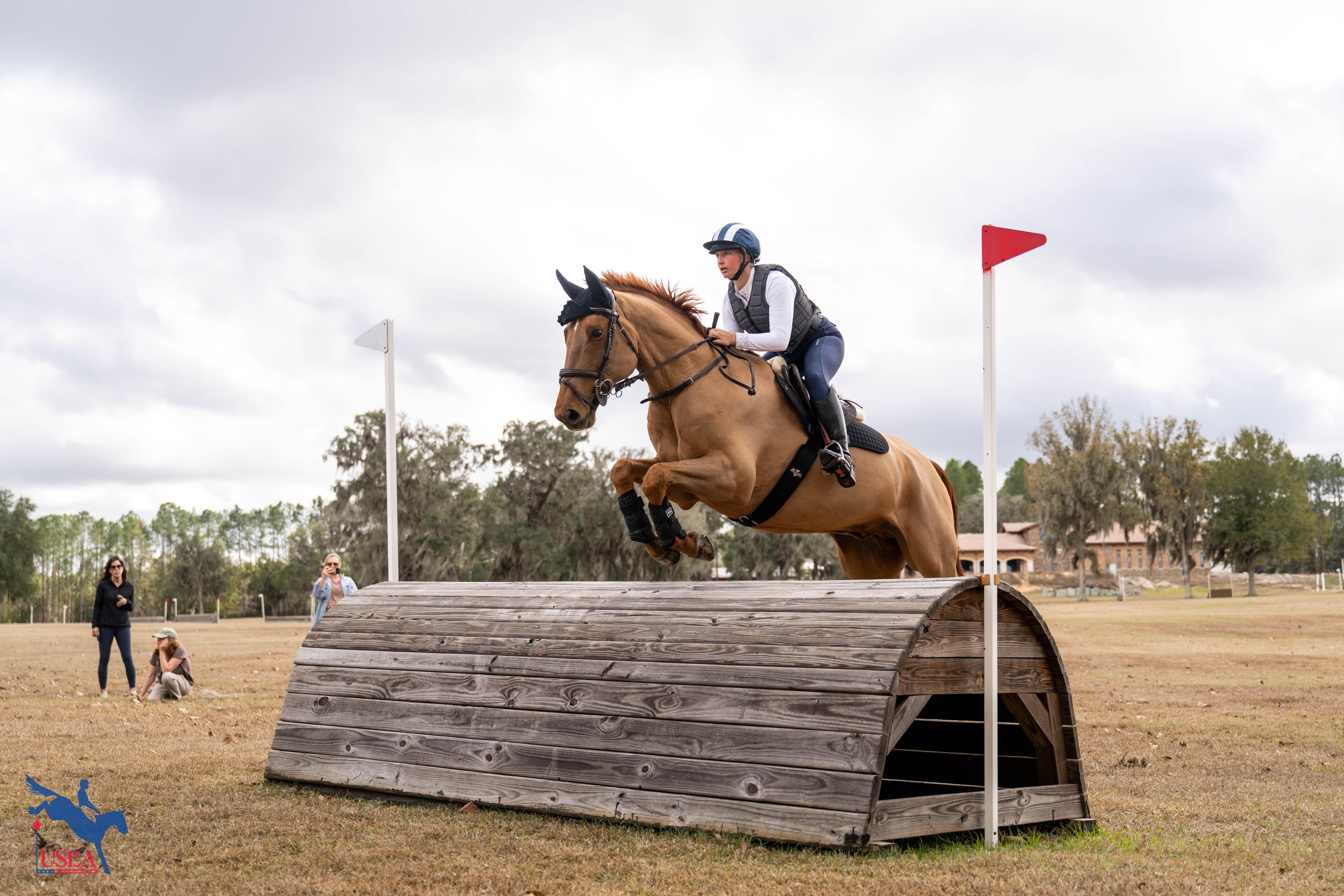
1. How vertical the face of a jump is. A ramped house requires less decrease in speed then a single vertical of rails.
2. What’s behind the fence. Are there more elements in a combination? Does the ground change? Is there a large crowd?
3. Terrain. Are you going uphill or downhill? Is the ground even or does it fall away on one side?
4. Width of fence. The wide fences are not successfully navigated by going faster. Speed is not to be confused with energy or impulsion.
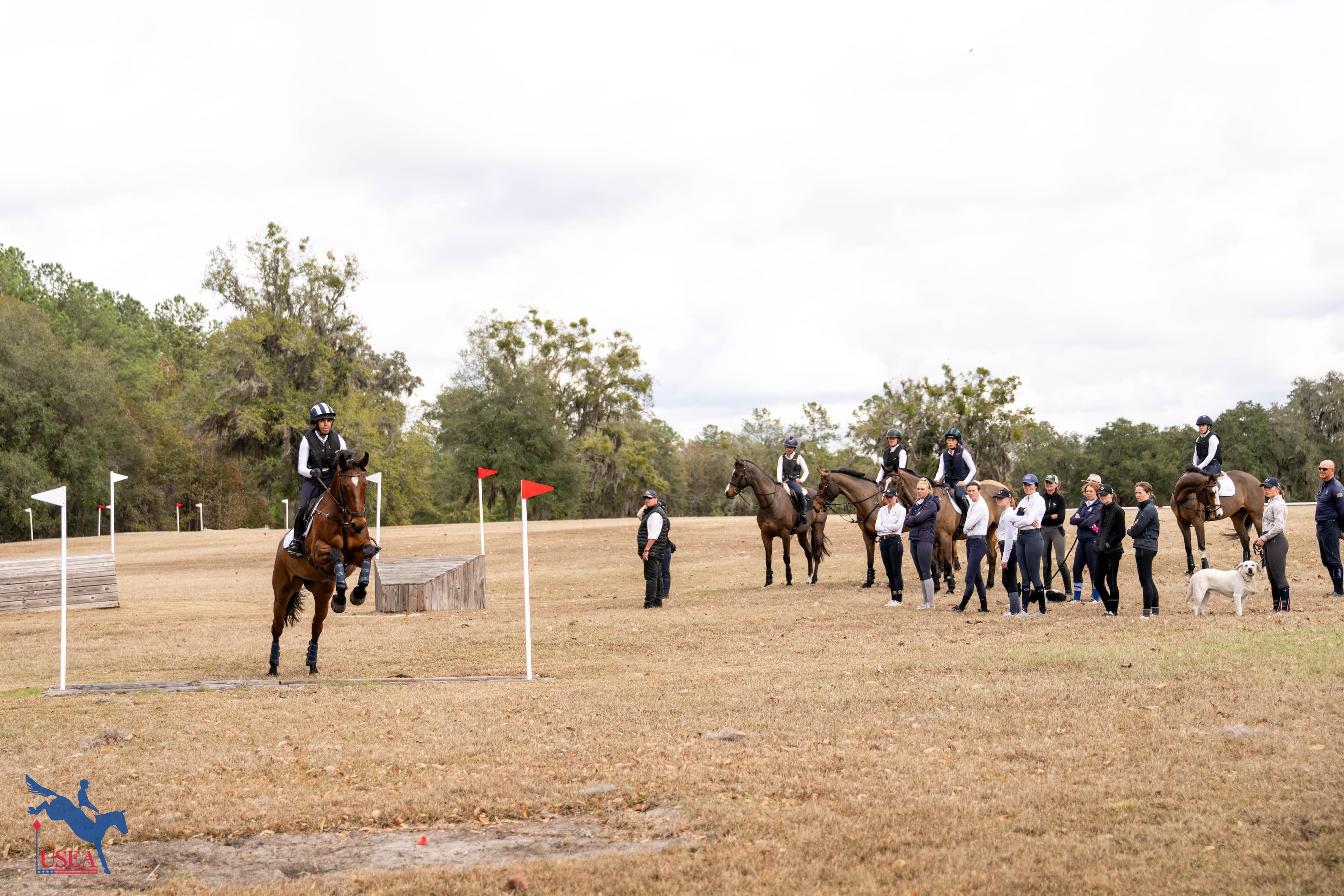
With those guidelines in place, O’Connor finished the lecture with “It’s time to go to the playground.”
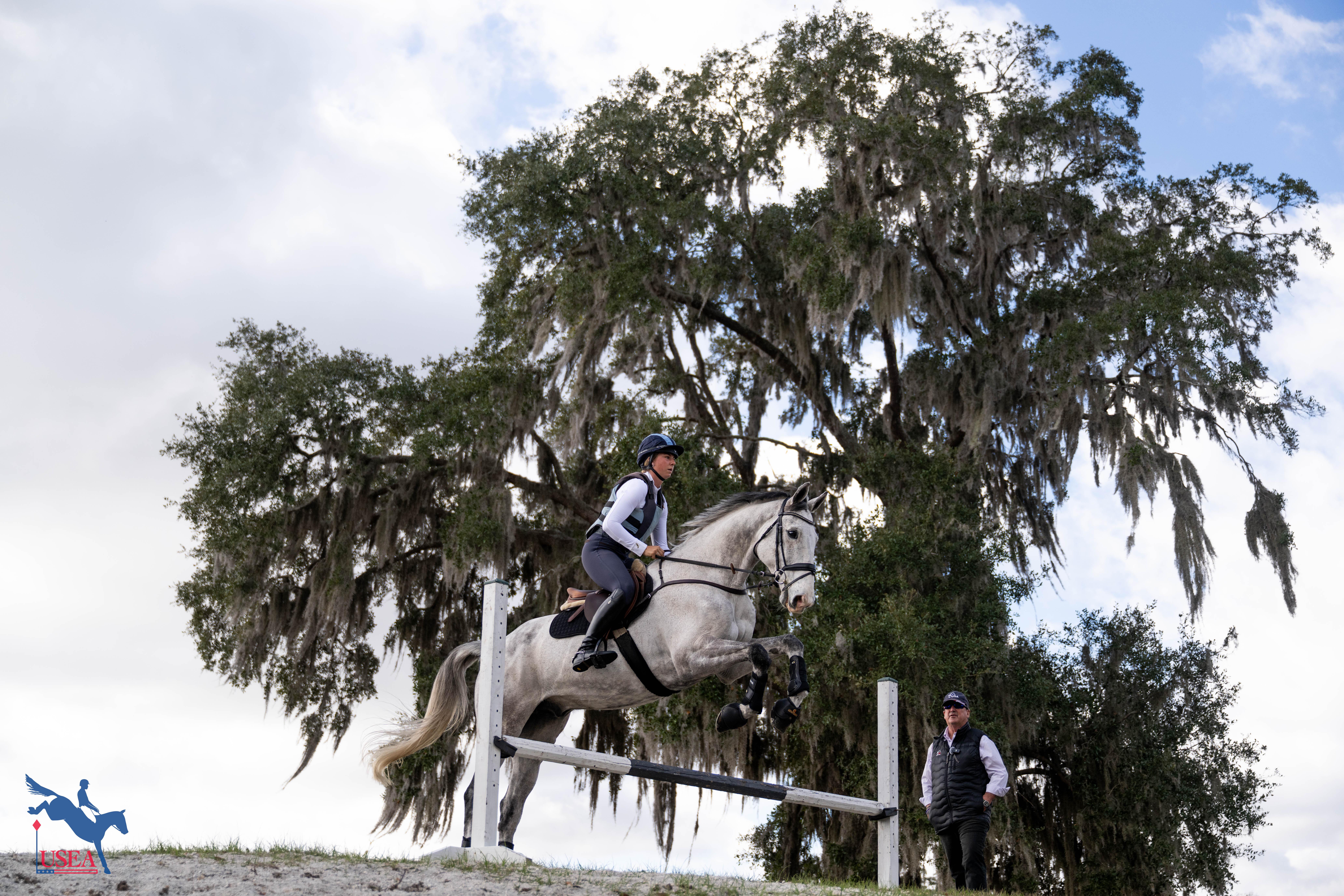
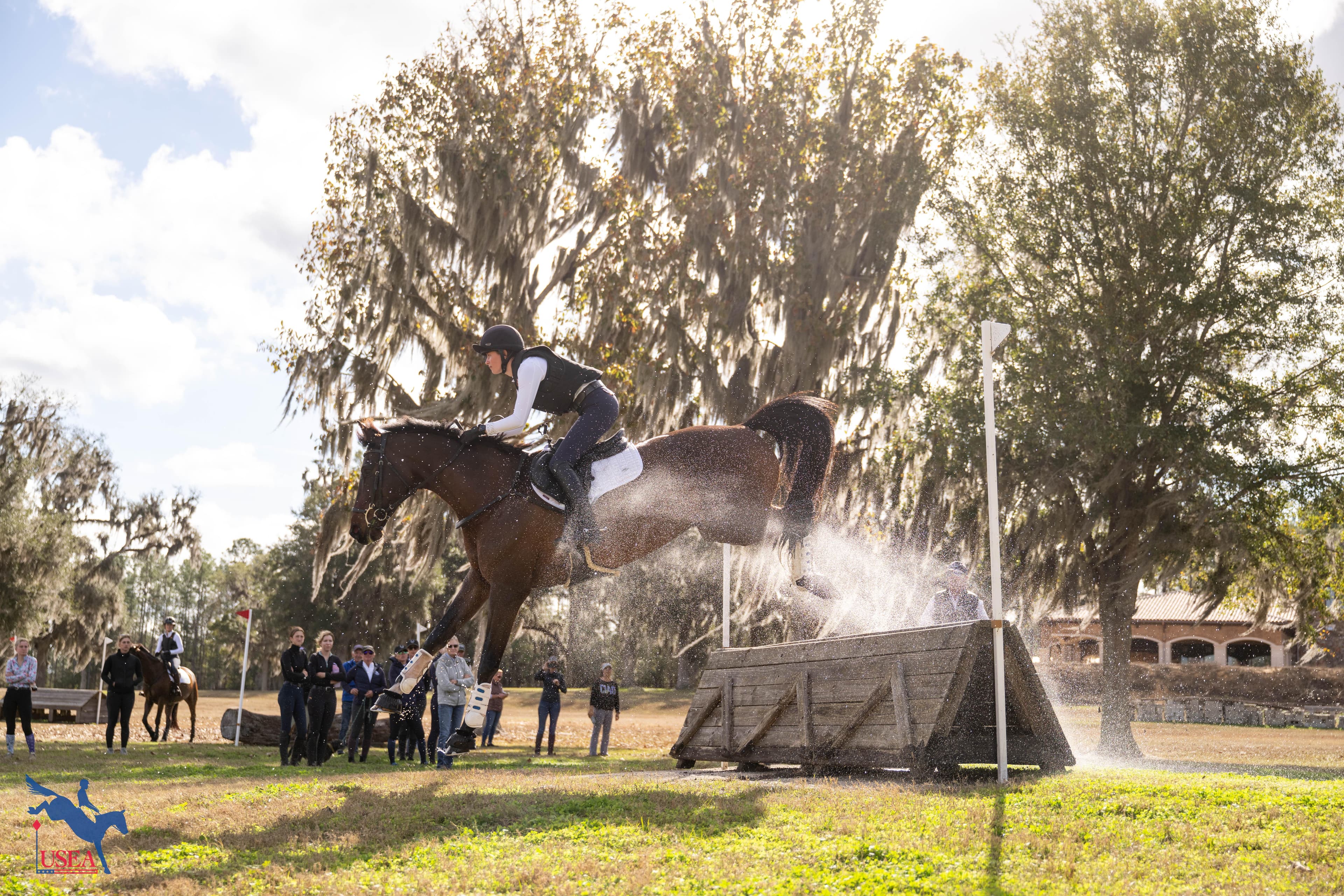
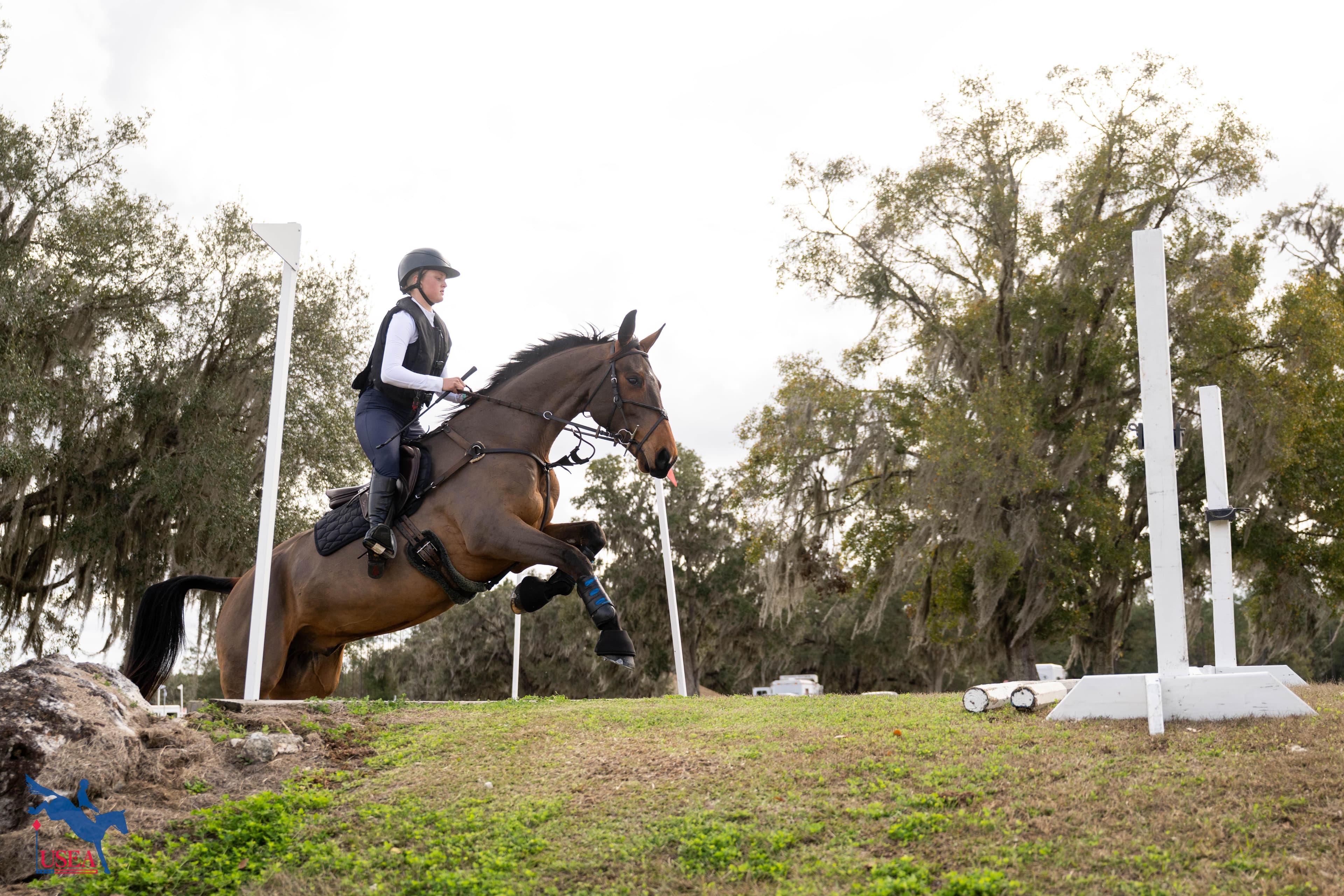
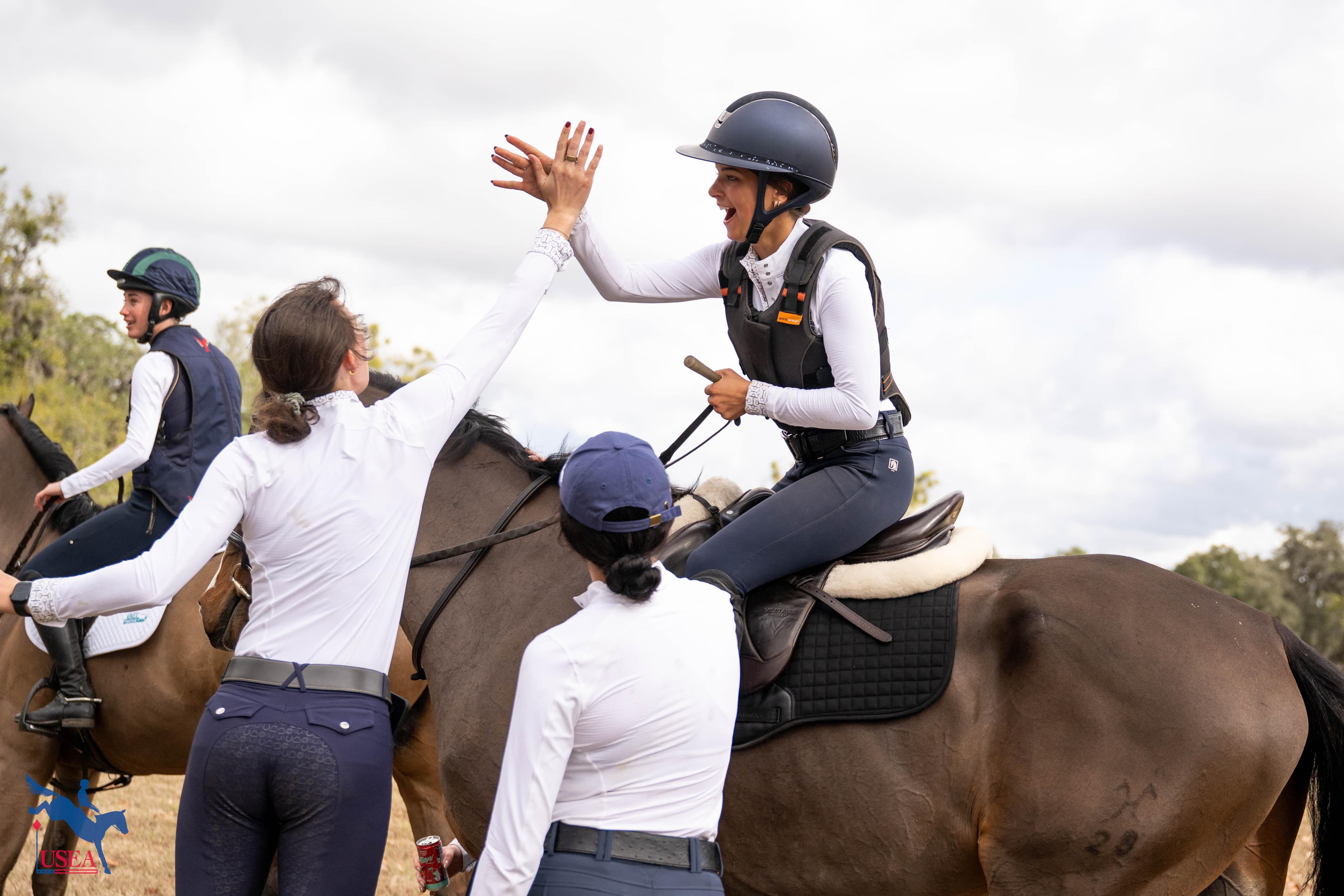
And play it was. Horses and riders expressed their joy with laughter and pricked ears, handling tough questions with the calmness and thoughtfulness O’Connor had encouraged throughout the week.
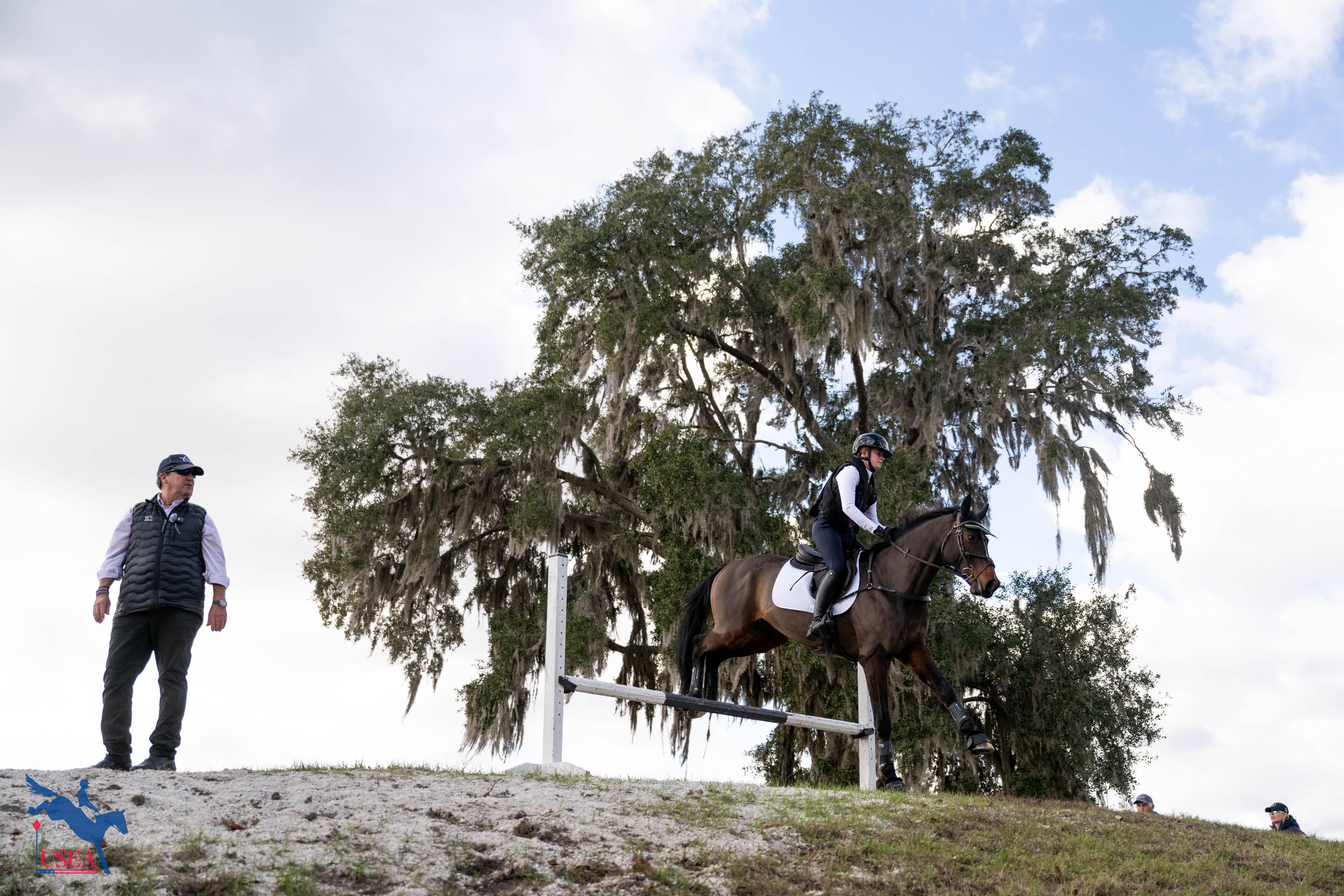
“I really liked the bank combo to the hill [today]. We did a bank, vertical, down bank, up the hill, and down to a skinny,” Hanni Sreenan, first time participant, shared. “It's technical, and it's fun to me. I thought that was probably some of the most challenging stuff out there, too, that we did today. I'm super thrilled with the week. There's so much to process, but the takeaways are just amazing.”
O’Connor coached a simplification of terms and understanding down to the what instead of the how. The rider’s challenge is to learn what they are doing to make it reproduceable. Shruti Bona, attending for the second time in her final qualifying year, found a step back to simple very helpful. “Sometimes I think we over complicate things because we know maybe there's more to fix than you can at one time, and it's easy to get wrapped up,” she said. “That's why I like David's whole idea of going back to the basics. For my horse, it was her balance. She tended to get a little low. That was her go-to in all phases. When I would focus on her balance, pieces started came together. Of course, there's always more things to work on, but it's nice to know that, oh, maybe I just need to change one thing, and my ride improves.”
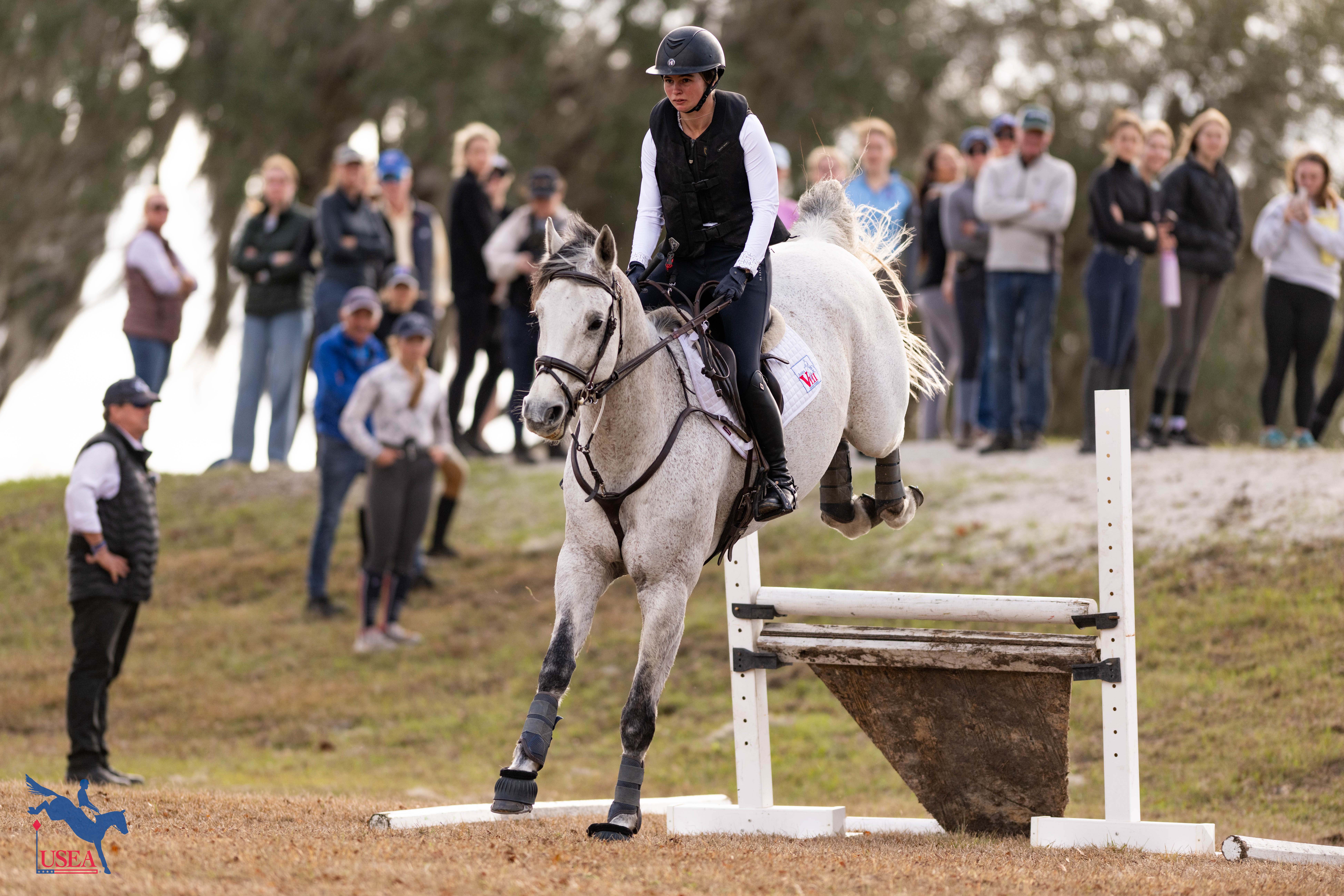
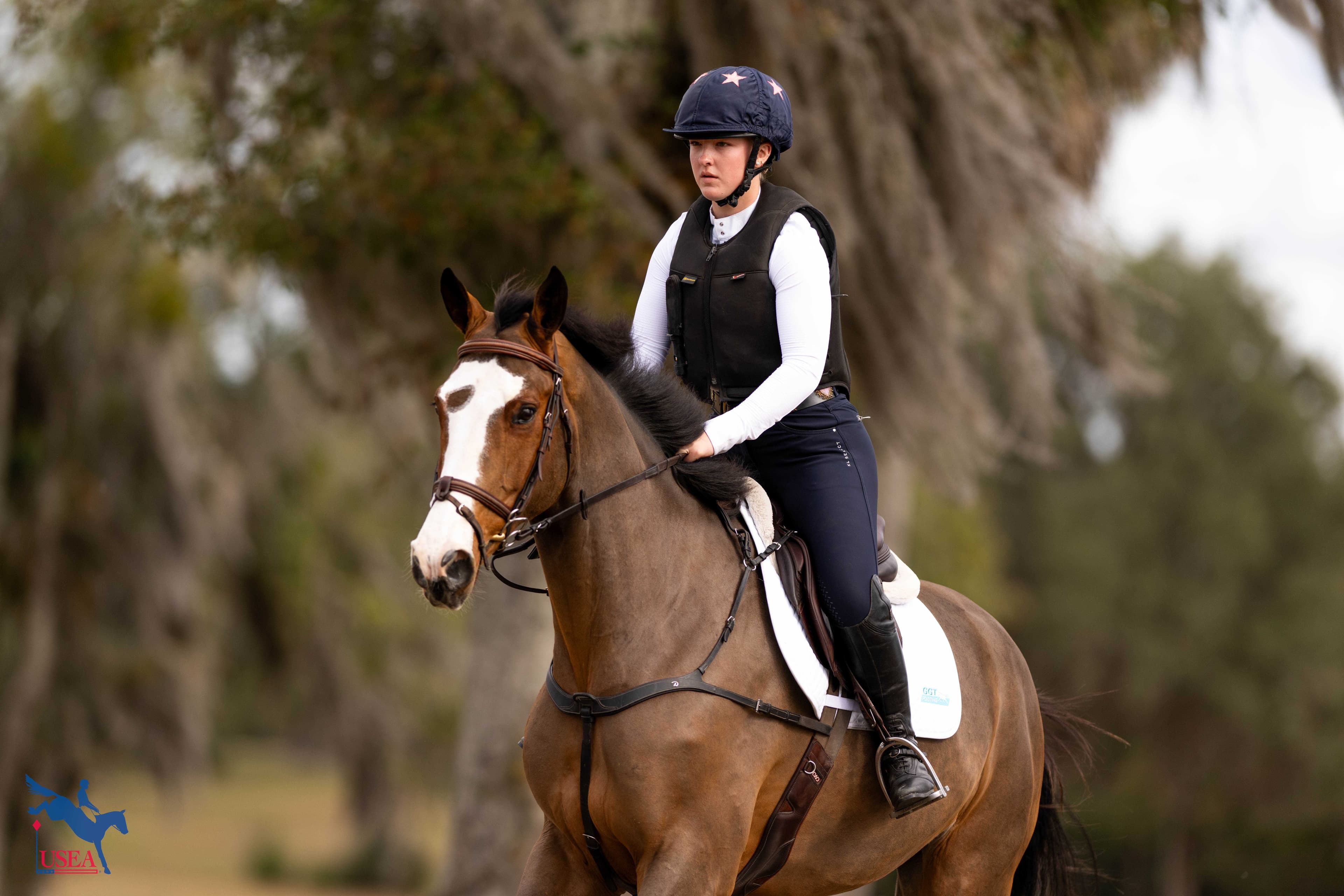
For Willford, breaking it down to one thing made a difference in every phase. “I think [O’Connor] made a big difference. Sometimes [my horse] gets a little bit excited, especially right now, because he's just coming off about a month vacation. So, [O’Connor] helped me find some ways to kind of use my body to relax him a bit and help guide him in the right direction, especially trying to get his head up a little bit, [so he’s] looking where he's going.”
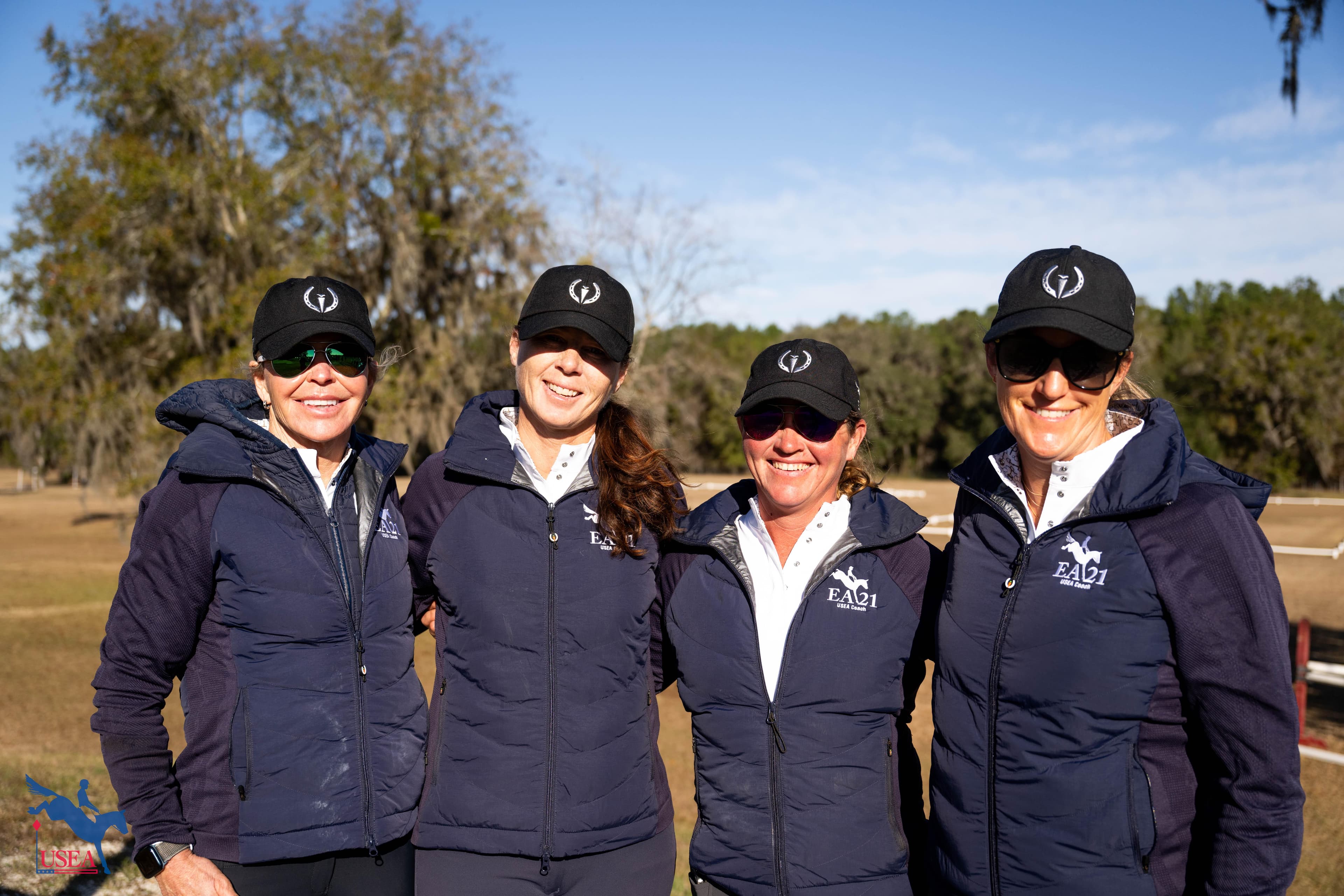
The pursuit of knowledge goes both ways. Five of the EA21 Coaches attended the week to support O’Connor in the instruction and to continue learning their own craft. From across the country, they came to support that endless pursuit of education.
“[O’Connor] always say little things that I think, oh, yeah, I need to remember to make sure I add that, or don't skip that. We all feel the same, you know, he'll turn to us and be like, Did I miss anything? You get so excited about trying to say everything you want to say,” Bec Braitling, 2025 East I - Morven Park Coach, said. “The other cool thing is, in these situations, it's an open forum—the kids are always asking so many questions. There's never a dull moment. But I'm really proud of what we've what we've put out this year.”
Ashley Johnson, who is preparing to enter her first year as an EA21 Coach, couldn’t find one moment that stood out. “The young ladies, they showed up with so much class this week,” she said. “They really were present. They were listening. They were learning. They were a really good, cohesive group. So, there wasn't one moment over another. I just was really impressed with how well they showed up and how invested they were in being here. I think that they're leaving the week with so much positive momentum.”
Emily Mastervich, 2025 West I - Twin Rivers Coach, remembered that education can go hand in hand with community. “[My] big takeaway is that even though everyone complains about the cold Ocala mornings we've had to endure, there must be something [about] everyone huddling around the propane heaters that brings everyone together,” she said with a laugh. “Because by the end of the week, it's such a cohesive unit between these girls. Maybe the cold mornings and the heaters and everyone getting really close during the lectures does something positive!”
The community, the simple fundamentals, and the repetition of knowledge has landed on one recipient. Caitlin O’Roark, who has attended National Camp every year since the program’s inception in 2022 and received the YETI Sportsmanship Award this year, has aged out of the program with some core beliefs. “My communication comes first with them, because how are we going to tell them to do the crazy things we do if they don't understand? And communicating in a way that makes sense [to my horse], so then it wasn't forceful. [When I started EA21], I think that I had no idea what I didn't know, and then the more I [learned], the more I felt like I didn't know. It makes me hungry; to learn more, to keep digging into it, and really study the horses. I love what [O’Connor] always talks about with watching how they think and watching horses communicate with horses. You can see them put on pressure and release pressure. So, I try to recreate that and communicate with them that way.”
Sincere and heartfelt gratitude to Sweet Dixie South for the use of the facility, to the catch-ride donors Emily Mastervich, Joe and Ruthie Meyer, Coco Ramkowsky, and Sara Kozumplik, to Dr. Lisa Casinella and Max Corcoran for their guest appearances, and all the sponsors of the EA21 Program for their generous support!
Quick Links:
- Meet the EA21 National Camp Athletes
- 2025-2026 EA21 National Camp Fast Facts
- Learn more about the USEA EA21 Program
About the USEA Emerging Athlete U21 Program (EA21)
The purpose of the USEA Emerging Athletes U21 Program (EA21) is to identify and provide consistent quality instruction to the next generation of elite event riders. The aim is to create a pipeline for potential team riders by identifying and developing young talent, improving horsemanship and riding skills, and training and improving skills and consistency.
The USEA Emerging Athletes U21 Program was launched in 2022 with a model of five summertime regional clinics taught by carefully selected USEA Eventing Coaches Program (ECP) coaches, leading to a winter national camp consisting of selected Young Riders from the regional clinics. Athletes who are 21 years or younger, are current members of their USEA Young Rider Area program, and are established at the Training Level or higher, are eligible to apply for the EA21 program. Click here to learn more about the USEA EA21 Program.
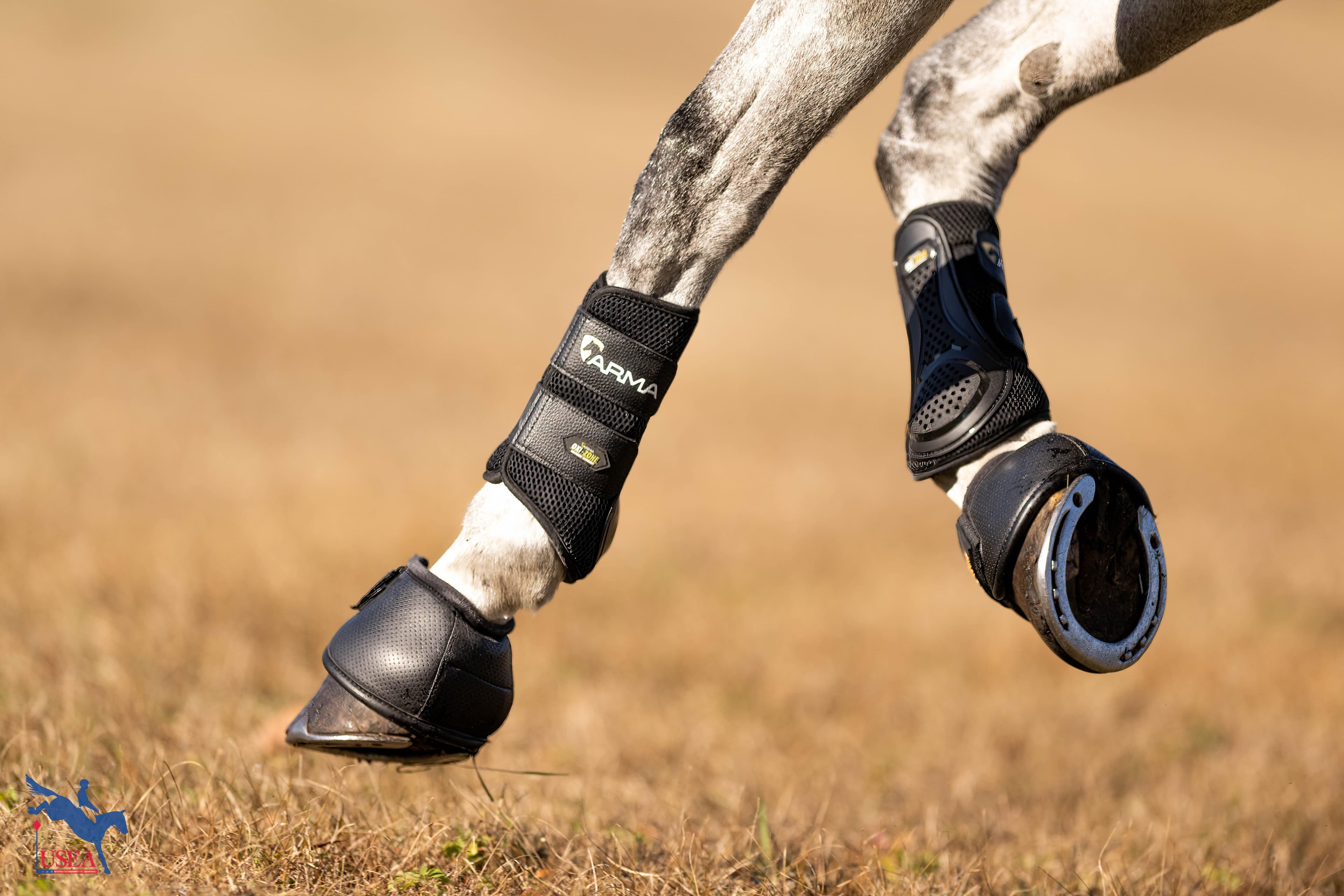
The USEA would like to thank ARMA, Bates Saddles, GGT Footing, Horse Illustrated, Kerrits, PulseVet, Ride iQ, Schneiders Saddlery, Sidelines Magazine, WeRideTogether, and YETI for sponsoring the USEA Emerging Athletes U21 Program.


Related Articles

World Equestrian Brands Continues Support of USEA Programs in 2026
The United States Eventing Association (USEA) is pleased to welcome back World Equestrian Brands (WEB) as a valued partner for the 2026 season. World Equestrian Brands will support multiple USEA programs and initiatives, including T...
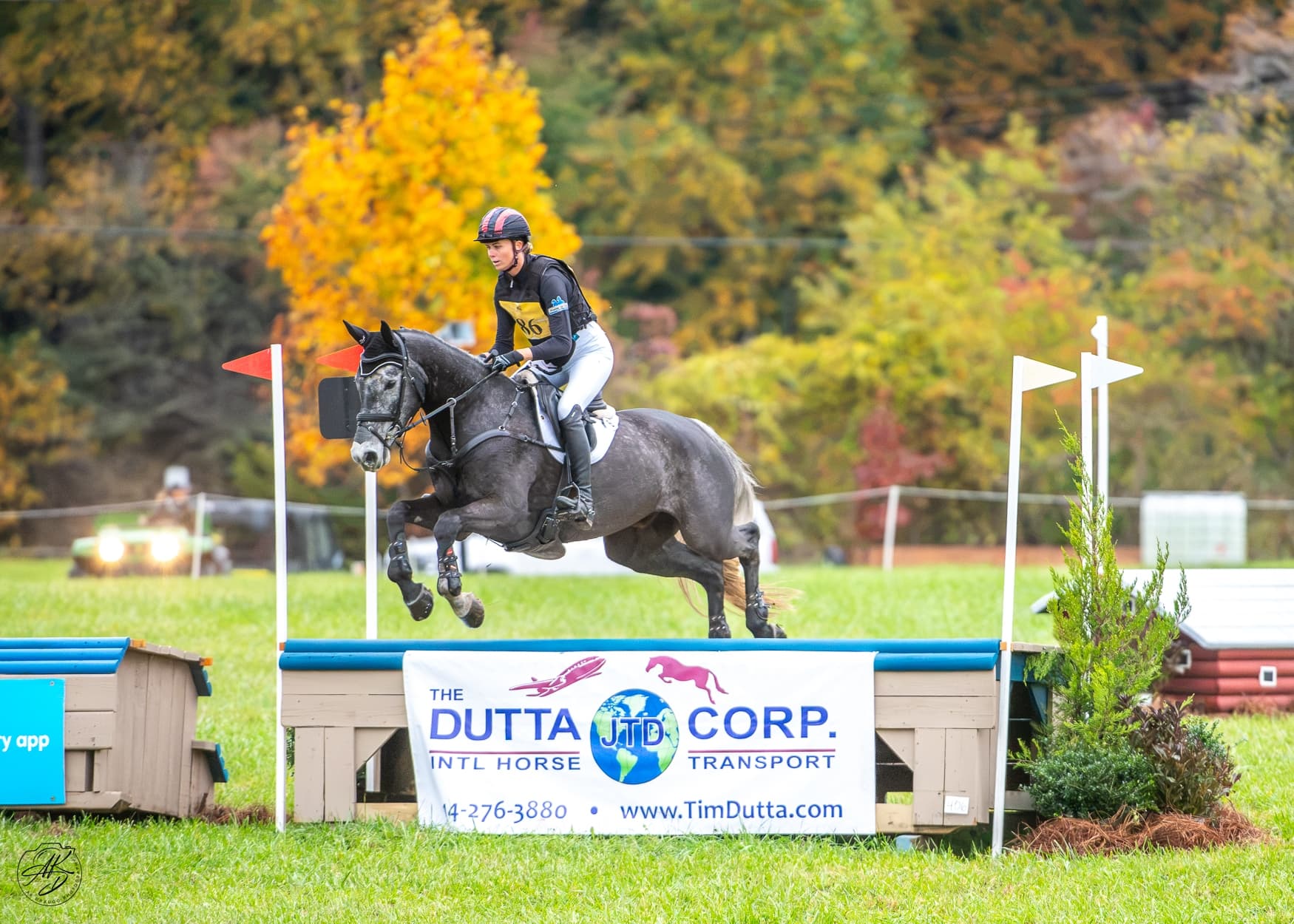
HSH Moves Like Jagger Takes Center Stage in USEA YEH East Coast 5-Year-Old Championship
It was a weekend to remember for Caroline Pamukcu at the 2026 Dutta Corp. USEA Young Event Horse (YEH) East Coast Championships at Fair Hill, as she followed up Friday's victory in the 4-year-old division with another championship title on Saturday, this time aboard HSH Moves Like Jagger. The 5-y...
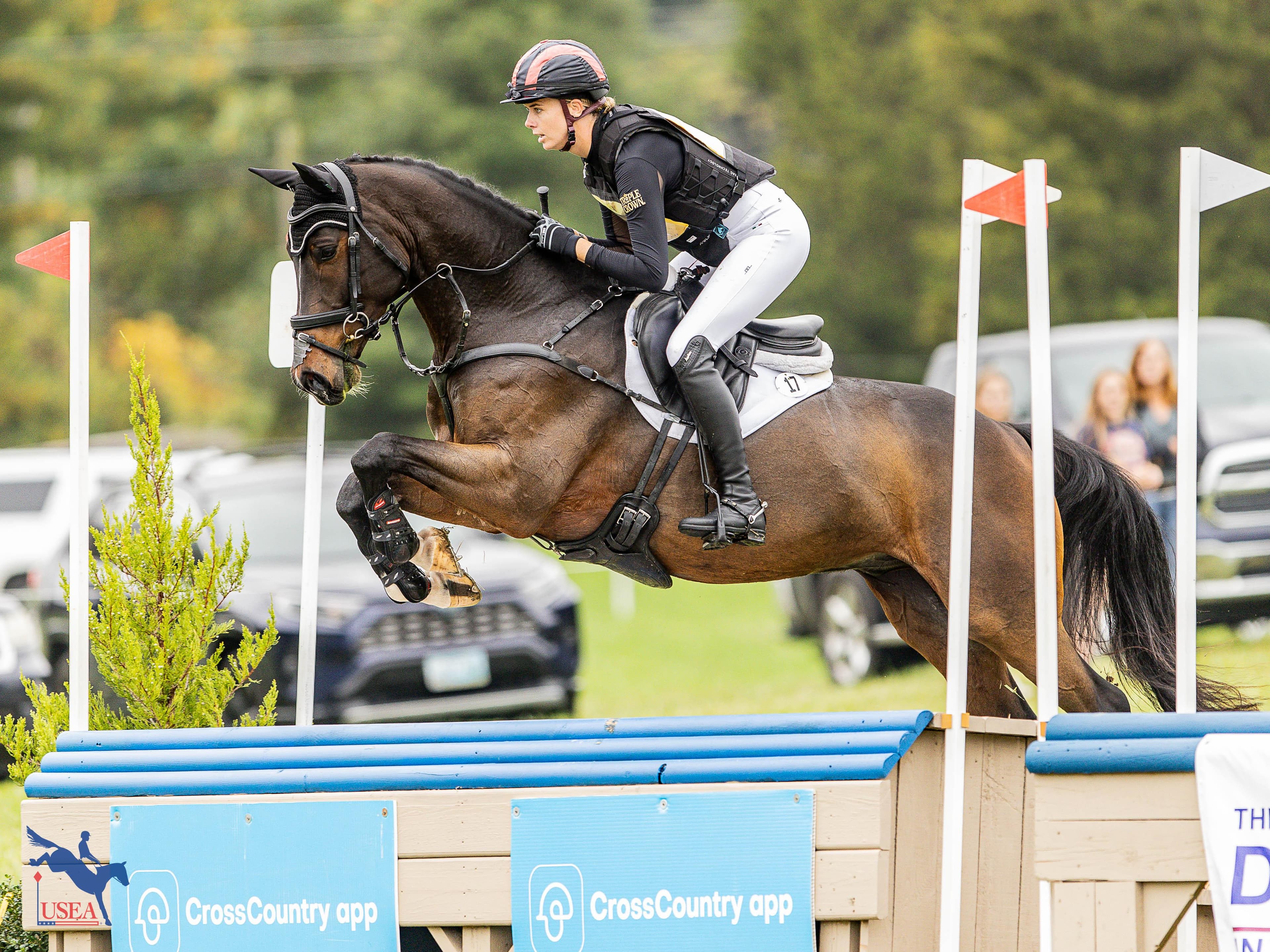
HSH Straight Arrow Hits the Mark in 2026 USEA Young Event Horse East Coast 4-Year-Old Championship
Caroline Pamukcu added another USEA Young Event Horse (YEH) Championship title to her résumé today at Fair Hill, piloting HSH Straight Arrow to victory in the 2026 USEA YEH East Coast 4-Year-Old Championship. The 4-year-old Irish Sport Horse gelding, owned by Pamukcu and Sherrie Martin and bred b...