Is Your Saddle in the Right Place? Here’s How to Check
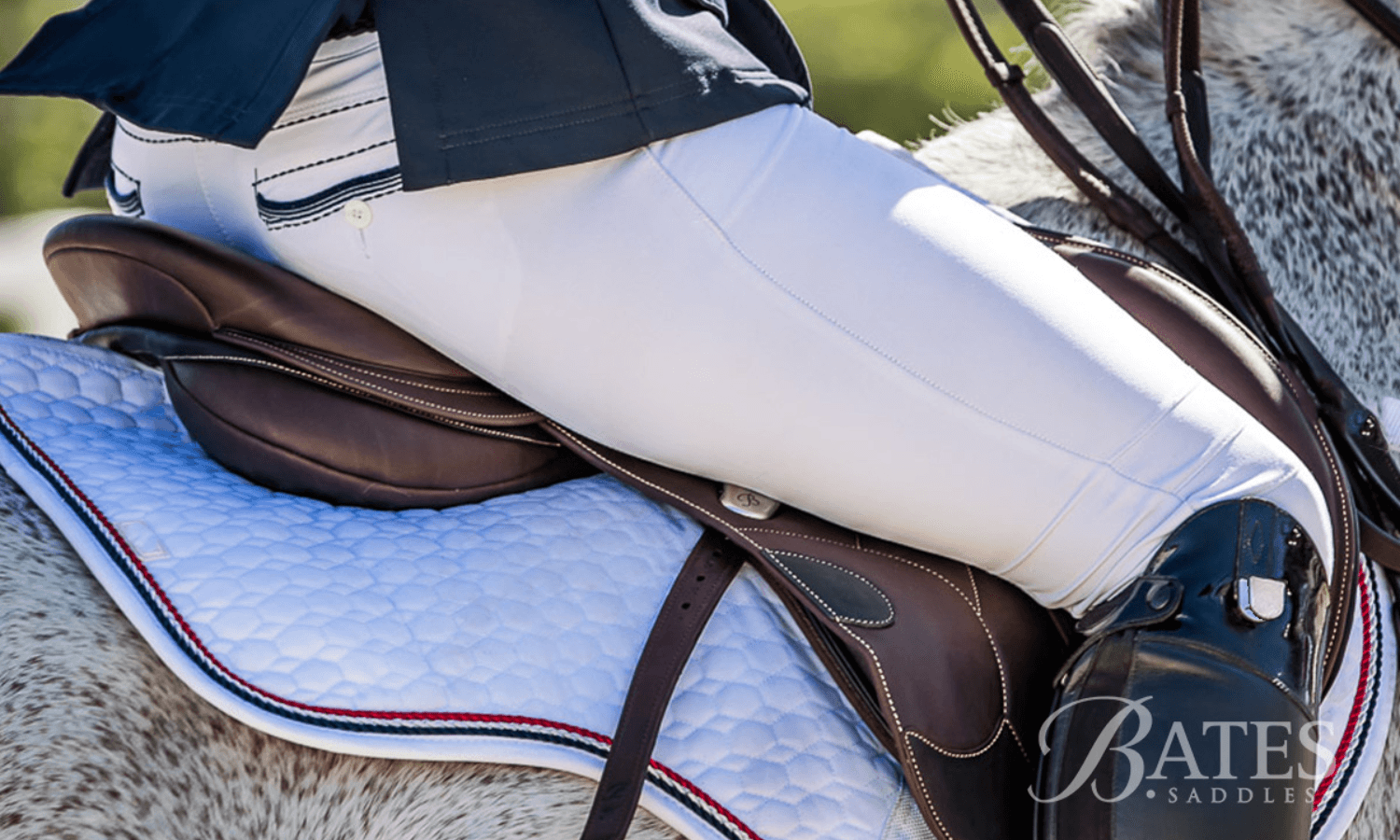
In our last article, together with Bates Saddles, the Official Saddle of the United States Eventing Association (USEA), we walked you through how to perform a routine health and safety check on your saddle because a well-maintained saddle is essential for both performance and comfort. Once your saddle is in top condition, the next step is just as important, making sure it’s correctly positioned on your horse.
Even with a perfectly fitting saddle, incorrect placement can cause discomfort, restrict movement, and compromise your effectiveness in the saddle. That’s why understanding where your saddle should sit is a vital part of your routine tack check.
Meet the Optimal Saddle Platform
There’s a specific area on your horse’s back where the saddle is designed to sit. We call this the optimal saddle platform. It lies behind the shoulder blade, to allow unrestricted movement of the front limbs, and in front of the last rib, to avoid placing weight over the horse’s lumbar region, which isn’t built to carry it. This area provides the most secure and biomechanically supportive foundation for both horse and rider.
How to Find It
To identify the optimal saddle platform on your horse:
- Locate the shoulder blade: Feel just behind your horse’s front leg and gently trace upward to find the rear edge of the scapula. This marks the front boundary for your saddle.
- Find the last rib: Place your hand just in front of the flank and feel for the last rib. From here, draw a gentle upward line on an angle, this gives you a rough guide for the saddle’s rear boundary.
Tip: Be gentle, especially with sensitive horses. Feeling for anatomical landmarks like the last rib can tickle or irritate them if not done carefully.
Placing Your Saddle Correctly
Once you’ve located the optimal saddle platform:
- Lower the saddle into position gently, don’t slide it forward from the hindquarters.
- Check the front clearance by running your hand down the front of the saddle panel to make sure it’s sitting just behind the shoulder blade.
- The saddle should lie evenly and in balance, with no excessive tilt forward or back.
What Happens When It's Too Far Forward?
If the saddle is placed too far forward and overlapping the shoulder blade, you might notice:
- The front of the saddle sitting too high, tipping your weight backward.
- Your leg position shifting forward, making it harder to apply precise aids.
- Restriction in your horse’s shoulder movement, leading to tightness or reduced range of motion.
- Subtle signs of discomfort: pinned ears, short strides, fussiness during tacking up, or uneven transitions.
- It’s easy to misinterpret these signs, especially since they can be quite subtle.
But they’re important signals that your horse may be telling you something’s not quite right.
A Final Check
Once you’ve positioned the saddle and tightened the girth, do one last check by sliding your hand behind the front panel and making sure the saddle remains behind the shoulder and hasn’t crept forward during tacking up.
Check out this informative demonstration of how to check your saddle is sitting correctly, with showjumper, eventer and Olympian Amanda Ross.
Keep Building the Bigger Picture
Correct saddle placement is a key part of your saddle-checking routine, and it goes together with overall saddle fit, rider balance, and horse comfort. This article was brought to you by our good friends and the Official Saddle of the USEA, Bates Saddles. Passionate about helping you and your horse perform at your best through innovation, education, and attention to detail. Follow @useventing and @batessaddles for more educational saddle related information.
Related Articles

USEA Recognizes Ride EquiSafe for Support of 2026 American Eventing Championships
The United States Eventing Association (USEA) is pleased to recognize Ride EquiSafe for its continued support as an Official Bronze Level Sponsor of the 2026 USEA American Eventing Championships (AEC), which took place August 25-30 at Th...
Skyler Norris Comes Full Circle with Advanced Debut at Ocala
For Skyler Norris, the Florida Horse Park in Ocala is more than just another competition venue. It’s where she first discovered the thrill of eventing as a little girl and where she’s spent countless weekends competing, learning, and chasing her dreams.
Official Corporate Sponsors of the USEA
Become a Sponsor