The Puzzle Comes Together at EA21 West Regional Clinic
Paso Robles, Calif.—June 17—When eventers are asked why they love the sport so much, one of the most common responses is the three different phases and the unique challenges they all bring. The tact of dressage, the quick thinking of show jumping, and the adrenaline of cross-country help make eventers the jack of all trades. But learning how to connect all of the disciplines and understanding how they help each other is a huge learning moment for any student of the sport.
For coach of the USEA Emerging Athletes U21 (EA21) West 1 Regional Clinic, Emily Mastervich, it was as good a starting point as any.
“In the first introduction day, they were all talking about how they wanted to learn better about how to tie their dressage work into their jumping phases, and that really did come through in the majority of them. We came up with a lot of solutions to things that they thought were troubling them prior to coming here and now they have a lot to take home and work with.”
The imagery she used to help bring all the pieces together was that of a puzzle. Each moment of imperfection was one section of the puzzle and it must connect to the next piece. A strong horse in the jumping who runs too much into the hand can benefit from canter-halt transitions on the flat. A calm horse who on the surface needs minimal direction in the dressage can make jumping a challenge by stopping.
“If you stay looking at those situations and really reading the horses and the riders, you can have so many positive results,” Mastervich said. “A lot of them came in saying that they had some areas where they were struggling, so I kept confirming to them that the fact that they popped up today was actually a positive, because then we could find some solutions.”
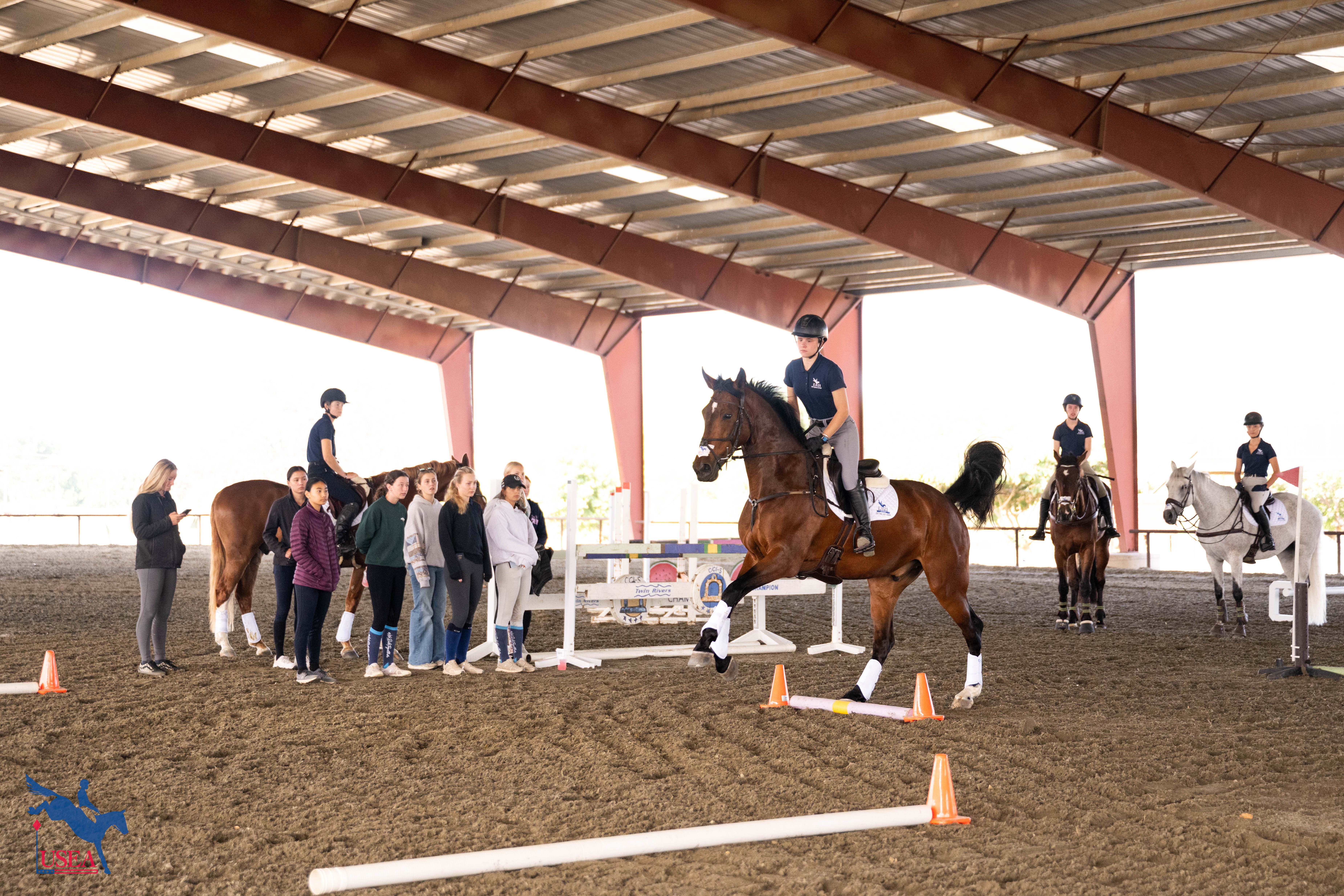
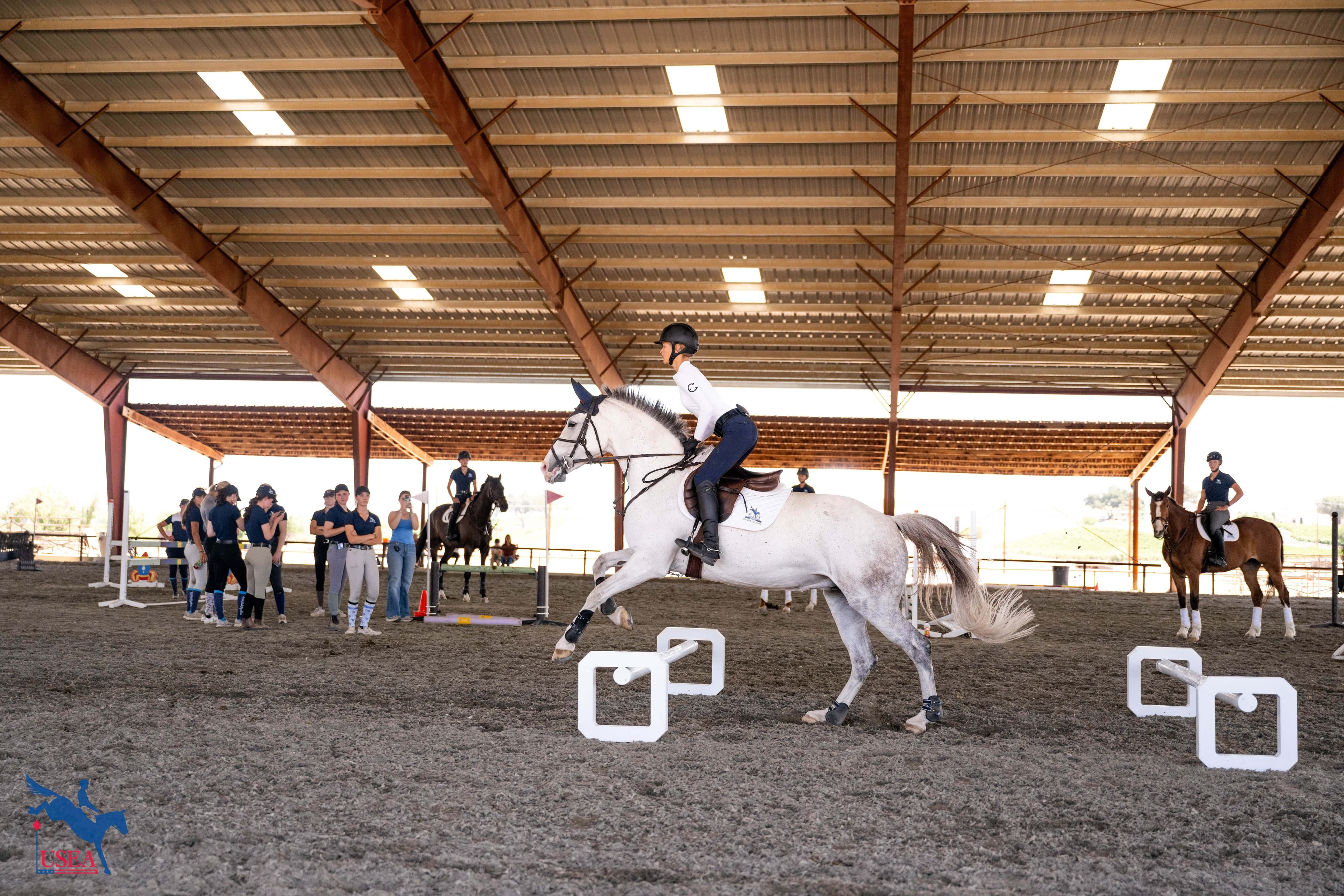
The basic schedule of the ride, after warming up, began with pole exercises. A series of three skinny poles with cones on each side set 21 feet apart served to sharpen up line accuracy and footwork in a gentle and forgiving line where challenges were low but education high. Once riders went through the line first to show their horses the question, they were asked to perform upward and downward transitions between or over the poles, testing their communication for the day. Then an additional line of poles set 33 feet apart was introduced where riders were asked to change the amount of strides between them to continue the rideability questions they had begun the day before on the flat.
From there, courses and mock cross-country exercises were introduced, putting all the pieces of the puzzle together with bending lines, transitions within the gait, and accuracy of track. As the questions grew harder, the challenges revealed where each combination struggled.
When those struggles arose, Mastervich took the time to ask each rider what they were feeling underneath them and what their reasoning was for their choices before offering suggestions to work through the tension. One unique solution she offered was to Megan Bebb, whose horse stopped at the fence when it seemed like everything was going well. Mastervich observed that Bebb made small changes to the approach too close to the jump and suggested that in that moment when she felt she needed to change the canter, to look at the ground and distract herself instead of communicating new information to her horse too close to the fence. The beautifully clean course she completed proved Mastervich’s individual solution to have been well read and well executed to help rebuild the trust between horse and rider.
“That was the first time I’ve been told to look at the ground in my whole riding career!” Bebb laughed. “It was really helpful! It took my mind off just the fence ahead and collectively prepare instead of staring straight on. This was my first time riding with Mastervich and she was very ‘learn by doing.’ She respects that you know your horse and would be very patient.”
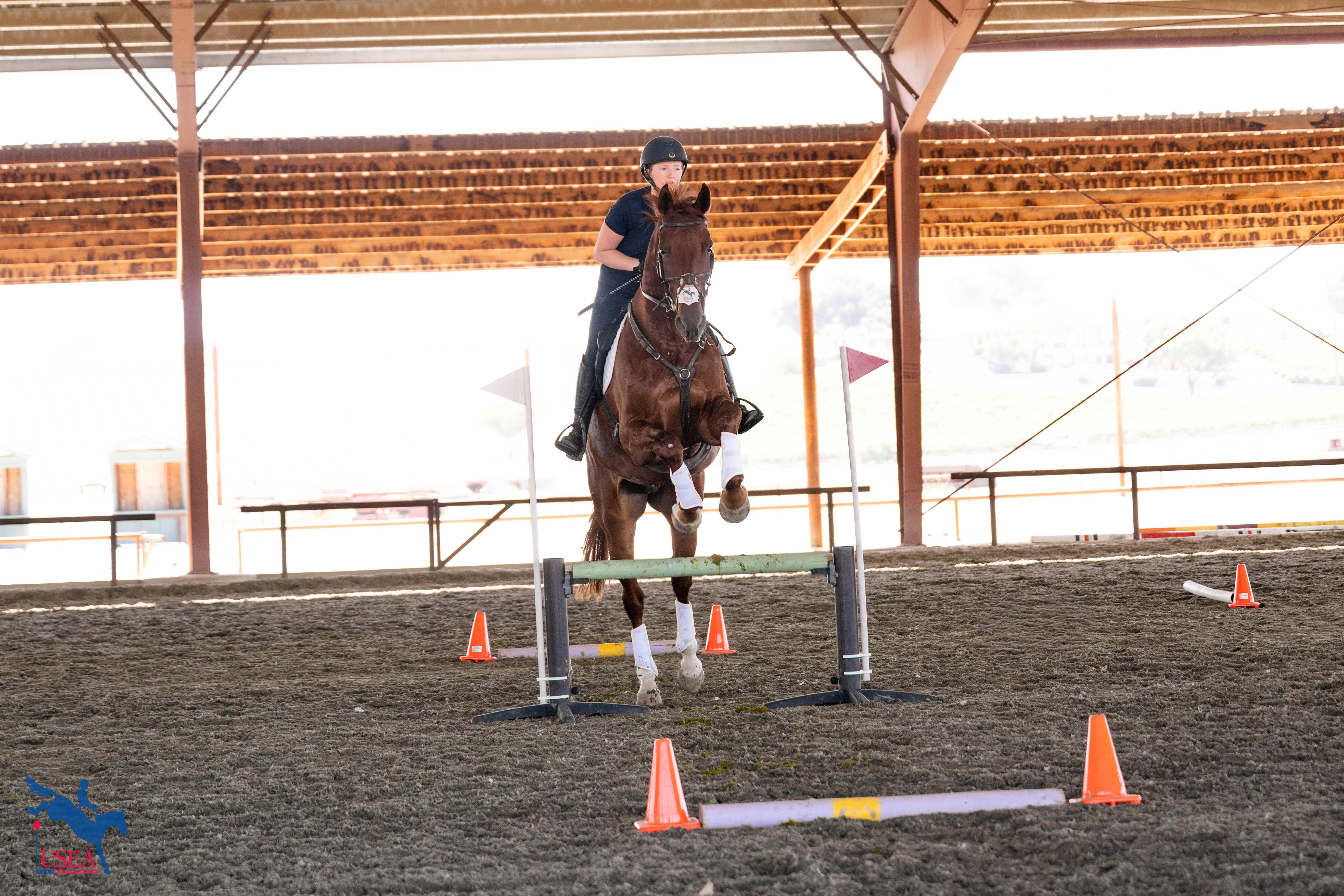
Olivia Keye, a first-time participant to the EA21 in California after having attended at Aspen Farms in Washington, applies to the program each year in the hopes of having a natural benchmark moment to check her progress with her horses and take advantage of the opportunity to learn new things. Emily’s guidance on the flat to use lateral work to help unlock her horse’s body and use his haunches more proved to be her puzzle piece in the jumping.
Camille Botoy, a returning participant to the EA21 program, found the whole environment to be inspirational. Her lessons in the flatwork and the jumping were marked with their own breakthroughs, but it was the community that made her excited to be returning.
“I make the EA21 part of my schedule because it’s really great to be not only with an upper-level trainer but also upper-level riders of my own age. All these girls are so confident and so well versed in what they do. It’s so amazing to be a part of the conversation with all these talented people!”
Having people to learn with can help not only in sharing experiences but also in sharing knowledge. Observing and studying on the ground helped first-timer Salma Kuhlmann take so much more out of the two days.
“During the clinic a big part was the lectures and I think that when riding, you learn a lot of things, but from the ground, seeing other people ride and how they responded to the teaching was super helpful. It helped me in my own riding and how to perceive instruction. Seeing other horses and other riders, it was helpful to incorporate some of that and see how it could help me and my horse.”
Being a part of a community not only helps with the learning but it also helps with the fun. Nadia Vogt, another returning participant to the EA21 after a few years away, found the impromptu evening games to have been beneficial.
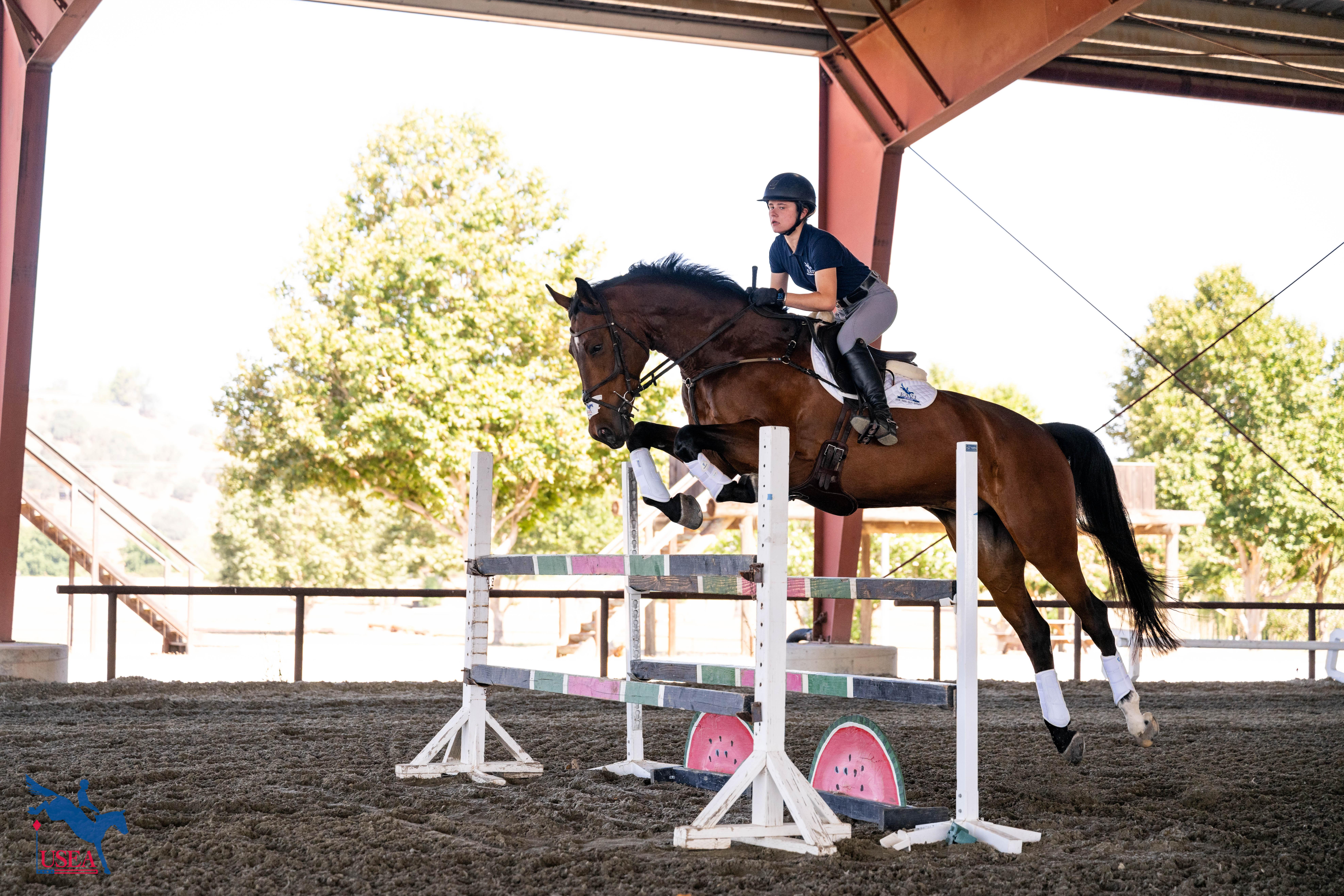
“[The saddle on the exercise ball] was really fun and helped me work on my position. I actually felt a huge change today in my jump saddle, getting that two-point position that would help my horse and me out on cross-country or in the show jump ring.”
Vogt was not alone in that. Anya Ostrovsky, a returning EA21 participant, learned a little more about herself in the ball exercise rather than about her body.
“My biggest non-riding lesson was discovering just how far my willpower and stubbornness can take me. When we were having the exercise on the yoga ball to practice our balance, I was the last to go and I was very determined to win because I am very competitive. Even though my legs kind of felt like they were going to fall off, I still stayed on as long as I could and I won.”
Many of the athletes found the ball exercise to be their biggest non-riding lesson of the week. Mastervich laughed when she heard that.
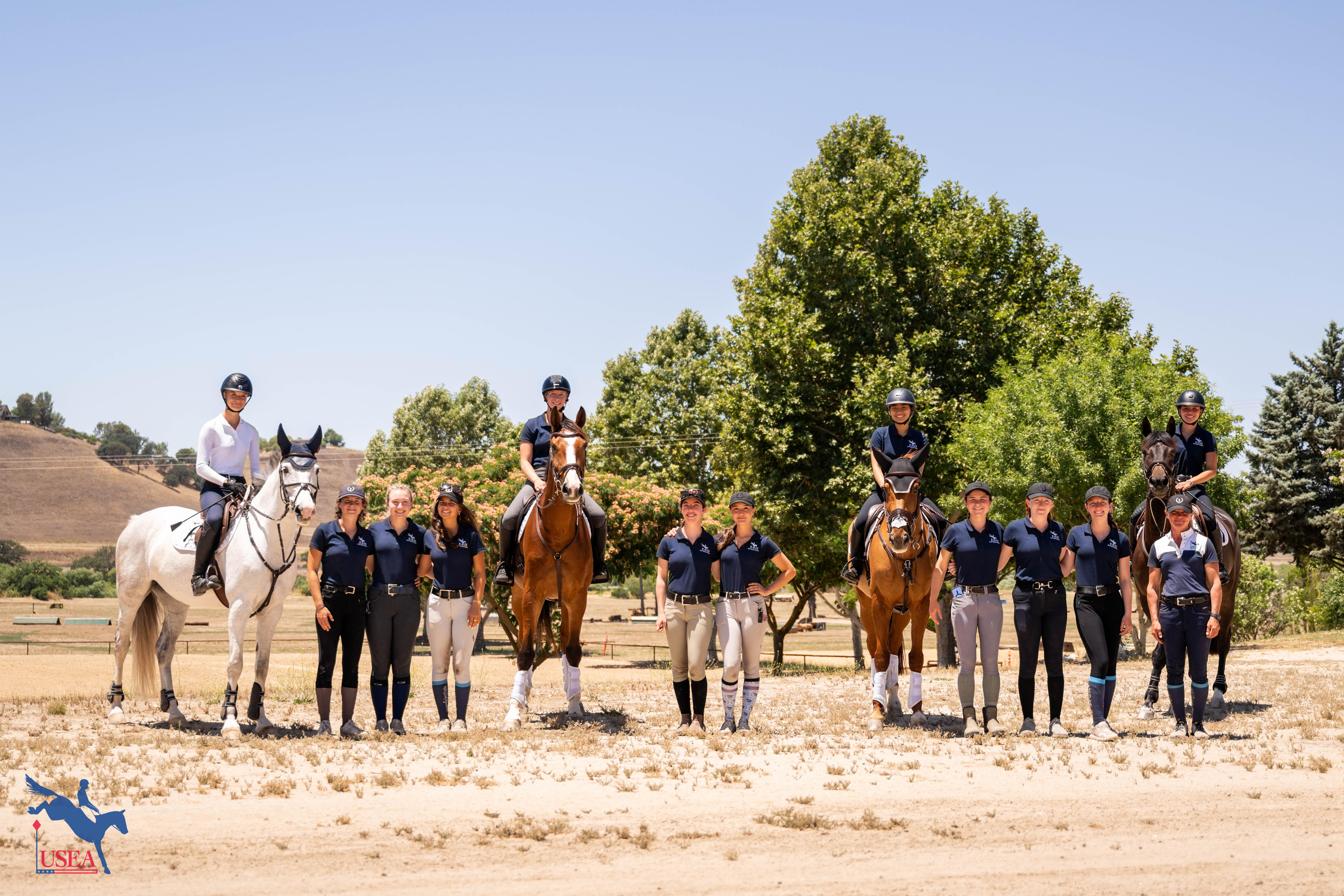
“There’s always something that you can take away, either from something that works or even when things don’t work, but also from the riders that come in from different programs and have different histories and paths to get here. I guess I would say that I learned that there are ways that we can work on our balance when we’re not on the horses! That was such a spur-of-the-moment group effort, right? A little bit of ingenuity, a little teamwork to find ways that we could challenge ourselves.”
A huge thank you to Teresa Harcourt for serving as the onsite coordinator at the USEA EA21 West I Regional Clinic and to Twin Rivers Ranch for generously hosting this year's clinic.
West I | Twin Rivers Ranch | Paso Robles, California
The Participants
- Lauren Bebb
- Megan Bebb
- Camille Botoy
- Paige Beauchamp Crandon
- Olivia Keye
- Salma Kuhlmann
- Fiona Lempres
- Soobin Oh
- Anya Ostrovsky
- Kylie Scott
- Nadia Vogt
- Maya Zechman
The USEA Emerging Athlete U21 (EA21) Program is entirely funded through donations. Led by the EA21 Committee, the program provides educational opportunities for young riders under the guidance of USEA Eventing Coaches Program (ECP) Certified Coaches, helping build the future pipeline of U.S. Eventing. Your support makes this program possible. Please consider making a donation through the USEA Foundation and selecting EA21 as your designated program: https://useafoundation.org/donate
Follow the USEA coverage on social media!
Facebook | Instagram | Threads | TikTok
About the USEA Emerging Athlete U21 Program (EA21)
The purpose of the USEA Emerging Athletes U21 Program (EA21) is to identify and provide consistent quality instruction to the next generation of elite event riders. The aim is to create a pipeline for potential team riders by identifying and developing young talent, improving horsemanship and riding skills, and training and improving skills and consistency.
The USEA Emerging Athletes U21 Program was launched in 2022 with a model of five summertime regional clinics taught by carefully selected USEA Eventing Coaches Program (ECP) coaches, leading to a winter national camp consisting of selected Young Riders from the regional clinics. Athletes who are 21 years or younger, are current members of their USEA Young Rider Area program, and are established at the Training Level or higher, are eligible to apply for the EA21 program. Click here to learn more about the USEA EA21 Program.
The USEA would like to thank ARMA, Bates Saddles, GGT Footing, Horse Illustrated, Kerrits, PulseVet, Ride iQ, Schneiders Saddlery, Sidelines Magazine, WeRideTogether, YETI, and 100xEquine for sponsoring the USEA Emerging Athletes U21 Program.
Related Articles
Fast Facts: 2026 USEA YEH West Coast Championships
As of this morning, 19 young horses are entered in the 2026 USEA Young Event Horse (YEH) West Coast Championships at Twin Rivers Ranch in Paso Robles, California, which take place this weekend, October 23–24. The field includes six 4-year-olds and 13 five-year-olds. Horses qualify for the West Co...
The VAP Series: Dressage Score Runner
While riders are focused on putting their best foot forward in the dressage arena, another important part of the competition is happening just outside the ring. Behind every promptly posted dressage score is a team of dedicated volunteers helping ensure that completed tests make their way from th...
USEA Recognizes Ride EquiSafe for Support of 2026 American Eventing Championships
The United States Eventing Association (USEA) is pleased to recognize Ride EquiSafe for its continued support as an Official Bronze Level Sponsor of the 2026 USEA American Eventing Championships (AEC), which took place August 25-30 at Th...