David "O'Connorisms" for Better Show Jumping: Part II
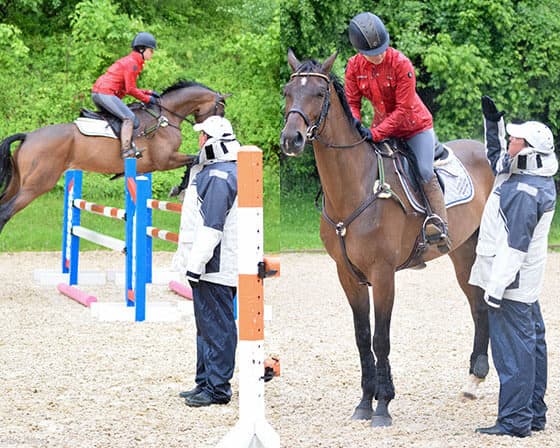
Last month legendary horseman and current chef d’equpie David O’Connor lead a USEA Instructors’ Certification Program (ICP) Workshop to prepare instructors for their upcoming level III/IV certifications. Hosted by Ms. Jacqueline Mars’ beautiful Stonehall Farm in The Plains, Va., O’Connor walked the group first through the fundamentals of show jumping, where he reveled many helpful tidbits and fun facts, which I am calling, “O’Connorisms,” that can be beneficial for riders of all levels. Catch up with Part One here.
Preparing For Your Course
What makes a show jumping course tricky? O’Connor says, “Courses are just a series of exercises one after the other. When you land off one, you are already doing the next one.” Riders often can do each of these “questions” the course designer asks independently of one another, but doing them sequentially makes for a trickier ride. “Being able to take the course apart and recognizing what canter you need [for each exercise] is the hard part. They can do each one of those exercises on their own, but now they have to do them all in a row.”
Quiz: Does your horse land farther away from an oxer or a vertical?
Answer: a vertical. Horses jump the same arc over both an oxer an a vertical. You can see that over a vertical, the pinnacle of the arc is directly over the jump, whereas over an oxer the highest point is the middle of the who rails. This leads your horse to land closer to an oxer on the backside, which is something to keep in mind when walking distances in your show jumping course. Consider the first jump in your line. If it’s a vertical, you may find you jump farther into the distance than expected, and it it’s an oxer, you may find the opposite.
Triple bar oxers take this theory even father. When horses jump a triple bar, they can end up landing a bit steep on the far side. O’Connor says as you progress up the levels, you will see course designers using this to challenge you, and it was seen even at the Rolex Kentucky Three-Day even this year. Competitors were asked to jump a triple bar followed by one stride to a vertical. O’Connor explained that this was a tricky line, and if riders were caught off guard by the triple and couldn’t quite make the distance, they were likely to take the rail on the vertical out.
Canter Control
O’Connor believes that six stride related distances are becoming a frequently used tool in the show jumping arsenal. “Six is the new four,” O’Connor commented. “You have to be more competent because you can’t see six strides, where in a four [stride distance] you can see that much easier.”
Think you shouldn’t fuss over your number of strides in a related distance line of six, seven or eight? Think again. O’Connor urges riders to own their distances throughout an entire course, which means owning and understanding your canter. “Riders should have the rhythm they want throughout,” he said. “What canter produces the six [strides]? What canter produces the seven? And the eight?”
One exercise you can do to get a more solid understanding of each of your canters, is to set up to jumps on any related distance. Go through on the measured distance first, and then come back again adding more strides as taking out more strides. You can use this to get more comfortable on the many canter gears you may need in the show jumping.
Straightness is Greatness
Straightness in your horse, O’Connor argues, is severely underemphasized in eventing. “Straightness is huge. I think most people bend way too much through the turns,” he explained. He continued that you should aim to keep your horse’s head and neck straight out in front of themselves. Not only will this keep you straighter to your fences, but also this idea of squaring up your turns will give your horse a clearer idea of where you’re going next. O’Connor says, “Go watch some Grand Prix Show Jumpers – the don’t come around the turns with a bend.”
Square up your turns, sit up tall and kick on!
Related Articles
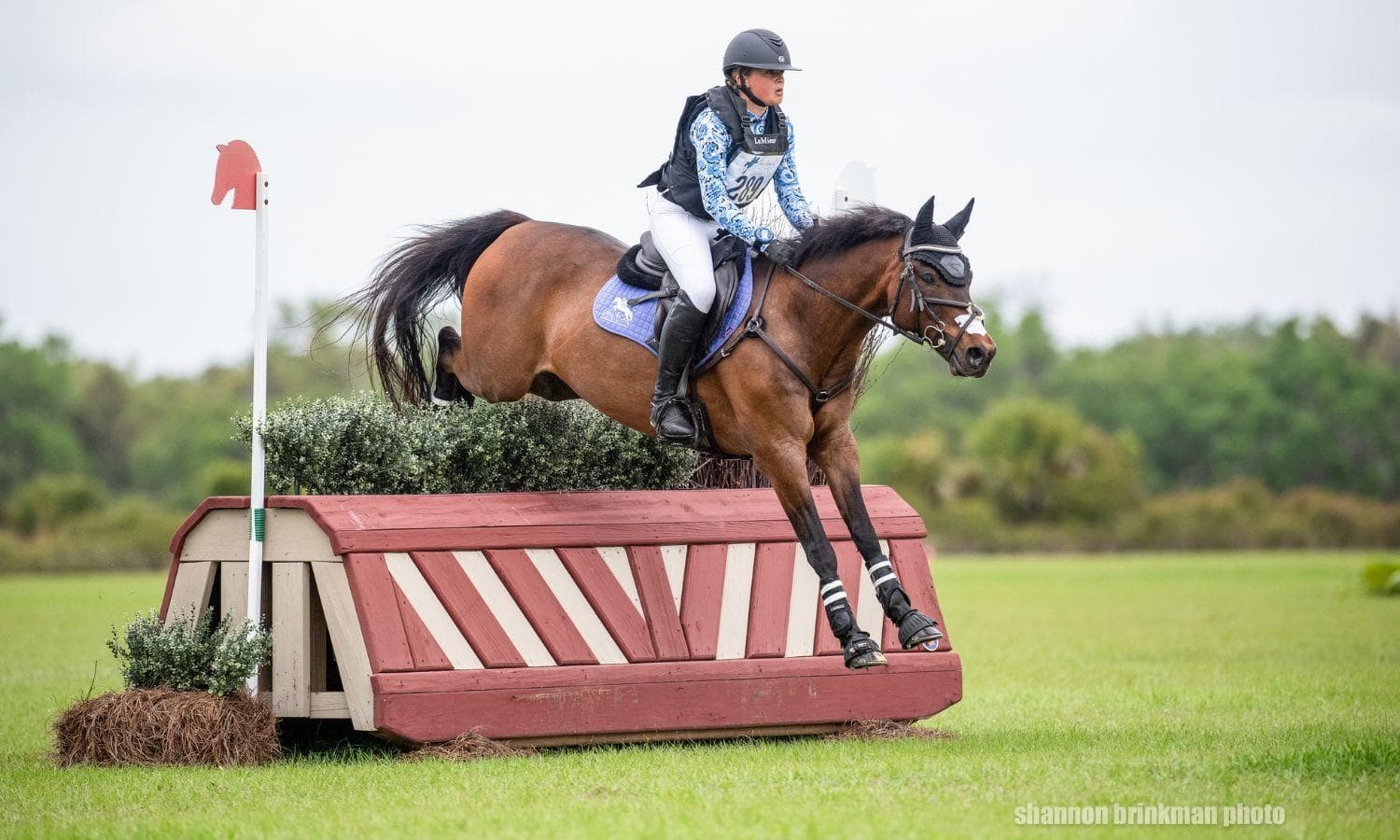
Borton Comes Full Circle at The Event at TerraNova CCI1*-S
It was a full-circle moment for Addison Borton when she competed in the CCI1*-S at The Event at TerraNova, held March 26-29 in Myakka City, Florida. Just 11 years old, Borton rode Way Too Marvelous BSR to fourth-place finish in her first international event—three years after her first ever USEA-r...

Athletux Expands Partnership with USEA for 2026
The United States Eventing Association (USEA) is proud to announce an expanded partnership with Athletux for 2026, building on a successful collaboration and introducing new educational initiatives alongside continued support of the USEA American Eventing Championships (AEC).
USEA Podcast #410: Let's Chat Cross-Country Course Design
Dive into the fascinating world of cross-country course design with Adri Doyle and Beth Perkins—two of the leading female designers in the U.S. They take listeners behind the scenes of what it really takes to build a course, from balancing challenge and safety to understanding how horses read que...