Convention 2009: USEA Safety Studies Updates
Review of USEA Studies
On Friday morning, eventers of all ages packed the conference room to listen to the Review of USEA Safety Studies. 2009 USEA Hall of Fame Inductee and USEF President David O’Connor delivered a detailed analysis of trend tracking including number of accidents and rotational falls. Suzanne Smith, PHD, from University of Kentucky, followed to address developments in frangible pins and fence technology. Next up, John Staples provided in-depth review and brief history of the GPS Speed Study, while Drs. Catherine Kohn & Mark Hart wrapped up by reviewing the Cardiovascular Research, including the recent study conducted at the Plantation Field Horse Trials in September.
The following are summaries of what each speaker covered:
David O’Connor -- Tracking and Analyzing Data:
After last year’s Safety Summit in Lexington, Kentucky, it was determined that with more detailed information about when and where falls occur, more tools would be available to help determine why the falls occurred an how to prevent future accidents. Thus arose the initiative to gather past information for analysis and more closely track trends at every recognized event each year.
“Frangible technology isn’t the entire answer,” O’Connor said. “The idea behind that is to lessen the severity of someone who’s already in trouble. You’re trying to minimize what happens. The number one priority is to stop people getting in trouble. Number two is, if they get in trouble, can we reduce the severity of the fall.”
O’Connor went on to share horse and rider fall statistics from 2009. Rider falls rendered a 3% chance of resulting in serious injury while horse falls showed a 17% chance of sustaining injury. 33% of falls were rotational, with the biggest difference showing between Novice and Training. But overall, the numbers were down from 2008.
“Are we preparing our horses and rider better?” O’Connor questioned. “All numbers are dramatically different this year as a whole sport. That shows that we’re actually making progress. For the health of the sport, it shows we’re still pretty good and people still want to play. What trends do we have here? Can you track classes of people? Can you track courses, etcetera?”
Suzanne Smith -- Frangible Pins and Safe Fence Research:
Dr. Smith has done extensive research and practice in frangible technology. “It’s a long process in many different ways,” she began. “Certainly this year, there were some very important changes and philosophies that worked around the world, which have led to more technology being made available. Now we’re getting closer to more answers and different thinking. I think we’re finally over the hump.
“This work is really the product of a lot of people involved,” she went on. “including support from the USEA and USEF. The overall objective of the effort is to evaluate frangible and deformable jump designs for improve rider and horse safety.”
She explained and displayed detailed graphs, photos, and videos demonstrating how force is a key factor in designing such devices and verified findings with lab & field-testing.
- Frangible Pin technology is working in the lab and in competition. As the horse’s weight and the force of his forward momentum causes pins to break, the rail drops down which changes the pivot point and path of motion and prevents his body from going into a cartwheel as the rail drops down.
- Early research was conducted using a “crash test horse”.
- The frangible pin activates when the horse’s weight produces enough downward force.
- Field research produced algebraic and video data for over 1600 contacts (impacts).
Dr. Smith showed the types of field and lab testing devicees used including pendulum tests, instrumental sledgehammers, and the use of the foam-core log substitute, Prolog.
She also revealed a prototype hinged gate jump fence, which folds down upon surplus impact using frangible pin technology and displayed video footage captured with a high speed camera illustrating how the gate is activated upon impact.
“We have come up with a lot of information about different products available for safety devices and are gather a lot of facts,” Dr. Smith said. “We are still compiling information about different products and are considering a web-based form where developers, designers, and builders can enter data.”
In 2010, testing and research will continue focusing on finding practical solutions and considering horizontal and vertical forces. A Strap-And-Snap concept is in development as well as frangible table concepts. Our research will continue to be done in cooperation with British Eventing researchers and project collaborators, both past and new.
John Staples -- GPS Speed Study:
John Staples next took the podium to address the GPS Speed Study. He described how data was collected and analyzed in 2009 including recording absolute and relative speeds measured on cross-country during competitions. Some data has demonstrated that actual speeds are not necessarily equal to the optimum speed of a course.
The field data has been collected using GPS watches and radar guns to measure speeds. The devices take a reading from a rider each second they are one course. “We can track their location on course and their elevation,” he said.
Information collected from the GPS watch is download onto a web-based system and overlaid on a Google Earth map to illustrate and track the actual ride of the horse as it goes across the country. “With this, we can start to do more analysis of what’s going on on-course,” Staples said. “We can go back and plot the jumps and see how fast they’re going on the approach, etcetera.”
He went on to comparing data retrieve from long format versus short format events. The variance of speed was significant. “ On the longer courses (long format), maybe it’s a fitness issue,” he proposed. “Speeds were more average; not erratic. Speed can affect the shape of the jump. The shape of the jump can affect the speed of the jump.
“We’re starting to pick out the trends of riders and courses,” he went on. “Courses are starting to show a signature. They seem to increase or decrease their speeds at the same point. This shows how the horse’s energy is being used across the courses.”
While Staples assured the study will continue, he also said he would need more watches and volunteers as the study plans to incorporate heart rate data for horse and rider fitness info. It will also become increasingly important to have access to the Internet in the field for data tracking. The ultimate goal is to develop a complete telemetry system to measure speed and heart rates during competition.
As of now, data seems to reveal that, “huge variances in speed can have a big affect on the fatigue of the horse.”
Catherine Kohn & Dr. Mark Hart -- USEA Cardiovascular Research: Dr. Catherine Kohn began to address the Cardiovascular Research with some raw data collected between 1996 and 2008:
- 51 horse fatalities
- The average age of horses that died from a cardiovascular issue was 13.7 years.
In analyzing the frequency of deaths throughout this time period, it was easy to see an escalation over the past few years. 38 fatalities occurred on cross-country, with 5 occurring at the end of the course, which is why the study’s focus will remain on the cross-country phase.
“Is there some medical issue or something that we’re doing that’s creating medical issues in these horses,” Dr. Kohn questioned.
She went on to emphasize the importance of obtaining Necropsy results from affected horses. “We only have a limited number of necropsies to work with,” Dr. Kohn said. “The data we hope to collect can predict the type of injury by the type of fall the horse has.”
Perhaps the most poignant part of the presentation was when Dr. Kohn thanked 2009 USEA Hall of Fame Inductee Denis Glaccum for offering his competition and riders to the experiment at Plantation Field Horse Trials this fall. Glaccum responded by standing and pledging $1000 to the study.
While the study rendered data which is currently being analyzed, there are other factors that need to be considered so more accurate data can be collected in a more stable environment:
“The generators used to power the equipment are very loud which made it difficult to listen to heart and lungs,” Dr. Kohn said. “We need bigger tents and better design to mount EKG on horses during cross-country.”
Preliminary results from the Plantation Field study showed no dramatic heart arrhythmias before and after cross-country. “It appears there aren’t big structural heart changes in our horses,” she went on. “What’s going on during the course, though, we don’t know yet.”
Dr. Kohn wants to bring the study to the 2010 Rolex Kentucky Three-Day Event. “We would like to study the highest levels of horses that are doing the most work,” she said. “The work has just begun. We need your help to gather info.”
Phillip Dutton contributed to the presentation: “A lot of time we rely on other sports to help us with this knowledge. The information we’re gathering is pretty unique to our sport. Maybe it’s something we can find that some horses aren’t suitable for upper-levels. All of these studies will help.”
Finally, Hank Rothwell, outgoing Chair of the USEA Endowment trust, took the podium and offered to match the amount of contributions given during the duration of the Convention. By Sunday, approximately $11,000 was pledged to this study.
“From where we were two years ago, these programs are up and running,” USEA President Kevin Baumgardner assured as he returned to the podium to wrap-up the meeting. “They’re going to bring lots of ideas to make the sport better.”
USEA Safety Program Pledge Cards are available here
Related Articles
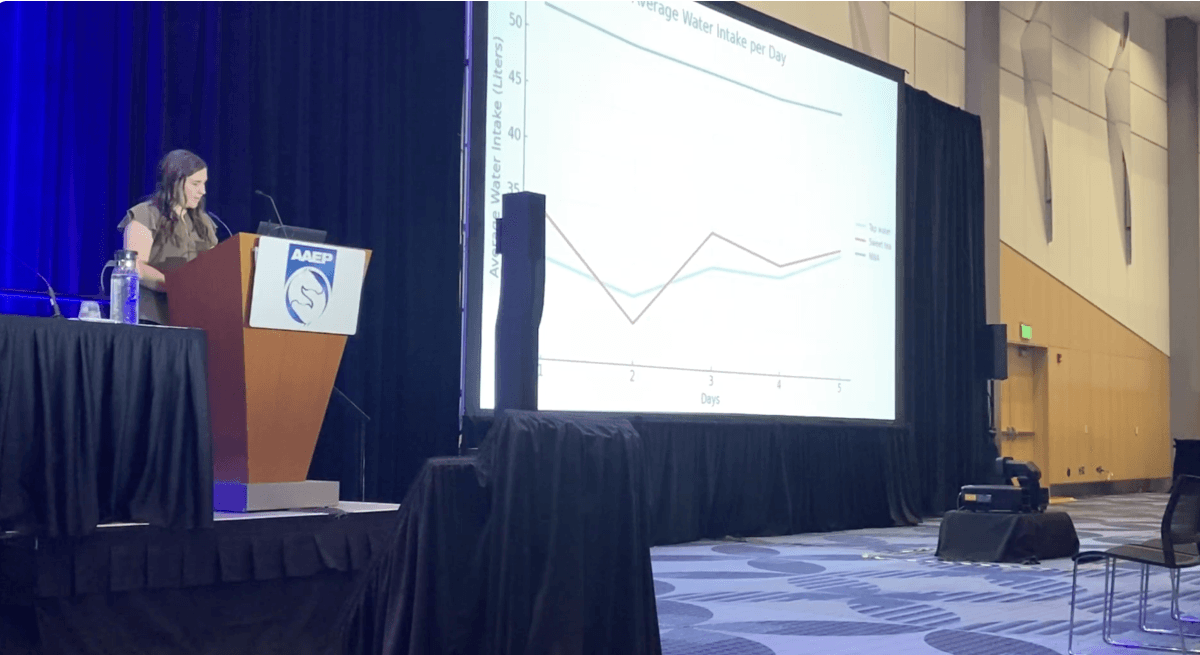
A Novel Water Additive Increases Voluntary Water Intake in Healthy Horses
The simplest changes can mean the difference between drought or drink. Keeping horses hydrated in times of stress – namely travel, hospitalization, or showing – can be challenging. This is furthered by the fact that when horses experience water losses through marked sweating or diarrhea, they may...
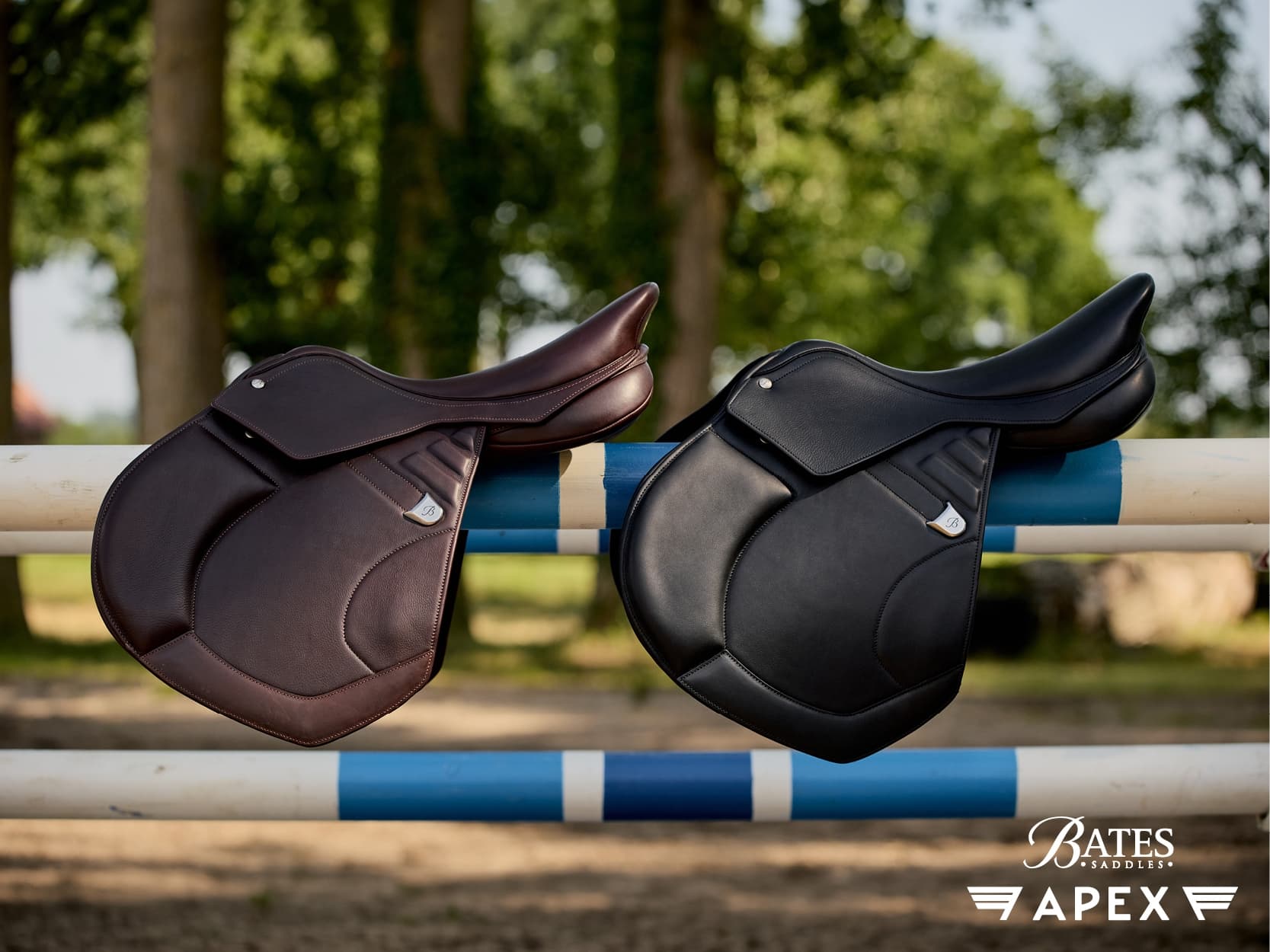
Bates Apex: Revolutionary Jump Saddle Launches with Patented Technology
Bates Saddles today launches the Bates Apex, the biggest evolution in jump saddles, featuring patented FlapLock Technology that eliminates flap movement and actively po...
In Memoriam: Roger Secrist
The USEA sends our heartfelt condolences to the friends and family of former USEA Board of Governors member Roger Secrist. Secrist played a pivotal role in founding of the Carolina Horse Park (Raeford, North Carolina) and spearheaded several influential initiatives for the USEA during his terms o...