2014 USEA Annual Meeting and Convention: Saturday
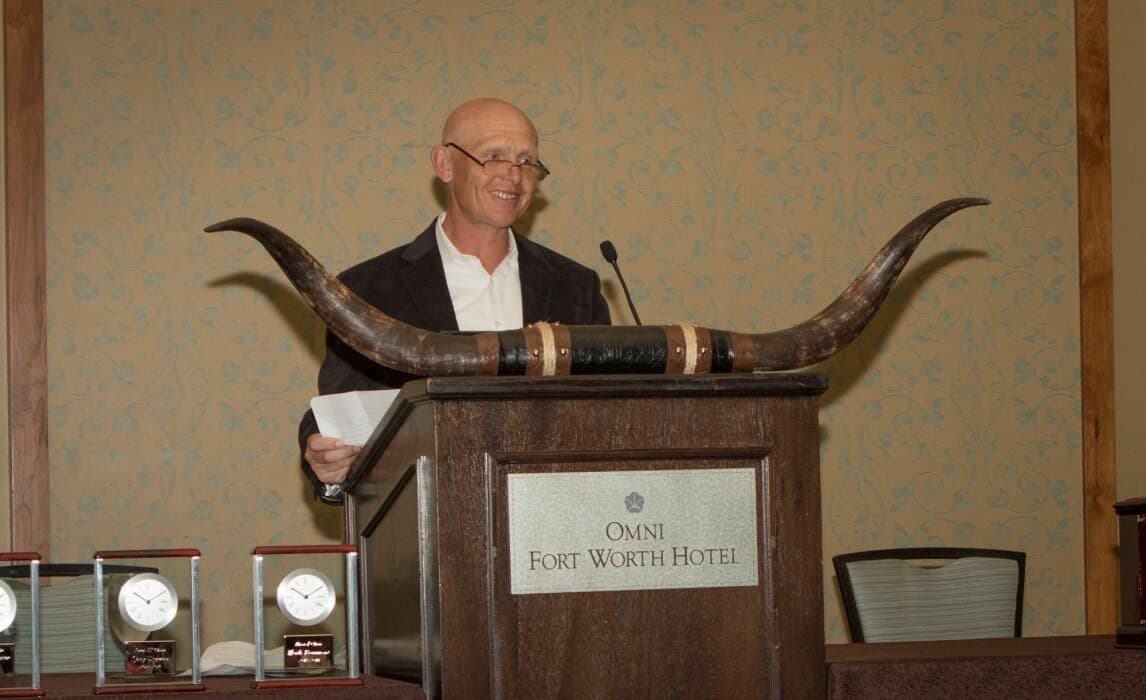
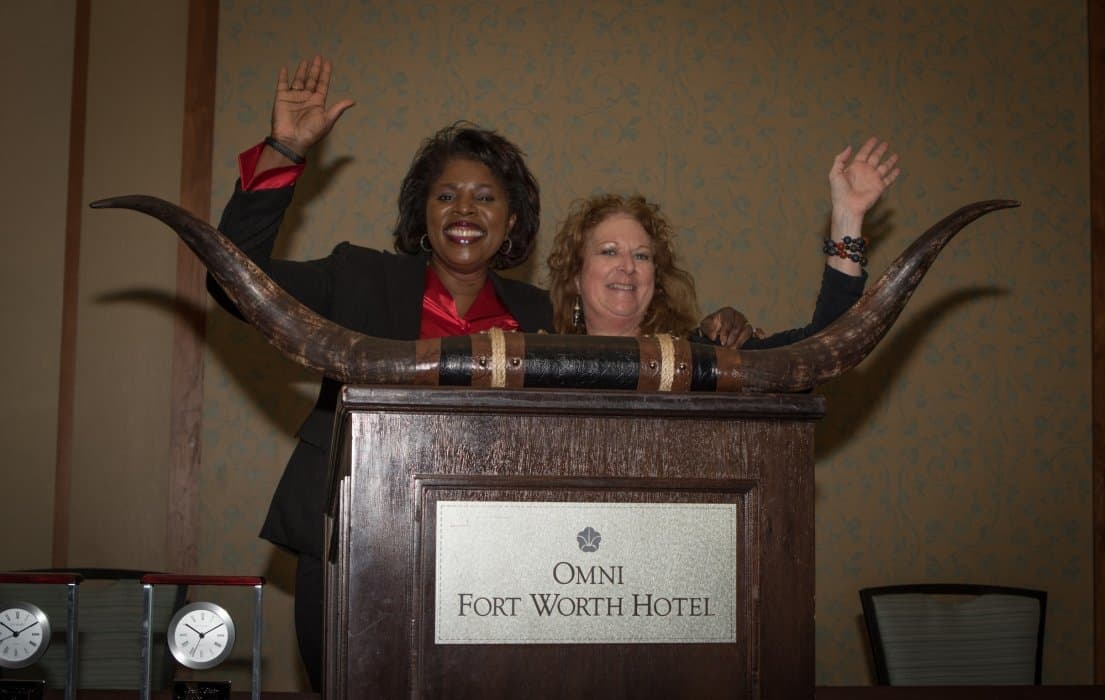
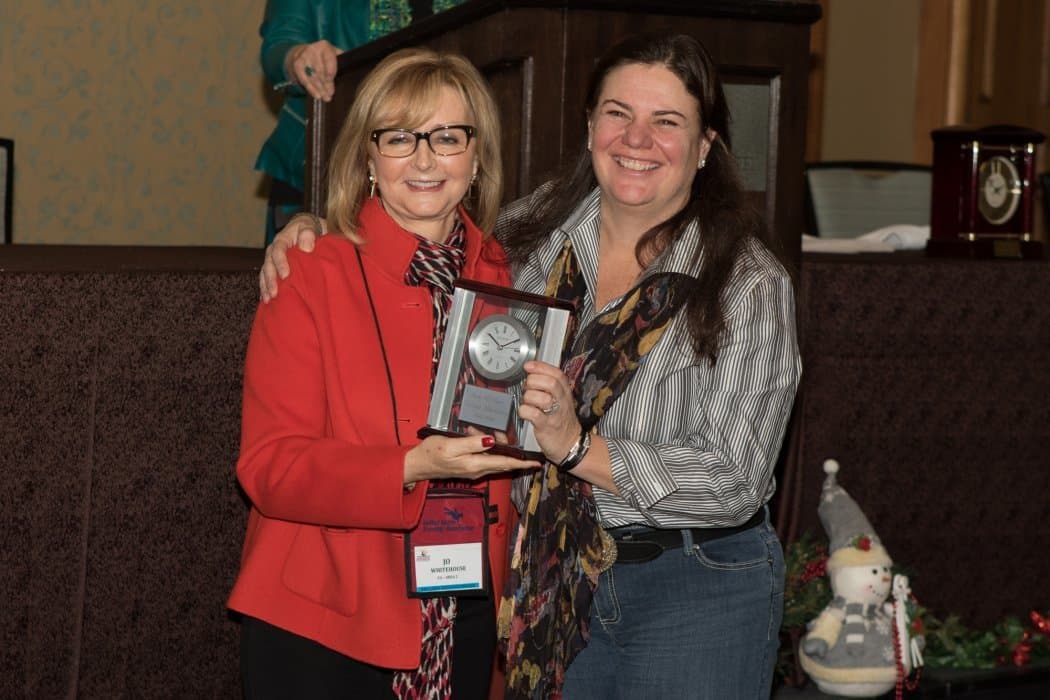
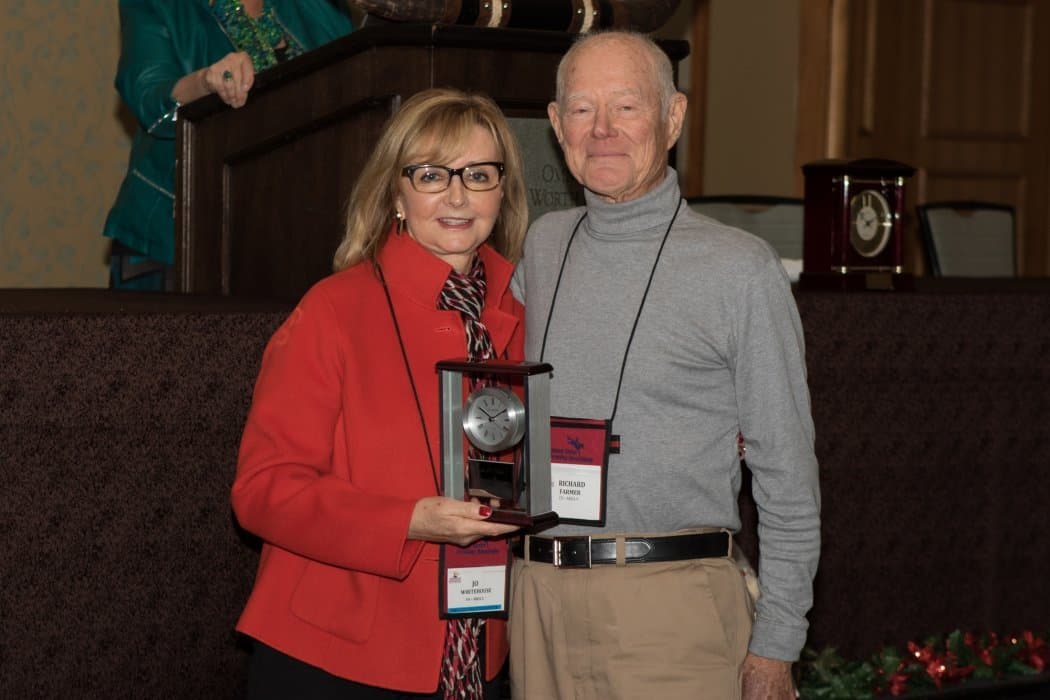
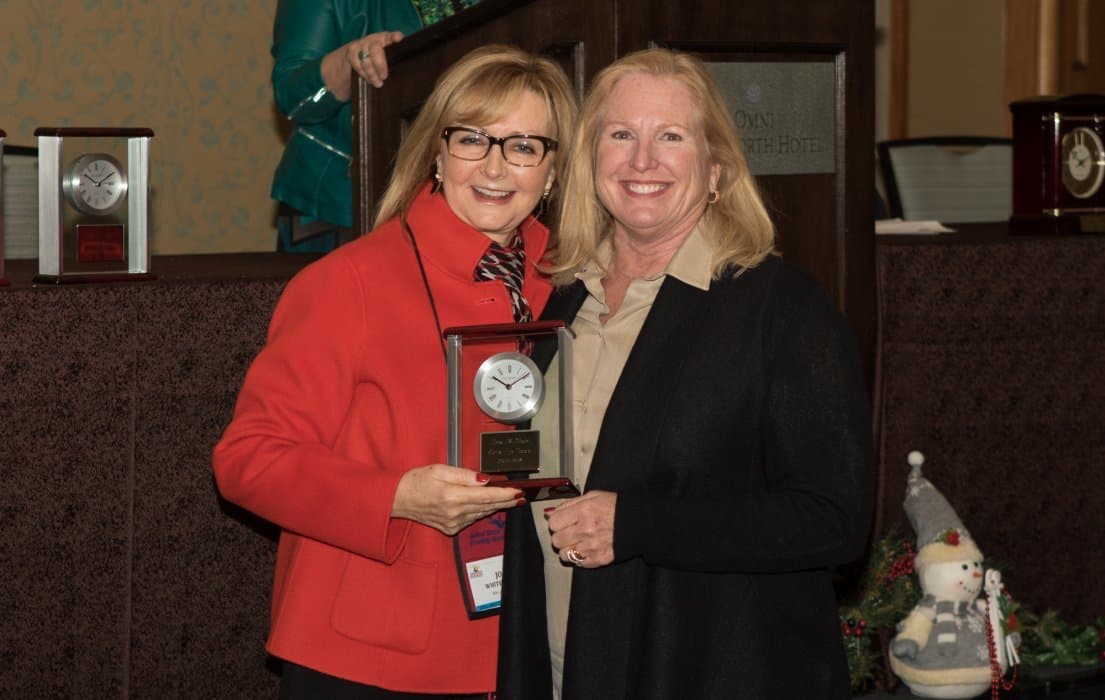
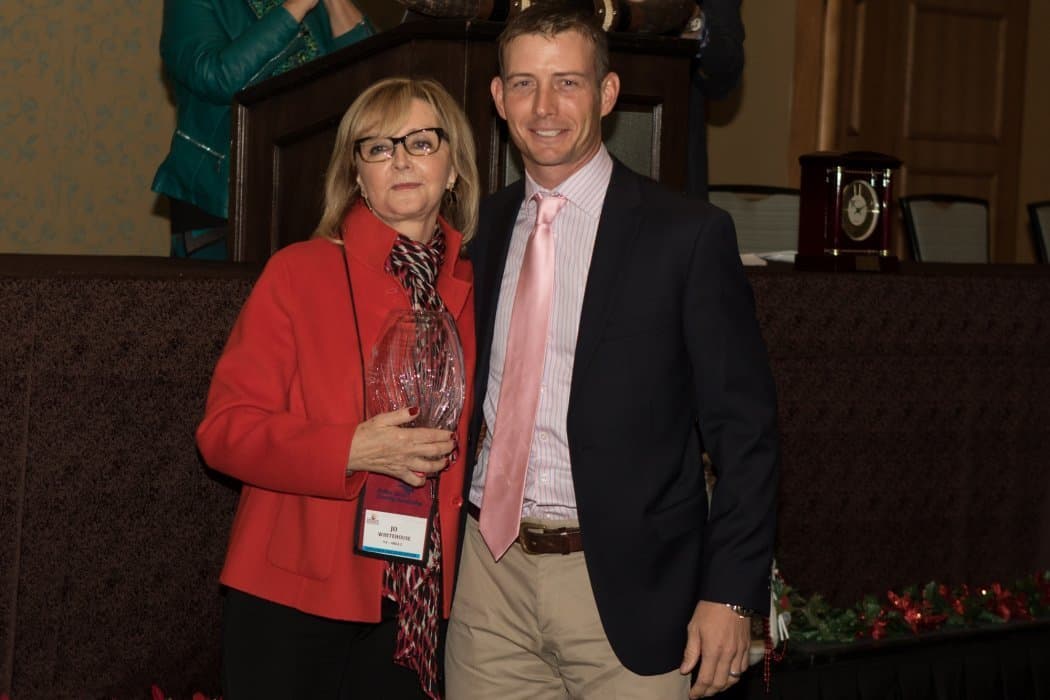
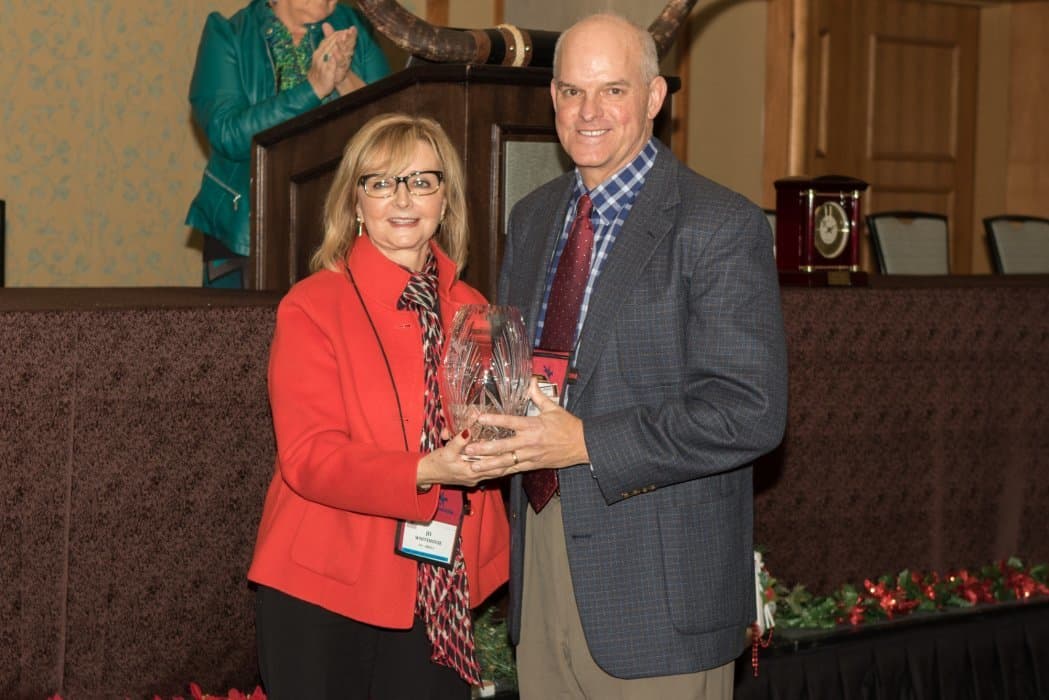
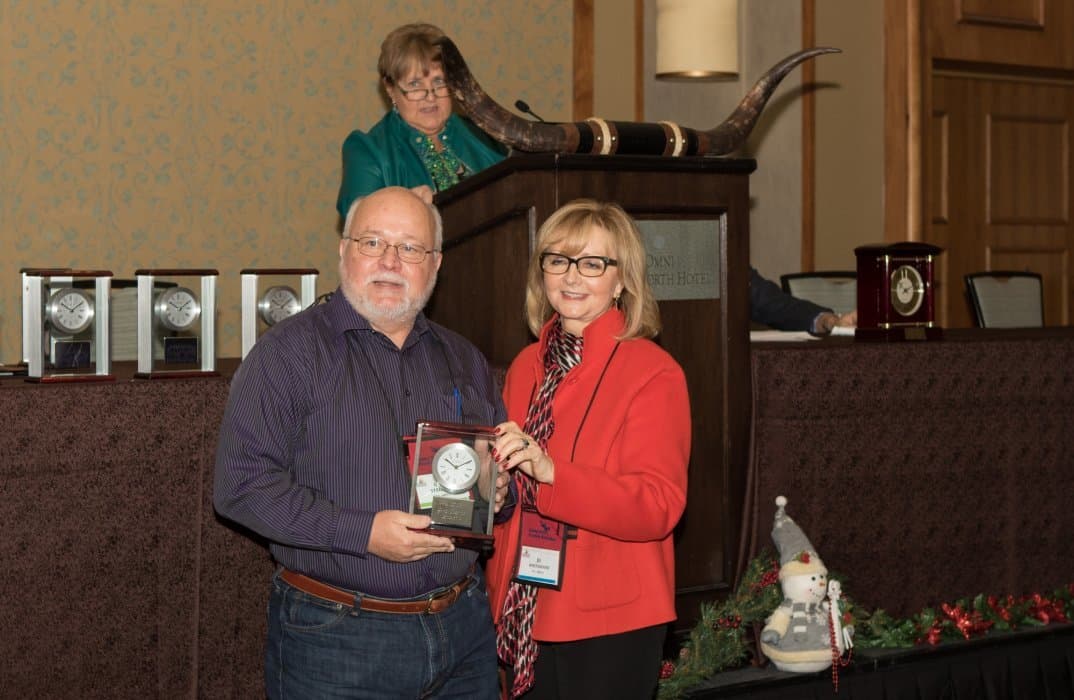
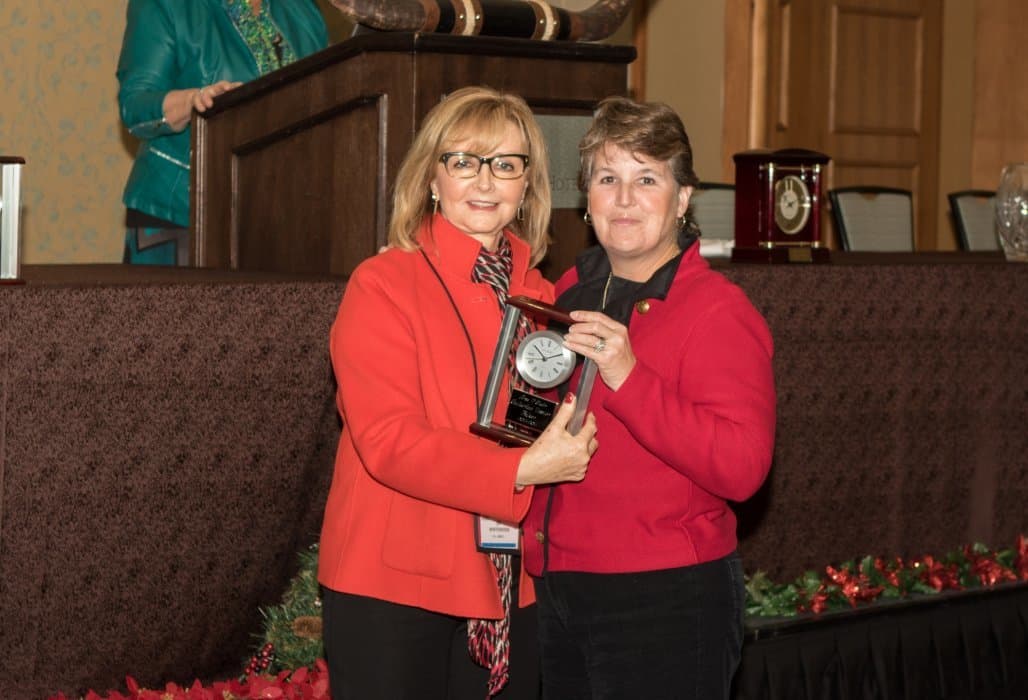
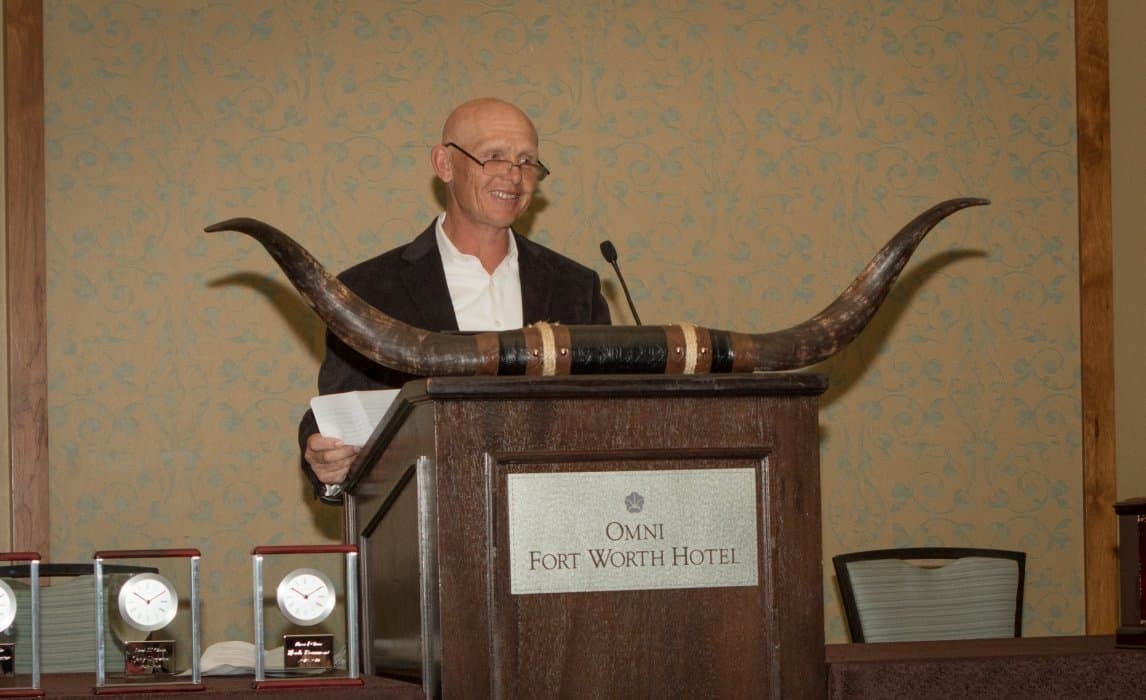
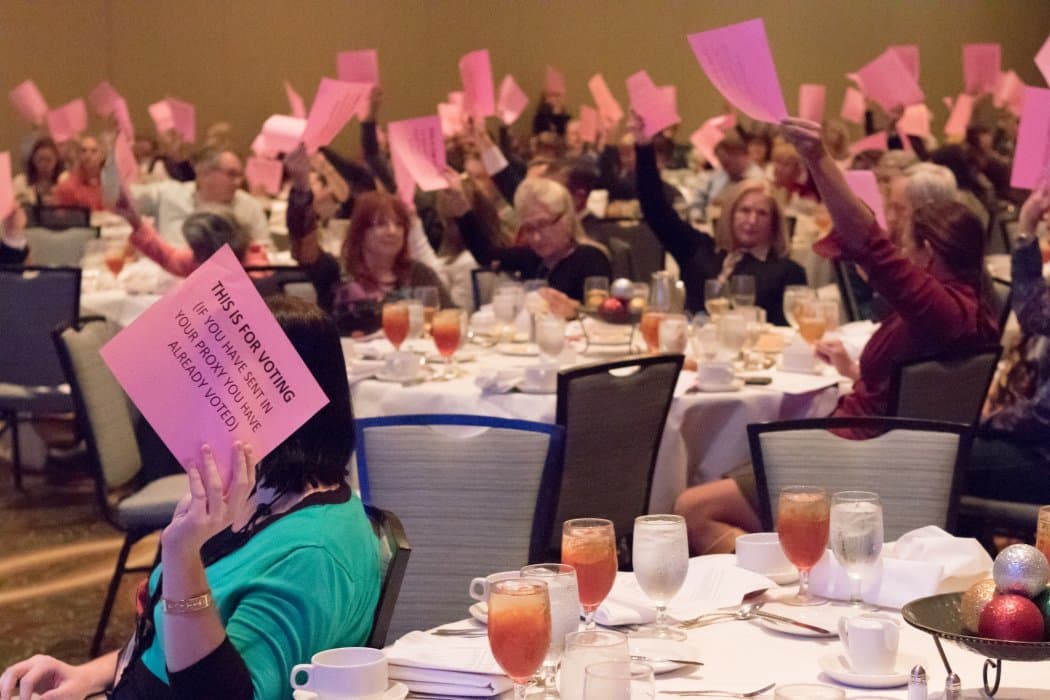
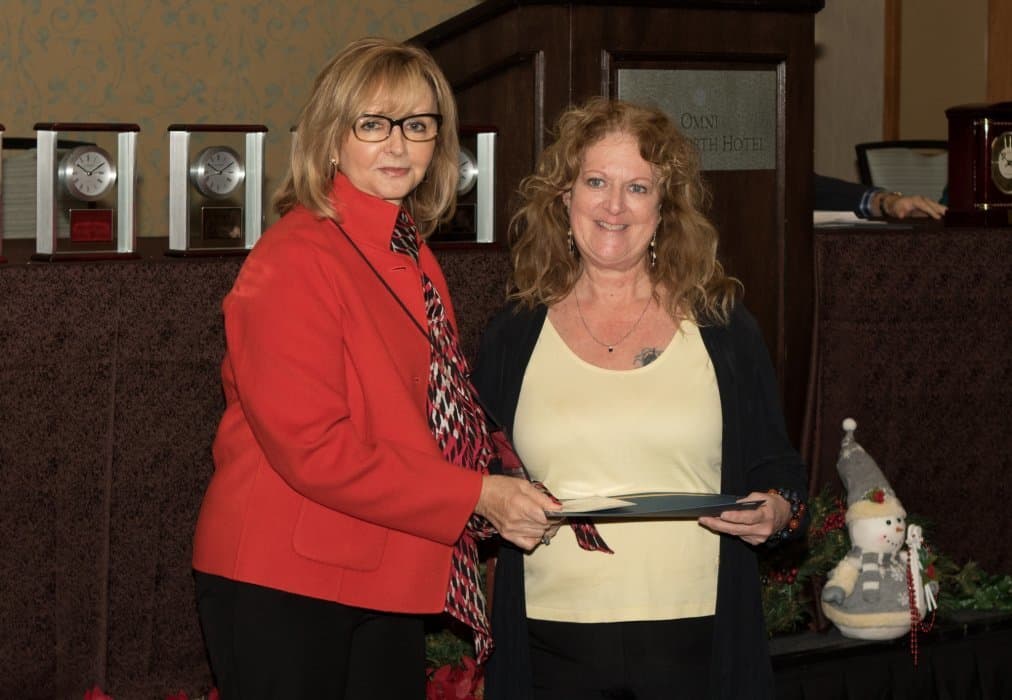
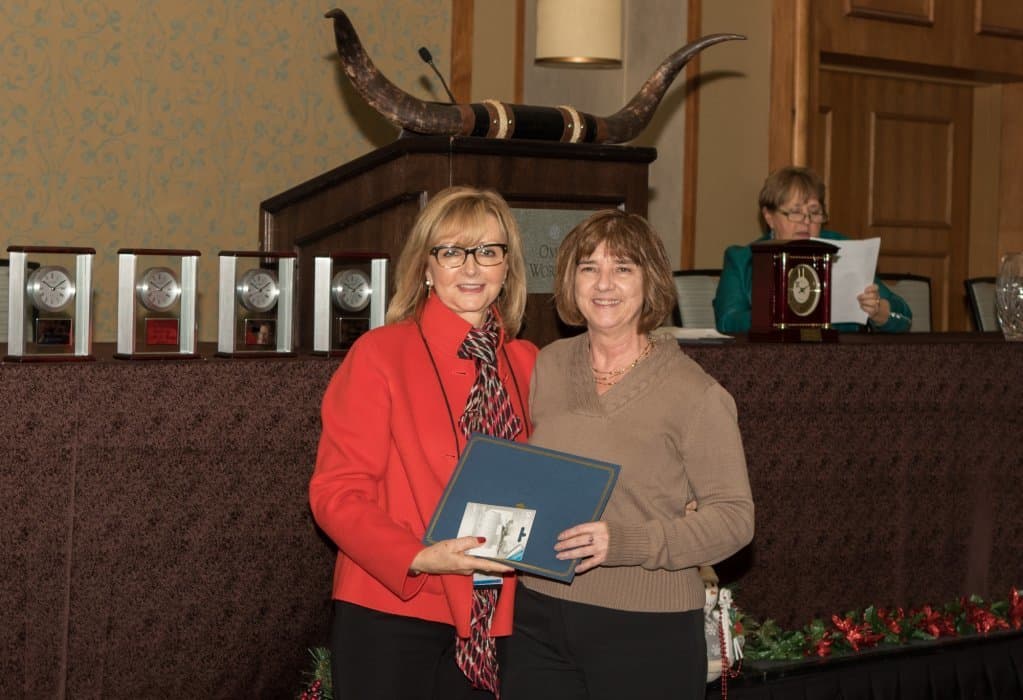
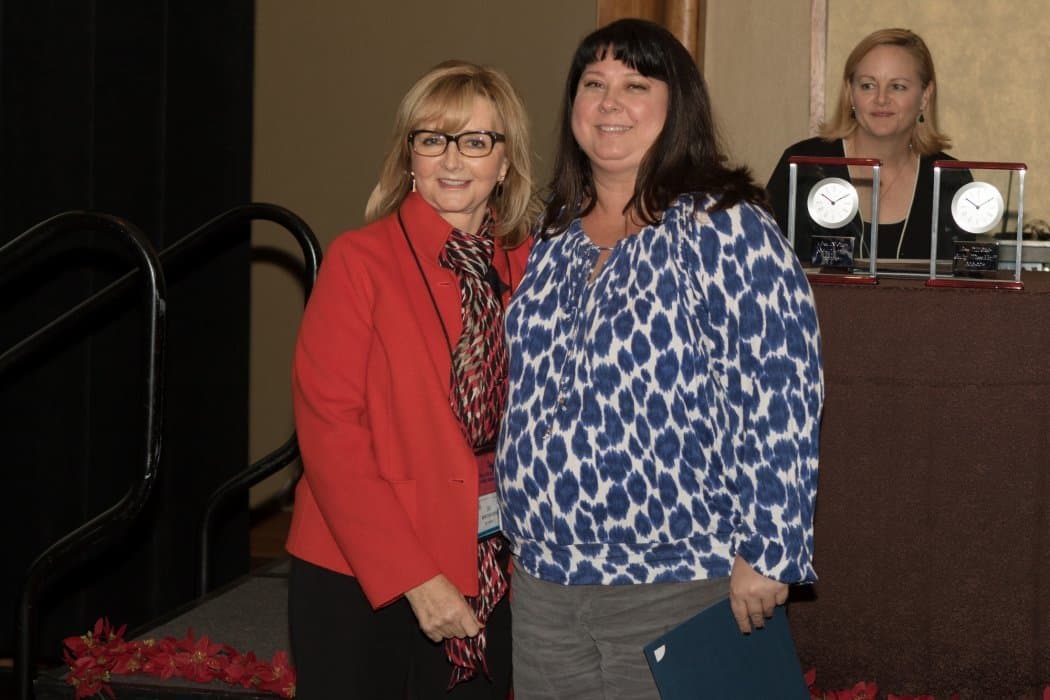
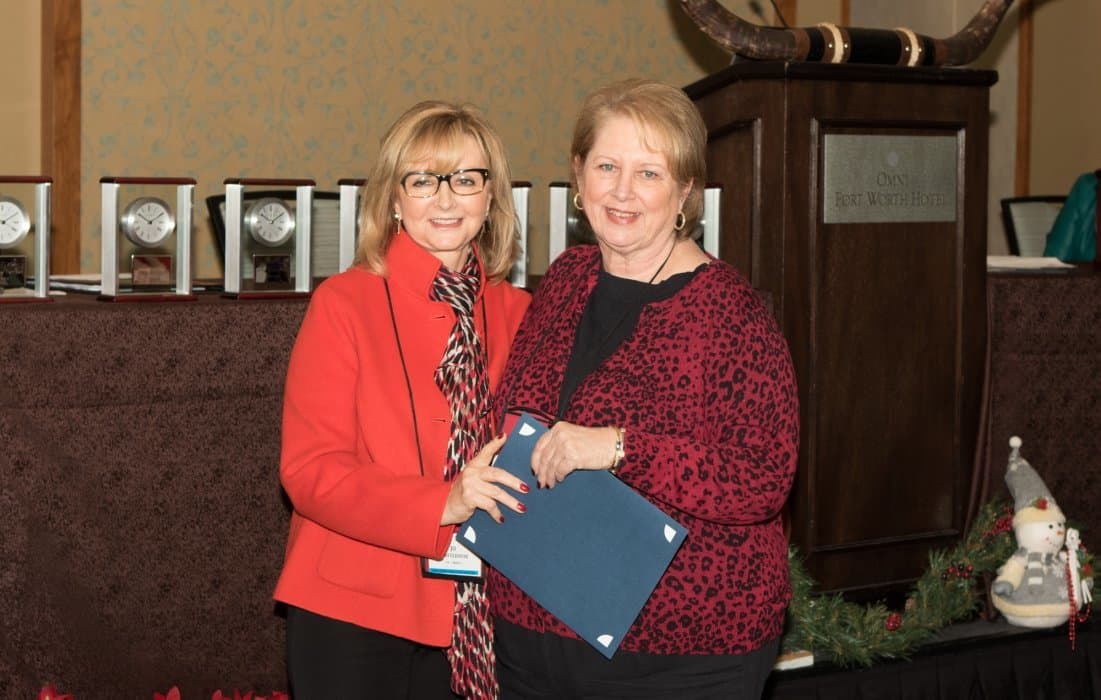
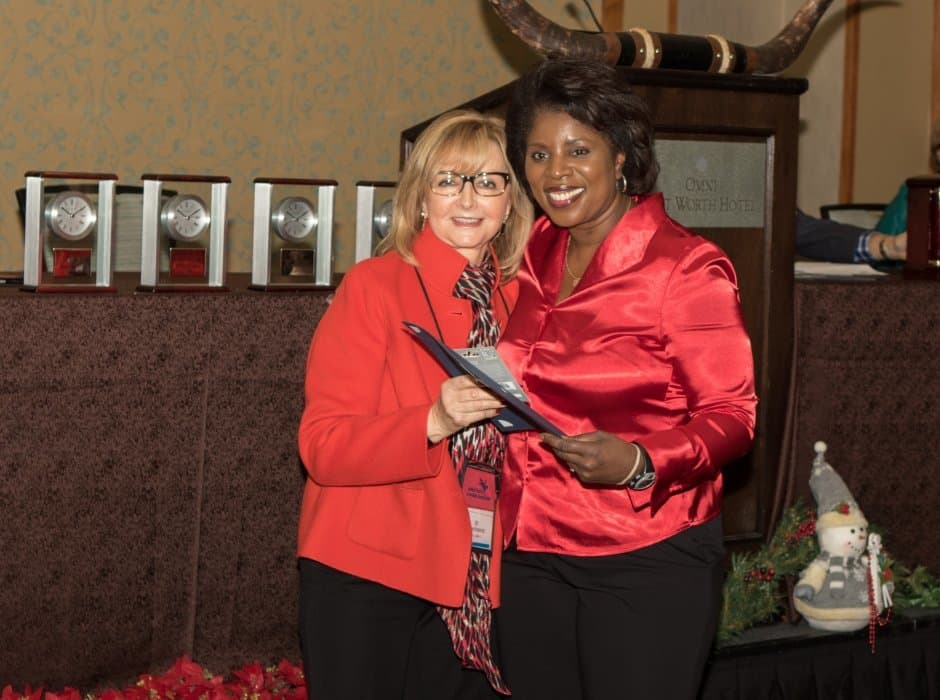
On Saturday at the USEA Annual Meeting and Convention, the educational lectures, shopping, and meetings continued. USEA members convened for lunch to bid farewell to departing Board Members Jonathan Holling and Mike Winter, to honor individuals who have served the USEA and eventing for many years, and to listen to Leslie Law's keynote speech, which earned him a standing ovation from the crowd. The British Olympic gold medalist said that he believes the U.S. has the knowledge, trainers, riders, horses, vets, and tools to claim a top spot on the podium, but that competitions in the States must be developed to attract world-class competition.
Here are some of the highlights of the meetings from Saturday in Ft. Worth:
Brody Robertson: Building Your Own Show Jumps
Brody Robertson got into building show jumps at an early age. He would travel to the horse shows in Florida as a kid, and saw that the best jumps were there. He went home and tried to make replicas of some of the jumps he saw to practice over with his horse. Today, he gave the audience tips to build their own show jumps for schooling at home.
- He says that even at home, he doesn’t like to have mismatched poles and equipment on the same jump.
- Use rustoleum paint, an oil-based paint. The only downside is that you have to wait 24 hours between coats. Use rollers to paint poles – 7” rollers are good for the task.
- Try to stay on top of painting your jumps. If you let it get to the point where the paint is chipping, it is a whole lot more work to sand it down and repaint. Try to paint your jumps once a year or once every other year to cut down on your workload.
- Definitely use treated wood. Untreated wood, even when painted, doesn’t hold up. Brody uses wood that is kiln dried after it is pressure treated.
- Prefers plastic cups on keyhole tracks instead of the metal jump cups with pins, which requires drilling through the jump in 3” increments.
- Typical hurdles that act as fillers under jumps (walls, flower boxes, etc.) work best if they are around 2’ in height.
- Brody doesn’t use his painted jump poles for ground lines or cavaletti. He suggests pressure-treated wood for ground poles, but doesn’t bother painting them as they are often stepped on and scratched anyway.
Richard Jeffery Show Jumping Panel for Organizers
Richard has designed the show jumping course for Rolex since it has become a four star – 16 years in a row, since 1998. He still has paper copies of every course he has designed there.
Joanie Morris reiterated that the technicality of show jumping is greatly increasing and courses are becoming more difficult. The best riders look like the course is mentally happening slowly, saying, “Andrew Nicholson looks like he has all the time in the world on course.” Joanie, who has organized the NAJYRC, says that just because the show jumping is the last phase doesn’t mean it can be a last priority in terms of footing and fences.
Richard explains that there are ways to, without taking a ton of time and disrupting the flow of the event, change the track of the courses which will help the footing and educate the horses and riders. He doesn’t feel that adding a jump or two to the Novice course is always enough to make the upper level tracks. Maintenance of the footing before and after the event, as well as during the day, is paramount for health of horse and rider. He prefers to water and drag the course every 50 horses or so.
Here are some of Richard’s tips for getting through the day:
- Large entries may require two days or two arenas
- Good help saves time
- Build courses in drag/water times
- Allow time for course changes and walk by the Ground Jury
- You can ask the first competitor in a class to salute the Ground Jury on behalf of his fellow competitors, so that every rider does not waste time saluting the Jury.
- Encourage your course designer to design a track that can be changed between the levels without moving all of the jumps. This may mean a few extra jumps in the ring and a few extra jump numbers, but if you don’t have to move jumps during the day and just renumber them instead, it will save a lot of time.
Rule Change Open Forum
The Rule Change Open Forum was moderated by Malcolm Hook, who began by reiterating that the rule change proposal affecting the speeds on cross-country and heights on show jumping at the lower levels have been withdrawn and will be reexamined in 2015. Malcolm encouraged everyone to read the Cross-Country Obstacle Design Guidelines to better understand what is currently allowed and why a change was suggested. While the proposal has been withdrawn for now, it will be reexamined not in its original form, but in a second draft, which will be made available for viewing soon.
Some dress changes will go into effect for the 2016 season: instead of “white or light shirts,” the wording was changed to a “conservative color,” which allows riders to wear a pale blue shirt, for instance. In Beginner Novice through Training, jackets may not be worn.
Additionally, smooth roweled spurs are permitted by the FEI to be worn in show jumping and dressage, and it is expected that they will be allowed on cross-country in the near future.
Biosecurity is becoming a bigger and bigger issue at horse shows, said Malcolm. There was a proposal to make proof of influenza vaccines mandatory on horse show grounds, but will not be passed at this time because administrative measures are not in place.
Disaster Preparedness with Eldon Reyer
Eldon Reyer has spent 35 years as a Park Ranger in the Yellowstone National Park. Today, he spoke to a group of Convention-goers about preparing for a natural disaster.
In May of 2000, Eldon experienced the chaos of the Los Alamos fire and it sent him into action to create a rescue system for his local area. Eldon has come up with a “cook book” formula of suggestions to be completely prepared for evacuating your horse in the face of a natural disaster.
- Look at your property and see what kind of emergencies might occur (fires, floods, mudslides, storms, windstorms, tornadoes) and are you prepared to take your horses out of harm’s way.
- Look at your trailer and towing vehicle. Check your tires and trailers at the 1st of every month. Park trailer in an accessible place. Make sure your horse will load.
- Establish a place where to take your horse (fair grounds, tracks, riding schools). If you know where to go you are more inclined to take action immediately.
- Develop a scramble bag (disaster preparedness kit). Flashlight, sharp knife, wire cutters, protective glasses, hoof pick, first aid kit (for horses and humans), gloves, head cover, scarf, medical mask, horse’s medication, jacket/rain coat, 2 way radio, hand held radio, energy bars, bottled water, personal ID, proof of ownership, emergency phone numbers, vapor rub, 20 ft cotton rope.
- Proof of ownership of your horse as people can take advantage of a chaotic situation to steal horses. A picture of you and your horse together in addition to Coggins or Travel Certificate.
- Have identification on your horse. Some options include: If your horse is microchipped circle where you think the microchip is and draw a capital M with a cattle marker. Tie a tag with your contact information in the mane. Write your name and phone number on your horses front left hoof with a Sharpie.. Write all the information on a paper and tape to the cheek piece of his halter – include feed/hay type as it can help reduce colic.
- Post information about your horses, trailer, etc. in your barn so if you aren’t home during an emergency other people are able to activate your plan. Have a meeting with your family/neighbors to discuss the plans.
Eldon concluded his speech with his philosophy: Proper prior pre planning prevents poor performance.
Developing the Equine Pipeline: Breeding, Producing and Placing Young Event Horses in the U.S. with David O’Connor
David O’Connor was joined by Robin Walker to discuss their thoughts on the pipeline for improving young horses in this country. David explained how high performance riders in Europe nearly all have relationships with breeders or “spotters” who continually provide them with young horses who have been produced until their 5- or 6-year-old year and are ready for FEI competition. When Americans go over to shop they are looking at the pool of horses that have not been set aside for the elite riders of Europe. Another point was the prevalence of American Thoroughbred blood in the European horses – including the top German stallion currently – Heraldik. David and Robin both put a strong focus on the mare line and bringing horses slowly up the levels with a strong fitness base. We need to work on getting American on the podium with American bred horses using a strong pipeline.
Staying Smart and Becoming Smarter with Roy Burek
Brain research is a hot topic right now for the world’s researchers and Roy Burek, Managing Director of Charles Owen, gave an interesting recap of recent studies and what can help you stay smart and become smarter.
A study done in Seattle by SNELL has shown that hard shell (outside shell separate from the polystyrene) helmets are more protective then thin shell (outside molded to the inner polystyrene) and no shell (plastic cover). Despite the fact that all three types of helmets have passed the same standard, the study proves that the level of protection is different. This is important when choosing the type of helmet to purchase and ride in.
Helmets have proven to be very good at preventing breakage such as skull fracture, brain bleed, and puncture, but what researchers are focusing on is the shear and brain movement. It has been discovered that concussion is actually caused by the release of poisons when the junction of neurons is broken. If the body isn’t able to pump the poisons out fast enough then it causes the cells and neurons to die, which leads to the TBI symptoms.
Factors which contribute to the outcome of a brain injury are:
- Gender
- Apolipoprotein E-epsilon4 genotype
- Hydration
- Nutrition
- Progesterone
- Vitamin D
- Brain Derived Neurotrophic Factor
- Brain Volume

Related Articles
The Countdown to the 2026 USEA American Eventing Championships presented by Nutrena Feeds is On!
The 2026 United States Eventing Association (USEA) American Eventing Championships (AEC) presented by Nutrena Feeds is headed back to the Kentucky H...