USEA Young Rider Mentorship Program with Jane Cook
The USEA Young Rider Mentorship Program affords Young Riders (21 years and younger) the opportunity to learn from experienced equine professionals to gain a better understanding of career paths, skill development, networking and goal setting for his/her future. 15-year-old Jane Cook represented Area V in the mentorship program this summer, and was kind enough to share her experience.
This summer, during the North American Junior and Young Rider Championships (NAJYRC), I had the privilege of traveling to the Kentucky Horse Park for the Mentorship Program. When I arrived, I was swept away on a golf cart festooned with streamers and flags to head to the opening ceremonies at Spy Coast Farm. The atmosphere of excitement at Young Riders was infectious, as silly string and water guns rained down on the competitors. The first night I met my area coordinator and the Vicki HowardFine, the brain and heart behind the program. She gave me my credentials and instructed me to get some sleep. We were to meet at the Eventing office at 7:00 a.m. the next morning.
Wednesday morning dawned on the horse park’s campground, where I bunked with my area. I hitched a ride to the Eventing office, where I met the other two girls in the program, Samantha Laurel and Miranda Losey. Finally, we got to meet the officials we would be working with for the rest of the week. We were each paired with an official who would act as our mentor for the weekend. Les Smith, the President of the Ground Jury paired with Samantha. Miranda was paired with Technical Delegate Andy Bowles. I was very lucky to be paired with Jane Hamlin, a member of the Ground Jury and an excellent mentor. Jo Young, also a member of the Ground Jury, and Bobby Stevenson, Assistant T.D. worked with the three of us throughout the weekend as well.
The first order of business was the cross-country course. Kentucky had received quite a bit of rain, and the low–lying areas of the course were flooded. David O’Connor was the course designer, but he was in Toronto for the Pan American games, so Andy got to work figuring out how to re-work the underwater portions of the course. Driving around the course with the FEI officials was fascinating. They inspected every jump for both the CH-J* (CCI*) and CH-Y** (CCI2*), commenting on design, difficulty, placement and footing. We learned how frangible pins and MIMSafe NewEra safety clips work, allowing the jump to collapse or fold in half when struck by a horse. On solid colored obstacles, especially tables, brush or mulch can be added across the back line of the jump to make the spread of the jump more visible for horses. Water questions that are dyed blue help create contrast between the ground, water and jumps, especially if there is a question in the water. Later in the afternoon, we attended the CH-J* and CH-Y** jog up, and then the Chef D’Equipe meeting.
Thursday was the first glimpse into dressage judging, as well as more cross-country work. There were only four two-star riders, but the judges were able to get acquainted with their scribes and used to us “manatees” sitting in the box and asking questions. (At the start of the program, eight years ago, the mentees were affectionately nicknamed “manatees” by David O’Connor, and the name stuck!) Jane Hamlin sat at B for the tests, and answered all of my questions. She would ask me if I agreed with the marks she gave, why or why not, and she would explain how she scored the movements. It helped prepare me for the forty dressage tests I would sit in on the next day. Once judging was over, we headed back out on cross-country for a more in-depth look at the course. One of the most interesting things I witnessed was the complete redesigning of a combination determined too wet to dry before Saturday. Two new jumps were brought out, stuffed with brush, and the officials collaborated on designing the new question, directed by Andy. We manatees were asked questions about what we would do and if the striding looked right. Once the new question was finalized, Andy left securing the jumps and scalloping the brush to the course builder, Aaron Rust.
Friday was an early morning, and an exciting one, as one-star dressage ran that day. I started off at B again with Jane Hamlin, and from the minute the tests began, I was sucked in to the world of dressage judging. Every letter offers a different perspective, and every judge is very different. At B, Jane was able to see the connection and gait quality much better than H and C, as she could see the horse from the side for most of the test. Next, I moved to H with Jo Young, who allowed me to practice scoring and see how it stacked up against her marks. From H, it’s difficult to see the straightness perfectly, but you can see the quality of the lengthenings and extensions very well. Lastly, I rotated to C with Les Smith. C is a surprisingly limited point of view, despite the fact that it is the classic dressage judging position. You can clearly see the centerline movements, the trot extensions, and of course, the final halt and salute. The scribe at C let me practice scribing. Never again will I criticize the handwriting on my dressage tests after experiencing how hard it is to scribe! Sitting in the box opened my eyes to the world of dressage judging and scribing, and I have a newfound interest and appreciation for the work judges do.
Finally, it was Saturday, which meant cross-country day! The officials were able to sit back and watch their hard work pay off as riders went around. One of the most interesting things I experienced on cross-country was how the Ground Jury’s predictions came true. As we walked the course in the days before, offhand remarks such as “this question is soft,” “this question is difficult,” or “this question will ride well,” added up over the course, and they proved to be accurate once the competitors went around. The standings remained nearly the same after dozens of clear rounds, and all of the officials were done early. We were dismissed shortly after 2:00 pm, so Samantha, Miranda and I browsed all the shops and vendors by the Rolex Arena. Cross-country day was interesting, but surprisingly the slowest day. Still, we were all excited to see how the standings would play out after show jumping.
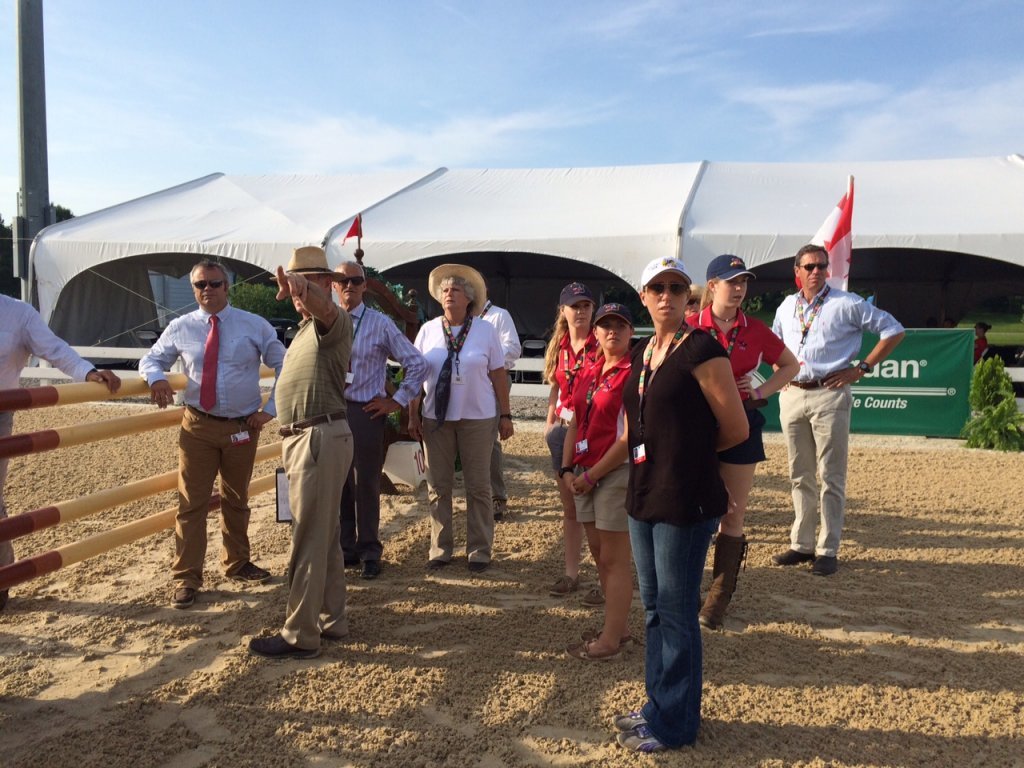
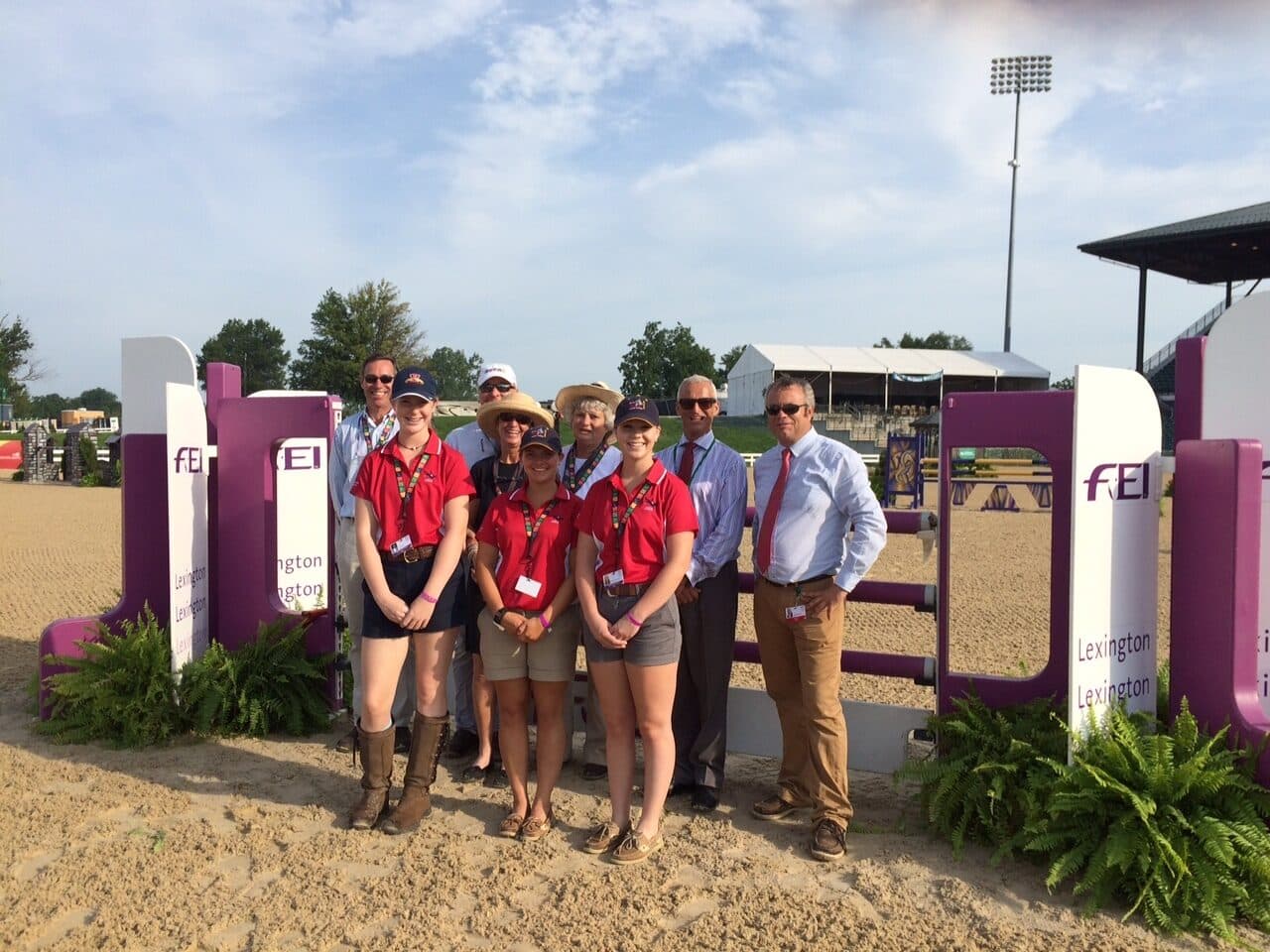
Sunday was our last day, and we rose early to pack our things before heading to the Rolex Arena. Once we arrived, we walked the show jumping course with the course designer, Ground Jury, Technical Delegate and Assistant Technical Delegate (pictured above). The President of the Ground Jury raised two fences, but other than that it was completely approved for the competitors to start walking. We went to breakfast with our mentors, gave them gifts from our areas and said some preliminary goodbyes before heading up to the announcer’s box. The glass-fronted room was perfect for watching the show jumping rounds, and we got to see the computer that controls what goes up on the big scoreboard and how the announcers organize information for each competitor. The ring steward would radio up to the announcer when the rider was ready to come in, then the announcer would radio back that we were good to go. Once the horse and rider were visible down the chute, the person using the scoreboard computer would put the name and score up on the board while the announcer, well, announced who was entering the ring. The rider would salute to the Ground Jury, and then the computer person would activate the buzzer. There were two announcers for Young Riders, and they took turns announcing either the rider or a short blurb about the competitor. All in all, when it came down to both the nail-biting finish and the heart-warming awards ceremony, Sunday was a happy day for officials and competitors alike.
Throughout my week at the Kentucky Horse Park, I learned so much I could barely fit it all into this very long article! The NAJYRC Mentorship Program is an unbelievable opportunity to gain insight into the professions of FEI officials and the workings of an event as massive as NAJYRC. The program would not be possible without all the love and support poured into it by the founder of the Mentorship Program, the incredible Vicki Howard-Fine. I encourage anyone who is interested in this Program to apply for the experience of a lifetime, which is available to any Young Riders (21 years and younger). (P.S. You get free food at the competitor’s tent and a bunch of awesome shirts!) I will take the knowledge and joy from my experience from the Mentorship Program with me through the rest of my Eventing career, and the rest of my life. Thank you mentors, thank you Kentucky Horse Park, and thank you, Vicki!
Related Articles
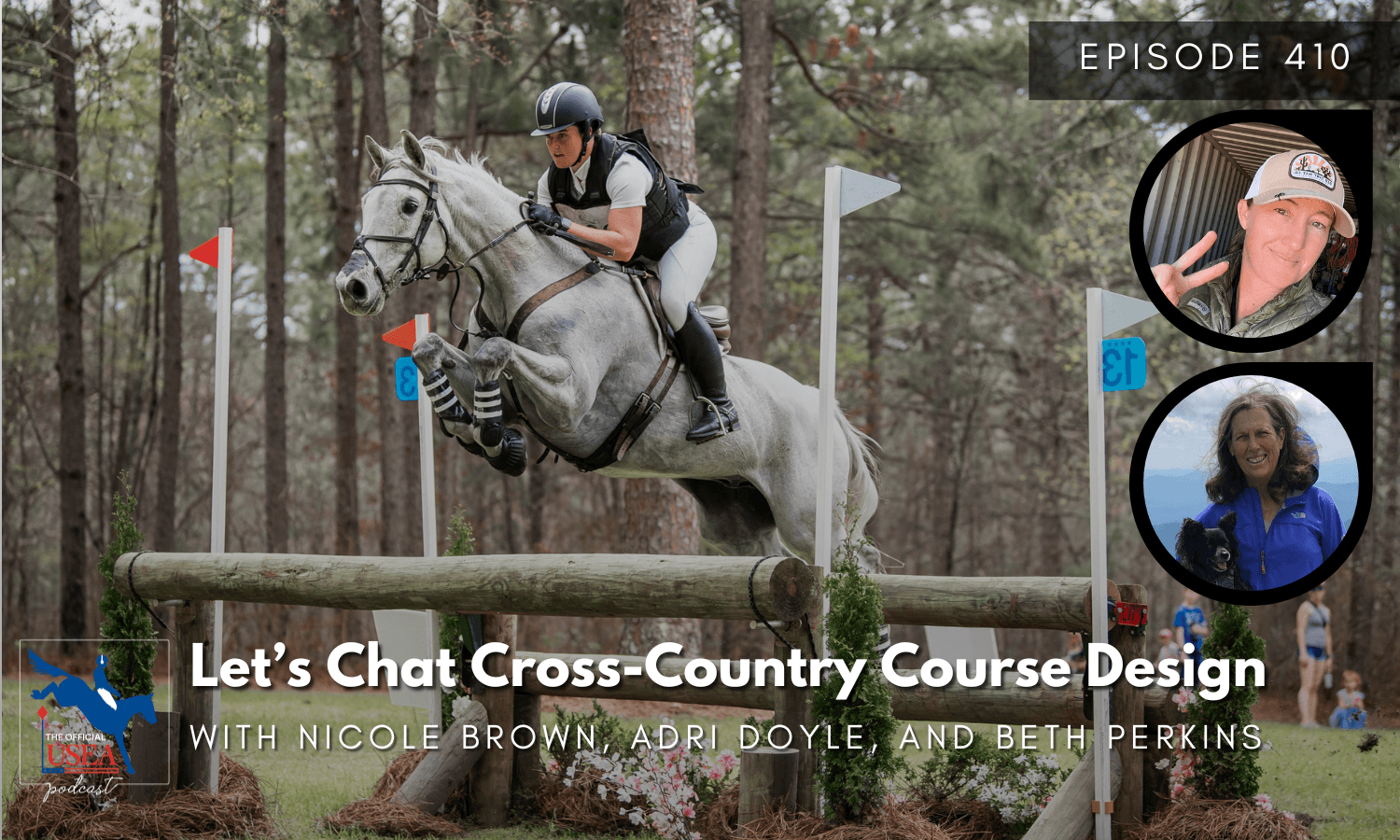
USEA Podcast #410: Let's Chat Cross-Country Course Design
Dive into the fascinating world of cross-country course design with Adri Doyle and Beth Perkins—two of the leading female designers in the U.S. They take listeners behind the scenes of what it really takes to build a course, from balancing challenge and safety to understanding how horses read que...
Bellissimo Tops Stable View CCI4*-S Aboard Dyri
Charles Pinnell, cross-country announcer, said it best—it was a “picture-perfect Saturday here in Aiken, South Carolina.” The day at Stable View started early with the remaining national divisions starting their weekend in the Tree Arena with dressage. The FEI divisions got underway promptly at 9...
Spring Has Sprung at the Stable View Spring International with Bellissimo Leading the CCI4*-S
The first day of the Stable View Spring International started off with a little bit of fog but quickly turned into a beautiful day. The 2/3/4* FEI divisions kicked off the day with the first riders going down the center line at 8:20 a.m.