USEA Annual Meeting Kicks Off with Technical Committee, Professional Horseman’s Council, and Active Athletes Meetings
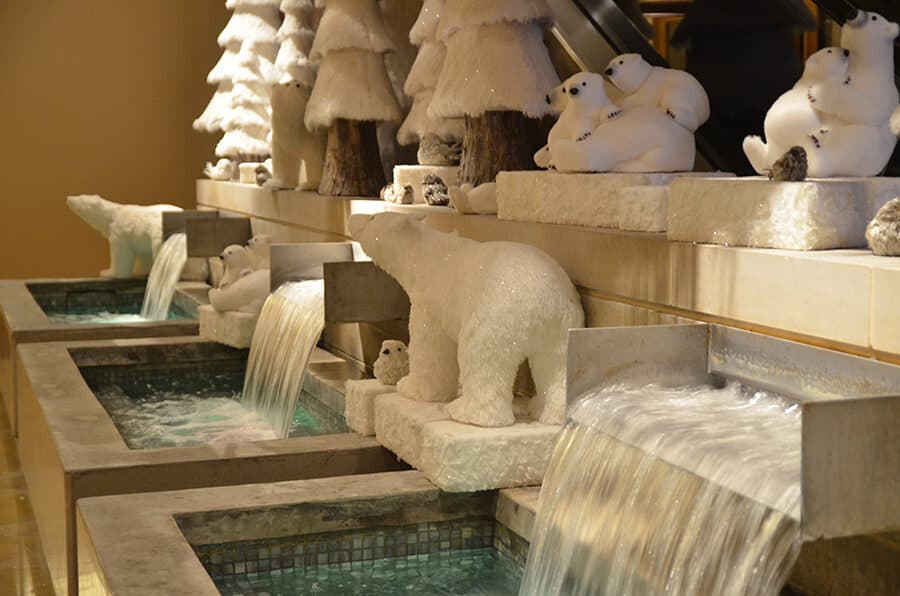
USEA Annual Meeting and Convention attendees are arriving at the Omni Fort Worth Hotel to find a bounty of stunning holiday decorations including enormous glowing Christmas trees and impressive gingerbread house villages, three in-house restaurants and a Starbucks, an impressive bar, and all of the amenities of a top-notch hotel. Located in the heart of the charming downtown Fort Worth, guests will have no shortage of shopping, dining and entertainment should they choose to venture outside of the hotel to explore.
USEF Technical Committee Meeting
The Convention kicked off this morning with the USEF Technical Committee Meeting, a portion of which was open to non-committee members. The most popular topic of conversation during the open meeting was the proposed rule change to EV140 and adjustments to the wording in the Levels of Horse Trials appendix. The proposed changes have been refined and are still very much in the “draft” phase, and we caught up with course designer Richard Jeffery, who was tabled at the meeting, to get his thoughts and updates.
The USEF Eventing Department’s Shealagh Costello took the opportunity to remind event organizers about the Frangible Technology Grant Program, which has seen a revival and she would like to further expand. This grant allows the USEF to import frangible pins from Europe in bulk so that organizers can buy the frangible equipment from the USEF at a greatly reduced cost with added convenience. The aim of this program is to increase the use of frangible technology on cross-country nation-wide.
Professional Horseman’s Council (PHC) Meeting
The Professional Horseman’s Council (PHC) meeting was tactfully led by Tamra Smith, who began the meeting with a discussion on calendar planning. The conflict, she explained, lies between trying to welcome new events onto the calendar while also honoring the events that currently exist.
“You want to find a way to be respectful of the calendar and not blow it up…but you’re still giving new events an opportunity to come up,” explained PHC member Jonathan Holling. Jon suggested systematically picking dates for events in a draft-pick style; in each Area, he proposed, let the existing events pick two dates on the competition calendar, then allow new events to pick two dates, and finally, events that hold more than two events a year can fill in the remainder of the calendar with their “leftover” events.
Mike Huber expressed concern about this problem, as an over-crowded event calendar may cause organizers to host events that are not with an association or sanctioned in any way. In the show jumping discipline, he explained, horse shows that have huge financial and media backing will host “entertainment events” that will attract high-profile competitors but are not sanctioned or recognized by any federation or association. “The goal is not for events to go out and run their own unsanctioned events just because they can’t get on the calendar,” said Huber.
Next on the PHC agenda was enforcement of the rules at events across the country, which many riders feel is inconsistent.
“You go to one event and the stewarding is really strict but you go to another event and you can’t even find a steward. It has to be more standardized,” said Smith. “You can take a photo or video about something that you see happening that isn’t legal. If you really feel strongly that there is a rule being broken and it’s obvious, take a picture of it and take it to the official.”
Those attending the forum overwhelmingly supported and voted in support of treating veterinarians at national-level events having a printout or cheat-sheet of the USEF or FEI drug and medication rules, which would help eliminate inconsistency on the veterinary side.
Finally, Jeffray Ryding spoke about The Event College, which aims to break down the complicated sport of eventing - and the horsemanship and training that goes with it - more palatable for those new to the sport or unfamiliar with the sport. There is a groom school that will be looking to get its roots in the U.S. if there is enough support, according to Jeffray. Max Corcoran developed a template of the curriculum but the school is still in the early stages of development. “We need your help,” said Jeffray. “If you are interested and if this sounds like something you’d like to see go forward, I’d love to talk to you.”
USEF Active Athletes Meeting
The USEF Active Athletes meeting was one of the last open meetings of the day, led by David O’Connor, Joanie Morris, Marilyn Payne, Buck Davidson and Phillip Dutton. Joanie Morris reminded riders of the upcoming deadlines for the Pan-American games, which will take place in Toronto (CAN) in July of 2015. David O’Connor briefly spoke of the importance of the U.S. Eventing Team having a very strong showing at the Pan-Ams, saying, “We’ve been beaten at the Pan-Ams before, we’ve been beaten quite a few times. So don’t think that just because we show up that we’ll just win it.” He also stressed that reliability and consistency are of paramount importance in selecting horses and riders.
Marilyn Payne and Tim Holekamp also spoke of the importance of developing young horses in the U.S. as part of the future of eventing. Tim announced the goal of developing a CIC * and ** that is only for 6- and 7- year olds, similar to the Championships of Le Lion d'Angers (FRA), saying, “We’re trying to promote breeding in the U.S. and not have to go to Europe for our horses.”
This evening, attendees will enjoy the Board of Governor’s reception with cocktails and hors d’oeuvres until 9:30 p.m. Tomorrow, we look forward to bringing you coverage of The Event College’s Hands-On Course Building Seminar at Gold Chip Stables with James Atkison, Tremaine Cooper, Dan Starck and Mats Bjornetun, as well as the meetings at the Omni Ft. Worth.
Related Articles
USEA Board Approves New Intro Level
Growing the sport of eventing in the United States remains a central goal of the United States Eventing Association (USEA) and its Membership Committee. Through feedback from members, coaches, and prospective participants, a common theme emerged: while interest in the sport is strong, the cross-c...
USEA Podcast #412: The Stories that Defined Kentucky
Fresh off of the heels of a U.S. win at the Defender Kentucky Three-Day Event, the crew sits down to recap the weekend in the bluegrass and all the pairs that impressed during the CCI4*-S and CCI5*-L competitions. From well-deserved wins, to horses who won our hearts, to a moment that USEA CEO Ro...
The Countdown to the 2026 USEA American Eventing Championships presented by Nutrena Feeds is On!
The 2026 United States Eventing Association (USEA) American Eventing Championships (AEC) presented by Nutrena Feeds is headed back to the Kentucky H...