USEA Annual Meeting & Convention: Friday Report
Most likely the busiest day of the USEA Annual Meeting and Convention, Friday was filled with educational seminars, open forums, and committee meeting from sun up to sun down. Here are some notes from seminars that took place today and be sure and stay tuned for updated reports.
The Latest in Eventing Safety
The afternoon of the Latest in Eventing Safety featured two main speakers, David Halstead and Paul Varnsverry and concluded with a report from the chair of the safety committee.
Professor Halstead, Laboratory Director of the University of Tennessee Sports Biomechanics Impact Research Lab and Technical Director of Southern Impact Research Center, started the meeting with a presentation of helmet and head safety. He outlined that there are two main types of brain injury mechanics: linear forces and rotary/angular forces. The current understanding of linear forces is pretty strong while the knowledge of rotary/angular forces are still limited.
Interesting tidbits include:
- The human eye only sees 30 frames per second so eye-witness reports of what happened in an accident are never completely true.
- Football players would be dead with open oozing wounds without helmets on nearly every play
- No standard attempts to address mild traumatic brain injury (MTBI or Concussion) have a limit for rotation
- If you completely heal from a concussion you aren’t really at a risk for a worse repeat injury. However it does take in excess of 6 weeks to fully heal.
- The unprotected head only needs to fall about 2 feet for a person to die. We are really good at reflexively protecting our heads when we are ambulating which is why death from head injuries isn’t rampant.
- If someone has told you that they have invented a concussion proof helmet they are lying. They have not be invented or tested yet.
- Seven cases (1 rider, 6 bike riders) have been studied where there was no noticeable helmet damage however the injured people were in a persistent vegetative state. Linear impulses were all below 40 Gs. Should be above 300 for that injury. It is the rotational forces that caused the results. However, riding without a helmet is very fool hardy. Without the helmet you would be dead rather than in a persistent vegetative state – which is worse?
- Very rare to hit with your head first – you normally hit something else first.
- Best way to fall-off – don’t. No conclusive studies show a best way to fall.
- Helmet needs to be low on the forehead – when you move the helmet the skin on your forehead needs to move with the helmet. Chin strap should be snug.
- The life of the helmet is one impact. Sunscreen or bug spray can destroy the helmet. Anything that ends in an ine, z, or one kills the foam in the helmet. Helmets can be badly compromised in one summer. Never wear one that is more than 5 years old.
- Most common sign of MTBI (Concussion) is inability to sleep well.
- Is there a different between a $50 helmet and a $300 helmet? Yes, $250. In the laboratory – chances are the cheaper helmet will test better because the more expensive helmet is probably trying to be thinner to make it look better.
- Can’t hurt your helmet without your head in it. Aka if you drop it in the barn aisle. They can take some pretty good abuse and still be fine unless your head is in it.
Following Professor Halstead, Paul Varnsverry took his turn at the podium. Paul went through a presentation outlining the development of the air jacket technology and the testing that has been done on air jackets.
Air bag technology has been around since 1998 when a marine life vest was tried to be turned into a motorcycle jacket. The original marine life vest had a three second inflation time – that was fine if you were falling into water because you can stay under for 3 seconds and not die but it wasn’t fast enough for motor cycles. Took the time down to 1 second – still too long. Now down to sub one second.
Point Two put out a survey of riders who wore the air jackets and out of 192 surveys given 95 have experienced falls in the jackets. None of the riders surveyed who fell sustained any serious injury or required hospital admission.
The discussion then continued with a variety of data from the five independent testing houses that have tested the Point Two vests before wrapping up with the new technology that the company is developing including the Hybrid air jacket, a faster trigger system, and saddle sensor technology.
The afternoon of eventing safety concluded with a short presentation from Carol Kozlowski where she touched on topics that the safety committee has been working on including: coaches encouraging dangerous riding, seller responsibility not to sell a dangerous horse to an inexperienced buyer, misuse of watches, and the USEA’s Fallen Rider Survey.
Dress Your Event For Success
Finding volunteers - why do the volunteers come?
- Get free flowers
- Have fun
- Take ownership of the fences
- Follow the riders
Cost
- Rolex CCI4*: $14,000 (includes horse inspections, dressage, trade fair, cross-country – decorations then move to show jumping)
- World Equestrian Games: Total cost for all the events minus the ones in the Rolex Arena: $37,000. Includes flowers and shrubs for rening, vaulting, eventing xc, para equestrian, endurance, driving’s dressage, marathon and cone courses, all horse inspections, renting a 1,000 gallon water wagon for 19 days.
The process
- Order flowers in October, November, or December for a course you have never seen b/c they need to be in full bloom by April
- Order any special equipment
- Meet with course designer in January or March. Get the plan
- Write volunteers a letter
- Look at last year’s jumps vs. this year’s
- Line up leftover flowers and place them on new jumps, order more flowers and shrubs
Rolex list 2011
- 28 jumps
- 45 elements
- Un-jumpables
- Mulched and planted 45 areas
Meet with the team leaders
- Take pictures of the cross-country jumps
- Put pictures of the jumps with mulch directions
- Divide up the jumps and assign particular team leaders to specific jumps
The nurseries
- You must have a nursery that has multiple greenhouses
- You must have the ability to walk the aisle ways and get whatever you need
- You must have a good relationship with the greenhouse owners and staff
- Budget
- Special events: special providers
Horse Parks, Hay Fields, & Hack Lanes: Protecting our Interests
Horse Parks, Hay Fields, & Hack Lanes: Protecting our Interests is a seminar that has been given for the last several years at the USEA Annual Meeting and Convention because the issue is very important for people to be educated about. This year’s seminar was given to a small group of attendees by Deb Balliet of the Equine Land Conservation Resoure, a 501c3 educational organization that was founded 14 years ago based around six main issues: Community Land Use Planning, Farmland Protection, Trail Access & Stewardship, Land Stewardship/Best Management Practices, Equine Economic Development, and Liability Issues. ELCR believes that the issue of land loss for equestrian use is going to be critical in the next 15-20 years and it is not going away, so the sooner they can help the better.
The threats to equestrian land
- Unplanned or poorly planned development
- Loss of 6,000 acres of farm, forest, and open space per day (USDA figure)
- US population to increase to 100,000,000 by 2050 (US Census Bureau)
- International food and biofuel production demands (losing land for hay, more profitable for a farmer to grow corn)
- Populace increasingly unfamiliar with horses/livestock
Conservation easements:
- Remove development rights from land
- Protect conservation values
- Federal tax deduction in exchange for extinguishing development rights
- In perpetuity
Purchase of development rights:
- Remove development from land
- Protect conservation values
- Cash payment in exchange for extinguishing development rights
- In perpetuity or tem limited
What we know
- Horsemen need to organize themselves
- Strength in numbers
- Together we stand; divided we fall
Partners and coalition building
- Equestrians
- Other trail users/recreationists
- Developers
- Environmental
Community land use planning and rural preservation
- Land use plans and zoning laws
- Transportation plans
- Park and recreation plans
- Trail and greenway plans
- Historic preservation
Community comprehensive plans
- Community involvement through public input meetings and committees
- Products = text plan and maps
- Guiding document and principles
- Revised approximately every 5 years
Related Articles
Grayson-Jockey Club Research Foundation Advances Critical Research to Address Equine Sudden Death
Sudden deaths in horses remain one of the most complex and least understood challenges in equine medicine. Often occurring without warning in otherwise healthy animals, these rare but devastating events can take place during or immediately after exercise—leaving veterinarians, trainers, and owner...
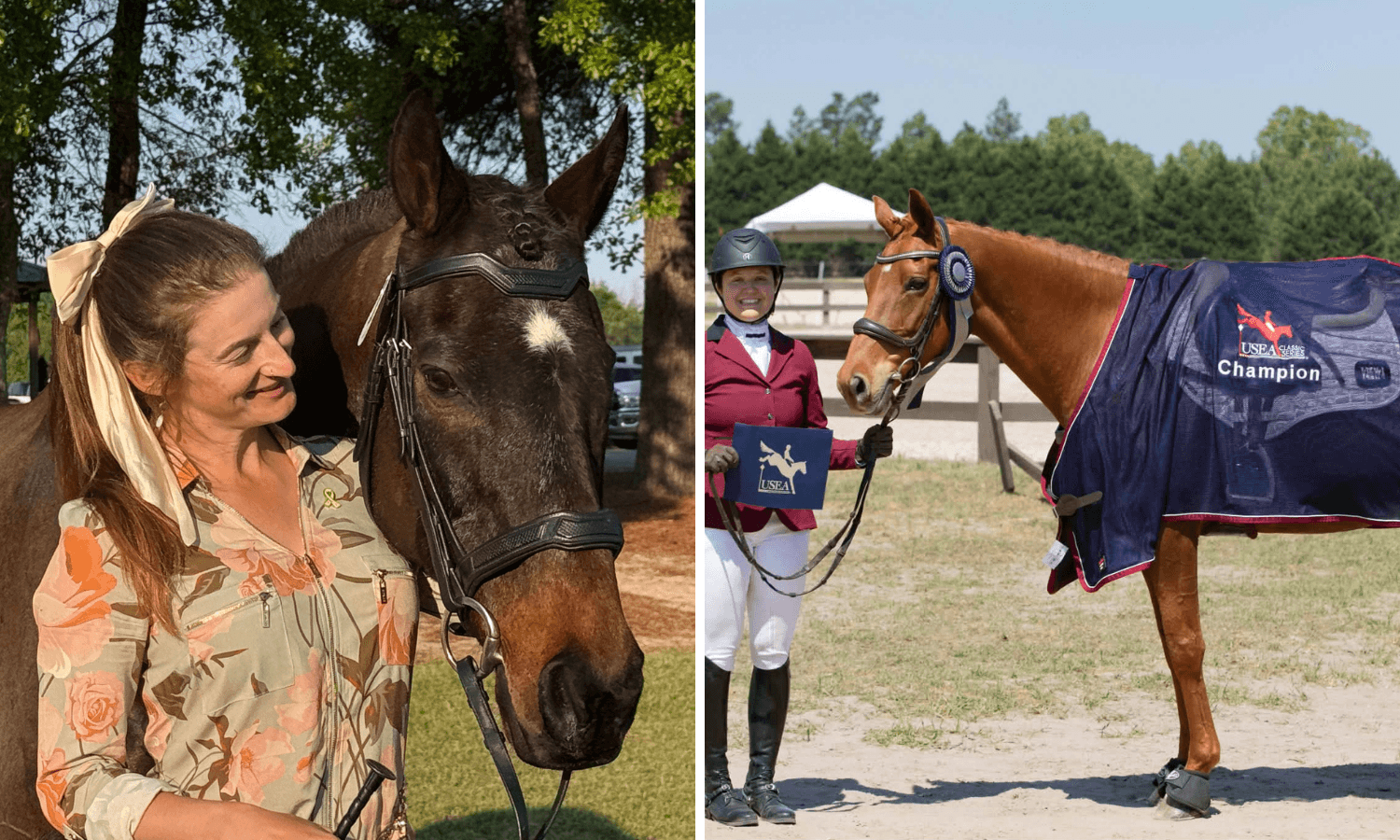
Hiller and Patterson Claim First USEA Classic Series Victories of the Year at Longleaf Pine H.T.
The Longleaf Pine Pine H.T. kicked off the 2026 USEA Classic Series season on April 3-5 at the Carolina Horse Park (Raeford, North Carolina). This year, the event offered two Classic Series divisions at the Beginner Novice and Novice levels. Get to know the first Classic Series champions of the y...
The Classic Series is ‘Icing on the Cake’ for Longtime Coconino Organizer Alice Sarno
For Alice Sarno, competing in a long format three-day event during her competitive career was always “icing on the cake” after a season of horse trials.