The Jump and Gallop Are the Center of Attention on Day Two of the Young Horse Symposium
The second day of the “Evaluation of the Young Event Horse Prospect” symposium focused on the four- and five-year-olds that are developing under saddle, instead of the yearlings through three-year-olds that took the stage yesterday (go here and here for yesterday's coverage).
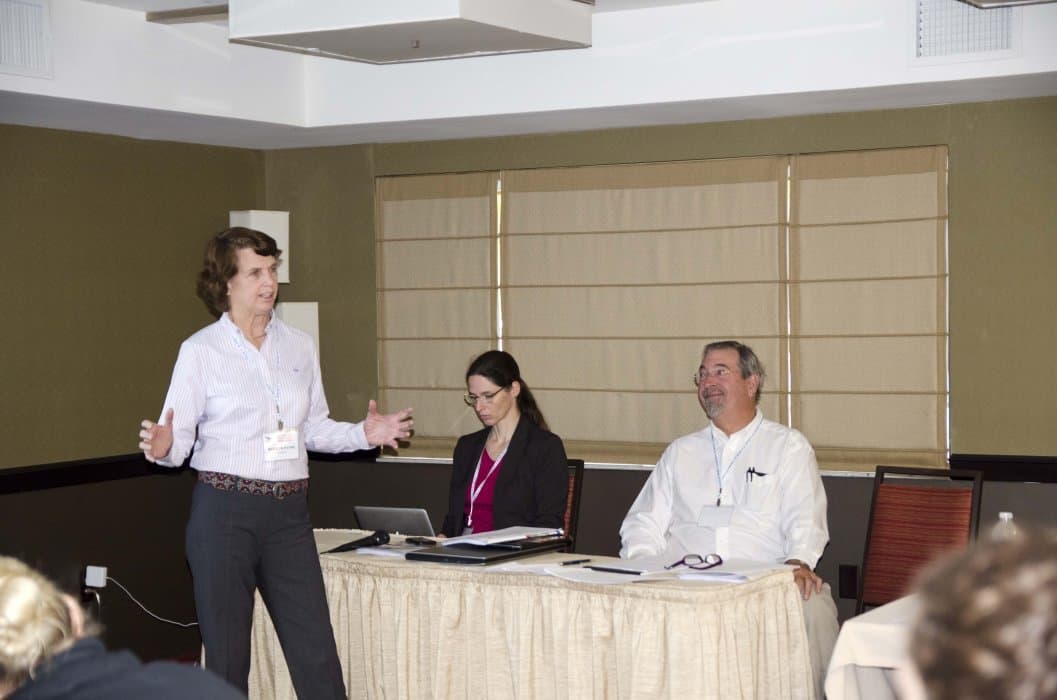
David O’Connor kicked off the morning with a discussion about the upward pathway from young horses to U.S. Team horses.
“Someone is breeding these nice horses, because we’re buying them,” he said. “So why not us [in the U.S.]?” With artificial insemination, breeders have access to stallions all over the world. With embryo transfer, mares can continue with their careers without taking a year off to have a foal, but you can still have that mare’s offspring on the ground.
“You can improve a trot by 40%, but you can only improve a canter by under 10%,” David said, and he stressed that when buying young horses, the walk and canter should be the best gaits.
David believes that while the sport of eventing has changed over the decades, the fitness requirements at the top level of the sport haven’t much. “The only difference I see at the four star level compared to the long format is that I think horses recover faster now,” he said. “But the fitness is basically the same, if not a bit faster. We’re even going back to how the horses were fed for those long format events.”
Sports medicine and veterinary care have advanced a lot in the last 30 years, and nutrition in the last 15 years, but the horses’ brains are still the same, so training hasn’t dramatically changed. He explained that purpose breeding for an event horse is also relatively new; event horses used to be the knockoffs of show jumping and other disciplines.
David said that breeders should work to get their best horses into hands where they can be produced into top-level and potential team horses. There is a need for riders that have the time and talent to develop 4-7 year-olds, and that breeders should develop relationships and financial situations with riders to develop their horses of that age. Then, in a perfect world, they would funnel into the hands that would develop them into Team horses.
“Europeans, for the first time, are coming to the U.S. to look at horses at the upper levels,” he said. However, those riders aren’t coming to the U.S. for young horses yet, the way that U.S. riders go to Europe to look for young horses.
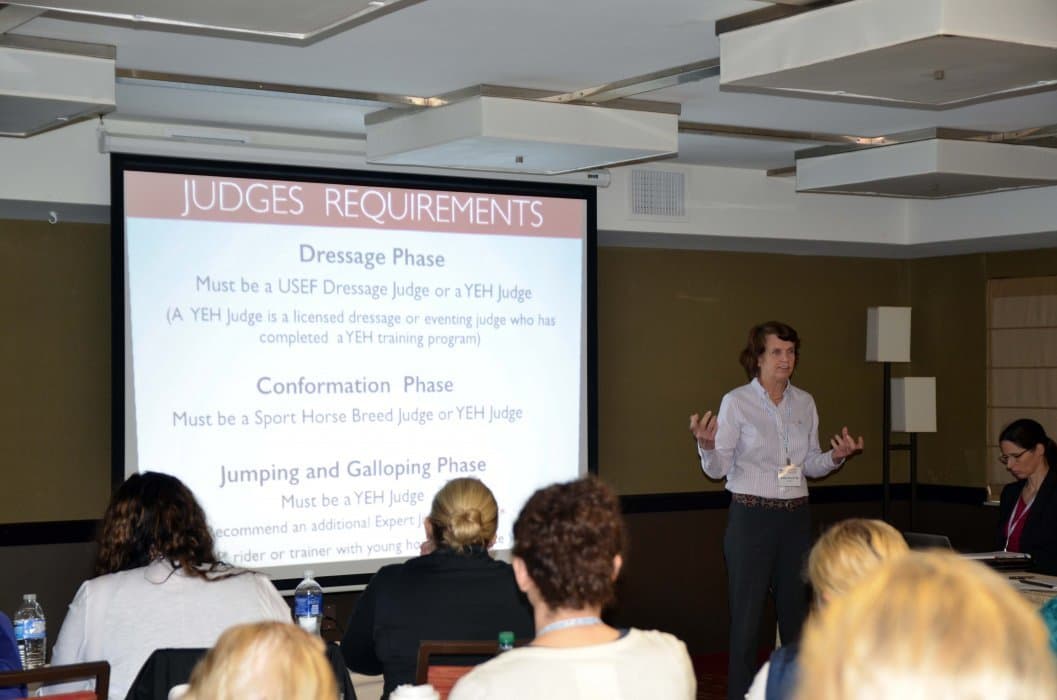
Marilyn Payne spoke on the methodology of judging the Young Event Horse (YEH) classes and broke down the scoresheets for attendees to better understand. She explained that the goal of the program is to identify horses with 3* and 4* potential, but that the evaluations and experience can be valuable for owners with a horse that is intended for the preliminary level, for example. At Championships, the Safe Harbor Award is given to the horse that has great rideability and temperament, but is best suited to the lower levels.
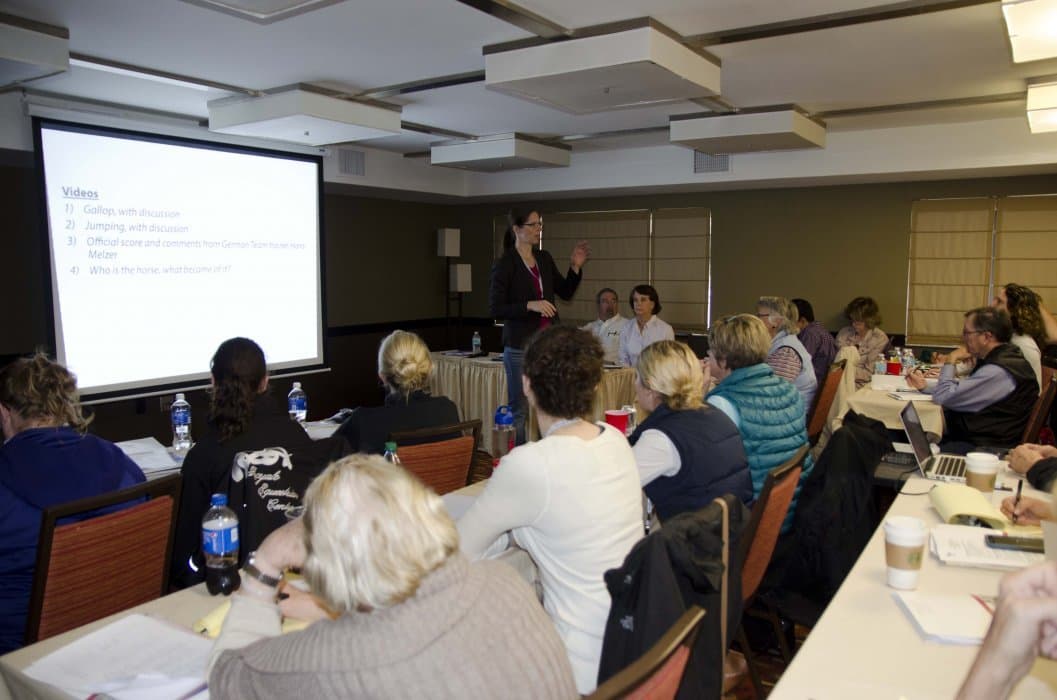
Dr. Maren Engeldhardt helped the audience dissect the jump and gallop.
“A good gallop is a movement that cannot be seen on the flat only – it requires the phase before, over and after the jump,” she said. “A good gallop is characterized by effortlessness, rhythm, balance, elasticity, adjustability before and after the jump, and endurance.”
Maren selected several videos of young horses from the Bundeschampionat in Germany, and the attendees were asked the study the video and write their own comments and scores. Then, she showed the comments and scores that the judges gave.
Maren explained that at the Bundeschampionat (Young Horse Championship in Germany), the aim is not to predict future potential, but to judge the horse on that day, which differs from the aim of the Young and Future Event Horse programs. In fact, there are riders who specialize in presenting horses for that event specifically. Nevertheless, the road to the Bundeschampionat is extremely selective and weeds out the weaker horses, so the horses that complete it typically do become top-class horses.
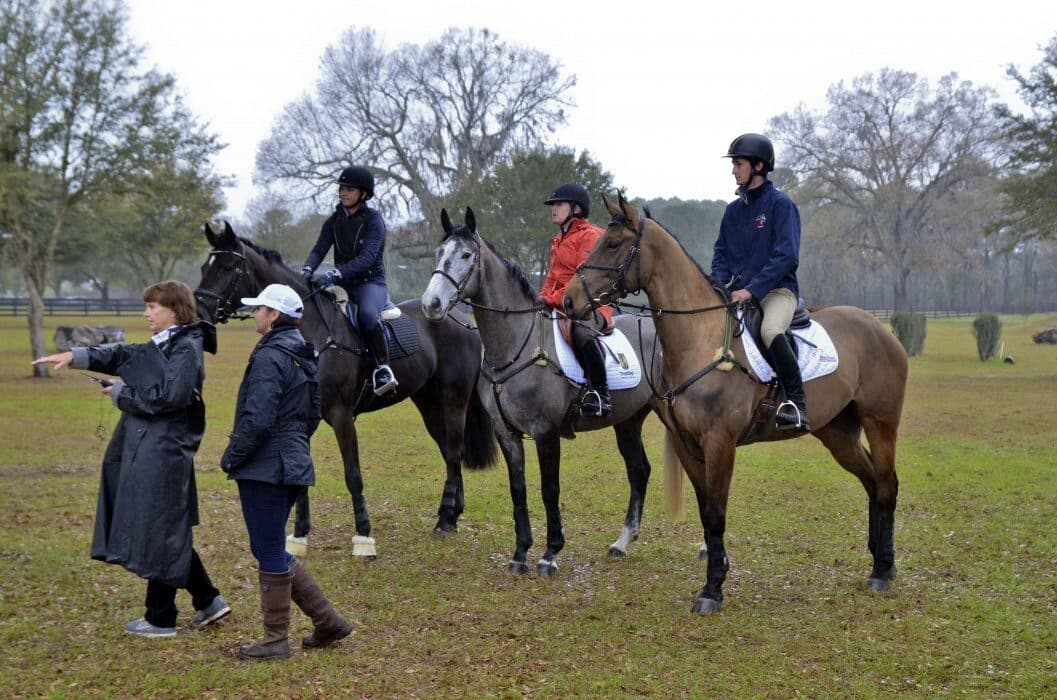
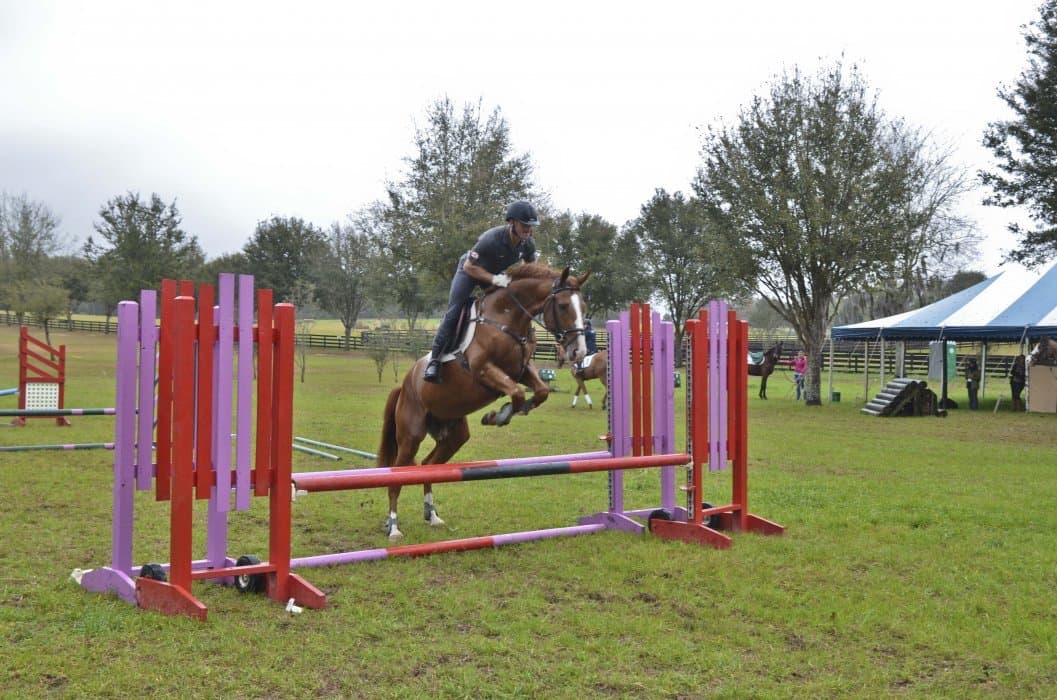
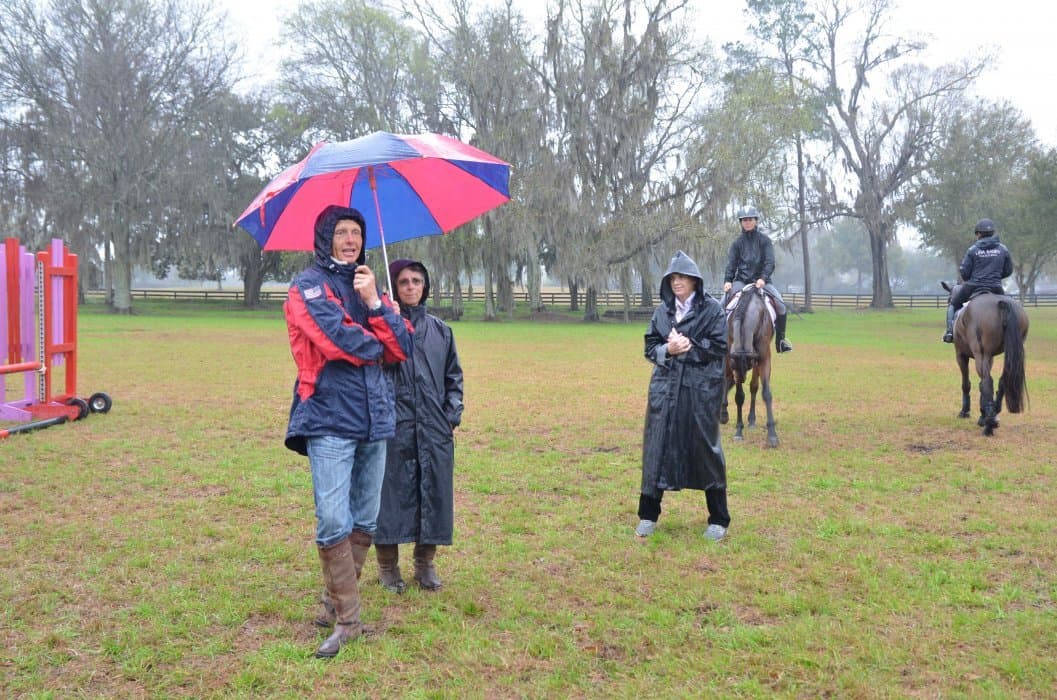
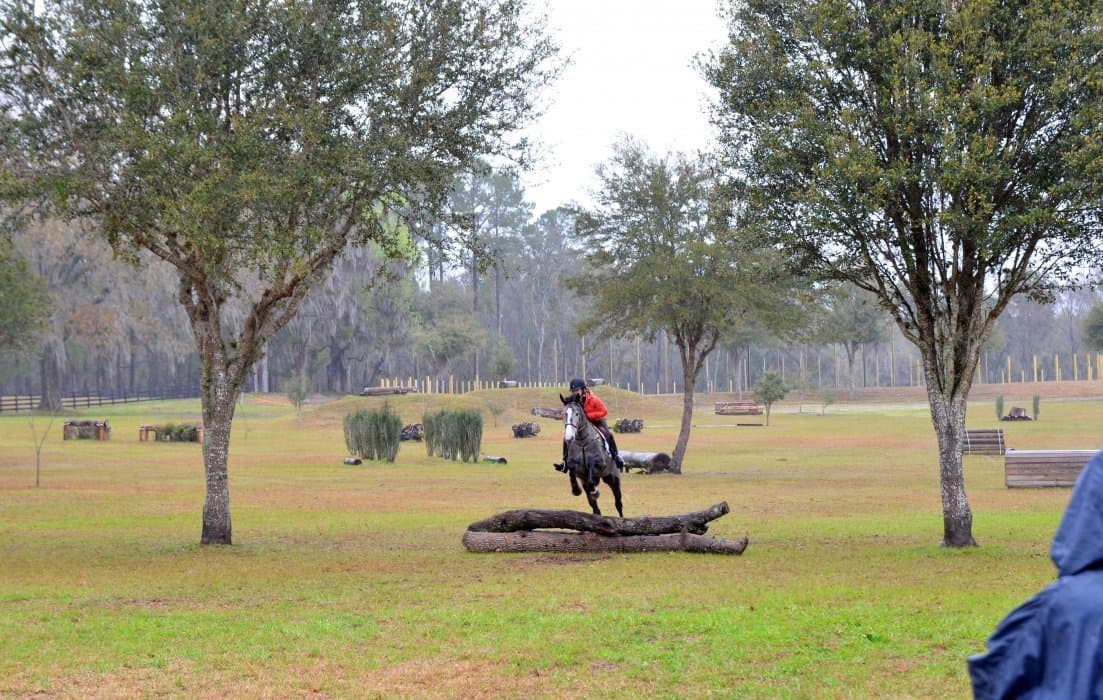
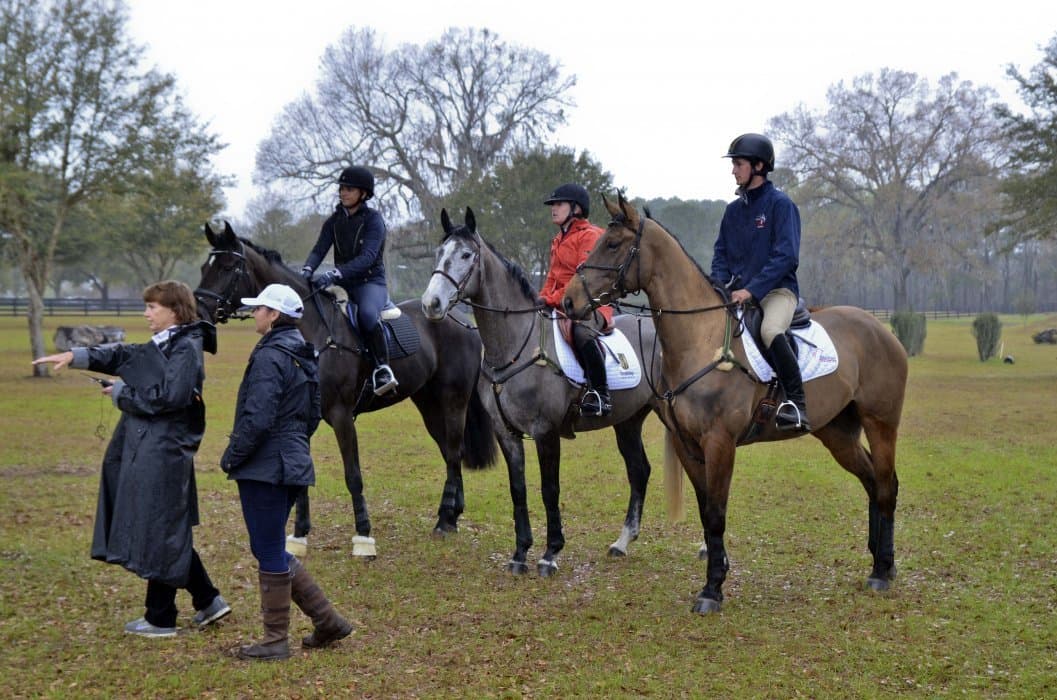
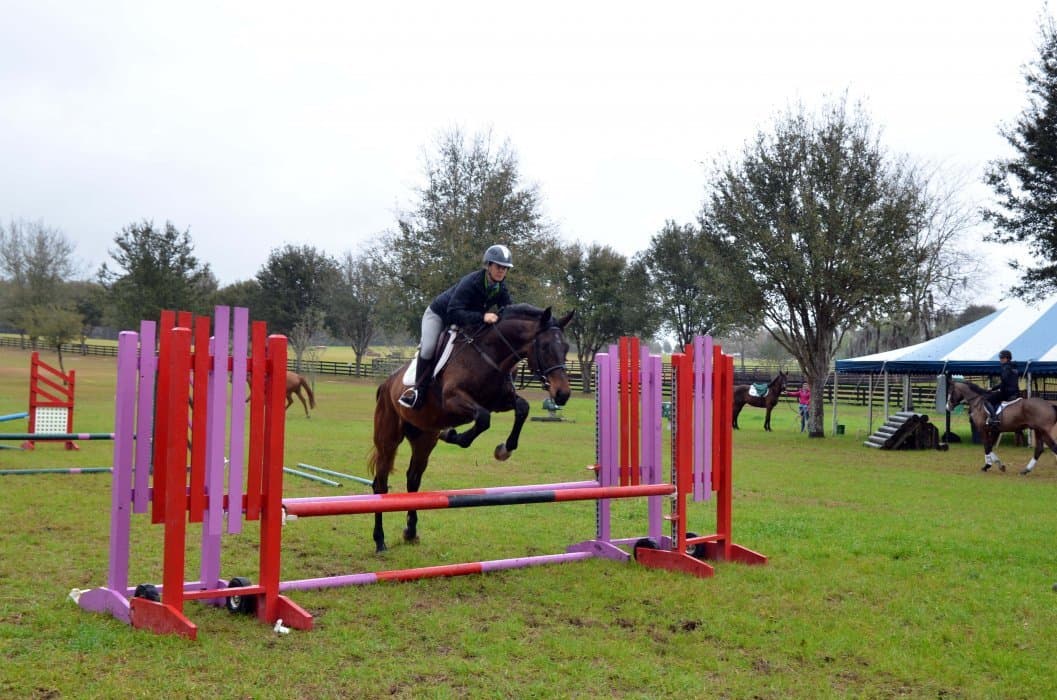
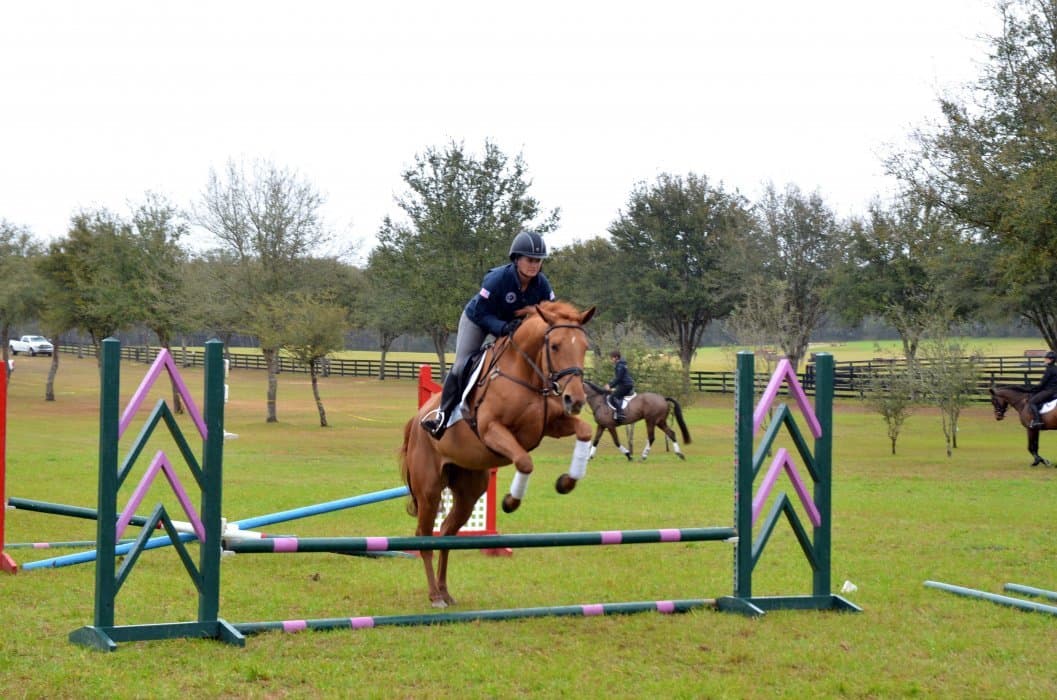
In the afternoon, spectators braved the rain and headed to Longwood Farm South for the Young Event Horse ridden demonstrations. Michael Pollard, Hannah Sue Burnett, Lisa Barry, Woods Baughman, Ashley Kehoe, Ashley Leith, Sharon White, Erin Freedman, and Ellie McPhail kindly volunteered their time and their horses for one or more of the segments: gait evaluation, gymnastics, show jumping, cross-country, and the gallop. Marilyn Payne and Maren Engelhardt pointed out the strengths and weaknesses of each young horse, evaluating the rideability, scope, movement, and temperament of the horses.
The horses were mostly four- and five-year-olds, but Lisa Barry rode her eight-year-old 2* horse for a developmental comparison. Some of the horses had green moments, and were praised by Maren and Marilyn when they seemed to learn from their mistakes. Marilyn explained that in a YEH competition, if the horse makes a mistake or is unsure about a jump, it can be an opportunity for the judges to see how the horse figures out problems, which could even help the overall score.
Leslie Law spoke about the gallop as the crowd watched a handful of young horses gallop on a long straightaway.
“Almost all horses can gallop,” said Leslie. “Even a heavy warmblood can gallop up this hill. But the question is: can they gallop for 11 or 12 minutes? I think you increase your changes of that with a Thoroughbred or with more Thoroughbred blood, but that’s not necessarily the only horse that can do it.”
Leslie says that he doesn’t have a standard requirement for percentage of Thoroughbred blood when he is looking for horses.
“Some horses, I can tell they have a great, easy, effortless gallop,” he said, explaining that the gallop shouldn’t be flamboyant or waste time in the air. “But some horses, I want to get on them and feel; do they move right off my leg and gallop ‘forward through the rider,’ as we say?”
“The training level and early preliminary days are very crucial for teaching these young horses how to gallop,” said Leslie. The horses that tend to gallop on their forehand have to learn how to stay balanced, and horses have to learn to jump out of a galloping stride. Leslie believes that the best way to teach a horse to carry himself in the gallop is not by schooling it more in the dressage, but to practice at the gallop and teaching the horse how to respond to a half halt within the gallop.
Tomorrow will conclude the symposium, and will focus on evaluating horses through video and photography. Tim Holekamp will also talk about presenting your horses in conformation photos, and Maren will do more video analyses of young horses galloping and jumping.
For more information about the Young and Future Event Horse Programs, visit this page on the USEA website.
Related Articles
USEA Board Approves New Intro Level
Growing the sport of eventing in the United States remains a central goal of the United States Eventing Association (USEA) and its Membership Committee. Through feedback from members, coaches, and prospective participants, a common theme emerged: while interest in the sport is strong, the cross-c...
USEA Podcast #412: The Stories that Defined Kentucky
Fresh off of the heels of a U.S. win at the Defender Kentucky Three-Day Event, the crew sits down to recap the weekend in the bluegrass and all the pairs that impressed during the CCI4*-S and CCI5*-L competitions. From well-deserved wins, to horses who won our hearts, to a moment that USEA CEO Ro...
The Countdown to the 2026 USEA American Eventing Championships presented by Nutrena Feeds is On!
The 2026 United States Eventing Association (USEA) American Eventing Championships (AEC) presented by Nutrena Feeds is headed back to the Kentucky H...