How to Determine Your Horse's Insured Value
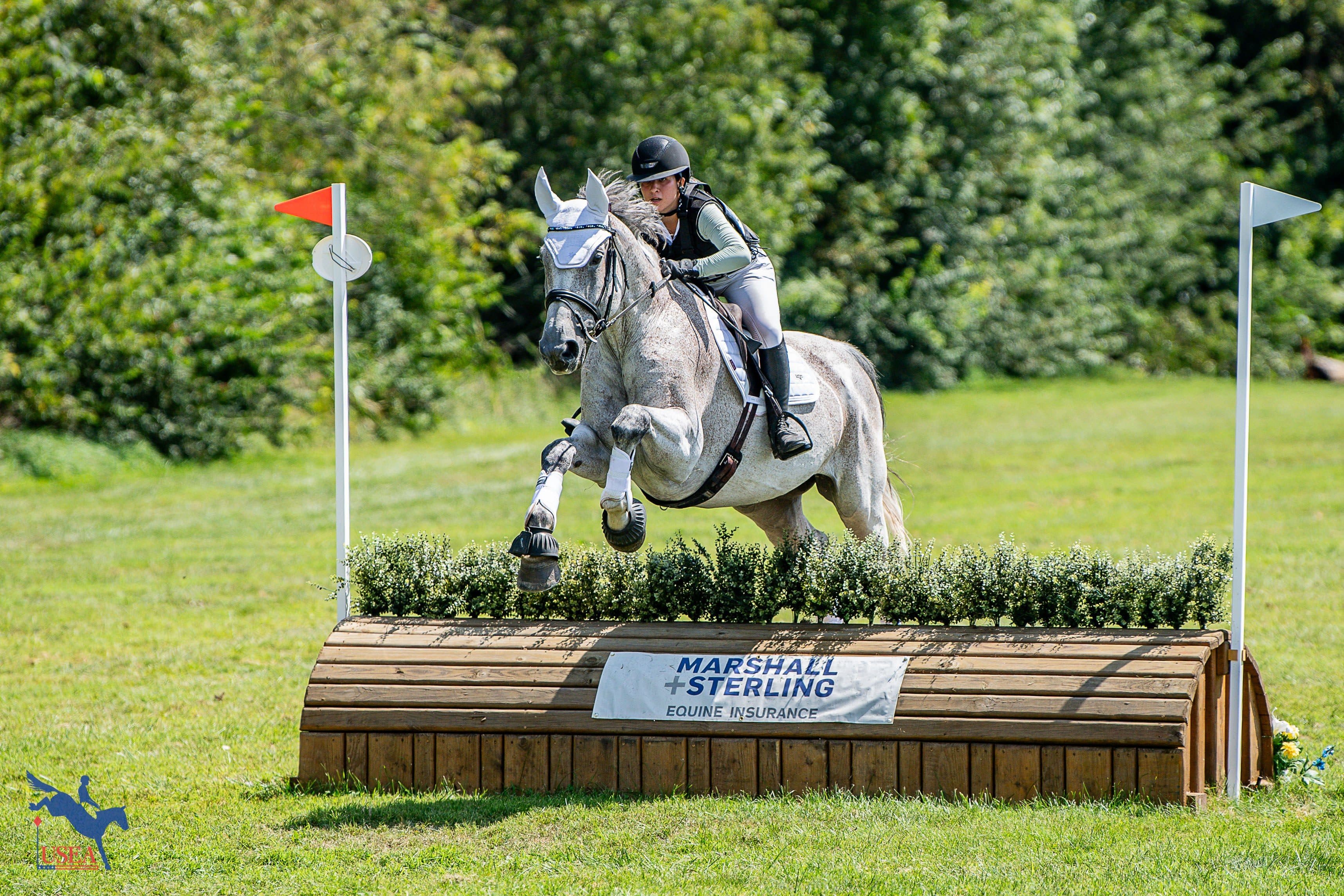
Not sure what value to put on your horse's mortality (life) insurance? You're not alone. While there is no exact formula, underwriters follow consistent guidelines. This article explains what they look at, what they ignore and what paperwork to have ready. And if you’re interested in finding out how premium relates to insured value and want an insurance quote, visit Marshall+Sterling Equine Insurance to request a quote.
Quick answer: For a recent purchase, insured value is generally capped at what you paid. For a horse you've owned longer, underwriters may approve a higher value based on competition record, professional training, use and breeding history. Day-to-day expenses such as boarding and vet bills do not count toward value
How is insured value determined for a recently purchased horse?
If you bought your horse within the last few months, the purchase price is the maximum insured value underwriting will allow. Some clients ask to insure for more because they got an especially good deal, which may be the case, but underwriting generally won't factor it in. Insurance is meant to indemnify you for your loss (and no more), so if you paid $7,500 on a recently purchased horse, that is the value underwriting will approve.
What to have ready:
- The exact purchase price and date of purchase, entered accurately on your application
- Proof of purchase, such as the sales agreement, receipt of payment or proof of a cashed check or wire transfer (some underwriters will ask for these when applying for coverage; others might not need them then, but will require them if you file a mortality claim).
Do transportation and agent fees/commissions count?
Sometimes. For a recently imported horse, underwriting may add certain transportation costs to the purchase price. Some underwriters will also consider fees paid to an agent or broker who helped you find the horse.
Important: List these amounts separately on your application. Underwriting needs to see the price you paid the seller apart from any additional fees.
How is value set for a performance horse you've owned for a while?
Once you've owned a horse for several months or longer, underwriters can look beyond the purchase price. They consider two main factors.
Competition Record
This applies to performance horses, including eventing, dressage, hunter/jumper, driving, barrel racing, cutting, reining, roping, equitation and show horses.
- Where prize money is limited, underwriters look at the division or level, final scores and placings
- Where prize money and valuable prizes are common, they also consider the amount won and the value of prizes
As your horse moves up the levels or competes successfully over time, underwriters may consider a value above the purchase price.
Professional Training Fees
Underwriters consider training fees paid to a professional. Only the cost of training counts, not board or other expenses paid to your trainer. If you are the professional trainer, they will consider what you would typically charge a client.
Note: Training costs are not added dollar for dollar. If you paid $500 per month for 12 months ($6,000 total), underwriting will not add $6,000 to the value. Generally, they consider a percentage of the amount.
What expenses do not count toward value?
Horse ownership is expensive, even on a shoestring budget, but many of your typical expenses will not be considered by underwriting, including: boarding costs, feed, farrier, vet, tack and equipment, hauling and show fees
- Boarding costs
- Farrier & vet
- Tack & equipment
- Hauling
- Show Fees
Can a horse without a competition record be insured above purchase price?
Yes. A horse doesn't need a show record or paid training to hold value. Examples include:
- Fox hunters: Underwriters consider how long the horse has been hunting, whether it goes mainly first or second flight or hilltops, and any other details you can provide
- Working cattle horses: These can be very valuable to a working operation
- Seasoned horses that help young horses learn the ropes or lead trail rides
How are rescue and gifted horses valued?
- Rescue or adopted horses: Underwriting typically considers the amount paid to the rescue
- Gifted horses: They generally apply a minimal value, such as $500 to $1,000
If your main concern is Medical/Surgical coverage, we work with one company that offers it on minimally valued horses, provided the horse otherwise meets underwriting criteria. For example, while not necessarily a rescue, if you buy a Thoroughbred off the track for $3,000 but want $10,000 in Medical/Surgical coverage, they are usually an option.
How is value set for homebred foals and breeding stock?
- Homebred foal you've owned from birth: Underwriting typically considers two to five times the sire's stud fee you paid. Value may increase as the foal matures, based on training spend, in-hand show results and breed registry designations such as Warmblood testings
- Broodmare: The sale prices and performance records of her foals can factor in
- Breeding stallion: Underwriting can consider the stud fee, number of foals produced and the sale prices and performance records of his foals
Quick Reference: What Underwriters Consider
| Situation | Typically Considered |
Recent Purchase | Purchase price (plus certain transport or agent fees, documented separately) |
| Performance Horse | Competition record and professional training fees |
| Pleasure, Hunting, or Working Horse | Length and type of use, plus details you provide |
| Rescue or Gifted Horse | Amount paid to rescue, or a minimal value for gifts |
| Homebred Foal | Three to five times the sire's stud fee |
| Breeding Stock | Offspring sales and performance, stud fee, number of foals |
Can I change my horse's value mid-policy?
Most companies will consider a mid-term change, providing the horse is sound and healthy. Send your agent the same substantiation described above, and they will submit it to underwriting for review.
What do I need to provide when renewing?
Some companies require value substantiation every year, even if you aren't changing the value. They want to confirm the horse is still competing at least occasionally (competition horses), in some form of work (pleasure horses), or being used for breeding (broodmares and stallions).
What to include:
- Complete the applicable sections of the form in your renewal paperwork, even for a pleasure horse
- Add an official competition record from a breed, sport or national association, if you have one
- For pleasure or work horses, use the Comments section to describe the past 12 months, such as trail riding, schooling (including the horse’s progression – if they were schooling training level last year but are now schooling second level, include that detail)
- If the horse has had some time off, include the reason the horse (rider off to college, rider out of commission due to injury, etc.)
- If a broodmare or stallion isn't being bred, explain why
- If the form has no space, attach a separate page or send an email
- If you’re stumped, think of it as writing a sales ad and list you’re horse’s accomplishments
Note: The maximum amount a Mortality policy will pay in the event of a loss is the amount you have insured the horse for. The insurance company does not automatically increase your horse’s value. You must provide substantiation to underwriting to request a value increase, and providing the value is approved, then pay the additional premium due.
Please don’t send a blank form. Sending back a blank form, or nothing at all, may prevent your policy from being renewed. At best, the horse continues at its current value. At worst, the company may decline to renew without some information from you.
What if I can’t afford to insure my horse for its full value?
Not a problem. If your competition record paints the picture of a $50,000 sale price, but your bank account can only handle the premium for a $15,000 newbie, you can choose an insured value that works for you. Many of our clients don’t insure their horses to their full value, especially those that are most interested in having Medical/Surgical coverage (which is only available as an endorsement added to a Mortality policy).
What if my horse doesn't fit these categories?
Your horse may not fit any of the categories above, or may have been purchased under unusual circumstances. Call your agent to go over the details.
Next steps
To request an emailed quote or learn more about coverage, Marshall+Sterling or call (844) 320-8060. For answers to additional questions, check out How Much Does Horse Insurance Cost, Answers to Your 5 Most Common Horse Insurance Questions and Equine Insurance FAQs.
Author Bio
A lifelong equestrian starting out in 4-H and then moving on to show hunters, eventing and dressage, Amy J. Daum has three decades of experience in the equine insurance industry, including seven years as a member of the USEA staff. A founding partner of Broadstone Equine Insurance Agency, she joined Marshall+Sterling seven years ago when the agency acquired Broadstone and has since served as Marshall+Sterling's VP of Equine Operations.
About Marshall+Sterling
Founded in 1864, Marshall+Sterling is a 100% employee-owned national independent risk solutions partner, providing business and personal insurance, employee benefits, and wealth management solutions. Marshall+Sterling is committed to empowering customers to predict, prepare for, and preempt risk—creating a future that’s safer and more secure. Headquartered in New York and licensed in all states and the U.S. Virgin Islands, the firm is regularly recognized among the top 50 of privately held insurance brokers in the United States.
Related Articles
Rule Refresher: Microchip Requirement Takes Effect Dec. 1
With the start of the 2027 competition year just around the corner, the United States Eventing Association (USEA) would like to remind members of an important rule change taking effect on Dec. 1, 2026. Beginning on that date, all horses competing at United States Equestrian Federation (USEF) lice...

USEA Podcast #425: The Horses to Watch After the 2026 YEH Championships
The future of eventing is looking bright! This week on the USEA Official Podcast, we're celebrating the 2026 USEA Young Event Horse (YEH) Championships with the riders and connections behind this year's East and West Coast champions. James Alliston joins the show following a clean sweep of the We...
Future Proofing Eventing With the USEA Youth Mentorship Program
For many of us, our experience with eventing is limited to being a rider, a competitor, or a fan. We enjoy the sport by doing it or watching it, cheering for the successes and bemoaning the losses from personal enjoyment or disappointment. Some of us may be lucky enough to compete at the upper le...