Here’s How to Recognize the Signs of Poor Saddle Balance
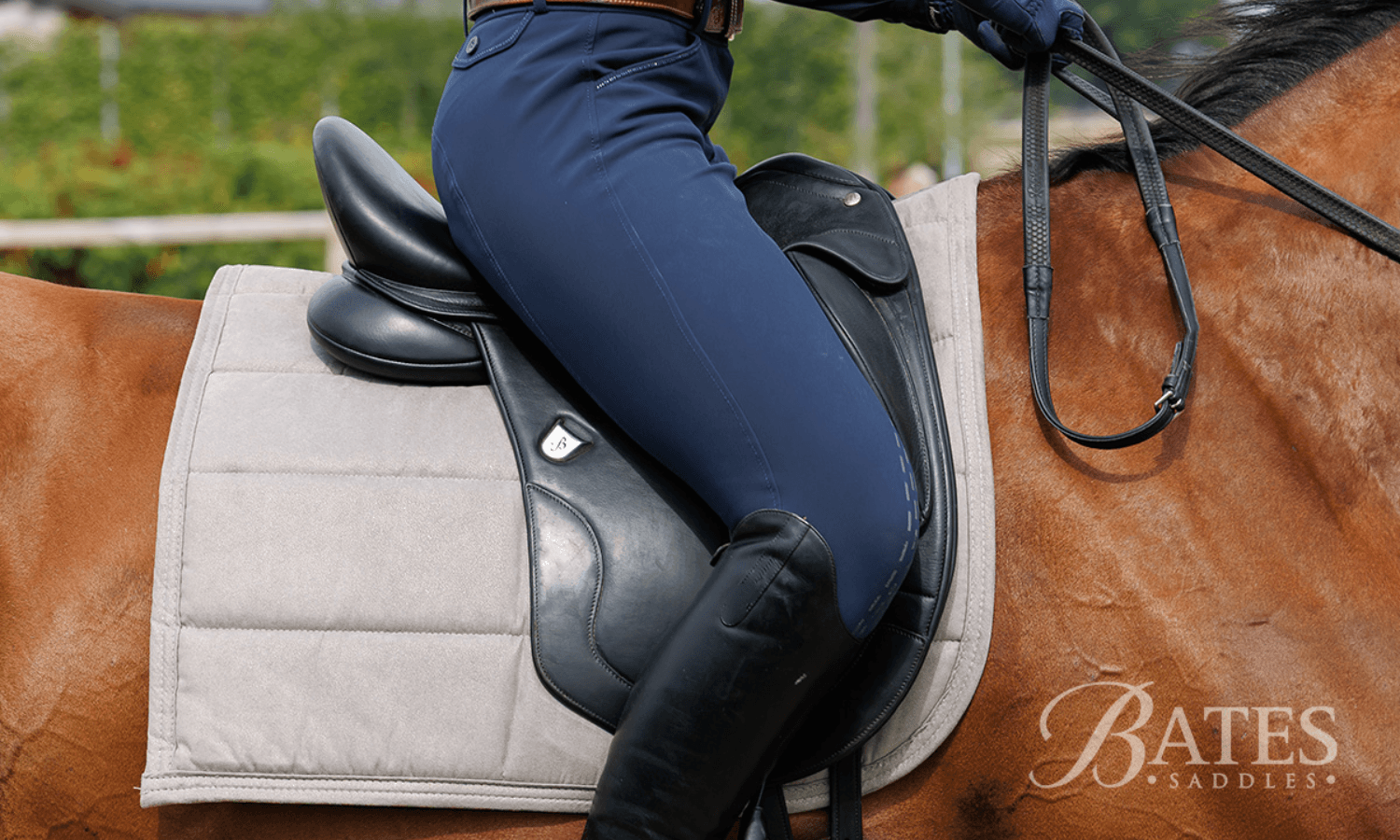
In our last article together with Bates Saddles, the Official Saddle of the United States Eventing Association (USEA), we showed you how to correctly position your saddle within the optimal saddle platform behind the shoulder blade and in front of the last rib. But even with your saddle in the right place, one important element remains, which is balance.
A saddle that’s out of balance can impact far more than just your comfort, it can affect your alignment, your horse’s movement, and your ability to ride effectively. Whether you’re feeling ‘off’ in your position, or your horse is showing subtle signs of discomfort, it could be time to ask: Is my saddle helping me or holding me back?
What Is Saddle Balance and Why Does It Matter?
A balanced saddle allows the rider to sit in harmony with the horse’s movement. It should naturally support your position without you even noticing it.
When a saddle is out of balance, even slightly, you may find yourself:
- Struggling to stay upright
- Gripping to stay in place
- Fighting to maintain alignment
- Feeling sore or fatigued after rides
For your horse, the consequences can include pressure points, blocked movement, or uneven weight distribution.
Signs Your Saddle May Be Out of Balance
Even with correct placement, the balance of your saddle may need adjustment. Here’s what to look for:
- Saddle too low behind (cantle low):
- You feel like you’re in a recliner or ‘armchair’
- Your lower leg shifts forward
- It’s difficult to stay balanced in two-point
- You may feel collapsed at the hip, and the saddle can press heavily at the back which will also be uncomfortable for your horse.
- Saddle too low in front (pommel low):
- You feel tipped forward or pushed toward the pommel
- Your lower leg sits too far back
- You may have to pinch with your knees for grip, which reduces security and effectiveness
- It can cause an arched lower back, often leading to rider soreness
Whether you're schooling on the flat or tackling a course of fences, these imbalances make it harder to ride in sync with your horse and can contribute to performance issues or behavioral changes.
What Does a Balanced Saddle Feel Like?
A well-balanced saddle should allow you to:
- Sit effortlessly in the middle, without feeling pushed forward or backward
- Maintain a correct ear–shoulder–hip–heel alignment, even in motion
- Move smoothly between positions, especially into two-point
- Ride without bracing, gripping, or constantly adjusting
If your saddle makes riding feel harder than it should, it might be time to investigate further.
A Simple Short-Term Fix
If you suspect your saddle is out of balance and can’t immediately access a saddle fitter, you can use riser pads as a temporary solution.
- Front risers help lift a low pommel
- Rear risers help lift a dropped cantle
Used correctly, these can bring your saddle back into balance and restore your alignment in the short term. They’re not a permanent fix but they can make a big difference while you wait for a professional fitting.
Your Position Tells the Story
One of the easiest ways to identify a balance issue is by observing your own position:
- Are you working too hard to stay in alignment?
- Is your leg sliding too far forward or back?
- Do you feel tipped forward or like you're sitting behind the movement?
- Are you sore after riding for reasons you can’t quite explain?
Your horse’s feedback also matters, are they moving freely? Showing signs of resistance? It may be subtle, but it’s worth investigating.
Ride in Balance, Ride at Your Best
Correct saddle placement is only one piece of the puzzle. Saddle balance plays a critical role in unlocking your best position and your horse’s best performance. When everything is aligned from fit to balance to rider posture, it feels effortless.
Take a look at how Could Your Saddle Be Causing the Problem? – YouTube.
Stay tuned for more expert advice as we continue this saddle education series brought to you by the Official Saddle of the USEA, Bates Saddles, committed to helping you and your horse ride in comfort, harmony, and peak performance every stride of the way. Follow @useventing and @batessaddles for more educational saddle related information.
Related Articles
The VAP Series: Dressage Score Runner
While riders are focused on putting their best foot forward in the dressage arena, another important part of the competition is happening just outside the ring. Behind every promptly posted dressage score is a team of dedicated volunteers helping ensure that completed tests make their way from th...

USEA Recognizes Ride EquiSafe for Support of 2026 American Eventing Championships
The United States Eventing Association (USEA) is pleased to recognize Ride EquiSafe for its continued support as an Official Bronze Level Sponsor of the 2026 USEA American Eventing Championships (AEC), which took place August 25-30 at Th...
Skyler Norris Comes Full Circle with Advanced Debut at Ocala
For Skyler Norris, the Florida Horse Park in Ocala is more than just another competition venue. It’s where she first discovered the thrill of eventing as a little girl and where she’s spent countless weekends competing, learning, and chasing her dreams.