For Ingrid Pavilanis, Building IEL in Area IV Has Always Been About Giving Kids a Team
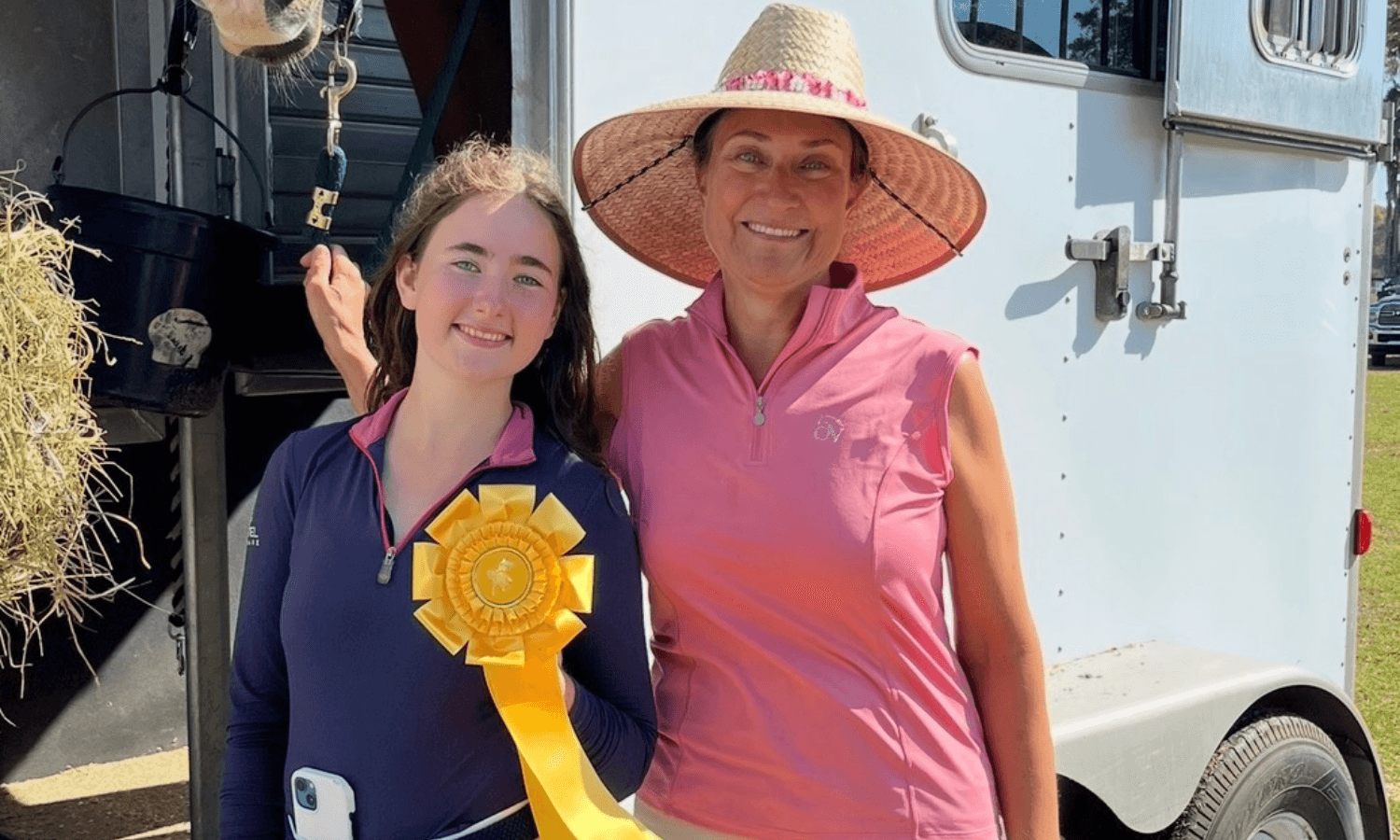
When the USEA approved the creation of the Interscholastic Eventing League (IEL) in 2020, Ingrid Pavilanis saw an opportunity and got to work.
Pavilanis, a lifelong eventer whose daughter, Emma Buckley, was then riding with coach Jennifer Howlett at L’Esprit Equestrian in Illinois, began making phone calls. She reached out to event organizers and coaches, explained the new program to parents and riders, and encouraged eligible juniors to get involved.
Over the next few years, she helped bring IEL Team Challenges to events in Area IV and beyond, offering to handle scoring herself, raising money to purchase ribbons and sending them to competitors, and finding sponsors for prizes.
“I think you have to talk to everyone and just offer to help,” Pavilanis said. “And hopefully it catches on.”
It was the kind of behind-the-scenes work that rarely draws much attention but can make all the difference for a young program.
“[IEL] exists in Area IV in large part because she took a hold of it,” Howlett said. “We would not have had any IEL competitions, or very many, if she hadn’t organized it—even to the extent of ordering the ribbons and offering to do the scoring.”
A Natural Fit
Designed to bring more of a team atmosphere to a traditionally individual sport, IEL gives junior riders the chance to compete alongside their peers. Today, the program is open to riders in grades 5th through 12th, with clubs formed around barns, schools, Pony Clubs, Areas, or another shared connection. Riders can compete together in IEL Team Challenges held in conjunction with USEA-recognized horse trials, and the program provides a pathway toward collegiate eventing as riders graduate from high school.
For Pavilanis, the idea immediately made sense. She grew up in the Montreal area, with her family’s farm about 10 minutes from Bromont, a longtime hub for international equestrian competition in Quebec. Pavilanis went on to compete in Young Riders before eventually building a career in engineering and banking and settling in the Chicago area.
Buckley’s interest in horses began early. Pavilanis remembers watching the 2008 Olympics on television when her then-2-year-old daughter, who had never seen her mother’s old riding photos or ribbons, suddenly pointed at the horses.
“Mama, I want,” Buckley told her.
As it happened, Buckley’s riding would also reconnect Pavilanis with someone from her own eventing past. Pavilanis and Howlett had known each other through the Quebec eventing community when they were younger, but decades had passed without the two seeing each other. Then one day, Howlett was standing in an indoor riding arena in Barrington, Illinois, when Pavilanis walked up to her.
“Jennifer?” Pavilanis asked.
“Ingrid?” Howlett replied.
“It was surreal,” Howlett recalled. “We probably hadn’t seen each other for over 20 years at that point.”
The two stayed connected, and Buckley ultimately became a longtime student in Howlett’s L’Esprit Equestrian program. So when IEL arrived, Pavilanis and Howlett already had a group of young riders around them.
“I just went to Jennifer, and I said, ‘OK, we’re going to put all the kids who are eligible on the team,’” Pavilanis recalled.
At first, however, one of the biggest challenges was simply explaining what IEL was. Parents wondered what they needed to do to participate, while organizers were being asked to add something unfamiliar to an already busy horse trials weekend. Pavilanis emphasized that riders were already competing individually in their regular divisions; the Team Challenge simply added another element to the weekend.
As she began pushing for more Team Challenges, Pavilanis contacted ECP-certified trainers throughout Area IV and reached out directly to horse trials in Area IV and neighboring Area VIII. Her pitch was simple: If organizers were willing to hold a Challenge, she was willing to help make it happen. At some events, that meant handling the scoring remotely and sending ribbons to competitors afterward.
“My mom has been the driving force of the IEL in Area IV and at competitions in other Areas that are popular destinations for Area IV riders,” Buckley said. “Nobody really knew what it was and my mom worked hard to get the word out, organize it at events, to get sponsors for prizes and ribbons, and to get as many junior riders on teams as possible.”
For Buckley, now 20, the result was something that changed the feel of a competition weekend.
“IEL was a great opportunity within the USEA to make competitions about more than just your personal goals, as it connected everyone on the team under a new goal of doing well together,” she said. “It allowed me to meet new young riders, grow closer to the girls on my team, and have a bit of extra fun at competitions.”
Making Every Rider Count
For Pavilanis, though, the value of that team goes beyond camaraderie—especially for riders who aren’t necessarily aiming for blue ribbons.
“I’m not worried about the kids who can win,” she said. “I’d like the kids who get eliminated, and who struggle, to be able to say, ‘I was on that team.’”
At one Area IV Team Challenge, nine teams participated but only six completed the competition with a team score. Pavilanis didn’t want the riders on the other three teams to leave without acknowledgment. She and the event’s Pony Club treasurer wrote and signed letters congratulating them for participating and encouraging them to ask organizers at their next event about hosting an IEL challenge.
At another early competition, Pavilanis had extra sixth-place ribbons. She sent them to riders who hadn’t placed or completed the competition anyway, simply to encourage them to keep going.
The gesture came from experience. Pavilanis still remembers her own first event at age 12. She won the dressage phase, then had two refusals at the first cross-country fence before getting her mare around the rest of the course. It was the year of the 1976 Montreal Olympics, whose equestrian competition was held at Bromont, and Pavilanis received a participation certificate decorated with the Olympic symbol and her name.
Half a century later, she still has it.
“I think it’s important when you say, ‘Hey, you guys, you did well in a team challenge, or you participated,” she said. “Good for you for putting yourself out there.”
That philosophy has also shaped Pavilanis’ efforts to make Team Challenges feel special for the riders who participate. At a local Challenge this year, she approached a tack shop about donating prizes. The shop responded enthusiastically, creating inscribed leather keychains for the placing teams and adding horse treats, socks, and a gift certificate.
A Place on the Team
Buckley has since aged out of IEL and moved on to college, one of several L’Esprit riders who have graduated from the program. She has remained active in Area IV programs, including the Area IV Youth Council, and participated in Young Rider and Adult Rider team challenges.
That progression is part of IEL’s larger promise: giving younger riders another way to find community in the sport and, potentially, a bridge toward the opportunities available to them as they get older.
For Pavilanis, there is still plenty of room for IEL to grow in her area. “My goal would be to see every Area IV event hold a Team Challenge and for every eligible rider to participate,” she said.
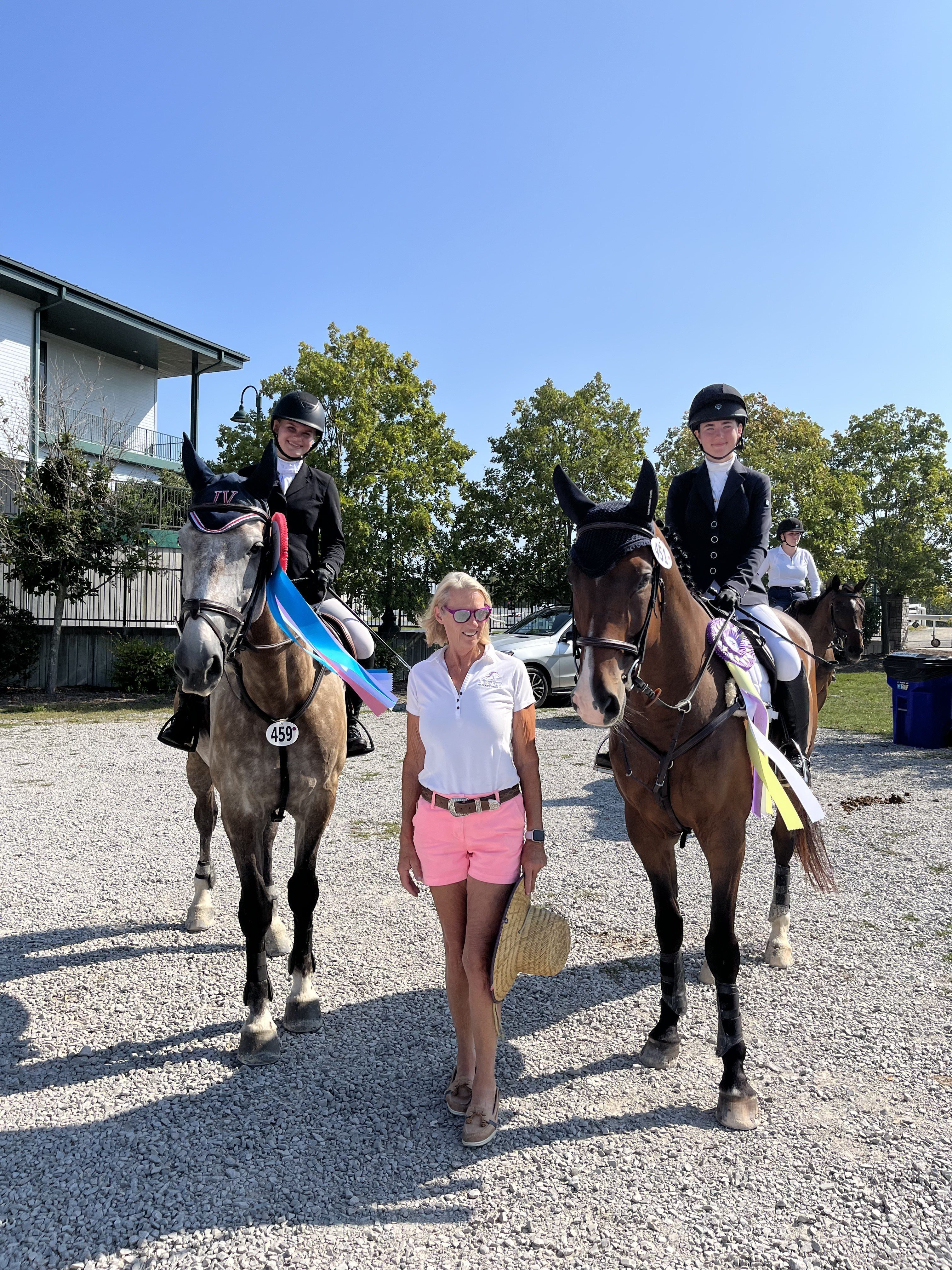
Howlett believes having someone willing to champion the program locally is essential to making that happen. “I think every Area should have a driver for that program,” she said. “Somebody that’s driving it forward.”
Pavilanis says growing IEL isn’t simply about adding more Team Challenges to the calendar. It’s about reaching the riders who might otherwise think there isn’t a place for them—the kid whose round doesn’t go as planned, whose score doesn’t count toward the team total, or who is still figuring out where they fit in the sport.
On another day, Pavilanis knows, that same rider might be the one whose score carries the team. “I want all these kids—middle school, high school, and college—to not feel left out,” she said.
After all, Pavilanis still has the participation certificate she earned at her first event 50 years ago. She knows how long a small acknowledgment can stick with a young rider—and how much it can mean simply to know you were part of something.
About the USEA Interscholastic Eventing League (IEL)
In August 2020, the USEA Board of Governors approved the creation of the USEA Interscholastic Eventing League (IEL) as an official program of the USEA. The mission of IEL is to unite junior riders who are in the 5th—12th grade and provide a supportive community through which students can continue to pursue their riding interests. A group of junior members in the 5th—12th grade who share a common bond, such as the same barn, school, Pony Club, or other connection, can register with the USEA as an IEL Club. The 2026 USEA Intercollegiate & IEL Championships will be held at Stable View in Aiken, South Carolina, on May 15-17. Click here to learn more about the Interscholastic Eventing League.
The USEA would like to thank Bates Saddles, Gallagher’s Water, Kerrits, PulseVet, Schneiders Saddlery, Aiken Saddlery, AllStar Tents & Events, Horse & Country, Meybohm Realtors – Deirdre Stoker Vaillancourt, Powell Asset Protection Agency, Sidelines, U.S. Equestrian, Wendel Mobile Equine, WeRideTogether, World Equestrian Brands, Young Rider Magazine, and 100xEquine for sponsoring the USEA Intercollegiate Eventing Program.
Related Articles
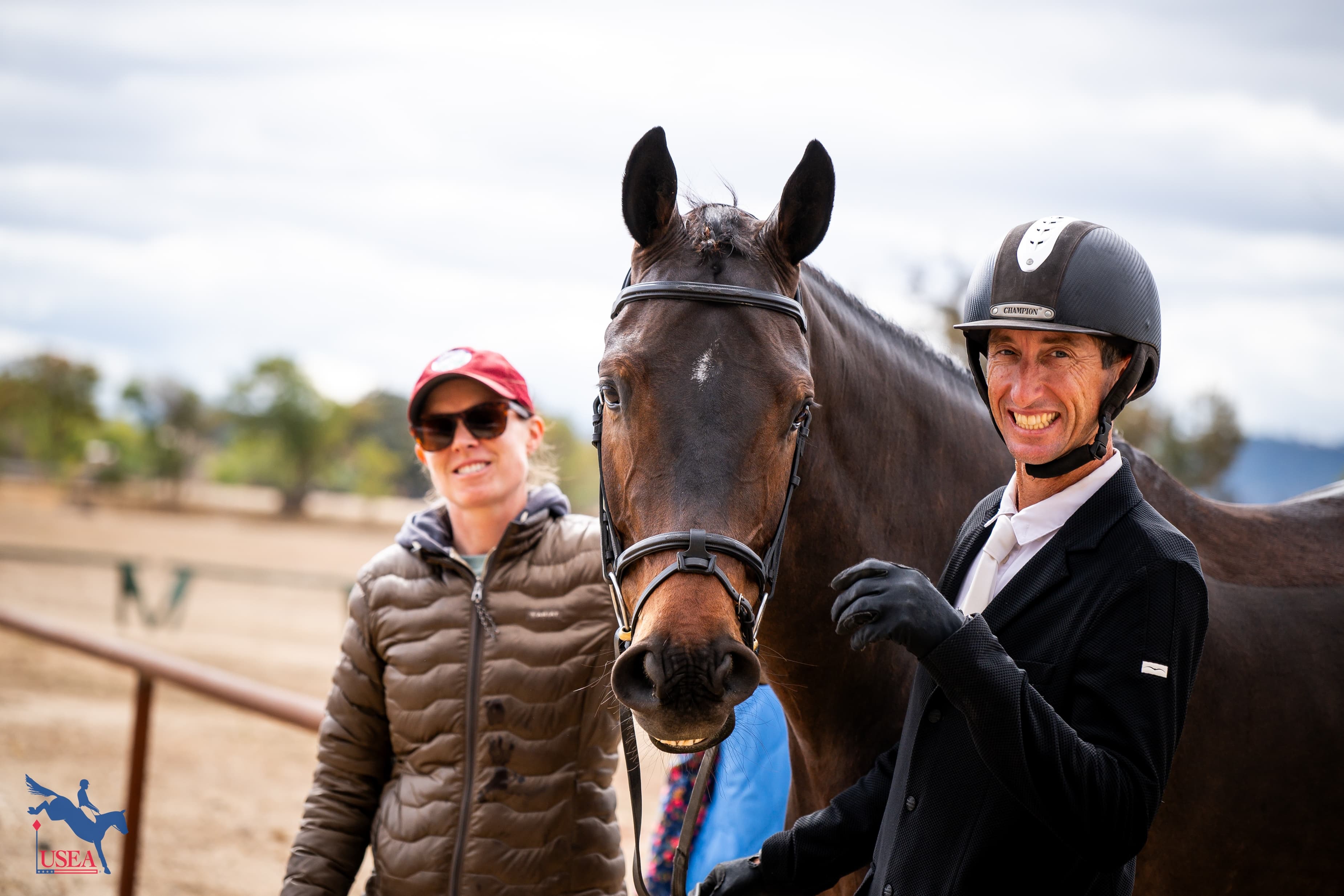
Day One Recap from the 2026 USEA Young Event Horse West Coast Championships
The 2026 USEA Young Event Horse (YEH) West Coast Championships kicked off with the dressage and conformation phases today at Twin Rivers Ranch in Paso Robles, CA. James Alliston leads the 5-year-old championship with a 24.95 on Petey Alliston's Viodor (Vidar x Haupstutbuch Sibrensil), a German-br...
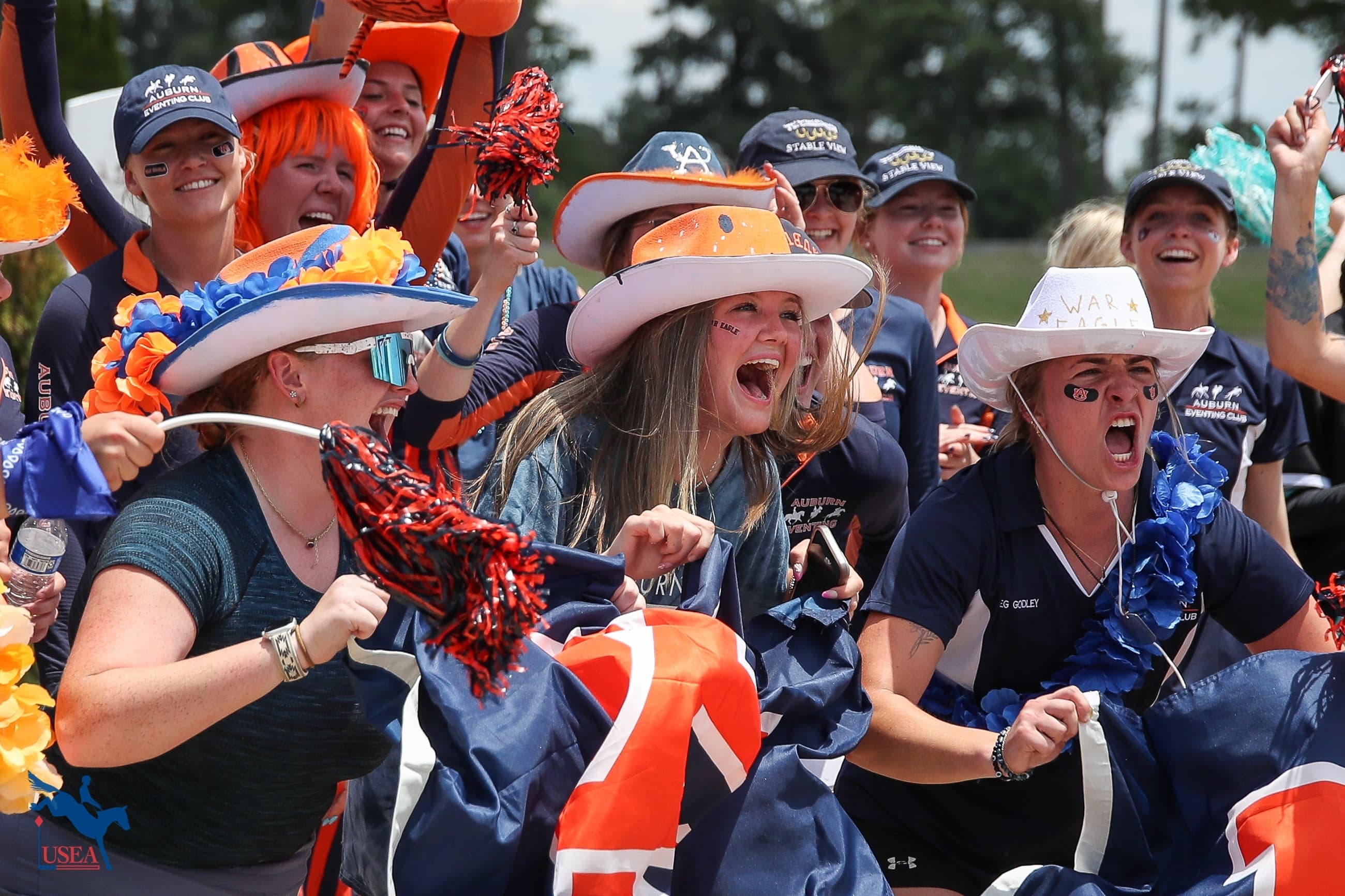
Request for Expressions of Interest: 2028 & 2029 USEA Intercollegiate & Interscholastic Eventing Spring Championships Host Sites
The United States Eventing Association, Inc. (USEA) is excited to announce a request for expressions of interest to host the USEA Intercollegiate & October 23, 2026
Fast Facts: 2026 USEA YEH West Coast Championships
As of this morning, 19 young horses are entered in the 2026 USEA Young Event Horse (YEH) West Coast Championships at Twin Rivers Ranch in Paso Robles, California, which take place this weekend, October 23–24. The field includes six 4-year-olds and 13 five-year-olds. Horses qualify for the West Co...
Official Corporate Sponsors of the USEA
Become a Sponsor