More Than a Team: Building Horsemanship and Community at the University of Findlay
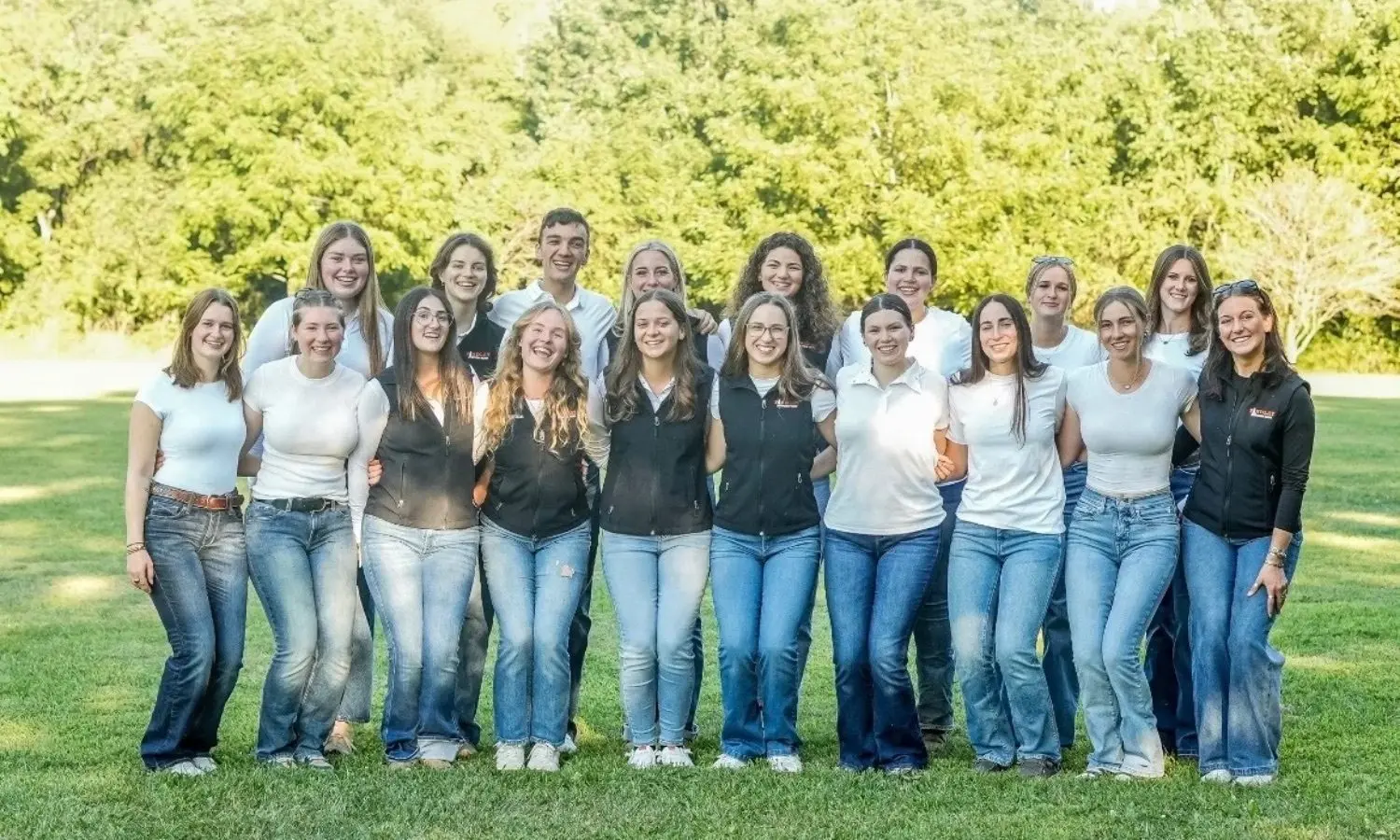
For college students who want to continue riding while pursuing a degree, finding the right balance between academics, horses, and campus life can be a challenge. At the University of Findlay, the eventing team offers students a way to remain involved in the sport while becoming part of a community built around horsemanship, teamwork, and shared responsibility.
The team brings together riders with different levels of experience, but its focus extends beyond competition. Through regular practices, team-hosted events, and opportunities to take on leadership roles, members learn to support one another both in and out of the saddle.
Building Partnerships in the Barn
One of the defining features of Findlay’s program is that all team horses are housed in one barn. Most members ride and compete on horses assigned to them through the university. Horses assigned to the students through the school are responsible for all care and riding of those horses. Members who own a personal horse may compete with it on the team instead of a school-assigned horse if they so wish.
Having an assigned horse through the school gives students the opportunity to develop a partnership over time, just like owning their own horse. Riders become familiar with their horses’ personalities, quirks, strengths, and weaknesses, building the trust and understanding that are important in eventing.
That relationship becomes especially important on cross-country, where horse and rider must navigate unfamiliar obstacles and terrain together.
“Eventing requires a tremendous amount of trust between horse and rider, particularly when you get to the cross-country phase,” said Victoria Tokarczyk, one of the team’s two co-captains.
The arrangement also encourages students to become responsible horsemen and horsewomen. Caring for and working with an assigned horse requires consistency and an understanding that horsemanship extends beyond the time spent riding.
“We aren’t just developing riders; we are developing knowledgeable and responsible horsepeople,” Tokarczyk said.
An All-Hands-On-Deck Approach
The team’s weekly schedule is centered around Wednesday practices with coach Abigail Conner. Because students have individual class schedules, riding commitments, and other responsibilities, communication is important in coordinating the group. Team members use group text messages to stay connected and organize their schedules around practice.
The work does not end when the riding is finished. After practice, team members reset jumps, put away equipment, clean up the arenas, and make sure the horses are properly cared for. Horse aftercare includes wrapping, poulticing, applying liniment, and time on the Theraplate.
“Everyone is responsible for helping leave the barn ready for the next day,” Tokarczyk said. “We emphasize teamwork and making sure no one is left doing all the work.”
Once the barn is in order, the team comes together for a meeting to go over upcoming competitions, responsibilities, and questions. These shared responsibilities reinforce the idea that practices and competitions are team efforts, not just individual riding opportunities.
Student leadership also plays an important role in keeping the program organized. The two co-captains prepare practice lists, coordinate and lead practices alongside Conner, and oversee preparation for competitions.
Other officers take responsibility for different parts of the team’s operation. The two fundraising chairs organize fundraising opportunities and the team’s hosted events, including Jumper Nights, the Three-Phase, and the Combined Test, and coordinate entries and ride times. The treasurer manages team finances and hotel accommodations, while the workout coordinator makes sure members complete three workouts each week, including at least one independently. The social media coordinator helps promote the team and its activities.
Each role contributes to the team’s success, and members are expected to take an active part in representing both the team and the university. The result is an all-hands-on-deck culture in which students share responsibility for keeping the program moving.
Competition and Connection Beyond Practice
Along with weekly practices, the team hosts its own events throughout the academic year, giving members opportunities to compete close to home, fundraise, and spend time together.
In the fall, the team hosts two Jumper Nights and a Three-Phase. The schedule continues in the spring with two more Jumper Nights and a Combined Test. Jumper Nights are informal schooling shows that let riders practice jumping courses in a competition-like setting. The Three-Phase includes dressage, stadium jumping, and cross-country, while the Combined Test pairs dressage with stadium jumping. This allowed students to practice their desired phases without the pressure of a recognized event.
Because the team runs these events itself, members gain experience organizing and supporting competitions, as well as riding in them.
The team also makes time for fun. The year kicks off with a team picnic in September after tryouts, and each fall before Halloween, the captains organize a themed murder mystery night. Members take on characters, gather clues, and question one another to figure out who committed a fictional crime. This year’s mystery has a rodeo theme, with characters based on the equestrian world.
“Our annual murder mystery is one of our favorite team traditions,” Tokarczyk said. “One of my favorite parts is seeing everyone get into character and watching the different theories develop throughout the night. It is a fun way to bring the team together outside of riding and give everyone a chance to interact in a different setting.”
A Place for Riders at Every Level
The team brings together students with varying levels of riding and eventing experience, and members make a point of supporting one another at every stage.
At competitions, teammates make sure every rider has someone cheering them on, from the start box to the finish line. They help each other get ready for dressage tests and pitch in with tack, equipment, and making sure everyone is where they need to be.
“At home, support looks a little different but is just as important,” Tokarczyk said. “Teammates help each other learn new dressage tests, work through challenging exercises, and prepare for upcoming competitions. If someone is struggling with a particular skill, teammates are always willing to offer advice, encouragement, or another set of eyes. We also make a point of recognizing each other’s progress and celebrating improvements, no matter how big or small.”
For many students, the opportunity to continue riding while earning a degree is a major attraction. The team also offers a supportive equestrian community, making it possible to stay connected to horses and the sport while navigating college life.
Recruitment happens through several channels, including social media, flyers at the barn, word of mouth, and email. These efforts help introduce prospective students to the program and the opportunities it offers.
Ultimately, the University of Findlay eventing team is shaped by more than its competition schedule. Its shared barn, assigned-horse partnerships, student leadership, and team activities all contribute to an environment where members learn to be better riders, more responsible horsemen and horsewomen, and supportive teammates.
For Tokarczyk, it all comes back to the people around her. “Our team is very much an all-hands-on-deck environment, and we want everyone to feel supported both as a rider and as a member of the team.”
About the USEA Intercollegiate Eventing Program
The USEA Intercollegiate Eventing Program was established in 2014 to provide a framework within which eventing teams and individual competitors could flourish at universities and colleges across the country. Many events across the country offer Intercollegiate Team Challenges where collegiate eventers can compete individually or in teams with their fellow students. In Intercollegiate Team Challenges, each rider’s score is multiplied by a coefficient appropriate for their level to account for differences in level difficulty, and then the individual scores are added together to determine the team score. The USEA Intercollegiate Eventing Championship is a capstone event for the program, which is held annually in the spring. The 2027 USEA Intercollegiate & IEL Championships will be held at Stable View in Aiken, South Carolina, May 7-9. Click here to learn more about the Intercollegiate Eventing Program.
The USEA would like to thank Bates Saddles, Gallagher’s Water, Kerrits, PulseVet, Schneiders Saddlery, Aiken Saddlery, AllStar Tents & Events, Horse & Country, Meybohm Realtors – Deirdre Stoker Vaillancourt, Powell Asset Protection Agency, Sidelines, U.S. Equestrian, Wendel Mobile Equine, WeRideTogether, World Equestrian Brands, Young Rider Magazine, and 100xEquine for sponsoring the USEA Intercollegiate Eventing Program.
Related Articles
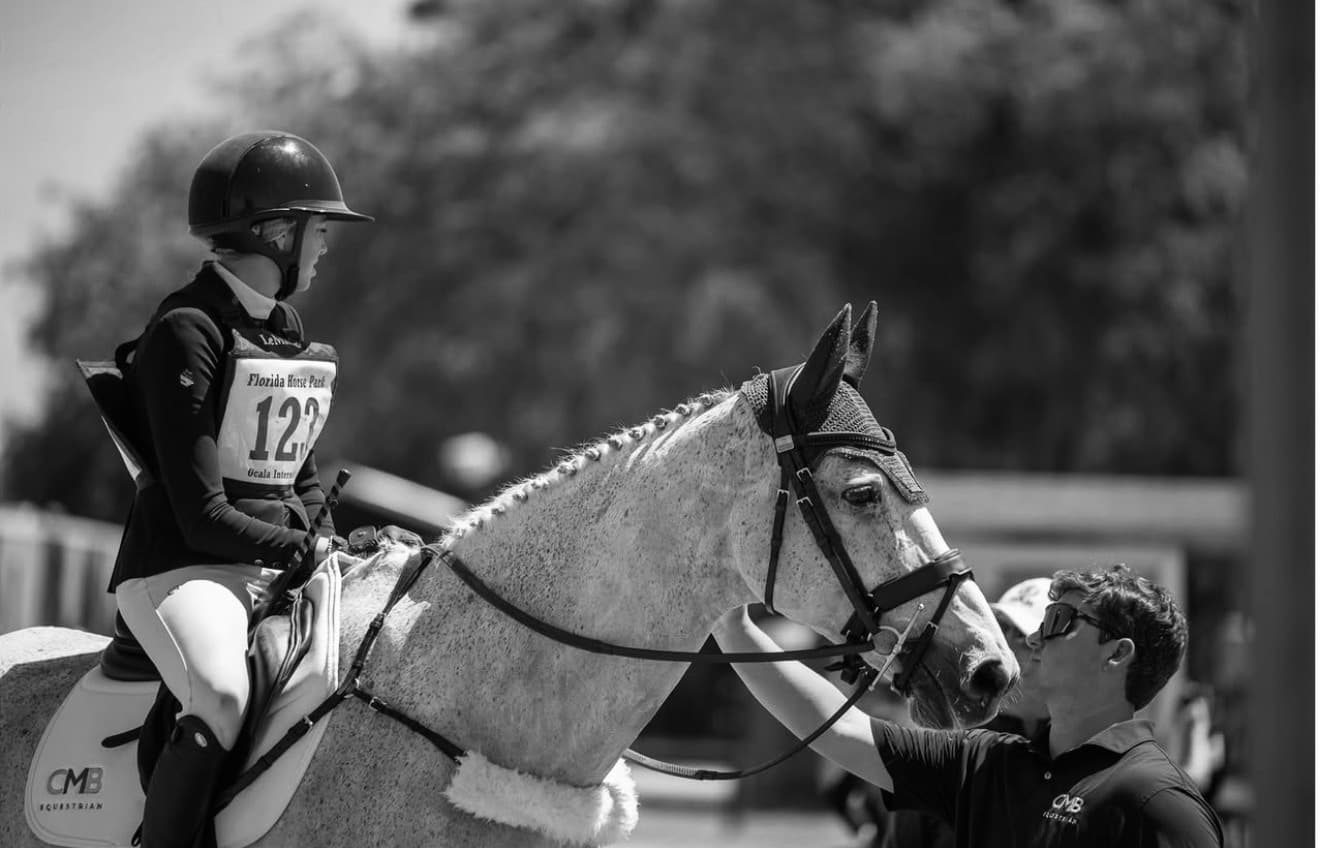
The Heart of the Barn: Former Three-Star Eventer Gregory Warwick Finds Purpose Behind the Scenes
There are some trips that are so good, you might wish to take back a memento; shove a little something special in your suitcase. For Mya Poulos, that something special was Gregory Warwick. Not exactly carry-on sized.
Elite Education at the 2026 USEA Annual Meeting & Convention in Arlington, VA
The 2026 USEA Annual Meeting & Convention, featuring the U.S. Eventing Hall of Fame Induction Ceremony, is quickly approaching and the USEA is...
Pressure Proof Tip with Daniel Stewart: Fear Isn't Our Fault
For the past few months, we’ve been discussing our 200,000-year-old survival instinct and how it can cause all of us a lot of stress and struggle in the 21st century. We even talked about how the fears of failing, being watched, and being embarrassed are all linked to our evolutionary i...