Creating Suppleness through Lateral Work and Transitions on Day 1 of the USEA EA21 Central Clinic
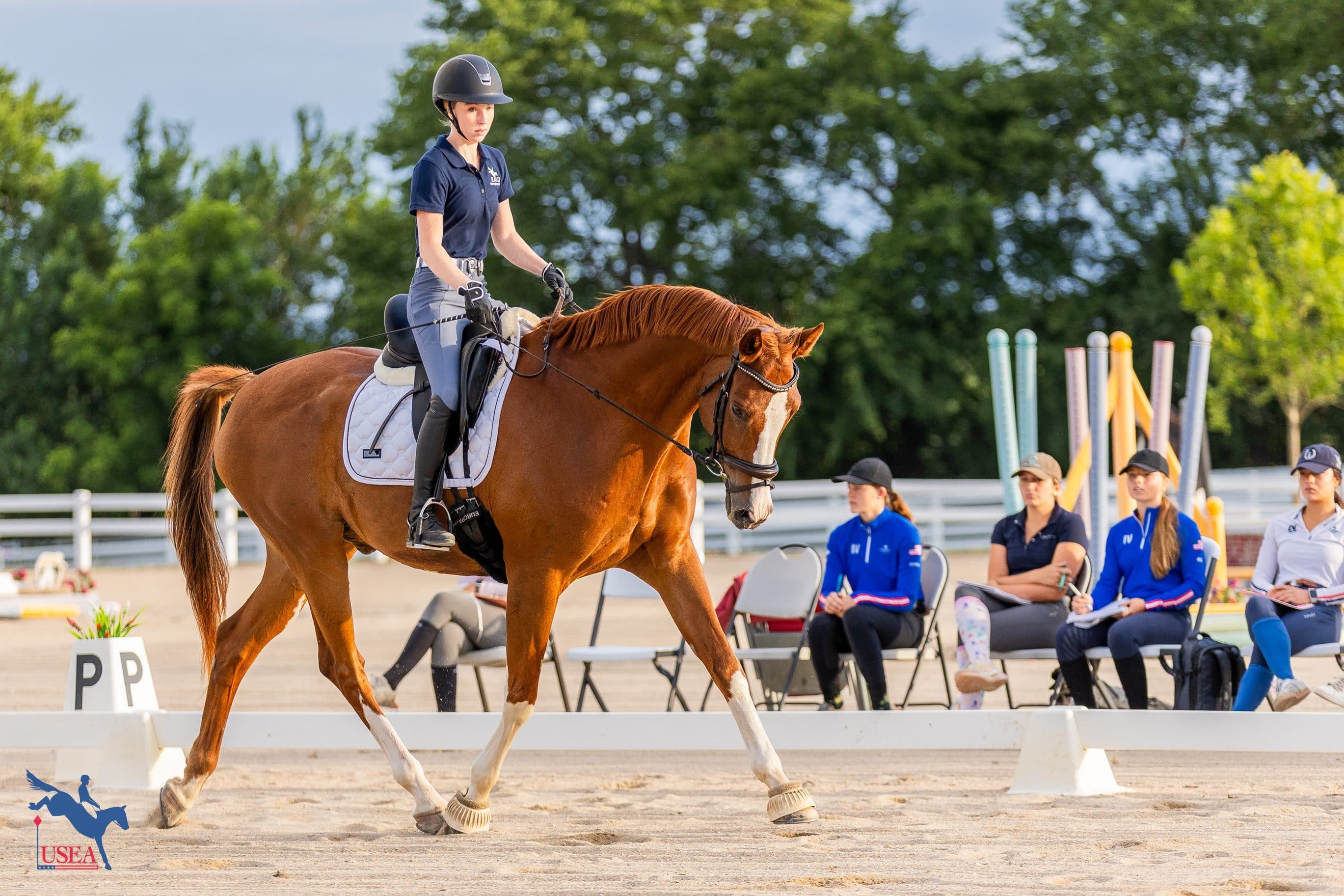
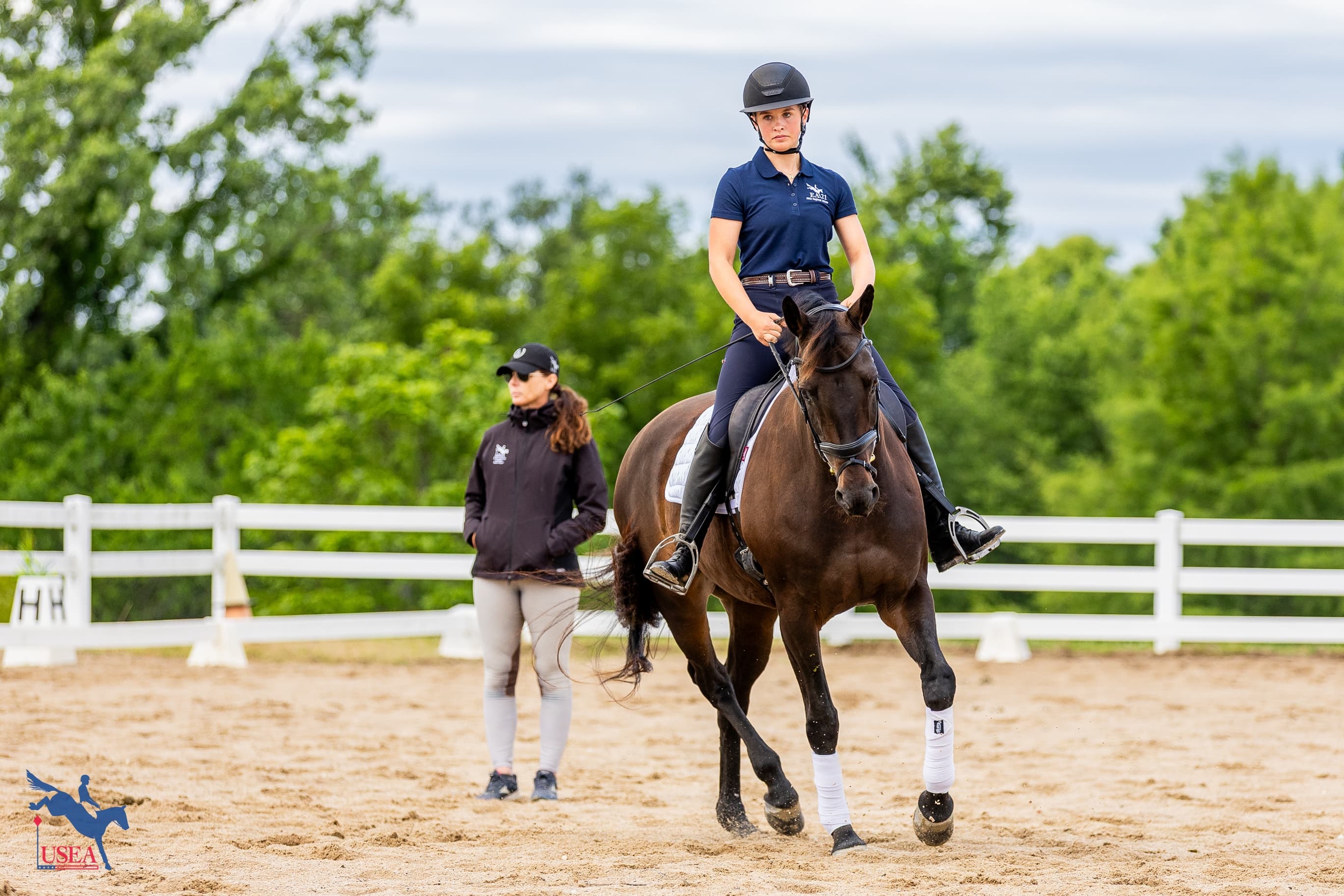
Bucyrus, Kansas—June 16— The FIFA World Cup isn’t the only thing happening in Kansas City this week. Just 45 minutes south of the city, the 2026 USEA Emerging Athletes U21 (EA21) Central regional clinic officially kicked off on Tuesday, June 16, at Chaps Equestrian Center in Bucyrus, Kansas, with a full day dedicated to flatwork under the guidance of Ashley Johnson of Ashland Eventing. Johnson, an A Pony Club graduate, five-star event rider, USEA Level V ECP Certified Instructor, and R-certified licensed eventing judge and technical delegate, challenged participants to think beyond simply performing movements and instead focus on developing the horse's overall way of going.
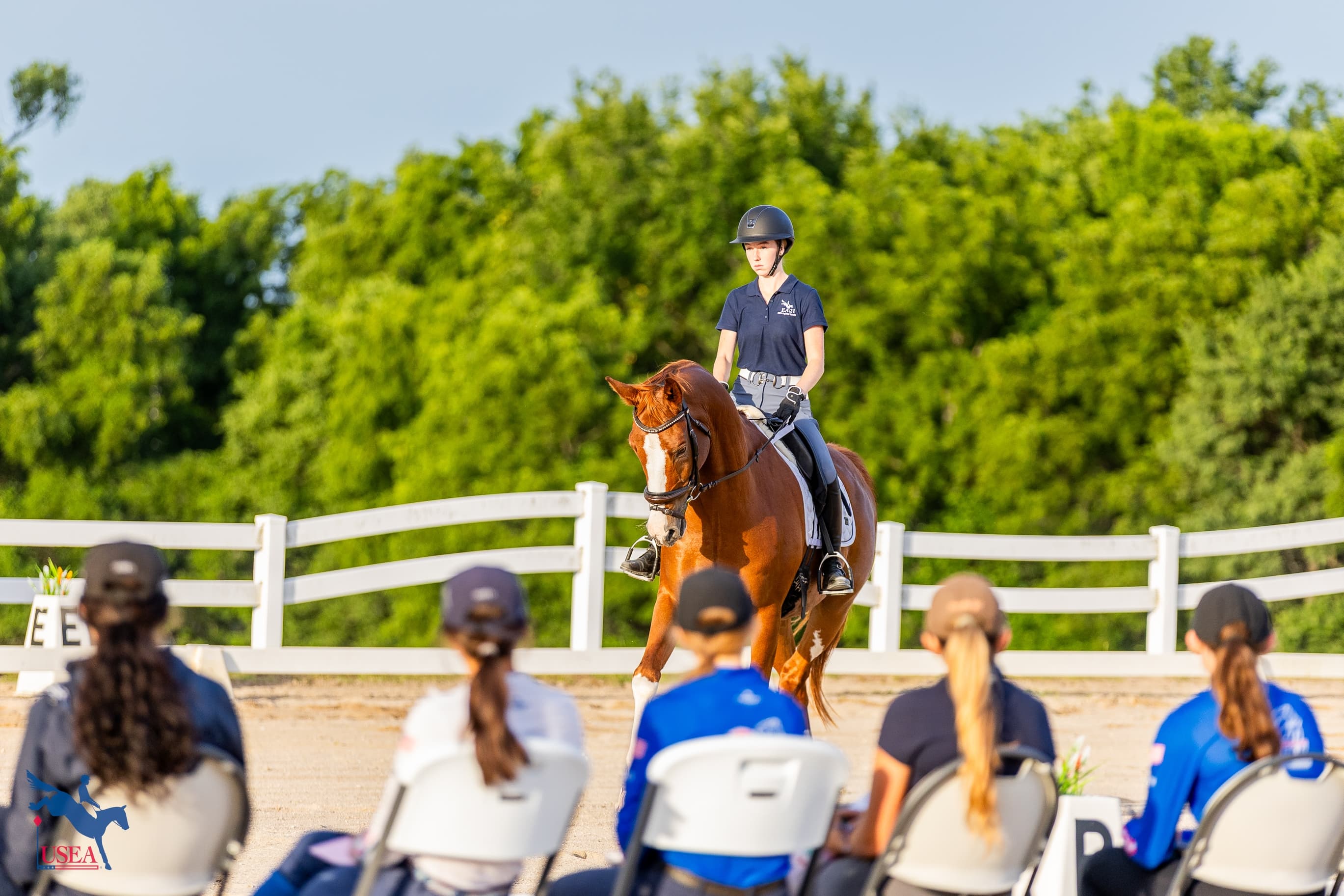
The clinic began Monday evening as 13 young riders settled in with schooling rides and a welcome dressage lecture. During the session, Johnson asked participants to submit questions on note cards, many of which found their way into Tuesday's flatwork sessions. From the start, the focus was clear: develop thoughtful horsewomen who understand not only how to perform an exercise, but why they are doing it.
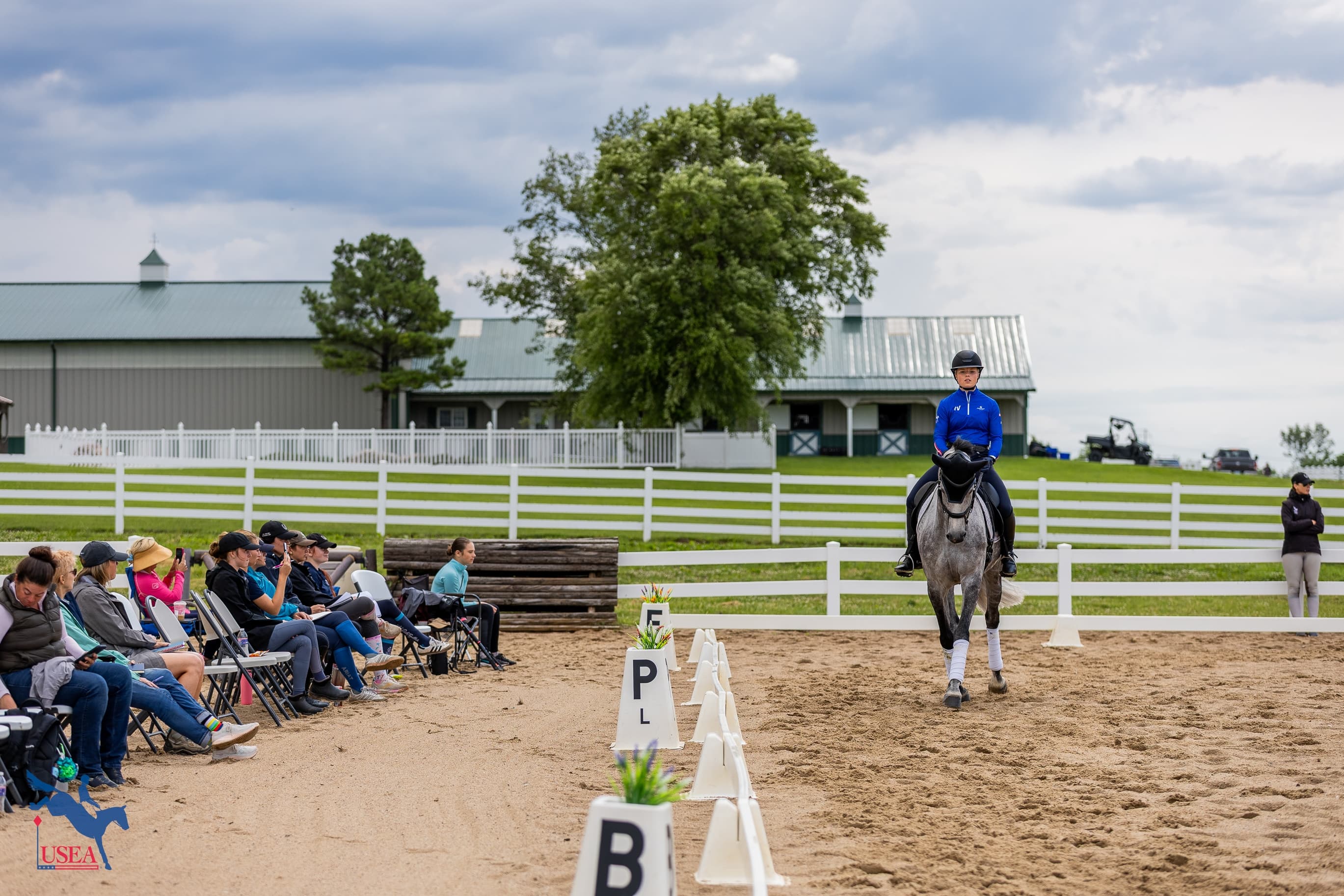
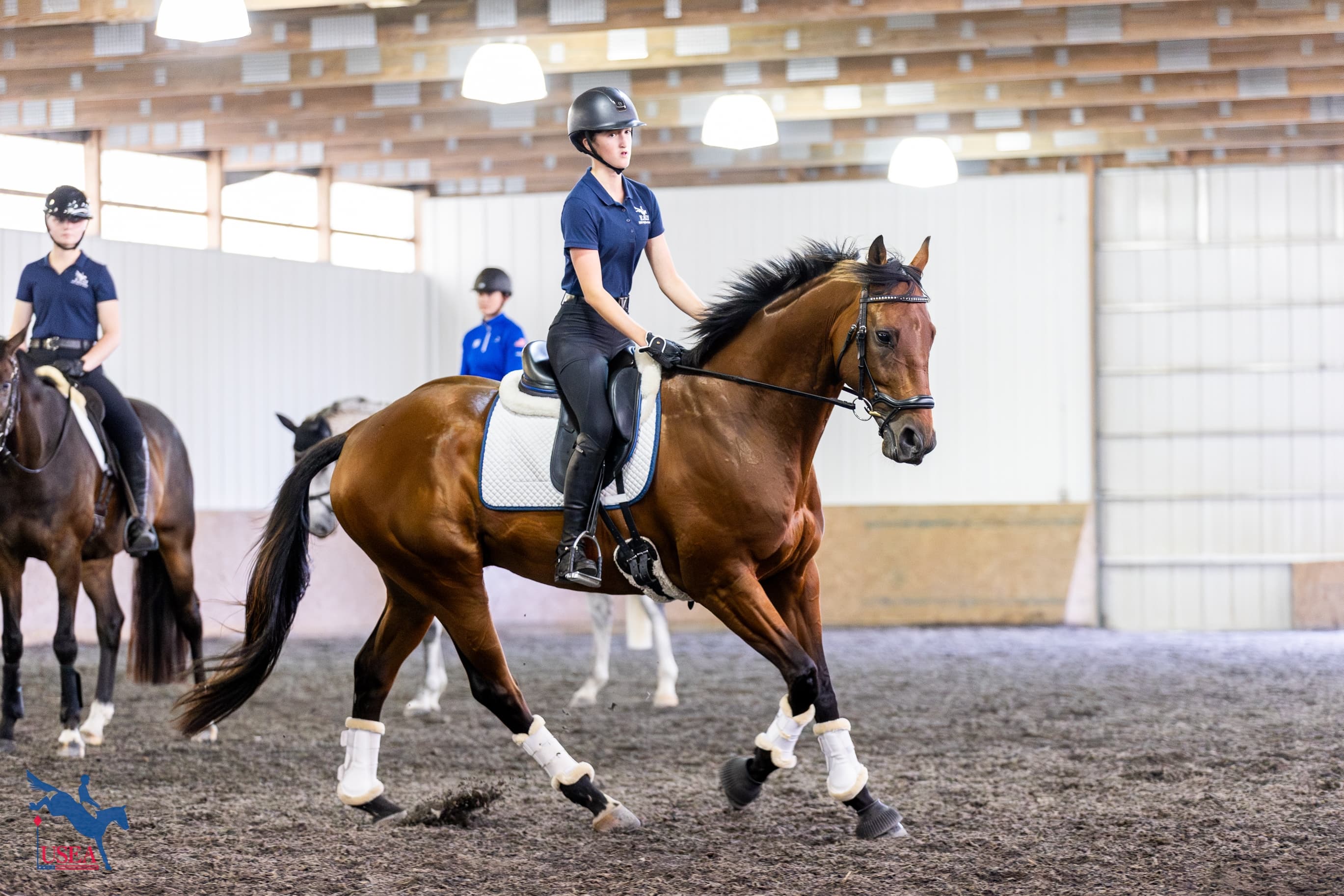
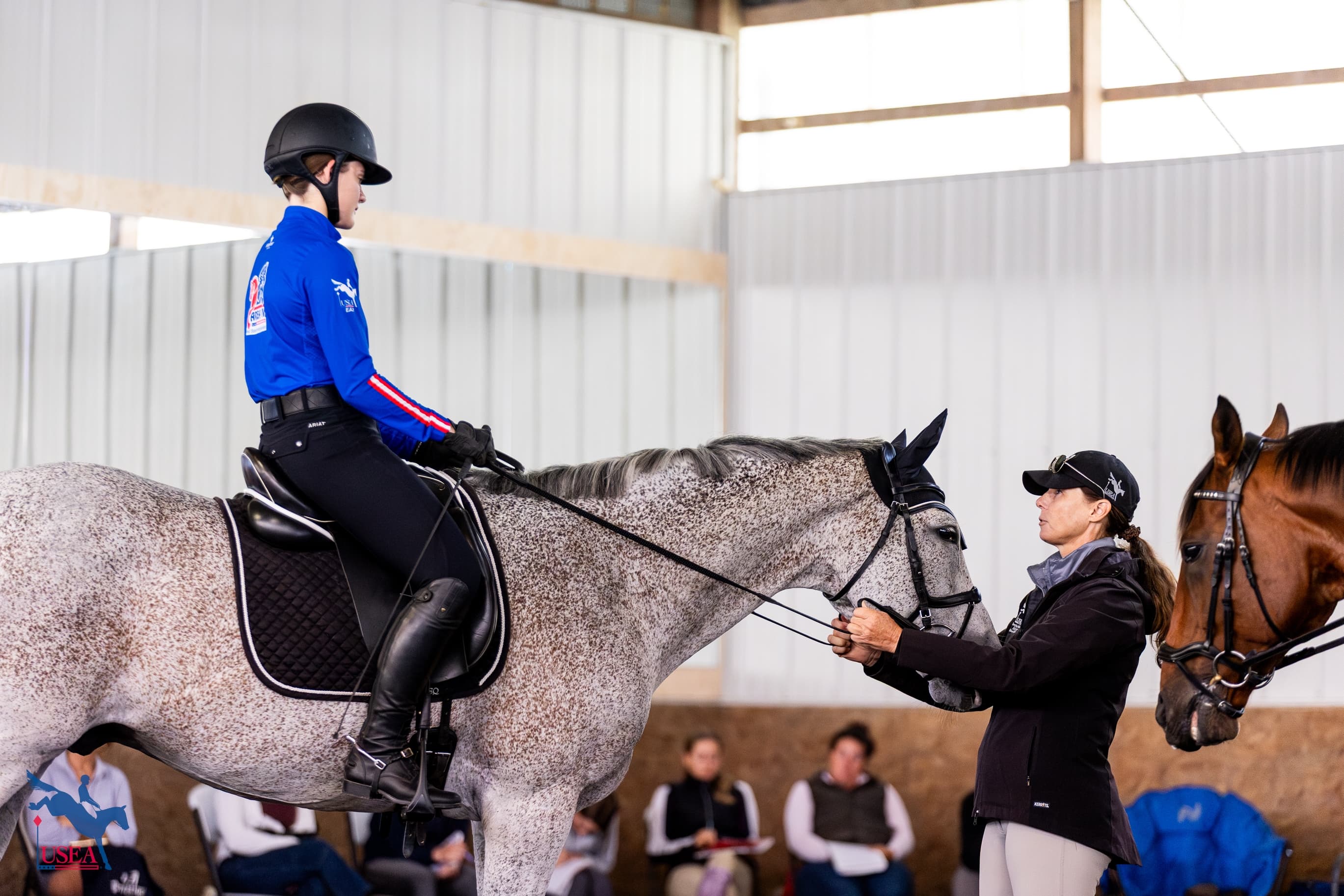
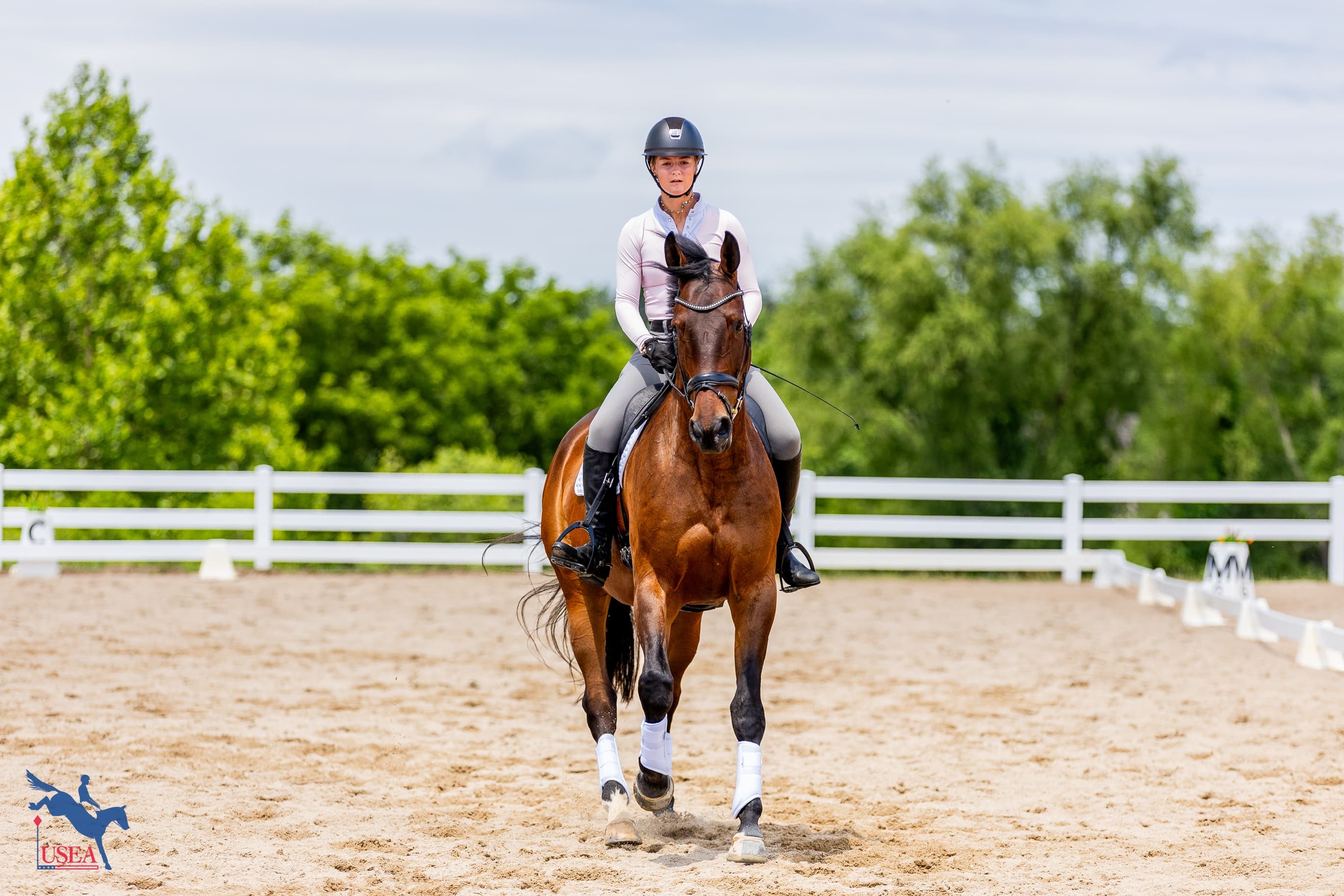
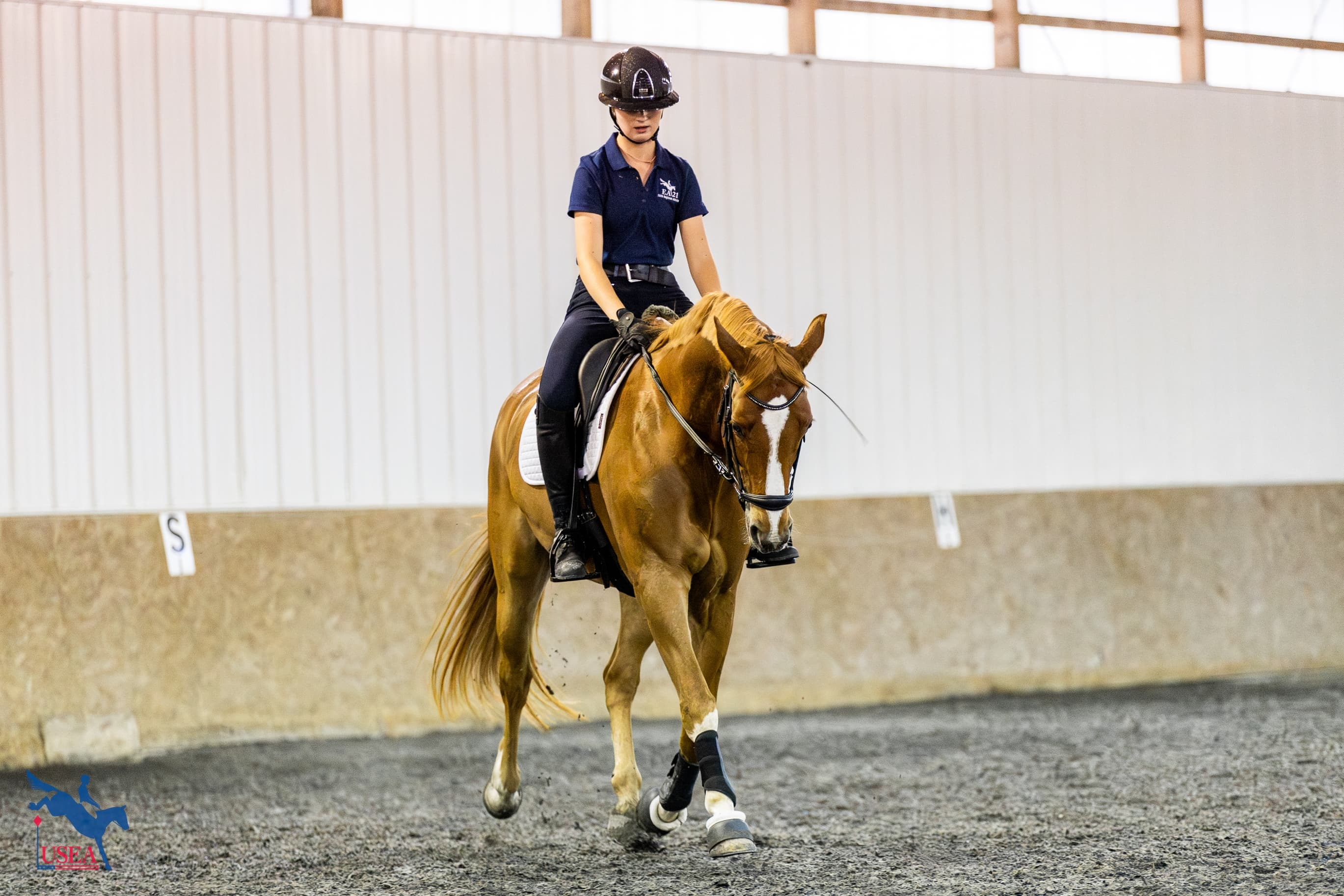
As the morning began, riders enjoyed unusually cool temperatures and sunshine in the outdoor arena before a good old fashioned midwest rainstorm rolled through, sending the clinic indoors for part of the day. By the afternoon, the weather had once again shifted, allowing the final groups to return outside and finish the day under sunny skies.
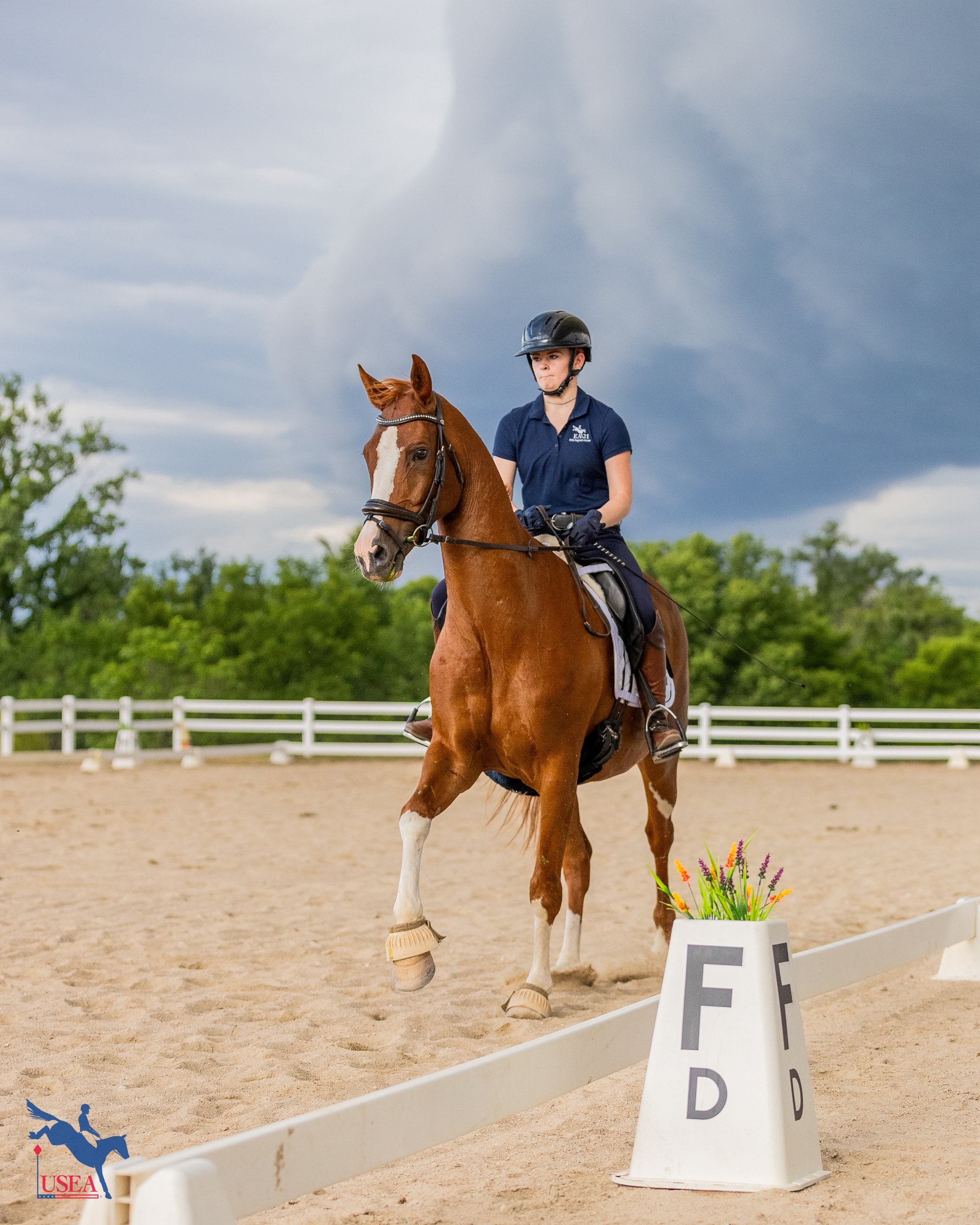
Regardless of the changing weather, Johnson maintained a clear theme throughout every session: using lateral work and transitions within the gaits in order to develop a more supple, uphill self-carriage, regardless of the horse's age, size, experience level, or temperament.
"The first priority should always be getting the horse to move forward off the leg," Johnson emphasized throughout the day.
To illustrate the concept, she encouraged riders to think of their horse's energy like water flowing through a hose. A horse that is not moving freely off the leg, whether forward or laterally, she explained, is like trying to send water through a hose with a kink in it. Before riders can influence balance, collection, or straightness, they must first establish a clear and willing reaction to the leg.
That principle carried through every exercise riders focused on throughout the day. While the specific movements varied between groups, Johnson repeatedly returned to the importance of lateral work as a tool for creating both physical and mental suppleness.
"Every horse, regardless of age and experience, can benefit from lateral work," she explained. Teaching horses to understand the difference between forward leg pressure and sideways leg pressure allows riders to develop greater adjustability, responsiveness, and overall body control.
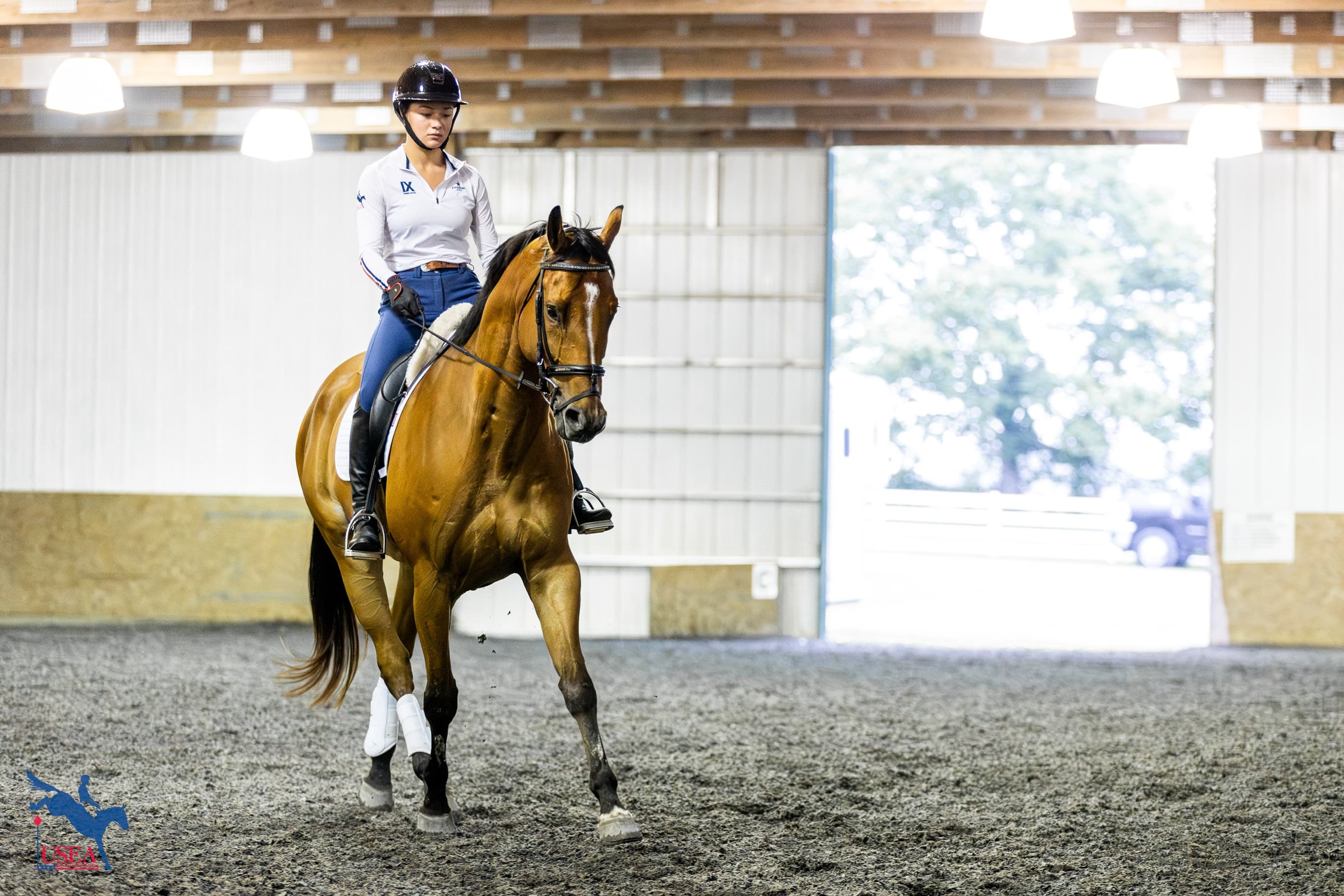
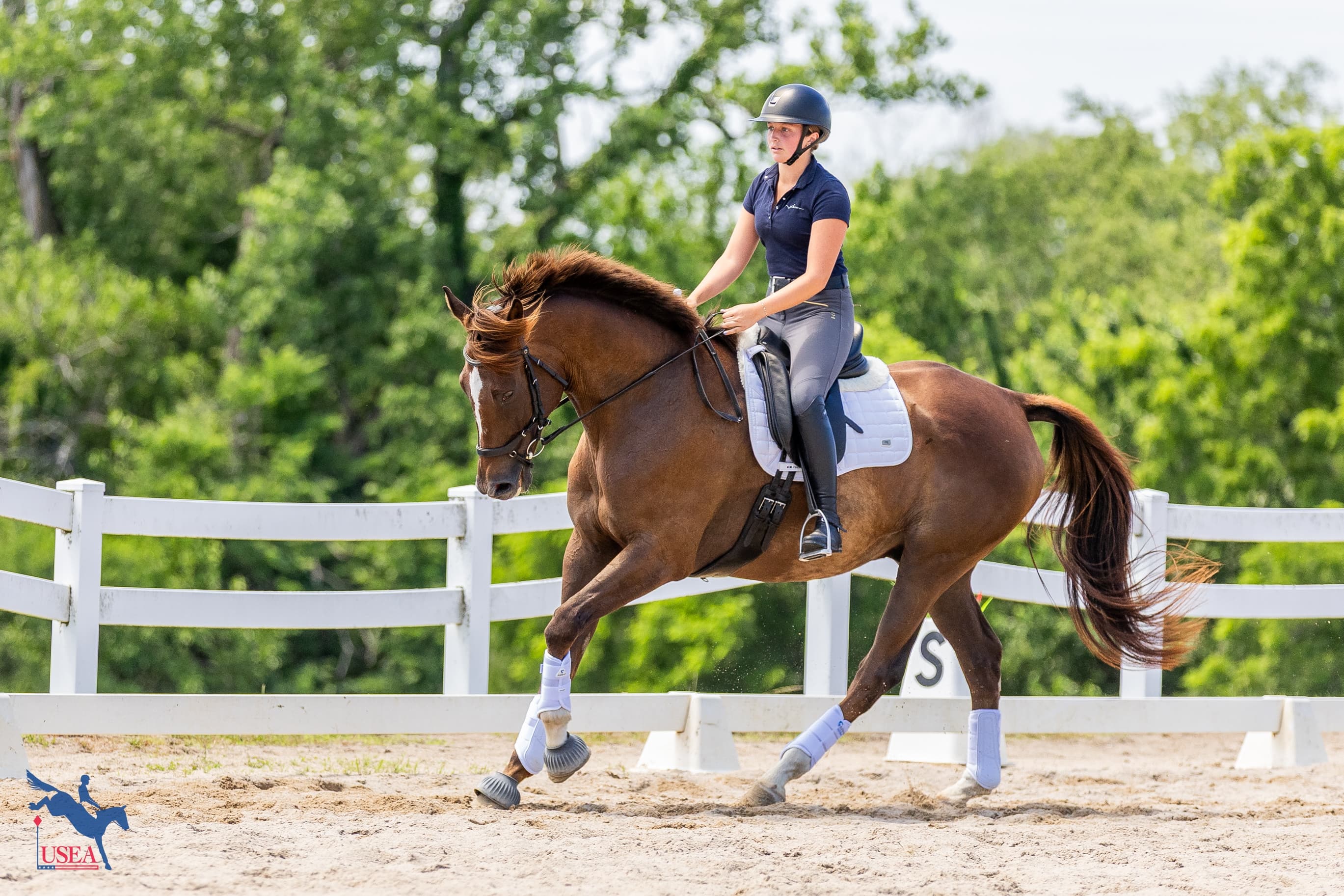
Participants worked through a variety of exercises designed to encourage horses to move laterally while maintaining forward energy. Spiraling circles, leg yields, shoulders-in, haunches-in, shoulder-fore, and counter-bend exercises appeared frequently throughout each session, always with the goal of helping horses loosen their ribcages, engage their hindquarters, and swing more freely through their backs.
One recurring theme was Johnson's emphasis on improving the horse in front of you today rather than focusing solely on future and competition goals. This was an especially crucial takeaway, as multiple riders were aboard catch rides they’d never ridden before.
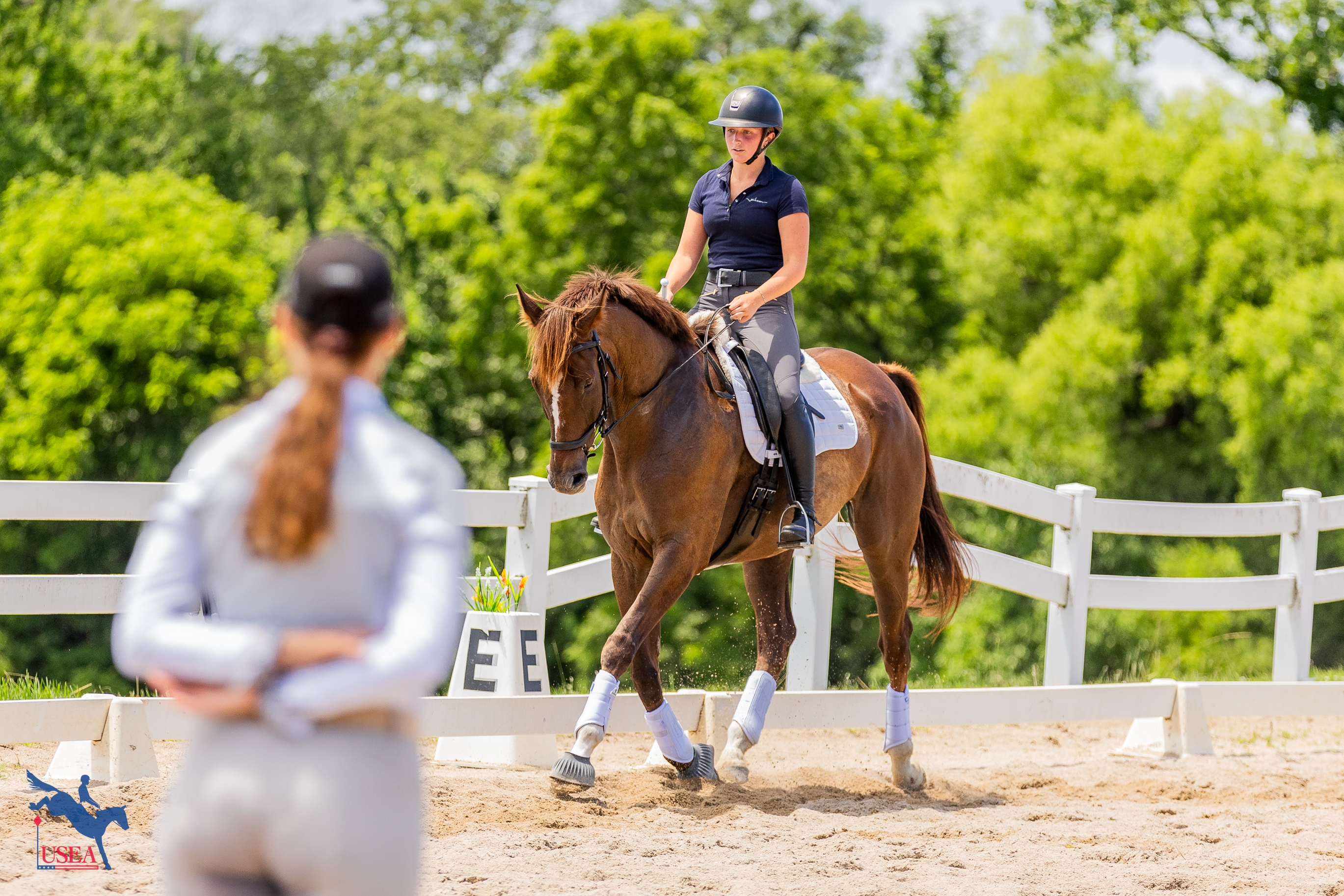
"Ride in the moment, but plan for the future," Johnson reminded participants. Sometimes you may plan to ride with a specific goal, but ultimately you must ride the horse you have on the day.
Rather than concentrating on perfecting a particular movement, Johnson encouraged riders to prioritize the quality of the horse's body and way of going. Suppleness, relaxation, and understanding what was being asked of them were valued over forcing a movement simply for the sake of completing it.
For Sierra Thomas, who attended the clinic with her 6-year-old Irish Sport Horse Ernie, that message aligned perfectly with her goals for the rest of the season.
"Since he's only six, and so big, my goal this year is really to progress his training instead of focusing on show goals," Thomas said. "That's why it was important to bring him here. I'm excited to keep building his education and my own education and let him tell me how he wants to progress.”
Beyond the riding itself, Johnson encouraged participants to develop a deeper understanding of the training process by urging them to think like trainers rather than riders.
Throughout the day, EA21 athletes were tasked with observing their peers during warmups and exercises. Johnson frequently stopped to ask observers what they noticed, what they believed the objective of a particular exercise was, and how they felt it improved the horse. The discussions encouraged riders to critically analyze both horse and rider performance rather than simply watching from the sidelines.
"Think with a trainer's mind, not a rider's mind," Johnson urged.
This educational approach proved especially valuable as participants switched horses throughout the day, requiring them to quickly assess new mounts and adapt their riding strategies. Riders saw firsthand how different horses responded to the same exercises and how training principles can be applied across a variety of types and experience levels.
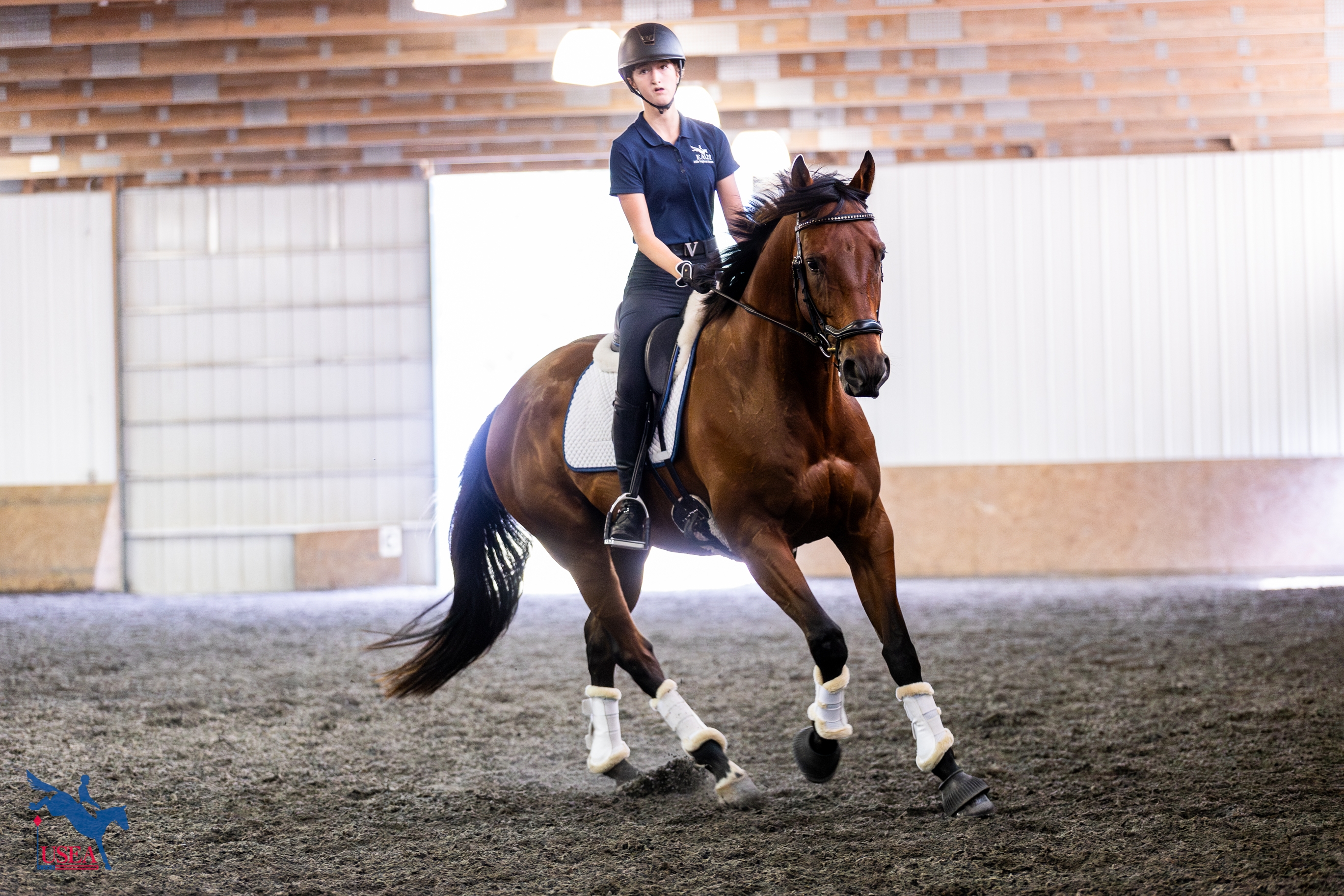
First-time EA21 participant Charlotte "Lizzy" Schaeff found the opportunity especially valuable.
"I was able to watch the National Clinic in Ocala with David O'Connor, and I thought it was really educational getting to watch all those amazing young riders," Schaeff said. "I want to be like them someday."
Schaeff, who regularly trains with EA21 Director of Coaching David O'Connor, felt those lessons helped prepare her for the challenge of riding a catch ride during the clinic.
"Karen and David have spent so much time teaching me body language and how to be in control of my body," she said. "That really helped me today riding a horse I'd never ridden before."
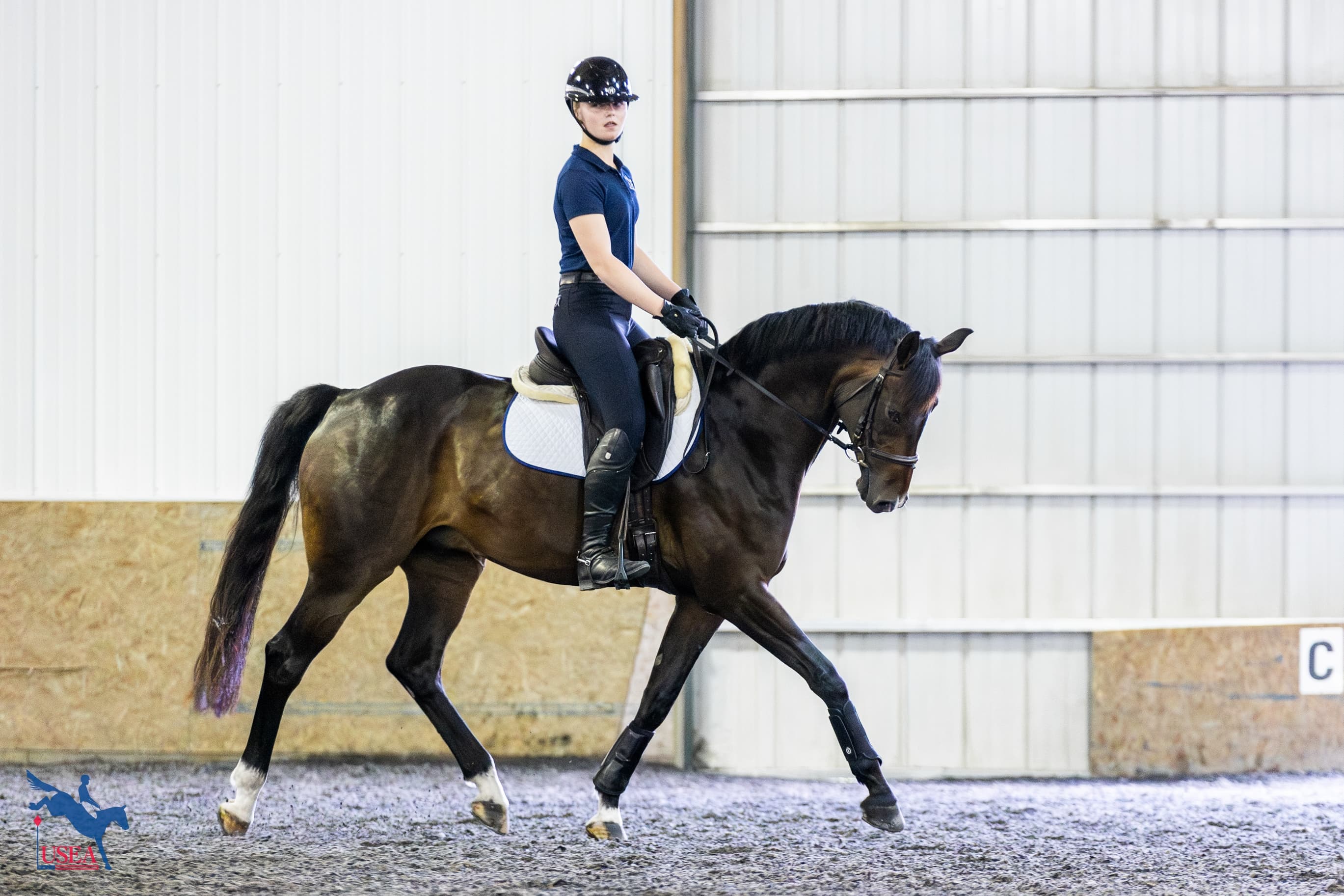
Whether working with experienced upper-level eventers, young prospects, hot Thoroughbreds, or young Irish Sport Horses, Johnson consistently emphasized developing options within the gait. Riders practiced transitions within and between gaits, learning how to create more push, more collection, and greater adjustability without sacrificing relaxation or balance.
Several exercises focused on improving the horse's ability to carry itself in transitions, forcing riders to use forward push rather than pulling with their hands. Johnson told riders to think about making the horse's body shorter rather than shortening the neck when collecting, and frequently reminded participants to ride transitions forward and up rather than pulling downward.
Using a memorable analogy, she compared downward transitions to landing an airplane.
"You want the back wheels to touch the ground before the nose," she explained, encouraging riders to prioritize engagement from the hindquarters before asking the horse to rebalance.
Throughout the day, Johnson repeatedly emphasized the importance of developing pushing power from behind. Riders were encouraged to quicken the hind feet to lift the shoulders and poll, create more jump in the stride, and ultimately improve self-carriage.
Johnson used many visual analogies throughout the day, and one visual that particularly resonated with Thomas involved rider position.
"When Ashley gave the visual of the carousel pole and holding your body straight, that really clicked for me," she said. "My horse is a big guy, so sometimes I try to use my body to help him, and that ends up unintentionally blocking him. I'm trying to be better about keeping myself still so I can help him more effectively."
For Addison Hagan, a third-year EA21 participant, the educational opportunities available through the EA21 program continue to be a major draw for why she continues to apply each year.
"I think it's a great program for helping bring young riders up through the levels, and it's such a great chance to get consistency between all the different coaches within the program," Hagan said. "I really enjoy the strong foundation it's helped give me.”
Hagan also pointed to one of her biggest lessons learned through the program.
"Just learning how to trust my horse and trust myself," she said.
Following the morning flatwork sessions, participants gathered for lunch before meeting with five-star groom Isabel Turner for a private horse management session. The afternoon concluded with a show jumping discussion where riders finalized their plans for Wednesday's jumping sessions and helped set the course.
As day one concluded, one theme continued to surface in every lesson, discussion, and rider reflection: better dressage results come not from drilling individual dressage movements, but from developing a horse that is supple, responsive, adjustable, and confidently moving responsively from the rider's leg.
Through thoughtful observations, purposeful exercises, and constant discussion, the EA21 riders left with a deeper understanding of how lateral work, effective horse management, and strong analytical skills can be used to develop stronger, more effective event horses, and riders.
The EA21 Central Clinic continues Wednesday morning at 7 a.m. with the first group returning to Chaps Equestrian Center for show jumping sessions.
Central | Chaps Equestrian Center | Bucyrus, Kansas
The Participants
- Ava Davis
- Olivia Fry
- Sierra Fishell
- Addison Hagan
- Mia Holstien
- Ella Munsat
- Olivia Pratt
- Adelyn Rinehart
- Charlotte Schaef
- Willow Schwartz
- Sierra Thomas
- Elle White
- Rayna Williams
Follow the USEA coverage on social media!
Facebook | Instagram | Threads | TikTok
About the USEA Emerging Athlete U21 Program (EA21)
The purpose of the USEA Emerging Athletes U21 Program (EA21) is to identify and provide consistent quality instruction to the next generation of elite event riders. The aim is to create a pipeline for potential team riders by identifying and developing young talent, improving horsemanship and riding skills, and training and improving skills and consistency.
The USEA Emerging Athletes U21 Program was launched in 2022 with a model of five summertime regional clinics taught by carefully selected USEA Eventing Coaches Program (ECP) coaches, leading to a winter national camp consisting of selected Young Riders from the regional clinics. Athletes who are 21 years or younger, are current members of their USEA Young Rider Area program, and are established at the Training Level or higher, are eligible to apply for the EA21 program. Click here to learn more about the USEA EA21 Program.
The USEA would like to thank ARMA, Bates Saddles, GGT Footing, Horse Illustrated, Kerrits, PulseVet, Ride iQ, Schneiders Saddlery, Sidelines Magazine, WeRideTogether, YETI, and 100xEquine for sponsoring the USEA Emerging Athletes U21 Program.
Related Articles
Fast Facts: 2026 USEA YEH West Coast Championships
As of this morning, 19 young horses are entered in the 2026 USEA Young Event Horse (YEH) West Coast Championships at Twin Rivers Ranch in Paso Robles, California, which take place this weekend, October 23–24. The field includes six 4-year-olds and 13 five-year-olds. Horses qualify for the West Co...
The VAP Series: Dressage Score Runner
While riders are focused on putting their best foot forward in the dressage arena, another important part of the competition is happening just outside the ring. Behind every promptly posted dressage score is a team of dedicated volunteers helping ensure that completed tests make their way from th...

USEA Recognizes Ride EquiSafe for Support of 2026 American Eventing Championships
The United States Eventing Association (USEA) is pleased to recognize Ride EquiSafe for its continued support as an Official Bronze Level Sponsor of the 2026 USEA American Eventing Championships (AEC), which took place August 25-30 at Th...