Book Excerpt | Finding Purpose: A Life Managing the Passion, Compulsion, and Borderline Addiction Called Horses
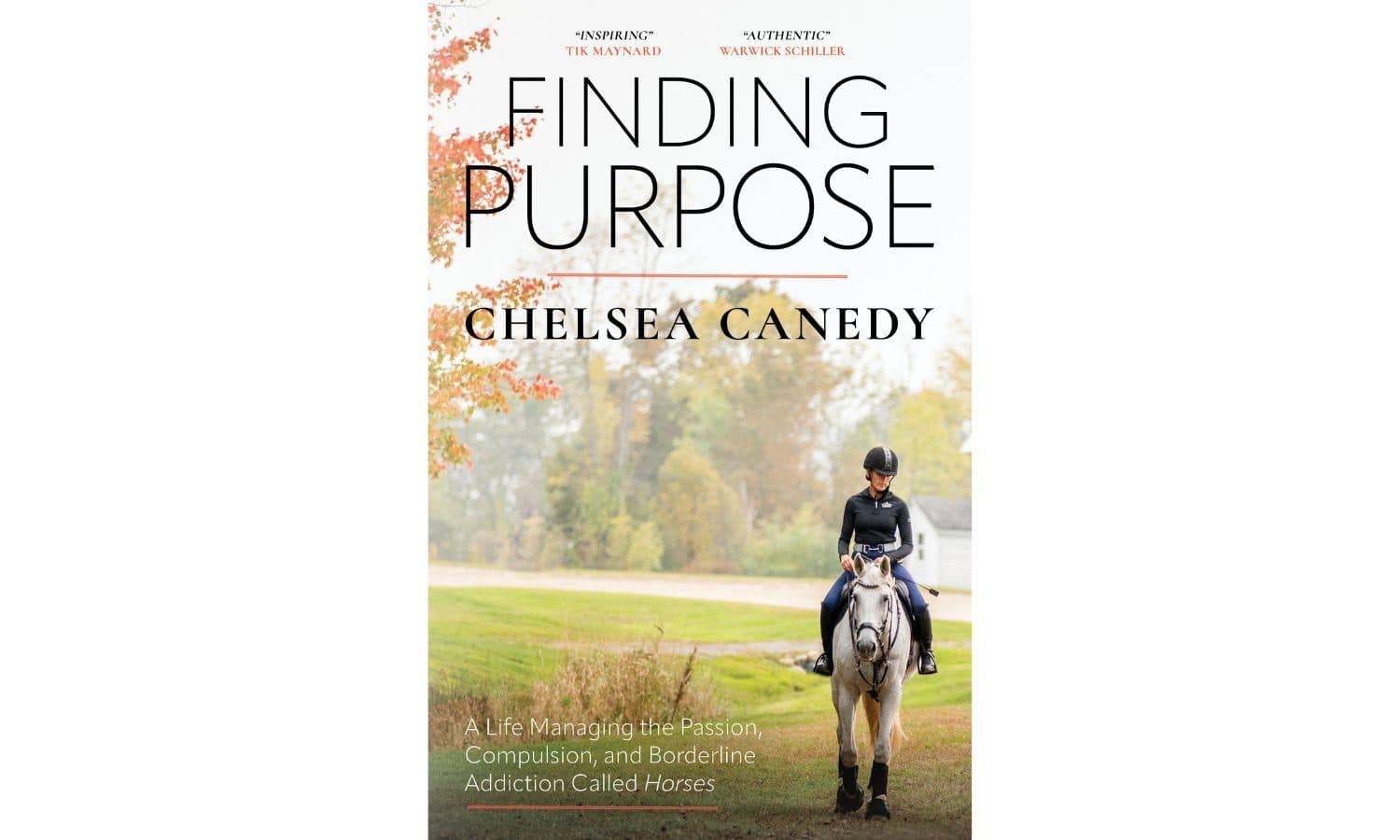
This excerpt from "Finding Purpose: A Life Managing the Passion, Compulsion, and Borderline Addiction Called Horses" by Chelsea Canedy, is reprinted with permission from Trafalgar Square Books.
Canedy was recently featured in our "The Horse First" video series, where she discusses regulating the horse's nervous system and how she worked with her horse Fox to build a stronger partnership.
Thankfully, Pony Club eventually opened another door for me, leading me to Lost Run Farm, the home of Virginia Leary. Virginia had been an upper-level event rider, along with her husband Jack, and she coached some of the more advanced riders in our club. I was able to fairly trade my time and energy working at Virginia’s farm for the opportunity to lease and receive lessons on a wonderful horse—a Connemara-Thoroughbred cross called Euglena. He was a bay gelding with a long back, a soft eye, a little white star on his broad forehead, and the kindest of hearts. Given how little I understood of how the process of training an animal actually worked at that point in my riding career, it was amazing how much “U.G.” offered me during our time together. He carried himself on the bit, mostly forward and swinging his back, moving easily between gaits and smoothly laterally when I asked in any sort-of correct way. When coaxed gently, he would jump the beginner novice- and novice-sized fences I pointed him at, even though he was clearly tentative and a bit nervous. He was what I would now call a low-level schoolmaster, and I can honestly say he was the most forgiving creature I have ever met on this earth. He dealt with my teenage angst like a kindly teacher—calmly listening, and never interrupting or offering unsolicited advice.
I still carry guilt for the rides in which my frustrations with my non-horse life came out as anger at Euglena. There was one afternoon after school, in particular, when I arrived at Lost Run in a terrible mood, surely because of some boy-related issue. I brushed U.G. and tacked him up mindlessly, looking only to check our ride off my to-do list so that I could get back to attending to the teenage drama of the day. Not surprisingly, U.G. did not offer me his usual ease and suppleness, and I remember trying to “put” him on the bit by aggressively moving it back and forth in his mouth while crying my eyes out and pleading out loud, “Why won’t you just go round?!” For sure he was not forward, nor was I asking him to use his body properly with any semblance of clarity. I was an emotional mess who had no business riding a horse that day. I was being unfair with U.G., but even then, he never put a foot out of place or complained. He still tried his little heart out for me, doing the best he could to interpret the frantic, stressed-out, aggressive input I was giving him. Eventually, I called it quits for the day, the guilt over how I had treated U.G. already seeping in.
Partly due to his saintly attitude, Euglena and I made our way to Pony Club Nationals for dressage in Lexington, Virginia, as representatives of the New York/Upper Connecticut Region, and earned national placings in both team competition and our individual freestyle. He also helped me earn my B Pony Club rating, which was quite a feat for a horse that didn’t really event, as it was equivalent to the United States Eventing Association (USEA) Training Level. He was not a brave horse, and we sometimes had stops on cross-country, but I was always able to get him to try and jump for me in the end.
Leaving Euglena to go to college was among the most painful things I had to do in my young life. He felt like home to me in a way that nothing else did. He was the first horse I really shed tears over—multiple times. First, when I was away at school, missing him dearly; then, when I found out he had been moved to his owner’s home and I would no longer see him at Virginia’s farm when I was home on break; and finally, when I learned he had colicked badly and had to be euthanized. Many of those final tears were shed in recognition of the fact that I hadn’t truly appreciated what a gift he was to me. He had given me so much kindness and tried so hard for me, and I felt I had taken that for granted, never giving him nearly as much in return.
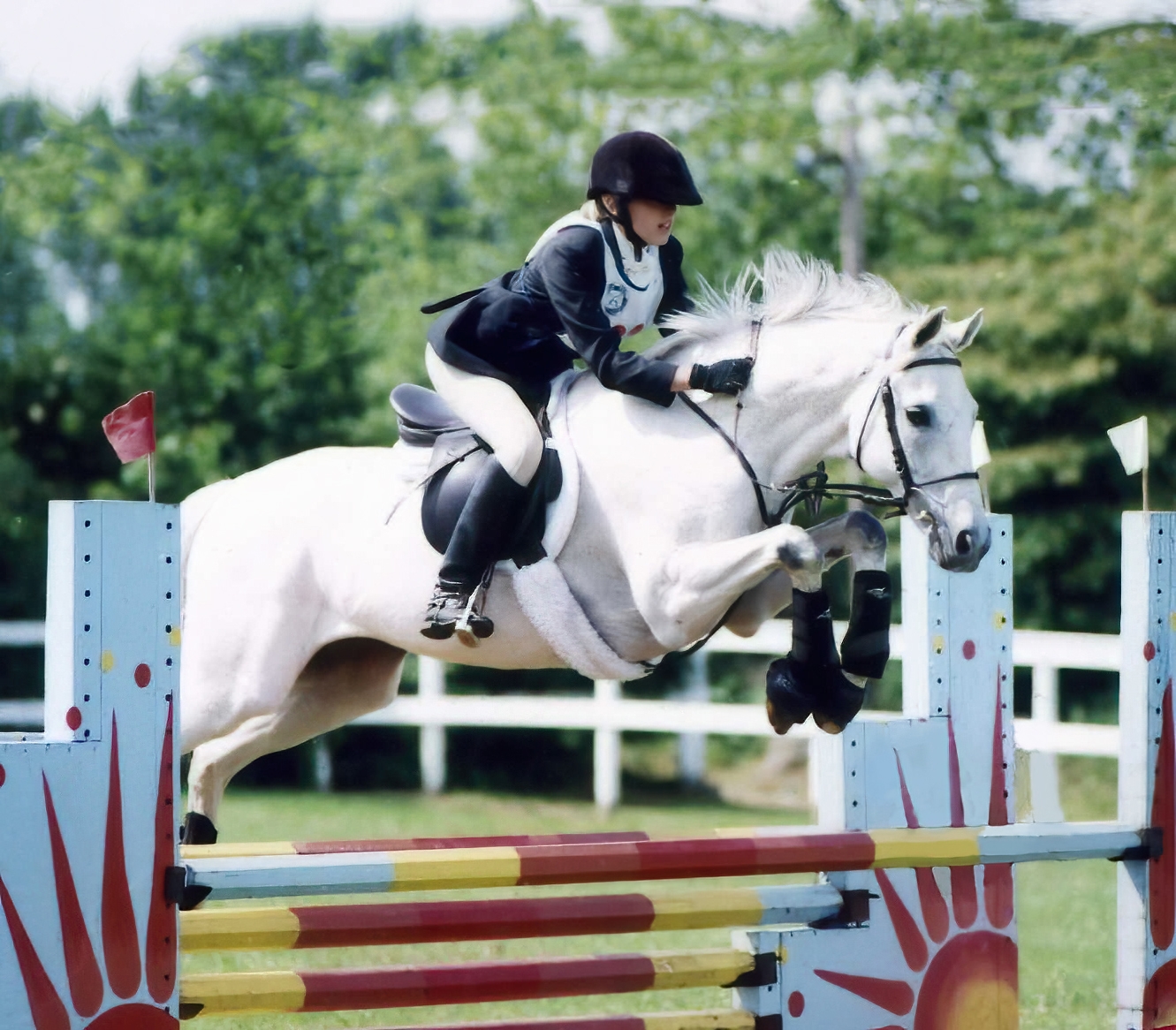
Later in my life, through meditation and the practice of self-compassion, I let much of the guilt related to U.G. go, and now I can look back on my time with him with love and gratitude. A picture of his sweet face at Pony Club Nationals lives on a dresser in my bedroom, and I can’t help but smile every time I look at his soft eyes in that picture, feeling my heart fill up with love for him and the time we had together.
I have observed that horses have a capacity to help people become grounded in a way that other humans simply can’t. That’s what U.G. did for me. I think it comes from horses’ ability to live so completely in the present moment, and to embody the qualities that many people see as the peak of goodness. They don’t ask for more than they need, and they don’t wield their strength and power to get anything but their needs met—even though they could. They are open to experiences as they come to them, and they seek the path of least resistance, never being malicious just for fun. Horses provide a space for humans to exist in all our turmoil and confusion, without judgment. They are therapeutic without exerting any effort to be so. No wonder we have been drawn to them for centuries.
I have often joked with fellow horse people that loving horses is like an addiction. Some of us can’t live without them, and we are willing to arrange our lives so that we don’t have to. As addictions go, horses are a mostly healthy, albeit expensive, coping mechanism for the trials and tribulations of life. To me, relying on another living creature to provide emotional stability in any way means we have a responsibility to understand that being’s needs and meet them as best we possibly can. That also means we can never assume we know all the answers. It means we have a duty to continually educate ourselves in regards to how we care for and communicate with our equine charges. It means we must be perpetual students of those who study horses in different ways, and of horses themselves. We must be open to what horses have to teach us about themselves…and about ourselves.
I have come to recognize what horses provide as similar to a profound experience I had one afternoon during my senior year of high school. I arrived at Lost Run Farm to do my usual chores, but when I walked into the barn, I was immediately sure that something was completely different about the space. I stood in the middle of the aisle, looking around at the familiar surroundings, alone and utterly confused, because, for the life of me, I couldn’t put my finger on what had changed. I opened every stall door, and looked in the feed room, the tack room, the bathroom, the hay stall, then went back out the door and studied every side of the barn from every angle, but could not see a single thing that seemed out of place, anywhere. With more than a little hesitation and befuddlement, I started my afternoon chores, keeping a wary eye on my surroundings as I went.
Virginia arrived shortly after, and I immediately told her I had the feeling that something had changed, but that I could find nothing different at the farm. Virginia grinned and literally laughed out loud. She went on to tell me that she’d had the barn “cleared” that morning, explaining how her friend had come and done a “sage-burning ritual.” I was stunned that something completely invisible to the eye had had such a palpable effect on a space I knew like the back of my hand. How was that possible? How could somebody waving around a bundle of burning herbs leave me with the sense that the space was completely transformed?
I think Virginia may have been as surprised as I was by my reaction that afternoon. Not long after, she invited me to sit with her and a group of other women, including her sage-burner friend, in a space on the Litchfield Town Green. We gathered on a circle of cushions and the other women took turns talking about their lives. I felt nervous, knowing that we would eventually come to me. I found myself shaking and crying uncontrollably as I began to speak, describing a feeling I sometimes had while lying in bed at night. It was a sensation of being larger on the inside than my skin would allow, a feeling that was so uncomfortable it would leave me both frightened and angry with no means of relief other than to will myself to sleep out of sheer emotional exhaustion.
I have no idea why I shared my nighttime suffering with the group of unknown women, sitting together that day, and I don’t remember the exact advice they gave me, but I do remember they validated my feelings somehow, without trying to fix them, and allowed me to move through my emotions without pressure to change. From then on, whenever I would feel that frightening sensation, lying in my bed at night, it held far less power over me. Eventually it stopped happening altogether, I think because I stopped fighting it so hard. I robbed the fear of its power over me by allowing it to come and to go. The women who listened to me that day gave me permission to do that, simply by bearing witness to my story.
Horses offer us this same kindness. They bear witness to the stories we bring to them, without judgment and without trying to fix us. Euglena did that for me, over and over again, when I was a teenager. Horses are sage-burners, creating palpable shifts in the energetic world around them without leaving a trace.
I have learned there are times you can’t clearly see a thing, but you can feel it. To me, feeling something experientially is just as real as anything you can see. I think this is an understanding held by people of strong religious faith, whatever their belief system might be. That being said, I didn’t grow up following a particular religious path. I grew up surrounded by science and math teachers, to whom evidence was king. So, at first, the idea that something could exist without visual proof seemed like a contradiction. But how can I deny what I feel and know of the world through my experiences? If I do, it means I can’t trust my own interpretations of those experiences. It means I have to deny what my heart, mind, and gut tell me, and instead trust only what others indicate is true.
I think horses help us bridge the gap between what we see externally, and what we sense and know innately, because they spend so much of their lives in a state of open awareness. Humans have access to a similar, natural state of being, but we override it with our thinking, moving minds. For example, there have been many times I have had a “gut feeling” that a horse just isn’t feeling quite right. It is subtle—maybe just a slightly different swish of the tail, a more blasé attitude toward breakfast, or a slightly higher alertness in their posture. I may carry on with the horse’s usual work for a few days, taking note of my initial suspicions and sensing if there are more or continued disturbances in his normal behaviors. If there are, and I decide to dig deeper, I almost always find something: the beginning of stomach ulcers; a tick-borne illness, like Lyme disease or anaplasmosis; a vitamin deficiency or a change in blood sugar levels; or soreness somewhere in the body. When we practice existing in a state of elevated awareness, the way horses do, we become more conscious of subtle changes and quieter modes of communication. We learn to trust our instincts and listen more carefully. We start to catch little things before they become big problems.
This ability can bleed out beyond the barn, and we can learn to more aware in other areas of our lives. We can sense what’s below the surface, not by weaving a story in our minds about what we think is happening, but by being open and allowing experience to occur. This is not only how we become better students and learners, but how we become better partners, parents, and educators.
Related Articles
The VAP Series: Dressage Score Runner
While riders are focused on putting their best foot forward in the dressage arena, another important part of the competition is happening just outside the ring. Behind every promptly posted dressage score is a team of dedicated volunteers helping ensure that completed tests make their way from th...

USEA Recognizes Ride EquiSafe for Support of 2026 American Eventing Championships
The United States Eventing Association (USEA) is pleased to recognize Ride EquiSafe for its continued support as an Official Bronze Level Sponsor of the 2026 USEA American Eventing Championships (AEC), which took place August 25-30 at Th...
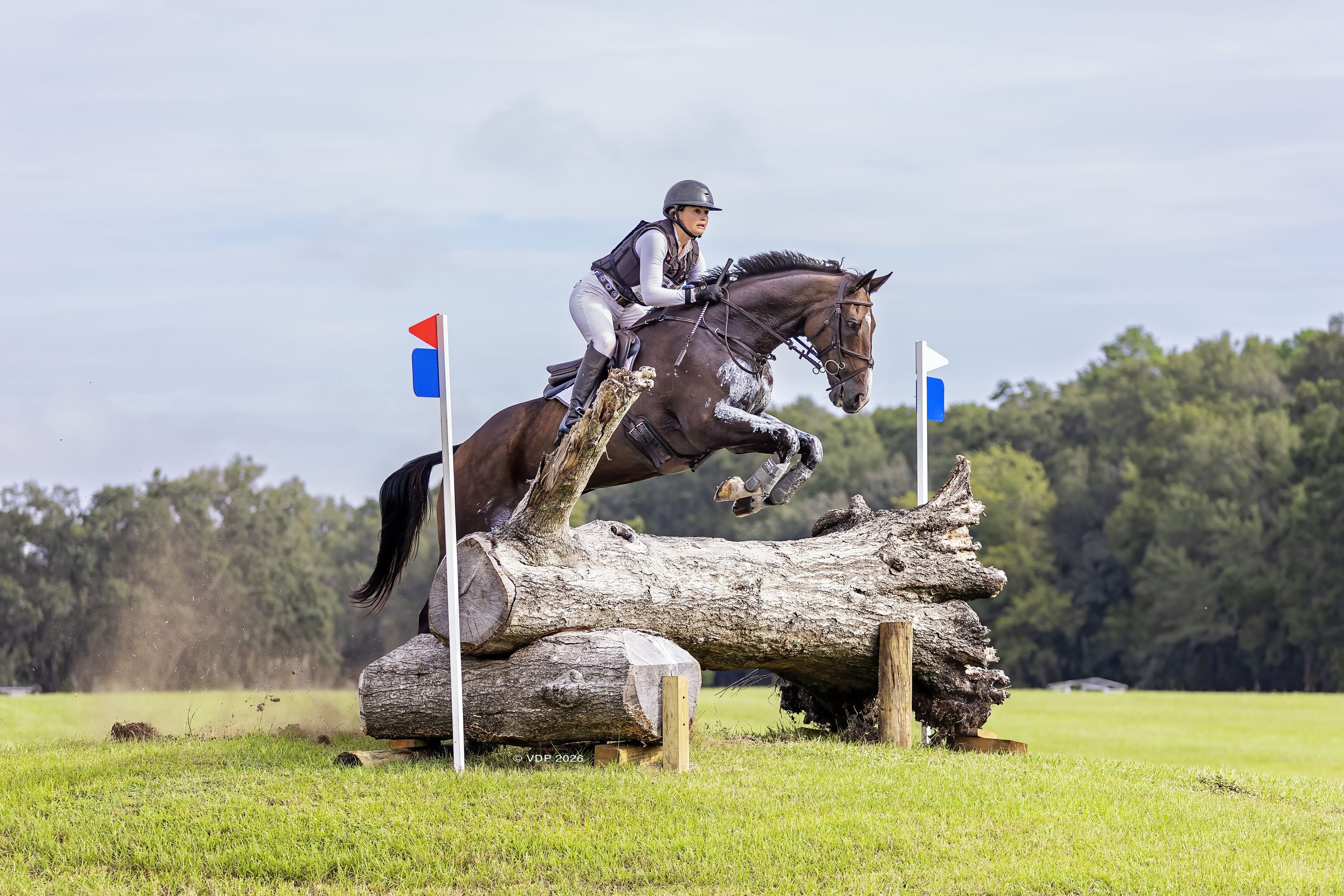
Skyler Norris Comes Full Circle with Advanced Debut at Ocala
For Skyler Norris, the Florida Horse Park in Ocala is more than just another competition venue. It’s where she first discovered the thrill of eventing as a little girl and where she’s spent countless weekends competing, learning, and chasing her dreams.