Behind the Scenes with Volunteer Coordinator Melissa Rundt
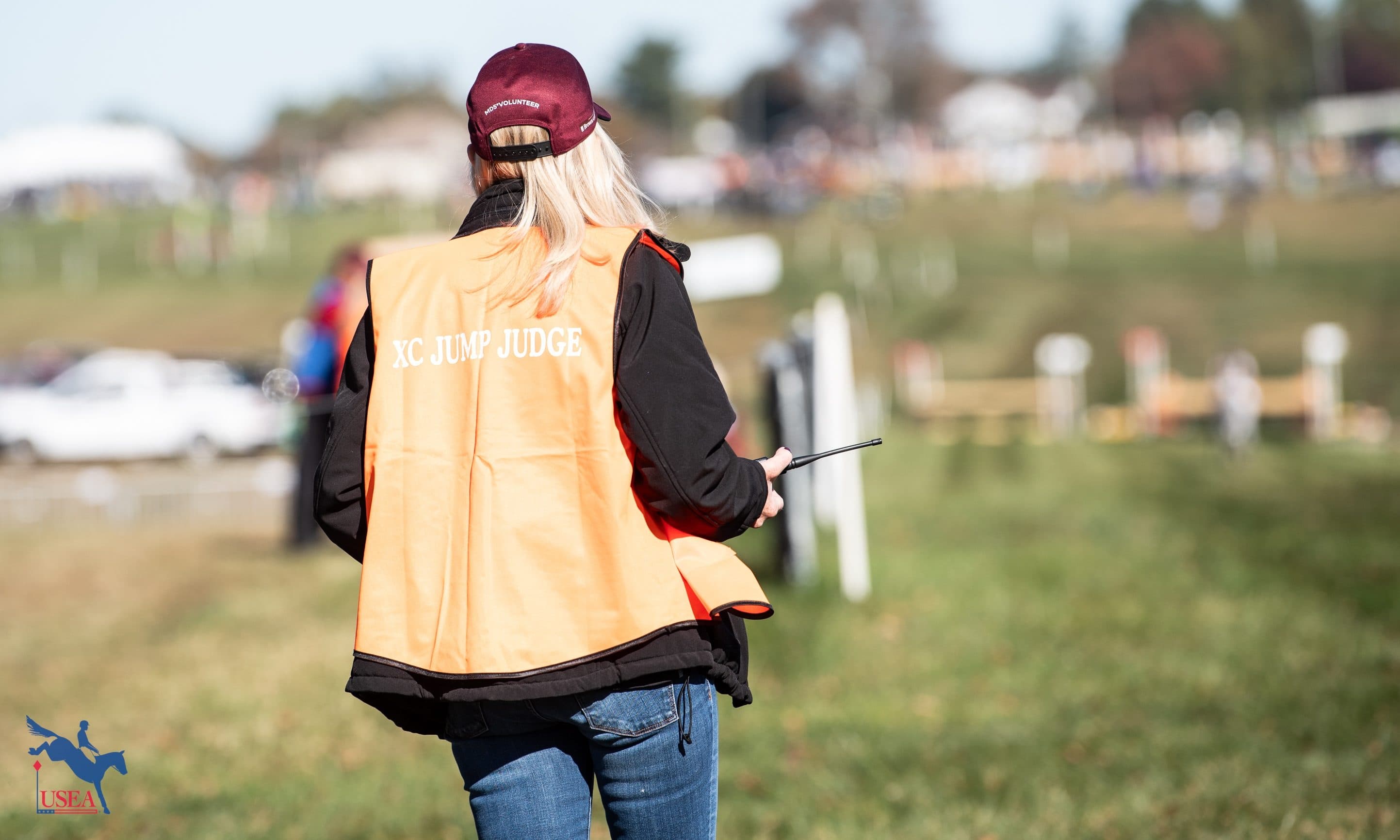
Volunteers are the backbone of the sport of eventing and behind every successful competition is a dedicated volunteer coordinator making it all happen. For Melissa Rundt, that role has grown into a full-time career built on relationships, organization, and a passion for the sport. From recruiting new volunteers to managing dozens of events each year, she shares what it takes to keep competitions running smoothly.
Q: How did you get started as a volunteer coordinator?
Rundt: My son competed through the Novice level before going to college, and during that time, I volunteered a lot at events, partly to stay busy and not stress about him! I would do whatever job was needed, which allowed me to learn all the different roles.
When he went to college in 2013, I stepped into the volunteer coordinator role at Pine Top [in Thomson, Georgia]. It felt like a natural progression because I already understood how everything worked. From there, it just grew. I picked up more events and expanded my role over time.
Q: How many events do you coordinate now?
Rundt: It’s turned into a full-time job. When we actually sat down and counted, it came out to around 28 or 29 events a year, including the ones where I serve as control.
And it’s not just the weekends—there’s a lot of prep work leading up to each event, so it really fills the calendar.
Q: What does your typical weekly schedule look like during the season?
Rundt: Because I have been doing this long enough, I have a pretty structured system. Mondays are the day that I approve volunteer hours, and I send thank-you emails, and take some personal time after the weekend.
Tuesdays, if I have maps, I am out driving cross-country. I do this for two reasons: it helps me know the courses, and it helps me know where I can combine jumps for a fence judge. That gives me Wednesday, Thursday, and Friday to find any extra fence judges that I might need and put something out on social media and emailing my final pleas for volunteers.
By Wednesday I am finalizing my fence judge assignments and back up what is in eventingvolunteers.com in a spreadsheet just in case. And on Thursday its just finalizing all the logistics.
I try to keep a running list in my head of what I need so I can recruit anytime so that if I out in the wild and run into a volunteer, I can let them know what I need. I just ran into a volunteer the other day at Kroger, and he let me know his meetings got cancelled so he was suddenly available that coming weekend, and I knew off the top of my head the roles I needed to fill.
And when I fall short, I go out and run bit check or serve as a warm-up steward for a while myself.
Q: What events are you currently involved with?
Rundt: I work at several venues, including Pine Top, Stable View, Sporting Days, Jumping Branch, and Plantation Field in Pennsylvania. At Plantation, I’m currently helping train a local coordinator so they can eventually take over more of the responsibilities there.
Q: Recruiting and retaining volunteers is a big challenge across the sport. What strategies have worked best for you?
Rundt: I approach it like sales. That’s my background, so I’m always “prospecting” for new volunteers.
I use social media, email databases, and word-of-mouth, but I also recruit in everyday situations—at tack shops, other events, even out in public. If someone tells me they love horses, that’s my opening. I’ll say, “I can put you in a position where you can watch horses all day.”
I’m also not afraid to pick up the phone and call people. In today’s world, that actually stands out and helps build stronger connections.
For retention, it’s all about placing people in roles they enjoy. If someone signs up to scribe and you move them to a completely different job, they may not come back. Understanding personalities and matching volunteers to the right roles is key.
Q: How important is building relationships with volunteers?
Rundt: It’s everything. I really get to know my volunteers—their preferences, their strengths, and what they enjoy doing.
I think of them as friends, and I advocate for them. If a volunteer is being treated poorly, I will step in. They’re giving their time for free, and they deserve respect and appreciation.
Q: What advice would you give to other volunteer coordinators preparing for the season?
Rundt: Organization is everything. You need systems in place and a plan for how you’re going to manage your events.
But just as important is flexibility. Things will change, people will cancel, and you have to adapt. There’s no one “right” way to do the job. You just have to get it done.
Q: What are some effective incentives for volunteers?
Rundt: It depends on the volunteer. Riders love schooling opportunities, so at Pine Top, one of the biggest incentives is that you can only cross-country school if you volunteer. I actually got four new volunteers at Pine Top this last show because they wanted to come school there.
If they don't ride, at Stable View things like local honey or wine are incredibly popular. I always give them a choice too. Do you want red or do you want white?
Q: What are some workarounds you have found work for you when volunteers are low?
Rundt: One thing I have done, especially with the Intercollegiate Championship, is that I will ask them if I can assign their school a jump to judge, and then their team just has to make sure it stays staffed all day. If you have someone who can't volunteer for the whole day, assigning a barn or team jump where they can rotate the person as their schedule needs works really well.
Q: What do you enjoy most about being a volunteer coordinator?
Rundt: Even on the hardest days, I feel incredibly lucky. My job is going to a horse show.
If every competitor leaves without knowing there were any problems, and every horse leaves safely, then it’s been a great day.
Related Articles
A First FEI Win for MHE Excel Star Noble Ikon and Morgan Houberg in USEA/USEF 6-Year-Old Developing Horse National Championship
Heavy rain overnight and into the morning turned the final day of the 2026 USEA/USEF Developing Horse Eventing National Championships into a true test of the young horses' confidence, athleticism, and determination at Morven Park International. When the final scores were tallied in the CCI2*YH-S ...
Orpheus Rises to the Top to Claim USEA/USEF 7-Year-Old Developing Horse National Championship
Consistency across all three phases proved to be the winning formula for the Dutch Warmblood gelding Orpheus, who rose from third place after dressage to claim the 2026 USEA/USEF 7-Year-Old Developing Horse Eventing National Championship at Morven Park International on Saturday. Owned by Cellar F...
Coleman and Off The Record Take Over the Lead After Cross-Country at US Equestrian Open Eventing Final CCI4*-L
Cross-country day at the US Equestrian Open Eventing Final CCI4*-L delivered a major shake-up on the leaderboard. Thirty-three horse-and-rider combinations tackled Derek di Grazia’s (USA) challenging 6,000-meter track at Morven Park International Equestrian Center in Leesburg, Va. Will Coleman (O...