The Result Isn’t Everything: Charlotte Collier Finds a New Perspective Ahead of the AEC
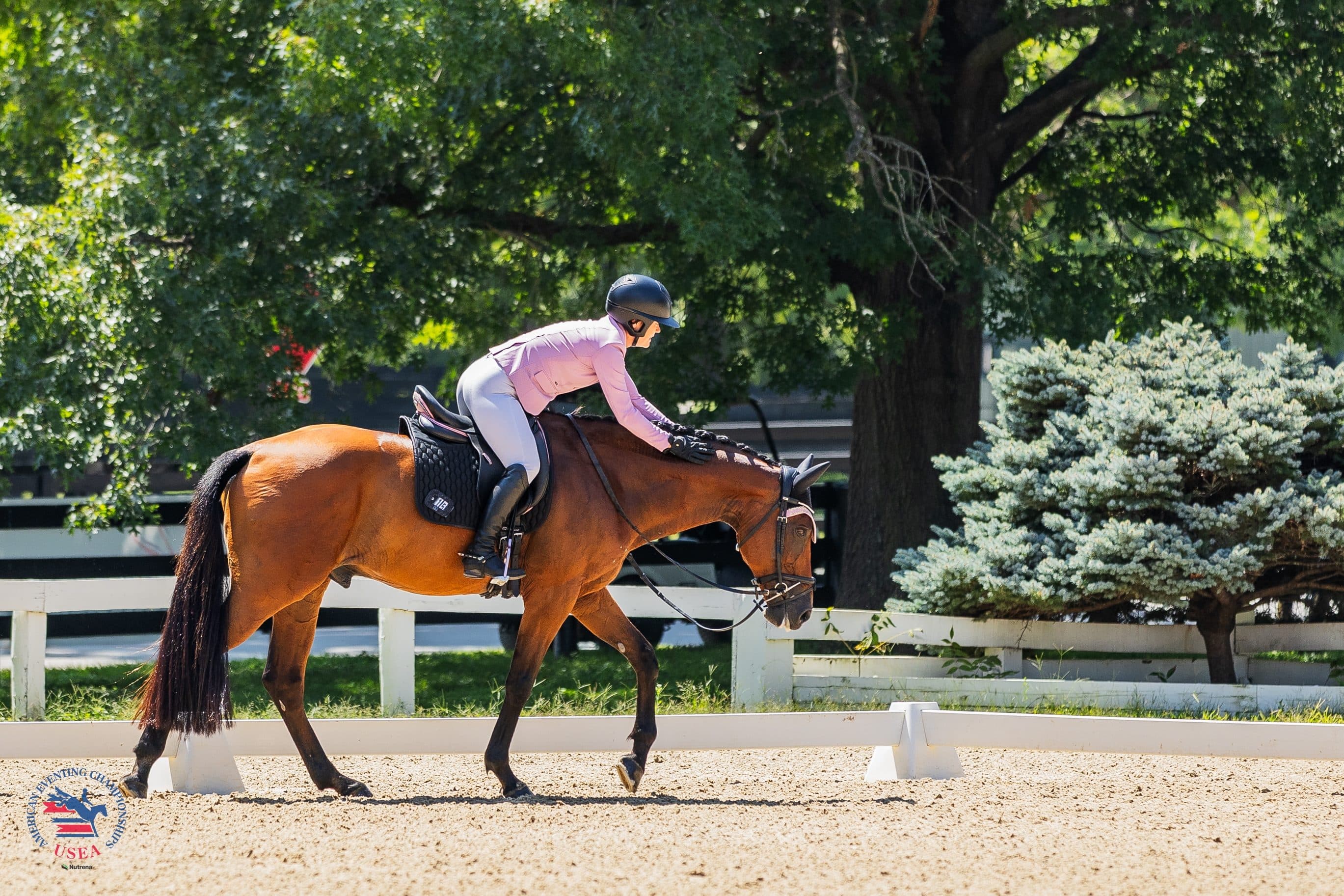
When Charlotte Collier rides into the Kentucky Horse Park this week for the USEA American Eventing Championships, she’ll have two horses, her young son watching, and considerably different expectations than she once might have carried into a championship.
Of course, Collier wants to ride well. She is ambitious by nature, something her current coach Olympian Clark Montgomery knows well. But after years when results and bigger goals could consume her, simply getting to Kentucky—and enjoying being there—means something different now.
“No matter what happens, I qualified for this. I’m here,” Collier said. “If it doesn’t go well, it’s a learning experience.”
It’s a perspective that has taken years to find. Collier spent much of her earlier career chasing the upper levels of the sport. She trained with longtime coach and mentor Sharon White for a decade before spending several years in the O’Connor program, competed through the four-star level, and was named to the USEF Emerging Athlete Eventing 25 program in 2019. Eventing wasn’t simply something she did; for most of her life, it was everything.
“I’ve been doing this since I was five years old,” she said. “All I’ve ever known is eat, sleep, breathe horses.”
Stepping Away
Beginning around 2021, a succession of setbacks piled up. Her upper-level horse, Clifford M, known as “Nils,” developed an unusual and ultimately career-ending respiratory problem. Another top horse developed EPM. Other horses suffered injuries and medical problems, while Collier herself endured what she describes simply as “too many broken bones.” After moving into her own farm in Ocala, Florida, she faced still more complications, including a tornado that tore the roof from one of the barns.
Eventually, she reached a point where she didn’t want to ride at all. “I was burnt out,” she said. “I didn’t even want to look at a horse.”
So she stopped.
For someone who had organized much of her life around horses and the goal of someday representing the United States, stepping away gave Collier an opportunity to experience a life she hadn’t made much room for before. She traveled. She skied. She went to the beach. She allowed herself to consider what she actually wanted rather than simply chasing the next competition.
Ultimately, the answer led her back to the barn. “There’s nothing else in the world that makes me as happy as this,” she said. “That feeling of coming out of the start box and crossing the finish line, and just being around the horses—that’s what I care about.”
Finding Her Way Back
Eventually, Collier started riding again. About a month later, she discovered she was pregnant.
Her pregnancy was considered high-risk, and she was placed on bed rest. Chris Talley and Lee Maher stepped in to ride and compete her horses, keeping them going while Collier watched from the sidelines.
“They did amazing with my horses,” she said. But the timing was difficult. “It killed me,” she said. “Finally making that choice to come back to the sport and be committed, and then I was stuck in bed. I had to watch other people living my dream that I’d just decided to come back to.”
Her son, Cypress, is now nearly two years old and healthy. But Collier soon discovered that wanting to return and being physically and mentally ready to do so were two different things.
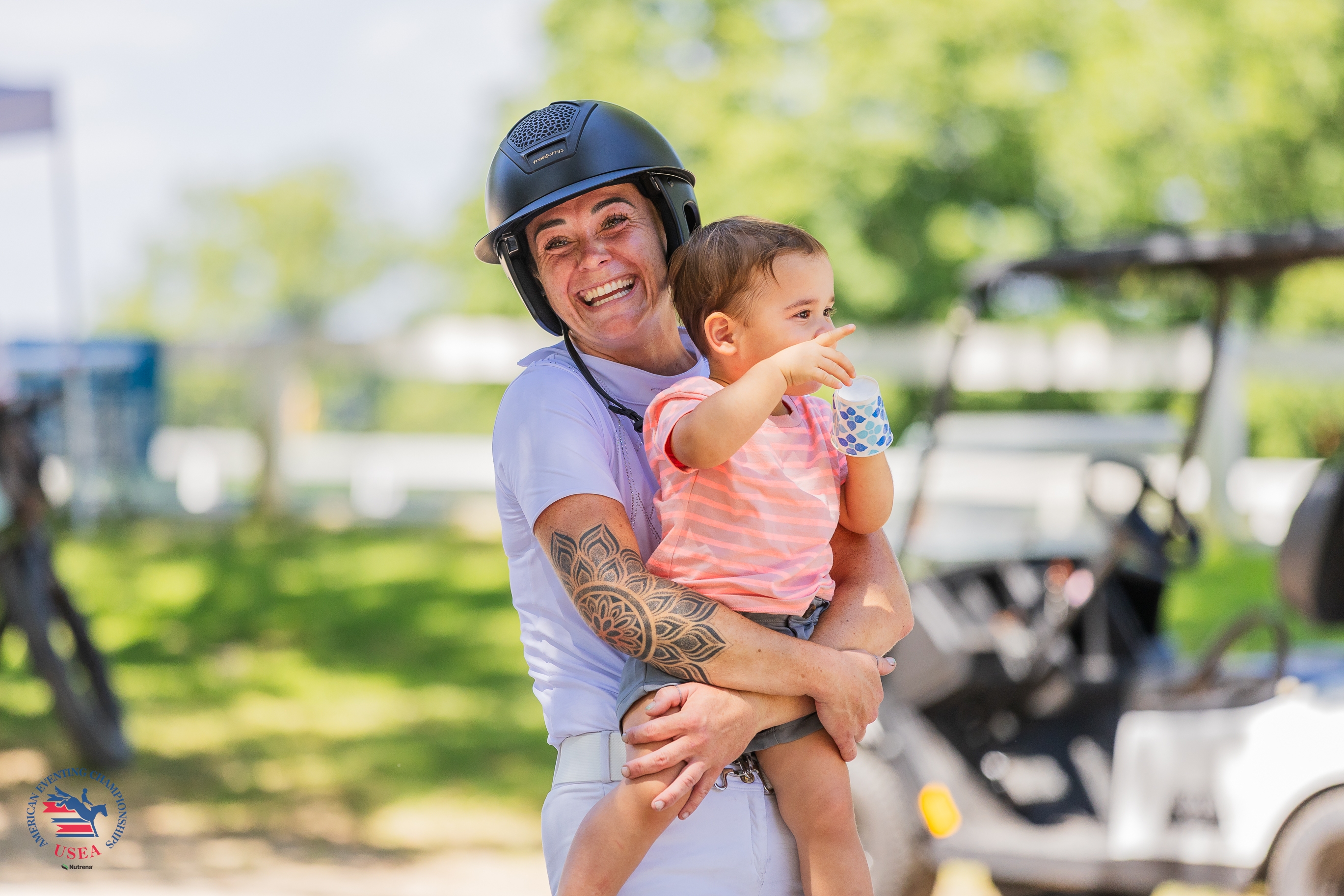
Seven weeks after giving birth, she climbed back aboard a horse. “I could not even trot a circle around the arena,” she recalled. “I literally got off and sat on the ground and just sobbed. I was like, ‘How am I ever going to get back to where I was?’”
Her body felt different. Her balance had changed. Posting and sitting the trot, once automatic, suddenly required conscious effort. So did seeing a distance to a fence.
And then there was the mental side. Before becoming a mother, Collier said, she had been able to leave the cross-country start box without dwelling much on the risks involved. Afterward, she found herself acutely aware of them. “I would come out of the start box and my brain goes, ‘Danger, danger, danger,’” she said.
There were times she pulled up on course. There were tears. And there was the uncomfortable experience of remembering exactly how capable she’d once felt while realizing that she couldn’t simply will herself back there.
That’s where Montgomery became particularly important.
The two began working together about two years ago, after Talley and Maher had helped keep Collier’s horses going during her pregnancy. Montgomery said that much of his early work with Collier wasn’t about teaching her to ride; it was about reminding her to give herself time to regain what she’d lost.
“I told her nobody expected her to be at her full capacity immediately,” he said. “She would get fit again. Her eye to the jumps would come back again. She would eventually be able to sit the trot again.”
For Collier, Montgomery became coach, mentor and, occasionally, the person who talked her through the moments when frustration threatened to overwhelm her. “He knows when he can say or not say something, and it’s going to help me in the moment,” she said. “We have a really good working relationship like that.”
Montgomery sees his role similarly. Collier’s ambition never disappeared during her time away, and sometimes his job is simply helping her keep it in perspective. “She wants it all, like, now,” he said with a laugh. “My job is to come in there and try to help her find the balance of that.”
Part of finding her way back has also meant embracing the parts of herself Collier once felt pressure to tone down. For years, she’s been easy to spot at events thanks to her signature pink—a color she’s incorporated into everything. At times, she said, criticism made her question whether she needed to look or act more serious to be taken seriously as an upper-level rider.
These days, she’s less concerned about fitting someone else’s idea of what a serious competitor should look like. “I think that there’s such a big area for people to be self-expressed,” she said. “It’s a fun sport.”
A Different Goal
This week’s AEC will mark another significant step in Collier’s return to competition.
Collier will compete two horses she owns at the AEC: Quiberon (Quite Easy x Avalon), a 10-year-old Oldenburg gelding previously campaigned by Doug Payne through the four-star level, in the Intermediate Championship; and 9-year-old Irish Sport Horse mare Loughtown Cici ZA (CC Captain Clover x Castlelawn Diamond Clover), whom Collier purchased from Talley, at Modified.
Both horses came to Collier with upper-level experience, and that was intentional. As she worked to rebuild her own confidence and consistency, she wanted the peace of mind of knowing the horses underneath her already understood their jobs.
Quiberon, known as “Hairball” around the barn, has still presented his own learning curve. Formerly a stallion, he’s powerful and particularly enthusiastic about cross-country.
“He has taught me so much and humbled my ego,” Collier said. At times, she joked, she feels “like a little tiny child compared to Doug [Payne].” But over the past year, she and Hairball have gradually figured one another out.
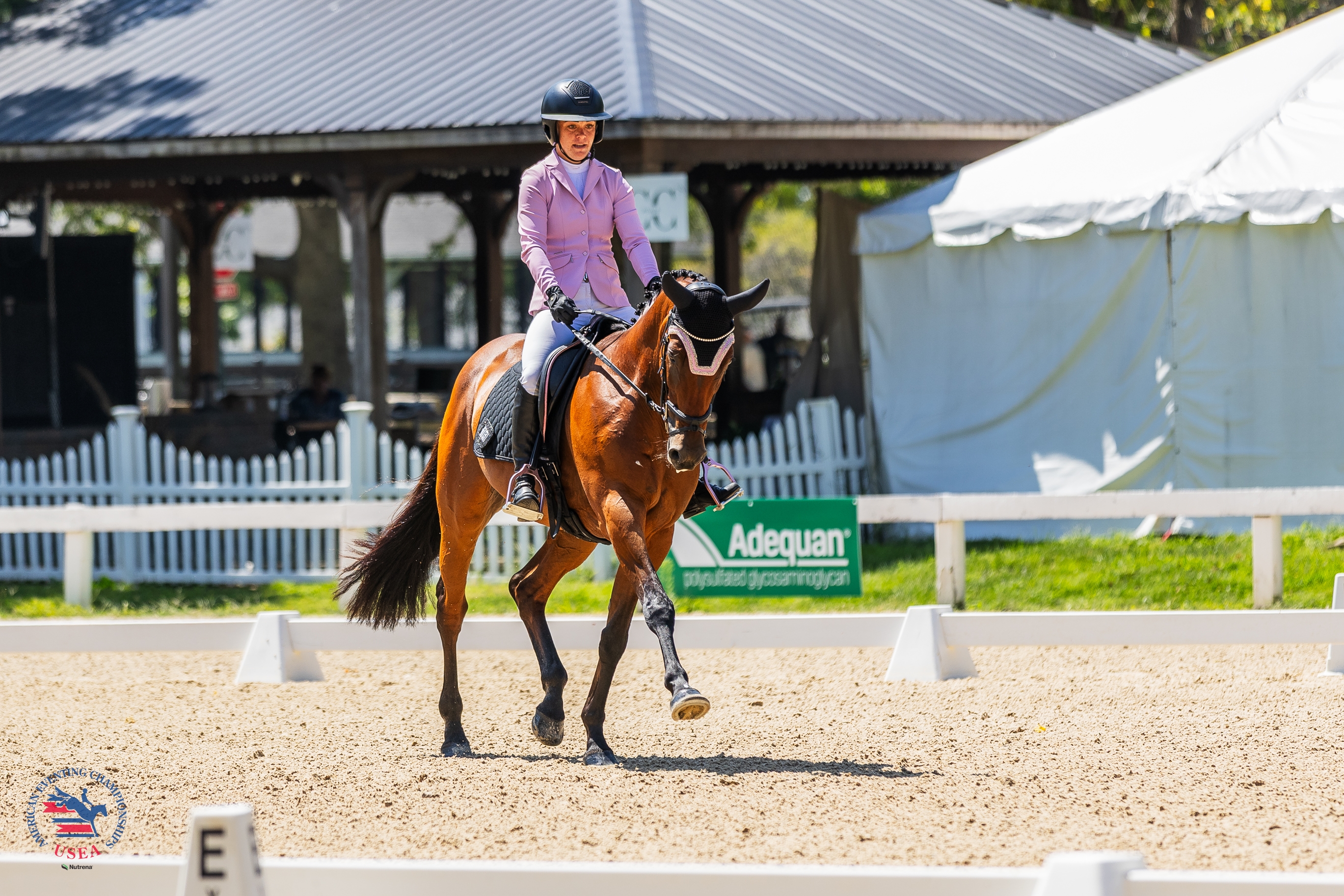
Cici, whom Collier purchased from Talley after he had competed the mare through the Advanced level, requires an entirely different ride. Sensitive and careful, she taught Collier to sit quietly and think through what she was asking.
“She’s the complete opposite of Hairball,” Collier said. “They couldn’t be more different. That’s helped my riding.”
Having two such different partners means Collier can’t approach every ride with the same formula. “I can have a plan, but it’s never the same for both of them,” she said.
And she wouldn’t trade either experience. “I absolutely adore them,” she said. “They’re such amazing horses, and I have so much fun with them.”
The AEC represents another deliberate step outside Collier’s recently rebuilt comfort zone. Since returning, she acknowledged that she has avoided some larger competitions and livestreamed events because of the pressure she knew she’d put on herself. Going to Kentucky means confronting that.
“This is the first show I’ve been nervous about,” she said. “I’m riding for experience and just to change my brain under pressure again.” Her goal, she said, is “accepting the pressure, but not reacting to it”—staying in the moment with her horses instead of worrying about who might be watching or what a result might mean.
Montgomery isn’t attaching a placing to the week either. “We’re still kind of coming back into the consistency in being competitive,” he said. “I always feel like you can go to these shows and come away with a lot of energy—wanting to go and do more. That’s what I hope she takes away from it.”
A New Kind of Balance
There will be something else waiting for Collier in Kentucky, too. For years, Collier dreamed of competing in the Rolex stadium with her child there to watch. This week, that dream will come true when Cypress watches her compete at the AEC. “That moment alone is going to make me cry,” Collier said. “It’s a childhood dream of mine.”
Cypress, meanwhile, is already beginning to share his mother’s love of horses. He’s started taking riding lessons and, according to Collier, is “obsessed” with horses. “He can do whatever he wants with his life. I’m not trying to push riding on him, but if that’s what makes him happy, then I’d love that for him,” she said.
Eventing, however, might be another matter. “I’m a mother—I’d be too nervous to watch my kid do it,” she said with a laugh. “He’s small enough, he could be a jockey or a polo player.”
Collier is still figuring out how to balance motherhood with the demands of horses and competition. Preparing two horses for the AEC through a Florida summer has meant early mornings—the barn starts at 4 a.m., allowing her to be on her first horse by 6:15—but she’s also more conscious now of setting limits. “I refuse to buy arena lights,” she joked. “I don’t want to be that person that’s riding horses in the middle of the night.”
In some ways, motherhood has helped her find that balance. “It made me slow down and appreciate the moments of everything,” she said. “I’m a very high-energy, fast-moving person. My kid slows me down in a good way. And it helps my horses, too. It’s helped my riding.”
That new balance has also meant learning to rely more on the people around her. Collier credits grooms Cassie Stolz and Sarah Bowman, along with Parker Chance, who has been with her for nearly six years, with making it possible for her to devote time to both her horses and her family.
“The people I have working for me right now—I wouldn’t be where I am without them,” she said. “I don’t have to worry because they love and care for my horses as much as I do. It’s the best group of people I’ve ever had.”
Chance, she added, is the one who “keeps the ship afloat.”
Collier has also changed her USEF status from professional to amateur, a decision she said helped remove some of the pressure she’d carried for years. She still has upper-level ambitions. But she no longer wants them to come at the expense of enjoying the horses or the process of getting there.
“I enjoy the everyday things,” she said. “I like grooming them, just everything.” Sometimes that means simply pulling a horse out of the paddock and spending time together for a hand-graze.
The hard days haven’t disappeared. Neither has Collier’s tendency to want everything to happen faster. But after discovering what it felt like to lose her enthusiasm for the sport entirely, she’s determined not to take that enthusiasm for granted again.
“At the end of the day, there’s nothing else I’d rather do with my life,” she said. “I just love the horses, and I just love every second of the journey.”
This week in Kentucky, the result will matter. Collier readily admits she’ll care.
It just won’t be the only thing that matters.
About the USEA American Eventing Championships (AEC)
The USEA American Eventing Championships (AEC) presented by Nutrena Feeds is the pinnacle of the sport at the national levels. Held annually, the best junior, adult amateur, and professional competitors gather to vie for national championship titles at every level from Starter to Advanced. This ultimate test of horse and rider draws hundreds of combinations from around the country to compete for fabulous prizes, a piece of the substantial prize money, and the chance to be named the National Champion at their respective levels. In fact, the 2021 AEC garnered over 1,000 entries and now stands as the largest eventing competition in North American history. The 2026 USEA American Eventing Championships presented by Nutrena Feeds will be held on Aug. 25-30 at the Kentucky Horse Park in Lexington, Kentucky. Click here to learn more about the USEA American Eventing Championships.
The USEA would like to thank Presenting Sponsor: Nutrena Feeds; Advanced Final Title Sponsor: Adequan; Platinum Level Sponsors: Bates Saddles, Marshall+Sterling Equine Insurance; Gold Level Sponsors: ARMA, Gallaghers Water, PulseVet, Schneiders Saddlery, SmartPak, Standlee; Silver Level Sponsors: Auburn Labs, Kerrits, The Jockey Club Thoroughbred Incentive Program, Rood & Riddle; Bronze Level Sponsors: 70°, Antech Diagnostics, Athletux, The Chronicle of the Horse, Devoucoux, D.G. Stackhouse & Ellis, Dubarry of Ireland, Equestrian Team Apparel, Grayson-Jockey Club Research Foundation, John Deere, Retired Racehorse Project, Ride EquiSafe, Santa Cruz Animal Health; Contributing Level Sponsors: AnimaSol, CrossCountry App, Foxhollow Farm, Georgetown/Scott County Tourism, Kentucky Equine Research, Kentucky Horse Park Foundation, Lexmark, LV Harkness, Only Fools and Horses, #WeRideTogether, YETI; and Prize Level Sponsors: ARRO Helmets, The Dad Den, Dandy Products, Equiluxe Tack, Equine IMED, Fair Hill Saddlery, FLAIR Equine Nasal Strips, I Love My Horse Boutique, The Infused Equestrian, Love Equestrian, Majyk Equipe, Mare Modern Goods, Natalie Hummel Coaching, Neighborly Tack, Outlaw Nutrition, Parkmore Supplements, Peak Performance Equine Spa, Poseidon Animal Health, Rachel Dory Fine Art, Right Path Equestrian, Saddle Bird Boutique, Sidelines Magazine, Strides For Equality Equestrians, STRIDER, Stylish in the Saddle, VTO Saddlery, and XLR8 Equine.
Related Articles
Bouckaert Farm Celebrates Inaugural U25 Champions at October International
Bouckaert Farm welcomed a new generation of eventing talent to its October International Horse Trials, October 23–25, introducing dedicated Under 25 (U25) divisions at the CCI1*-S, CCI2*-S, and CCI3*-S levels. The inaugural competition marked the beginning of an expanded U25 initiative, with plan...
McHugh and Bewley Claim USEA Classic Series Victories at Hagyard MidSouth
The traditional long-format experience took center stage at the Hagyard MidSouth Three-Day Event in Lextington, Kentucky, held October 14-18, 2026. Emma McHugh and Zara Bewley took home USEA Classic Series victories in the Training and Novice Three-Day divisions, respectively.
Save the Date: 2027 Young Event Horse Symposium in Ocala, Florida
The United States Eventing Association (USEA) is excited to announce the date for the 2027 USEA Young Event Horse Symposium. Taking place on Monday, February 15, 2027, this educational symposium is open to everyone interested in learning more about the successful production of Young Event Horses ...