The Eventing Saddle Buyer's Guide: Fit, Function & Finding the Right Match
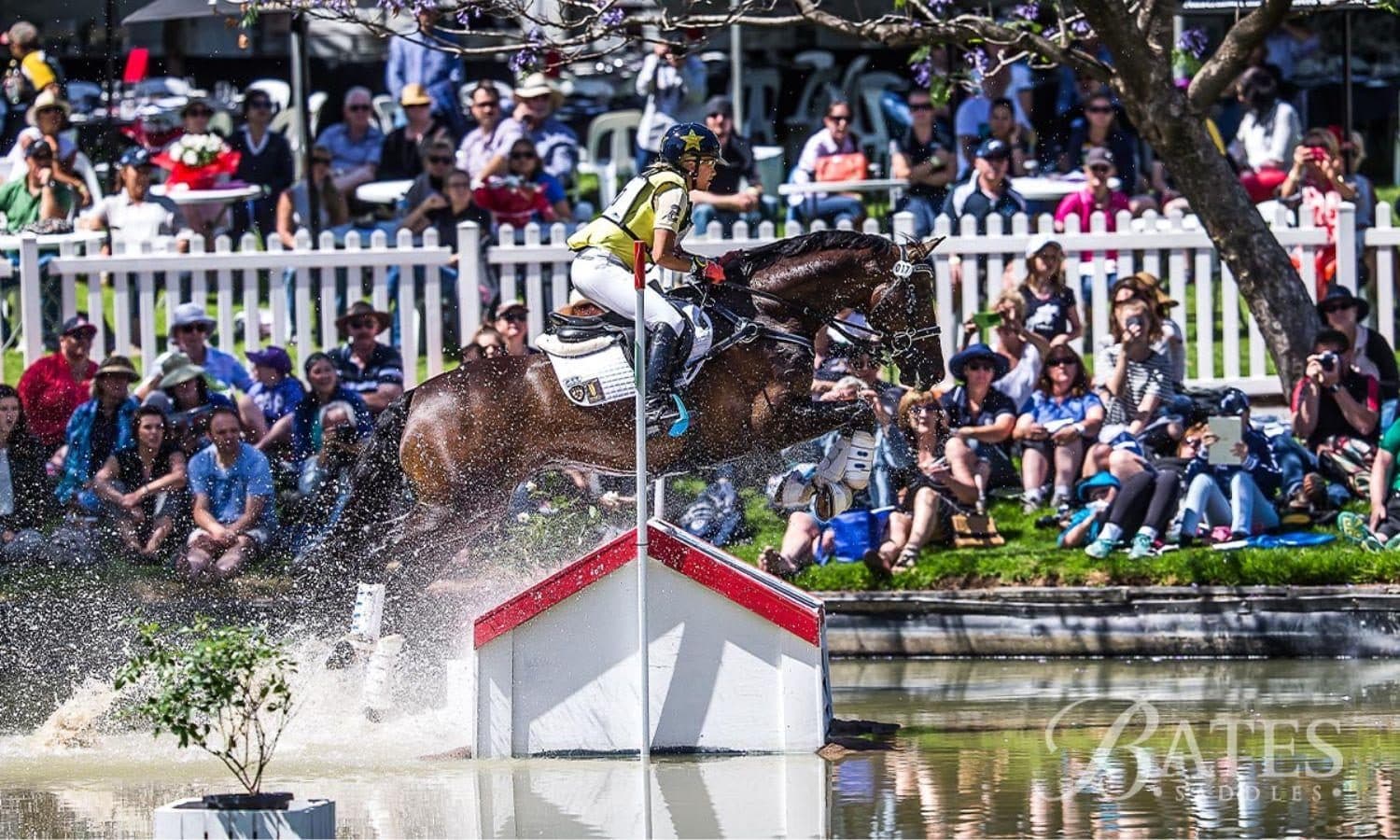
Fit for the saddle is your most important piece of equipment, the vital connection between you and your horse.
Understanding what makes an effective eventing saddle, and how to ensure proper fit for both horse and rider, is essential for success in this demanding sport.
What Makes an Eventing Saddle Different?
Unlike riders in other disciplines, eventers require at least two saddles: a dressage saddle for the dressage phase, and a jumping saddle for showjumping and cross-country.
Your dressage saddle must facilitate precise movements, support a longer leg position, and allow subtle aids. Many riders use the one jump saddle for both cross country and jumping phases. Some riders prefer a jump saddle with a little more security for longer gallops and demanding fences and a more open flatter style jump saddle for the show jumping. Jump saddles aim to deliver a more forward position that makes getting in and out of two-point with balance effortless, all while maintaining your horse's comfort and freedom of movement.
A properly balanced saddle should feel almost invisible. The saddle works with you, not against you. This becomes particularly critical in jumping, where you need to move effortlessly and quickly getting into two-point position without excessive effort and remaining light in the saddle.
Modern tree designs incorporate ergonomic flex, allowing the saddle to move dynamically with your horse. Panel technology is equally crucial, advanced systems are emerging which adapt to your horse's unique back shape. Some saddle brands, like Bates Saddles, have long incorporated these advanced innovations such as the CAIR Cushion System (launched in 2001), ensuring your horse stays comfortable across all phases.
Monoflap or Traditional Double-Flap Design?
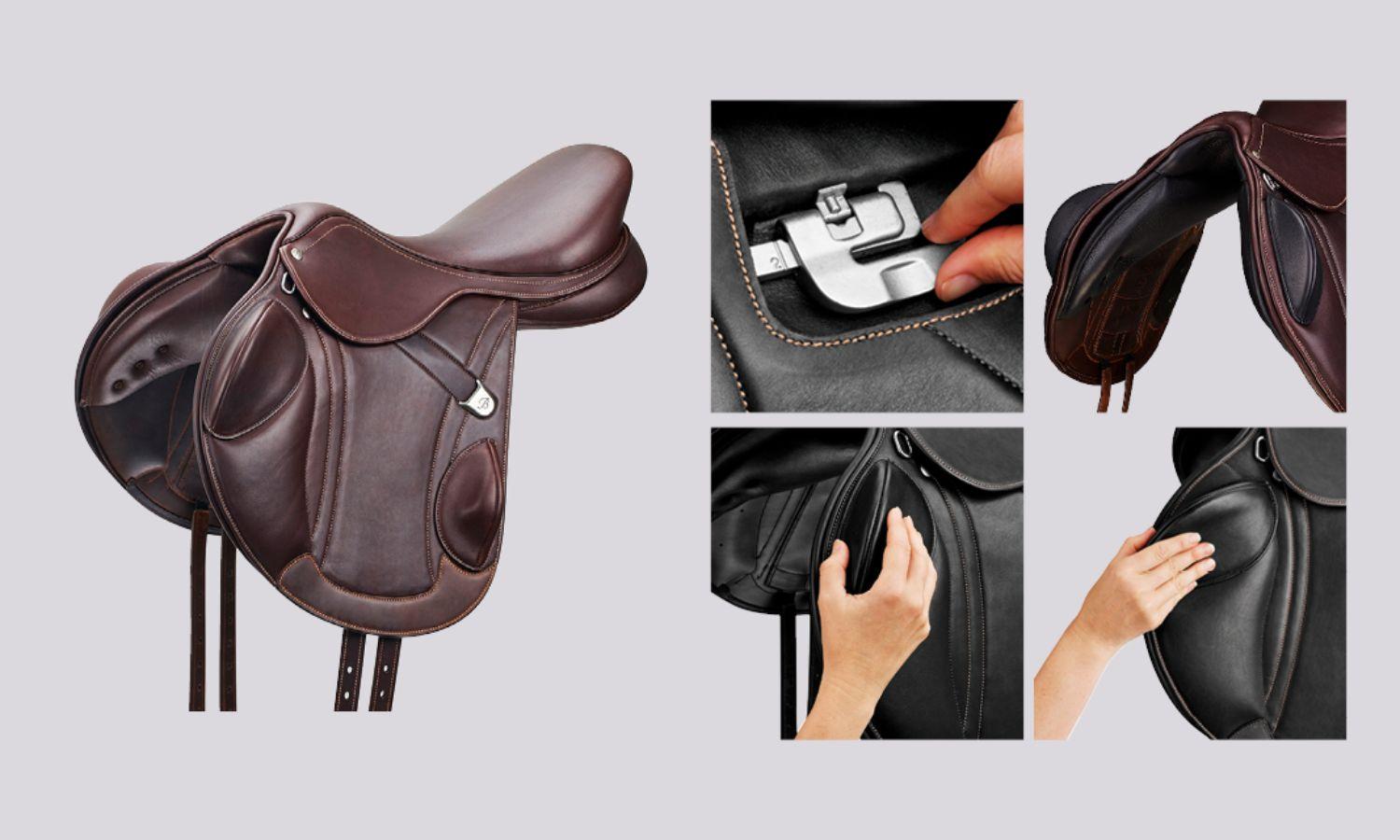
Monoflap saddles feature a single flap for maximum closeness, with external support blocks. Some brands, like Bates Saddles, offer movable external blocks allowing you to customise support to your individual position. Traditional double flap saddles feature support blocks under the flap, which should also ideally be movable. The choice is entirely personal.
Fit for the Horse: Performance, Comfort, and Welfare
Correct saddle fit is fundamental to your horse's performance and long-term health. Both your dressage and jumping saddles must fit correctly.
Finding the Optimal Saddle Platform
The optimal saddle platform sits behind the shoulder blade and in front of the last rib. Both saddles should rest within this weight-bearing area of your horse’s back and allow your horse complete freedom through the shoulder.
When a saddle sits too far forward, it restricts shoulder movement. Your horse may feel tight and uncomfortable, problematic in all eventing phases where full range of motion is needed.
Tree Width and Panel Contact
The tree width (also called the saddle width or gullet width) must match your horse's conformation. The panels should have an even, soft feel and be symmetrical, with a wide channel providing clearance along the spine.
Look for adjustable systems for maximum suitability and longevity. Systems like Bates Saddles' EASY-CHANGE Fit Solution offer exceptional flexibility without requiring the use of expensive or specialist equipment to make adjustments.
Recognizing When Your Horse Needs Help
Watch for these signs: your position isn't improving despite lessons, you feel insecure or unbalanced, your horse becomes difficult to ride or reluctant to work, the saddle slips during work, changes in muscle development, or your horse performs differently in one saddle versus the other.
Supporting Your Horse Through Change
Your horse's shape changes constantly. Contact your local saddle fitter when purchasing a saddle, and schedule regular fittings, at least every six months, or more frequently if you notice changes in your horse's age, fitness, work program, or any signs mentioned above.
Fit for the Rider: Empowering Your Performance
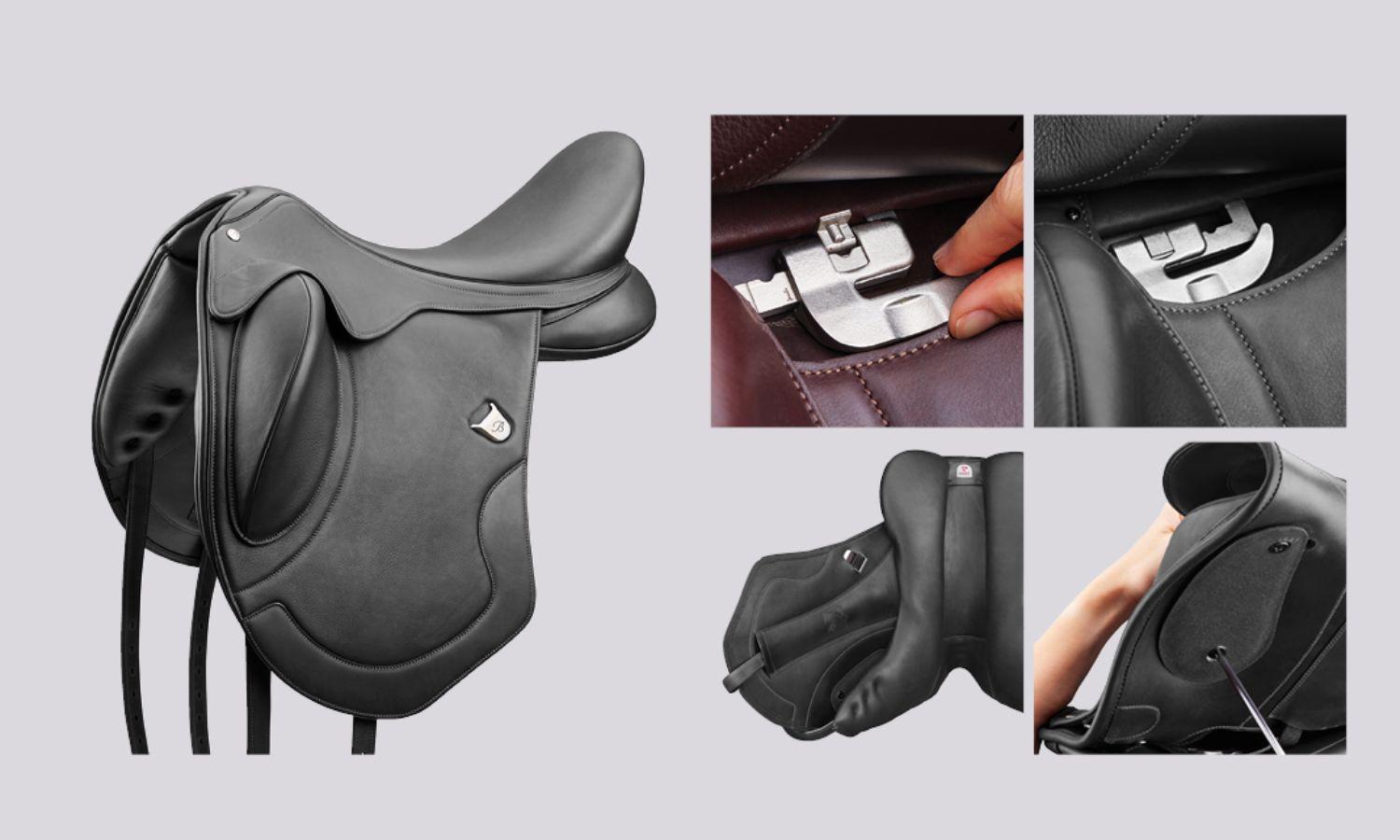
Event riders face distinctly different physical demands between dressage and jumping.
Achieving Effortless Alignment
Proper rider alignment, that ear-shoulder-hip-heel line – is essential. When you struggle to maintain alignment, it's often the saddle holding you back, not your riding ability.
A saddle too low behind and too high in front creates an armchair effect, pushing your foot forward. When attempting two-point, you must throw yourself forward. Upon sitting back, you land heavily, uncomfortable and ineffective. Conversely, when a saddle is higher behind and lower at the pommel, it tips you out the front door, leaving you vulnerable and easily pulled out of balance, which is not what you want when galloping towards a cross-country fence where security is paramount.
Finding What Works for You
Every rider is different. Sit in several saddles to find what works best for your individual biomechanics. Many brands, like Bates Saddles, have features such as movable support blocks, movable stirrup bars and overgirths, which affect leg contact, seat comfort and balance.
Some brands, like Bates Saddles, have high-performance ranges with innovations such as Adjustable Ergonomic Stirrup Bars which empower you to customize stirrup bar position for complete control. This adjustability is valuable across both saddles, allowing you to fine-tune each to support different positions required.
Block configuration is crucial. Whether you choose monoflap saddles with external movable blocks or traditional designs with movable blocks under the flap, adjustable systems let you customize support to match your needs.
Modern Adjustability and the Saddle Fitting Process
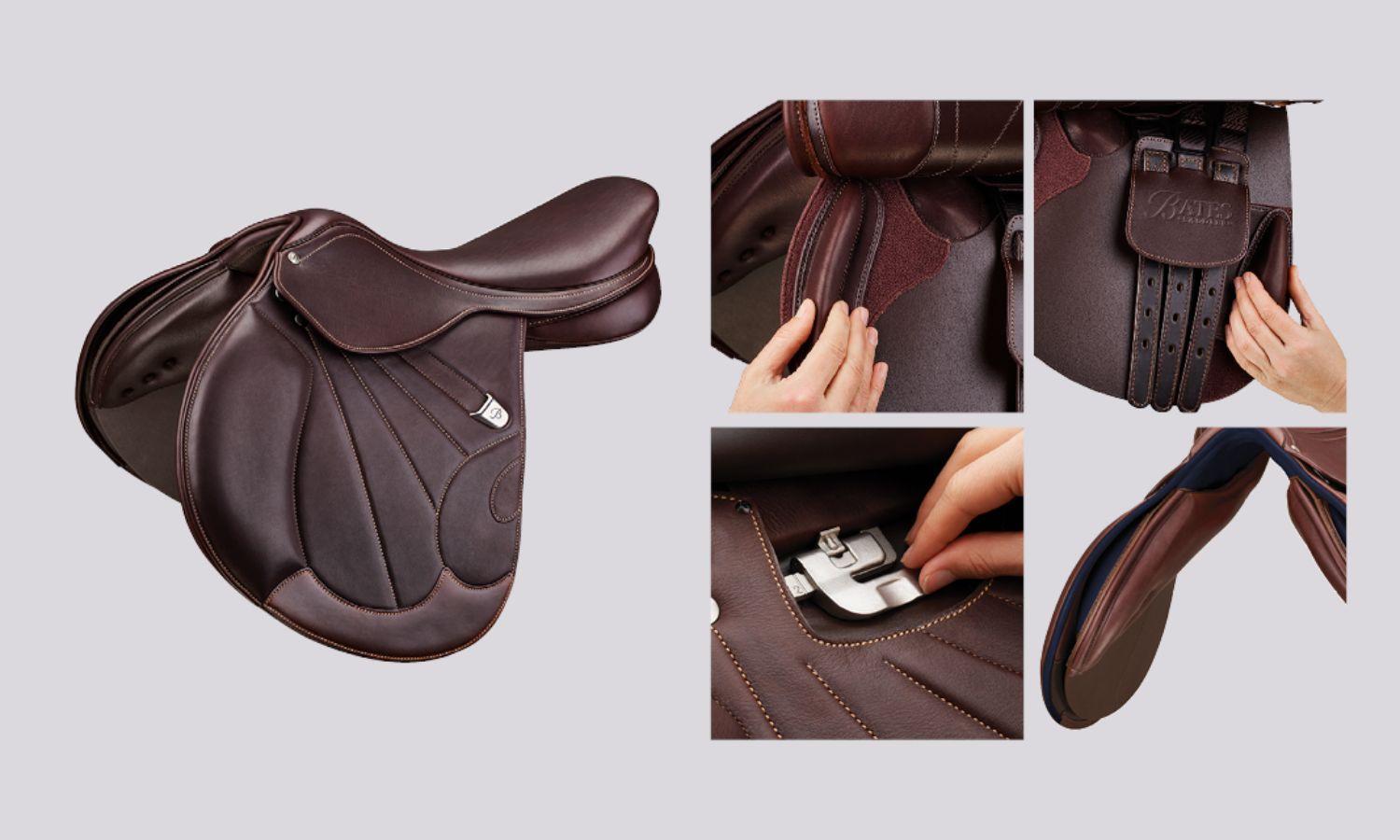
Investing in two quality eventing saddles is a significant commitment. Modern adjustability means your saddles can adapt as you both develop. It is peace of mind to both saddle fitters and riders that the saddle holds a solution for any changes within a horse and rider partnership throughout their journey.
Adjustable tree width systems allow modification within a matter of minutes. As your horse develops muscle or changes shape, the technology within the saddles allow the saddle to continue to provide optimal comfort.
Contact your local saddle fitter for expert advice. Working with a qualified fitter for initial fitting and regular reassessment is ideal. These professionals ensure correct tree width selection for both saddles, appropriate panel adjustment, proper rider alignment positioning, and identification of potential issues before they become problems.
Between professional fittings, perform basic checks. With your horse standing square and the saddle girthed up (without a saddle cloth, if safe to do so with your horse), check: saddle position (behind shoulder blade, in front of last rib), saddle balance (lowest part of seat should be level when viewed from 6 feet), the channel has sufficient clearance, and even bearing by sliding your hand between saddle and horse.
Bates Saddles: Top Eventing Choices
Jumping Saddles
- Bates Apex jump saddle coming April 2026
- The biggest evolution in jump saddles. Patented technology. Elite riders competing in it secretly for months. A saddle that does things no other saddle in the world can do. That's all you're getting here. If you're the kind of rider who needs to know, you already know where to look. batessaddles.com — go on, you know you want to.
- Bates Victrix jump saddle
- Lightweight and compact, the ultra-close Bates Victrix offers your horse complete comfort and freedom in every stride. Features: double flap saddle, movable Flexiblocs under the flap, Adjustable Ergonomic Stirrup Bar, close-contact Bates SynergyPanel.
- Bates Advanta jump saddle
- Engineered for perfect connection. The saddle all but disappears. Patented FlexiContourbloc technology (movable external blocks) works with a SweetSpot for effortless balance. Features: forward-cut monoflap, Adjustable Ergonomic Stirrup Bar, close-contact Bates SynergyPanel.
Dressage Saddles
- Bates Artiste dressage saddle
- A position so natural and a connection so sensitive the saddle all but disappears and your performance is amplified. Features: double flap saddle, movable Flexiblocs under the flap, Adjustable Ergonomic Stirrup Bar, close-contact Bates SynergyPanel.
- Bates Isabell Icon dressage saddle
- Total elegance meets high performance. The Bates Isabell Icon stands alone in freeing your horse's full scope of movement and conveying your aids clearly. Features: double flap saddle, movable Flexiblocs under the flap, Adjustable Ergonomic Stirrup Bar, close-contact Bates SynergyPanel.
For more information on saddle fit, care and technology, follow @batessaddles on social media and explore educational articles at batessaddles.com. Stay tuned to the United States Eventing Association for ongoing advice from their partners and industry experts to help you and your horse perform at your best.
Bates Saddles is the Official Saddle of the United States Eventing Association. For information about innovative saddle design and technology, or to find your nearest stockist, visit batessaddles.com
Related Articles

USEA Recognizes Ride EquiSafe for Support of 2026 American Eventing Championships
The United States Eventing Association (USEA) is pleased to recognize Ride EquiSafe for its continued support as an Official Bronze Level Sponsor of the 2026 USEA American Eventing Championships (AEC), which took place August 25-30 at Th...
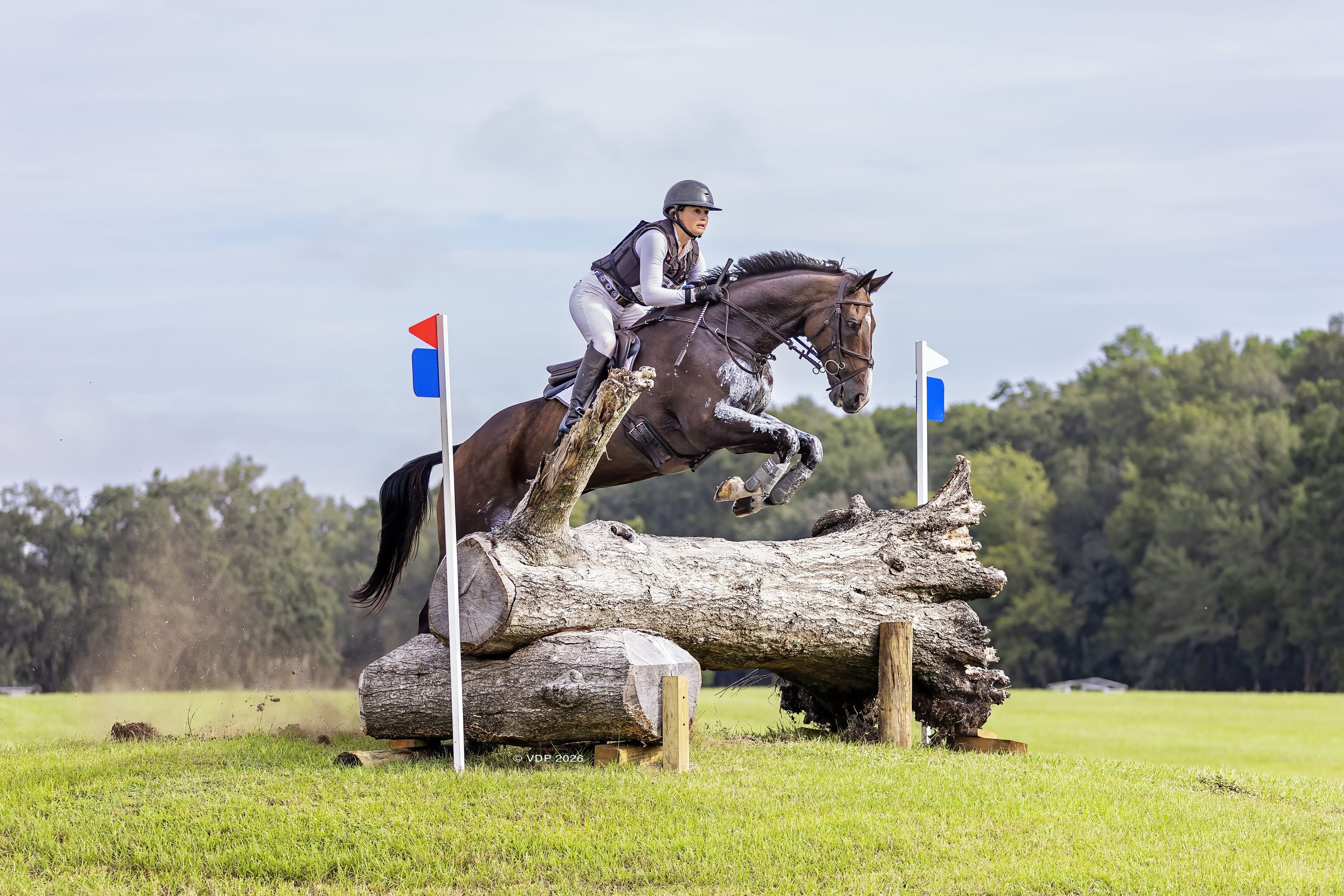
Skyler Norris Comes Full Circle with Advanced Debut at Ocala
For Skyler Norris, the Florida Horse Park in Ocala is more than just another competition venue. It’s where she first discovered the thrill of eventing as a little girl and where she’s spent countless weekends competing, learning, and chasing her dreams.

Official Corporate Sponsors of the USEA
Become a Sponsor